Little Nipple Cactus (Mammillaria heyderi)
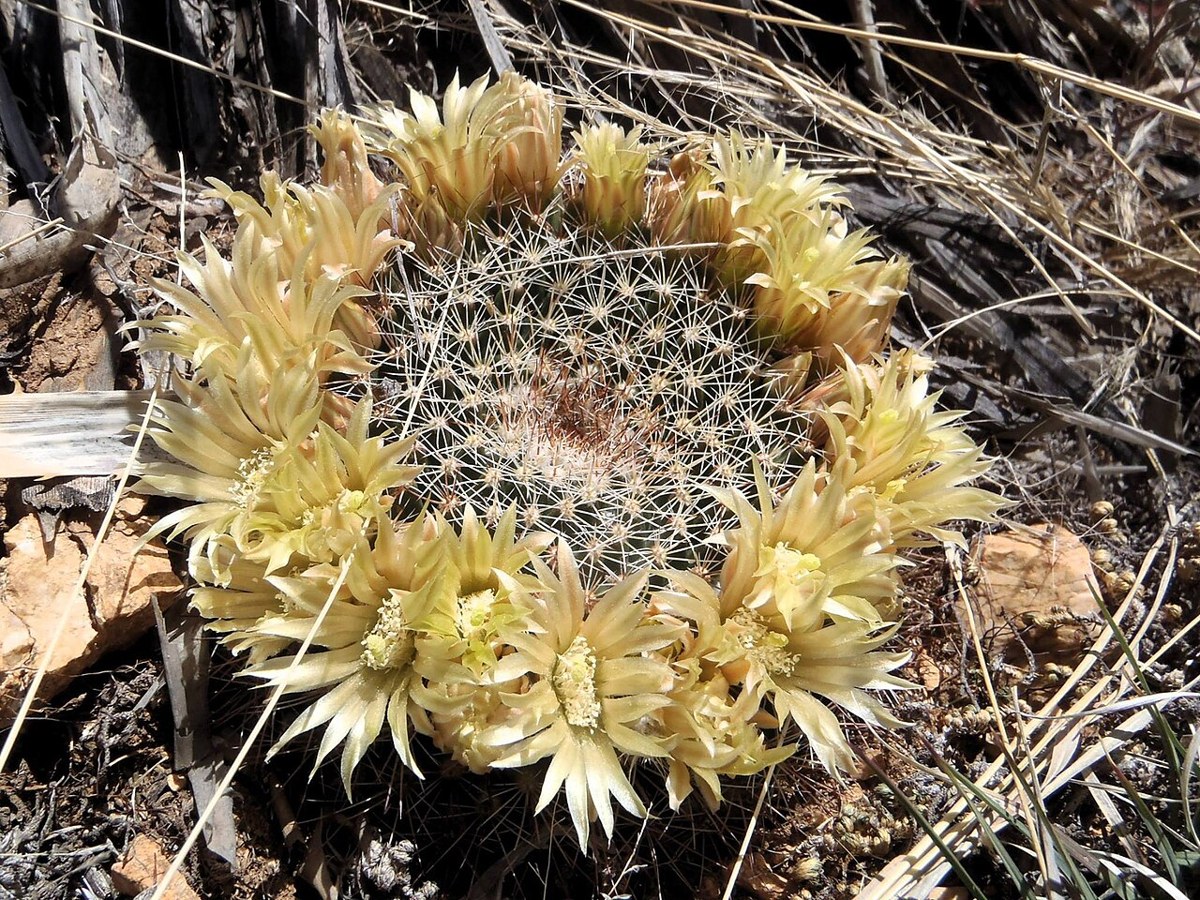
Mammillaria heyderi, the Little Nipple Cactus, is a small, ground-hugging cactus of the Sonoran and Chihuahuan Desert borderlands, found scattered across Arizona, New Mexico, and much of Texas. It belongs to the Cactaceae, and like other members of the large genus Mammillaria, its stem is covered not in ribs but in distinct, nipple-like tubercles — the feature from which both the scientific and common names derive. Rather than growing upright, the Little Nipple Cactus sits almost flush with the soil surface, often nearly buried except for its spiny crown, which makes it one of the more overlooked native cacti until its ring of pale flowers opens each spring.
This is a desert-floor and desert-grassland species, typically found growing singly on flats, bajadas, and rocky slopes among creosote bush, mesquite, and desert grasses, from low desert elevations up into oak-grassland transition zones. Mature plants form a solitary, flattened to globose body usually only 2 to 4 inches across, though multi-headed clumps occur in some populations. Unlike many showier cacti, Little Nipple Cactus rarely calls attention to itself outside of its brief but pretty bloom period, when a neat ring of cream to pale pink flowers circles the crown.
For gardeners in the Southwest, Little Nipple Cactus makes an excellent low, ground-level accent for rock gardens and gravel beds, valued for its tidy form, undemanding care, and reliable spring flower display rather than for size or drama.
Identification
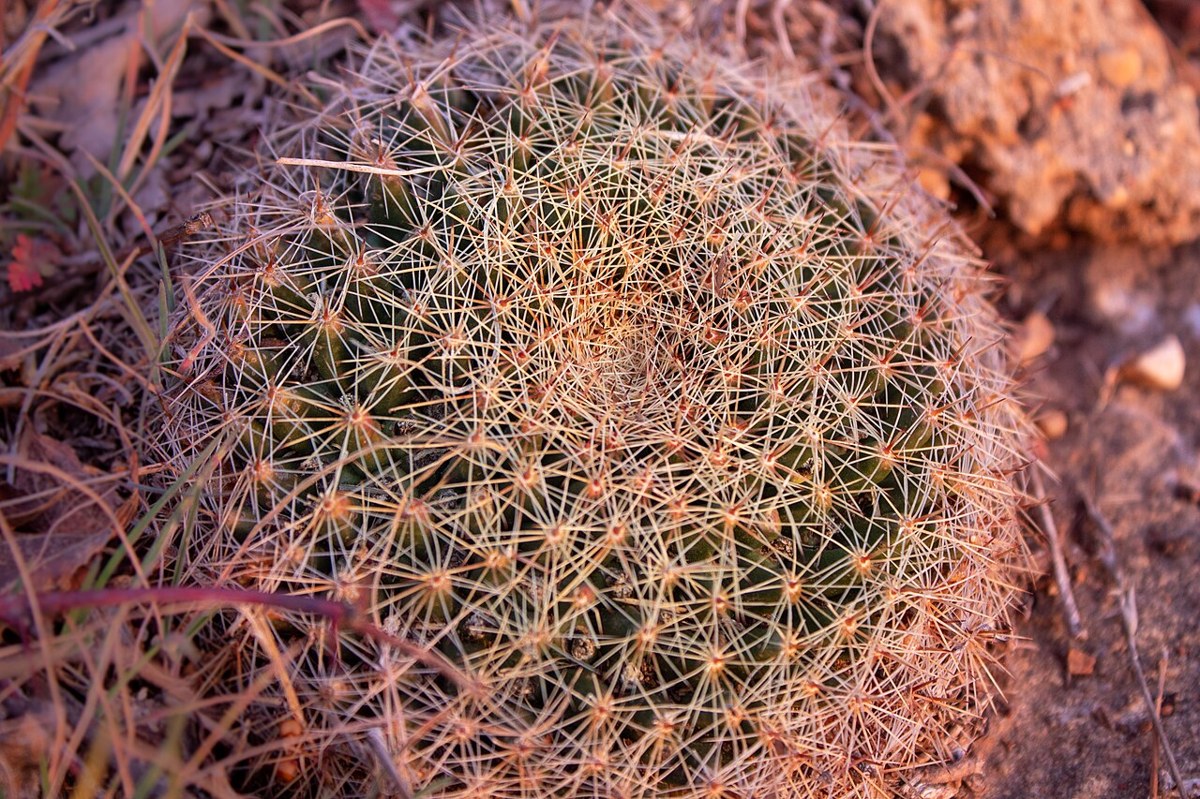
Little Nipple Cactus grows as a solitary, depressed-globose to short-cylindrical stem, usually unbranched, sitting low to the ground and often partially obscured by surrounding soil, gravel, or leaf litter.
Stem & Tubercles
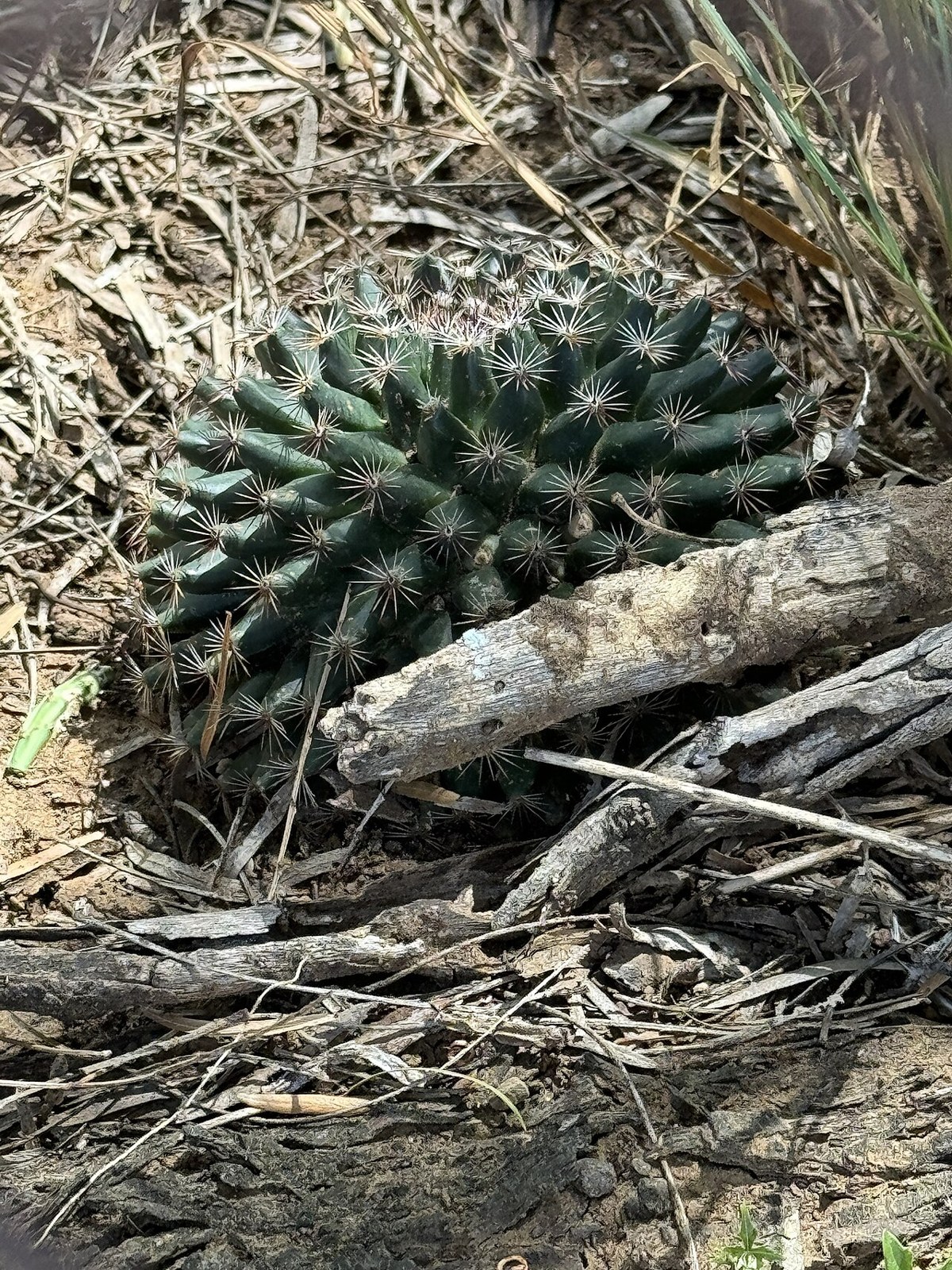
The stem is typically 2–4 inches tall and 2–5 inches in diameter, blue-green to gray-green, and covered in conical to cylindrical tubercles about ¼ to ½ inch long, arranged in tight spiraling rows without ribs — the defining character of the genus Mammillaria. The tubercles lack the milky sap found in some related species, and the crown of the plant is often somewhat woolly with fine hairs where new growth and flowers emerge.
Spines
Each tubercle bears an areole with 15–30 slender white to gray radial spines spreading outward in a dense, interlocking pattern, plus 1–3 stouter central spines that are often darker, sometimes reddish-brown to black-tipped. The dense radial spine coverage gives the whole plant a pale, almost frosted appearance from a distance.
Flowers
Flowers appear in a neat ring around the crown of the plant in spring, each about ¾ to 1¼ inches across, with narrow petals ranging from creamy white to pale pink or pale yellow, often with a darker midstripe. A single plant may open a dozen or more flowers simultaneously, each lasting only a few days.
Fruit & Seeds
Pollinated flowers develop into small, club-shaped, bright red to orange-red fruits that mature later in the season and persist on the plant for weeks, nestled among the tubercles near the crown — a useful identification feature when flowers are absent, and a draw for desert wildlife.
Quick Facts
| Scientific Name | Mammillaria heyderi |
| Family | Cactaceae (Cactus) |
| Plant Type | Low, Solitary Globose Cactus |
| Mature Height | 2–4 in |
| Mature Spread | 2–5 in |
| Growth Rate | Slow |
| Sun Exposure | Full Sun |
| Water Needs | Low |
| Soil Type | Rocky, gravelly or sandy desert soil; sharply drained |
| Soil pH | 7.0–8.3 (neutral to alkaline) |
| Bloom Time | March – May |
| Flower Color | Creamy white to pale pink or pale yellow |
| Fall Color | None (evergreen stem) |
| Fruit | Club-shaped bright red fruit, ripening after flowering |
| Deer Resistant | Yes |
| USDA Hardiness Zones | 8–10 |
Native Range
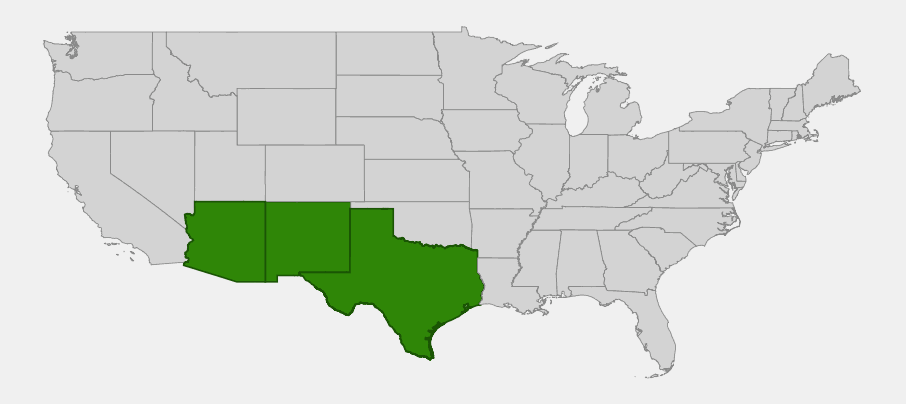
Little Nipple Cactus ranges across the warm deserts and desert grasslands of the American Southwest, native to southern Arizona, southern and central New Mexico, and much of central, south, and west Texas. It is most common at low to middle elevations across the Sonoran and Chihuahuan Desert regions, extending well south into Mexico.
Throughout this range it grows on open, well-drained flats, bajadas, and rocky slopes in creosote bush and mesquite desert scrub, as well as in desert grassland and oak-grassland transition zones at somewhat higher elevations. It is typically found growing as a scattered, solitary plant rather than in dense colonies, often nestled beneath or near nurse shrubs and grasses that offer it some protection from intense sun and foot traffic.
The species is not considered rare across its broad range, though like other small, slow-growing cacti it can be locally impacted by development, trampling, and illegal collection, and should always be purchased from nursery-propagated stock.
📋 Regional plant lists featuring Little Nipple Cactus: South and West Texas · Arizona & New Mexico
Growing & Care Guide
Little Nipple Cactus asks for little beyond sun and sharp drainage, making it a forgiving, low-maintenance addition to a desert or xeriscape garden.
Light
Plant in full sun. In the wild it often grows in the dappled shade of a nurse shrub when young, but mature plants perform and flower best with direct sun for most of the day.
Soil & Water
Good drainage is essential — rocky, gravelly, or sandy desert soils mimic its native habitat far better than rich garden loam. Water sparingly; established plants in their native Southwestern range typically need no supplemental irrigation beyond natural rainfall, and overwatering, especially in winter, is the most common cause of rot. A gritty, mineral-based cactus soil mix works well in containers.
Planting Tips
Set out nursery-grown plants in spring, keeping the crown at or just above soil level rather than burying it, which helps prevent crown rot. Space plants at least 8–12 inches apart to allow for air circulation and eventual spread of offsets. A top-dressing of gravel mulch around the base both looks appropriate and helps keep moisture away from the stem.
Pruning & Maintenance
No pruning is required. Remove spent flowers or old fruit only if desired for tidiness; otherwise the plant is essentially maintenance-free in well-drained soil. Watch for mealybugs or scale in overly humid or crowded container plantings, though outdoor plants in appropriate desert conditions are rarely troubled by pests.
Propagation
Propagate from seed collected from ripe red fruit, cleaned and sown in a sandy, well-drained mix in spring, or from offsets removed from multi-headed clumps, allowed to callus for several days before rooting in a barely moist, gritty medium.
Landscape Uses
- Rock gardens and gravel beds, where its low profile suits foreground plantings
- Container and trough gardens for patios and courtyards
- Desert-floor restoration plantings alongside creosote and mesquite
- Pollinator and wildlife gardens, for both flowers and fruit
- Xeriscape ground-level accents beneath taller desert shrubs
Wildlife & Ecological Value
Though small and easily overlooked, Little Nipple Cactus contributes meaningfully to the desert food web across its range.
For Pollinators
The ring of spring flowers attracts native bees, which are the primary pollinators, visiting for both pollen and nectar during the plant’s brief bloom window each year.
For Birds & Mammals
The bright red fruit is eaten by various desert birds, rodents, and other small mammals, which help disperse the tiny seeds across the landscape. The dense spine coverage affords the cactus itself good protection from heavier browsers such as deer and javelina, which largely avoid it.
Ecosystem Role
As a small but widespread component of desert scrub and desert grassland communities, Little Nipple Cactus adds to the overall plant diversity of these ecosystems and occupies a ground-level niche between larger shrubs and low-growing annuals, contributing to soil stabilization on open desert flats.
Cultural & Historical Uses
Little Nipple Cactus has limited documented historical use compared with larger, more conspicuous cacti of the Southwest such as saguaro or prickly pear, owing in part to its small size and modest fruit yield. Various small Mammillaria species across the region were nonetheless known to Indigenous peoples of the Southwest and northern Mexico, whose detailed knowledge of desert flora extended to even minor or inconspicuous plants.
In more recent decades, the broader genus Mammillaria has become a favorite among cactus and succulent collectors worldwide for its compact form, tidy tubercle patterns, and reliable flowering, and Little Nipple Cactus in particular has gained a following among native-plant gardeners in Arizona, New Mexico, and Texas as an easy, low-care addition to desert landscaping.
The species name honors German botanist Gustav Heyder, reflecting its documentation during the broader 19th-century era of botanical exploration and cataloging across the American Southwest and northern Mexico.
Frequently Asked Questions
Why is my Little Nipple Cactus not flowering?
Flowering depends on adequate light and plant maturity; young plants or those grown in too much shade may take a few years to bloom, and established plants typically flower for only a short window each spring.
How can I tell Little Nipple Cactus from other small round cacti?
Look for the spiraling pattern of distinct, nipple-like tubercles without ribs, combined with a ring of flowers forming around the crown rather than at the stem’s growing tip — both characteristic of the genus Mammillaria.
Can Little Nipple Cactus survive cold winters?
It tolerates the mild winters typical of its native low-desert and desert-grassland range (roughly USDA zones 8–10), but it is not reliably cold-hardy in regions with hard, prolonged freezes, and container specimens in colder climates should be protected or brought indoors.
Is the fruit of Little Nipple Cactus edible?
The small red fruits are eaten by desert wildlife, but they are not a significant human food source, and the plant is grown for ornamental and wildlife value rather than for any culinary use.
Does Little Nipple Cactus need fertilizer?
No regular fertilizing is necessary. It thrives in low-fertility desert soils, and a dilute cactus fertilizer applied lightly in spring is optional rather than required.

Looking for a nursery that carries Little Nipple Cactus?
Browse our native plant nursery directory: Arizona · New Mexico · Texas