Fragrant Mimosa (Mimosa borealis)
Mimosa borealis, commonly called Fragrant Mimosa or Pink Mimosa, is a small, thorny, deciduous shrub native to the limestone hills, canyons, and caliche flats of central and western Texas and New Mexico. A member of the pea family (Fabaceae), it belongs to the same genus as the better-known Powderpuff Mimosas of the tropics, but this is a tough, drought-hardened plant built for the Edwards Plateau, the Trans-Pecos, and the Rolling Plains rather than a humid garden border. Gardeners who know it tend to love it for one reason above all: in spring, a mature plant can be covered almost entirely in fuzzy, bright-pink flower balls that perfume the air for yards around, drawing in bees and butterflies by the dozen.
In the wild, Fragrant Mimosa rarely grows taller than four feet, forming a rounded, twiggy thicket armed with small recurved prickles along the stems. The bipinnately compound leaves are finely textured, almost fern-like, and fold up at night or when touched — a trait it shares with its more famous relative, the sensitive plant. After the pink flower puffs fade, flat, bristly seed pods form, persisting into winter and providing a minor but reliable food source for ground-feeding birds and small mammals that forage through brushy caliche draws.
Because it tolerates thin, rocky, alkaline soil and needs essentially no supplemental water once established, Fragrant Mimosa has become a popular low-maintenance choice for xeriscaping in South and West Texas and the high desert of New Mexico. It is not reliably cold-hardy much beyond its native range and should not be confused with the introduced, highly invasive Mimosa tree (Albizia julibrissin, sometimes called “silk tree”), which is unrelated apart from the similar-looking flowers and is not native anywhere in North America.
Identification
Fragrant Mimosa is a low, rounded, multi-stemmed shrub, usually 2 to 4 feet tall and about as wide, though some old plants on favorable sites reach 5 feet. Its silhouette is dense and twiggy, giving it a tumbleweed-like mass even in winter when it is leafless.
Bark & Stems
Young stems are slender, zigzagging slightly between nodes, and covered in short, hooked or straight prickles rather than true thorns. Older stems develop a thin, gray-brown bark. The prickly stems make the shrub useful as a small-scale barrier planting but mean it should be sited away from walkways.
Leaves
Leaves are bipinnately compound, 1 to 2 inches long, with 2 to 4 pairs of pinnae each bearing numerous tiny, narrow leaflets that give the foliage a soft, feathery appearance similar to a fern or an acacia. The leaflets are sensitive to touch and to darkness, folding closed at night and reopening with daylight — a response called nyctinasty.
Flowers
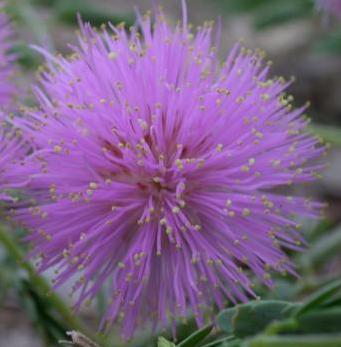
The flowers are the plant’s signature feature: dense, rounded, 1-inch puffball clusters of tiny pink to rose-colored flowers, each with a spray of long, showy stamens that give the whole head its fuzzy, pom-pom look. Clusters emerge from the leaf axils in profusion during a strong spring bloom (typically March through May), with lighter, sporadic rebloom after summer rains. The flowers carry a sweet, noticeable fragrance that gives the plant its common name and that draws in native bees, honeybees, and butterflies.
Fruit & Seeds
After flowering, Fragrant Mimosa produces flat, narrow, bristly-margined seed pods roughly 1 to 2 inches long. The pods turn tan to brown as they mature and split open to release small, hard seeds. Pods often persist on the bare winter stems, adding minor textural interest and a bit of food for wildlife during the leanest months.
Quick Facts
| Scientific Name | Mimosa borealis |
| Family | Fabaceae (Pea/Legume) |
| Plant Type | Deciduous Shrub |
| Mature Height | 2–4 ft (to 5 ft) |
| Mature Spread | 3–5 ft |
| Growth Rate | Slow to moderate |
| Sun Exposure | Full Sun |
| Water Needs | Low |
| Soil Type | Rocky, caliche, limestone; well-drained |
| Soil pH | 7.0–8.5 (neutral to alkaline) |
| Bloom Time | March – May, sporadic after rain |
| Flower Color | Pink to rose |
| Fall Color | None notable (yellow-green fade) |
| Fruit | Flat, bristly tan seed pods |
| Deer Resistant | Yes (prickly stems discourage browsing) |
| USDA Hardiness Zones | 7–9 |
Native Range
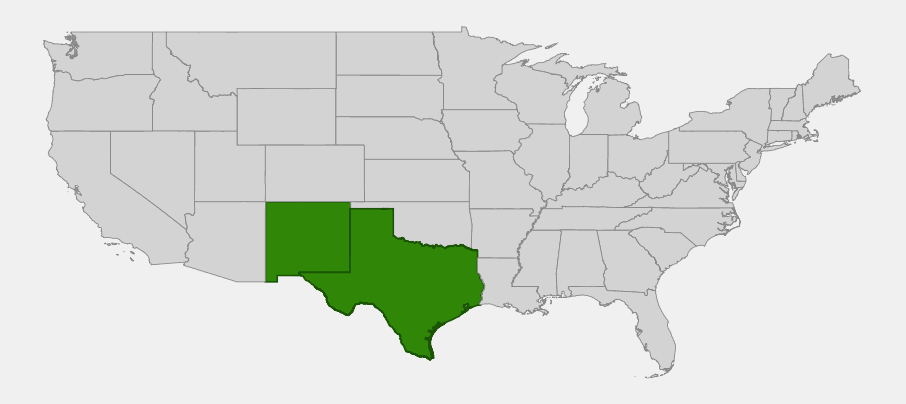
Fragrant Mimosa is native to the limestone and caliche country of central, western, and southern Texas, extending west into southern and eastern New Mexico. Its range runs from the Edwards Plateau and Rolling Plains westward through the Trans-Pecos, reaching into the Pecos River drainage of New Mexico, and it continues south into the Mexican states of Coahuila, Nuevo León, and Chihuahua. Within this range it is a common, sometimes locally abundant shrub of dry hillsides.
It favors rocky, calcareous soils: limestone outcrops, caliche banks, dry arroyo margins, and thin soils over bedrock where few other shrubs can compete. It is typically found in open brushland, juniper-oak woodland edges, and mesquite grassland, often growing alongside agarita, ceniza, and various species of prickly pear. Elevations range from near sea level in South Texas up to roughly 5,500 feet in the higher country of the Trans-Pecos and New Mexico.
Fragrant Mimosa does not occur naturally outside this Texas–New Mexico–northern Mexico core, and gardeners outside this dry limestone belt should not expect it to naturalize the way it does at home; it is reliably hardy and self-sustaining only where summers are hot, winters are mild, and soils drain quickly.
📋 Regional plant lists featuring Fragrant Mimosa: South and West Texas, Arizona & New Mexico
Growing & Care Guide
Light
Give Fragrant Mimosa full sun. It flowers most heavily with at least six to eight hours of direct light a day and tends to grow leggy and bloom sparsely in shade.
Soil & Water
This shrub is built for lean, rocky, alkaline soil and poor drainage is its real enemy, not drought. Plant it in caliche, decomposed limestone, or any fast-draining native soil; avoid heavy clay or regularly irrigated beds, where root rot becomes a real risk. Once established — usually after one growing season of supplemental watering — it needs no irrigation beyond natural rainfall in most of its native range.
Planting Tips
Plant in fall or early spring so roots can establish before summer heat. Choose a site with excellent drainage, such as a slope or raised bed, and avoid amending the planting hole with rich organic matter, which can hold too much moisture against the roots. Space plants 4 to 5 feet apart if used as a low hedge or screen.
Pruning & Maintenance
Little pruning is needed. A light shaping after the main spring bloom keeps the shrub tidy and can encourage a second flush of flowers later in the season. Because of the small recurved prickles, wear gloves and long sleeves when working around it.
Propagation
Propagate from seed after scarifying the hard seed coat (a light sanding or brief hot-water soak improves germination) or from semi-hardwood cuttings taken in summer. Seedlings establish slowly at first, typical of plants adapted to harsh, rocky sites.
Landscape Uses
- Low-water xeriscape and rock garden accent
- Informal, prickly low hedge or barrier planting
- Pollinator garden centerpiece for spring bloom
- Erosion control on dry limestone slopes
- Caliche and poor-soil restoration plantings
Additional habit and foliage photography for this species was not available from verified, appropriately licensed Wikimedia Commons sources at the time of writing; only one confirmed in-range photograph (the flower cluster above) could be used.
Wildlife & Ecological Value
For Pollinators
The fragrant, nectar-rich flower puffs are a magnet for native bees, honeybees, and butterflies during the spring bloom, making Fragrant Mimosa a valuable, low-water nectar source in dry limestone country where floral resources can be scarce for much of the year.
Birds
Seed pods that persist into winter provide a modest food source for ground-feeding birds such as quail and sparrows foraging through brushy draws, and the dense, thorny branching offers cover for small nesting birds.
Mammals
The thorny stems discourage browsing by deer and livestock, making this one of the more reliably deer-resistant native shrubs for Texas Hill Country and Trans-Pecos gardens. Small mammals use the dense thicket form for shelter.
Ecosystem Role
As a nitrogen-fixing legume, Fragrant Mimosa contributes to soil fertility on the thin, rocky sites where it grows, slowly improving conditions for other native plants establishing nearby. Its dense branching also helps stabilize loose caliche and limestone scree on slopes.
Cultural & Historical Uses
Fragrant Mimosa has long been noted by Texas and New Mexico ranchers and naturalists simply as one of the sweetest-smelling native shrubs of the spring brushlands, with early 20th-century botanical surveys of western Texas remarking on its fragrance carrying across open rangeland during peak bloom.
Its tough, thorny growth made it a natural, unplanted component of living fence lines on ranch land long before formal hedging was common, since cattle and horses generally avoided pushing through its prickly stems.
Today its cultural footprint is mostly horticultural: as native-plant gardening has grown in popularity across Texas and the Southwest, Fragrant Mimosa has become a minor but appreciated specimen in xeriscape and pollinator gardens, valued by home gardeners for asking almost nothing of the gardener while giving back a spectacular, fragrant spring show.
Frequently Asked Questions
Is Fragrant Mimosa the same as the invasive Mimosa tree?
No. Fragrant Mimosa (Mimosa borealis) is a small native shrub of Texas and New Mexico. The invasive “Mimosa tree” or silk tree (Albizia julibrissin) is a much larger, fast-growing introduced tree from Asia that is not native anywhere in North America. The two are unrelated beyond both belonging to the broader pea family and having similarly fluffy flowers.
How much water does Fragrant Mimosa need once established?
Very little. In its native range it relies entirely on rainfall once established, typically after its first year in the ground, and actually performs poorly with regular irrigation or heavy, slow-draining soils.
Will Fragrant Mimosa grow outside Texas and New Mexico?
It is hardy roughly in USDA zones 7–9 and can be grown in similarly hot, dry, alkaline-soil climates elsewhere in the Southwest, but it is not native beyond its Texas–New Mexico–northern Mexico range and should not be expected to naturalize outside it.
Is Fragrant Mimosa safe to plant near pets and children?
The small recurved prickles on the stems are the main hazard — they can scratch — rather than toxicity. Site it away from high-traffic areas such as walkways and play spaces.
Does Fragrant Mimosa attract bees?
Yes, heavily. The fragrant pink flower puffs are one of the more reliable native bee and butterfly draws in Texas Hill Country and Trans-Pecos gardens during the spring bloom period.
Looking for a nursery that carries native plants for your area? Check these regional native plant nursery directories: Texas, New Mexico.