Fiveneedle Pricklyleaf (Thymophylla pentachaeta)
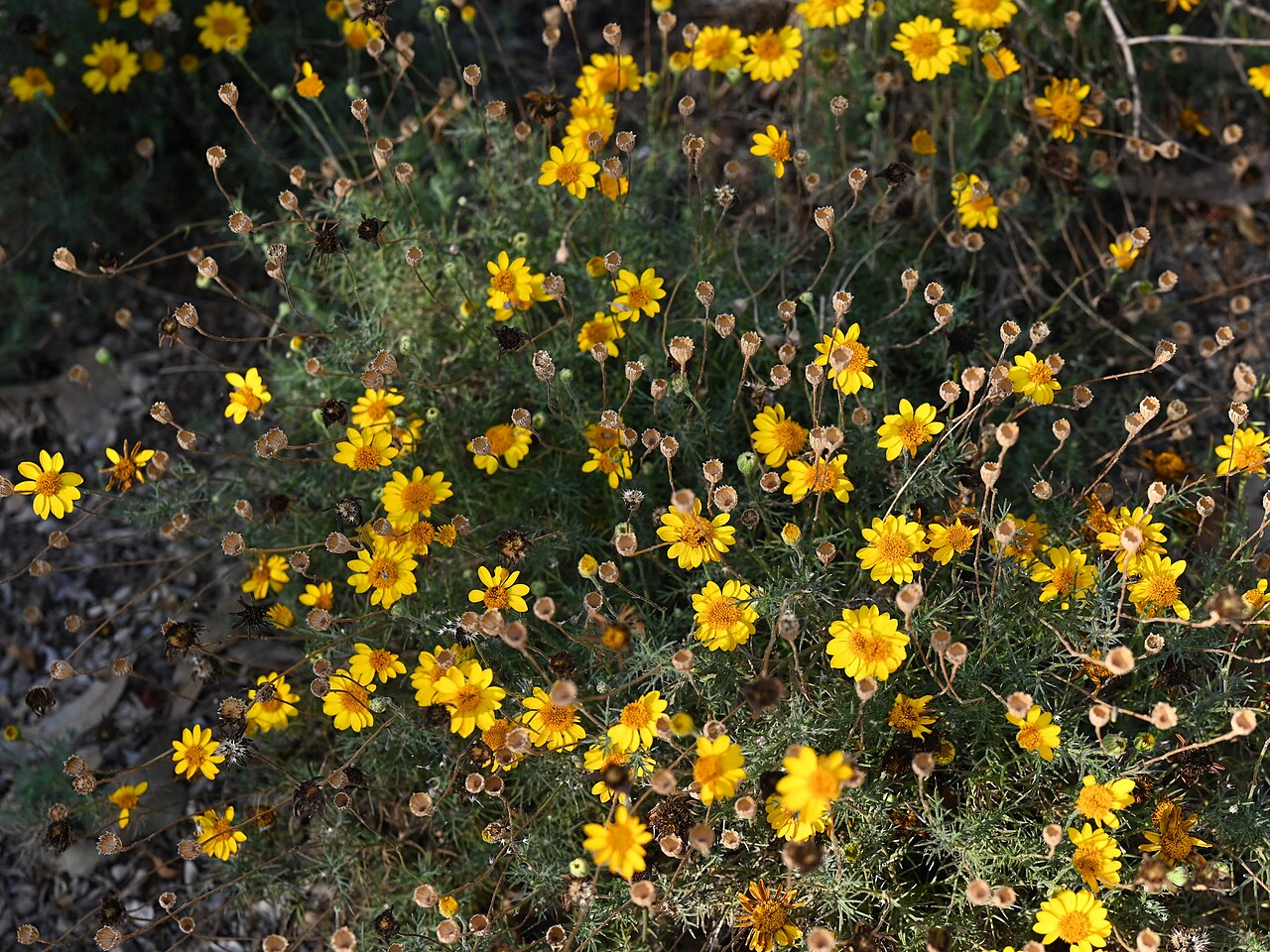
Thymophylla pentachaeta, commonly called fiveneedle pricklyleaf (also sold as golden dyssodia or parralena), is a small, mat-forming perennial wildflower native to the dry limestone hills and gravelly flats of central, western and southern Texas. It rarely tops 10 inches, but a single plant can carry dozens of inch-wide, bright yellow, daisy-like flower heads at once, held just above a tight mound of thread-fine, aromatic foliage. The species name pentachaeta (“five bristles”) and the common name “fiveneedle” both refer to the five narrow, needle-tipped lobes on each tiny leaf.
Fiveneedle pricklyleaf is a true limestone and caliche specialist. In the wild it grows on thin, rocky, often chalky soils across the Edwards Plateau, the Trans-Pecos and the South Texas Plains, frequently rooted in cracks of exposed limestone or in gravelly desert grassland alongside creosote bush, blackbrush acacia and sideoats grama. Crush a leaf and you will notice a sharp, resinous scent, a trait shared with many of its Asteraceae relatives and one reason deer and rabbits mostly leave it alone.
For Texas gardeners working with thin, alkaline soil and full sun, fiveneedle pricklyleaf is a dependable, low-maintenance ground-hugging wildflower. It flowers for months at a stretch, asks for almost no supplemental water once rooted in, and is perfectly scaled for rock gardens, gravel beds and the front edge of a xeriscape border, where its longblooming yellow flowers draw a steady stream of small native bees and other pollinators.
Identification
Fiveneedle pricklyleaf grows as a low, rounded, loosely branched subshrub or herbaceous perennial, usually 4 to 10 inches tall and somewhat wider, with numerous slender stems rising from a woody base.
Foliage
The leaves are small, opposite, and finely divided into narrow, almost needle-like segments, giving the whole plant a soft, thread-textured, gray-green look. Each leaf is dotted with tiny translucent oil glands, visible on close inspection, that give the foliage its characteristic resinous fragrance when bruised. The fine texture and pale color help the plant reflect heat and shed excess rain quickly, both useful traits on an exposed limestone slope.
Flowers
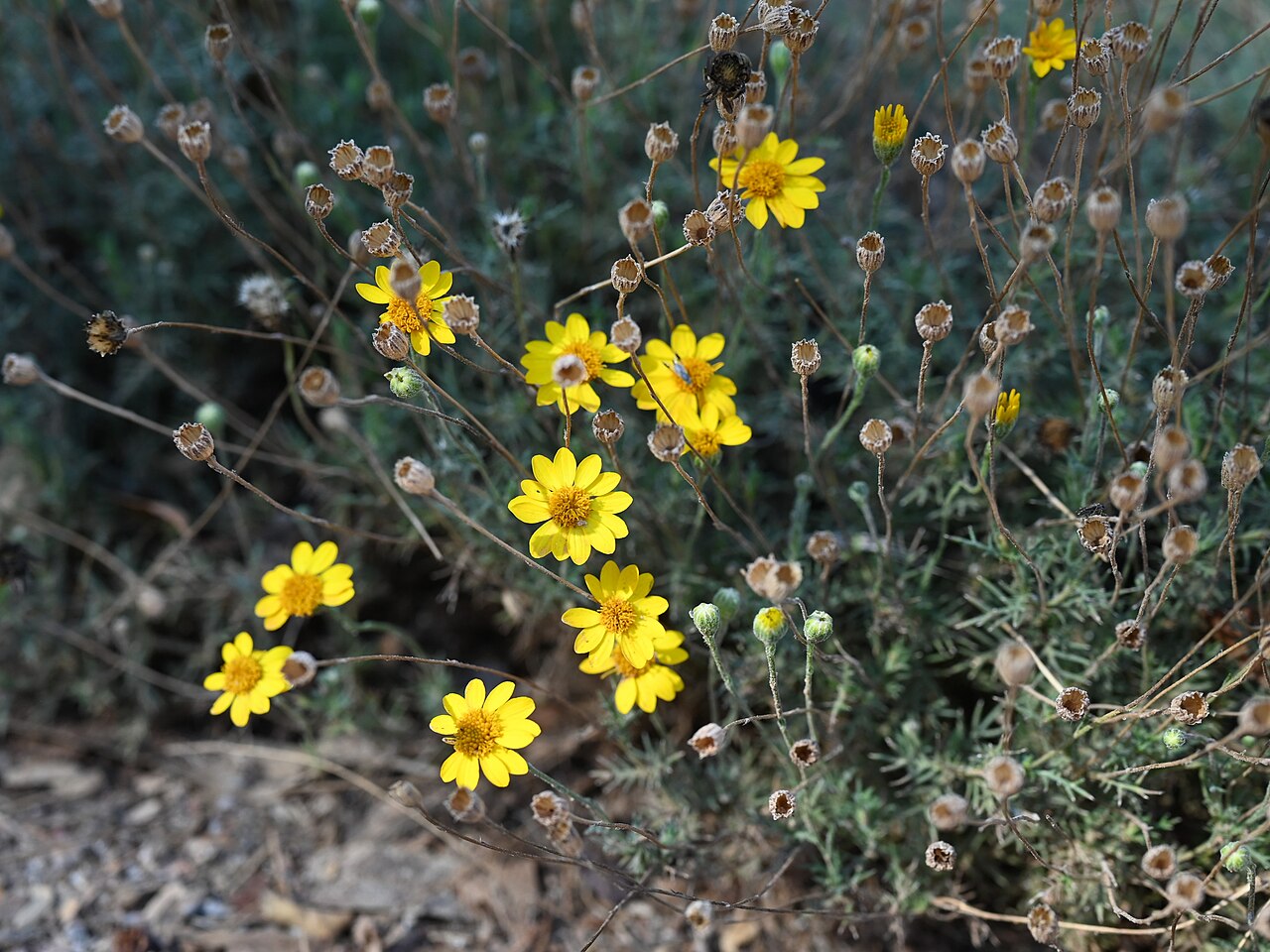
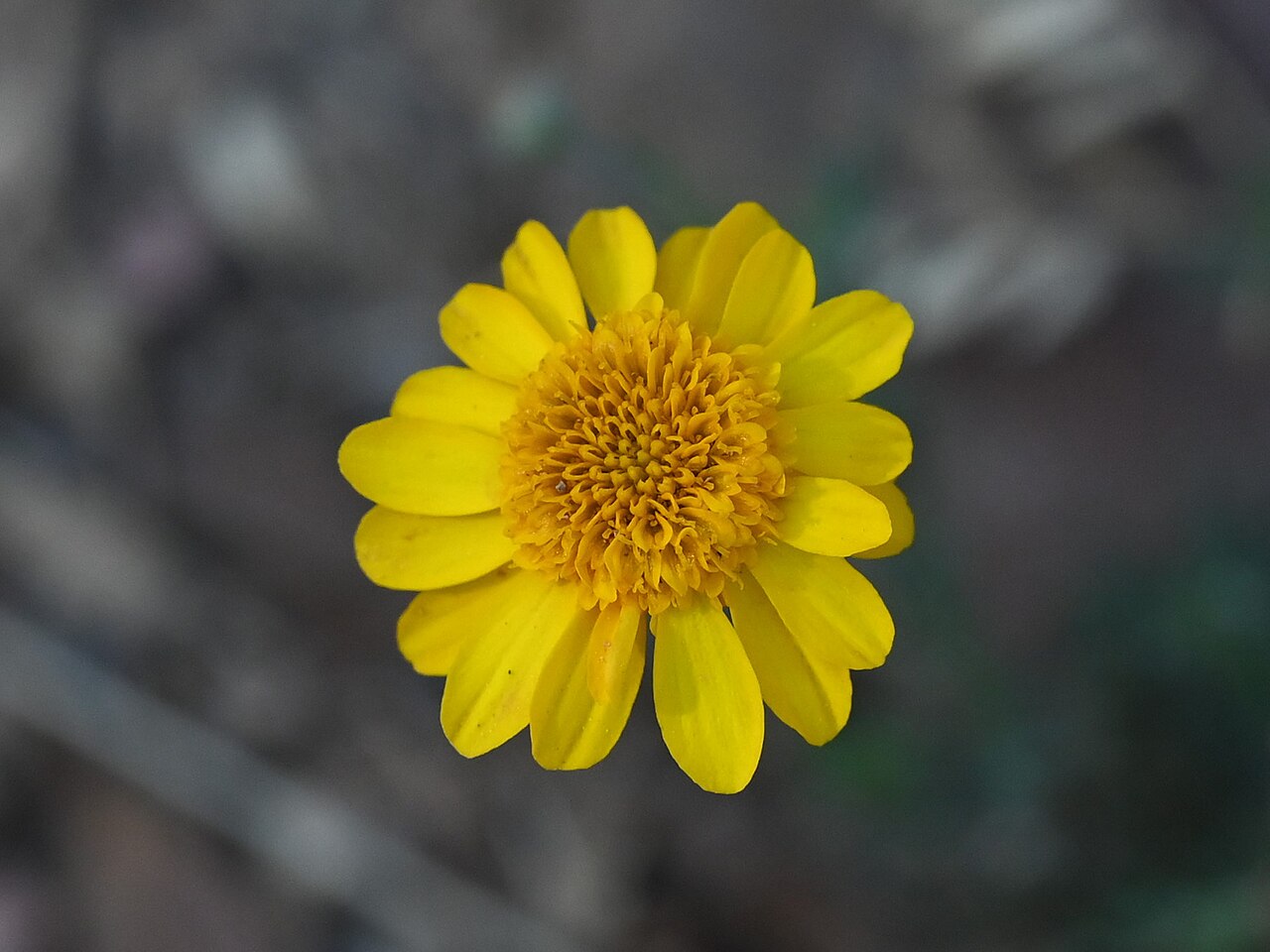
Flower heads are solitary at the tips of slender, leafless stalks that lift them just above the foliage mound. Each head is about half an inch to an inch across, with 8 to 13 bright yellow ray florets surrounding a dense cluster of yellow to orange disk florets. Blooming runs from spring through fall, April into October in a normal year, and can continue nearly year-round in southern Texas when rainfall allows. A well-grown plant in bloom can be almost completely covered in flowers.
Fruit & Seeds
After flowering, each disk floret matures into a narrow, dark, ribbed achene tipped with a small tuft of pale, hair-like bristles (the pappus) that catches the wind for dispersal, a typical sunflower-family seed built for travel on dry prairie and desert air.
Quick Facts
| Scientific Name | Thymophylla pentachaeta |
| Family | Asteraceae (Aster/Sunflower) |
| Plant Type | Low perennial wildflower/subshrub |
| Mature Height | 4–10 in |
| Mature Spread | 8–14 in |
| Growth Rate | Moderate |
| Sun Exposure | Full Sun |
| Water Needs | Low; drought tolerant once established |
| Soil Type | Thin, rocky, caliche or limestone-based; well-drained |
| Soil pH | Neutral to alkaline (about 7.0–8.5) |
| Bloom Time | April – October (nearly year-round in South Texas) |
| Flower Color | Bright yellow |
| Fall Color | None notable |
| Fruit | Small ribbed achenes with a bristly pappus |
| Deer Resistant | Yes (aromatic, resinous foliage) |
| USDA Hardiness Zones | 7–10 |
Native Range
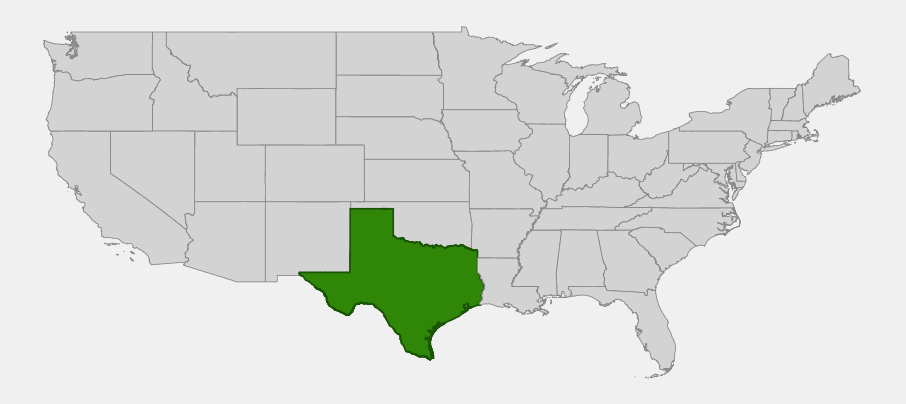
Fiveneedle pricklyleaf is native to Texas, where it occurs across the central, western and southern parts of the state: the Edwards Plateau, the Trans-Pecos, the South Texas Plains and the western Rio Grande Plain, with scattered populations reaching the southern Panhandle and into the Permian Basin. The species’ broader range continues south into northern and central Mexico and, disjunctly, into parts of South America, but within the United States it is confirmed essentially only in Texas.
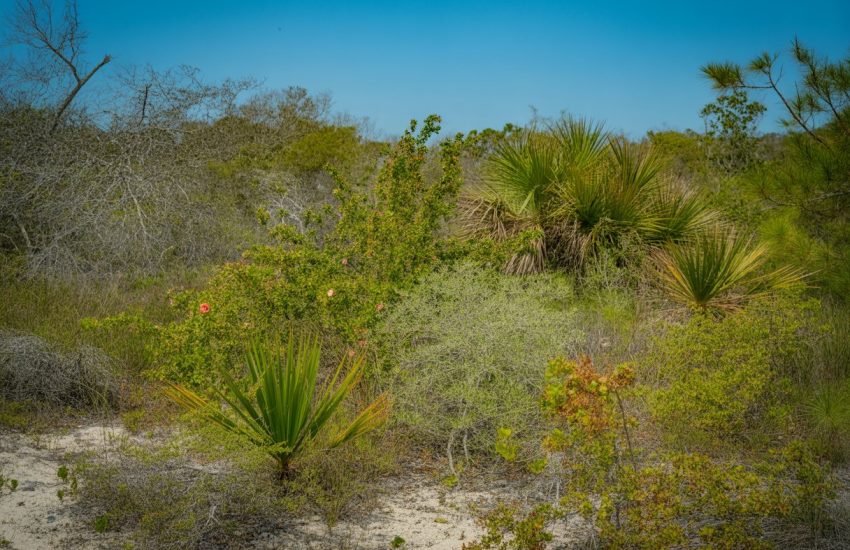
Typical habitat is open, sun-baked ground on thin limestone or caliche soils: rocky hillsides, dry desert grassland, chaparral and the gravelly margins of arroyos, usually below about 5,000 feet. It is a plant of exposed, low-competition sites rather than deep soil or shade, often rooting directly in cracks of exposed bedrock where little else can get a foothold. Common neighbors include creosote bush, blackbrush acacia, ocotillo, lechuguilla, prickly pear and short grasses such as sideoats grama and curly mesquite.
Because it depends on well-drained, calcium-rich soil and intense sun, fiveneedle pricklyleaf does not compete well in rich garden beds or heavy clay. It is not listed as rare or of conservation concern, and populations across its Texas range remain secure, but it is a distinctly regional plant that gardeners outside its limestone-country range will need to accommodate with gritty, alkaline soil mixes.
📋 Regional plant lists featuring Fiveneedle Pricklyleaf: South and West Texas
Growing & Care Guide
Fiveneedle pricklyleaf is an easy, long-blooming choice for Texas gardeners who have hot, sunny, poorly irrigated ground, exactly the conditions that defeat most garden-center annuals.
Light
Give it full sun. This species evolved on open, unshaded limestone slopes, and it needs strong, direct light all day to form a tight, floriferous mound; in shade it stretches, flowers sparsely and tends to rot.
Soil & Water
Plant it in thin, gritty, fast-draining soil on the alkaline side; a native-limestone or caliche-based garden bed, a crushed-rock berm or a lean gravel mix all work well. Rich, organic, or heavy clay soil that stays damp is the fastest way to lose this plant. Water regularly the first few weeks after planting, then taper off; established plants are genuinely drought tolerant and often do best on rainfall alone once their roots are down into the rock.
Planting Tips
Set out small nursery plants or direct-sow seed in spring or fall, when temperatures are moderate. Avoid mulching right up against the crown, since trapped moisture at the base is the main cause of rot; a top-dressing of pea gravel or crushed limestone instead of bark mulch keeps the center dry and also echoes the plant’s native rocky setting. Space plants 8 to 12 inches apart to let the mounds fill in without crowding.
Pruning & Maintenance
Little pruning is needed. Shear off spent flower stalks or lightly trim leggy growth in late winter to encourage a denser, more compact mound for the coming season. The plant has no serious pest or disease problems in well-drained soil and does not need fertilizer; feeding in rich soil tends to produce floppy, short-lived growth instead of the tight mounds it makes on lean ground.
Propagation
Fiveneedle pricklyleaf is usually grown from seed, sown in fall or spring directly on the soil surface and barely covered, since the fine achenes need light to germinate reliably. Established clumps can also be divided in early spring, though division is less commonly used than seed because the woody base resents heavy disturbance.
Landscape Uses
- Rock gardens and crevice plantings in limestone or gravel
- Xeriscape and waterwise borders needing a long-blooming, low edging plant
- Pollinator gardens alongside other Texas natives such as blackfoot daisy
- Caliche slopes and berms where few other wildflowers will root
- Container and trough gardens with fast-draining cactus mix
- Front-of-border mass plantings for season-long yellow color
Wildlife & Ecological Value
Despite its small size, a blooming mound of fiveneedle pricklyleaf is a steady source of nectar and pollen on ground where few other plants flower through the hottest months.
For Pollinators
The open, flat flower heads are easy landing pads for small native bees, syrphid flies and butterflies, which visit through the long spring-to-fall bloom season. On the sparse, rocky ground where this species grows, it is often one of relatively few reliable nectar sources during the driest summer stretches.
For Birds
Small seed-eating songbirds glean the ripe achenes from the low flower heads, and the dense, resinous foliage mound offers ground-level cover for birds moving through open desert grassland and scrub.
For Mammals
The strong-smelling, resin-dotted foliage is generally avoided by deer, rabbits and other browsers, which is part of why the plant persists so well on heavily grazed rangeland; it functions as an unpalatable, low-growing component of the desert grassland plant community rather than a forage species.
Ecosystem Role
As a low, mat-forming perennial rooted directly in rock crevices and thin soil, fiveneedle pricklyleaf helps stabilize caliche slopes and gravelly ground against erosion, and its long bloom period helps support pollinator activity through gaps in the flowering calendar of taller rangeland wildflowers.
Cultural & Historical Uses
Fiveneedle pricklyleaf and its relatives in the genus Thymophylla have long been known in Texas and northern Mexico by the Spanish common name “parralena,” referencing the resinous, aromatic quality of the crushed foliage that is typical of many dogweeds and pricklyleafs. The plant’s strong scent and bitter taste made it unappealing as forage, which ranchers over the generations came to recognize as a sign of well-managed, lightly grazed rangeland where more palatable grasses had not been stripped away.
Unlike some of its showier paintbrush and poppy neighbors, fiveneedle pricklyleaf has not been a significant food, fiber or medicinal plant in the historical record, and it is best understood today as a durable, long-blooming component of Texas limestone-country flora rather than a plant with a deep documented cultural history.
Its modern significance is mainly horticultural: as native and xeriscape gardening have grown across Texas, fiveneedle pricklyleaf has become a popular, low-water choice for rock gardens and caliche landscaping, valued for exactly the toughness and long bloom period that made it unremarkable to earlier generations of ranchers.
Frequently Asked Questions
Is fiveneedle pricklyleaf native to my state?
It is native to Texas, where it grows across the Edwards Plateau, Trans-Pecos and South Texas Plains on limestone and caliche soils. It is not documented as native anywhere else in the United States, though it ranges south into Mexico.
Why isn’t my fiveneedle pricklyleaf blooming as much as in pictures?
This species needs full sun and lean, fast-draining, alkaline soil to bloom heavily. Rich soil, shade, or too much water tends to produce lanky, sparse-flowering plants instead of the tight, flower-covered mounds seen in its native limestone habitat.
Can fiveneedle pricklyleaf grow in clay soil?
Not well. It is adapted to thin, rocky, well-drained ground and tends to rot in heavy clay that holds moisture. Amending with crushed limestone or decomposed granite, or planting in a raised gravel bed, gives much better results.
Is fiveneedle pricklyleaf deer resistant?
Yes. The foliage is aromatic and resin-dotted, and deer and rabbits generally avoid it, which makes it a reliable choice for gardens with heavy browsing pressure.
How long does fiveneedle pricklyleaf bloom?
It flowers from spring through fall, typically April into October, and can bloom nearly year-round in southern Texas when rainfall is adequate, making it one of the longest-blooming low wildflowers for Texas gardens.

Looking for a nursery that carries Fiveneedle Pricklyleaf?
Browse our native plant nursery directory: Texas