Western Ironweed (Vernonia baldwinii)
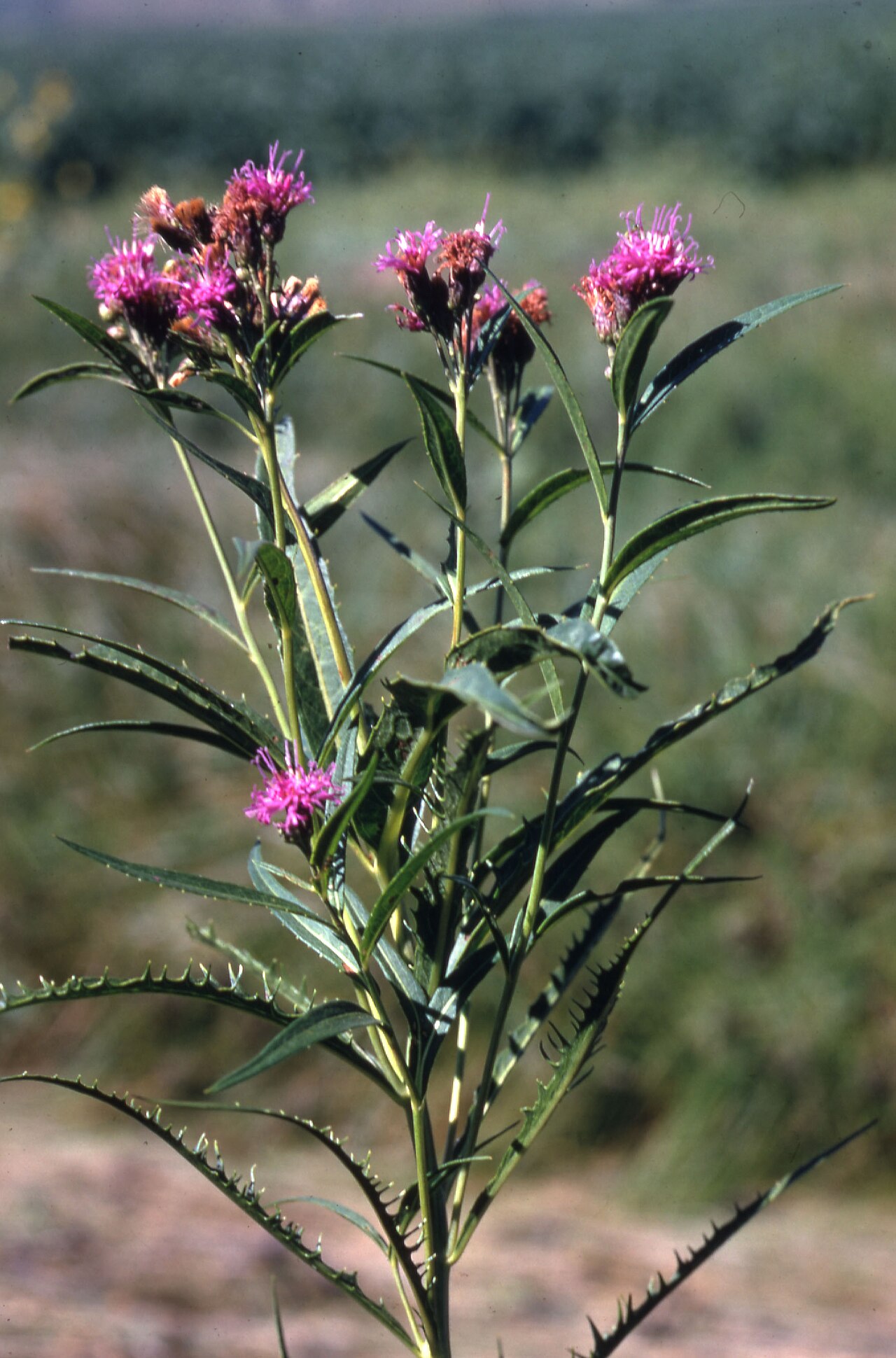
Vernonia baldwinii, commonly called Western Ironweed or Baldwin’s ironweed, is a tough, clump-forming perennial wildflower of the central Great Plains and mid-South. From midsummer into early fall, its flattened clusters of rose-purple to magenta disc flowers rise 2 to 5 feet above the surrounding grass, drawing a steady traffic of butterflies and bees at a time of year when many other prairie flowers have already finished blooming.
The plant gets its common name honestly. The stems are stiff and wiry, the leaves are coarse and sandpapery, and cattle and other grazers mostly leave it alone, which is exactly why it persists — and sometimes spreads — in grazed pastures across Texas, Oklahoma, Kansas and neighboring states. Gardeners who give it a sunny, well-drained spot get a reliable, low-maintenance native that blooms for weeks and asks for almost nothing in return.
Western ironweed is a plant of open ground: native prairie, pastures, roadsides, old fields and the edges of woods. It spreads slowly by short rhizomes as well as by seed, so a single plant can become a modest colony over a few years. That colonizing habit is an asset in a naturalized meadow planting and a minor nuisance in a small, tidy border, so site it with that tendency in mind.
Identification
Western ironweed grows as an upright, leafy perennial forb from 2 to 5 feet tall, usually unbranched below the flower cluster. The whole plant has a slightly gray-green, downy look because the stems and the undersides of the leaves are covered in fine, soft hairs.
Stems
Stems are single or clustered, round, stiff and covered with short, soft pubescence. They stay upright even in fairly exposed, windy prairie sites, which is part of what makes the plant so persistent along roadsides and fence lines.
Leaves
Leaves are alternate, lance-shaped to narrowly elliptic, 3 to 6 inches long, with finely toothed edges and a pointed tip. The upper surface is dark green and rough to the touch; the lower surface is paler and densely hairy, almost felted. This hairiness is a quick way to distinguish western ironweed from the similarly colored New York ironweed (Vernonia noveboracensis), whose leaves are smoother and narrower.
Flowers
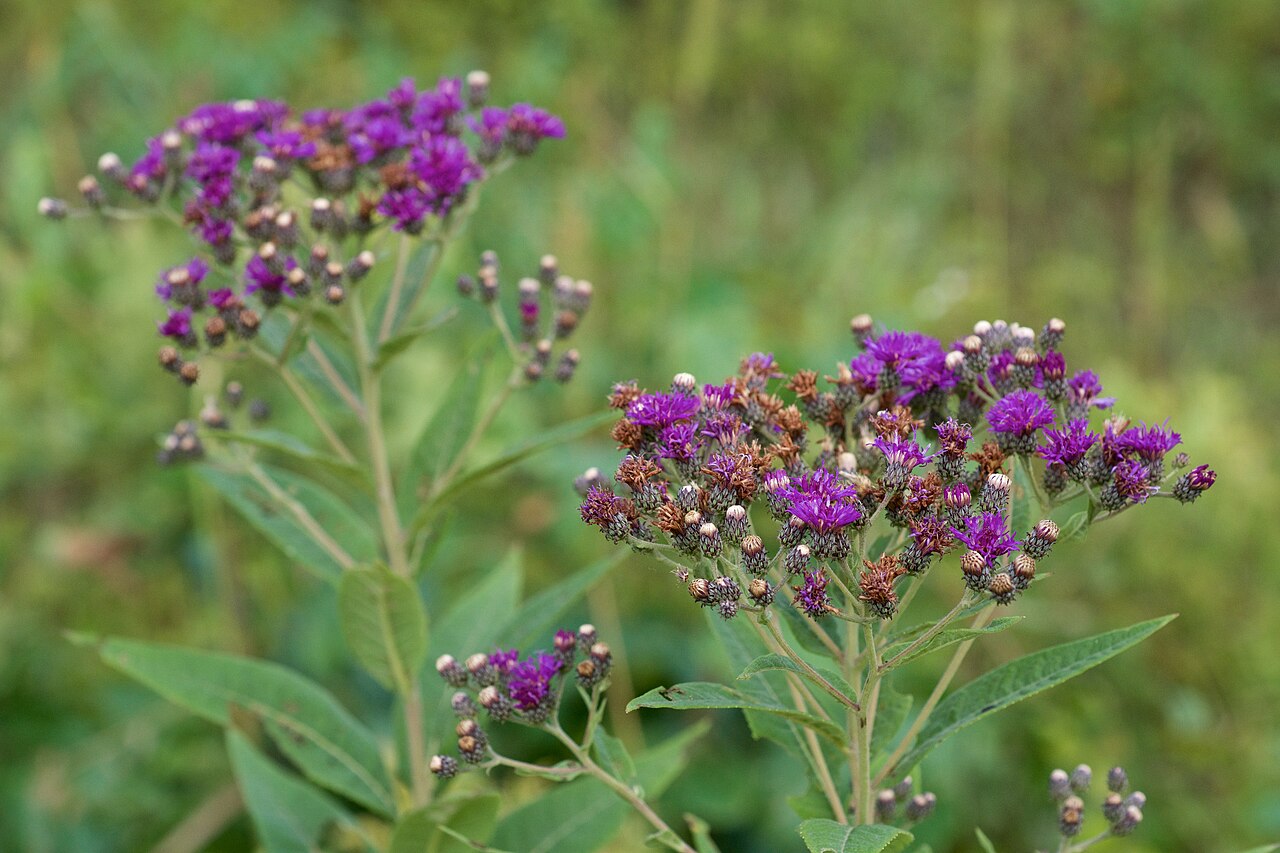
Each flower head is made up entirely of disc florets — there are no ray “petals,” just a dense tuft of thread-like, deep rose-purple to magenta florets packed into a small head about a half inch across. Dozens of these heads are arranged in a broad, rounded to flat-topped cluster (a corymb) at the top of the stem, so from a distance the whole cluster reads as one large, fuzzy purple bloom. Flowering runs from July into September, peaking in August across most of its range.
Fruit & Seeds
After flowering, each tiny floret matures into a small, ribbed, cylindrical seed (an achene) tipped with a tuft of tan to purplish bristles (a pappus), much like a small thistle or aster seed. These bristles catch the wind and carry seed into the surrounding grass, which is one of the two ways the plant spreads.
Quick Facts
| Scientific Name | Vernonia baldwinii |
| Family | Asteraceae (Aster/Sunflower) |
| Plant Type | Herbaceous perennial wildflower |
| Mature Height | 2–5 ft |
| Mature Spread | 1.5–3 ft, slowly colonizing by rhizome |
| Growth Rate | Moderate |
| Sun Exposure | Full Sun to Part Shade |
| Water Needs | Average; drought tolerant once established |
| Soil Type | Clay, loam or rocky prairie soils; adaptable |
| Soil pH | Neutral to slightly alkaline (about 6.5–8.0) |
| Bloom Time | July – September |
| Flower Color | Rose-purple to magenta |
| Fall Color | Foliage fades tan; no notable fall color |
| Fruit | Small bristle-tipped achenes, late summer–fall |
| Deer Resistant | Yes (bitter, coarse foliage) |
| USDA Hardiness Zones | 4–9 |
Native Range
Western ironweed is a plant of the central United States, centered on the southern and central Great Plains. Its core range runs from Nebraska, Kansas and Missouri south through Oklahoma and Texas, with populations extending east into Arkansas, Louisiana, Iowa and Illinois and scattered, less common occurrences reaching into Colorado’s eastern prairies.
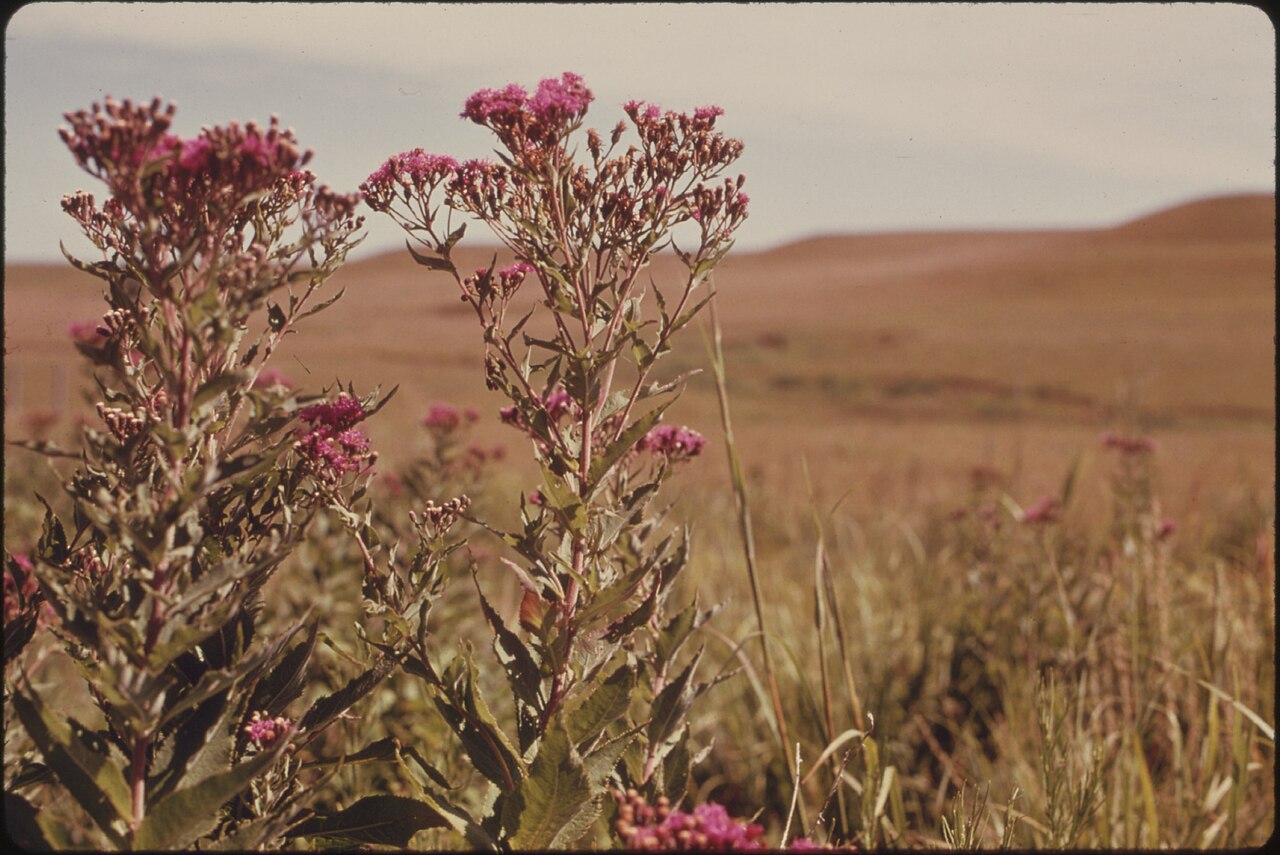
Across this range it favors open, sunny ground with reasonably heavy soil: native prairie remnants, hay meadows, grazed pastures, roadsides, railroad rights-of-way and the edges of post oak and blackjack oak woodlands. It is especially characteristic of tallgrass and mixed-grass prairie on clay or clay-loam soils, where it tolerates both summer drought and periodic heavy rain.
Because livestock avoid eating it, western ironweed often becomes more conspicuous in overgrazed pastures than in ungrazed prairie, which has earned it a reputation as a pasture weed in parts of its range even though it is a true native wildflower and a valuable late-season nectar source. In a garden setting it behaves as a well-mannered, if assertive, prairie perennial.
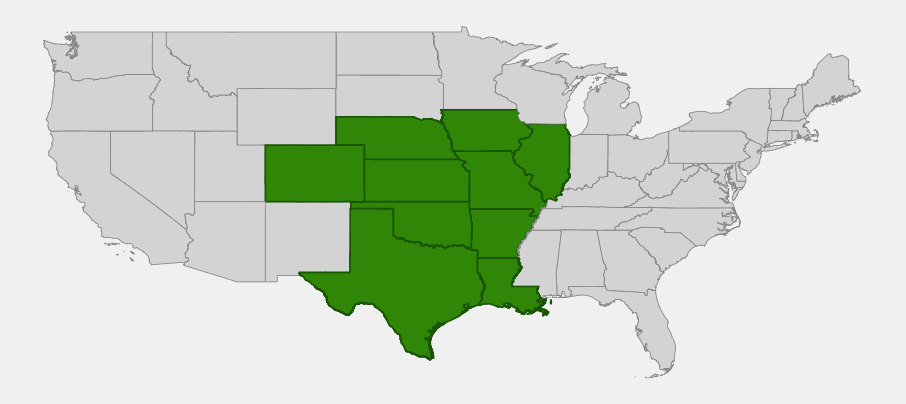
📋 Regional plant lists featuring Western Ironweed: South & West Texas · Arkansas, Louisiana, Eastern Oklahoma & Eastern Texas · Nebraska, Kansas & Eastern Colorado · Illinois, Iowa & Missouri
Growing & Care Guide
Western ironweed is as close to foolproof as a native wildflower gets. Give it sun and reasonable drainage and it will reward you with weeks of magenta bloom and almost no maintenance.
Light
Full sun gives the strongest flowering and the sturdiest, most upright stems. In part shade the plant still blooms but tends to lean toward the light and may need a neighbor to lean on; very shaded sites produce weak, floppy growth and few flowers.
Soil & Water
Western ironweed is not fussy about soil, thriving in clay, loam or rocky prairie ground as long as drainage is adequate. It handles both summer drought and brief wet spells once established, which reflects its prairie origins. Water new plants regularly through their first growing season; after that, rainfall is usually enough except in the driest years.
Planting Tips
Plant container-grown ironweed in spring or fall, spacing plants 18 to 24 inches apart to allow for its slow spread. Because it colonizes gradually by rhizome, give it room in a meadow or native border rather than squeezing it into a tight perennial bed, or plan to divide and share extra plants every few years.
Pruning & Maintenance
No pruning is needed through the season. Cutting plants back by about a third in early-to-mid June (the “Chelsea chop” technique) delays bloom slightly and produces a bushier, shorter plant that needs no staking — useful in a formal border. Leave the dried seed heads standing into winter for birds and winter interest, then cut old stems back in late winter before new growth starts.
Propagation
Western ironweed is easy from seed sown in fall or cold-stratified for 30 days before spring sowing. Established clumps can also be divided in early spring just as new shoots emerge; replant divisions promptly and keep them watered until they root in.
Landscape Uses
- Native meadows and prairie restorations, where its late-summer color extends the bloom season
- Pollinator gardens alongside butterfly milkweed and native grasses
- Back-of-border accent in a sunny mixed perennial bed
- Erosion control on sunny slopes, thanks to its spreading rhizomes
- Cut flowers, where the sturdy stems and long-lasting color hold up well in arrangements
- Wildlife and rain gardens that can tolerate occasional dry spells between rains
Wildlife & Ecological Value
Few native wildflowers pull their weight for pollinators as reliably as western ironweed during the hot, dry stretch of late summer when it blooms.
For Pollinators
The nectar-rich flower heads are a magnet for butterflies, including monarchs staging for fall migration, swallowtails, fritillaries and skippers, as well as bumblebees, native solitary bees and the specialist ironweed root-boring beetle. Its bloom period fills a nectar gap between the spring and early-summer wildflowers and the fall asters and goldenrods.
For Birds
Seed-eating birds, including goldfinches and sparrows, feed on the ripe achenes in fall and winter if the stalks are left standing. The dense clumps also offer cover for ground-feeding birds in open prairie habitat.
For Mammals
Because the foliage is tough, bitter and lightly toxic in quantity, deer, rabbits and livestock largely avoid browsing it, which is exactly why it survives so well in grazed land. Small mammals use the clumps for cover.
Ecosystem Role
In tallgrass and mixed-grass prairie, western ironweed adds structural and bloom diversity among the dominant grasses, and its rhizomes help stabilize soil on slopes and disturbed ground. Its persistence in grazed pastures also makes it a useful rangeland indicator species for ecologists tracking grazing pressure.
Cultural & Historical Uses
Western ironweed was historically used by some Indigenous peoples of the Great Plains, who prepared root infusions used as an astringent and for women’s health complaints, and sometimes chewed the root for toothache relief. These uses are a matter of historical and ethnobotanical record, not a modern medicinal recommendation, and the plant is not used medicinally today.
Ranchers and farmers across the southern Plains have long known the plant mainly as a pasture weed, since its wiry stems and bitter leaves make it one of the few prairie plants that cattle reliably avoid. Where grazing pressure is heavy, this has allowed western ironweed to thicken into dense stands, a pattern still used informally by some graziers as a sign that a pasture is being grazed too hard.
In more recent decades, western ironweed has found a second life in pollinator and prairie-restoration plantings, valued by native-plant gardeners for exactly the trait that irritates ranchers: nothing eats it, so it blooms reliably for weeks without protection.
Frequently Asked Questions
Is western ironweed invasive in my garden?
It spreads slowly by rhizomes and can form a modest colony over several years, but it is not aggressively invasive. In a small bed, give it room or be prepared to divide and share extra plants occasionally.
Why do cattle avoid eating western ironweed?
The foliage is tough, fibrous and bitter, and contains compounds that make it unpalatable and mildly toxic in large amounts. This is exactly why it persists and sometimes increases in overgrazed pastures while more palatable plants are eaten down.
Does western ironweed attract monarch butterflies?
Yes. Its late-summer bloom period coincides with fall monarch migration through the Great Plains, and the nectar-rich flower heads are a reliable stop for migrating monarchs as well as many other butterflies and bees.
How is western ironweed different from New York ironweed?
Western ironweed has leaves that are densely hairy and pale underneath, a shorter overall height (2–5 ft versus up to 7 ft), and a range centered on the Great Plains and mid-South, while New York ironweed (Vernonia noveboracensis) has smoother, narrower leaves and is native farther east.
Does western ironweed need deadheading?
No. Spent flower heads can be left standing for winter seed-eating birds and garden interest, then cut back in late winter before new growth emerges.

Looking for a nursery that carries Western Ironweed?
Browse our native plant nursery directory: Texas · Oklahoma & Nebraska · Kansas, Iowa & Illinois · Missouri & Louisiana · Arkansas · Colorado