California Snowdrop Bush (Styrax redivivus)
Styrax redivivus, known as California snowdrop bush or storax, is a deciduous shrub found only in California, where it grows scattered through foothill woodlands and canyons from the Sacramento Valley south through the Coast Ranges and into Southern California. For most of the year it is an unassuming, rounded shrub of open woodland, easy to overlook among oaks and chaparral. Then, in April and May, it transforms: drooping clusters of white, bell-like flowers with a sweet fragrance and golden-orange centers hang beneath every branch, among the most elegant blooms of any California native shrub.
California snowdrop bush was long treated as a variety of the Mediterranean Styrax officinalis, and some older references and nursery tags still use that name, but botanists now recognize it as its own species, endemic to California and found nowhere else in the wild. It typically grows 4 to 10 feet tall with a loose, open, multi-stemmed form, soft gray-green leaves, and smooth gray bark.
For gardeners building a foothill or woodland native garden, California snowdrop bush offers something few other drought-tolerant natives can: a true spring flowering event, with fragrant, pendulous white blossoms that draw bees and hummingbirds, followed by handsome round seed capsules that persist into fall. It asks for very little once established, making it a rewarding choice for a dry shade or part-sun planting beneath oaks.
Identification
California snowdrop bush is a deciduous, multi-stemmed shrub, usually 4 to 10 feet tall and somewhat wider than tall, with an open, airy branching pattern rather than a dense, twiggy habit. It often grows as an understory plant beneath oaks and other foothill trees, reaching toward available light.
Bark & Stems
Young stems are slender and grayish, often with a fine, soft hairiness when new, becoming smooth gray with age. Older stems develop a pale, smooth bark that stands out against the shrub’s dark foliage, especially in winter after leaf drop.
Leaves
The leaves are simple, alternate, oval to rounded, 1 to 3 inches long, with smooth or very finely toothed margins. They are soft gray-green above and noticeably paler and finely hairy beneath, giving the whole shrub a muted, silvery-green cast that fits comfortably into a dry woodland palette. Leaves drop in fall without significant color change.
Flowers
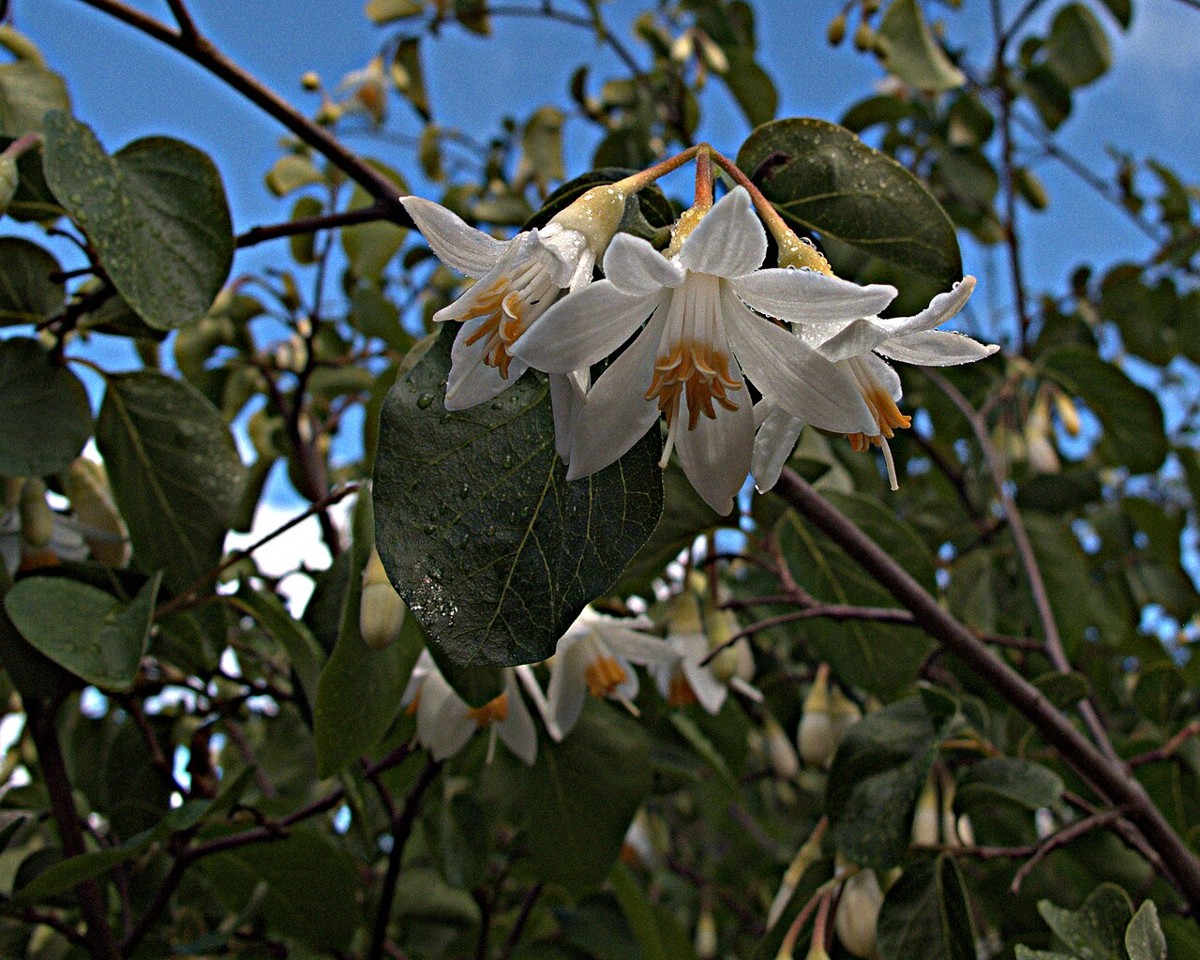
The flowers are the shrub’s signature feature: pendulous, bell-shaped, pure white blossoms about an inch across, borne in small drooping clusters of two to six along the branches in April and May. Five narrow, slightly recurved petals surround a cluster of showy golden-orange stamens, and the blooms carry a light, pleasant fragrance. Flowers hang beneath the branches so that from below, a blooming shrub looks hung with small white bells — the source of both its common name and the genus name Styrax, from the Greek word for the fragrant resin storax.
Fruit & Seeds
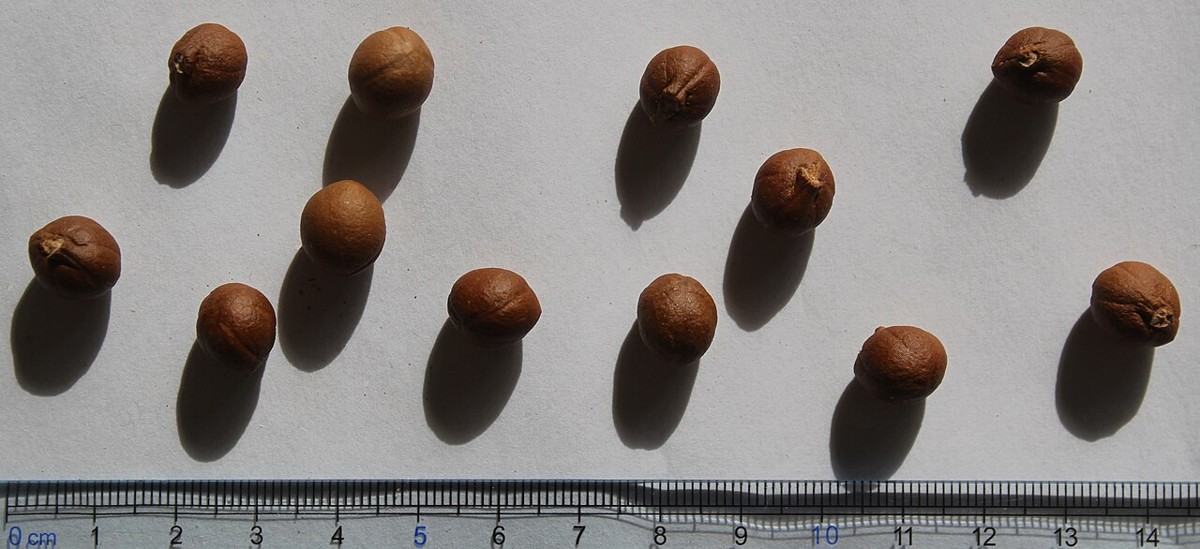
Flowers are followed by round, dry, gray-green capsules about half an inch across, which split open in fall to release one or two hard, round, brown seeds. The persistent capsules often remain on the bare branches into winter, adding interest after the leaves have dropped.
Quick Facts
| Scientific Name | Styrax redivivus (syn. Styrax officinalis var. californicus) |
| Family | Styracaceae (Storax) |
| Plant Type | Deciduous shrub |
| Mature Height | 4–10 ft |
| Mature Spread | 4–10 ft |
| Growth Rate | Slow to moderate |
| Sun Exposure | Part Shade to Full Sun near the coast |
| Water Needs | Low once established; appreciates some summer shade |
| Soil Type | Well-drained; rocky, gravelly or loamy foothill soils |
| Soil pH | 6.0–7.5 |
| Bloom Time | April – May |
| Flower Color | White with golden-orange stamens |
| Fall Color | None notable (leaves drop green to tan) |
| Fruit | Round gray-green capsules, splitting in fall |
| Deer Resistant | Mostly (seeds reported mildly toxic, discouraging browsing) |
| USDA Hardiness Zones | 7–10 |
Native Range
California snowdrop bush is endemic to California, found nowhere else in the wild. Its range runs from the northern Sacramento Valley and inner North Coast Ranges south through the central Coast Ranges and Sierra Nevada foothills, and on into the mountains and foothills of Southern California, generally below about 5,000 feet elevation. It is uncommon to locally frequent rather than abundant, occurring in scattered populations across this broad range.
Typical habitat is open foothill woodland and chaparral margins — the understory and edges of blue oak and foothill pine woodland, mixed evergreen forest, and brushy canyon slopes — usually on well-drained soils derived from a range of parent rock. It often grows with other classic foothill natives, benefiting from at least partial shade or the cooler microclimates found in canyons and north-facing slopes.
California snowdrop bush is not listed as rare or endangered, but because it grows in scattered, relatively small populations rather than large stands, local populations can be vulnerable to habitat conversion. Gardeners should always buy nursery-propagated plants rather than collecting from the wild.
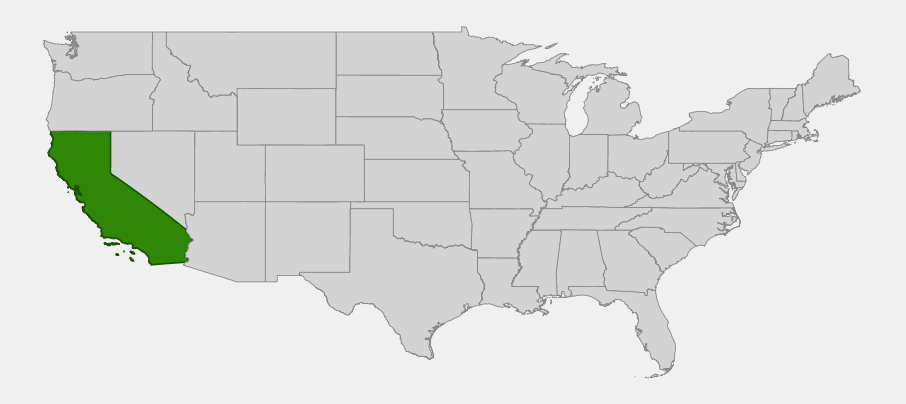
📋 Regional plant lists featuring California Snowdrop Bush: California & Nevada
Growing & Care Guide
California snowdrop bush is a low-maintenance native once it is settled into the right spot, rewarding patient gardeners with one of the showiest flower displays among California’s woodland shrubs.
Light
In the wild, this shrub typically grows beneath an open tree canopy, and it performs best in the garden with part shade or filtered sun, especially in hot inland areas. Near the cooler coast it tolerates more direct sun. Deep, full shade reduces flowering.
Soil & Water
California snowdrop bush wants well-drained soil and, like many California foothill natives, is sensitive to summer irrigation once established — it is adapted to a dry summer dormancy and can suffer root rot if watered heavily during the warm months. Water regularly the first one to two years to establish roots, then taper off to occasional deep watering, relying mainly on winter and spring rainfall.
Planting Tips
Plant in fall so winter rains help establish the root system before the first dry summer. Choose a site that mimics its woodland habitat: light or dappled shade, such as the north or east side of an oak or beneath high, open tree canopy. Good drainage is essential; avoid low spots where water collects. Space plants 6 to 10 feet apart if planting in groups.
Pruning & Maintenance
California snowdrop bush needs very little pruning. Remove dead or crossing branches after flowering in late spring, since flower buds form on the previous year’s wood and winter pruning removes the coming season’s blooms. The open, naturally graceful form needs little shaping. Established plants are generally untroubled by pests or disease.
Propagation
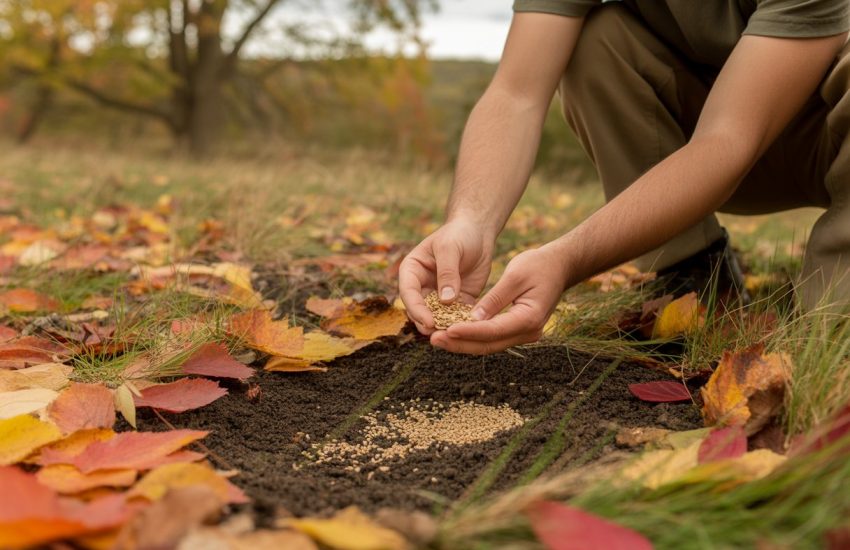
Propagation is primarily from seed, which benefits from cold stratification over winter before sowing in spring; germination can be slow and uneven, as with many Styrax species. Semi-hardwood cuttings taken in summer can also root with the aid of rooting hormone, though success rates are variable.
Landscape Uses
- Woodland understory beneath oaks or other high-canopy native trees
- Specimen shrub for its spring flower display and fragrance
- Dry shade gardens where few flowering shrubs perform well
- Foothill and canyon restoration plantings
- Pollinator gardens, paired with other spring-blooming natives
- Naturalistic borders with toyon, California buckeye and other foothill shrubs
Wildlife & Ecological Value
Though a modest presence most of the year, California snowdrop bush becomes an important resource for pollinators during its brief but spectacular spring bloom.
For Pollinators
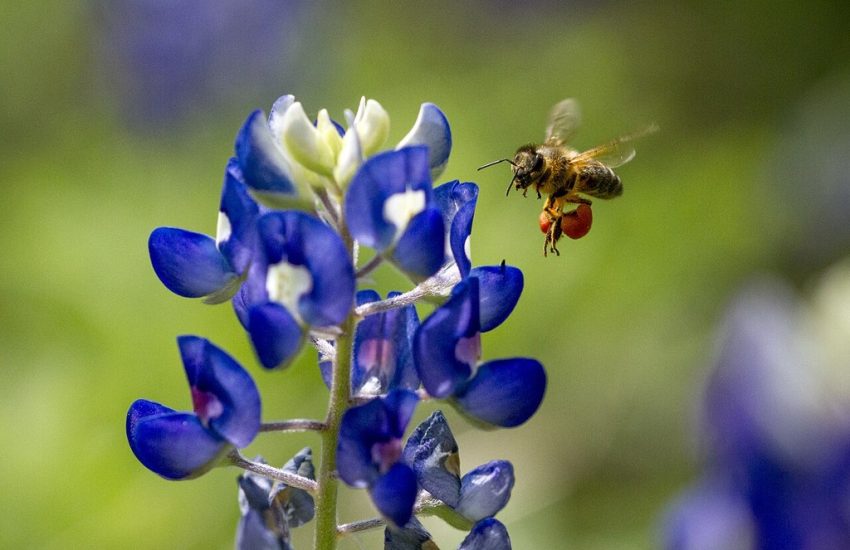
The fragrant, nectar-rich flowers attract native bees and honeybees during the spring bloom window, and hummingbirds are also drawn to the pendulous blossoms. Because flowering coincides with a period when many other woodland plants have not yet bloomed, it provides a valuable nectar source in the foothill plant community.
For Birds
The open branching structure offers modest cover for small songbirds moving through foothill woodland, and the shrub’s presence as understory habitat adds structural diversity beneath oak canopies.
For Mammals
The seeds contain compounds that make them generally unpalatable to most mammals, which likely helps protect the shrub from heavy browsing pressure in areas with deer. This makes California snowdrop bush a relatively reliable choice in gardens where deer are a persistent problem.
Ecosystem Role
As part of the understory layer in blue oak and foothill pine woodlands, California snowdrop bush contributes to the structural diversity of these increasingly fragmented plant communities, and its spring flowering helps support pollinator populations that in turn benefit the wider woodland ecosystem.
Cultural & Historical Uses
The genus name Styrax refers to storax, a fragrant resin historically obtained from related Old World species and used in incense and perfumery; California snowdrop bush, however, was not a significant commercial source of this resin. Indigenous peoples of California knew the shrub in the landscapes where it grew, though it was generally less utilized than more abundant foothill shrubs, as its seeds are reported to contain saponins that make them unsuitable to eat without extensive processing.
Historically, botanists classified this California shrub as a variety of the Mediterranean Styrax officinalis, reflecting the two plants’ close resemblance, before modern taxonomic work recognized the California plant as a distinct, endemic species under the name Styrax redivivus. The species has long been admired and occasionally cultivated by California native plant enthusiasts for its fragrant, bell-like spring flowers, though it remains far less common in gardens than it deserves given its modest care requirements.
Frequently Asked Questions
Is California snowdrop bush the same as Styrax officinalis?
No, though it was long classified that way. The true Styrax officinalis is native to the Mediterranean region; the California plant is now recognized as the distinct species Styrax redivivus, found only in California. Some older nursery tags and references still use the old name.
Can you eat the seeds of California snowdrop bush?
No. The seeds contain saponins and are not considered edible without extensive, specialized processing historically used for other purposes. Treat them as toxic and keep them away from children and pets.
Why isn’t my California snowdrop bush flowering?
Flowering can be reduced by deep shade, by pruning off the previous year’s wood in winter (flower buds form on old growth), or by young plants still establishing a root system. Be patient — established plants bloom reliably each spring.
Does California snowdrop bush need summer water?
Established plants generally do not want regular summer irrigation, since they are adapted to California’s dry summers and can develop root rot if kept consistently moist. Water deeply but infrequently once the shrub is established.
Is California snowdrop bush deer resistant?
It is considered relatively deer resistant compared to many native shrubs, likely because of compounds in the foliage and seeds, though no plant is completely deer-proof under heavy browsing pressure.

Looking for a nursery that carries California Snowdrop Bush?
Browse our native plant nursery directory: California