Cheesebush (Ambrosia salsola)
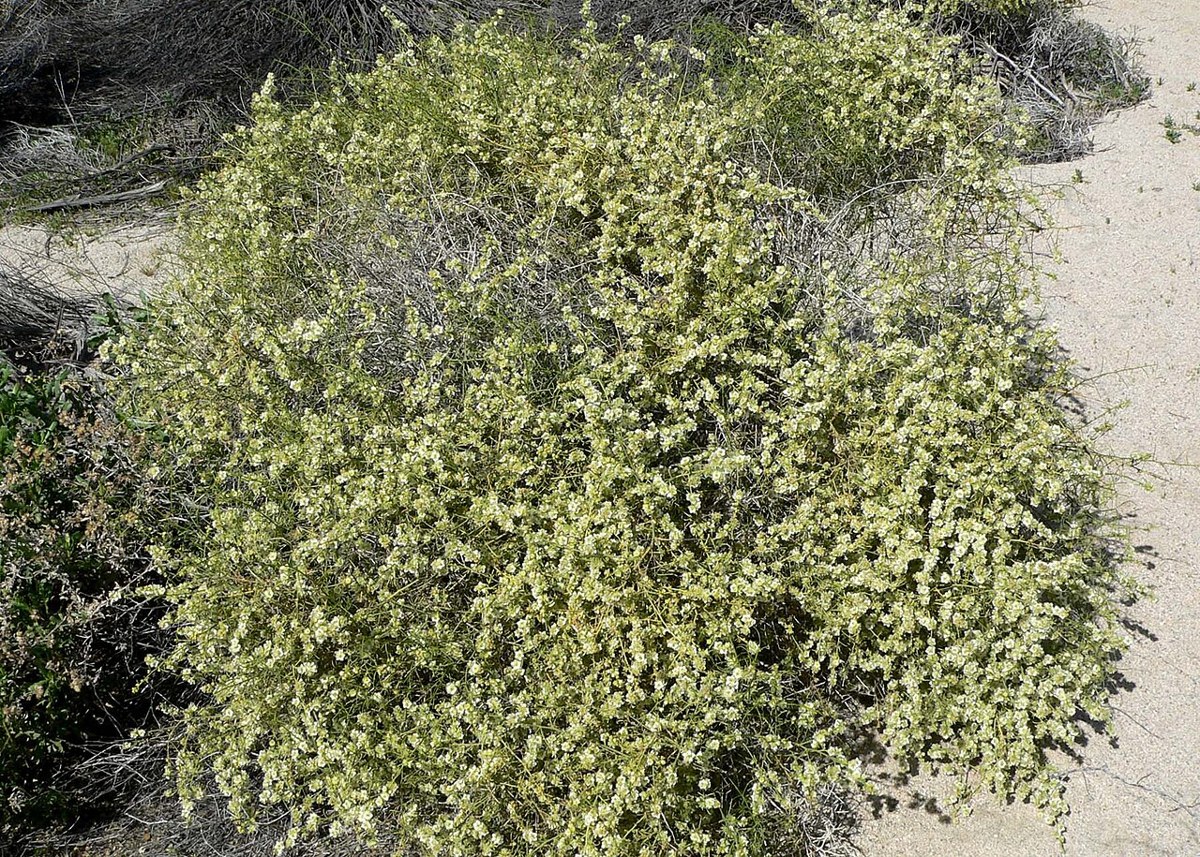
Ambrosia salsola (long known as Hymenoclea salsola), commonly called cheesebush or burrobush, is one of the most widespread and recognizable shrubs of the Mojave, Sonoran, and Great Basin deserts. Its common name comes from the distinctive, somewhat cheesy odor the foliage releases when crushed or disturbed, a smell many desert hikers come to associate instantly with washes and disturbed desert ground.
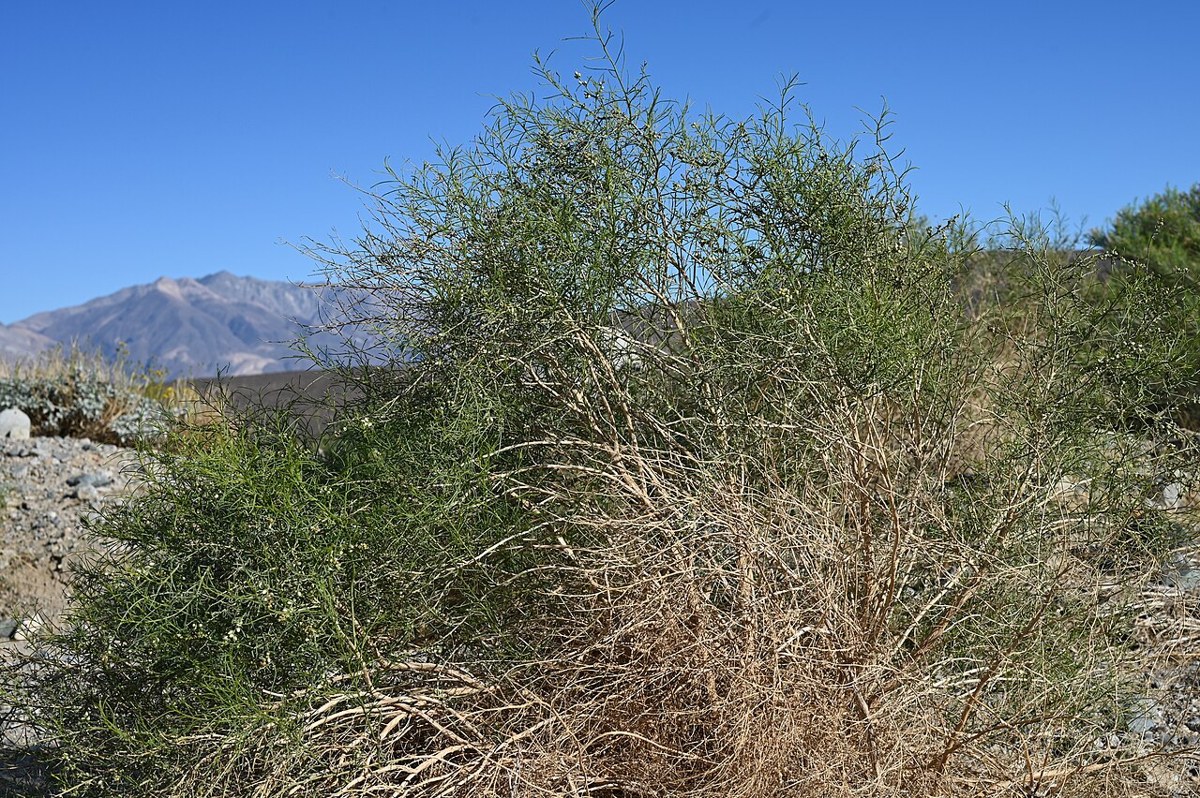
Cheesebush is a fast-growing, rounded to broom-shaped shrub, typically 2 to 6 feet tall, with pale green to gray-green stems and thread-like, almost leafless foliage that gives the whole plant an airy, wispy texture. In spring, and often again after summer rains, it becomes covered in small, pale, papery flower heads that give the shrub a soft, almost frosted appearance from a distance. It is one of the first shrubs to colonize disturbed desert soil, including washes scoured by flash floods, roadcuts, and other bare ground.
For desert gardeners, cheesebush offers fast, reliable cover and a soft, fine-textured look that contrasts nicely with the region’s many spiny and succulent plants. It thrives on neglect, making it a practical choice for difficult, disturbed, or erosion-prone sites where little else will establish quickly.
Identification
Cheesebush is a rounded, broom-like, fast-growing shrub, usually 2 to 6 feet tall and similarly wide, with numerous slender branches arising from the base. The overall look is airy and pale, almost silvery-green, quite different from the darker, denser shrubs often found growing nearby.
Stems
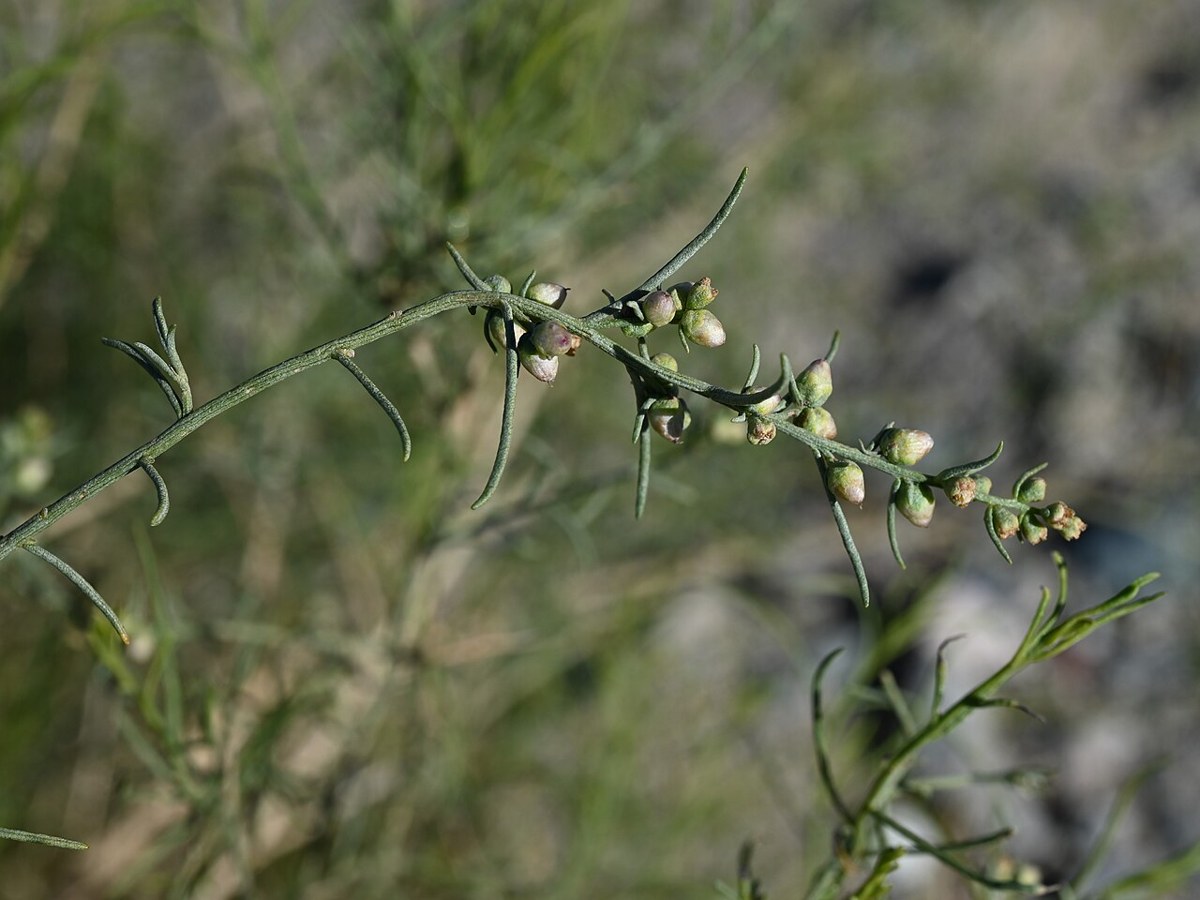
Stems are slender, pale green to straw-colored, and much-branched, becoming woody and gray-brown with age at the base while the newer growth stays flexible and green. The plant often looks almost leafless because the foliage is so finely divided.
Leaves
The leaves are small and deeply divided into thread-like segments, giving the plant a fine, feathery texture more reminiscent of a grass or fine herb than a typical woody shrub. This narrow, dissected leaf form helps the plant minimize water loss in intense desert heat, and it is one of the quickest ways to distinguish cheesebush from the broader-leaved shrubs around it.
Flowers & Fruit
Cheesebush is wind-pollinated, like its relatives in the ragweed group, and its small flower heads lack showy petals. Male and female flowers are separate but found on the same plant, with male flower heads clustered toward branch tips and female flowers below them. After flowering, which can occur in spring and again after summer or fall rains, the plant produces small, dry fruits surrounded by a ring of flattened, papery, wing-like bracts that help disperse the seed on desert winds — these pale, papery seed clusters are often what gives a blooming colony of cheesebush its soft, frosted look from a distance.
Quick Facts
| Scientific Name | Ambrosia salsola (syn. Hymenoclea salsola) |
| Family | Asteraceae (Sunflower) |
| Plant Type | Deciduous to semi-evergreen subshrub |
| Mature Height | 2–6 ft |
| Mature Spread | 3–6 ft |
| Growth Rate | Fast |
| Sun Exposure | Full Sun |
| Water Needs | Very low; drought tolerant once established |
| Soil Type | Sandy or gravelly desert soil, including disturbed ground |
| Soil pH | Neutral to alkaline (about 7.0–8.5) |
| Bloom Time | Spring, and again after summer/fall rain |
| Flower Color | Pale green to cream (wind-pollinated, not showy) |
| Fall Color | None notable |
| Fruit | Small dry fruit with papery wing-like bracts |
| Deer Resistant | Yes |
| USDA Hardiness Zones | 8–11 |
Native Range
Cheesebush is native across the desert Southwest, with county-level records confirming it through California, Nevada, Arizona, and the warm desert corner of southwestern Utah. It is one of the most widely distributed shrubs of the Mojave and Sonoran deserts and also extends into the warmer basins of the Great Basin desert.
It grows especially abundantly in desert washes, along roadsides, and on other disturbed or periodically scoured ground, from near sea level in the low desert up to around 5,000 feet in desert mountain foothills. Its ability to rapidly colonize bare, disturbed soil — including ground scoured clean by flash floods — makes it one of the first shrubs to appear after such disturbance, an ecological role sometimes called “pioneer” vegetation.
Cheesebush is extremely common and not remotely rare anywhere in its range; if anything, it is considered one of the signature, ever-present shrubs of the warm North American deserts.
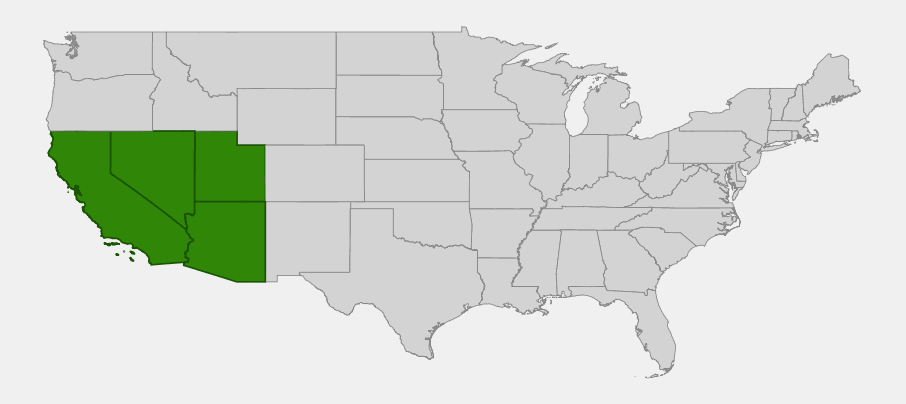
📋 Regional plant lists featuring Cheesebush: California & Nevada · Arizona & New Mexico · Utah & Western Colorado
Growing & Care Guide
Cheesebush is about as low-maintenance as native shrubs get, which is exactly why it is such a useful plant for tough, disturbed, or erosion-prone desert sites.
Light
Give cheesebush full sun. It is a true desert sun-lover and will become thin and leggy in any significant shade. Full, unobstructed sun produces the densest, most attractive form.
Soil & Water
Cheesebush thrives in sandy or gravelly desert soils, including poor, disturbed, or recently graded ground where many other plants struggle to establish. It needs sharp drainage and will not tolerate standing water. Once established, which can happen quickly given its fast growth rate, it needs no supplemental irrigation in most of its native range and relies entirely on natural rainfall, including the pulse of growth that follows summer monsoon storms in its southern range.
Planting Tips
Plant in fall or early spring. Because cheesebush grows quickly and self-sows readily on bare ground within its native range, it is often more practical to let it volunteer naturally on disturbed sites than to plant nursery stock, though container plants establish easily too. Give it room to spread, since its fast growth and sprawling form can quickly fill a 4- to 6-foot space.
Pruning & Maintenance
Cheesebush can be cut back hard in late winter to refresh its form, since it resprouts vigorously from the base. Without occasional pruning it can become leggy or straggly, especially in older plantings, so periodic rejuvenation pruning every few years keeps it looking its best. It needs no fertilizer and has essentially no pest or disease problems in the dry, sunny conditions it prefers.
Landscape Uses
- Erosion control on disturbed desert soil, washes, and roadcuts
- Fast, low-water screening where quick cover is needed
- Naturalistic desert gardens, for its soft, fine texture against bolder desert plants
- Revegetation and restoration projects on graded or disturbed desert land
- Wildlife habitat plantings, given its value as cover and a seed source
- Low-maintenance roadside and commercial landscaping in desert climates
Wildlife & Ecological Value
As one of the most common and widespread shrubs of the warm deserts, cheesebush provides cover, forage, and ecological stability across millions of acres of desert habitat.
For Pollinators
Because cheesebush is wind-pollinated rather than insect-pollinated, its flowers do not depend on bees or other pollinators, and it offers limited nectar value. It can still provide some incidental pollen for generalist insects, but its wildlife value lies more in cover and seed than in pollination support.
For Birds
The dense, twiggy growth provides nesting and roosting cover for small desert birds such as verdins and various sparrows, which favor its tangled branches for concealment in otherwise open desert terrain. Seed-eating birds also forage on the small fruits.
For Mammals
Cheesebush is browsed by desert mammals, including jackrabbits and desert bighorn sheep in some areas, and its dense growth form provides shade and cover for small mammals and reptiles seeking relief from the intense desert sun. Its common name “burrobush” reflects its historical use as forage for burros and other grazing animals in the desert Southwest.
Ecosystem Role
Cheesebush plays an outsized role as a pioneer species, rapidly colonizing bare ground left by flash floods, road construction, or other disturbance. By quickly stabilizing loose desert soil with its root system, it helps reduce erosion and creates the first sheltered microhabitat that allows other, slower-growing desert plants to establish nearby — a quiet but important contribution to desert ecosystem recovery after disturbance.
Cultural & Historical Uses
Cheesebush’s strong-smelling foliage and fine, thread-like leaves made it less useful for food or fiber than many other desert plants, but its wood found a practical niche: Indigenous peoples of the desert Southwest, including groups in the Mojave and Sonoran desert regions, used the slender, straight stems of cheesebush for arrow shafts and other small wooden implements, since the stems grow conveniently straight and lightweight.
The plant’s abundance along desert washes and disturbed ground also made it a familiar, ever-present part of the desert landscape for travelers and settlers moving through the Southwest, and its common name “burrobush” reflects its long history as forage for burros and livestock in the region.
Today, cheesebush’s main significance to people is ecological and practical — a tough, fast-establishing native shrub valued for erosion control and desert revegetation, and a familiar, aromatic presence along desert trails and washes throughout its wide range.
Frequently Asked Questions
Why does cheesebush smell like cheese?
The foliage contains aromatic compounds that produce a sharp, somewhat cheesy or pungent odor when crushed or brushed against, especially noticeable after rain or in the heat of the day. This distinctive smell is one of the easiest ways to identify the plant in the field.
Is cheesebush the same as burrobush?
Yes, “cheesebush” and “burrobush” are both common names for the same species, Ambrosia salsola (formerly classified as Hymenoclea salsola). Which name is used tends to vary by region and by source.
Does cheesebush need watering once established?
No, not in most of its native range. It is extremely drought tolerant and typically relies entirely on natural rainfall once established, including the pulse of growth many populations show after summer monsoon rains in the southern desert.
Is cheesebush good for erosion control?
Yes, it is one of the best native shrubs for this purpose in the desert Southwest. Its fast growth and ability to colonize disturbed, bare soil make it especially useful for stabilizing washes, roadcuts, and other eroded or graded ground.
How do I keep cheesebush from looking straggly?
Cut it back hard every few years in late winter. Cheesebush resprouts vigorously from the base after pruning, which refreshes its form and prevents the leggy, woody look that can develop in older, unpruned plants.

Looking for a nursery that carries Cheesebush?
Browse our native plant nursery directory: California · Nevada · Arizona · Utah