Allscale Saltbush (Atriplex polycarpa)
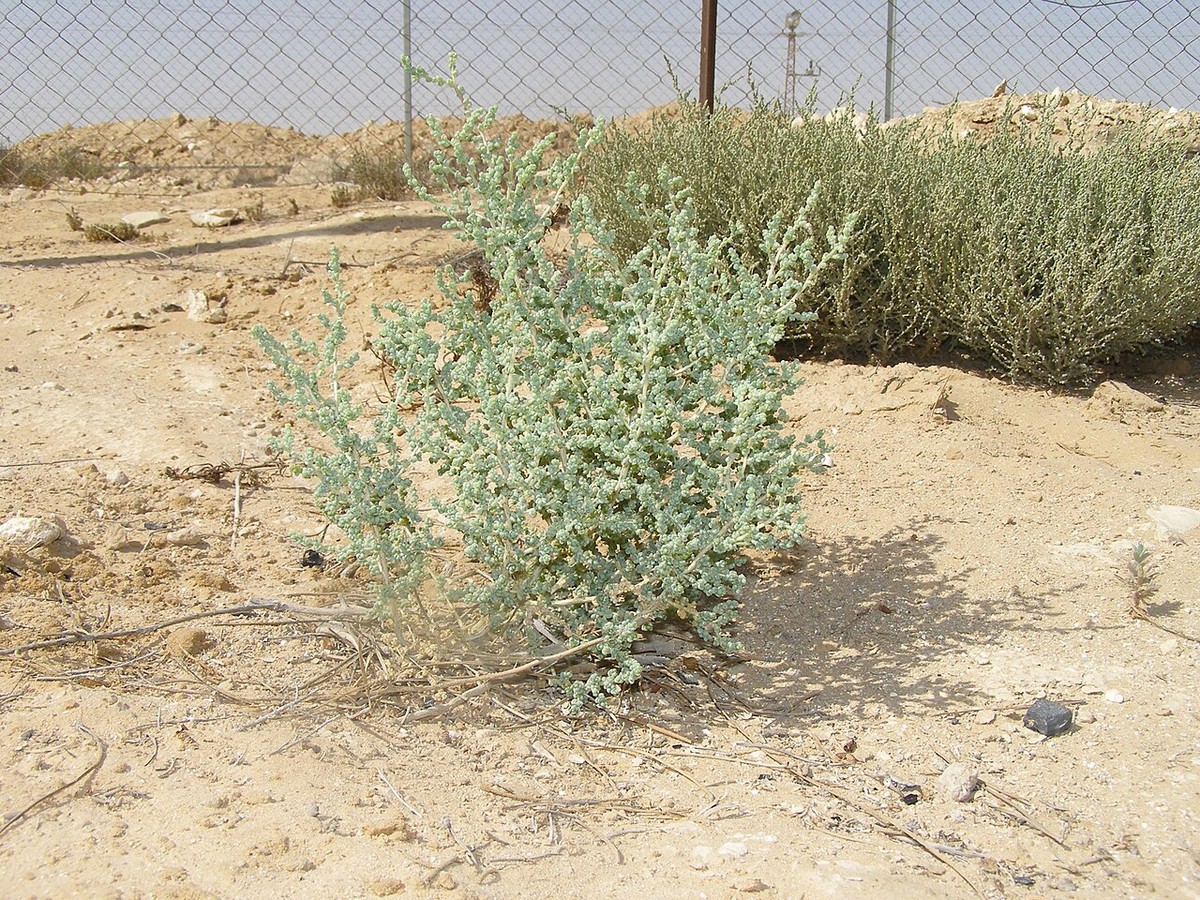
Atriplex polycarpa, commonly known as Allscale Saltbush, Allscale, Cattle Spinach, or Cattle Saltbush, is a tough, silvery-gray evergreen shrub of the hottest, saltiest ground in the American Southwest. A member of the Amaranthaceae (the amaranth and goosefoot family, which absorbed the old Chenopodiaceae), it belongs to a genus built for exactly these conditions — saline flats, alkali sinks, and bone-dry washes where few other woody plants can survive. Its fine, densely branched form and year-round gray foliage make it a quietly distinctive presence across the San Joaquin Valley, the Mojave and Sonoran deserts, and the Great Basin edge of Nevada and Arizona.
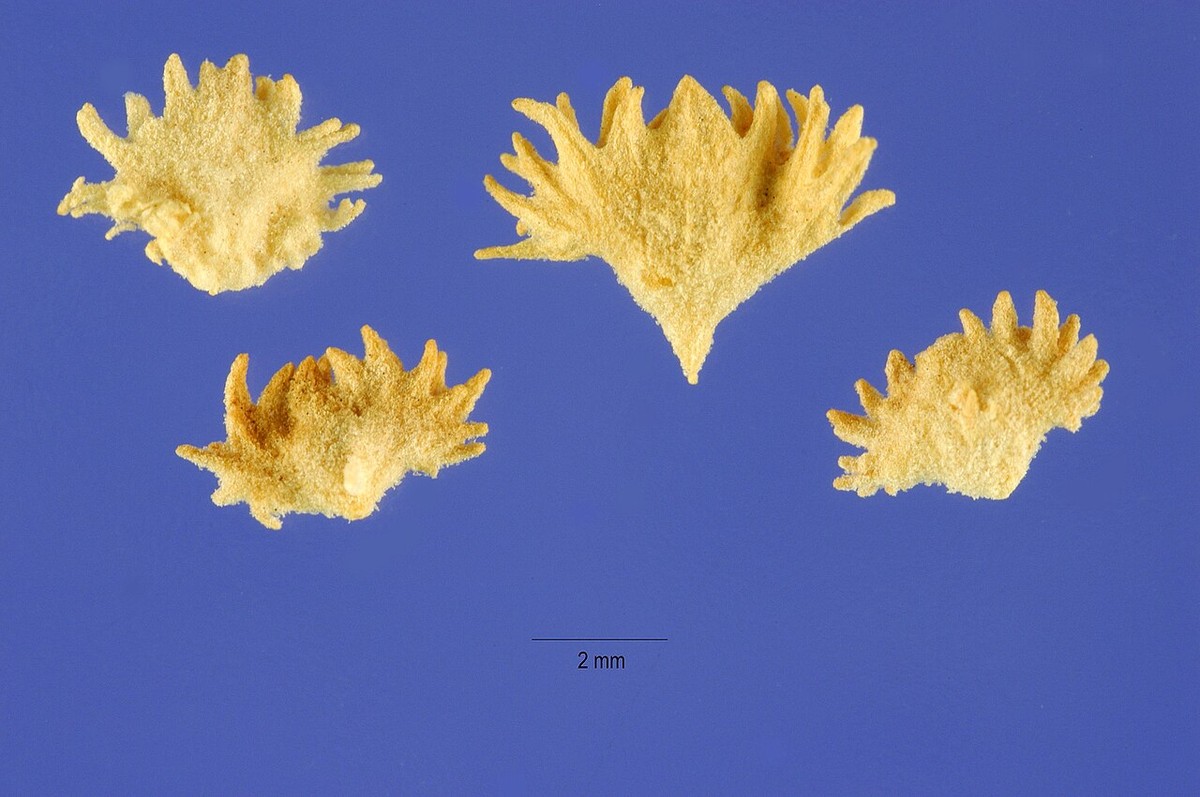
Allscale saltbush grows as a rounded, intricately branched shrub, usually 2 to 6 feet tall and often wider than tall, with countless short, stiff twigs covered in tiny, scurfy, silver-gray leaves. Like most saltbushes it is dioecious, meaning individual plants are either male or female, and the inconspicuous wind-pollinated flowers give way, on female plants, to small fan-shaped, toothed bracts that hold the seed. The whole plant has a scruffy, weathered look that belies how well-adapted and ecologically important it is — allscale saltbush is a keystone browse plant for desert wildlife and livestock, and a key soil-holding shrub on disturbed and saline ground.
For native gardeners in the low deserts and the drier valleys of California, Nevada, and Arizona, allscale saltbush is a genuinely low-water, low-care shrub that thrives in soils too alkaline or saline for almost anything else. It is not a showy plant — there are no bright flowers — but as a structural, evergreen, wildlife-supporting backbone for a xeriscape or habitat planting in true desert conditions, it has few equals.
Identification
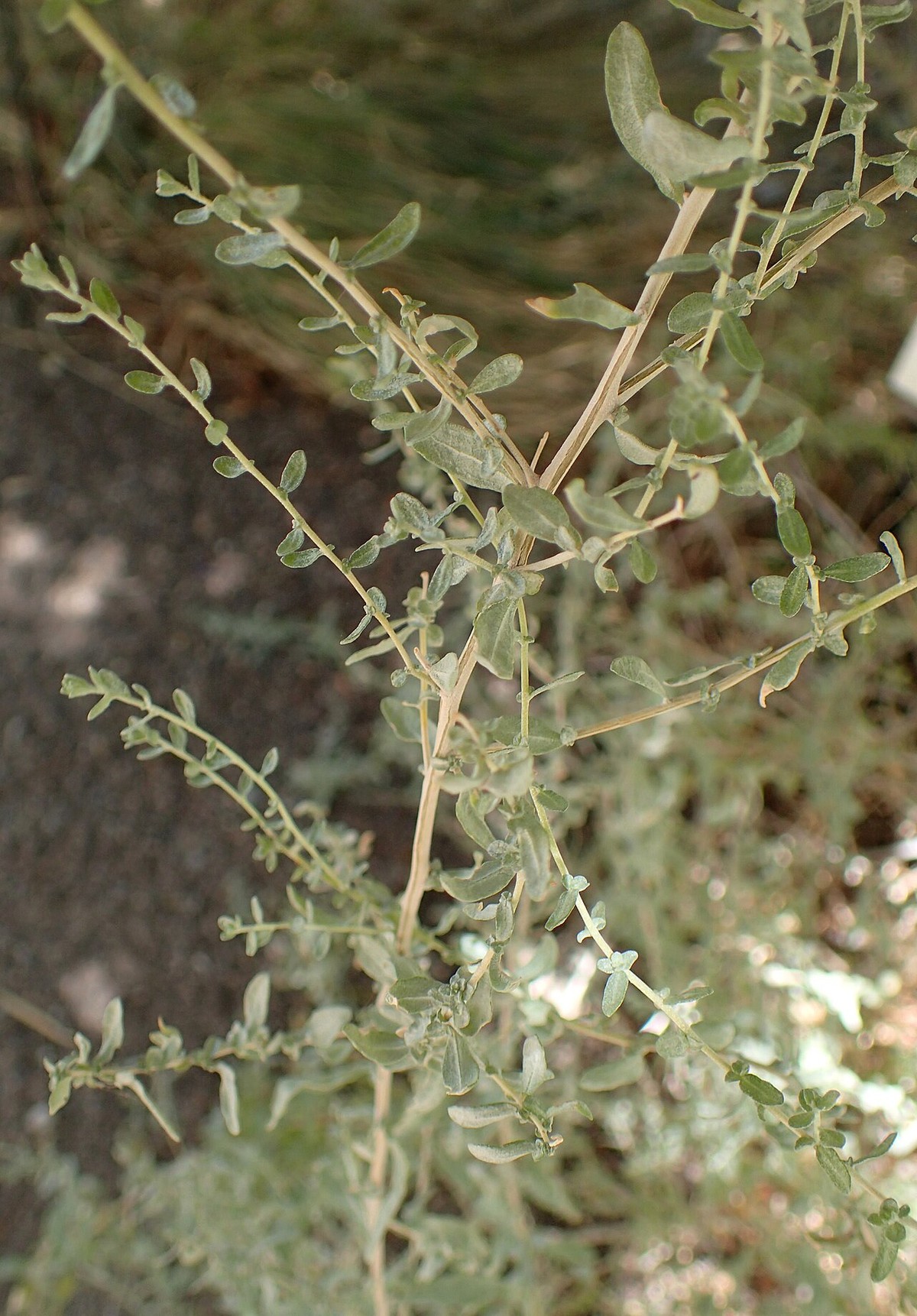
Allscale saltbush forms a rounded to irregular shrub with a dense network of thin, stiff branches arising from a woody base. Young stems are pale and finely scurfy (covered in tiny bran-like scales); older stems turn gray-brown and somewhat woody. The overall silhouette is fine-textured and intricate rather than leafy, giving the shrub a soft, grayish haze from a distance.
Leaves
The leaves are small, usually ¼ to 1 inch long, narrowly elliptic to oblong, and set alternately along the stems. They are evergreen and covered on both surfaces with tiny silvery scales (a feature called “scurfy” or “lepidote”), which reflect sunlight and help the plant conserve water in intense desert heat. Leaf margins are smooth (entire), without teeth or lobes, and the overall color ranges from pale gray-green to nearly white-gray depending on season and moisture.
Flowers & Fruit
Like other saltbushes, allscale saltbush is dioecious — male and female flowers occur on separate plants. The flowers themselves are tiny, greenish-tan, and without petals, clustered in dense spikes or panicles toward the branch tips. They are wind-pollinated and bloom mainly in summer, typically July and August. Female plants produce the true fruit: a single seed enclosed by a pair of fused bracts (an utricle) that is flattened, fan-shaped, and toothed or shallowly lobed along the outer margin, sometimes with a warty or pimpled surface. These papery bracts turn tan to straw-colored as they ripen in late summer and fall, and they are the easiest way to identify a female plant and confirm the species.
Quick Facts
| Scientific Name | Atriplex polycarpa |
| Family | Amaranthaceae (Amaranth/Saltbush) |
| Plant Type | Evergreen shrub |
| Mature Height | 2–6 ft (occasionally to 8 ft) |
| Mature Spread | 3–8 ft, often wider than tall |
| Growth Rate | Moderate |
| Sun Exposure | Full Sun |
| Water Needs | Very low; highly drought tolerant |
| Soil Type | Sandy to clay desert soils; tolerates alkaline and saline ground |
| Soil pH | Neutral to strongly alkaline |
| Bloom Time | July – August |
| Flower Color | Greenish-tan, inconspicuous |
| Fall Color | None (evergreen, silvery-gray year-round) |
| Fruit | Small tan, fan-shaped toothed bracts (utricles), late summer–fall |
| Deer Resistant | No (readily browsed by deer and livestock) |
| USDA Hardiness Zones | 7–10 |
Native Range
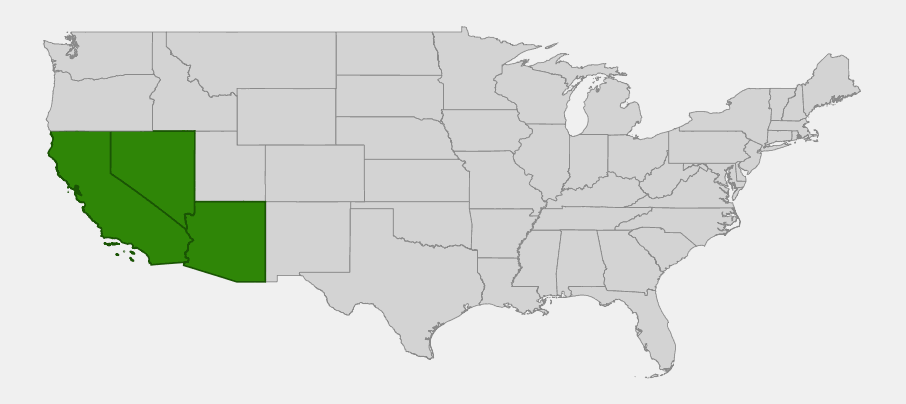
Allscale saltbush is native to the deserts and dry interior valleys of the Southwest, from the San Joaquin Valley and the Mojave and Colorado deserts of California east across southern Nevada and into western and southern Arizona, with its range continuing south into northern Mexico. It is one of the most widespread and characteristic shrubs of California’s saltbush scrub and alkali sink communities.
Across this range, allscale saltbush occupies the harshest, saltiest ground available: alkali flats, dry lakebeds, saline and alkaline desert washes, and heavy clay soils where salts accumulate at the surface. It also grows on better-drained sandy and gravelly desert soils, usually below about 4,000 feet in elevation, often forming extensive stands or co-dominating desert scrub alongside other saltbushes, shadscale, and desert holly.
Because it tolerates salinity and alkalinity that few other woody natives can handle, allscale saltbush is often one of the last shrubs standing on disturbed, graded, or saline sites in its range, and it is widely used in the San Joaquin Valley and the low deserts for erosion control and revegetation of such ground.
📋 Regional plant lists featuring Allscale Saltbush: California & Nevada · Arizona & New Mexico
Growing & Care Guide
Allscale saltbush is about as low-maintenance as a native shrub gets, provided it is planted in the hot, dry, sun-baked conditions it evolved for. It is a poor fit for a typical irrigated garden bed but an excellent choice for true desert and alkali-soil landscaping.
Light
Give allscale saltbush full sun. It is a plant of open desert flats and washes with no tolerance for shade, and it will grow thin and weak in shaded sites. The silvery leaf scales that give the shrub its color are also a sun-reflecting adaptation, so a hot, bright exposure is exactly where the plant looks and performs best.
Soil & Water
This is one of the few native shrubs that genuinely prefers alkaline or saline soils, including heavy clay alkali flats where most plants fail outright. It also grows well in ordinary sandy or gravelly desert soil. Once established, allscale saltbush needs no supplemental irrigation in its native range and is seriously injured by regular garden watering or poorly drained soil, which promotes root rot. Water new plants during their first one or two seasons to establish a deep root system, then withhold irrigation.
Planting Tips
Plant young, container-grown allscale saltbush in fall or early spring so roots can establish before summer heat arrives. Choose the sunniest, driest, most open spot available — this is not a shrub for foundation plantings near regularly watered lawns or beds. Because the species is dioecious, a single plant may be male or female; gardeners interested in seed production or supporting the broadest range of wildlife should plant several individuals where space allows.
Pruning & Maintenance
Allscale saltbush needs almost no pruning. Light shaping to remove dead or storm-damaged twigs can be done in late winter, but the naturally dense, twiggy form is part of its appeal and its wildlife value. The plant has no significant pest or disease problems in appropriate desert soils and needs no fertilizer.
Landscape Uses
- Alkali and saline soil landscaping where few other woody natives will grow
- Xeriscape and water-wise desert gardens as a structural, evergreen anchor shrub
- Erosion control and revegetation on disturbed, graded, or saline ground
- Wildlife habitat plantings for cover, browse, and nesting structure
- Informal hedges or screens in low-desert gardens
- Rangeland and livestock forage plantings in appropriate agricultural settings
Wildlife & Ecological Value
Despite its plain appearance, allscale saltbush is one of the more ecologically important shrubs of the low desert and San Joaquin Valley, anchoring soil and food webs on ground too harsh for most plants.
For Pollinators
Allscale saltbush is wind-pollinated rather than insect-pollinated, so it offers little nectar, but its pollen and foliage support a number of desert insects, and its dense branching provides shelter for small beneficial insects in an otherwise open landscape.
For Birds
Quail and other ground-foraging birds use the dense, twiggy structure of allscale saltbush for cover and nesting, and the seeds produced by female plants are eaten by sparrows and other seed-eating birds through fall and winter.
For Mammals
Allscale saltbush is an important browse plant for mule deer, desert bighorn sheep, and jackrabbits, and it has long been valued as emergency and supplemental forage for cattle and sheep on desert rangeland, which is the origin of its common names “cattle saltbush” and “cattle spinach.” Small mammals also shelter within its dense branch structure.
Ecosystem Role
As one of the few shrubs able to colonize saline and alkaline flats, allscale saltbush plays an outsized role in stabilizing soil and providing structure on ground that would otherwise be nearly bare. Its deep, spreading root system helps hold soil on disturbed or eroding sites, and stands of allscale saltbush create the only significant woody cover across large stretches of alkali desert, making it a foundation species for the animals that depend on that habitat.
Cultural & Historical Uses
Allscale saltbush has long been recognized by ranchers and range managers across the Southwest as valuable forage, particularly during drought and in winter when more palatable browse is scarce — a reputation reflected directly in its common names “cattle saltbush” and “cattle spinach.” Its ability to grow on the saltiest, least productive rangeland made it an important component of grazing land in parts of California, Nevada, and Arizona for well over a century.
Like other saltbushes, allscale saltbush accumulates salts drawn up from alkaline soils within its leaves and tissues, a trait that made related Atriplex species useful to desert peoples as a source of salt and as a leafy vegetable in some regions, though specific historical use of this particular species by Indigenous peoples of California and the Southwest is not well documented in available records.
In the modern era, allscale saltbush has become an important tool in restoration and revegetation work on saline and disturbed soils, including old agricultural fields affected by salt buildup in the San Joaquin Valley and roadside and construction sites across the desert Southwest, where few other natives can be relied upon to establish.
Frequently Asked Questions
Is allscale saltbush edible?
It is not generally grown or used as a human food plant, though like other saltbushes it accumulates salt in its leaves. It is far better known, and far more valuable, as browse for livestock and desert wildlife than as a garden edible.
Why does allscale saltbush look gray instead of green?
The gray-silver color comes from tiny bran-like scales covering the leaf surfaces. These scales reflect sunlight and reduce water loss, an adaptation shared by many desert saltbushes that helps the plant survive intense heat and strong sun with very little water.
Can allscale saltbush grow in regular garden soil?
Yes, but it performs best, and needs the least care, in hot, dry, sunny conditions similar to its native alkali flats and desert washes. In rich, regularly irrigated garden soil it tends to grow leggy and is more prone to root problems; it is really at its best in true desert and xeriscape plantings.
How do I tell male and female plants apart?
Allscale saltbush is dioecious, so an individual plant produces either male or female flowers, never both. Only female plants develop the small, fan-shaped, toothed seed bracts in late summer and fall; male plants simply drop their spent flower clusters without producing visible fruit.
Does allscale saltbush tolerate salty or alkaline soil?
Very well — this is one of its defining traits. It is one of the few native shrubs that actively prefers saline and alkaline ground, including alkali flats and heavy clay soils where salts concentrate at the surface, and it is widely planted specifically for that tolerance.

Looking for a nursery that carries Allscale Saltbush?
Browse our native plant nursery directory: California · Nevada · Arizona