Stiffstem Flax (Linum rigidum)
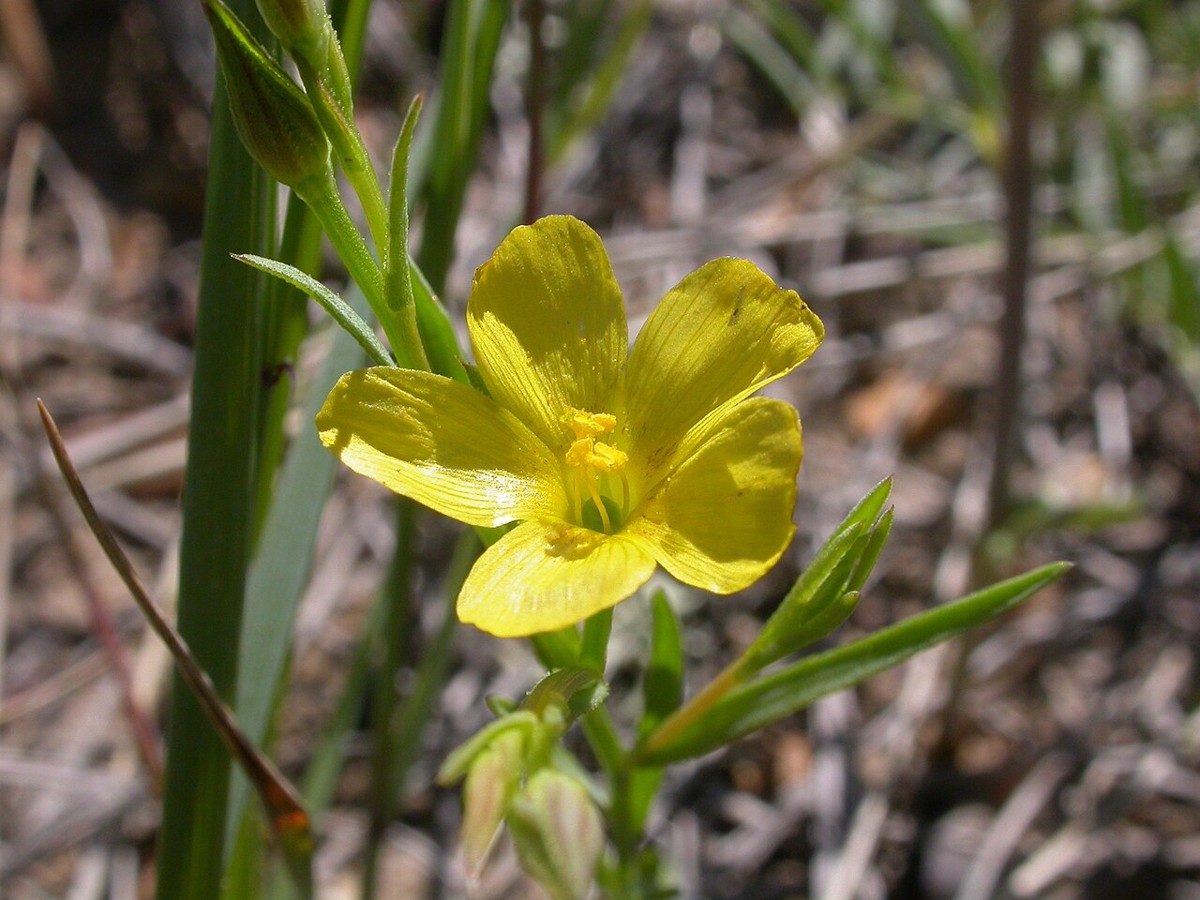
Linum rigidum, commonly known as Stiffstem Flax or Yellow Flax, is a slender, wiry little annual wildflower of the Great Plains and intermountain West, scattered from Montana south to Texas and New Mexico. Despite its modest, sparse growth habit, it produces a steady succession of cheerful yellow, five-petaled flowers — each marked with a reddish-orange eye at the center — that open fresh each morning and drop their petals by afternoon, to be replaced by new blooms the next day throughout the growing season.
Stiffstem Flax grows in dry shortgrass prairie, sagebrush steppe, roadsides, and disturbed ground on clay or sandy soils, usually where competition from taller vegetation is limited. It rarely forms dense stands, instead appearing as scattered individuals tucked among grasses — a sporadic but reliable presence across its wide range rather than a showy mass bloomer.
Because it is a true dryland annual adapted to a very broad swath of the central and western U.S., Stiffstem Flax is best suited to native wildflower meadows and prairie restorations within its documented range, where it can reseed itself naturally year after year.
Identification
Stiffstem Flax is a slender annual herb, typically 6 to 20 inches tall, with thin, wiry, mostly unbranched to sparsely branched stems. Despite the name “stiffstem,” the plant has a delicate, almost wispy overall appearance, often growing as isolated, thinly scattered individuals rather than thick clumps.
Leaves
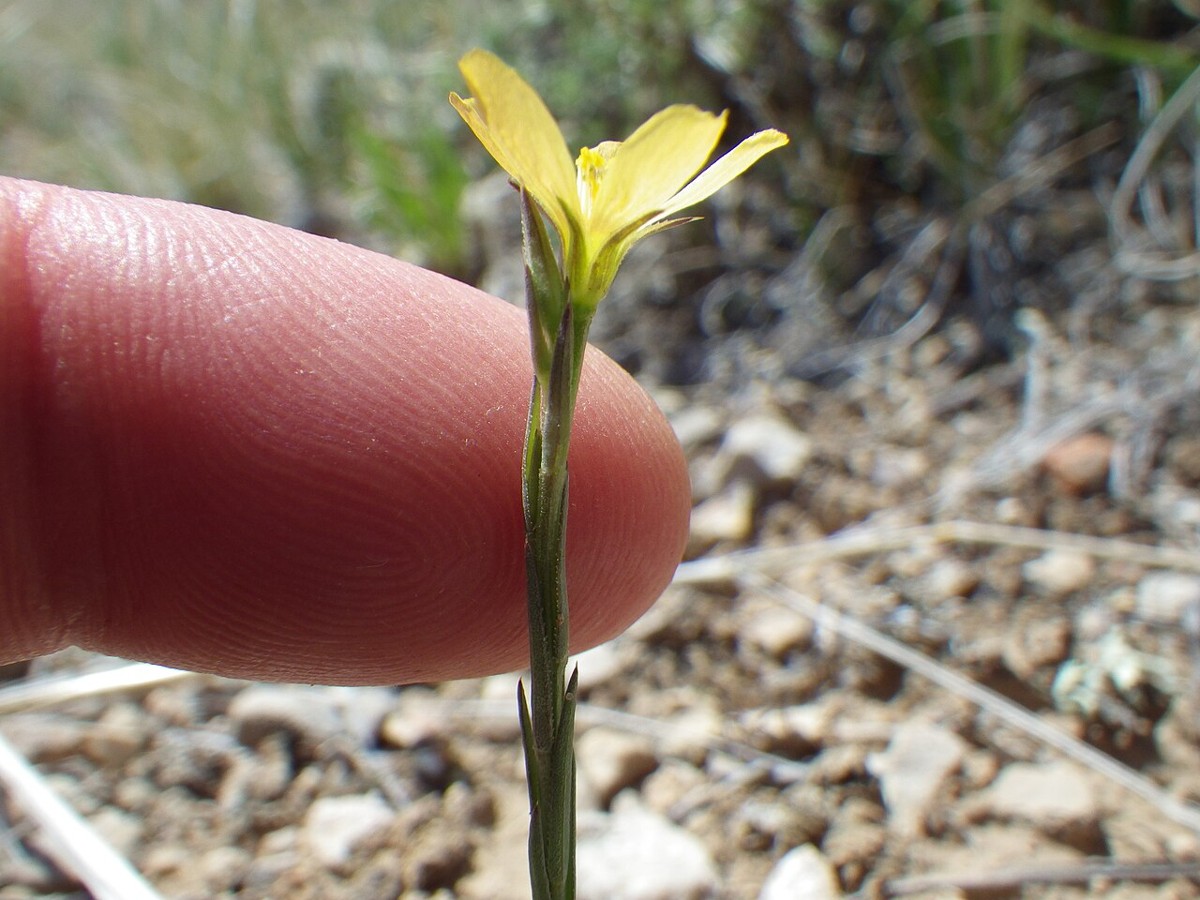
Leaves are alternate, narrow, linear to needle-like, about ⅓ to 1¼ inches long, and erect along the stem. The sparse foliage contributes to the plant’s airy, see-through appearance in the landscape.
Flowers
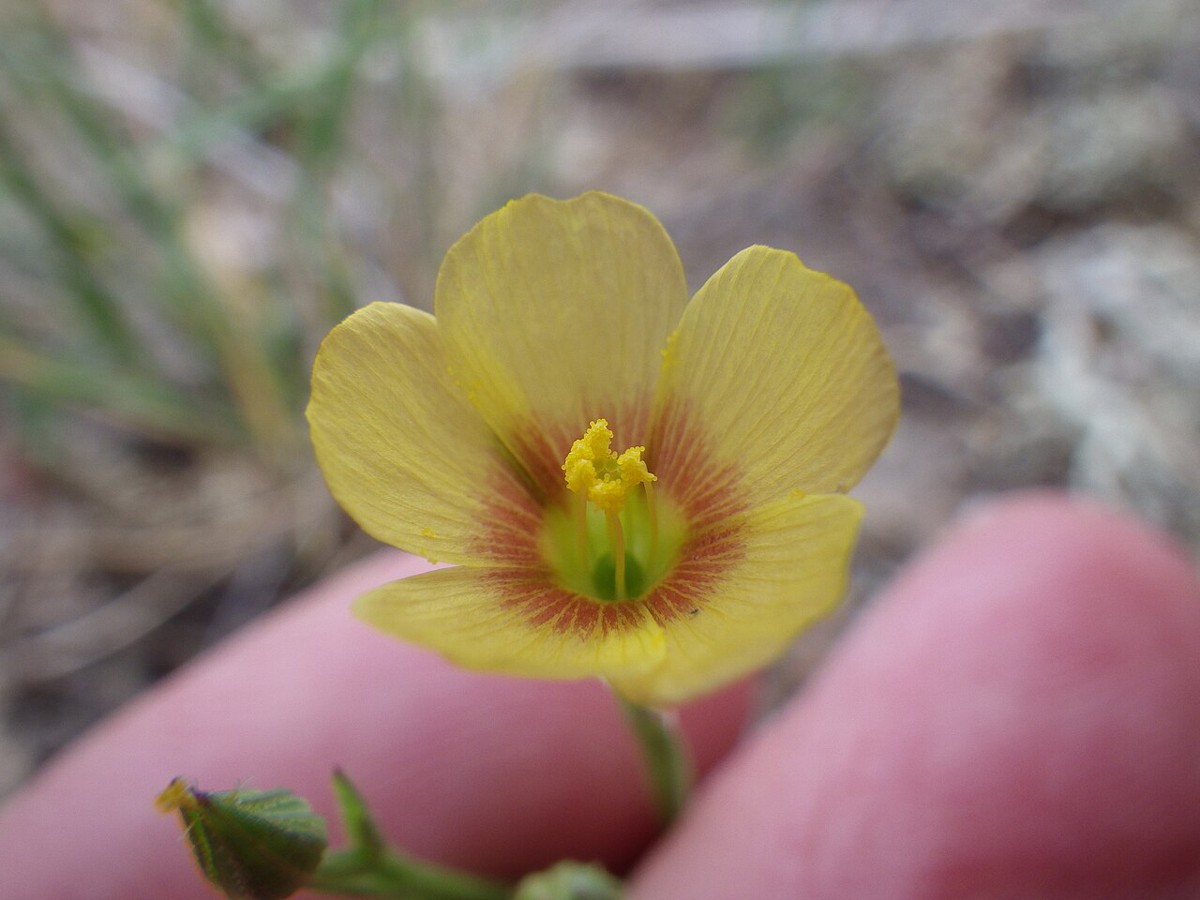
Each flower has five yellow to orange-yellow petals, typically ¾ to 1½ inches across, with a distinctive reddish or red-orange “eye” radiating from the center around five yellow stamens. Flowers are borne singly at the tips of slender branches and, true to the flax family habit, each individual bloom opens for only a single day before dropping its petals — though a healthy plant produces a long succession of new flowers from May into September.
Fruit
The fruit is a small, dry, rounded seed capsule that splits open at maturity to release several small seeds, allowing the plant to reseed itself freely in suitable open, disturbed, or sparsely vegetated ground.
Quick Facts
| Scientific Name | Linum rigidum |
| Family | Linaceae (Flax) |
| Plant Type | Annual Wildflower |
| Mature Height | 6–20 in |
| Growth Rate | Fast |
| Sun Exposure | Full Sun |
| Water Needs | Low |
| Soil Type | Clay, sandy, or gravelly prairie soils; well-drained |
| Soil pH | Neutral to slightly alkaline |
| Bloom Time | May – September |
| Flower Color | Yellow to orange-yellow with red-orange eye |
| Drought Tolerance | Excellent |
| USDA Hardiness Zones | 3–9 |
Native Range
Stiffstem Flax has one of the broadest native ranges of any dryland annual in this guide, found across much of the Great Plains and parts of the intermountain West: Montana, North and South Dakota, Wyoming, Nebraska, Kansas, Colorado (mainly the eastern plains), New Mexico, Oklahoma, Texas, and the far western edge of Minnesota. Across this entire range it sticks to dry, open ground — shortgrass prairie, sagebrush steppe, clay flats, and disturbed roadsides — generally avoiding wetter or more densely vegetated sites.
Though widespread, Stiffstem Flax is rarely abundant anywhere within its range; it tends to appear as scattered individuals rather than dense colonies, often most noticeable the year or two after soil disturbance opens up bare ground for its seeds to germinate.
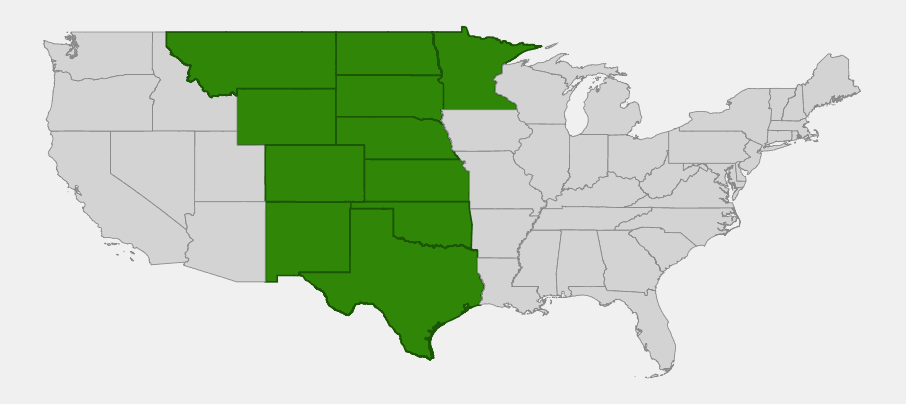
📋 Regional plant lists featuring Stiffstem Flax: Montana & Wyoming · North Dakota, South Dakota & Western Minnesota · Nebraska, Kansas & Eastern Colorado · Arizona & New Mexico · South and West Texas
Growing & Care Guide
Stiffstem Flax is an easygoing annual for dry, sunny, open sites, best treated as a reseeding wildflower rather than a long-term perennial fixture.
Light
Full sun is essential — this is a plant of open prairie and steppe, and it will not perform well in shaded or crowded plantings where taller vegetation blocks direct light.
Soil & Water
Stiffstem Flax thrives in lean, well-drained clay, sandy, or gravelly soils typical of shortgrass prairie, and it is highly drought tolerant once established from seed. It needs little to no supplemental water beyond what falls naturally within its range, and in fact performs poorly in rich, moist, or heavily mulched garden soil, where faster-growing plants quickly outcompete it.
Planting Tips
Direct-sow seed in fall or early spring onto bare, disturbed, well-drained soil — this species germinates best where competition is minimal. It is best used in native wildflower meadow mixes, prairie restorations, or dry, open borders rather than as a standalone specimen plant, since individual plants are small, sparse, and short-lived. Once established in a suitable site, it will self-sow and persist as part of the annual wildflower community for years.
Pruning & Maintenance
No pruning is needed. Allow seed capsules to mature and shatter naturally to maintain a self-sustaining population in future years. Stiffstem Flax has no significant pest or disease problems and needs no fertilizer, performing best when simply left alone in its preferred lean, dry conditions.
Landscape Uses
Stiffstem Flax works best as a supporting player in naturalistic plantings:
- Prairie and shortgrass meadow restorations, mixed with native grasses
- Wildflower seed mixes for dry, open sites
- Roadside and reclamation plantings within its native range
- Pollinator gardens, adding scattered color through a long bloom season
Wildlife & Ecological Value
Though individually small, Stiffstem Flax’s long, staggered bloom season provides a steady trickle of nectar and pollen resources across the growing season in dry prairie habitats.
For Pollinators
The open, shallow flowers are accessible to small native bees and other short-tongued pollinators, which visit the fresh blooms each day the plant is in flower. Because individual flowers last only a single day but new ones open continuously from spring through late summer, a population of plants provides consistent, if modest, forage over several months.
Ecosystem Role
As a pioneering annual of disturbed and open prairie ground, Stiffstem Flax helps occupy bare soil between perennial grasses and forbs, contributing to the diversity and resilience of shortgrass prairie plant communities without competing aggressively for resources.
Frequently Asked Questions
Is Stiffstem Flax related to the flax grown for fiber or flaxseed?
It belongs to the same genus, Linum, as cultivated flax (Linum usitatissimum), but Stiffstem Flax is a wild native wildflower grown for its ornamental and ecological value, not for fiber or seed production.
Why do the flowers only last one day?
This is a common trait across many Linum species — the delicate petals open in the morning and drop by afternoon. A healthy plant compensates by producing a long succession of new blooms throughout the growing season, so the display continues even though individual flowers are fleeting.
Will Stiffstem Flax come back every year?
As an annual, individual plants complete their life cycle and die within one growing season, but they reliably reseed themselves in suitable open, well-drained sites, so a planting often persists and even expands over several years without replanting.
Does Stiffstem Flax need rich garden soil?
No — it actually performs worse in rich, fertile soil, where faster-growing plants outcompete it. Lean, well-drained prairie-type soil with minimal competition is ideal.
Can Stiffstem Flax be grown outside its native Great Plains range?
It can be tried in similar dry, open climates elsewhere, but it is native to a specific swath of the Great Plains and intermountain West. Gardeners well outside that range should look for a flax or similar dryland wildflower native to their own region.

Looking for a nursery that carries Stiffstem Flax?
Browse our native plant nursery directory: Montana & Minnesota · Wyoming · North Dakota, Nebraska, New Mexico & Oklahoma · Kansas · Colorado · South Dakota & Texas