Plains Fleabane (Erigeron modestus)
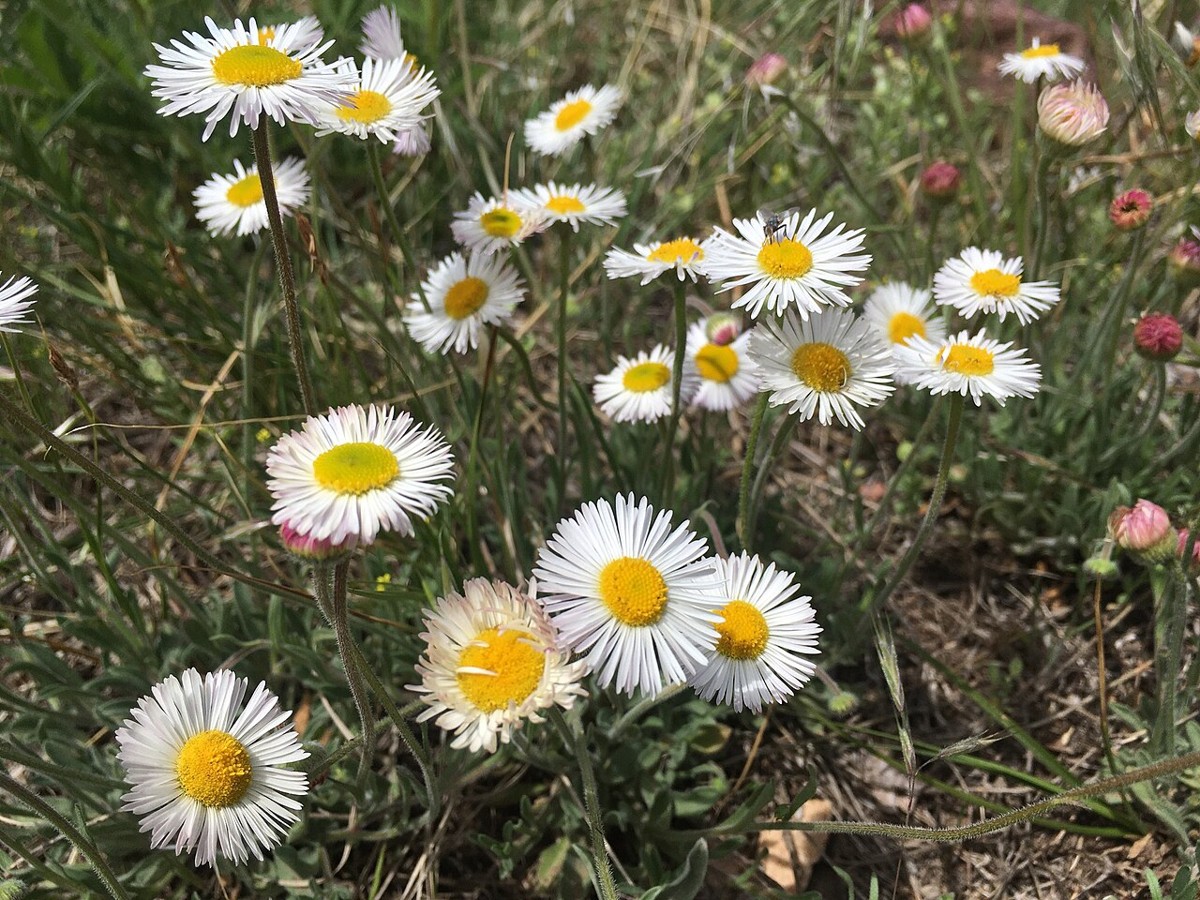
Erigeron modestus, commonly known as Plains Fleabane, is a modest but hardworking little wildflower of the dry limestone hills and rocky flats of the southern Great Plains and desert Southwest. A member of the aster family (Asteraceae), it produces small daisy-like flowers — white to pale pink rays around a bright yellow disc — in loose, branching clumps that bloom for months on end with almost no care. It rarely gets taller than a foot, but what it lacks in stature it makes up for in sheer persistence, flowering from early spring through fall and reseeding itself readily in open, sunny, well-drained ground.
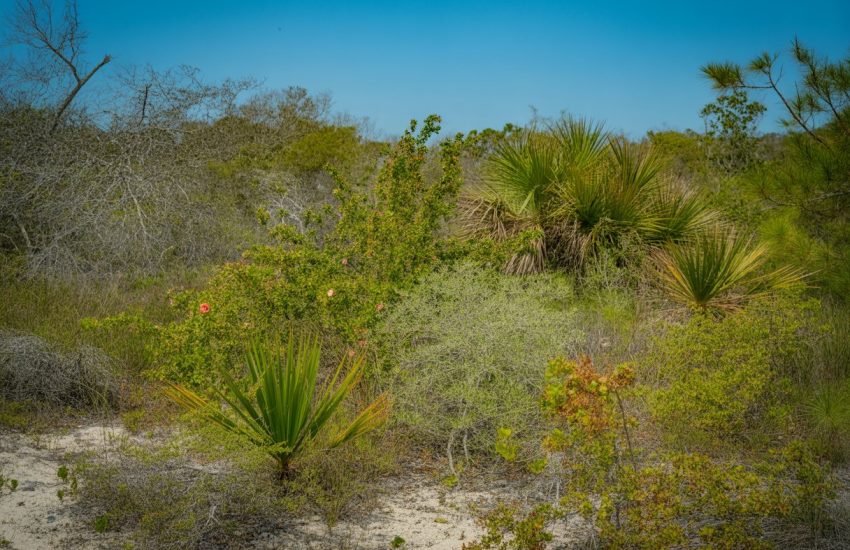
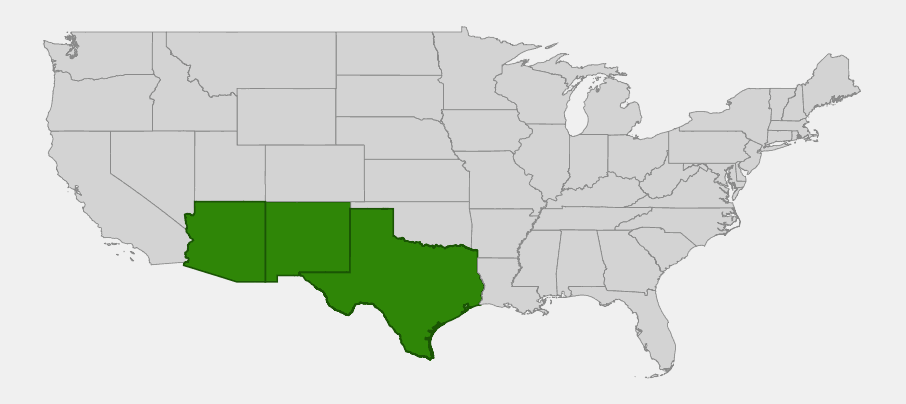
Plains Fleabane grows wild on limestone and caliche outcrops, rocky slopes, gravelly flats, and roadsides across Texas, New Mexico, and Arizona, usually in places too dry and rocky for much else to thrive. Its gray-green, hairy foliage and compact mounding habit make it a natural fit for xeriscapes, rock gardens, and any sunny corner where water is scarce. Bees and small butterflies visit the flowers steadily through the warm months, and the plant asks for nothing in return beyond good drainage and full sun.
Because it is so undemanding and long-blooming, Plains Fleabane has become a popular choice with native-plant gardeners in its home range who want low-water color without the fuss of pampering. It is not native east of its home range in the southern Plains and Southwest, and gardeners outside that region should look to locally native fleabanes instead.
Identification
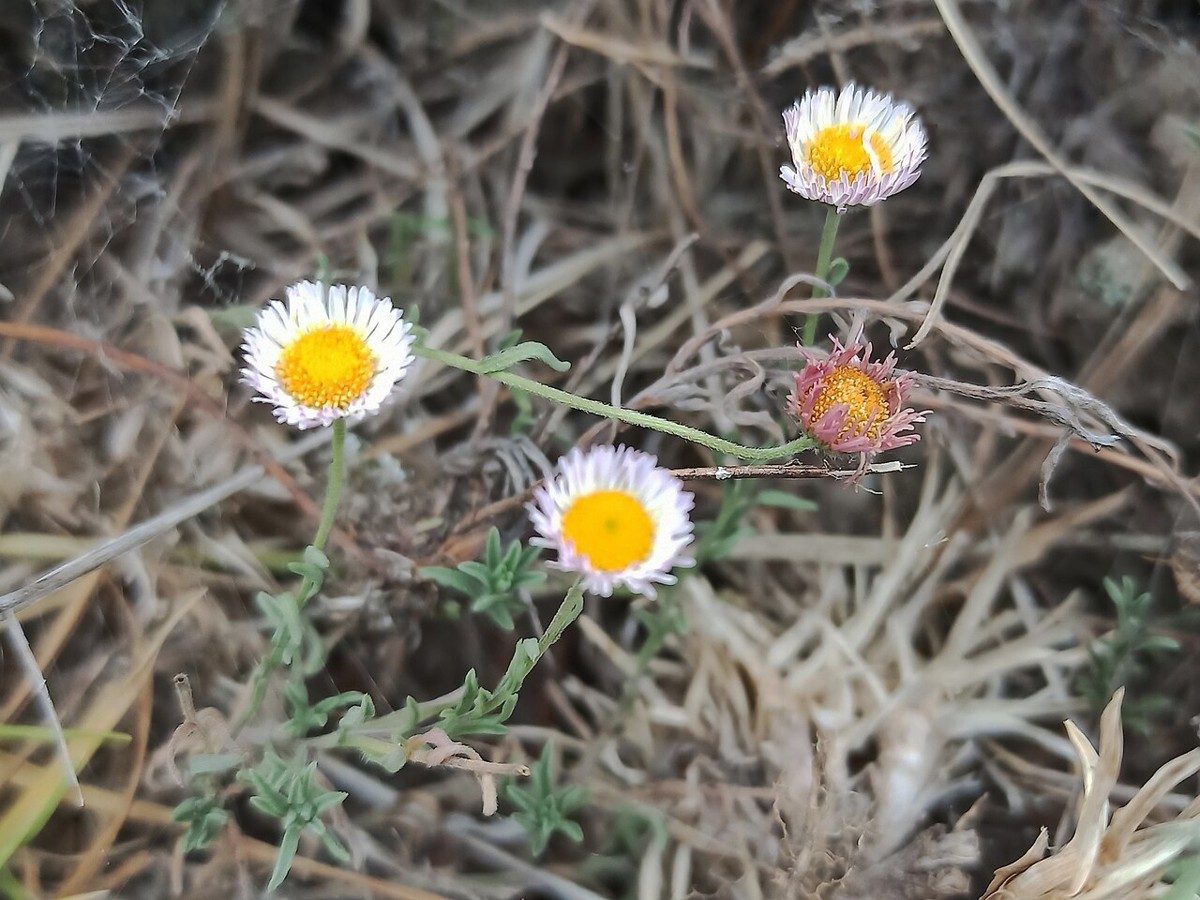
Plains Fleabane is a short-lived perennial (sometimes behaving as a biennial or short-lived subshrub) that forms a low, bushy mound 6 to 15 inches tall and about as wide, with numerous slender, branching stems rising from a woody base. The whole plant is covered in fine, grayish hairs, giving the foliage a soft, silvery-green cast that helps it reflect heat and conserve moisture in its dry habitat.
Leaves
The leaves are narrow, spoon-shaped to linear, mostly entire (though basal leaves may have a few shallow lobes or teeth), and arranged alternately along the stems. Basal leaves are somewhat larger and often form a loose rosette, while leaves higher on the flowering stems are progressively smaller and narrower. All leaves are hairy, which contributes to the plant’s overall grayish-green appearance.
Flowers
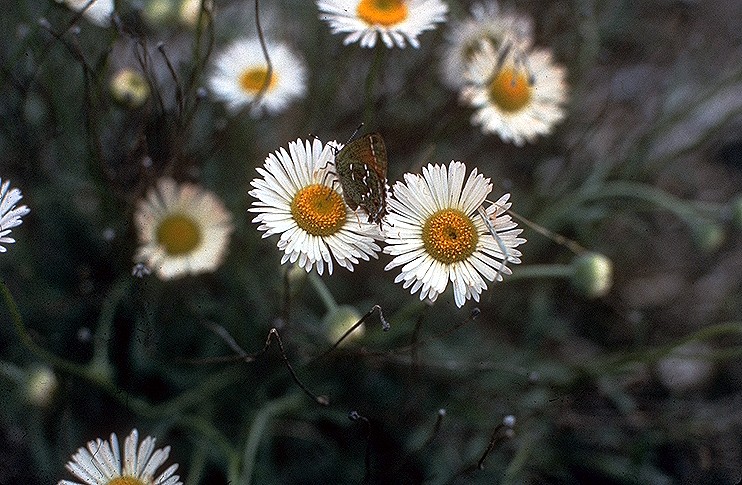
Each flower head is a small daisy about ½ to ¾ inch across, with 50 to 100 narrow white to pale pink ray florets surrounding a dome of yellow disc florets. Flower heads are borne singly on slender stalks at the tips of the branching stems, and a single plant can carry dozens of blooms at once. Flowering runs from March into October in good years, peaking in spring and again after summer rains, which is unusually long for a Plains wildflower.
Fruit
Like other fleabanes, the fruit is a tiny, dry, one-seeded achene topped with a tuft of bristly hairs (a pappus), allowing the seed to be carried on the wind — the same basic design as a dandelion seed, just smaller and less conspicuous.
Quick Facts
| Scientific Name | Erigeron modestus |
| Family | Asteraceae (Aster/Daisy) |
| Plant Type | Short-lived Perennial Wildflower |
| Mature Height | 6–15 in |
| Growth Rate | Fast |
| Sun Exposure | Full Sun |
| Water Needs | Low |
| Soil Type | Rocky, gravelly, or limestone-based; well-drained |
| Soil pH | Neutral to alkaline |
| Bloom Time | March – October |
| Flower Color | White to pale pink rays, yellow disc |
| Drought Tolerance | Excellent |
| USDA Hardiness Zones | 7–10 |
Native Range
Plains Fleabane is native to the southern Great Plains and desert Southwest, with its core range running from central and western Texas through most of New Mexico and into southeastern Arizona. It favors dry, open, calcareous ground — limestone hills, caliche flats, rocky uplands, and gravelly roadsides — at low to moderate elevations.
It is a true dryland specialist, most abundant in the Edwards Plateau, Trans-Pecos, and High Plains of Texas, and extending across the rangelands of New Mexico into the sky-island country of southeastern Arizona. Outside this range it is not documented as native, and gardeners further east or north should choose a locally native fleabane instead.
📋 Regional plant lists featuring Plains Fleabane: Arizona & New Mexico · South and West Texas
Growing & Care Guide
Plains Fleabane is about as low-maintenance as native wildflowers get, provided it has the one thing it truly needs: sharp drainage. Give it rocky or gravelly soil and full sun, and it will reward you with months of flowers and very little trouble.
Light
Full sun is essential. Plains Fleabane is a plant of open, exposed ground in its native range, and it flowers most heavily and stays most compact when it gets at least six hours of direct sun a day. In part shade it tends to stretch and flop and blooms less.
Soil & Water
This species is built for lean, rocky, alkaline soils and will struggle in rich, heavy, or poorly drained ground. A gritty, gravelly, or limestone-based soil mix is ideal. Once established, it needs very little supplemental water and is genuinely drought tolerant — in fact, too much water or overly fertile soil tends to shorten its lifespan and cause floppy, weak growth. Water sparingly during the first growing season to help it establish, then let rainfall do the rest.
Planting Tips
Plant in fall or early spring in a well-drained, sunny spot — rock gardens, gravel beds, dry slopes, and the edges of xeriscape beds all suit it well. Because it is relatively short-lived, Plains Fleabane relies on reseeding to persist in a garden; leave some spent flower heads in place to let it self-sow, and expect a shifting population of seedlings rather than a single long-lived clump. It combines well with other dryland natives that share its need for sharp drainage.
Pruning & Maintenance
Deadheading spent flowers can extend the bloom season and tidy up the plant’s appearance, but leaving some seed heads intact ensures a new generation of seedlings. Cut plants back hard in late winter to encourage fresh, compact growth in spring. Plains Fleabane has no significant pest or disease problems and needs no fertilizer — in fact, it generally performs best when left alone.
Landscape Uses
Plains Fleabane earns its keep in several tough garden settings:
- Rock gardens and gravel beds, where its mounding habit and long bloom fit right in
- Xeriscapes and other low-water plantings
- Dry slopes and caliche or limestone outcrops where little else will grow
- Pollinator gardens, as a reliable, long-blooming nectar source
- Roadside and reclamation plantings in its native range
Wildlife & Ecological Value
Despite its small size, Plains Fleabane is a dependable nectar source across a long stretch of the growing season, flowering when many other dryland wildflowers have gone dormant.
For Pollinators
The flowers attract a steady stream of small native bees, honeybees, and butterflies, including skippers and other small butterfly species drawn to the open, easily accessed disc florets. Because it blooms from early spring through fall, it helps bridge gaps between the bloom times of showier but shorter-flowering neighbors.
For Birds and Other Wildlife
The tiny windborne seeds are eaten by small seed-eating birds, and the low, bushy growth form offers modest ground-level cover for insects and small wildlife in otherwise open, rocky terrain.
Ecosystem Role
As a pioneering species of disturbed and rocky ground, Plains Fleabane helps stabilize thin, erosion-prone soils on slopes and caliche outcrops, and its reliable reseeding habit lets it colonize bare patches quickly after disturbance, paving the way for longer-lived perennials and grasses to establish.
Frequently Asked Questions
Is Plains Fleabane the same as other fleabanes sold at nurseries?
No. Several Erigeron species are sold as garden “fleabane,” including the Mediterranean Erigeron karvinskianus (Santa Barbara daisy), which is not native to North America. Plains Fleabane (Erigeron modestus) is a distinct species native only to Texas, New Mexico, and Arizona — check the botanical name before buying if native status matters to you.
How long does Plains Fleabane live?
Individual plants are short-lived, typically persisting as a perennial for just a few years, sometimes behaving more like a biennial. It maintains itself in the garden through self-seeding rather than longevity of any single plant.
Does Plains Fleabane need fertilizer?
No — this species is adapted to lean, rocky soils, and fertilizing it tends to produce weak, floppy growth and can shorten its lifespan. Skip the fertilizer and let it grow in poor, well-drained soil.
Will Plains Fleabane spread aggressively in my garden?
It reseeds readily in open, bare, well-drained ground, but it is not aggressive or invasive — it simply fills gaps where conditions suit it. In denser plantings or less favorable soil, self-sowing is much more modest.
Can Plains Fleabane grow outside Texas, New Mexico, and Arizona?
It can be grown in similar hot, dry, alkaline-soil climates elsewhere, but it is not native outside its southern Plains and Southwest range. Gardeners outside that range who want ecological value from a native plant should look for a fleabane species native to their own region instead.

Looking for a nursery that carries Plains Fleabane?
Browse our native plant nursery directory: Arizona · New Mexico · Texas