Texas Grama (Bouteloua rigidiseta)
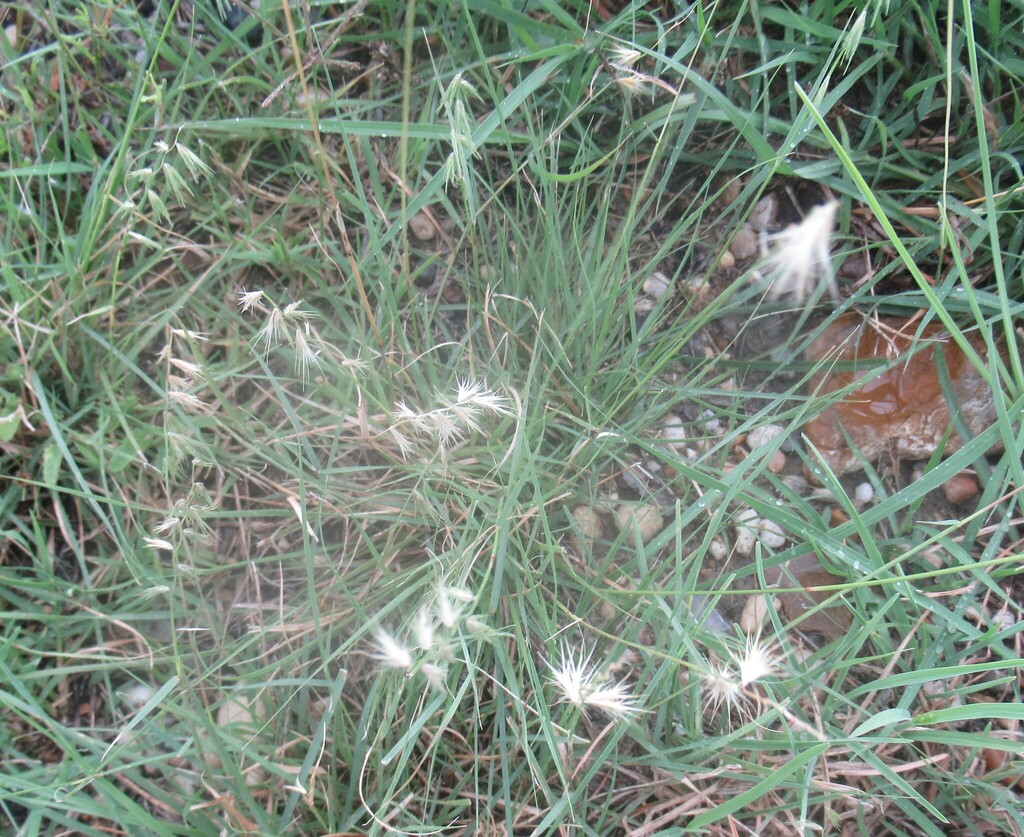
Bouteloua rigidiseta, commonly called Texas grama (also written Texas grass-grama), is a short, tufted, warm-season perennial bunchgrass native to the prairies and rocky hills of the south-central United States. It belongs to the same genus as the better-known blue grama and sideoats grama, and it shares their fine texture and drought toughness, but it stays noticeably lower and finer, rarely topping a foot even in bloom.
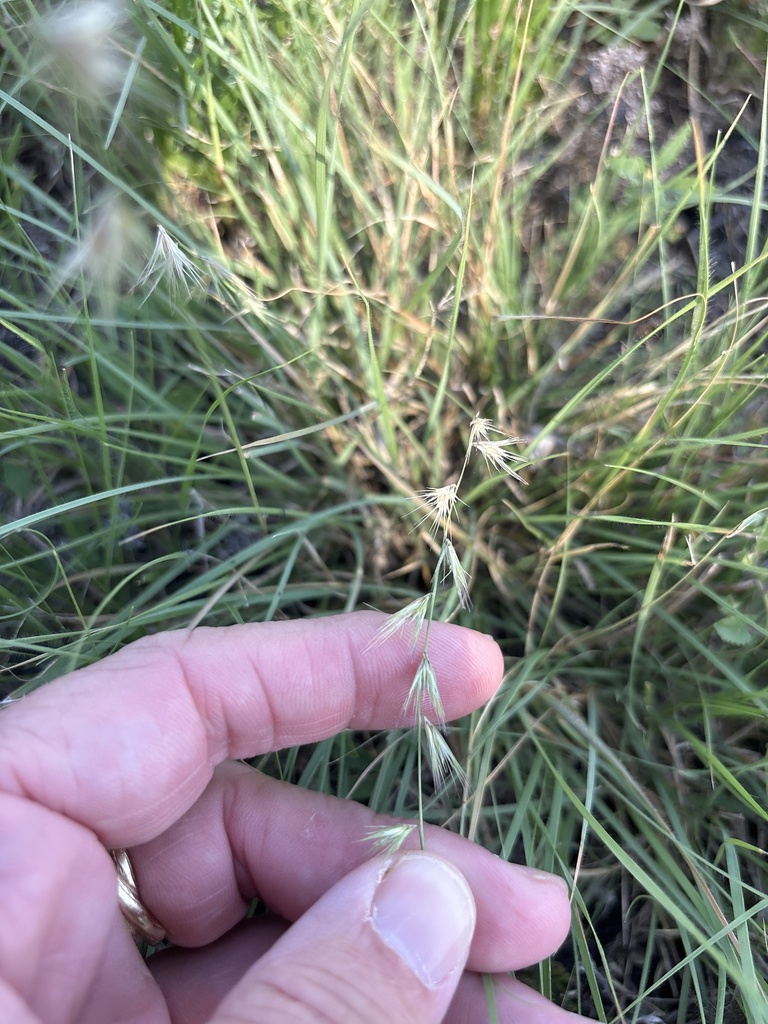
Texas grama forms neat, leafy tufts only 8 to 12 inches tall, with narrow, slightly hairy blades that stay mostly basal. In summer the plant sends up thin flowering stems carrying a handful of small, triangular, fan-shaped spikelets that dangle along one side of the stalk, drying to a pale straw color that catches the light and persists into winter. It is one of the most common native grasses on the limestone prairies and rocky hills of central Texas, where it often grows thick enough to be a dominant ground cover between taller bunchgrasses.
For gardeners in its native range, Texas grama is an easy, low-maintenance choice for a short native lawn, a rock garden, or the front edge of a prairie planting. It asks for almost nothing once established, tolerates the thin, rocky, alkaline soils typical of the Texas Hill Country, and gives a soft, fine-textured look that taller grasses cannot match.
Identification
Texas grama is a low, densely tufted perennial with no rhizomes or stolons, so each plant stays a tight clump rather than spreading by runners.
Stems & Leaves
Culms are slender, wiry, and erect to slightly spreading, usually 8 to 12 inches tall including the flowering heads, though the leafy base stays only a few inches high. Leaf blades are narrow, 1 to 1.5 mm wide, flat to slightly folded, and sparingly covered with short, stiff hairs (sparingly papillose-pilose). Most of the foliage is basal, giving the plant a fine, almost hair-like texture at the base of the clump.
Flowers & Spikelets
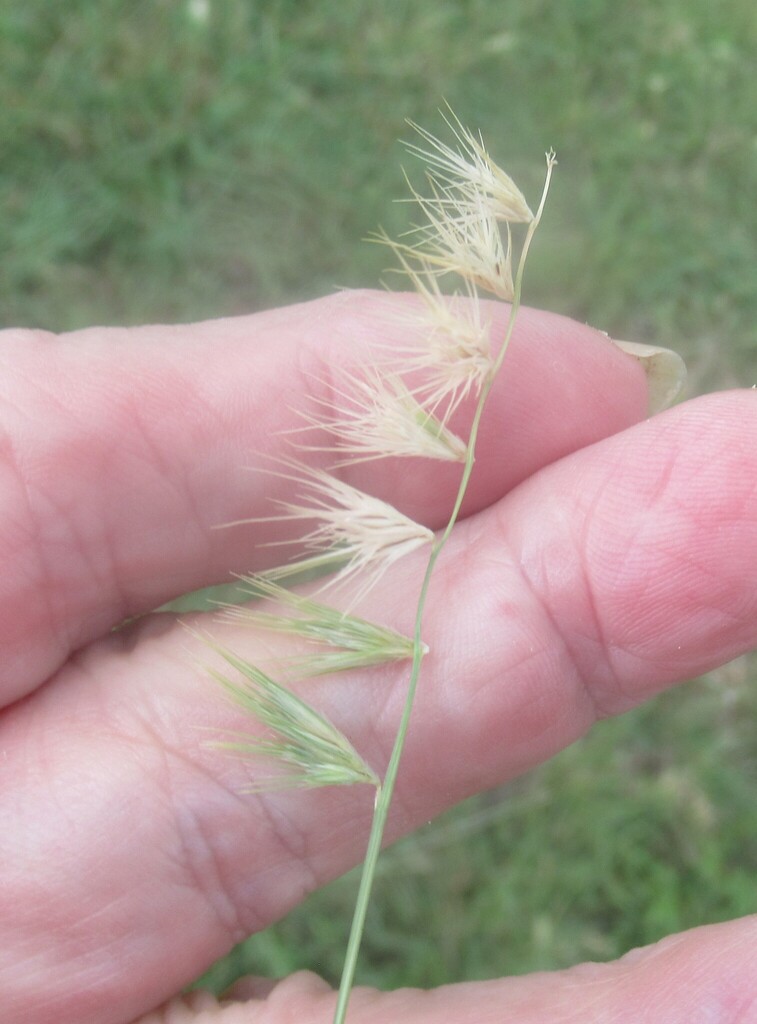
From late spring through fall, each clump sends up several thin flowering stalks bearing 6 to 8 short, triangular to wedge-shaped (cuneate) spikelet clusters, each about 1 to 1.2 cm long including the awns. The spikelets are crowded and ascending, with pubescent glumes and a fertile lemma that carries three spreading awns, giving the whole head a bristly, star-like look when backlit. The flowering heads are not showy from a distance but are distinctive and attractive up close.
Fruit & Seed
Like other gramas, Texas grama produces a small grain enclosed in the persistent floret. The dried, awned spikelets cling to the plant well after ripening, which is part of why the straw-gold seed heads remain an attractive feature into late fall and winter, and why the seed is easy to collect by hand for propagation.
Quick Facts
| Scientific Name | Bouteloua rigidiseta |
| Family | Poaceae (Grass) |
| Plant Type | Warm-season perennial bunchgrass |
| Mature Height | 8–12 in in flower |
| Mature Spread | 6–10 in clump width |
| Growth Rate | Slow to moderate |
| Sun Exposure | Full Sun to Part Shade |
| Water Needs | Low; drought tolerant once established |
| Soil Type | Thin, rocky, caliche or limestone soils; well-drained clay or sand |
| Soil pH | Neutral to alkaline (about 6.5–8.0) |
| Bloom Time | May – October |
| Flower Color | Straw-tan, drying pale gold |
| Fall Color | Tan, persisting through winter |
| Fruit | Small grain in persistent awned floret |
| Deer Resistant | Yes |
| USDA Hardiness Zones | 7–9 |
Native Range
Texas grama is native to the south-central United States, centered on the prairies, plains and rocky hills of Texas and Oklahoma, with outlying populations in eastern New Mexico, southwestern Arkansas and coastal Louisiana, and it also occurs in northern Mexico. It is most abundant and most dominant across the Edwards Plateau, Blackland Prairie and Rolling Plains of central Texas, where it often forms a major part of the short-grass understory on thin, rocky soils.
Typical habitat is open prairie, rocky hills, caliche outcrops, limestone glades and disturbed ground such as roadsides and pastures, nearly always in full sun on thin, well-drained, often alkaline soil. It tolerates heavy grazing better than many taller prairie grasses, which has helped it persist and even increase on rangeland where overgrazing has thinned out taller competitors. It commonly grows alongside sideoats grama, buffalograss, curly mesquite and little bluestem.
Because it needs sharp drainage and resents constantly wet or rich soil, Texas grama is a poor choice outside its climate and soil range; gardeners in humid, heavy-clay regions farther east or in consistently moist gardens generally see poor results. Within its native range it is not rare and is not protected, but it is best sourced from seed or nursery divisions rather than dug from the wild.
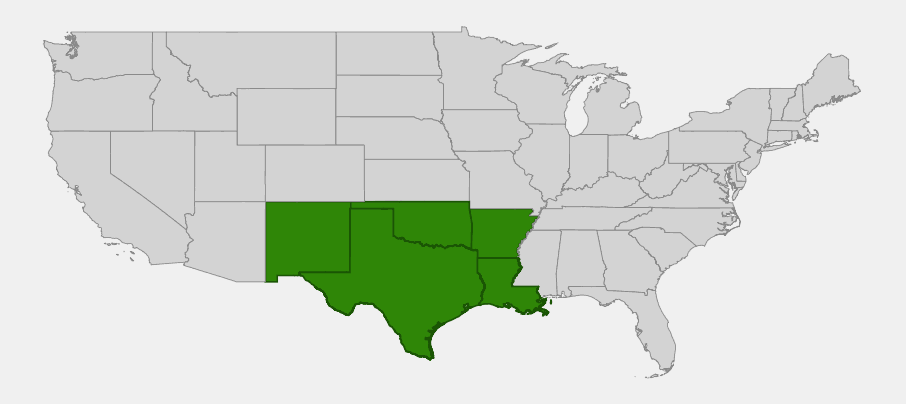
📋 Regional plant lists featuring Texas Grama: South and West Texas · Arkansas, Louisiana, Eastern Oklahoma & Eastern Texas · Arizona & New Mexico
Growing & Care Guide
Texas grama is easy to grow within its climate range, as long as the soil drains sharply and does not stay wet.
Light
Give Texas grama full sun for the thickest, most flower-covered clumps; this is how it grows naturally on open prairie. It tolerates light or part shade, such as under an open mesquite canopy, but clumps thin out and bloom less in heavier shade.
Soil & Water
Plant it in thin, rocky, well-drained soil; it thrives on caliche, limestone and clay-loam that would be considered poor for most garden plants, and it is one of the best native grasses for hot, dry, alkaline sites. Water new plantings for the first growing season to establish roots, then expect established clumps to need little or no supplemental water except in extended drought. Rich, moist, or heavy soils that stay wet invite root and crown rot.
Planting Tips
Set out container plants or seed in spring after the soil has warmed, giving each clump 6 to 10 inches of space since it does not spread by rhizomes. Direct seeding works well on prepared, lightly raked soil; seed needs light and should be only lightly covered. Avoid amending planting holes with rich compost, which can encourage rot in this lean-soil specialist.
Pruning & Maintenance
Texas grama needs very little upkeep. Where used as a short native lawn or meadow, an annual mowing or trimming to 2 to 3 inches in late winter removes old growth before spring green-up; otherwise leave the tan winter foliage standing for texture and wildlife cover. It needs no fertilizer and has few pest or disease problems.
Propagation
Propagate from seed collected in fall once the spikelets have dried to tan; sow in fall or spring on the soil surface, since the seed needs light to germinate. Established clumps can also be divided in early spring, though division is slower to recover than fresh seedlings in this species.
Landscape Uses
- Short native lawn or meadow alternative on hot, dry, rocky sites where turf grass struggles
- Rock gardens and xeriscapes paired with sideoats grama
- Prairie restoration as a fine-textured matrix grass between wildflowers
- Erosion control on thin, rocky slopes and caliche cuts
- Edging and pathway borders where a low, tidy grass is wanted
Wildlife & Ecological Value
Though small and often overlooked, Texas grama plays a steady supporting role in the short-grass prairies where it grows.
For Pollinators
As a wind-pollinated grass, Texas grama does not offer nectar, but its fine foliage provides larval host material and shelter for several native skipper butterflies and other grass-feeding insects, which in turn support insect-eating pollinators and birds.
For Birds
Ground-feeding birds such as sparrows and quail pick at the small grains through fall and winter, and the dense tufted growth offers low cover and nesting material for grassland birds.
For Mammals
Texas grama is palatable and nutritious forage for cattle, deer and other grazers, and its tolerance of grazing pressure is part of why it persists and often increases on well-used rangeland. Small mammals use the tufted clumps for cover.
Ecosystem Role
As a short, fine-rooted bunchgrass, Texas grama helps bind thin prairie and caliche soils against erosion and fills the gaps between taller grasses, adding structural diversity close to the ground that benefits ground-dwelling insects and ground-feeding birds.
Cultural & Historical Uses
Texas grama has no significant documented history of use by Indigenous peoples or settlers as a food, fiber or medicinal plant; like many short gramas, its chief historical importance has been as rangeland forage rather than a plant gathered or cultivated for human use.
Ranchers across central and south Texas have long valued it as a component of native pasture, prized for staying green and palatable through much of the growing season and for holding up under grazing better than many taller prairie grasses. Agricultural extension and range management programs in Texas and Oklahoma have studied it as an indicator of rangeland health, since its abundance tends to rise on grazed land where taller bunchgrasses have thinned.
In recent decades, Texas grama has gained a second life in native plant horticulture, as gardeners and restoration practitioners in its range look for authentic, low-water alternatives to traditional lawn grass and ornamental ornamental grasses from other continents.
Frequently Asked Questions
Can Texas grama be used as a lawn grass?
Yes, within its native range it makes a low, fine-textured lawn or meadow alternative that needs little water or mowing once established, though it will not take heavy foot traffic as well as turf grasses bred for that purpose.
How is Texas grama different from blue grama or sideoats grama?
Texas grama is shorter overall, usually under a foot, with more numerous, smaller, triangular spikelet clusters along the flowering stem, compared to the single curved comb of blue grama or the larger, more widely spaced spikelets of sideoats grama.
Does Texas grama need fertilizer?
No. It is adapted to thin, low-fertility, rocky soils and generally performs worse, not better, on rich or heavily fertilized ground, which can encourage weak growth and disease.
Is Texas grama drought tolerant?
Very. Once its roots are established, it is one of the more drought-tolerant native grasses in its region and needs supplemental water only in prolonged, severe drought.
Where does Texas grama grow best?
It grows best in full sun on thin, well-drained, often rocky or alkaline soil, such as limestone hills, caliche flats and dry prairie; it performs poorly in humid climates with heavy, constantly moist clay soils.

Looking for a nursery that carries Texas Grama?
Browse our native plant nursery directory: Texas · Oklahoma & New Mexico · Louisiana · Arkansas