Woolly Lip Fern (Cheilanthes tomentosa)
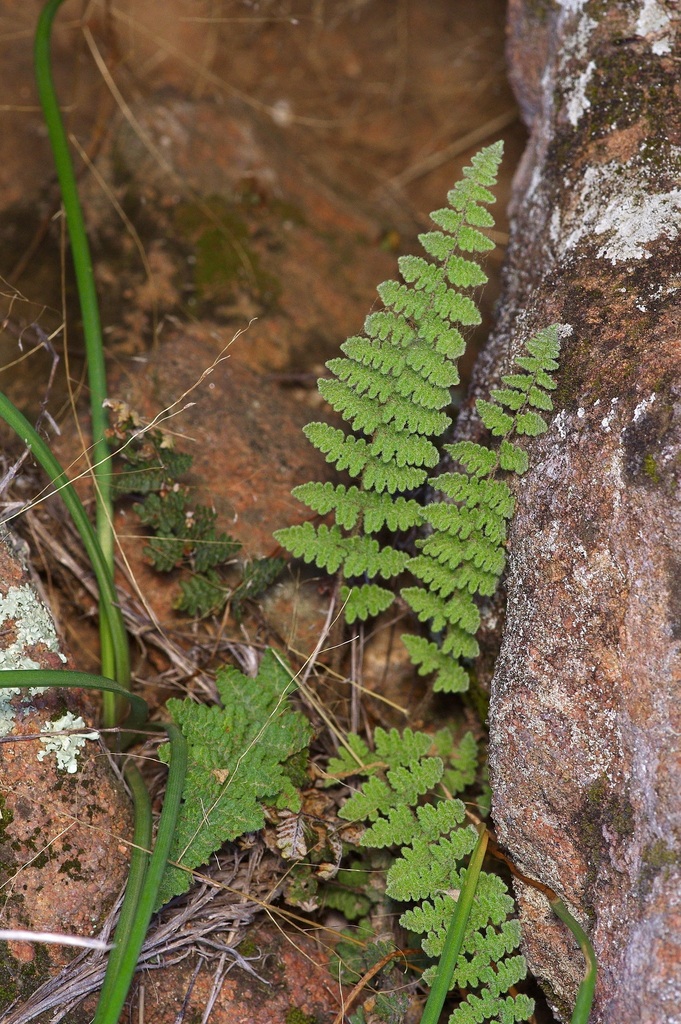
Cheilanthes tomentosa (also classified as Myriopteris tomentosa), commonly called woolly lip fern, is a small, drought-tolerant perennial fern native to dry, rocky slopes and outcrops across the south-central and southeastern United States. Unlike the moisture-loving ferns most gardeners picture, woolly lip fern is a true xeric fern, built to survive baking sun, thin soil and long dry spells on exposed rock.
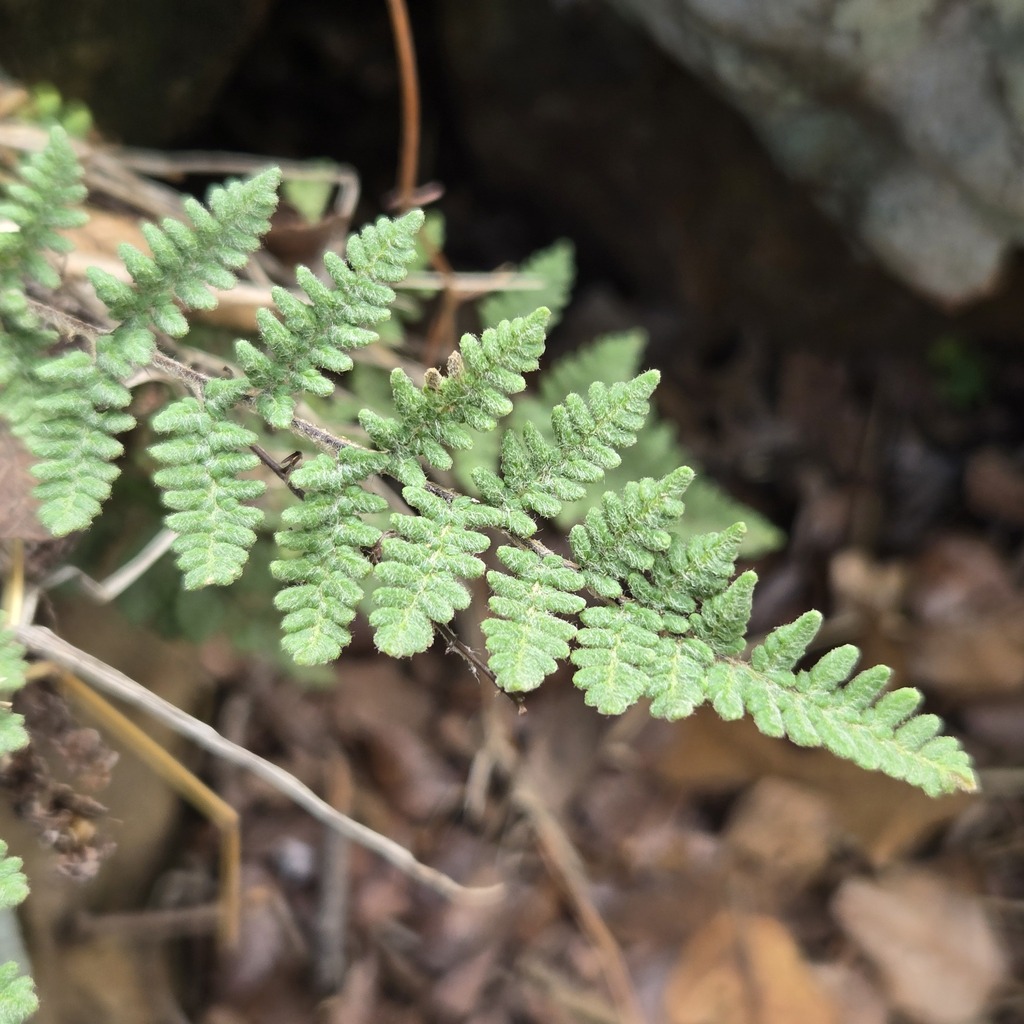
The plant forms a dense, low tuft of finely divided, lacy fronds 6 to 15 inches long, covered on both surfaces with a soft coat of fine white to tan hairs that give the whole plant a woolly, grayish-green cast. That hairy coat is more than decoration: it reflects sunlight and slows moisture loss, letting the fern thrive on sun-baked ledges where almost no other fern could survive. During extended drought the fronds curl inward and appear dead, then uncurl and green up again within days of rain, a trick called poikilohydry shared by several of its rock-fern relatives.
For rock garden and xeriscape enthusiasts within its range, woolly lip fern is an excellent, often overlooked choice: a true fern that thrives in the crevices of a dry stone wall, scree bed or rock garden where conventional ferns would simply die.
Identification
Woolly lip fern grows from a short, compact rhizome densely covered in narrow brown scales, producing a tight tuft of upright to arching fronds rather than spreading widely.
Fronds
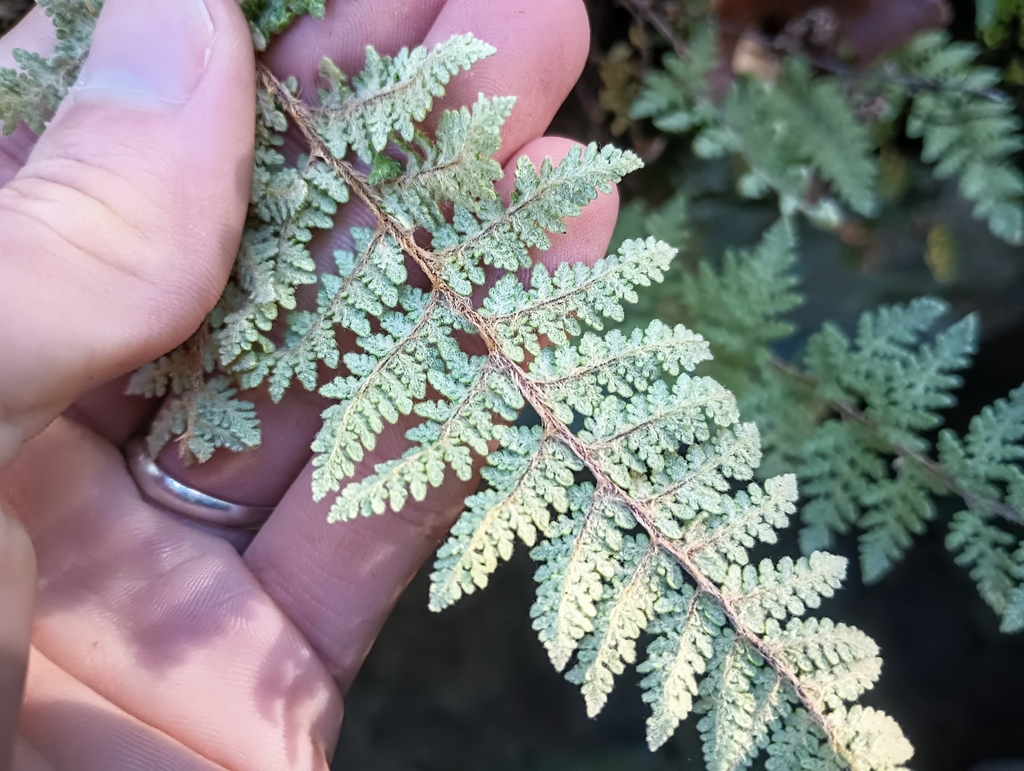
Fronds are narrowly lance-shaped to oblong, 6 to 15 inches long, and finely divided two to three times (bipinnate to tripinnate), giving them a delicate, lacy appearance despite their tough, drought-hardy nature. Both frond surfaces are covered in dense, soft, whitish to tan hairs, a key field mark that separates this species from the related and superficially similar lace ferns and lip ferns, most of which have scaly rather than hairy fronds. The wiry stalks (stipes) are dark brown to black and also hairy.
Sori & Reproduction
Like other lip ferns, woolly lip fern does not flower; it reproduces by spores produced in small clusters (sori) along the curled-under edges of the frond segments on the underside, protected by the rolled leaf margin (a false indusium). Spores typically mature in summer and are dispersed by wind.
Habit
The fern forms a dense, rounded tuft 6 to 12 inches across. During drought the fronds curl tightly inward and look brown and shriveled, a normal dormant response rather than a sign of a dying plant; they green up and unfurl again within days of rain.
Quick Facts
| Scientific Name | Cheilanthes tomentosa (syn. Myriopteris tomentosa) |
| Family | Pteridaceae (Brake Fern) |
| Plant Type | Evergreen, drought-dormant perennial fern |
| Mature Height | 6–15 in |
| Mature Spread | 6–12 in |
| Growth Rate | Slow |
| Sun Exposure | Full Sun to Part Shade |
| Water Needs | Low; excellent drought tolerance once established |
| Soil Type | Rocky, thin, sharply drained; limestone or other rock crevices |
| Soil pH | Neutral to alkaline (about 6.5–8.0) |
| Bloom Time | Non-flowering (spores mature in summer) |
| Flower Color | None (fern) |
| Fall Color | Evergreen (curls and browns in drought, regreens with rain) |
| Fruit | None; reproduces by spores |
| Deer Resistant | Yes |
| USDA Hardiness Zones | 5–9 |
Native Range
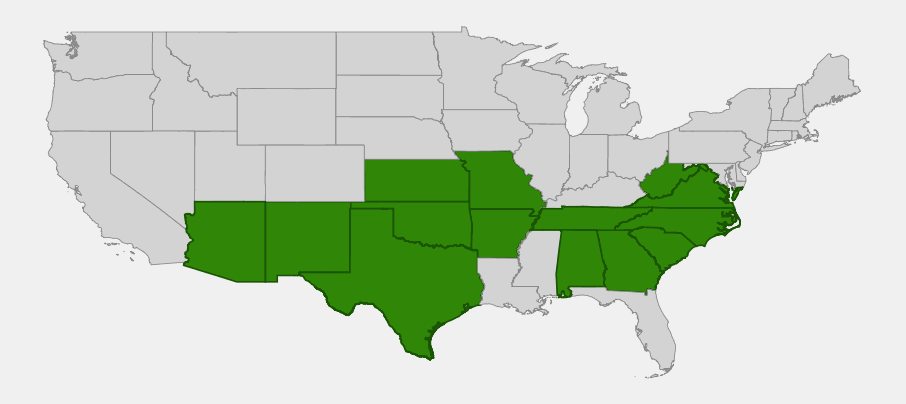
Woolly lip fern is native to two broad regions of the United States: a western cluster across Arizona, New Mexico, Texas, Oklahoma, Arkansas, Kansas and Missouri, and an eastern cluster across the southern Appalachians and Piedmont, including Alabama, Georgia, Tennessee, North Carolina, South Carolina, Virginia and West Virginia. It is absent from the lower Gulf coastal plain and most of the Mississippi Valley between these two clusters.
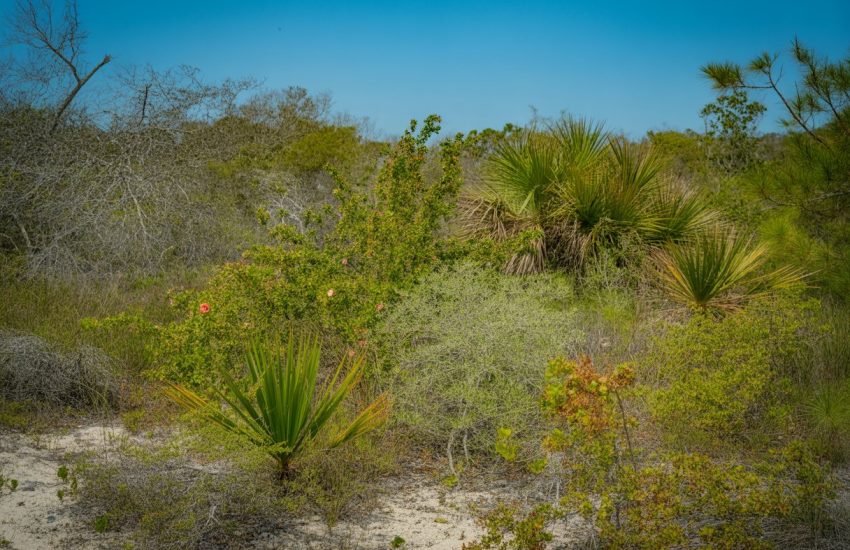
Typical habitat is dry, sun-exposed rock: limestone and other calcareous outcrops, boulders, canyon walls, rocky slopes and the thin soil pockets in crevices, almost always on well-drained, rocky or gravelly ground with little competition from taller vegetation. In the Southeast it is especially associated with exposed granite and limestone outcrops in the Piedmont and foothills; in the Southwest it occupies rocky canyons and hillsides from the desert grasslands up into oak-juniper woodland.
Woolly lip fern is not rare or protected across most of its range, though populations can be locally uncommon where suitable rock habitat is limited. Because it depends on specific rocky microhabitats, it is rarely weedy and poses no invasive risk.
📋 Regional plant lists featuring Woolly Lip Fern: South and West Texas · Arkansas, Louisiana, Eastern Oklahoma & Eastern Texas · Nebraska, Kansas & Eastern Colorado · Illinois, Iowa & Missouri · Georgia, Alabama & Mississippi · Kentucky & Tennessee · North Carolina & South Carolina · Maryland, Virginia & West Virginia · Arizona & New Mexico
Growing & Care Guide
Woolly lip fern rewards gardeners who give it the opposite of typical fern care: lean soil, sharp drainage and plenty of sun rather than shade and moisture.
Light
Give woolly lip fern full sun to light shade. It is naturally a rock-face plant adapted to strong light, and unlike woodland ferns it does not need shade to thrive; too much shade can make growth leggy and sparse.
Soil & Water
Plant in thin, rocky, sharply drained soil; a rock garden crevice, dry stone wall, or gravel-amended bed suits it far better than rich garden loam. Water sparingly after establishment; this fern is adapted to long dry spells and resents having wet feet, which can rot the rhizome. Established plants need no supplemental irrigation beyond natural rainfall in most of their native range.
Planting Tips
Tuck small nursery-grown plants into crevices between rocks or in a raised scree bed, angling the rhizome so water drains away rather than collecting around the crown. Give it excellent drainage above all else; a few inches of gravel mulch around the base helps keep the crown dry. Avoid planting in standard garden beds with regular irrigation meant for moisture-loving plants.
Pruning & Maintenance
Essentially none needed. Old, tattered fronds can be trimmed off in late winter before new growth resumes, but many gardeners simply leave the plant alone. If fronds curl and brown during a dry spell, resist the urge to intervene; this is normal drought dormancy, not plant failure, and fronds typically green back up within days of rain.
Propagation
Woolly lip fern is propagated by spores, which require a longer and more exacting process than typical fern spore culture because of the plant’s need for excellent drainage even as a seedling; division of the compact rhizome is difficult and rarely attempted. Most gardeners source plants from specialty native plant or rock-garden nurseries rather than propagating their own.
Landscape Uses
- Rock gardens and crevice gardens where few true ferns can survive
- Dry stone walls tucked between stones for a soft, textural accent
- Xeriscape and waterwise plantings with low-water native companions
- Container rock gardens in fast-draining mineral soil mixes
- Limestone and granite outcrop restoration projects within its native range
Wildlife & Ecological Value
Woolly lip fern is a modest but genuine contributor to the rocky plant communities it inhabits, though as a fern it plays a different ecological role than flowering natives.
For Pollinators
As a spore-producing fern, it offers no nectar or pollen and plays no direct pollinator role, but the dense tufts shelter small insects and spiders that are part of the broader food web on rock outcrops.
For Birds
Ground-foraging birds may pick through rock-outcrop fern tufts for insects, though woolly lip fern itself provides no significant seed or fruit resource.
For Mammals
Small rock-dwelling mammals and reptiles use dense fern tufts for cover on otherwise exposed rock surfaces, and the plant is not a significant browse species for larger mammals.
Ecosystem Role
Woolly lip fern is one of the pioneer plants able to colonize bare rock and thin crevice soil, helping trap organic matter and moisture that gradually supports other rock-outcrop specialists. Outcrop communities like these are often botanically distinctive and worth conserving where they occur.
Cultural & Historical Uses
Woolly lip fern has no significant documented history of food, fiber or medicinal use by Indigenous peoples or settlers. As a small, tough fern of exposed rock rather than a conspicuous or productive plant, it did not attract the kind of traditional use recorded for many larger or more accessible species.
Its primary human interest has always been botanical and, more recently, horticultural. Early American botanists documented it among the diverse rock-fern flora of the southern Appalachians and the Southwest, and its remarkable ability to “resurrect” after apparent death in drought has long fascinated naturalists studying desiccation tolerance in plants.
In recent decades, rock garden and native plant enthusiasts have begun seeking out woolly lip fern and its relatives as specialty plants for crevice gardens, appreciating a true fern that thrives in conditions that would kill most other ferns outright.
Frequently Asked Questions
Why do the fronds of my woolly lip fern turn brown and curl up?
This is a normal drought response called poikilohydry, not a sign the plant is dying. The curled, brown fronds protect the fern’s tissues during dry spells and will uncurl and green up again within days of rain.
Can woolly lip fern grow in regular garden soil?
It performs poorly in rich, moisture-retentive garden soil, which tends to rot the rhizome. It needs lean, rocky, sharply drained soil similar to a rock garden or crevice planting to thrive long-term.
Does woolly lip fern need shade like other ferns?
No. Unlike most garden ferns, it is adapted to full sun on exposed rock and actually performs best with plenty of light, needing only light shade in the hottest, driest climates.
How can I tell woolly lip fern from similar rock ferns?
The dense covering of fine white to tan hairs on both surfaces of the frond is the key field mark; related lip ferns and lace ferns in the same habitats typically have scaly rather than hairy fronds.
Is woolly lip fern easy to find in nurseries?
It is a specialty plant, more often available from rock-garden and native-plant specialty nurseries than from general garden centers, so gardeners within its range may need to seek out a dedicated native plant source.

Looking for a nursery that carries Woolly Lip Fern?
Browse our native plant nursery directory: Texas, Tennessee, South Carolina & Virginia · Oklahoma & New Mexico · Arkansas, Arizona & Alabama · Missouri · Kansas · Georgia · West Virginia