Two-Tooth Sedge (Carex serratodens)
Carex serratodens, commonly known as Two-Tooth Sedge, is a clump-forming perennial sedge of California’s coastal hills, valleys, and inner Coast Ranges, with a notable disjunct outpost in the sky-island canyons of southeastern Arizona. Its unusual common name comes from the sharply two-toothed perigynia (the small, beaked sacs enclosing each seed), a detail visible up close that helps separate it from the many other clump-forming Carex species sharing its habitat.
Two-Tooth Sedge favors seasonally moist, often heavy clay soils — swales, seeps, streambanks, and the damp edges of vernal drainages that are saturated through the rainy season and dry considerably by late summer. This adaptability to California’s wet-winter, dry-summer rhythm makes it a natural fit for rain gardens, clay-soil plantings, and the margins of seasonal water features in gardens throughout its range.
Though less widely sold than some of its sedge relatives, Two-Tooth Sedge is gaining attention among California native plant growers for its tolerance of heavy clay — a soil type that frustrates many other garden sedges — and its usefulness in bioswales and seasonal wetland plantings.
Identification
Two-Tooth Sedge grows in loose to fairly dense clumps rather than spreading extensively by rhizome, reaching 1 to 3 feet tall with arching, grass-like foliage. Clumps slowly expand over years but stay far more contained than true rhizomatous lawn sedges such as Carex pansa or Carex praegracilis.
Leaves & Stems
Leaves are flat, somewhat firm, and medium green, typically ⅛ to ¼ inch (3–6 mm) wide, rising from the base in an arching fountain shape. Flowering stems are triangular in cross-section, as in all true sedges, and generally stand taller than the surrounding foliage, especially in spring when flowering stems elongate rapidly.
Flowers
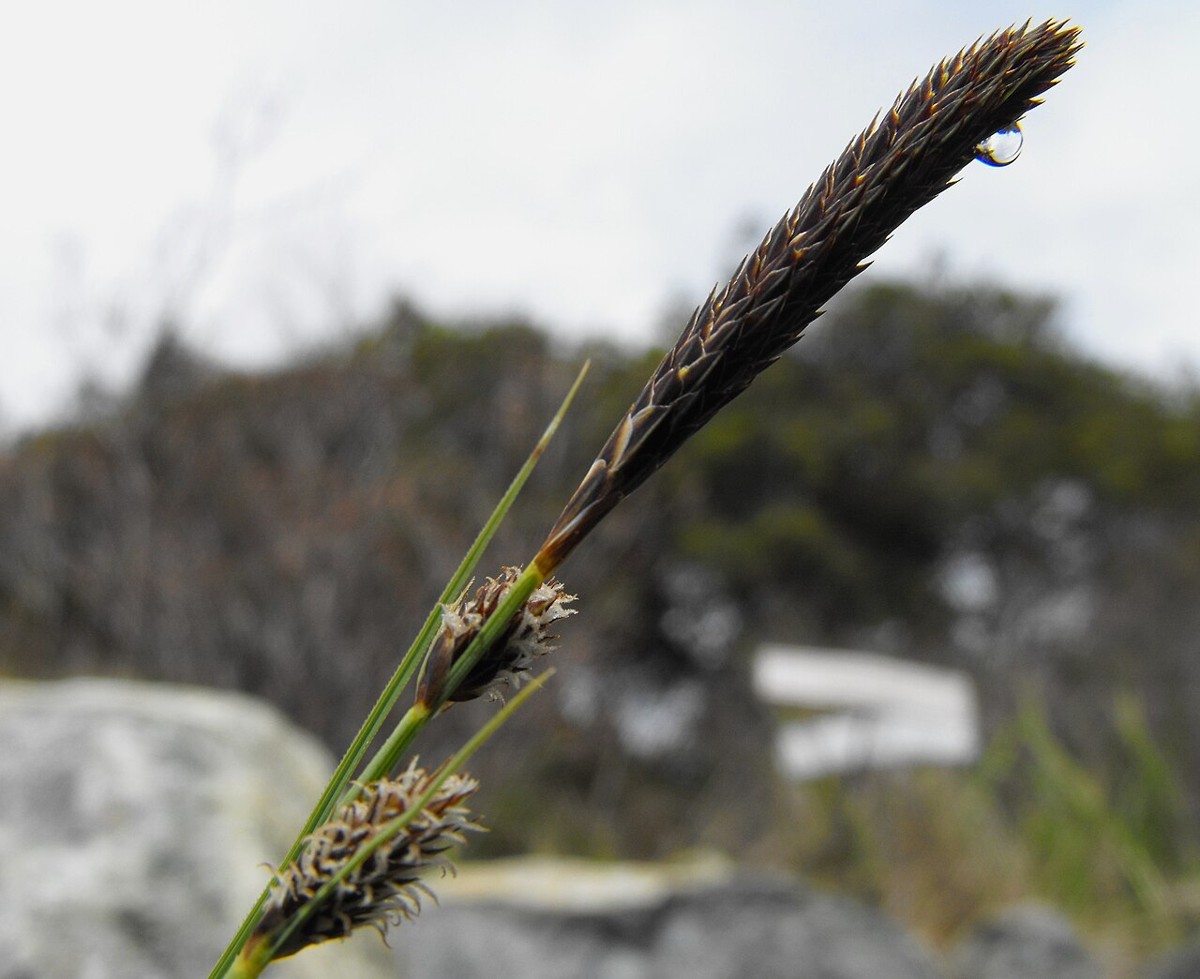
Each flowering stem carries a single, slender, dark reddish-brown to blackish male spike at the tip, held above one to several shorter, thicker, paler green to straw-colored female spikes lower on the same stem. The contrast between the dark, narrow male spike and the lighter, bristlier female spikes below it is a useful and attractive field mark, visible in the photograph above. Bloom occurs in spring, typically March through May, with timing following the winter rains that the species depends on.
Fruit & Seeds
The defining identification feature of this species lies in its fruit: each seed is enclosed in a perigynium with two sharp, tooth-like points at the beak — the “two teeth” of the common name — a detail distinct enough under magnification to separate Carex serratodens from superficially similar clumping sedges in the same habitats. The bristly, straw-colored female spikes mature through late spring and into early summer.
Quick Facts
| Scientific Name | Carex serratodens W. Boott |
| Family | Cyperaceae (Sedge) |
| Plant Type | Clump-Forming Perennial Sedge |
| Mature Height | 1–3 ft (30–90 cm) |
| Mature Spread | 1–2 ft clumps, slowly expanding |
| Growth Rate | Moderate |
| Sun Exposure | Full Sun to Partial Shade |
| Water Needs | Moderate to High in winter/spring; tolerates summer dry-down |
| Soil Type | Clay, loam; tolerates seasonal saturation |
| Soil pH | 6.0–7.5 (neutral) |
| Bloom Time | March – May |
| Flower Color | Dark reddish-brown (male) and pale green to straw (female) |
| Fall Color | Foliage fades to tan in late summer dormancy |
| Fruit | Small achenes in sharply two-toothed, beaked perigynia |
| Deer Resistant | Yes |
| USDA Hardiness Zones | 8–10 |
Native Range
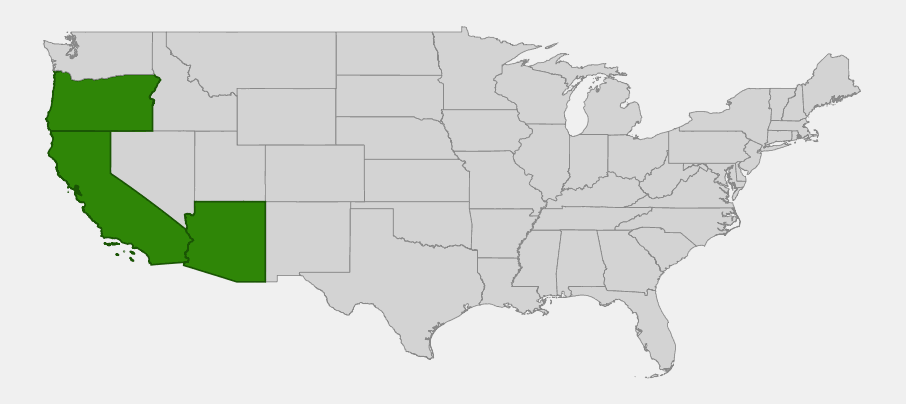
Two-Tooth Sedge is centered in California, occurring through the Coast Ranges, San Francisco Bay Area hills, Central Valley margins, and inner South Coast Ranges, with populations reaching north into western Oregon. A separate, disjunct population occurs in the sky-island canyons and oak woodlands of southeastern Arizona — a notable range gap that reflects similar pockets of seasonally moist, clay-rich soil in otherwise arid country.
Within California, the species typically grows in seasonally wet swales, clay-soil seeps, streamside flats, and the damp margins of vernal drainages in grassland, oak woodland, and chaparral-adjacent settings. These sites share a common rhythm: saturated or very moist soil through the winter rainy season, followed by a pronounced summer dry-down, a pattern the species’ clumping, moderately deep root system is well adapted to ride out.
The Arizona population occupies a similar seasonal-moisture niche within canyon bottoms and riparian oak woodlands of the sky islands, illustrating how the same basic habitat template — heavy, seasonally wet soil in an otherwise dry landscape — can support the species across a wide geographic gap.
📋 Regional plant lists featuring Two-Tooth Sedge: California & Nevada · Western Oregon & Western Washington · Arizona & New Mexico
Growing & Care Guide
Two-Tooth Sedge is a good option for gardeners dealing with heavy clay soil and a seasonal wet-dry cycle — conditions that stump many other ornamental sedges but match this species’ native habitat closely.
Light
Plants grow well in full sun near the coast and in partial shade further inland, where some afternoon shelter reduces stress during the hottest part of summer. In its native oak-woodland sites, it often grows in the light shade cast by oak canopies.
Soil & Water
Two-Tooth Sedge is notably tolerant of heavy clay soils that stay wet through winter, making it a strong choice for low spots, clay-bound swales, and seasonal drainage lines that other plants find too waterlogged in winter and too dry in summer. Regular winter and spring moisture supports strong growth and flowering; established plants tolerate a pronounced summer dry-down without irrigation, consistent with California’s Mediterranean climate, though occasional deep summer water keeps foliage fresher in garden settings.
Planting Tips
Install container plants in fall, ahead of winter rains, so roots can establish before the summer dry season. Choose a site that stays visibly moist through winter — a swale, rain garden basin, or the lower end of a slope — rather than a well-drained raised bed. Space clumps roughly 12 to 18 inches apart for a filled-in look within two to three years.
Pruning & Maintenance
Maintenance needs are minimal. Cutting back old foliage in late winter, before new growth emerges, keeps clumps tidy, though it is not strictly necessary. Clumps can be divided in fall if a planting needs to be expanded or rejuvenated after several years.
Landscape Uses
Two-Tooth Sedge fills a useful niche for seasonally wet, clay-soil garden sites:
- Rain gardens and bioswales on heavy clay soils
- Seasonal wetland and vernal drainage plantings
- Oak woodland understory in winter-wet, summer-dry sites
- Pond and water-feature margins with clay-based soils
- Clay-soil erosion control on gentle slopes and swale edges
Wildlife & Ecological Value
Two-Tooth Sedge contributes quiet but real habitat value in the seasonally wet clay swales and oak-woodland drainages it occupies.
For Birds
Seed-eating birds forage on the ripening seed in the dense female spikes, and the clumping foliage provides low cover for ground-foraging species in open grassland and woodland-edge habitats.
For Insects & Other Wildlife
As with other sedges, the plant is wind-pollinated rather than insect-pollinated, but its clumps provide shelter for ground-dwelling insects and small animals, particularly valuable in the otherwise sparse, seasonally wet microhabitats it favors.
Ecosystem Role
By anchoring heavy, seasonally saturated clay soils, Two-Tooth Sedge helps stabilize vernal drainages and swale edges against erosion during the winter rainy season, when these sites see their highest water flow and are most vulnerable to soil loss. Its presence is also a useful indicator of intact seasonal wetland hydrology in California’s grassland and oak-woodland landscapes.
Cultural & Historical Uses
Two-Tooth Sedge does not have a widely documented history of specific material use by Indigenous peoples of California, and its growth in seasonally wet clay swales — often less accessible and less productive for fiber harvesting than the long rhizomes of floodplain basketry sedges — likely made it a secondary plant in traditional practice compared with more prominent wetland species.
Its current significance lies mainly in California native plant horticulture, where growing recognition of clay-tolerant native groundcovers and rain-garden plants has brought more attention to species like Two-Tooth Sedge that solve a specific, common garden problem: what to plant in a low spot that floods in winter and bakes dry in summer.
The species’ disjunct Arizona population is also of interest to botanists studying historical connections between California floristic communities and the isolated sky-island ranges of the desert Southwest, where pockets of California-affiliated flora persist in cooler, wetter canyon microclimates.
Frequently Asked Questions
Why is it called Two-Tooth Sedge?
The name refers to the two sharp, tooth-like points on the beak of each perigynium (the small sac enclosing the seed), a distinguishing feature visible up close on the female spikes.
Will Two-Tooth Sedge grow in heavy clay soil?
Yes — it is notably well suited to heavy clay that stays wet in winter, making it a good choice for rain gardens, swales, and seasonal drainage areas where many other sedges and groundcovers struggle.
Does it need water all summer?
No. It is adapted to California’s wet-winter, dry-summer climate and tolerates a significant summer dry-down once established, though occasional deep watering keeps foliage looking fresher through the driest months.
Is the Arizona population the same species as the California plants?
Yes. Both are Carex serratodens, occupying similar seasonally wet, clay-influenced habitats — swales and streamside flats in California, and canyon riparian sites in the Arizona sky islands — despite the geographic gap between them.
Is Two-Tooth Sedge aggressive or spreading like a lawn sedge?
No. It grows in slowly expanding clumps rather than spreading widely by rhizome, so it stays put as a clumping accent rather than filling in as a continuous groundcover.

Looking for a nursery that carries Two-Tooth Sedge?
Browse our native plant nursery directory: California · Oregon · Arizona