Tapertip Hawksbeard (Crepis acuminata)
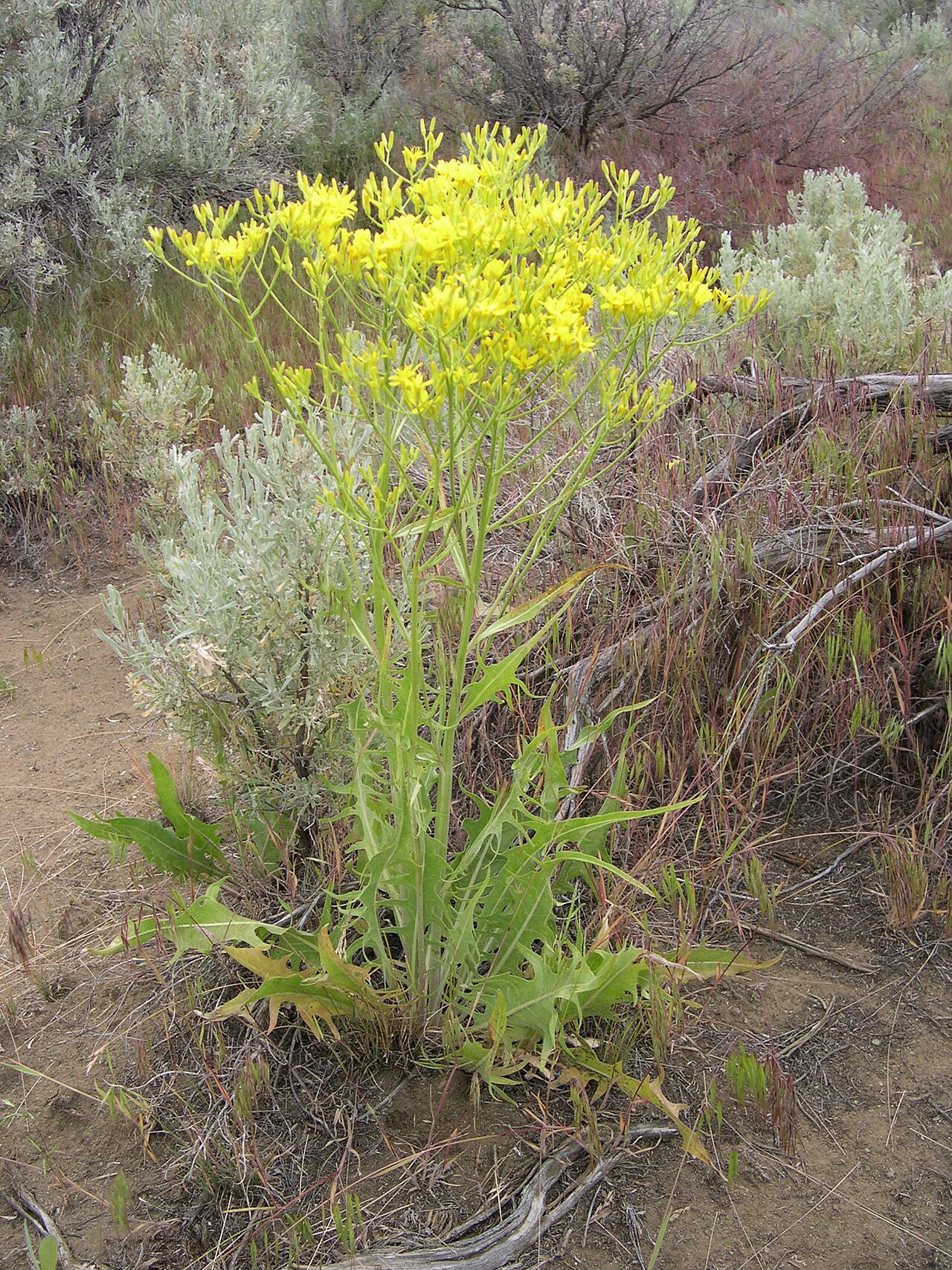
Crepis acuminata, known as tapertip hawksbeard or longleaf hawksbeard, is a tough, drought-adapted perennial wildflower of the sagebrush country and dry montane forests of the interior West. It forms a rosette of long, deeply lobed, gray-green leaves from a stout taproot, and in late spring sends up branching, woolly flower stalks topped with flat clusters of bright yellow, dandelion-like flower heads. The “tapertip” in its name refers to the narrow, pointed tips of its involucral bracts, a detail that helps separate it from the dozen or so other western hawksbeards it often grows beside.
This is a common, unassuming plant across millions of acres of sagebrush steppe, from the dry hills east of the Cascades through the Great Basin and into the Rocky Mountain foothills. It thrives in exactly the lean, rocky, well-drained soils that frustrate many other wildflowers, and because it grows from a deep taproot it handles the long summer droughts of its native range without complaint. Few gardeners seek it out by name, but for a true-to-habitat sagebrush steppe or dry rock garden planting in the Intermountain West, it is a dependable, low-maintenance native with real wildlife value.
Tapertip hawksbeard asks for almost nothing: full sun, sharp drainage, and no supplemental water once established. In return it offers weeks of cheerful yellow bloom in early summer, when much of the surrounding sagebrush steppe is otherwise quiet, and its foliage and seed feed a range of native wildlife across its range.
Identification
Tapertip hawksbeard is a perennial herb in the sunflower family (Asteraceae), growing from a thick taproot and a basal rosette of leaves. Flowering stems are woolly-hairy, branching in the upper half, and reach roughly 1 to 2.5 feet tall, occasionally taller in favorable sites.
Leaves
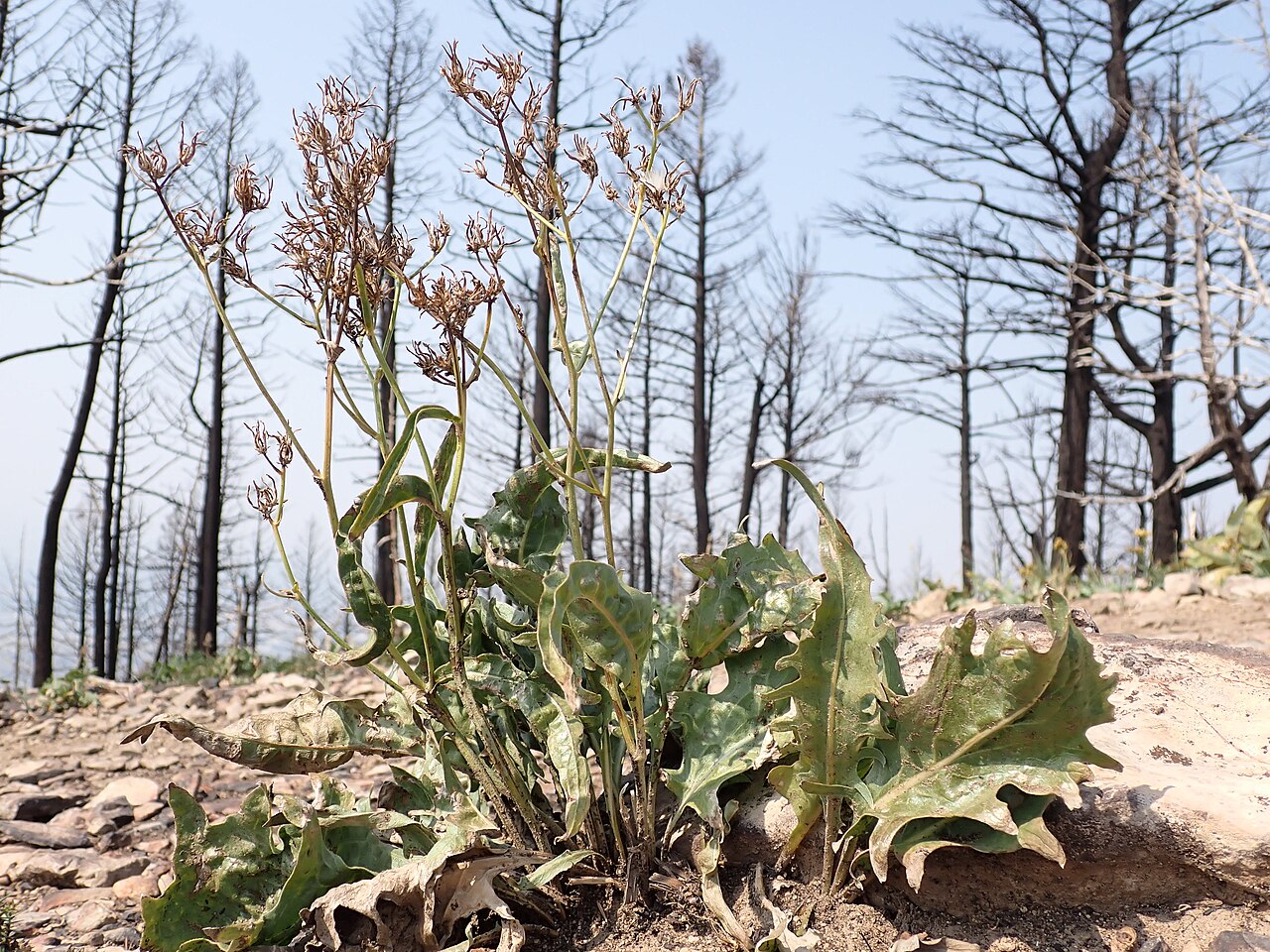
The basal leaves are the plant’s most distinctive feature: long, narrow, gray-green, and deeply cut into numerous triangular, backward-pointing lobes, giving them a ragged, dandelion-like outline. They can reach 4 to 16 inches long, with the largest leaves near the base of the plant. Stem leaves are smaller and fewer, reducing in size up the stalk. All parts of the plant exude a milky, bitter latex when broken, typical of the chicory tribe within the sunflower family.
Flowers
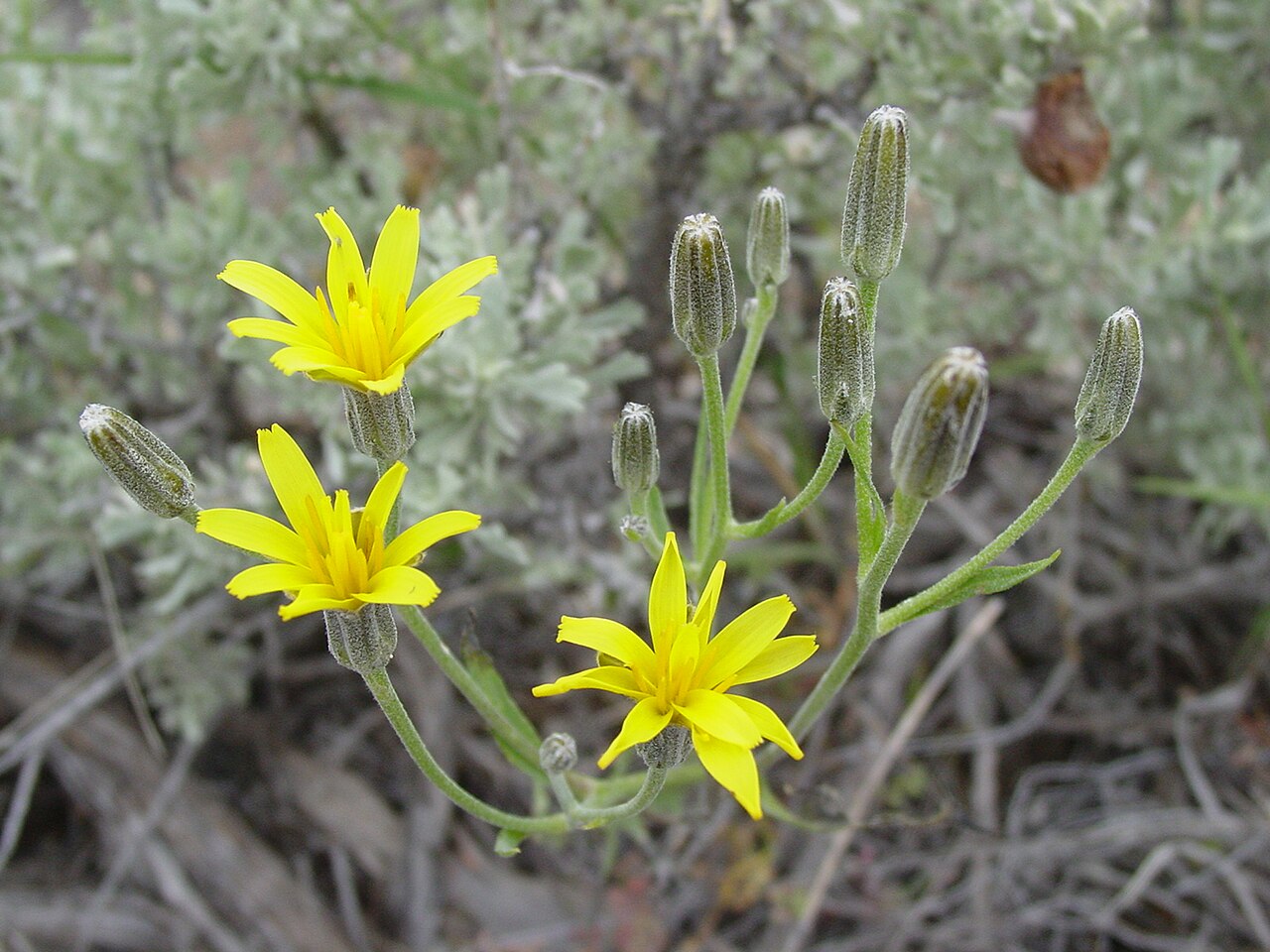
Flower heads are borne in an open, branching, flat-topped to rounded cluster at the top of each stem. Each head is about ⅝ to 1 inch wide and composed entirely of yellow ray florets — there are no central disc florets, as in dandelions and other chicory-tribe composites — with up to about 10 rays per head. The narrow, pointed (tapertipped) phyllaries wrapping each bud are smooth to finely hairy. Bloom typically runs from late May through July depending on elevation, with high-elevation populations flowering later.
Fruit & Seeds
Each flower head matures into a cluster of narrow, ribbed achenes about ¼ to ⅓ inch long, each tipped with a tuft of white, hairlike bristles (a pappus) that carries the seed on the wind, much like a small dandelion puff.
Quick Facts
| Scientific Name | Crepis acuminata |
| Family | Asteraceae (Sunflower) |
| Plant Type | Perennial Wildflower |
| Mature Height | 1–2.5 ft |
| Mature Spread | 1–1.5 ft |
| Growth Rate | Slow to moderate |
| Sun Exposure | Full Sun |
| Water Needs | Low |
| Soil Type | Dry, rocky or sandy, well-drained |
| Soil pH | Neutral to slightly alkaline |
| Bloom Time | Late May – July |
| Flower Color | Yellow |
| Fall Color | None (foliage dies back) |
| Fruit | Small ribbed achenes with white pappus |
| Deer Resistant | Moderate (browsed when preferred forage is scarce) |
| USDA Hardiness Zones | 4–8 |
Native Range
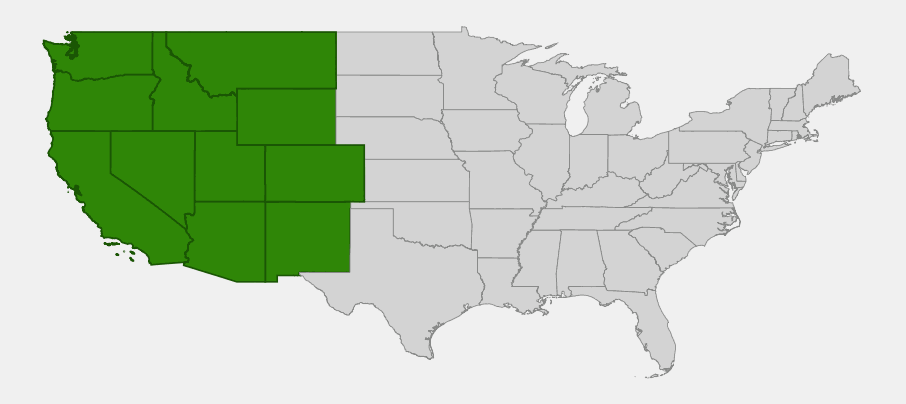
Tapertip hawksbeard is native across the interior western United States, from eastern Washington and eastern California through the Great Basin and Rocky Mountains to central Montana, Colorado, and northern New Mexico. It is one of the most common and widespread forbs of sagebrush steppe vegetation, found at nearly every elevation where big sagebrush (Artemisia tridentata) grows.
Across this range it occupies dry, open habitats: sagebrush flats and foothills, open pine and juniper woodlands, dry montane meadows, and rocky slopes, typically from valley floors up into the lower subalpine zone. It is notably fire-adapted, often resprouting vigorously from its deep taproot the first growing seasons after a burn, when it can become locally abundant before surrounding shrubs recover.
Because it depends on a true continental, dry-summer climate, tapertip hawksbeard does not occur in the moist forests west of the Cascade and Sierra Nevada crests; its range sits entirely in the rain-shadow country to the east, making it a good indicator species for genuine high-desert and sagebrush-steppe gardens.
📋 Regional plant lists featuring Tapertip Hawksbeard: California & Nevada · Idaho, Eastern Oregon & Eastern Washington · Utah & Western Colorado · Montana & Wyoming · Arizona & New Mexico
Growing & Care Guide
Tapertip hawksbeard is built for neglect. Give it full sun and sharp drainage and it will establish slowly from a deep taproot and then outlast most of the plants around it through drought, heat, and poor soil.
Light
This species needs full sun to perform well; it is a plant of open sagebrush flats and rocky slopes, not shaded understories, and will grow weak and sparse-flowering in shade.
Soil & Water
Sharp drainage is essential — rocky, sandy or gravelly soils of average to low fertility suit it best, mimicking the lean sagebrush-steppe soils it grows in naturally. Water only to establish young plants; once the taproot is down, established plants need no supplemental irrigation and can rot in heavy, poorly drained or regularly watered soil.
Planting Tips
Start from seed sown in fall to take advantage of winter moisture and natural stratification, or set out container-grown plants in spring. Because it develops a deep taproot early, tapertip hawksbeard transplants poorly once established, so choose its permanent spot from the start. Give plants 12 to 18 inches of space to accommodate their basal leaf rosette.
Pruning & Maintenance
Little maintenance is needed. Spent flower stalks can be cut back after seed has dispersed, or left standing through winter for seed-eating birds. The basal rosette persists as a low mound of foliage through the dormant season in milder parts of its range.
Landscape Uses
Tapertip hawksbeard fits naturally into dry, low-water garden styles across the Intermountain West:
- Sagebrush steppe and high-desert gardens
- Xeriscape and gravel gardens
- Dry rock gardens and slope plantings
- Post-fire and disturbed-land restoration
- Pollinator and wildlife gardens in dry climates
Wildlife & Ecological Value
As one of the most abundant forbs across millions of acres of sagebrush steppe, tapertip hawksbeard punches above its weight ecologically, supporting a range of wildlife through its foliage, flowers, and seed.
For Pollinators
The yellow flower heads attract native bees, small butterflies, and other short-tongued pollinators throughout their early-summer bloom period, offering nectar and pollen at a time when sagebrush steppe can otherwise be sparse in flower.
For Birds & Mammals
Tapertip hawksbeard is an important early-season forage plant for pronghorn, mule deer, and elk across much of the Intermountain West, especially before summer drought sets in and more palatable forage becomes scarce. The seed heads, built like small dandelion puffs, are eaten by sparrows and other seed-foraging songbirds, and sage-grouse are known to browse the foliage and flowers in parts of its range.
Ecosystem Role
As a long-lived, deep-rooted perennial, tapertip hawksbeard helps anchor soil on the open, often erodible slopes of sagebrush country, and its ability to resprout vigorously after fire makes it an important early recovery species in burned sagebrush steppe, helping stabilize ground and provide forage while slower-growing shrubs reestablish.
Cultural & Historical Uses
Tapertip hawksbeard has a limited documented history of direct human use compared with larger western forbs, though as a widespread and conspicuous component of sagebrush steppe it would have been a familiar plant to Indigenous peoples throughout the Great Basin and Rocky Mountain region. Some ethnobotanical records note limited use of related Crepis species’ young greens, though specific historical use of Crepis acuminata itself is not well documented.
The genus name Crepis comes from the Greek word for “sandal” or “boot,” a reference whose exact botanical connection has been lost to history; the species name acuminata simply describes the tapered, pointed tips of its floral bracts.
Today, tapertip hawksbeard’s main significance is ecological and agricultural: range scientists and land managers study it as an indicator of sagebrush-steppe health and as an important component of pronghorn, mule deer, and sage-grouse forage across the Intermountain West.
Frequently Asked Questions
Is tapertip hawksbeard the same as dandelion?
No, though they are related. Both belong to the chicory tribe of the sunflower family and share the all-ray-floret flower head and milky sap, but tapertip hawksbeard is a taprooted perennial with deeply lobed, gray-green leaves and branching flower stalks bearing many smaller heads, unlike the single flower head per stalk of true dandelions.
How drought-tolerant is tapertip hawksbeard?
Very. It is a signature plant of sagebrush steppe, one of the driest plant communities in North America, and its deep taproot lets it access soil moisture well below the reach of shallow-rooted annuals. Once established, it needs no supplemental irrigation in most of its native range.
Does tapertip hawksbeard spread aggressively in a garden?
No. It spreads by windblown seed rather than rhizomes or runners, and its slow, taproot-based growth habit keeps it well-behaved rather than weedy in a garden setting.
Can I grow tapertip hawksbeard outside the Intermountain West?
It can be grown wherever soil is sharply drained and summers are dry, but it struggles with humid summers, heavy soils, or regular irrigation, which can cause the taproot to rot. It performs best in true high-desert or dry Rocky Mountain conditions similar to its native range.
Do animals eat tapertip hawksbeard?
Yes. It is a valued forage plant for pronghorn, mule deer, and elk, especially in spring and early summer, and sage-grouse browse its foliage and flowers in parts of its range, making it a quietly important wildlife plant despite its modest garden profile.

Looking for a nursery that carries Tapertip Hawksbeard?
Browse our native plant nursery directory: Arizona · California · Colorado · Idaho · Montana · Nevada & New Mexico · Oregon · Utah · Washington · Wyoming