Streambed Bristlegrass (Setaria leucopila)
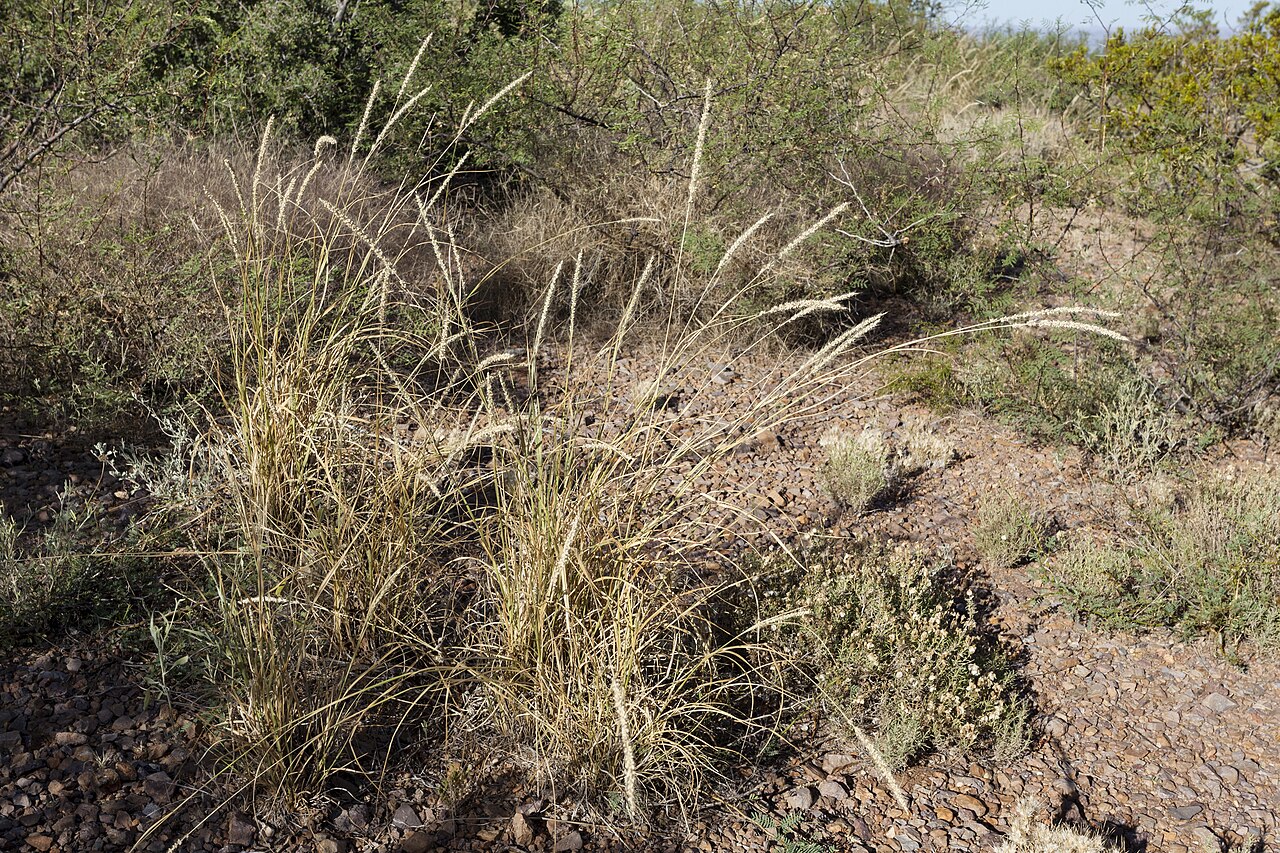
Setaria leucopila, commonly known as streambed bristlegrass or plains bristlegrass, is a tough, clump-forming perennial grass native to the dry plains and grasslands of the southwestern United States. A member of the Poaceae (grass family), it grows in dense bunches with narrow blue-green leaves and slender, bristly flowering spikes that catch the light and sway readily in open-range wind — a familiar sight along dry washes, roadsides, and overgrazed pastures from Texas to Arizona.
Reaching 1 to 3 feet tall, streambed bristlegrass is valued on southwestern rangelands as a reliable, moderately drought-tolerant forage grass, reproducing readily from both seed and tillers to fill in bare or disturbed ground. Its bottlebrush-like seed spikes, bristled with short awns, are a useful identification feature that distinguishes it from the many other native and introduced grasses sharing its range.
For native plant gardeners and rangeland restorationists in the southern plains and desert Southwest, streambed bristlegrass offers a low-fuss, drought-adapted grass for naturalistic plantings, erosion control, and habitat restoration where regionally appropriate — though it is only a fair wildlife forage compared to the best native bunchgrasses.
Identification
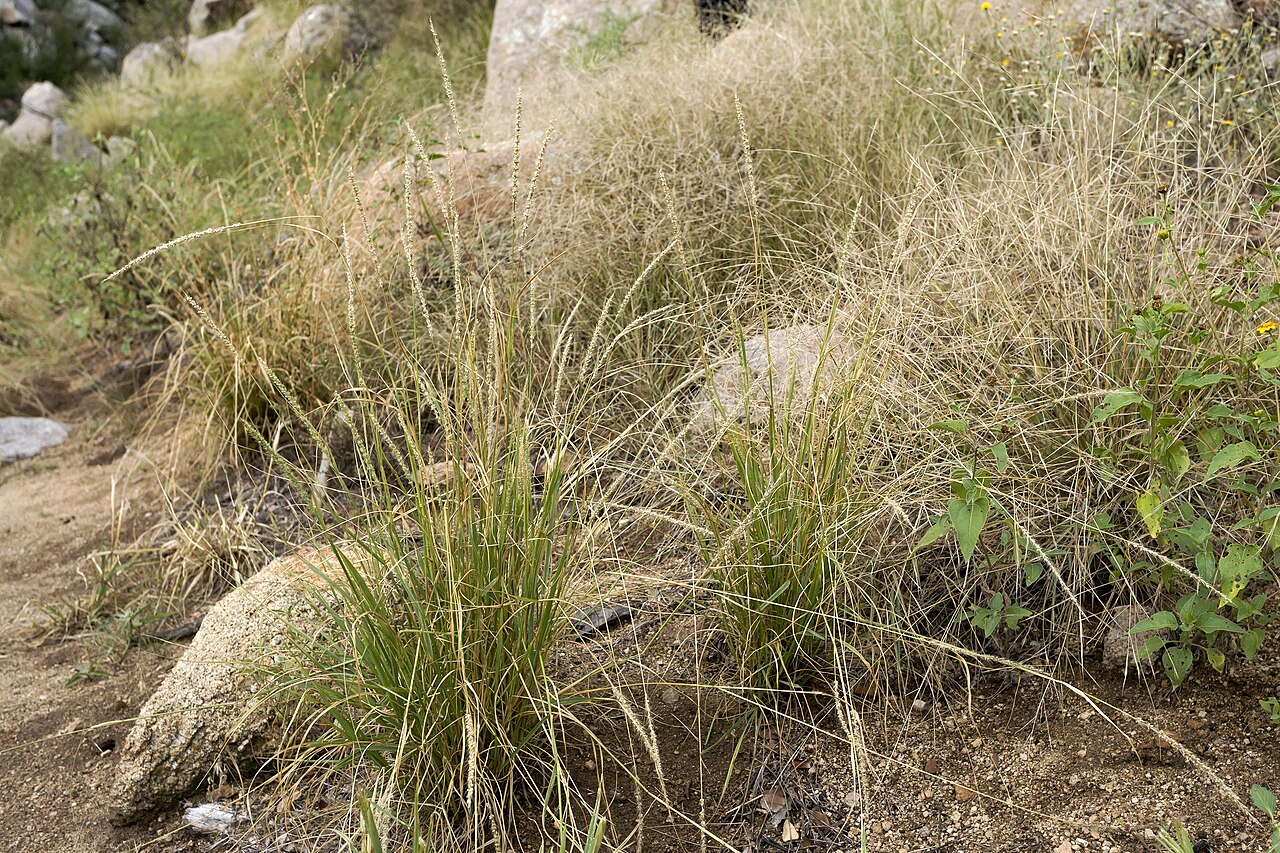
Streambed bristlegrass is a perennial bunchgrass reaching 4 to 39 inches (10–99 cm) in height, typically forming dense, upright to slightly spreading clumps from a fibrous root system. Its overall form is a tidy, rounded tussock of narrow, blue-green foliage topped by slender, bristly seedheads in summer and fall.
Stems & Leaves
The stems (culms) are slender, erect, and typically unbranched below the inflorescence, rising from a basal clump of leaves. Leaf blades are narrow, flat to slightly folded, blue-green to gray-green, and roughened along the margins — a texture gardeners can feel by running a hand along the blade. New growth emerges from the crown each spring, with the tussock gradually widening as the plant matures.
Flowers & Seedheads
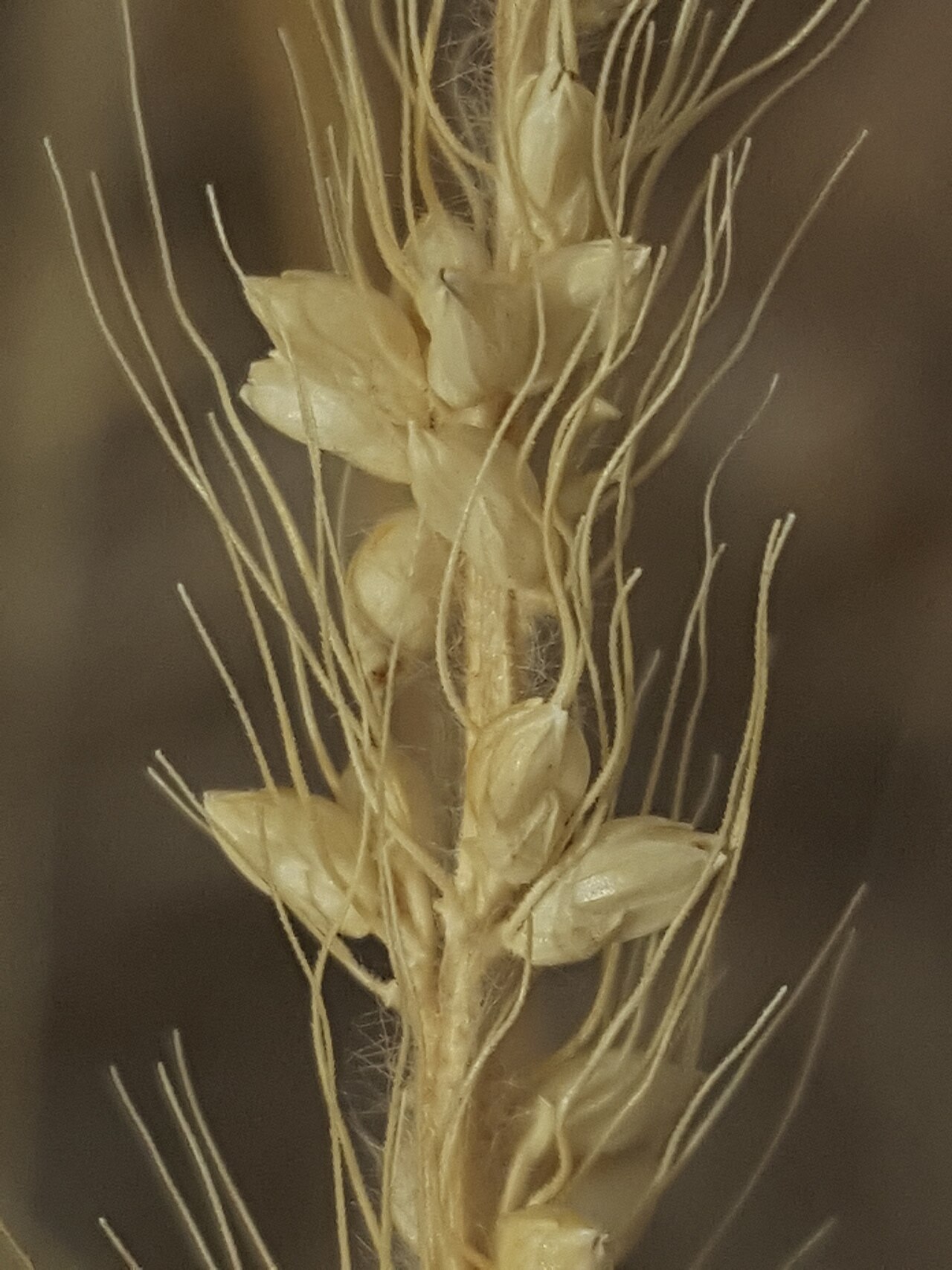
The flowering spike is a dense, cylindrical panicle 2 to 6 inches long, bristling with numerous short awns (bristles) surrounding each spikelet — the feature that gives the genus Setaria (and the plant’s common name) its bristlegrass identity. The spikes are typically tawny to purplish as they mature, turning pale straw at full seed set in late summer and fall.
Fruit & Seeds
Seeds are small, oval grains enclosed within the bristled spikelets, shed gradually through fall and winter. The plant reproduces readily by both seed and tillering from the crown, allowing established clumps to slowly expand and colonize open ground.
Quick Facts
| Scientific Name | Setaria leucopila |
| Family | Poaceae (Grass) |
| Plant Type | Perennial bunchgrass |
| Mature Height | 4–39 in (10–99 cm) |
| Mature Spread | 1–2 ft clump |
| Growth Rate | Moderate |
| Sun Exposure | Full Sun |
| Water Needs | Low |
| Soil Type | Dry, well-drained; rocky, sandy, or caliche soils |
| Soil pH | 6.5–8.5 (neutral to alkaline) |
| Bloom Time | Summer – fall |
| Flower Color | Tawny to purplish, fading to straw |
| Fall Color | Straw-tan |
| Fruit | Small bristled grain spikes |
| Deer Resistant | No (grazed by deer and livestock) |
| USDA Hardiness Zones | 7–10 |
Native Range
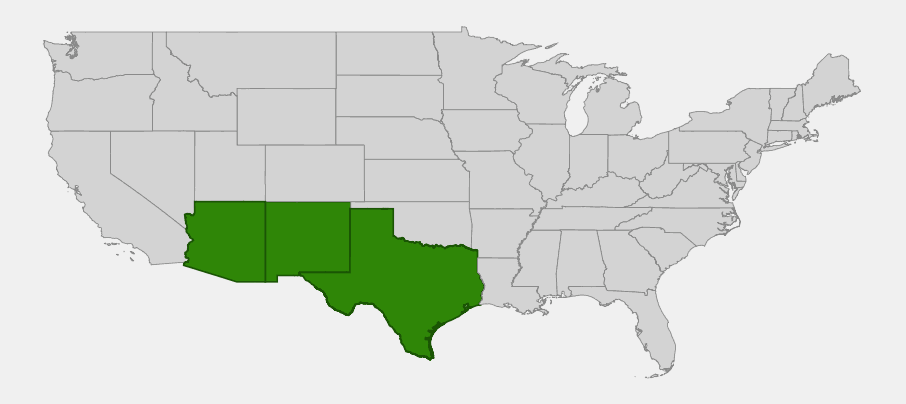
Streambed bristlegrass is native to the southern plains of the United States, centered on Texas, New Mexico, and Arizona, with its range extending into adjacent parts of Oklahoma and Colorado and south into northern Mexico. It is a characteristic grass of dry prairie, desert grassland, and rocky foothill habitats across this region.
Within its range, streambed bristlegrass grows on dry mesas, rocky slopes, arroyo margins, and disturbed or grazed grassland, typically below about 6,000 feet elevation. Despite the “streambed” in its common name, it is not a wetland species; the name reflects its frequent presence along the margins of dry washes and intermittent streambeds where runoff briefly supplements the otherwise sparse rainfall of its native grasslands.
Gardeners outside the southern plains and desert Southwest should choose a regionally native bunchgrass instead, since streambed bristlegrass depends on the hot, dry summers and mild winters of its native range to perform reliably.
📋 Regional plant lists featuring Streambed Bristlegrass: South and West Texas · Arizona & New Mexico
Growing & Care Guide
Streambed bristlegrass is an undemanding, drought-tolerant grass for naturalistic southwestern landscapes, performing best when conditions mirror its native dry grassland habitat.
Light
Full sun is essential. Streambed bristlegrass does not perform well in shaded sites and will thin out and become sparse if crowded out by taller vegetation.
Soil & Water
This grass thrives in lean, fast-draining soils, including rocky, sandy, and caliche ground, and tolerates alkaline pH well. It is drought-tolerant once established, needing only occasional deep watering during extended dry spells; it does not want consistently moist or poorly drained soil, which encourages root problems.
Planting Tips
Establish from container plants or direct seeding in spring, taking advantage of early-season moisture to help seedlings root in before summer heat arrives. Space plants 12 to 18 inches apart for a naturalistic bunchgrass planting; closer spacing speeds in-fill for erosion control projects.
Pruning & Maintenance
Cut back old growth in late winter before new shoots emerge to keep clumps tidy; this is optional but improves appearance where a more groomed look is desired. The species has no significant pest or disease issues within its native range and needs no fertilizer in appropriate soils.
Landscape Uses
Streambed bristlegrass is suited to a range of practical, low-water plantings:
- Naturalistic grassland and prairie-style plantings in the desert Southwest
- Erosion control on dry slopes and disturbed ground
- Rangeland and roadside revegetation
- Xeriscape accent grass for texture among wildflowers and shrubs
- Wildlife habitat restoration in grassland and desert grassland settings
Wildlife & Ecological Value
Streambed bristlegrass contributes modest but steady value to southwestern grassland wildlife, functioning as one of many grass species that together support the broader desert grassland food web.
For Mammals
Livestock graze streambed bristlegrass readily, and it is considered good forage for cattle on southwestern rangeland. Wild grazers including mule deer and pronghorn browse it as well, though it is rated only fair forage for wildlife compared to some other native grasses, since palatability declines as the plant matures and cures.
For Birds
Ground-foraging grassland birds feed on the small seeds produced in the bristled spikes, and the bunchgrass form offers nesting and escape cover for species adapted to open desert grassland.
For Pollinators
As a wind-pollinated grass, streambed bristlegrass offers no nectar resources, but its presence in a diverse native grassland planting supports the overall habitat structure that pollinator-friendly wildflowers depend on.
Ecosystem Role
Streambed bristlegrass helps anchor soil on dry slopes and disturbed range, reproducing by both seed and tillering to fill gaps in grassland cover. Alongside grasses like black grama and burrograss, it forms part of the diverse native grass community that stabilizes southwestern rangeland against wind and water erosion.
Cultural & Historical Uses
Streambed bristlegrass has long been recognized by ranchers across the southern plains and Southwest as a useful, if not premium, forage grass — valuable enough to persist in grazing management plans, but not prized the way higher-protein grasses like black grama are. Its presence on a rangeland site is generally taken as a sign of moderately grazed, functioning grassland.
Indigenous peoples of the southern plains and Southwest lived among grasslands where streambed bristlegrass was a common, if background, component of the native plant community, supporting the game animals that were hunted for food rather than being harvested directly itself.
In more recent decades, streambed bristlegrass has found use in rangeland and roadside revegetation projects across Texas, New Mexico, and Arizona, valued for its ease of establishment from seed and its tolerance of the poor, alkaline soils common on disturbed sites in the region.
Frequently Asked Questions
Is streambed bristlegrass a wetland or streamside-only plant?
No — despite the common name, it is a dryland grass of mesas, rocky slopes, and grassland, not a true wetland or aquatic species. The name reflects its frequent presence along dry wash and arroyo margins rather than a need for consistent moisture.
How tall does streambed bristlegrass get?
It typically reaches 1 to 3 feet, though height can range from under a foot to over 3 feet depending on soil moisture and growing conditions.
Is streambed bristlegrass good forage for livestock?
Yes, it is considered good forage for livestock on southwestern rangeland, though only fair forage value for wildlife compared with some other native grasses.
Does streambed bristlegrass need regular watering?
No. Once established, it is drought-tolerant and needs only occasional supplemental water during extended dry spells; it does not tolerate consistently wet soil.
Can I grow streambed bristlegrass outside Texas, New Mexico, or Arizona?
It is not native outside this region, and its drought adaptations depend on the hot, dry summers typical of the southern plains and Southwest. Gardeners elsewhere should choose a locally native bunchgrass instead.

Looking for a nursery that carries Streambed Bristlegrass?
Browse our native plant nursery directory: Arizona · New Mexico · Texas