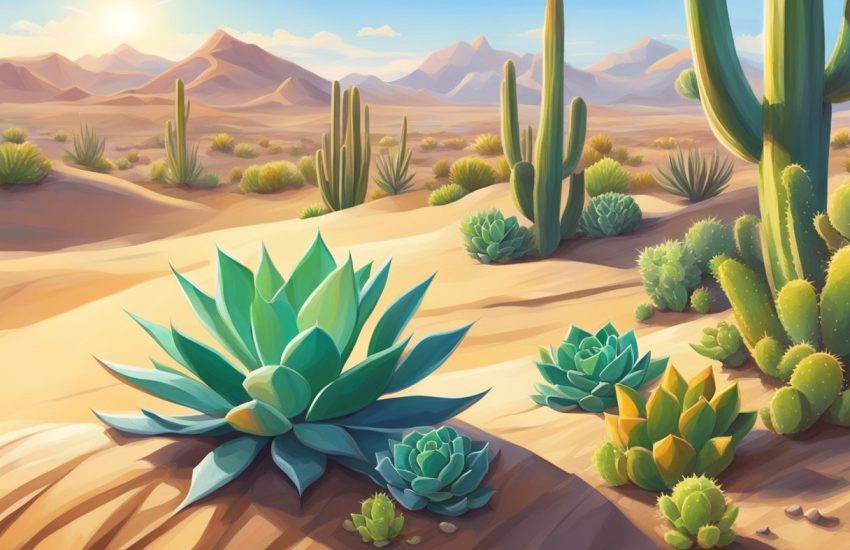
False Rhodes Grass (Trichloris crinita)
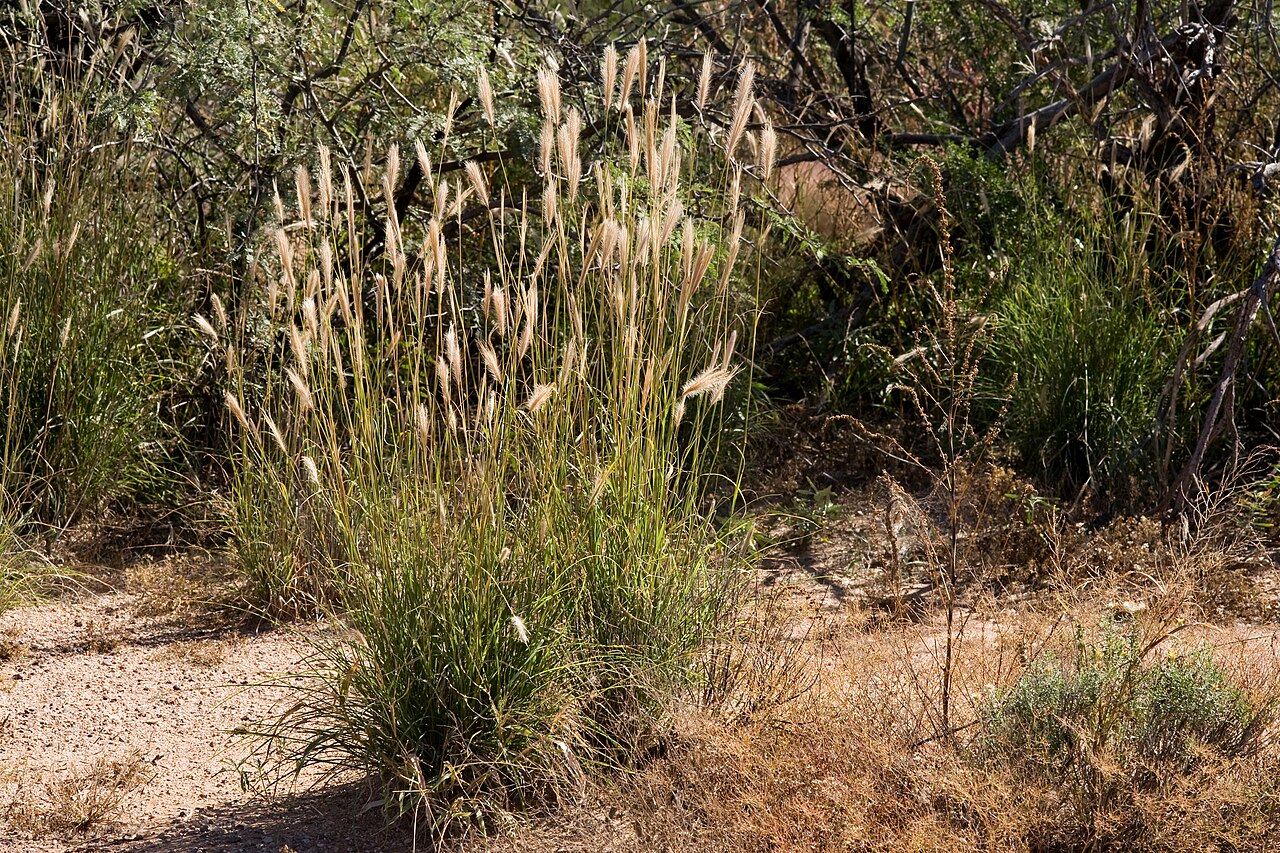
Trichloris crinita, commonly called False Rhodes Grass, is a warm-season perennial bunchgrass native to the hottest, driest corners of the American Southwest. It belongs to the Chloridoideae, the same grass subfamily as sideoats grama and buffalograss, and its genus name hints at a resemblance to true Rhodes grass (Chloris gayana), an African species grown for forage — Trichloris is often treated by botanists as embedded within Chloris or Leptochloa, and some current references use the name Leptochloa crinita for this same plant. Whatever name it goes by, ranchers and desert gardeners across Arizona, New Mexico, and Texas know it as one of the most dependable native forage and erosion-control grasses for truly arid ground.
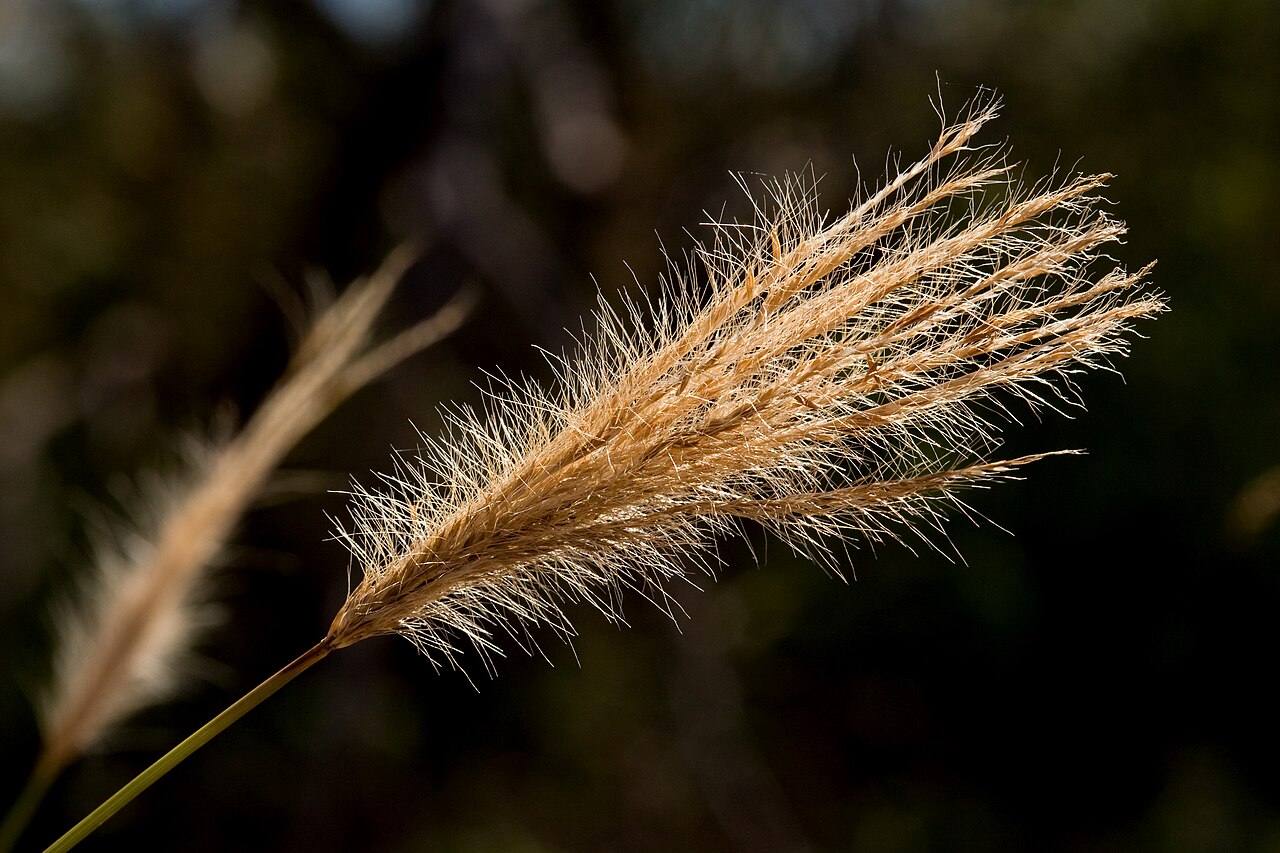
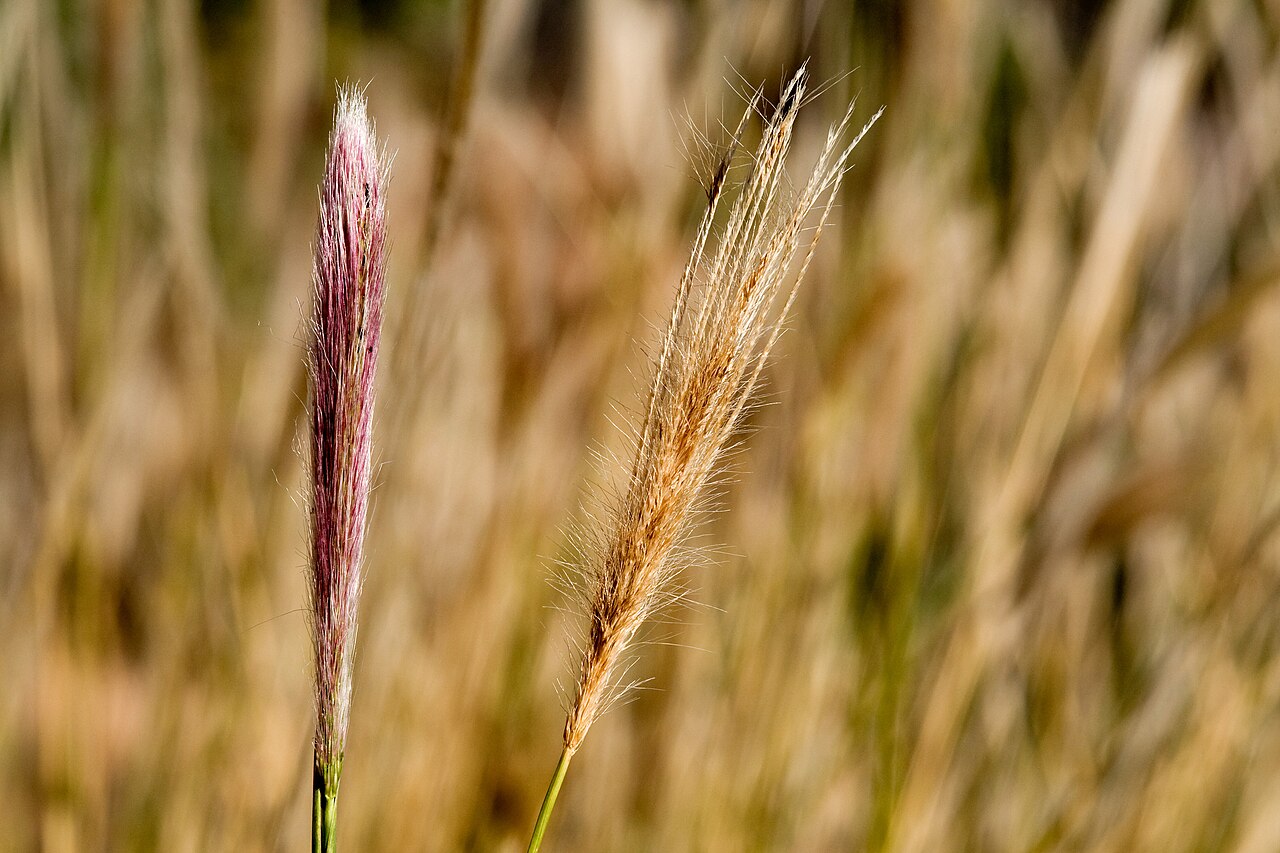
False Rhodes grass forms upright to sprawling clumps 1 to 3 feet tall, topped from late summer into fall by a distinctive candelabra-like seed head: several feathery, silvery-tan branches radiating in tight whorls from the top of the stem. The effect is almost plume-like, especially when backlit by low desert sun, and it is this seed head — more than the foliage — that makes the plant easy to identify in the field and attractive enough to use ornamentally. Established plants tolerate extreme heat, reflected sun off pavement and rock, and months without rain, resuming growth quickly once summer monsoon moisture arrives.
In the wild, False Rhodes grass grows on rocky slopes, desert flats, floodplains, and along washes and arroyos from the Sonoran and Chihuahuan Deserts into the South Texas Plains, often alongside creosote bush, mesquite, and other grama grasses. It is valued for stabilizing disturbed soil, for its drought-season forage value to livestock and wildlife, and for bringing texture and late-season movement to a xeric native garden without demanding supplemental water once established.
Identification
False Rhodes grass is a cespitose (tufted, non-rhizomatous) perennial that grows from a dense, fibrous-rooted base, sometimes rooting at the lower nodes where stems touch the ground. Culms are slender, often geniculate (bent) near the base, and reach roughly 12 to 40 inches tall depending on moisture and soil depth.
Leaves & Growth Habit
Leaf blades are narrow — typically 2 to 8 inches long and under ¼ inch wide — flat to loosely rolled, gray-green to blue-green, and often rough to the touch along the margins. The sheaths are usually hairless to sparsely hairy, and the clump has a loose, airy habit rather than the dense turf of a sod-forming grass. New growth emerges in late spring, but the plant is slow to green up and is most conspicuous once it flowers in response to summer rain.
Flowers & Seed Heads
The inflorescence is the plant’s signature feature: 6 to 20 slender branches, each 2 to 6 inches long, arranged in several closely spaced whorls at the top of the stem so the whole head looks like a single dense, feathery cluster rather than an open, spreading panicle. Each branch is lined with tiny spikelets bearing long, hair-like awns, giving the entire seed head a soft, brush-like or bottlebrush texture. Color shifts from a faint purplish or reddish cast when fresh to tawny gold-tan as it dries on the stem, where it often persists well into winter.
Fruit & Seeds
Each spikelet contains one fertile floret and one or two reduced, sterile florets, all subtended by the characteristic long awns. Seed is small, lightweight, and wind- and animal-dispersed; it is also harvested commercially for range revegetation seed mixes in the Southwest, since the species establishes readily from direct seeding on disturbed arid ground.
Quick Facts
| Scientific Name | Trichloris crinita (syn. Leptochloa crinita, Chloris crinita) |
| Family | Poaceae (Grass) |
| Plant Type | Warm-Season Perennial Bunchgrass |
| Mature Height | 1–3 ft (12–40 in culms) |
| Mature Spread | 1–2 ft clump |
| Growth Rate | Moderate once established |
| Sun Exposure | Full Sun |
| Water Needs | Low |
| Soil Type | Rocky, sandy, or caliche; well-drained |
| Soil pH | 6.5–8.5 (neutral to alkaline) |
| Bloom Time | Late Summer – Fall (after monsoon rain) |
| Flower Color | Purplish-tan fading to golden tan |
| Fall Color | Straw-gold seed heads persist into winter |
| Fruit | Small awned grass seed (caryopsis) |
| Deer Resistant | Moderate (grazed by livestock and wildlife as forage) |
| USDA Hardiness Zones | 8–11 |
Native Range
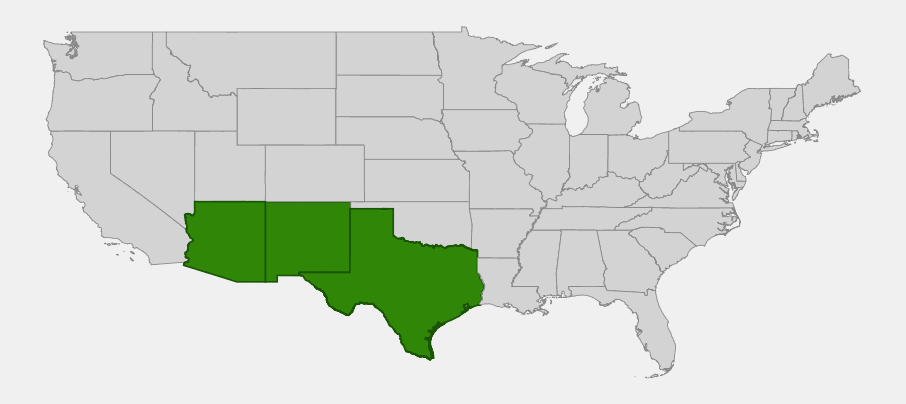
False Rhodes grass is native to the southwestern United States and northern Mexico, with a notable disjunct population in the arid Monte region of Argentina. Within the U.S. it is concentrated in southern Arizona, southern and central New Mexico, and the southern half of Texas, where it grows from the low Sonoran and Chihuahuan Desert basins up into desert grassland and foothill habitats.
It favors open, sun-baked ground: rocky or gravelly slopes, caliche flats, roadcuts, and the margins of washes and arroyos where periodic flooding keeps competing vegetation sparse. It is frequently found growing with creosote bush (Larrea tridentata), mesquite (Prosopis spp.), tarbush, and other warm-season bunchgrasses such as the gramas (Bouteloua spp.) and tobosa grass.
Because it tolerates extreme heat, poor rocky soil, and long dry spells, False Rhodes grass is also planted outside its historical range for erosion control and range revegetation on disturbed arid sites across the Southwest; gardeners should still confirm local provenance seed when restoration genetics matter, since nursery and reclamation stock is sometimes sourced from outside the immediate region.
📋 Regional plant lists featuring False Rhodes Grass: Arizona & New Mexico · South and West Texas
Growing & Care Guide
False Rhodes grass is a low-fuss choice for gardeners who want a drought-resilient, texturally interesting native grass in hot, sun-exposed spots where few other plants thrive. It rewards neglect far more than pampering.
Light
Give it full sun. This is a desert bunchgrass adapted to the most intense light and heat the Southwest offers; in part shade it grows leggy, sparse, and reluctant to flower.
Soil & Water
Plant in well-drained rocky, gravelly, or sandy soil — it is at home in caliche and thin desert soils that would struggle most ornamental grasses. Once established, it needs no supplemental irrigation beyond natural rainfall, though occasional deep summer watering during the hottest, driest stretches will keep it looking fuller and encourage more reliable flowering. Soggy or heavy clay soils that stay wet are the main thing to avoid; poor drainage is far more likely to kill this grass than drought.
Planting Tips
Set out container plants in spring after the last frost, or direct-seed in late spring to early summer ahead of monsoon rains, which the species uses as its natural germination cue. Space plants 12 to 18 inches apart for a naturalistic drift, or wider for an airy, see-through screen effect. New plantings benefit from a season of light supplemental water to establish a deep root system before being left to fend for themselves.
Pruning & Maintenance
Cut clumps back hard — to 2 or 3 inches — in late winter before new growth starts, to remove the previous year’s dried foliage and seed stalks and keep the clump tidy and vigorous. No fertilizer is needed in typical desert soils; over-feeding tends to produce floppy, weak growth on a plant that is naturally lean and wiry.
Landscape Uses
False Rhodes grass earns its keep in several garden roles:
- Xeriscaping and water-wise gardens where irrigation is minimal
- Erosion control on slopes, roadcuts, and disturbed arid ground
- Accent or texture planting among cacti, agaves, and other desert perennials
- Range and pasture revegetation on hot, dry rangeland
- Naturalistic desert meadows mixed with grama grasses and wildflowers
- Rock garden backdrop, where its airy seed heads catch low sun
Wildlife & Ecological Value
As a native warm-season bunchgrass of some of the harshest terrain in the Southwest, False Rhodes grass plays an outsized role in stabilizing soil and feeding wildlife in places where plant cover is otherwise sparse.
For Birds
Seed-eating desert birds, including sparrows and quail, forage on the abundant small seed produced by mature seed heads, and the clumping growth form offers low ground-level cover for nesting and escape from predators in open desert terrain.
For Mammals
The foliage is palatable and nutritious, making it a valuable warm-season forage grass for cattle, and for wild grazers such as pronghorn and deer, particularly during summer and fall when the plant is actively growing after rain. Small mammals use the dense clump bases for shelter.
For Pollinators
As a wind-pollinated grass it offers no nectar, but the structure of a mature clump supports a range of grassland insects that, in turn, feed birds and other wildlife — an often-overlooked ecological service of native bunchgrasses in desert gardens.
Ecosystem Role
False Rhodes grass’s deep, fibrous root system binds soil on slopes and wash banks prone to erosion, and its tolerance of disturbance makes it one of the first native grasses to recolonize bare ground after flooding or construction disturbance in its range, helping stabilize sites before longer-lived shrubs and trees establish.
Cultural & Historical Uses
False Rhodes grass has long been recognized by ranchers across the Southwest borderlands as a reliable warm-season forage grass, valued because it stays productive on rangeland too dry and rocky for many other grasses to persist. Its drought tolerance and palatability to cattle made it a species of practical interest well before it attracted attention from native-plant gardeners.
In the twentieth century, soil conservation and range management programs in Arizona, New Mexico, and Texas incorporated False Rhodes grass into seed mixes for stabilizing disturbed and eroded rangeland, building on its natural role as an early colonizer of bare desert soil. It remains part of commercial native seed mixes used for highway revegetation and erosion control across its range today.
More recently, as xeriscaping and water-wise landscaping have grown in popularity across the arid Southwest, False Rhodes grass has found a second life as an ornamental accent grass, prized by native-plant gardeners for its airy, candelabra-shaped seed heads and its ability to thrive in reflected heat from pavement and masonry where few other plants, native or otherwise, will grow.
Frequently Asked Questions
Is False Rhodes grass the same as true Rhodes grass?
No. True Rhodes grass (Chloris gayana) is an African forage grass widely planted and sometimes weedy in the U.S.; False Rhodes grass (Trichloris crinita) is a native North and South American species in a closely related genus. The resemblance in the feathery seed head is why the common name “False Rhodes grass” stuck.
How much water does False Rhodes grass need once established?
Very little. It is adapted to the Sonoran and Chihuahuan Deserts and survives on natural rainfall alone once its root system is established, typically after one growing season. Occasional deep watering during extreme summer heat will improve appearance and flowering but is not required for survival.
Will False Rhodes grass spread aggressively in my garden?
No. It is a non-rhizomatous bunchgrass that increases in clump size and may self-seed modestly in favorable conditions, but it does not spread by runners and is easy to keep contained within a planting bed.
When does False Rhodes grass flower?
It is responsive to rainfall rather than a strict calendar date, typically sending up its distinctive seed heads in late summer and fall following monsoon rains, and the dried, straw-gold heads often remain attractive on the plant through winter.
Is False Rhodes grass good for erosion control?
Yes. Its dense, fibrous root system and tolerance for rocky, disturbed, and periodically flooded ground make it a commonly used species in range revegetation and erosion-control seed mixes throughout its native range.

Looking for a nursery that carries False Rhodes Grass?
Browse our native plant nursery directory: Arizona · New Mexico · Texas