Scarlet Leatherflower (Clematis texensis)
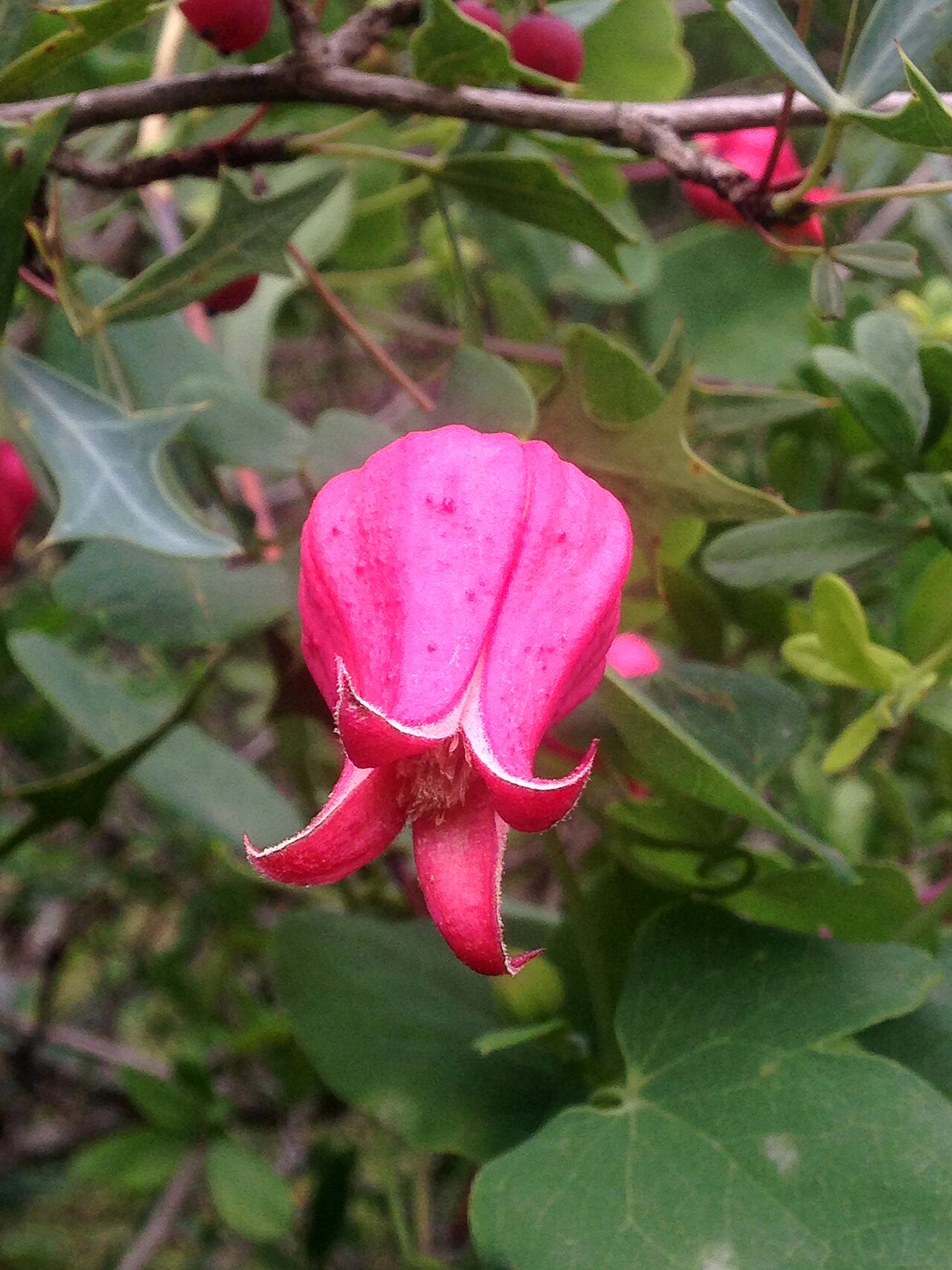
Clematis texensis, the Scarlet Leatherflower (also called Scarlet Clematis or Texas Clematis), is a slender, climbing vine found nowhere on Earth except the limestone canyons of central Texas. It is one of the true treasures of the Edwards Plateau: a quiet, twining plant that most of the year looks like little more than a tangle of blue-green leaflets threading through shrubs and fence lines, and then from early summer into fall produces a scatter of thick, waxy, scarlet-to-pink urn-shaped flowers that nod from the foliage like small leather bells. The species name honors its home state, and the thick, leathery texture of the sepals gives the group of related species their common name, leatherflower.
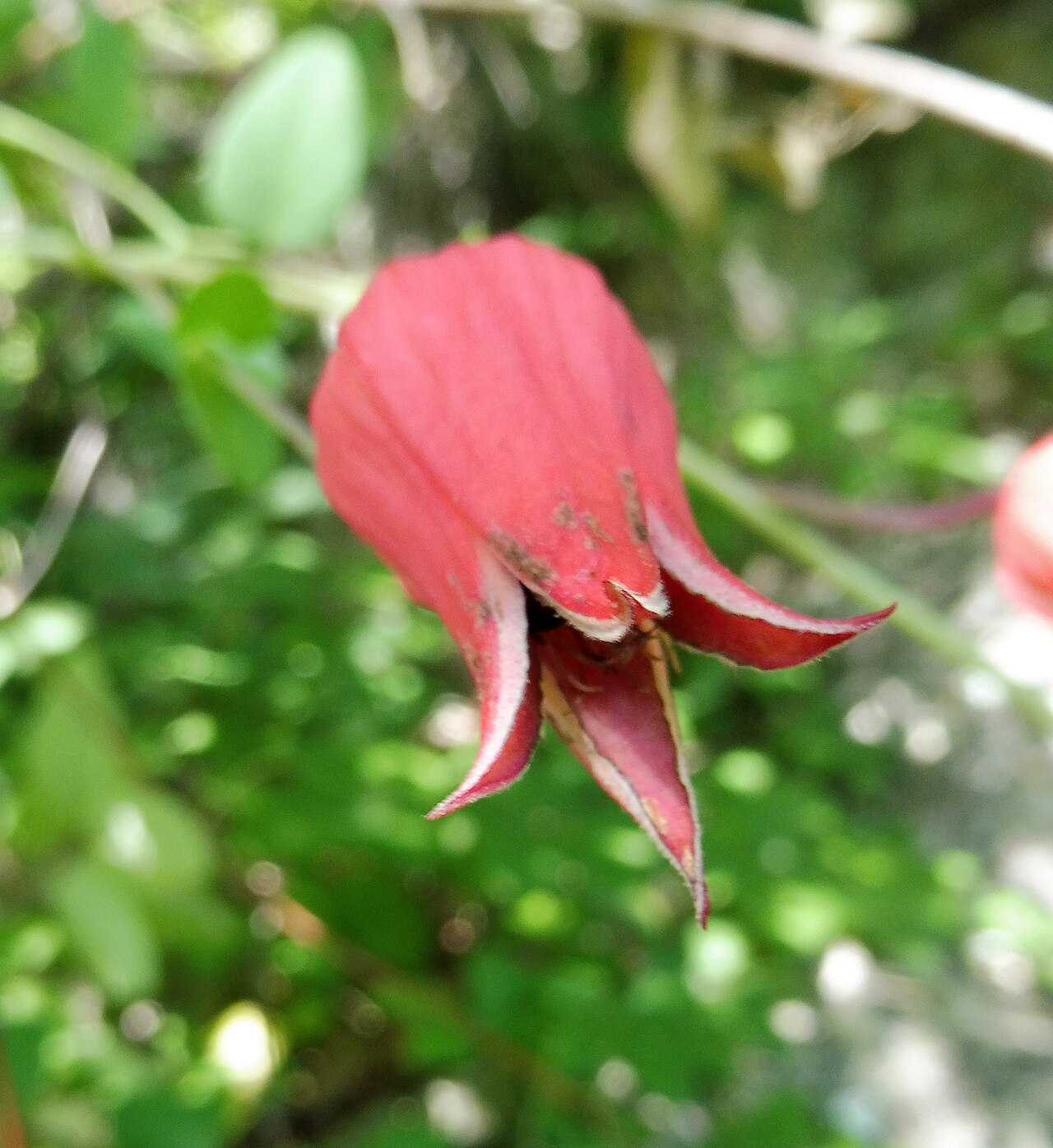
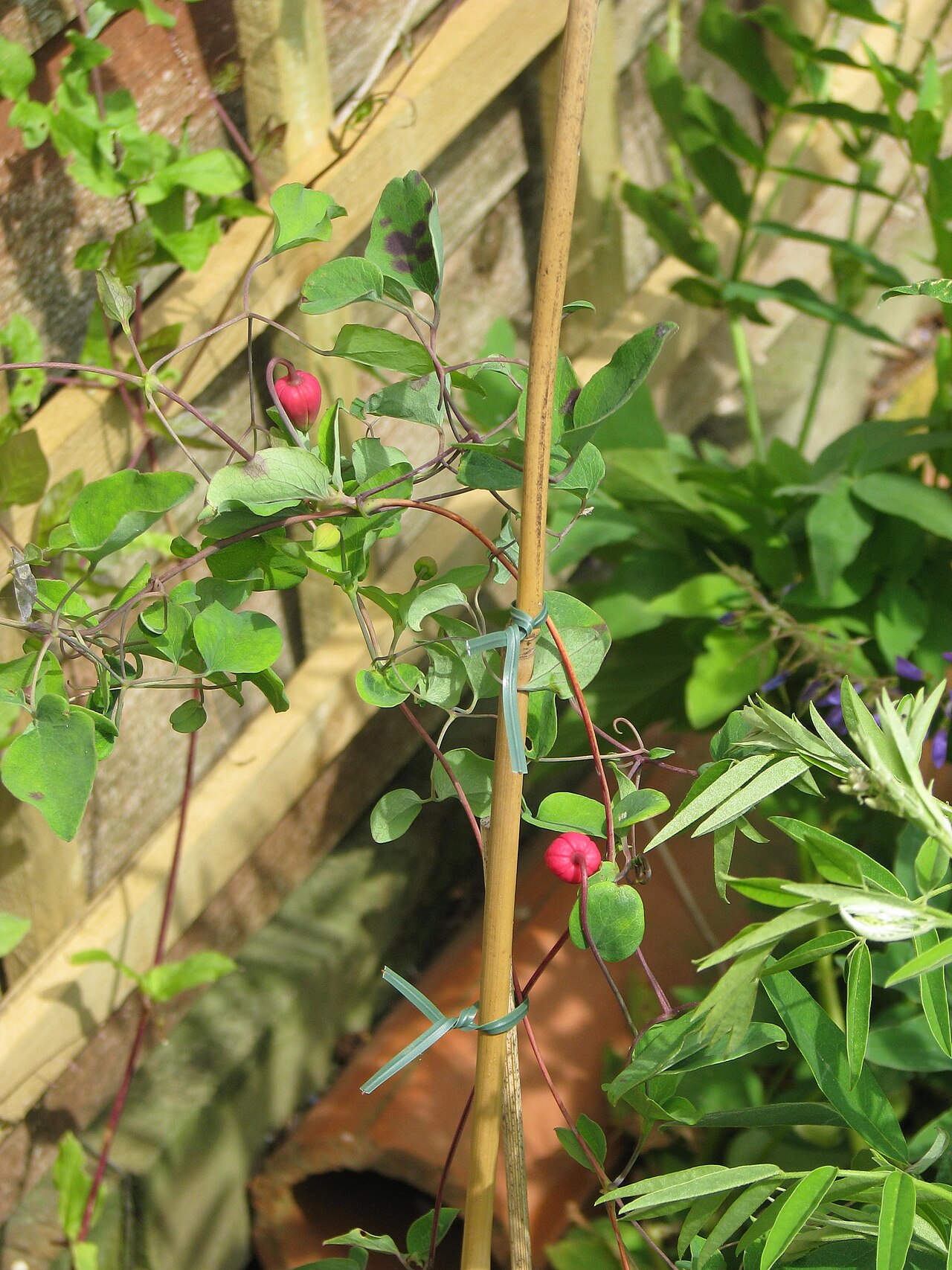
Unlike the big, flat-faced hybrid clematis sold at garden centers, Scarlet Leatherflower never opens into a wide, flat bloom. Instead, four thick, pointed sepals stay fused into a narrow, nodding urn with only the recurved tips flaring outward, so the flower always looks half-closed, like a tulip caught mid-bloom. This unusual shape, paired with its true-red color, made the species one of the most important parents of modern hybrid clematis bred for red and pink flowers — cultivars such as ‘Duchess of Albany’ and ‘Gravetye Beauty’ trace directly back to wild Texas plants collected in the 1870s.
In the garden, Scarlet Leatherflower is a modest, well-mannered vine, rarely aggressive, that rewards full sun and a little lime in the soil with a long season of unusual flowers and feathery seed heads. It is an excellent choice for gardeners anywhere in its USDA hardiness range who want an authentic, regionally rooted alternative to the showy but non-native clematis hybrids, and it is especially fitting for Hill Country and central Texas gardens built around limestone and native plants.
Identification
Scarlet Leatherflower is a herbaceous to slightly woody, deciduous, twining vine. New growth dies back to a woody base each winter in most of its range, and plants typically climb 9 to 15 feet in a season by wrapping their leaf stalks (petioles) around twigs, wire, or other support, rather than by tendrils or holdfasts.
Leaves
The leaves are opposite and pinnately compound, usually with 2 to 4 pairs of leaflets plus a terminal leaflet or tendril-like leaf tip. Individual leaflets are bluish-green, thin but somewhat firm, oval to heart-shaped, 1 to 3 inches long, with smooth (entire) margins and a slightly glaucous, waxy bloom that helps the foliage stand out against darker shrubs. The leaf stalks are flexible and twist readily around any nearby support, which is how the whole vine climbs.
Flowers
Flowers are borne singly on long stalks from the leaf axils from late spring through fall, more heavily in June and July and again, more sparingly, until frost if the plant gets enough water. Each flower is 1 to 1.5 inches long, urn- or bell-shaped and nodding, made of four thick, leathery sepals (there are no true petals) that are scarlet to deep pink on the outside and often paler, sometimes nearly white, within. The sepal tips are narrow, pointed, and recurve outward as the flower matures, and the outer surface has a fine, velvety down. There is no noticeable fragrance.
Fruit & Seeds
After flowering, each bloom develops into a rounded cluster of plumed achenes — the typical clematis “seed head.” Each achene carries a long, feathery, silvery-tan tail that catches the light and helps the seed ride the wind once it dries and loosens from the cluster in late summer and fall. These seed heads are almost as ornamental as the flowers and persist on the vine for weeks.
Quick Facts
| Scientific Name | Clematis texensis |
| Family | Ranunculaceae (Buttercup) |
| Plant Type | Deciduous, herbaceous-to-slightly-woody twining vine |
| Mature Height | Climbs 9–15 ft in a season (dies back near the base in winter) |
| Mature Spread | 3–6 ft, depending on support |
| Growth Rate | Moderate to fast once established |
| Sun Exposure | Full sun to part shade (best flowering in full sun) |
| Water Needs | Average; drought tolerant once established |
| Soil Type | Rocky, well-drained, limestone-based soils |
| Soil pH | Neutral to alkaline (about 7.0–8.0) |
| Bloom Time | Late May through October, heaviest in June–July |
| Flower Color | Scarlet to deep pink, paler within |
| Fall Color | None notable; foliage yellows lightly before dieback |
| Fruit | Clusters of silvery, long-plumed achenes, late summer–fall |
| Deer Resistant | Generally yes |
| USDA Hardiness Zones | 7–9 (grown successfully to zone 4 with winter mulch) |
Native Range
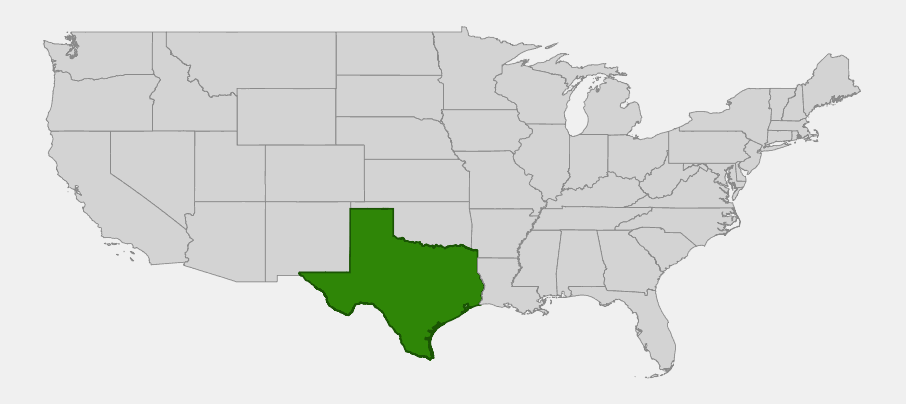
Scarlet Leatherflower is endemic to the Edwards Plateau of south-central Texas — it is found nowhere else in the wild. Its core range runs through the Texas Hill Country counties west and northwest of San Antonio and Austin, including Bandera, Real, Uvalde, Kerr, Medina, Bexar, Kendall, Blanco, and neighboring counties, wherever the Balcones Escarpment exposes limestone bedrock.
Within this small range, the vine is a plant of canyon country. It grows along spring-fed creeks and rivers such as the Sabinal, Medina, and Frio, climbing through shrubs on rocky, mesic bluffs, limestone cliffs, and the edges of oak-juniper woodlands where the soil is thin and well-drained but roots can reach moisture in rock crevices. It is not a plant of the open Hill Country grasslands, but of the shaded, rockier microhabitats cut into the plateau by water.
Because its range is so restricted, Scarlet Leatherflower is considered uncommon even within Texas, though it is not formally listed as threatened or endangered. Gardeners growing it outside the Edwards Plateau — it is popular in cultivation well beyond Texas — should know that no wild population exists outside this one region, which makes protecting its Hill Country habitat especially important.
📋 Regional plant lists featuring Scarlet Leatherflower: South and West Texas
Growing & Care Guide
Scarlet Leatherflower is easier to grow than its narrow wild range suggests, as long as you mimic the open, rocky, lime-rich conditions it comes from. It is a good match for central and south Texas gardens, and gardeners in cooler zones have had success growing it with winter protection.
Light
Give Scarlet Leatherflower full sun for the heaviest bloom, though it tolerates part shade, especially with some afternoon relief in the hottest parts of Texas. In the wild it often climbs into partial shade at the edge of oak-juniper canopy, so a little dappled shade on the roots with sun on the foliage mimics natural conditions well. For general guidance on matching clematis to the right amount of light and support, see our overview on growing and propagating clematis.
Soil & Water
This vine wants sharply drained, rocky or gravelly soil, and it is noticeably happier with a neutral to alkaline pH than with acidic soil — a reflection of its limestone homeland. Heavy clay or constantly wet soil will shorten its life. Like most clematis, it appreciates “cool feet, warm face”: shade or mulch over the root zone keeps roots cool while the vine climbs into the sun. Water regularly through the first year, then taper off; established plants handle Hill Country summers with only occasional deep watering.
Planting Tips
Plant in spring or fall, setting the crown slightly below soil level as is standard clematis practice, which helps the plant recover if the top ever suffers frost or wilt dieback. Place it where it can twine up something no wider than a pencil at first — wire, twine, a chain-link fence, or a shrub’s twiggy branches — since the leaf stalks cannot grip a thick post on their own. A 2-inch mulch layer or a low companion plant over the root zone keeps the soil cool.
Pruning & Maintenance
Scarlet Leatherflower blooms on new growth produced in the current season, so it is pruned like a Group 3 clematis: cut the vine back hard, to 12 to 18 inches, in late winter before new growth starts. This simple, once-a-year cut keeps the plant tidy and encourages the most flowers. Through summer, little else is needed beyond occasional light shaping and watching that it has not outgrown its support.
Propagation
Seed is the most reliable home method: collect the plumed achenes once they turn tan and fluffy in fall, and sow them shallowly in a well-drained mix, where they typically need a cold-moist stratification period before germinating in spring. Softwood cuttings taken in early summer and stem layering, where a low stem is pinned to the soil until it roots, also work, following the same general techniques described in our guide to propagating clematis. Division is not practical, since the plant grows from a single woody crown rather than a spreading clump.
Landscape Uses
- Limestone rock gardens and Hill Country native plant beds, where its small scale and drought tolerance fit naturally
- Chain-link fences and low trellises; see our roundup of trellis options for climbing plants for support ideas sized to a light vine like this one
- Mixed plantings with shrubby associates such as agarita, letting the vine scramble through the branches the way it does in the wild
- Pollinator and native plant gardens; it is a worthwhile, true-red alternative to non-native hybrid clematis — more on native options in our guide to native vines for trellises
- Container growing on a small obelisk or tuteur for patios in its native range
Wildlife & Ecological Value
Within its small Hill Country range, Scarlet Leatherflower plays a modest but real role for pollinators and small wildlife tied to limestone canyon habitats.
For Pollinators
The tubular, nodding shape of the flower is well suited to long-tongued bees and to hummingbirds, which can probe the narrow opening for nectar; ruby-throated hummingbirds passing through central Texas visit the blooms. Native bees also work the flowers for pollen.
For Birds
Small songbirds that favor the shrubby, broken canopy of oak-juniper woodlands use the tangled vine growth for cover, and the feathery seed heads occasionally supply nesting material in spring.
For Mammals
Mammal use is limited; like most clematis, the foliage contains irritant compounds that make it unpalatable and generally deer resistant, which helps the vine survive in areas with heavy deer browsing pressure.
Ecosystem Role
As a vine restricted to shaded canyon microhabitats, Scarlet Leatherflower is part of the specialized plant community that depends on the cooler, moister conditions found along Hill Country streams, distinct from the drier grasslands above the canyon rim. Its presence is a good indicator of relatively undisturbed limestone canyon habitat.
Cultural & Historical Uses
Scarlet Leatherflower has no significant history of food or medicinal use among Indigenous peoples or settlers of the Hill Country; like many clematis, the foliage and sap are irritating to skin and not safe to eat.
Its real cultural importance is horticultural. English and European plant breeders obtained seed of this Texas species in the 1870s and quickly recognized its value: it was one of the first clematis with true scarlet-red flowers, a color absent from the European and Asian species then in cultivation. Crossed with large-flowered garden clematis, it produced a line of hybrids — including ‘Duchess of Albany,’ ‘Gravetye Beauty,’ and ‘Princess Diana’ — that remain popular garden plants worldwide, more than a century later, still carrying the wild Hill Country vine’s distinctive bell shape and color in their flowers.
In Texas itself, the species has more recently become a point of pride for native plant gardeners seeking regionally authentic alternatives to these very hybrids, bringing the story back to where it started.
Frequently Asked Questions
Is Scarlet Leatherflower the same as the clematis hybrids sold at nurseries?
No. Nursery clematis are usually large-flowered hybrids, some of which have Clematis texensis as one parent. The wild species itself has smaller, urn-shaped, never fully open flowers and a more modest growth habit than its showy hybrid descendants.
Will Scarlet Leatherflower grow outside Texas?
It is hardy and grown successfully well north and east of its native Edwards Plateau range, roughly USDA zones 4 through 9, especially with winter mulch in colder areas. It is not native anywhere outside central Texas, so gardeners elsewhere are growing it as an introduced ornamental, not restoring a local native.
Does Scarlet Leatherflower need alkaline soil?
It performs best in neutral to alkaline, limestone-derived soil, reflecting its Hill Country origin. It can struggle in strongly acidic soils; gardeners in those areas sometimes amend with garden lime.
How do I prune Scarlet Leatherflower?
Cut it back hard, to about 12 to 18 inches, in late winter. It flowers on new growth each year, so this hard annual cut keeps the vine vigorous and produces the most blooms rather than a leggy tangle of old stems.
Is Scarlet Leatherflower toxic?
Like most clematis, the sap and foliage contain irritating compounds (protoanemonin) that can cause skin irritation or mouth and gut upset if chewed. It should be treated as toxic if ingested and handled with care by anyone with sensitive skin; keep it away from pets prone to chewing plants.

Looking for a nursery that carries Scarlet Leatherflower?
Browse our native plant nursery directory: Texas