Frantoio Olive Tree (Olea europaea ‘Frantoio’)
Last updated: November 3, 2026
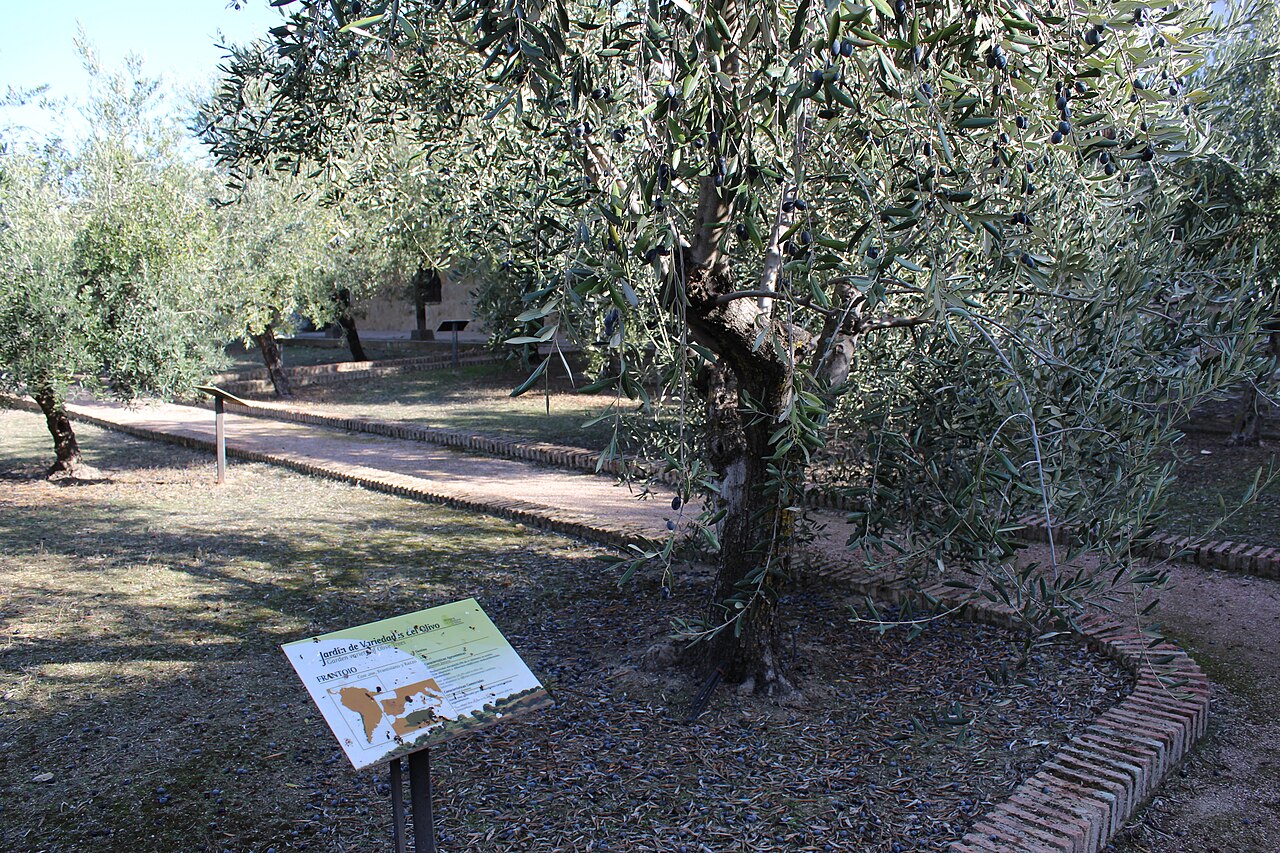
Frantoio (Olea europaea ‘Frantoio’) is one of Tuscany’s oldest and most celebrated olive cultivars, grown for centuries in the hills around Florence, Lucca and Siena to produce the region’s signature peppery, fruity olive oil. Its name comes from the Italian word for an olive mill, a nod to how central this variety has long been to Tuscan oil pressing. Unlike many olive cultivars that grow as rounded bushes, Frantoio tends to grow more upright and tree-like, with a relatively open, airy canopy of narrow silvery-green leaves.
Gardeners and small-scale growers plant Frantoio for its high-quality oil, its reliability as both a fruiting tree and a pollinizer, and its graceful, somewhat weeping form that works as well in an ornamental landscape as in a working grove. It is self-fertile, so a single tree can set fruit, and it is widely used to cross-pollinate other cultivars, which in turn boosts its own yield.
Olive (Olea europaea) is not native to North America; the species originated in the Mediterranean basin and the Near East, and Frantoio itself was selected in Tuscany, Italy. It is not on any federal noxious-weed list, but in parts of coastal and central California, Cal-IPC lists olive as a limited-impact invasive because birds carry fruit from fruiting trees into nearby wildlands. If you plant Frantoio in that region, harvest the fruit each year and avoid planting it right next to natural areas; gardeners elsewhere in the country have little to worry about since hard freezes keep the species from naturalizing.
Identification
Bark & Stems
Young Frantoio branches are smooth and gray-green, aging to a furrowed, pale gray-brown bark on older trunks. With age the trunk often develops the gnarled, twisting character typical of old olive trees, though Frantoio’s habit stays more upright and single-leadered than sprawling cultivars like Sevillano.
Leaves
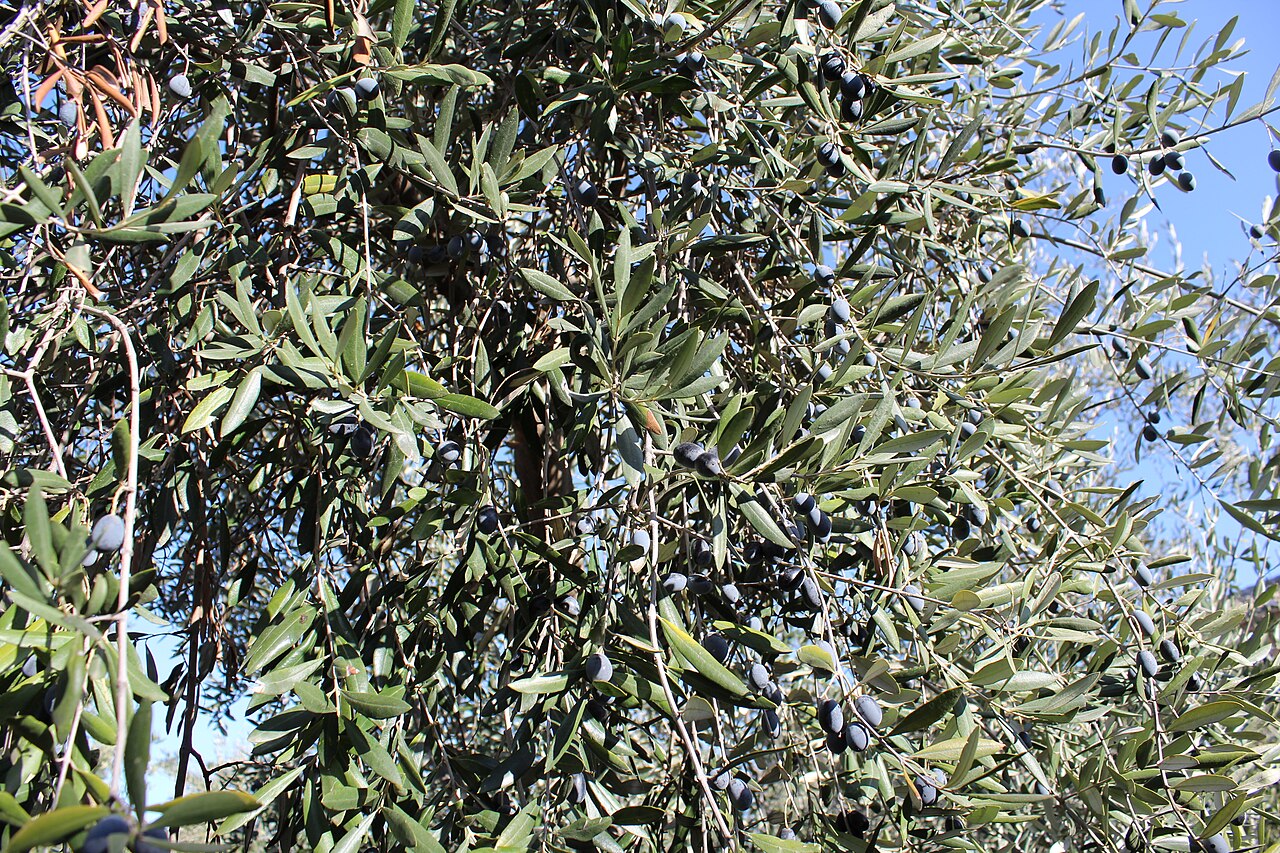
Leaves are narrow, lance-shaped, 1.5 to 3 inches long, leathery and evergreen. The upper surface is dull gray-green while the underside is covered in fine silvery scales, giving the whole canopy a shimmering, two-toned look in the wind. The canopy is noticeably airier and less dense than bushier cultivars such as Leccino.
Flowers
Small, cream-white, four-petaled flowers appear in loose clusters (panicles) at the leaf axils in late spring, usually May into June depending on climate. They are wind-pollinated with some insect visitation, and because Frantoio is self-fertile, a lone tree will set a crop, though yields rise with a nearby pollinizer cultivar.
Fruit & Seeds
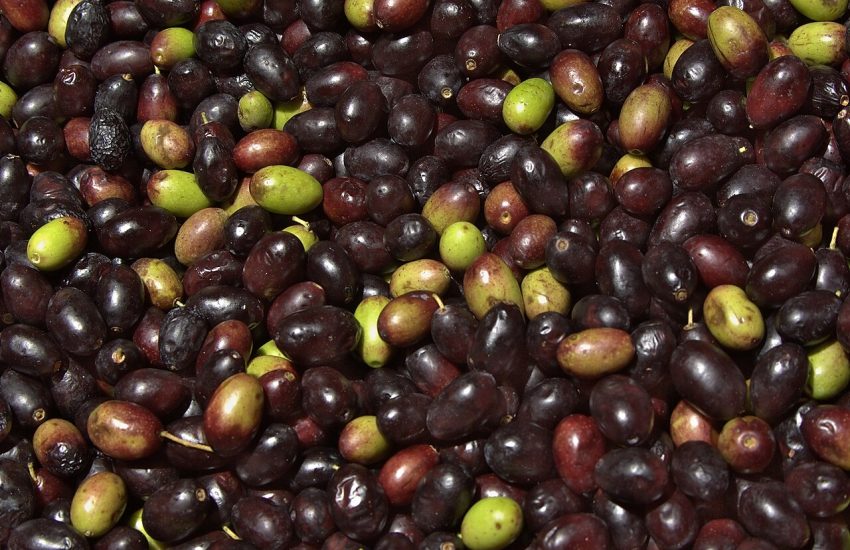
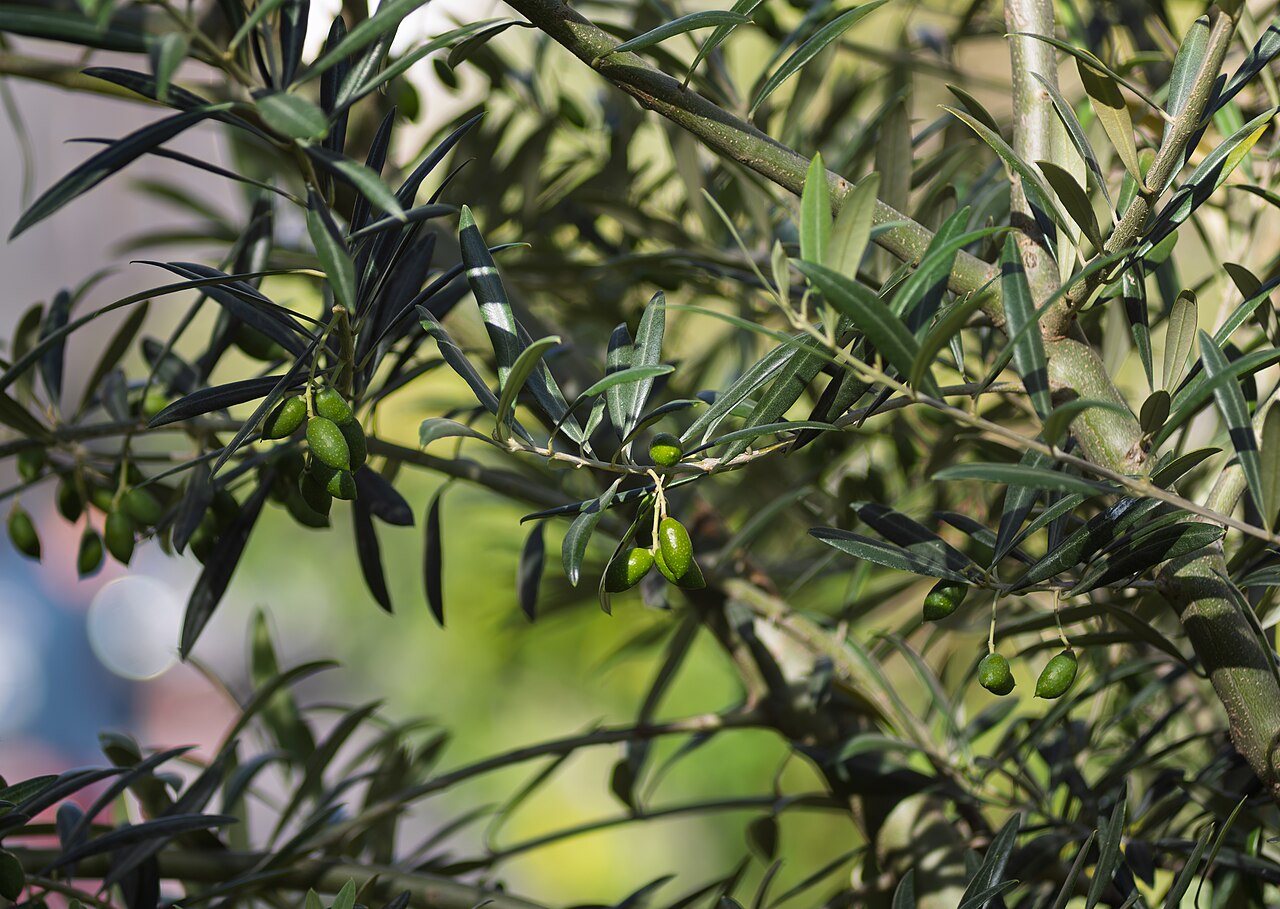
Fruits are medium-sized, oval drupes that ripen from green through red-purple to black over a long mid-to-late season harvest window. Frantoio is grown almost exclusively for oil: reported oil content runs roughly 23 to 28% of fruit weight, among the higher yields of the major Italian cultivars, and the resulting oil is prized for its fruity aroma and distinctive peppery, slightly bitter finish.
Quick Facts
| Scientific Name | Olea europaea |
| Cultivar | ‘Frantoio’ |
| Family | Oleaceae (Olive) |
| Plant Type | Evergreen fruiting tree |
| Native to North America | No — introduced from the Mediterranean; cultivar selected in Tuscany, Italy |
| Mature Height | 20–30 ft unpruned (commonly kept 12–20 ft) |
| Mature Spread | 15–20 ft |
| Growth Rate | Moderate; upright, airy canopy |
| Sun Exposure | Full sun |
| Water Needs | Low to moderate once established; drought tolerant |
| Soil Type | Well-drained loam, sand or rocky soil; poor wet-soil tolerance |
| Soil pH | Slightly acidic to alkaline (about 6.0–8.5) |
| Bloom Time | May – June |
| Leaf / Fall Color | Evergreen gray-green above, silvery below; no fall color change |
| Fruit | Medium oval olives, green to black; oil content ~23–28%; self-fertile, excellent pollinizer |
| Deer Resistant | Yes, generally |
| USDA Hardiness Zones | 9–10 (marginal in sheltered zone 8b sites) |
| Invasive Status | Not federally listed; Cal-IPC limited impact in parts of coastal/central California |
Origin & Where It Grows
The species Olea europaea is native to the Mediterranean basin, the Near East and parts of the Horn of Africa, where it has been cultivated for oil and food for thousands of years. It has no native range in North America.
Frantoio itself is an old Tuscan selection, long associated with the hill country around Florence and Lucca, where it remains one of the two or three backbone cultivars of Tuscan DOP olive oil, often blended with Moraiolo and Leccino. Its exact origin predates written cultivar records, but it has been grown in Tuscany for centuries and was carried to new olive-growing regions, including California, Texas, Arizona and the Southeast, as those areas developed commercial and backyard olive culture.
In the United States, Frantoio performs best in Mediterranean-type climates with mild, mostly dry winters and hot, dry summers: coastal and inland California, parts of southern Arizona, and the warmest zones of Texas, Georgia and Florida. It is somewhat less heat- and cold-tolerant than Spanish cultivars like Arbequina, so gardeners in borderline zones should plant it in a sheltered, south-facing spot.
Frantoio Origin & Range
| Species Native Range | Mediterranean basin, Near East |
| Cultivar Origin | Tuscany, Italy (centuries-old selection) |
| Best U.S. Regions | Coastal & inland California, southern Arizona, warm-zone Texas, Georgia, Florida |
| USDA Zones | 9–10 |
| Invasive Status | Not federally listed; Cal-IPC limited impact, coastal/central California only |
Growing & Care Guide
Frantoio is a relatively easy olive to grow where the climate suits it: full sun, well-drained soil and a true winter chill are the main requirements.
Light
Give Frantoio full sun — at least 6 to 8 hours a day. Trees grown in shade become leggy, bloom poorly and produce little fruit.
Soil & Water
Plant in well-drained soil; olives are notoriously intolerant of wet feet and are prone to root rot in heavy, poorly drained clay. Sandy loam or rocky soil suits them well. Water young trees regularly through their first two to three years, then taper off — established Frantoio trees are quite drought tolerant, though steady moisture during bloom and fruit set improves yield.
Planting Tips
Plant in spring after the last frost so roots establish before the first winter. Space trees 15 to 20 feet apart for an orchard planting, or give a specimen tree plenty of open space to show off its upright form. Choose the warmest, most sheltered spot available in marginal zone 8b–9a gardens.
Pruning & Maintenance
Prune in late winter to early spring after the coldest weather has passed, thinning crowded interior growth to let light reach the fruiting wood (olives fruit on the previous year’s growth). Frantoio’s naturally more open, upright habit needs less corrective pruning than bushy cultivars. Fertilize lightly in spring with a balanced or nitrogen-leaning fertilizer; olives are light feeders and excess nitrogen reduces fruiting.
Propagation
Frantoio does not come true from seed — seedlings revert toward wild-type characteristics and lose the parent’s oil quality and growth habit. Propagate by rooted cuttings or grafting onto olive rootstock, which is how nurseries produce true-to-type Frantoio trees.
Harvest & Pollination
Frantoio is self-fertile and will set a crop as a single tree, but cross-pollination with another cultivar such as Leccino or Pendolino increases yield. Harvest runs mid to late season; pick fruit green for a sharper, more peppery oil or let it ripen further for a milder flavor. Table use is possible but uncommon — Frantoio is grown almost entirely for pressing. All olives, green or ripe, are bitter and inedible straight off the tree and must be cured in brine, salt, water or lye before eating; only the oil is used without curing.
Landscape Uses
- Mediterranean and xeriscape gardens, where its silvery, airy canopy pairs well with lavender, rosemary and ornamental grasses
- Specimen or accent tree thanks to its upright form and shimmering foliage
- Small home oil groves, often planted with a second cultivar for better cross-pollination
- Espalier or hedge screening in warm-climate gardens
Wildlife & Ecological Value
Frantoio offers modest wildlife value compared with native trees. Its small wind-pollinated flowers draw limited bee and fly interest, nowhere near the pollinator traffic of native nectar-rich bloomers. Birds, especially mockingbirds, robins and starlings, will eat ripe olives and can spread seed into surrounding land in mild-winter regions, which is the basis of its limited-impact invasive listing in parts of California. The dense evergreen canopy offers some nesting cover and shade. Because Frantoio supports far fewer native insects than a comparable native tree, it should be treated as a food-producing landscape specimen rather than a wildlife planting.
Native Alternatives
Gardeners who want a similar silvery-leaved, drought-tolerant, Mediterranean-looking tree — or simply want to add a true native alongside or instead of Frantoio — have several good North American options:
- Desert Olive (Forestiera neomexicana) — a tough Southwestern native shrub/small tree with a similar common name and gray-green, fine-textured foliage
- Texas Olive (Cordia boissieri) — a drought-tolerant small tree for warm Texas gardens with showy white flowers
- American Sweet Olive / Devilwood (Osmanthus americanus) — a fragrant native evergreen in the same olive family, Oleaceae
- Honey Mesquite (Prosopis glandulosa) — a native, fine-leaved, drought-tolerant tree that gives a similar airy, silvery look in hot, dry climates
History & Uses
Frantoio has been a pillar of Tuscan olive oil production for generations, prized for giving a fruity, aromatic oil with a notably peppery, slightly bitter finish — qualities associated with fresh, high-polyphenol extra-virgin oil. Along with Moraiolo and Leccino, it forms the backbone of many Tuscan DOP (Protected Designation of Origin) oils, and the variety’s reputation helped cement Tuscany’s standing as a premium oil-producing region.
As Mediterranean-climate agriculture expanded in the Americas, Frantoio was imported for its oil quality and its usefulness as a pollinizer for other cultivars. Today it is widely planted in California’s modern super-high-density and traditional oil groves, and it shows up in small numbers in home orchards across the warmer parts of the Southwest, Texas and the Southeast. Its principal modern use remains oil pressing rather than table curing.
Frequently Asked Questions
Is Frantoio olive tree native to the United States?
No. Olive (Olea europaea) is native to the Mediterranean basin and the Near East, and the Frantoio cultivar itself was selected in Tuscany, Italy. It is an introduced, cultivated tree in North America, not a wild or native species, and is not federally listed as invasive, though it has limited-impact invasive status in parts of coastal/central California.
Does Frantoio need a second tree to produce olives?
No — Frantoio is self-fertile and will set fruit on its own, but planting a second cultivar such as Leccino or Pendolino nearby for cross-pollination typically increases yield.
How much oil does Frantoio produce?
Frantoio typically yields about 23 to 28% oil by fruit weight, among the higher-yielding Italian cultivars, which is part of why it’s so widely planted for oil.
Can I eat Frantoio olives right off the tree?
No. Fresh olives of any cultivar, including Frantoio, are intensely bitter and must be cured in brine, salt, water or lye before they’re palatable as table olives; Frantoio is grown mainly for pressing into oil rather than for table use.
How cold-hardy is Frantoio?
Frantoio tolerates light frost but is less cold-hardy than some Spanish cultivars, generally reliable in USDA zones 9–10 and marginal in sheltered zone 8b sites; hard freezes below the low 20s°F can cause significant damage.