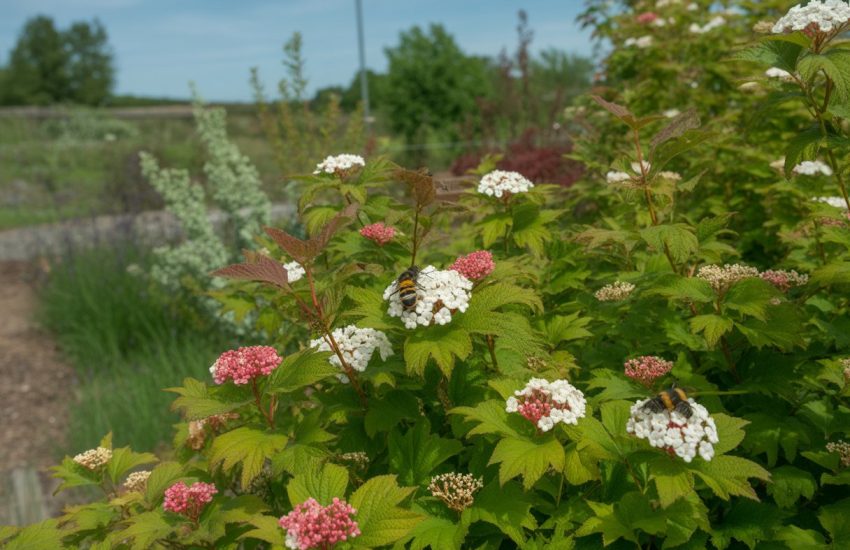
Tecate Cypress (Hesperocyparis forbesii)
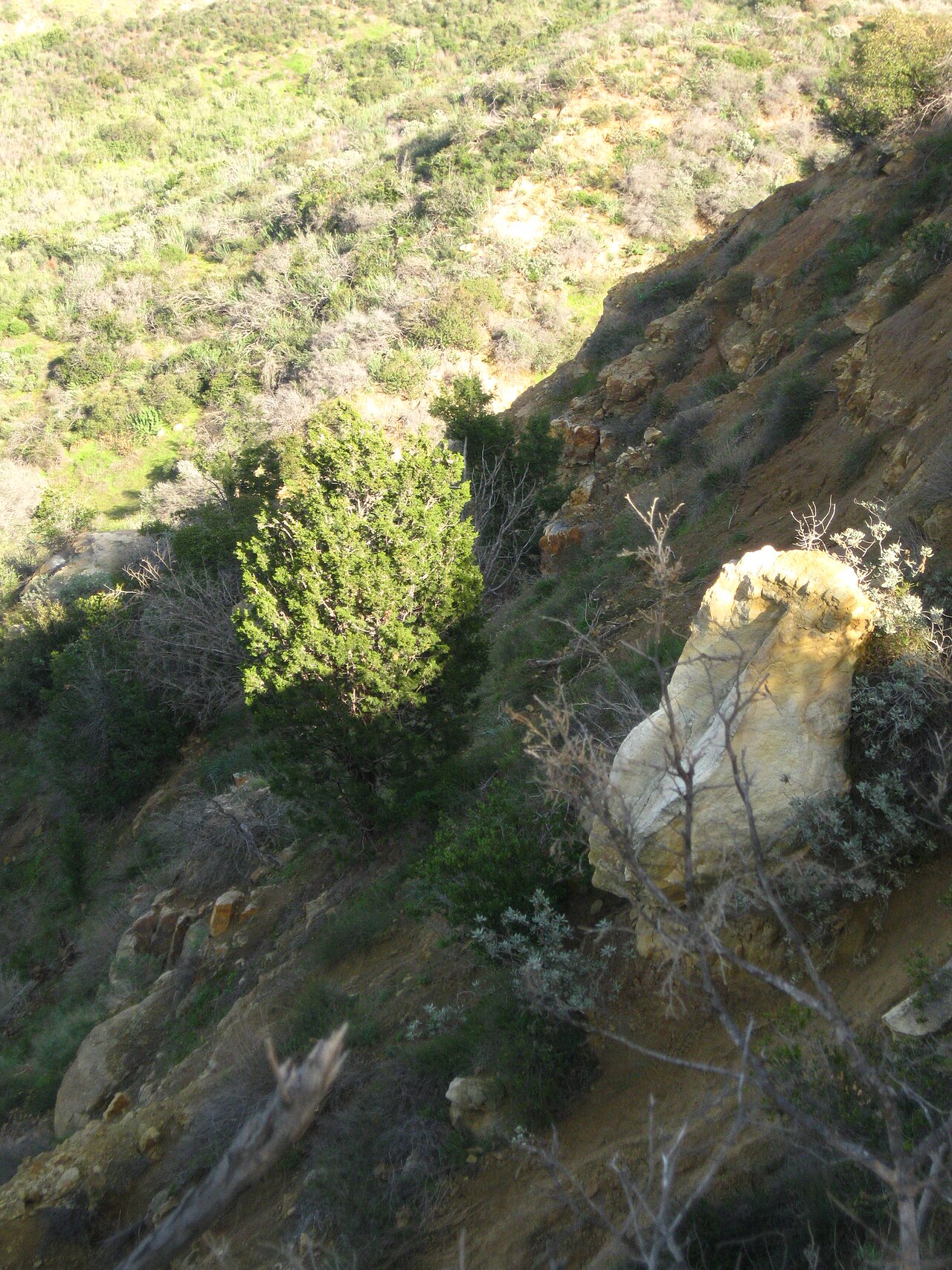
Hesperocyparis forbesii (also widely known by its older name, Cupressus forbesii), the Tecate Cypress, is one of California’s rarest native conifers, restricted in the wild to a small number of isolated groves in San Diego and Orange counties plus a larger population across the border in northern Baja California, Mexico. It is a small to medium evergreen tree with reddish, shredding bark, scale-like foliage, and woody, long-persistent cones that stay sealed on the branches for years, waiting for fire to open them.
Tecate cypress is a fire-dependent “obligate seeder”: mature trees are usually killed outright by wildfire, but the heat cracks open their serotinous cones and releases a flush of seed onto the newly cleared, ash-enriched ground, regenerating the whole stand at once. This strategy works well with the historically long fire-return intervals of its chaparral habitat, but it makes the species highly vulnerable where fires now burn more frequently than young trees need to mature and set a new seed crop — a major conservation concern at sites like the Otay Mountain and Guatay Mountain groves in San Diego County.
Because of its rarity and specific habitat requirements, Tecate cypress is a tree for dedicated native-plant gardeners and restoration projects in Southern California rather than a mainstream landscape plant. It is sometimes confused with the much more commonly planted, non-native Italian cypress (Cupressus sempervirens); see our guide on the pros and cons of Italian cypress trees for how that Mediterranean species compares to this California native.
Identification
Tecate cypress typically grows 15 to 40 feet tall, with a conical to irregular, often open crown shaped by wind and the rocky, exposed sites it favors. Bark, foliage, and cones together make it reasonably easy to identify once you know the key traits.
Bark & Stems
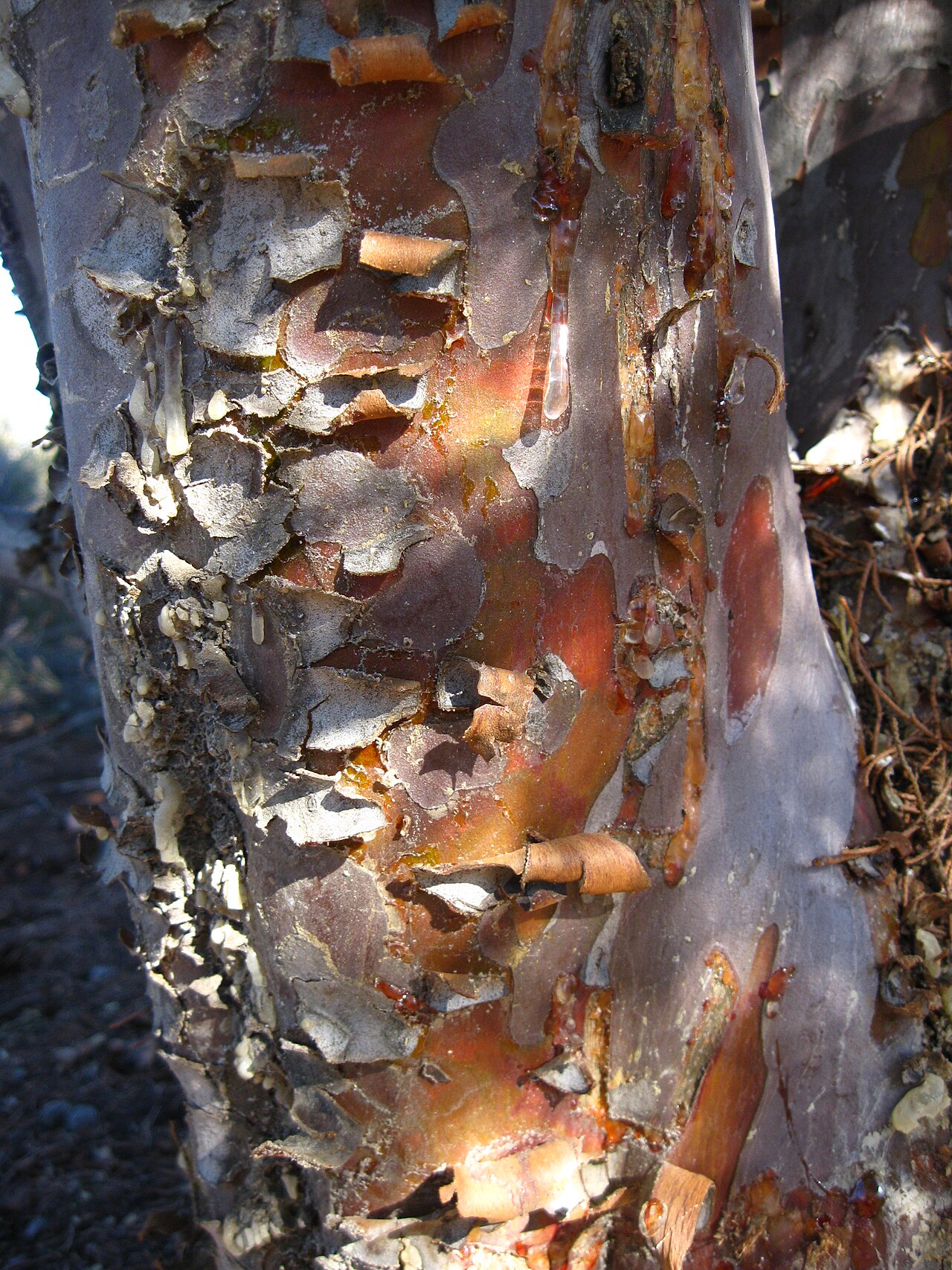
The bark is thin, smooth on young growth, and reddish-brown to purplish, peeling and shredding into loose, papery strips and curls as the tree matures — a texture clearly visible even from a short distance and a good field mark distinguishing it from the furrowed gray bark of many other conifers.
Foliage
Leaves are small, scale-like, and tightly appressed to the branchlets in the manner typical of cypresses, forming dense sprays of gray-green to blue-green foliage. Crushed foliage has a resinous, slightly pungent cypress scent.
Cones & Seeds
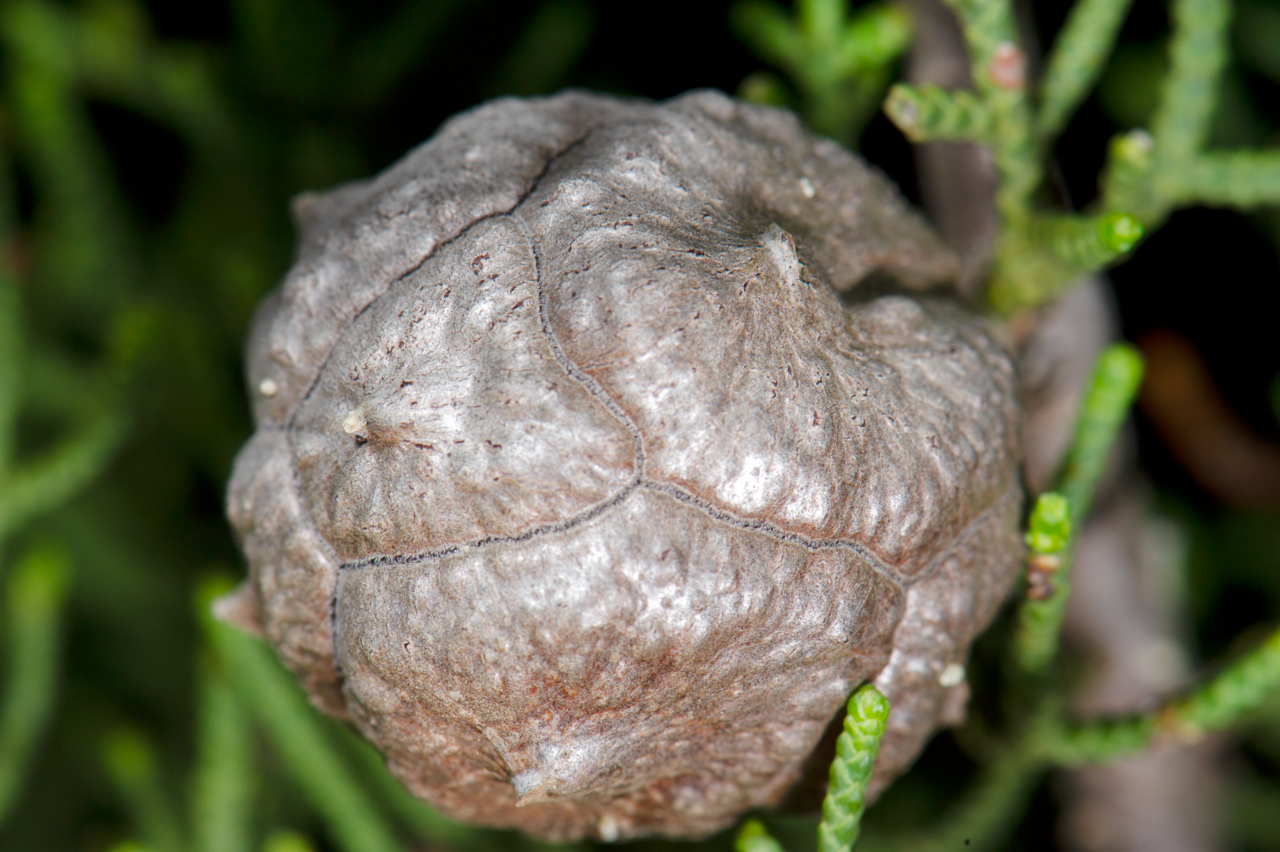
The woody seed cones are rounded, about ¾ to 1¼ inch across, made up of 6 to 8 thick, shield-shaped scales that often bear a small central point or boss. Critically, the cones are serotinous: they stay closed and attached to the branches for many years, accumulating on older wood, and open mainly in response to the heat of fire rather than simply drying out with age. Pollen cones are small, yellowish, and appear in late winter.
Quick Facts
| Scientific Name | Hesperocyparis forbesii (syn. Cupressus forbesii) |
| Family | Cupressaceae (Cypress) |
| Plant Type | Evergreen coniferous tree |
| Mature Height | 15–40 ft |
| Mature Spread | 10–20 ft, conical to irregular crown |
| Growth Rate | Slow to moderate |
| Sun Exposure | Full Sun |
| Water Needs | Low once established; excellent drought tolerance |
| Soil Type | Rocky, well-drained; often clay or gabbro-derived soils |
| Soil pH | Neutral to slightly alkaline |
| Bloom Time | Pollen cones in late winter (January–February) |
| Flower Color | Not applicable (conifer; yellowish pollen cones) |
| Fall Color | None (evergreen) |
| Fruit | Woody, serotinous cones, ¾–1¼ in, opened mainly by fire |
| Deer Resistant | Yes |
| USDA Hardiness Zones | 8–10 |
Native Range
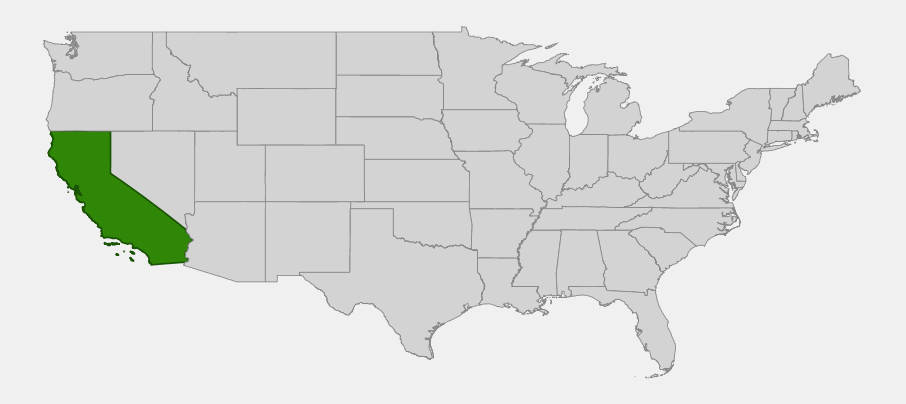
In the United States, Tecate cypress is native only to California, where it survives in a handful of small, widely separated groves in San Diego County (including Otay Mountain, Guatay Mountain, and Tecate Peak, for which the species is named) and Orange County (Coal Canyon and the Santa Ana Mountains near Sierra Peak). A larger population occurs roughly 100 miles south, across the international border in the Sierra de Juárez and nearby ranges of northern Baja California, Mexico.
Typical habitat is dry, rocky chaparral on steep slopes and ridgelines, frequently on soils derived from gabbro or other base-rich parent rock that support a distinct community of chaparral specialists. Because the species depends on infrequent, stand-replacing fire to regenerate, its groves are naturally patchy and tied closely to specific fire histories; too-frequent fire can eliminate a grove before young trees reach cone-bearing age, which is the central conservation threat facing the species today.
Tecate cypress is one of several California endemic cypresses that evolved in isolated “island” populations across the coastal mountains; for how it compares to its relatives, see our pages on Sargent cypress, Piute cypress, and the much more widely planted Monterey cypress.
📋 Regional plant lists featuring Tecate Cypress: California & Nevada
Growing & Care Guide
Tecate cypress is rare, nursery-propagated-only, and best suited to dedicated California native plant gardens, restoration plantings, and fire-conscious landscaping in Southern California rather than as a routine ornamental.
Light
Full sun is essential; Tecate cypress grows in exposed chaparral and does not tolerate shade well. Give it the sunniest, most open spot available.
Soil & Water
This species thrives in lean, rocky, fast-draining soil and is highly drought tolerant once established, needing little to no supplemental irrigation after the first year or two in a climate-appropriate garden. Avoid rich garden soil, heavy irrigation, or poor drainage, all of which encourage root and crown diseases in cypresses generally — the single most common way to lose a cultivated specimen.
Planting Tips
Plant young, nursery-propagated container stock in fall, ahead of winter rains, so roots can establish before the dry season. Because wild populations are small and conservation-sensitive, never collect seed or cuttings from wild trees; source plants only from reputable native plant nurseries that propagate from cultivated seed sources. Give trees plenty of open space and keep them well clear of structures and defensible-space zones, since cypresses carry substantial dry fuel.
Pruning & Maintenance
Minimal pruning is needed; remove only dead or damaged branches. Avoid heavy irrigation or fertilization, which can encourage disproportionately lush growth that is more susceptible to fungal cankers. For general background on how large cypresses of all kinds can get, see our guide on how tall cypress trees grow.
Landscape Uses
- Native conifer specimen for a dry, sunny Southern California garden
- Chaparral restoration and fire-ecology demonstration plantings
- Rare-plant conservation collections and botanic gardens
- Drought-tolerant screening on large rural properties with defensible space planned around it
- Erosion control on steep, rocky slopes within its native elevation range
Wildlife & Ecological Value
Tecate cypress is less a food source than a structural anchor for the rare plant community that depends on its specific chaparral habitat.
For Pollinators
Like other conifers, Tecate cypress is wind-pollinated rather than insect-pollinated, so it offers little direct nectar or pollen value, though the open, sunny chaparral it grows in supports a rich community of native bees drawn to the surrounding flowering shrubs.
For Birds
Small birds use the dense foliage for cover and nesting, and some seed-eating birds forage on cone seed once cones open, whether through age-related cracking or fire.
For Mammals
Small mammals use cypress groves for cover within the broader chaparral landscape; larger browsers generally avoid the resinous, scale-like foliage.
Ecosystem Role
Tecate cypress groves are globally rare plant communities, and each surviving stand represents a unique, isolated gene pool shaped by thousands of years of separation from other cypress populations. Because the species is an obligate seeder tied to specific fire-return intervals, its groves also serve as an ecological indicator: increasingly frequent human-caused wildfire in Southern California is one of the most immediate threats to the species’ long-term survival in the wild, since young stands killed before cone-bearing age cannot regenerate.
Cultural & Historical Uses
Tecate cypress has little recorded history of traditional use, reflecting its naturally rare and scattered distribution in rugged, hard-to-access chaparral terrain. The common name comes from Tecate Peak near the U.S.–Mexico border, close to one of the species’ San Diego County groves, and from the nearby town of Tecate, Baja California.
Its modern significance is almost entirely conservation-related. Botanists and land managers have closely studied Tecate cypress as a case study in fire ecology and climate-driven habitat loss, since its populations are threatened by the shortened fire-return intervals linked to increased human ignition sources near its San Diego and Orange County groves. Restoration and seed-banking efforts aim to safeguard the species’ genetic diversity against the loss of any single grove to an untimely fire.
Frequently Asked Questions
Is Tecate cypress the same as Italian cypress?
No. Tecate cypress (Hesperocyparis forbesii) is a rare California native with shredding reddish bark and serotinous cones, while Italian cypress (Cupressus sempervirens) is a tall, narrow, non-native ornamental from the Mediterranean commonly planted for privacy screens. See our Italian cypress guide for more on that unrelated species.
Why do Tecate cypress cones stay closed?
The cones are serotinous, meaning they are sealed with resin and remain closed on the tree for years until the heat of wildfire melts the resin and triggers them to open, releasing seed onto the newly burned, nutrient-rich ground.
Is Tecate cypress endangered?
It is considered rare and a California Rare Plant Rank species, though not federally listed. Its small number of wild groves and vulnerability to too-frequent fire make it a conservation priority in San Diego and Orange counties.
Can I grow Tecate cypress in my garden?
Yes, if you live within its climate range (roughly USDA zones 8–10) and can provide full sun and excellent drainage. Always buy nursery-propagated stock rather than collecting from the wild, given the species’ rarity.
How drought tolerant is Tecate cypress?
Very. It is native to dry, rocky chaparral with hot, rainless summers and needs little to no irrigation once established, making it a good fit for low-water Southern California landscaping.

Looking for a nursery that carries Tecate Cypress?
Browse our native plant nursery directory: California