American White Waterlily (Nymphaea odorata)
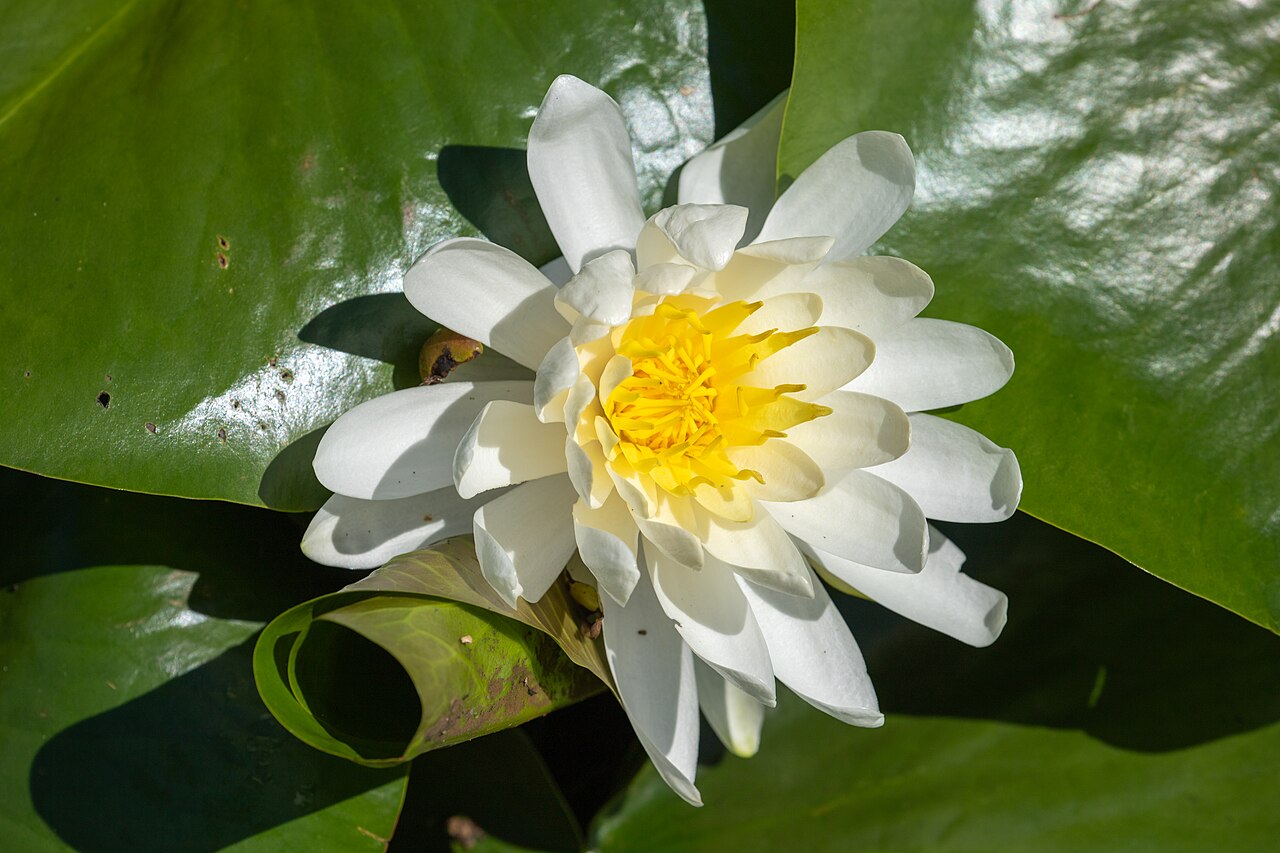
Nymphaea odorata, the American White Waterlily (also called Fragrant Water Lily), is the classic native water lily of ponds, lakes, and slow streams across the eastern half of the continent. Its star-shaped white flowers, often tinged pink at the base, open each morning with a sweet, delicate fragrance and close again by early afternoon — a daily rhythm that has made it one of the most recognized and beloved native aquatic plants in North America.
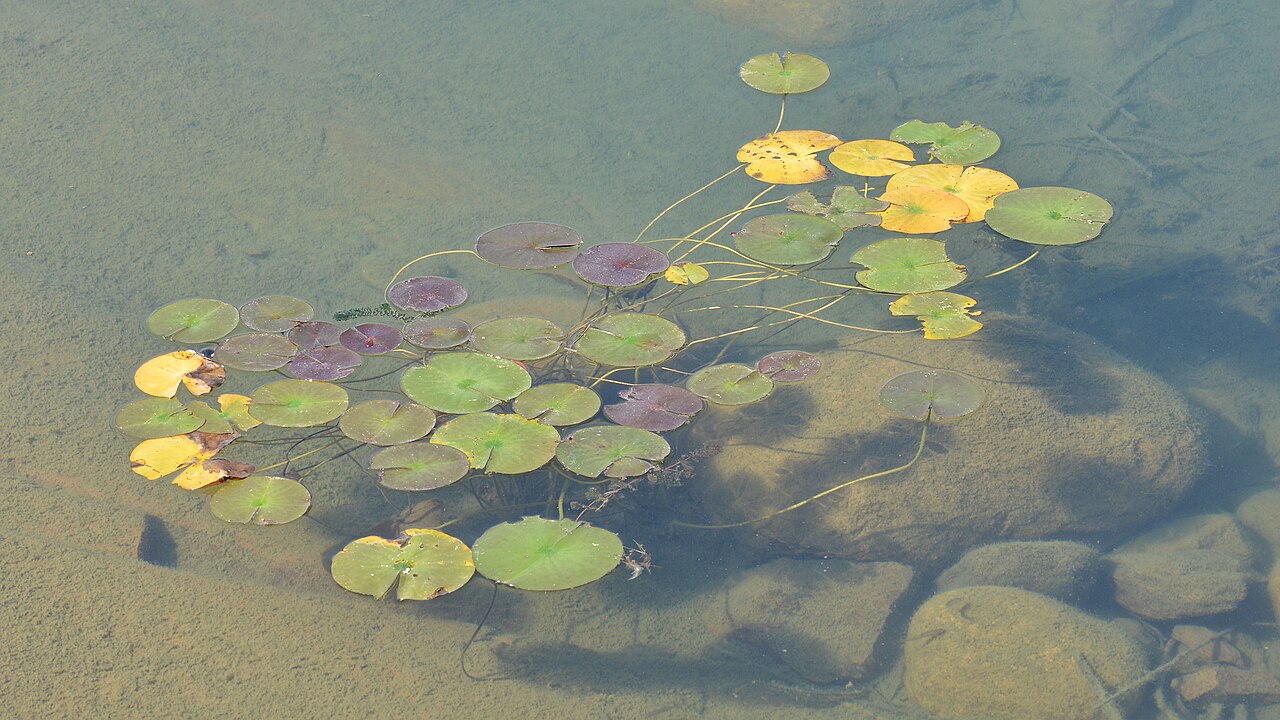
Unlike the related pond-lilies (Nuphar species) with their cupped yellow blooms, American White Waterlily produces a broad, flat flower, 3 to 5 inches across, made up of many narrow petals that grade smoothly from white at the outer edge to a center cluster of golden stamens. The round, deeply notched leaves float flush with the water surface, spreading from a thick rhizome anchored in soft mud below.
This is an excellent native choice for a wildlife pond or a large water garden with calm, shallow water. It asks for little beyond full sun, still water, and a season or two to settle in, after which it provides months of fragrant bloom, shelter for fish and amphibians, and food for a wide range of pond wildlife — all without the aggressive spread that makes some other native aquatics (like American Lotus) better suited to open lakes than small backyard ponds.
Identification
American White Waterlily is a rhizomatous aquatic perennial with all of its foliage and flowers floating directly on the water surface, in contrast to lotus and some pond-lilies that hold their parts up in the air. The whole plant dies back to the submerged rhizome each winter and regrows from the same rootstock each spring.
Leaves
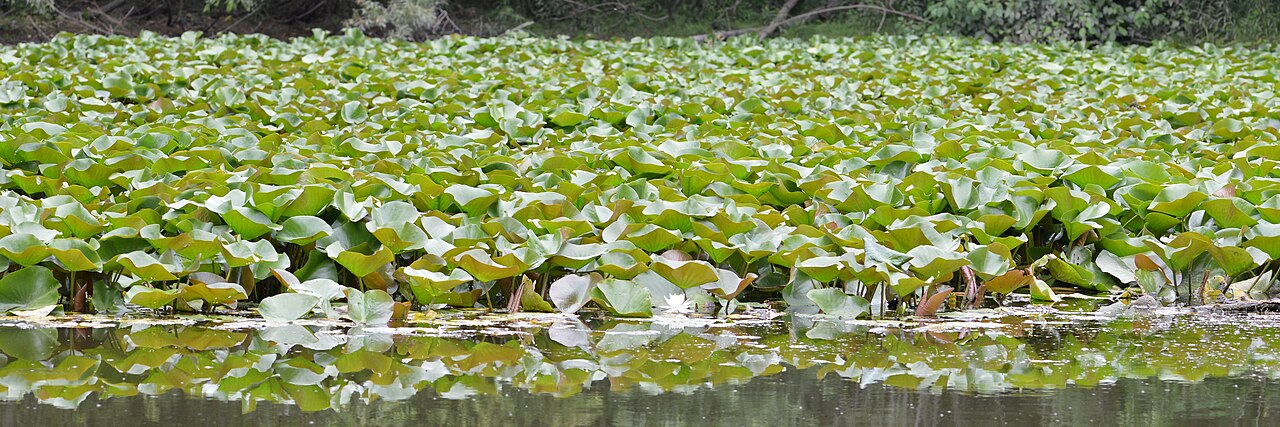
Leaves are nearly round, 4 to 12 inches across, deep green above and often purplish-red beneath, with a single deep notch (sinus) running from the leaf margin to the point where the long leafstalk attaches. The leaves float flat on the surface in overlapping mats, with new leaves continually unfurling from the rhizome through the growing season.
Flowers
Flowers are 3 to 5 inches across, with 17 to 43 narrow, pointed white petals (occasionally pink-tinged, especially toward the base) surrounding a dense cluster of yellow stamens. Each bloom opens in the morning and closes by early-to-mid afternoon, typically over a span of three to four days before the petals finally drop. The fragrance — a sweet, slightly fruity scent — is strongest in the morning hours and gives the species its name.
Fruit & Seeds
After pollination, the flower stalk coils and pulls the developing seed pod underwater to ripen. The berry-like fruit eventually ruptures underwater, releasing numerous small seeds, each surrounded by a buoyant, air-filled sac (aril) that floats the seed to a new location before it eventually sinks and germinates.
Quick Facts
| Scientific Name | Nymphaea odorata Aiton |
| Family | Nymphaeaceae (Water Lily) |
| Plant Type | Aquatic Perennial (floating-leaved) |
| Mature Spread | Leaves float on the surface, spreading 3–6 ft per clump |
| Growth Rate | Moderate |
| Sun Exposure | Full Sun |
| Water Needs | Aquatic — standing water 1–4 ft deep |
| Soil Type | Soft mud or silt pond bottom |
| Soil pH | 5.5–7.5 |
| Bloom Time | June – September |
| Flower Color | White, occasionally pink-tinged |
| Fruit | Berry-like capsule that ripens underwater |
| Deer Resistant | Yes — grows out of browsing reach in open water |
| USDA Hardiness Zones | 3–11 |
Native Range
American White Waterlily is native very broadly across the eastern half of North America, from the Canadian Maritimes and New England south through the entire Atlantic and Gulf coastal plain to Florida and Texas, and west through the Great Lakes states and into the Midwest. Within this huge range it is one of the most familiar native wildflowers of ponds, lake margins, and slow backwaters.
It roots in soft, organically rich mud in still or very slow-moving fresh water typically 1 to 4 feet deep, including natural ponds, lake coves, oxbows, slow streams, and bog edges. It tolerates a range of water chemistry but does best in clean, unpolluted water with good light penetration, since the floating leaves need full sun to flower well.
Gardeners in parts of the Pacific Northwest and California sometimes encounter Nymphaea odorata growing in local lakes and sloughs; these populations are introduced and, in some Washington and Oregon waters, considered invasive outside the species’ native eastern range, so it should be planted as a native only within the states listed below.
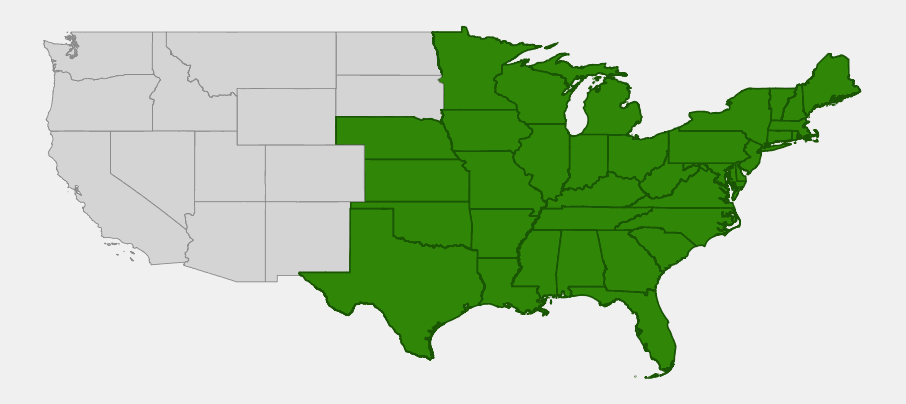
📋 Regional plant lists featuring American White Waterlily: Northern New England · Southern New England · New York, Pennsylvania & New Jersey · Maryland, Virginia & West Virginia · North & South Carolina · Kentucky & Tennessee · Iowa, Illinois & Missouri · Michigan, Minnesota & Wisconsin · Arkansas, Louisiana & Eastern Texas/Oklahoma
Growing & Care Guide
American White Waterlily is one of the easier native aquatics to establish in a garden pond, provided the water is calm, sunny, and at least a foot or two deep. It is considerably less aggressive in a contained pond than American Lotus, making it a better fit for most backyard water gardens.
Light
Give it full sun — a minimum of six hours a day — for reliable flowering. In shaded ponds the leaves will still spread, but bloom becomes sparse or stops altogether.
Water & Planting Depth
Plant the rhizome in a container or directly in mud so that the crown sits just below the soil surface, with the growing tip angled toward open water, in a spot where the water will be 1 to 4 feet deep over the root zone as leaves mature. Still or barely moving water is important; avoid fountains, waterfalls, or areas with strong current directly over the planting, which can damage leaves and inhibit growth.
Planting Tips
Set divisions or nursery-grown rhizomes into heavy clay-loam soil (not potting mix, which floats) in a wide, shallow planting container, then lower the container to the correct depth, raising it on bricks if needed while the plant is young and lowering it gradually as leaves lengthen. Spring through early summer, once water has warmed, is the best planting window.
Maintenance
Remove yellowing or decaying leaves periodically through the season to keep the pond clean and reduce nutrient buildup from decomposition. Divide congested rhizome clumps every three to five years in spring, when flowering begins to decline, discarding the oldest central growth and replanting vigorous outer sections. No winter protection is needed in most of its range; the rhizome survives cold as long as it stays below the ice line in water that does not freeze solid.
Landscape Uses
- Wildlife ponds — fragrant bloom plus cover and food for pond animals
- Backyard water gardens of almost any size, from large tubs to full ponds
- Naturalized pond and lake-edge restoration in calm coves
- Mosquito-reducing plantings — shaded, leaf-covered water discourages some mosquito breeding while supporting the dragonflies and fish that eat larvae
- Companion planting with emergent natives like Pickerelweed and Blue Flag Iris at the pond margin
Wildlife & Ecological Value
American White Waterlily does far more than look attractive — it is a foundational plant in healthy pond and lake ecosystems across its range.
For Pollinators
The fragrant flowers attract native bees and beetles, which crawl into the bloom to feed on pollen; some specialist water lily beetles depend on the plant for both food and shelter. The brief daily opening window concentrates pollinator visits into the morning hours when scent and nectar are freshest.
For Fish & Amphibians
The dense leaf cover provides shade that keeps water cooler and limits algae growth, while offering frogs, turtles, and small fish places to hide from predators and from the sun. Many fish species use the shaded underside of the leaf mat as nursery habitat for young fry.
For Birds & Mammals
Muskrats and beavers eat the rhizomes and leaves, and waterfowl occasionally feed on the seeds and soft tissue. Red-winged blackbirds, herons, and other pond-edge birds use waterlily stands as hunting and perching habitat.
Ecosystem Role
By shading the water surface, American White Waterlily helps suppress algae blooms and moderates water temperature, while its roots stabilize soft pond-bottom sediment. Mature stands create structurally complex habitat that supports a far greater diversity of aquatic insects, amphibians, and fish than open, unvegetated water.
Cultural & Historical Uses
Indigenous peoples across the plant’s range historically gathered the starchy rhizomes as an emergency or supplemental food source after extensive preparation to reduce their natural bitterness. The plant also held cultural and symbolic significance in some traditional practices, though specific uses varied widely among different nations and regions; this history is noted here as cultural context, not as guidance for modern use.
European and early American naturalists were captivated by the fragrant white blooms, and the species became a favorite subject for botanical illustrators and a popular addition to ornamental ponds from the 1800s onward. Its abundant, showy flowers also made it a familiar sight in regional folk names tied to lakes and ponds throughout the Northeast and Midwest, where “pond lily” season was a recognized marker of summer.
Today, American White Waterlily is grown almost exclusively as an ornamental and wildlife-support plant, valued by water gardeners for its ease of care, fragrance, and long bloom season compared to many showier hybrid water lilies.
Frequently Asked Questions
Why do the flowers close in the afternoon?
This daily opening-and-closing cycle is a normal part of the plant’s biology, thought to protect pollen from rain and overnight moisture while concentrating pollinator visits during the hours when the flower’s fragrance is strongest.
How is this different from American Lotus?
American White Waterlily holds its flowers and notched, round leaves flat on the water surface, while American Lotus raises its unnotched, perfectly circular leaves and flowers well above the water on stiff stalks. Waterlily is also far less aggressive in a contained pond.
How deep does the water need to be?
Plant in water 1 to 4 feet deep over the crown; shallower water can work for young plants, but adult rhizomes perform best with at least a foot of water above them, especially in colder climates where that depth helps protect the rootstock from freezing.
Will it take over a small pond?
It spreads steadily but far less aggressively than American Lotus, and is easy to manage in a backyard pond by periodically thinning the rhizome clump or confining it to a planting container.
Do American White Waterlily flowers need to be pollinated by hand in a garden pond?
No — native bees and beetles reliably pollinate the flowers outdoors without any help, as long as the pond gets enough sun to attract pollinator visits during the morning bloom window.
For more on building out a pond-edge planting with other moisture-loving natives, see our guide to starting a rain garden and our notes on the benefits of planting native Joe-Pye Weed along wet margins.