
September Elm (Ulmus serotina)
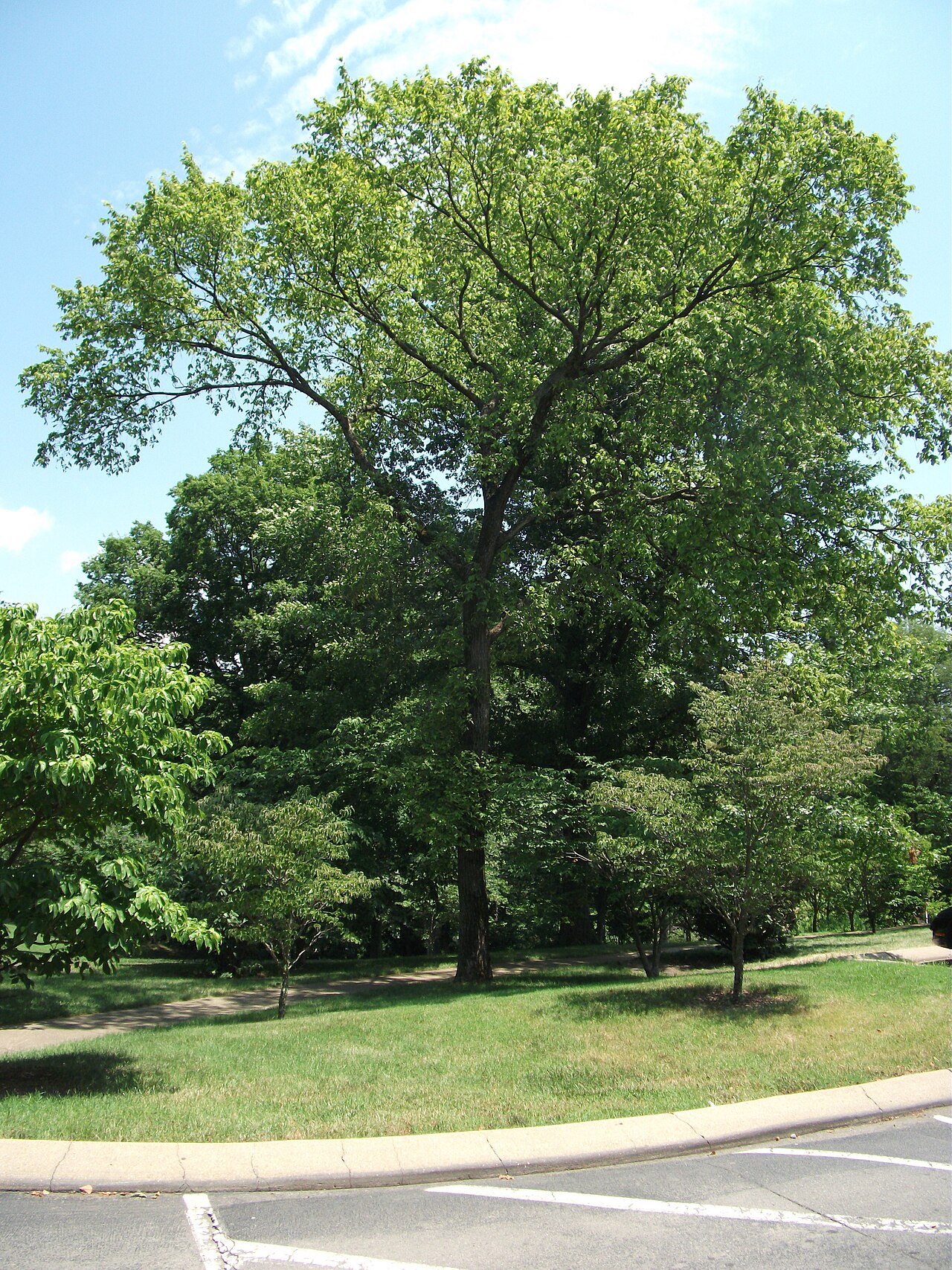
Ulmus serotina, commonly called September Elm or Red Elm, is an uncommon native tree best known for an unusual trait among North American elms: it flowers and fruits in autumn rather than early spring. Found scattered across a handful of states in the mid-South, it is a medium to large deciduous tree in the elm family (Ulmaceae), with a broad, spreading, rounded crown, finely toothed leaves, and distinctive corky-winged twigs on older branches.
September Elm is genuinely uncommon through most of its range, occurring in small, local populations rather than forming extensive stands, and it is rare enough that many experienced tree-watchers have never knowingly seen one. It typically grows on limestone bluffs, rocky wooded slopes, and streambanks, often in the company of other calciphile (lime-loving) trees and shrubs.
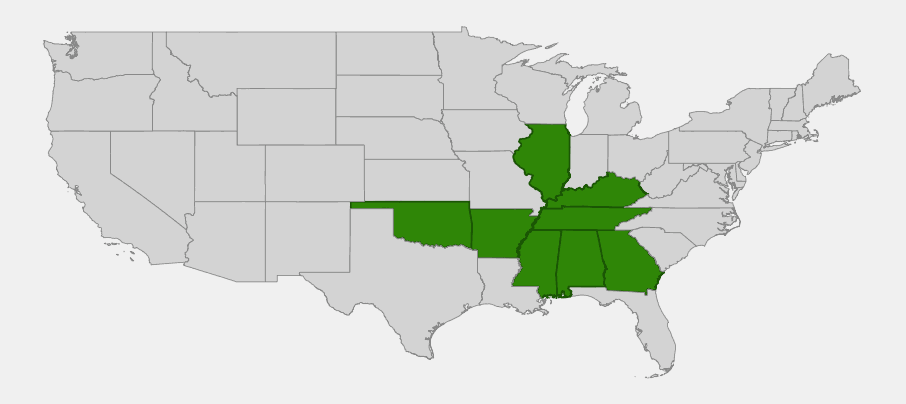
For gardeners and restoration plantings within its native range — Illinois, Kentucky, Tennessee, Arkansas, eastern Oklahoma, Mississippi, Alabama, and Georgia — September Elm offers a graceful shade tree with genuine conservation value and a late-season flowering display that sets it apart from every other native elm.
Identification
September Elm shares the classic elm silhouette — a vase-shaped to broadly rounded crown on a single trunk — but several features distinguish it from the more familiar American, slippery, and winged elms.
Bark & Stems
Mature bark is light brown to reddish-gray, developing shallow, interlacing fissures with age. Many branches, especially on older trees, develop irregular corky wings or ridges along the twigs, similar to (though generally less pronounced than) those of winged elm. Young twigs are slender, brown to gray, and range from pubescent to nearly hairless.
Leaves
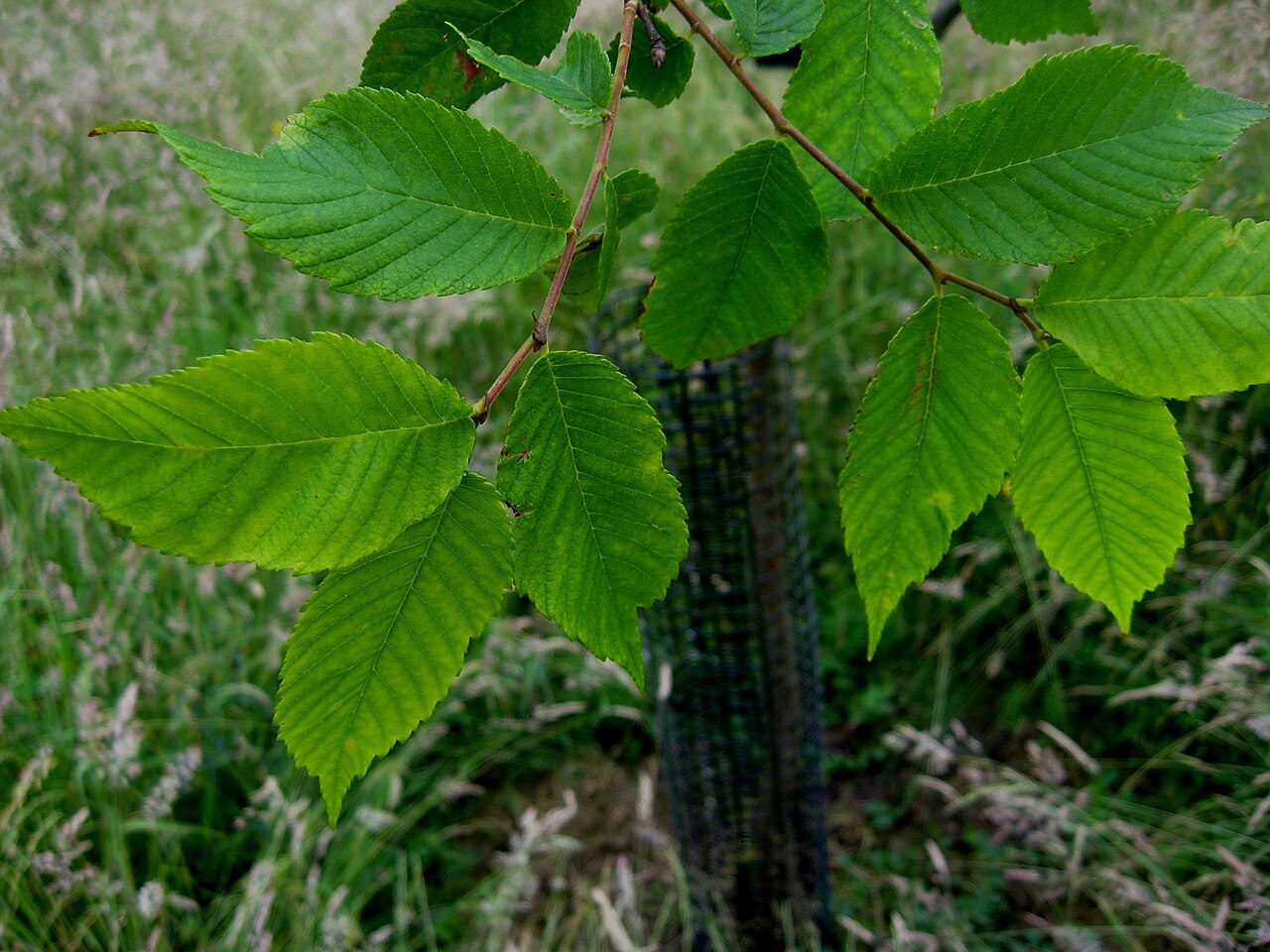
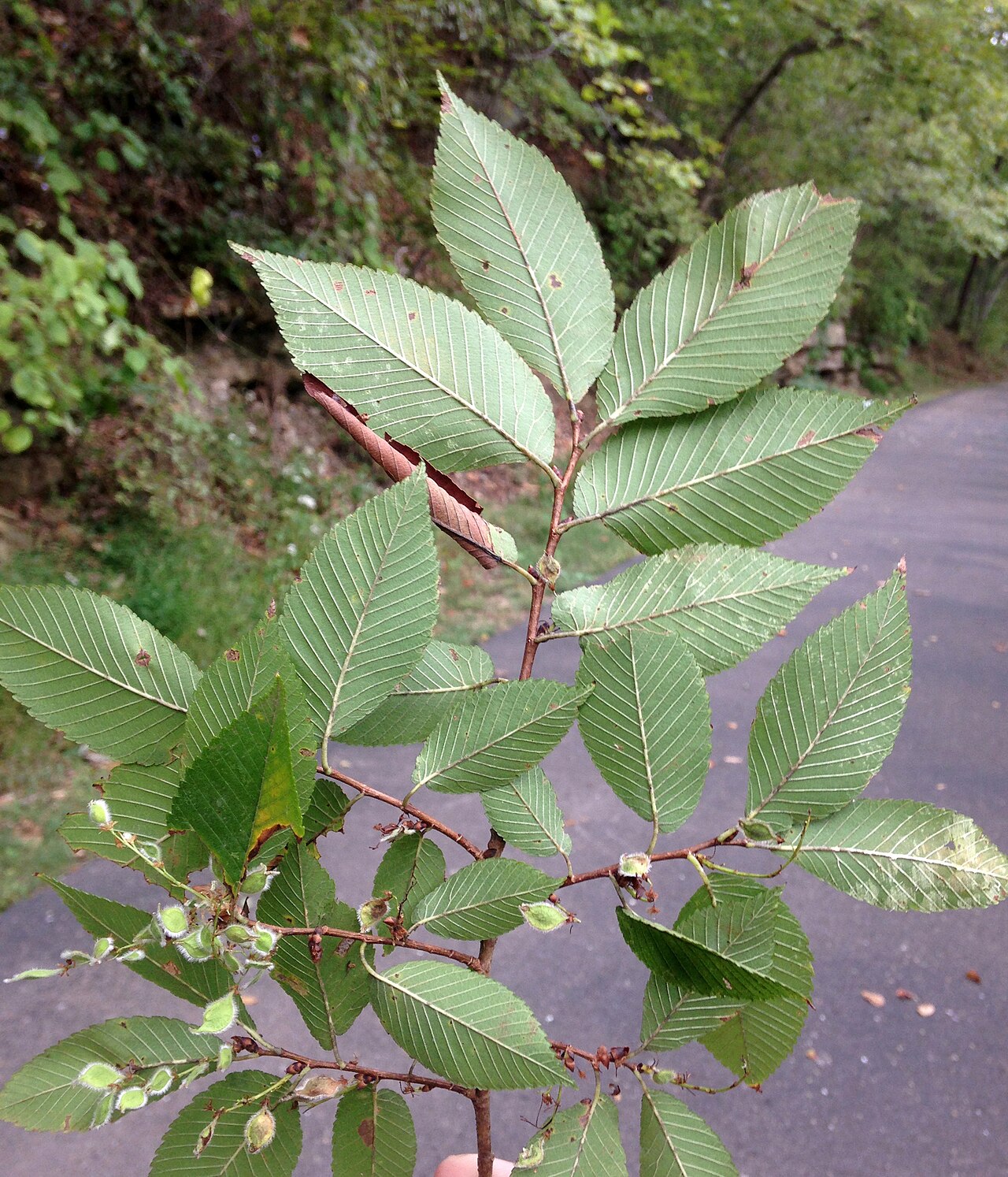
Leaves are simple, alternate, and elliptical to oblong-lanceolate, 2 to 4 inches long, with the classic asymmetrical (oblique) elm leaf base. Leaf margins are doubly serrate (large teeth with smaller teeth on them), and the upper surface is dark green and relatively smooth, while the lower surface is paler and softly hairy along the veins. Fall color is a modest yellow.
Flowers
This is the tree’s signature trait: unlike every other native elm, which flowers in late winter or very early spring before leafing out, September Elm flowers in late summer to early fall (typically September, giving the tree its common name), after the leaves are fully developed. The small, inconspicuous reddish-green flowers appear in clusters along the twigs.
Fruit & Seeds
The fruit is a typical elm samara — a flattened, winged seed — but because flowering happens in fall, the samaras mature in October and November, several months later than other native elms. Each samara is oval, notched at the tip, and fringed with fine hairs along the wing margin, dispersing by wind shortly after ripening.
Quick Facts
| Scientific Name | Ulmus serotina |
| Family | Ulmaceae (Elm) |
| Plant Type | Deciduous Tree |
| Mature Height | 40–70 ft |
| Mature Spread | 35–55 ft |
| Growth Rate | Moderate |
| Sun Exposure | Full Sun to Partial Shade |
| Water Needs | Low to Moderate |
| Soil Type | Rocky, well-drained soils over limestone; tolerates thin, dry sites |
| Soil pH | 6.5–8.0 (neutral to alkaline) |
| Bloom Time | September (uniquely late among native elms) |
| Flower Color | Reddish-green |
| Fall Color | Yellow |
| Fruit | Hairy-margined winged samara, ripening October–November |
| Deer Resistant | No (deer browse young growth) |
| USDA Hardiness Zones | 6–9 |
Native Range
September Elm has a scattered, mid-southern distribution centered on Tennessee, where it is found most frequently, with additional populations extending into Kentucky, southern Illinois, eastern Oklahoma, Arkansas, Mississippi, Alabama, and northwestern Georgia. A disjunct population is also reported from northeastern Mexico. Everywhere within this range, the species occurs locally rather than abundantly, and it is considered infrequent to rare outside of a few strongholds in Tennessee.
The species favors rocky, well-drained sites, especially limestone bluffs, dry wooded slopes, and streambanks, where it often grows alongside other lime-loving trees such as chinkapin oak and eastern redcedar. It is notably more drought- and heat-tolerant than many other native elms, reflecting its adaptation to thin, rocky soils.
Like other elms, September Elm is highly susceptible to Dutch elm disease, which has reduced wild populations of elms broadly across North America. Because it was never abundant to begin with, disease losses compound an already naturally limited range, making individual trees and local populations worth protecting.
📋 Regional plant lists featuring September Elm: Illinois, Iowa & Missouri · Kentucky & Tennessee · Arkansas, Louisiana, Eastern Oklahoma & Eastern Texas · Georgia, Alabama & Mississippi
Growing & Care Guide
September Elm is a tough, adaptable tree once established, well suited to the thin, rocky soils that stress out many other shade trees. Its biggest challenge in cultivation is simply finding nursery stock, since it is rarely sold commercially.
Light
Plant in full sun to light partial shade. Trees grow fullest and flower most reliably in full sun, though they tolerate the dappled light of a woodland edge, consistent with their natural habitat on rocky, often partly open slopes.
Soil & Water
September Elm is at its best in rocky, well-drained, neutral to alkaline soils, including thin soils over limestone that would challenge many other trees. It has good drought tolerance once established, reflecting its native habitat on dry bluffs and slopes, though young trees benefit from regular watering through their first couple of growing seasons.
Planting Tips
Choose a well-drained site; avoid heavy, poorly drained clay or low spots that stay wet. Plant in fall or early spring, and stake young trees only if needed in windy sites. Because the species is uncommon in the nursery trade, look for it through native-plant specialty growers or botanical garden plant sales rather than general garden centers.
Pruning & Maintenance
Prune in winter dormancy to remove dead, damaged, or crossing branches and to establish good structure while the tree is young. Watch for signs of Dutch elm disease — wilting, yellowing, or browning foliage on individual branches — and remove and dispose of affected limbs promptly to slow spread.
Propagation
Propagate from fresh seed collected in October or November, soon after the unusually late fall samaras ripen; seed generally germinates readily without extended stratification. Because wild populations are limited, collect seed responsibly and in small quantities, or source nursery-propagated stock.
Landscape Uses
- Shade tree for dry, rocky, or alkaline sites where many other trees struggle
- Specimen tree valued for its unusual fall flowering and fruiting display
- Restoration plantings on limestone glades, bluffs, and rocky woodland edges
- Conservation plantings supporting a regionally uncommon native tree
Wildlife & Ecological Value
As one of the few native plants to flower in early fall, September Elm fills an unusual ecological niche, offering late-season resources when most other trees have finished blooming for the year.
For Pollinators
The fall flowers are wind-pollinated like other elms, but their unusual late timing means they are not competing with spring-blooming trees for pollinator attention, and a variety of insects may visit the flowers even though wind is the primary pollen vector.
For Birds
Elm samaras, including those of September Elm, are eaten by various seed-eating birds, and the furrowed bark of mature trees provides foraging habitat for woodpeckers and nuthatches searching for insects.
For Mammals
Squirrels and other small mammals feed on elm samaras and buds, and deer browse the foliage and young twigs, particularly on seedlings and low branches.
Ecosystem Role
On the rocky bluffs and limestone slopes it favors, September Elm adds structural and species diversity to naturally sparse, dry woodland communities. Because the species is uncommon and disease-susceptible, surviving populations are ecologically significant both for the genetic diversity they preserve and for the specialized dry-limestone habitat they help anchor.
Cultural & Historical Uses
September Elm has never been an important commercial timber species because of its scattered distribution and modest size compared to American elm, but its wood shares the general strength and interlocked grain typical of elms, making it suitable for similar uses such as tool handles and rough construction where it has occasionally been cut.
The tree’s most notable historical interest has come from botanists and arborists drawn to its unusual autumn flowering habit, a trait documented since the species was first described in the 19th century and still cited today as the clearest way to distinguish it from other native elms in the field.
Specimen trees have occasionally been planted on college campuses and in arboreta specifically because of this late-blooming curiosity, giving visitors an elm in flower and fruit at a time of year when every other native elm has long since finished.
Frequently Asked Questions
What makes September Elm different from other elms?
It flowers and fruits in early fall (typically September) rather than late winter or early spring, which is the opposite timing from every other native North American elm. This is the easiest way to identify it in the field.
Is September Elm susceptible to Dutch elm disease?
Yes. Like most native elms, it is highly susceptible to Dutch elm disease, which has contributed to its rarity. Watch for wilting or browning on individual branches and remove affected wood promptly.
Where does September Elm grow best?
It thrives on rocky, well-drained, neutral to alkaline soils, especially limestone bluffs and dry wooded slopes. It tolerates drought and thin soils better than many other elms.
Is September Elm easy to find at nurseries?
No. It is rarely grown commercially and is mostly available through native-plant specialty growers, botanical garden sales, or seed collected responsibly from wild populations.
How tall does September Elm get?
Most mature trees reach 40 to 70 feet tall with a broad, rounded crown, making it a medium to large shade tree suitable for open lawns and larger properties.
For related elms already profiled on the site, see American Elm and Winged Elm, both common associates in the eastern hardwood forest. If you’re weighing firewood options for elm wood, see our elm firewood guide.

Looking for a nursery that carries September Elm?
Browse our native plant nursery directory: Illinois · Kentucky & Mississippi · Tennessee · Oklahoma · Arkansas & Alabama · Georgia

