
Water Elm (Planera aquatica)

Planera aquatica, commonly known as Water Elm or Planer-Tree, is a small native wetland tree and the only species in its genus. Despite the common name, it is only distantly related to the true elms (Ulmus), though it belongs to the same family (Ulmaceae) and shares a generally similar leaf shape and bark texture. Water Elm is a true swamp specialist, found almost exclusively in seasonally flooded bottomland forests, sloughs, and the margins of oxbow lakes across the southeastern United States.
This is a small to medium tree, usually 30 to 50 feet tall, often with a leaning or multi-trunked habit shaped by life in soft, waterlogged soil. Its small, oval, finely toothed leaves and distinctively fringed, bur-like fruit make it easy to identify once you know what to look for, even though it is overshadowed in most bottomland forests by larger canopy trees like bald cypress and water tupelo.
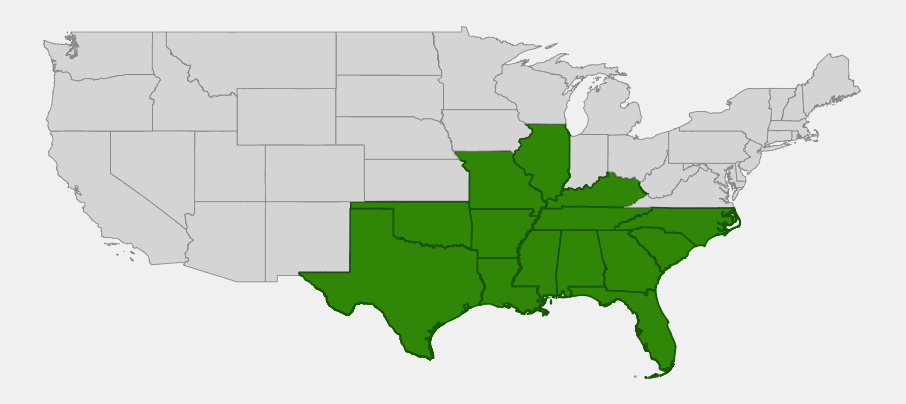
Water Elm rarely appears in the nursery trade, but it is an excellent, low-maintenance choice for wet, poorly drained sites where few other trees will thrive — rain gardens, pond edges, and restoration plantings in seasonally flooded bottomlands throughout its native range from Texas to the Carolinas and north into southern Illinois.
Identification
Water Elm is best recognized by its small size, habit of growing partly submerged or on hummocks in standing water, and its unusual bristly fruit.
Bark & Stems
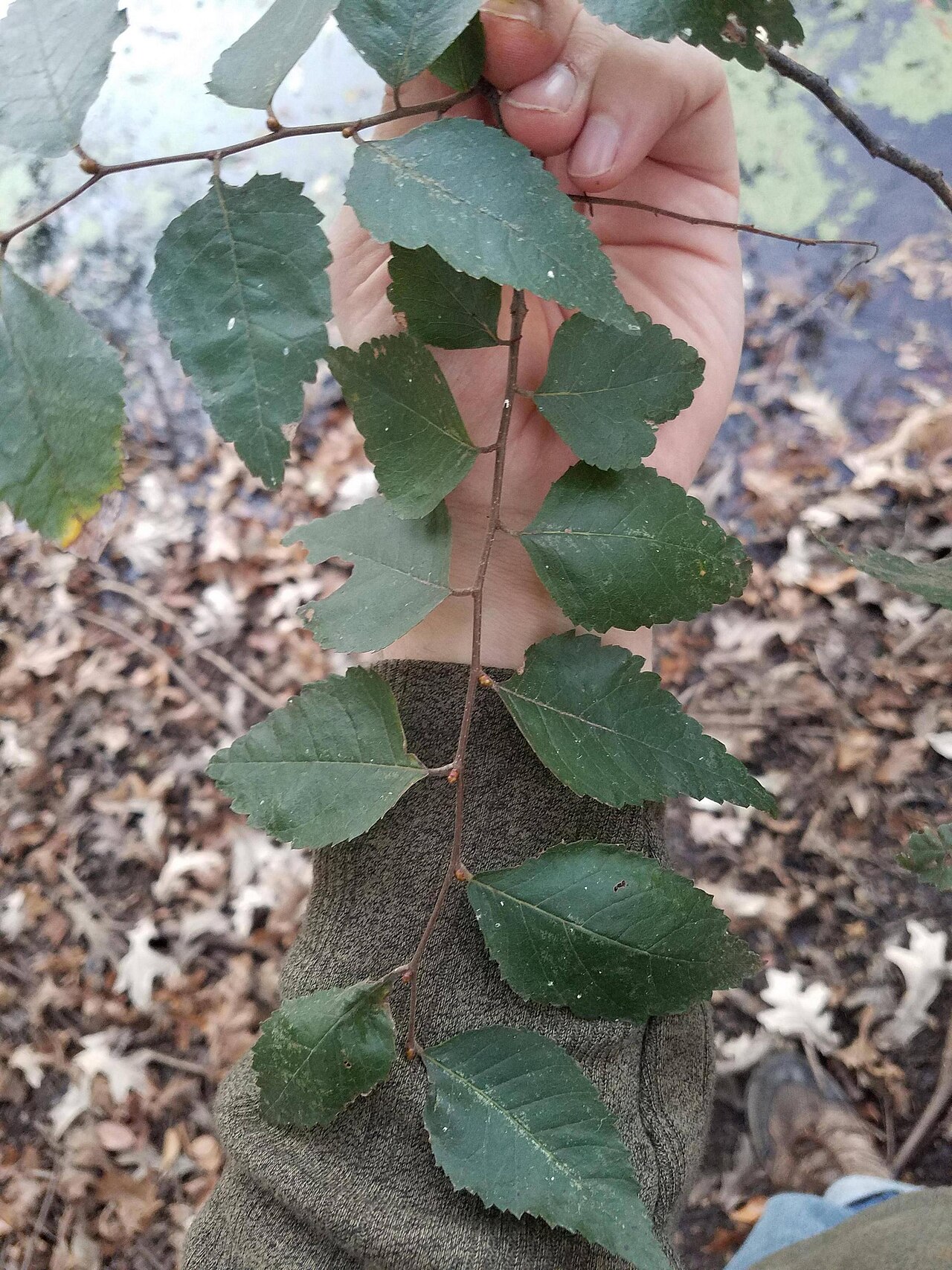
The bark is light gray to grayish-brown, thin, and breaks into small, loose, somewhat scaly plates with age — a texture reminiscent of true elms but generally more mottled and flaky. Trunks are often leaning, buttressed, or multiple from the base, an adaptation to the soft, saturated soils the tree grows in. Twigs are slender and reddish-brown, sometimes finely hairy.
Leaves
Leaves are simple, alternate, and elliptical to oval, 1.5 to 3 inches long, with the slightly asymmetrical base typical of the elm family. Margins are evenly and finely toothed, and the leaf surface is a dull, somewhat leathery dark green above, paler beneath. Leaves emerge relatively late in spring, after the inconspicuous flowers.
Flowers
Water Elm flowers very early, in late winter to early spring (typically March), before the leaves emerge. The flowers are tiny, greenish, and wind-pollinated, with male and female (and sometimes perfect) flowers occurring separately on the same tree, clustered along the previous year’s twigs.
Fruit & Seeds
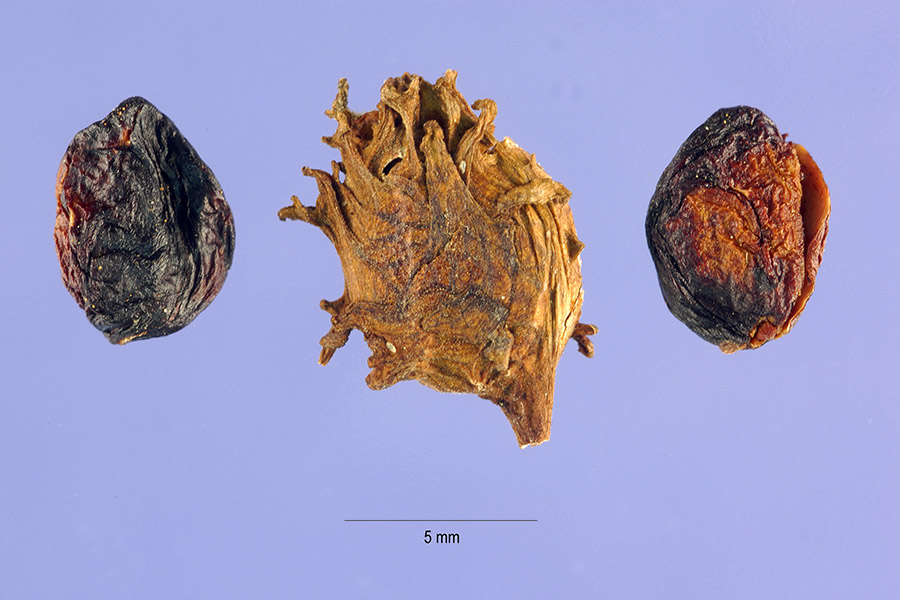
The fruit is the tree’s most distinctive feature: a small, hard, irregularly ridged and bristly drupe, often described as bur-like or warty, quite unlike the flat winged samaras of true elms. Fruits mature in spring, shortly after flowering, and are dispersed by water as much as by wind — a fitting trait for a tree that spends much of the year standing in floodwater.
Quick Facts
| Scientific Name | Planera aquatica |
| Family | Ulmaceae (Elm) |
| Plant Type | Deciduous Wetland Tree |
| Mature Height | 30–50 ft |
| Mature Spread | 20–35 ft |
| Growth Rate | Moderate |
| Sun Exposure | Full Sun to Partial Shade |
| Water Needs | High; tolerates standing water and seasonal flooding |
| Soil Type | Wet, poorly drained alluvial clay or muck |
| Soil pH | 5.5–7.0 (slightly acidic to neutral) |
| Bloom Time | March, before leaf-out |
| Flower Color | Greenish (inconspicuous) |
| Fall Color | Yellow-green, not showy |
| Fruit | Small, bristly, irregularly ridged drupe, ripening in spring |
| Deer Resistant | Mostly |
| USDA Hardiness Zones | 6–9 |
Native Range
Water Elm occupies a broad swath of the Gulf and lower Mississippi River region, extending from southeastern North Carolina and northern Florida west to eastern Texas, and north through the Mississippi Embayment into southern Illinois and Missouri. Within that range it is common wherever its specific habitat — regularly flooded bottomland forest — is present, but it is essentially absent from upland sites.
The species is a defining component of deep swamp and river-swamp plant communities, often standing in water for much of the year alongside bald cypress and water tupelo, or on slightly higher hummocks and natural levees within the same floodplain forests. It tolerates winter flooding to depths of several feet and thrives on the alluvial deposits that regular flooding leaves behind.
Because Water Elm is so tightly tied to intact floodplain and swamp habitat, its distribution has contracted somewhat in areas where wetlands have been drained or channelized for agriculture. Where natural flood regimes remain intact, however, it continues to regenerate readily and remains a common, ecologically important part of the southern bottomland hardwood forest.
📋 Regional plant lists featuring Water Elm: Georgia, Alabama & Mississippi · Arkansas, Louisiana, Eastern Oklahoma & Eastern Texas · Illinois, Iowa & Missouri · Kentucky & Tennessee · North Carolina & South Carolina
Growing & Care Guide
Water Elm is a specialist of wet sites, and it performs best exactly where most ornamental trees struggle: standing water, heavy clay, and poorly drained low spots. It is low-maintenance once planted in the right conditions.
Light
Grows well in full sun to partial shade. In the wild it is often found in semi-open swamp canopy gaps as well as beneath taller trees like bald cypress and tupelo, so it tolerates a range of light conditions as long as soil moisture is high.
Soil & Water
This is one of the most flood-tolerant native trees available, happily growing in soil that is saturated or under standing water for extended periods, especially during the dormant season. It prefers heavy, poorly drained alluvial clay or muck and does not perform well in dry, well-drained upland soils — this is not a tree for a typical home landscape bed unless that bed floods regularly.
Planting Tips
Choose the wettest part of the property: pond margins, rain garden basins, drainage swales, or low spots that collect runoff. Plant young container stock in fall or spring, and keep the root zone consistently moist through establishment, even though mature trees will tolerate both flooding and brief dry spells once established.
Pruning & Maintenance
Little pruning is required beyond removing dead or damaged wood, which is more common than average given the tree’s habit of leaning and multi-trunking in soft, saturated soil. Established trees are otherwise self-sufficient and require no supplemental fertilization.
Propagation
Propagate from fresh seed collected in spring shortly after the bristly fruits ripen and disperse; seed should be sown promptly, as water elm seed does not store well. Cuttings are occasionally used by restoration nurseries.
Landscape Uses
- Rain gardens and bioswales that experience periodic standing water
- Pond and wetland margins where few upland trees will survive
- Bottomland and swamp forest restoration within the species’ native range
- Stormwater management plantings on sites with poor drainage
Wildlife & Ecological Value
Water Elm is a foundational species of southern river-swamp forest, providing structure and food resources in one of the most ecologically rich wetland habitat types in North America.
For Pollinators
The tiny, wind-pollinated spring flowers appear before the swamp canopy leafs out, offering an early pollen source for insects active in late winter, though wind rather than insects does the actual pollination work.
For Birds
Wood ducks and other waterfowl that nest in flooded bottomland forest benefit from the dense cover Water Elm provides along with its swamp-forest associates, and songbirds forage among its branches for insects.
For Mammals
The bristly fruits are eaten by squirrels and other small mammals, and the dense, often tangled growth of multi-trunked trees provides cover for wildlife moving through flooded forest.
Ecosystem Role
As one of the few trees adapted to near-permanent flooding, Water Elm helps stabilize soft, saturated soils along sloughs and oxbow margins, and its presence signals healthy, functioning floodplain hydrology. Alongside bald cypress and water tupelo, it forms the backbone of a river-swamp ecosystem that filters floodwater, stores carbon, and supports a distinct community of amphibians, waterfowl, and wetland-dependent wildlife.
Cultural & Historical Uses
Water Elm has never been a commercial timber tree; its small size, often leaning or multi-trunked form, and preference for difficult-to-access swamp terrain made it impractical to harvest at scale. Where it has been cut, the wood has occasionally been used locally for rough fuelwood.
Historically, Water Elm served as a useful indicator species for naturalists and foresters mapping bottomland hardwood forest types, since its presence reliably marks the wettest, most frequently flooded portions of a floodplain — wetter than sites dominated by oaks and hickories, but often slightly drier than the deepest permanent-water stands of bald cypress.
Today, interest in Water Elm comes mainly from wetland restoration programs and native-plant gardeners looking for a genuinely flood-tolerant tree for difficult wet sites, a niche few other native trees fill as effectively.
Frequently Asked Questions
Is Water Elm a true elm?
Not exactly. It belongs to the same family (Ulmaceae) as true elms but is in its own genus, Planera, and it has notably different, bristly fruit instead of the flat winged samaras typical of Ulmus species.
Can Water Elm handle standing water?
Yes — this is one of its defining traits. Water Elm tolerates extended flooding, especially during the dormant winter season, better than almost any other native tree, making it ideal for wet, poorly drained sites.
Will Water Elm grow in a normal, well-drained yard?
It can survive in average garden soil, but it performs best and is most useful in consistently wet or seasonally flooded spots. In dry upland soil it will be slower-growing and less vigorous than trees better suited to those conditions.
How can I identify Water Elm?
Look for a small, often multi-trunked tree standing in or near water, with small, finely toothed oval leaves and distinctive bristly, bur-like fruit rather than the flat winged seeds of true elms.
Is Water Elm good for wildlife?
Yes. It is a key structural species in river-swamp forest, providing cover for waterfowl and songbirds and food for squirrels and other small mammals, while helping anchor the broader bottomland hardwood ecosystem.
Two common swamp-forest associates are already profiled here: Bald Cypress and Cedar Elm. For more on why native trees matter for local wildlife, see our guide to planting native trees for wildlife.

Looking for a nursery that carries Water Elm?
Browse our native plant nursery directory: Texas, South Carolina & Tennessee · Oklahoma & North Carolina · Arkansas & Alabama · Louisiana, Mississippi, Missouri & Kentucky · Georgia & Florida · Illinois

