Water Tupelo (Nyssa aquatica)
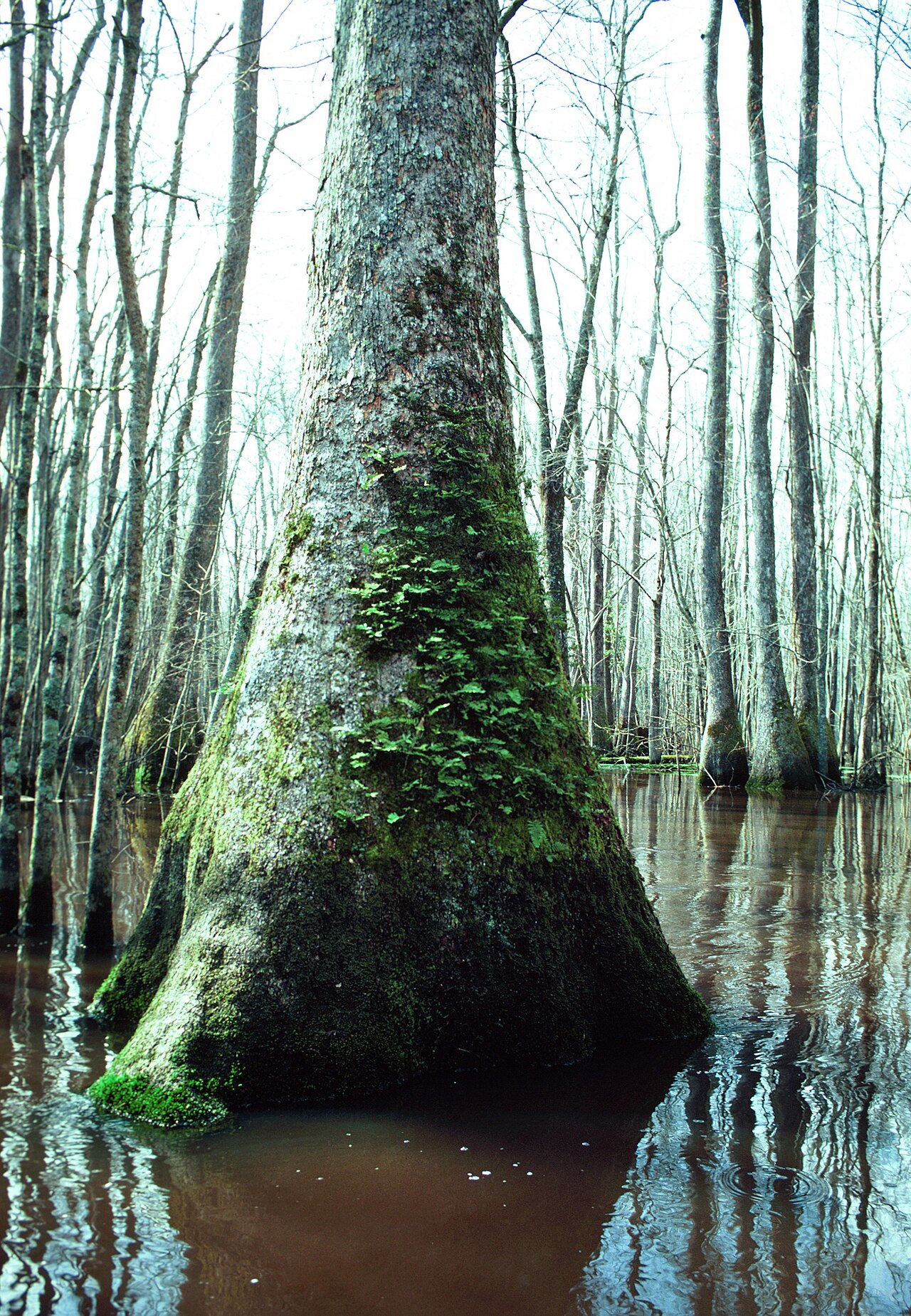
Nyssa aquatica, commonly known as water tupelo or cottongum, is a large, long-lived deciduous tree of the Nyssaceae family and one of the most recognizable trees of southern river swamps. It is best known for its dramatically swollen, buttressed trunk base — a shape that tapers from a wide, bottle-like foot up to a long, clear, surprisingly slender bole — an adaptation to a life spent standing in water for much of the year.
Water tupelo grows in deep, slow-moving river swamps, backwater sloughs, and the margins of oxbow lakes across the southeastern coastal plain and lower Mississippi River valley. It often grows in nearly pure stands alongside bald cypress, forming the classic flooded “cypress-tupelo swamp” of the Deep South, and can live for several centuries, with some champion specimens exceeding 100 feet tall and more than 40 feet in trunk circumference at the buttressed base.
For most home gardeners water tupelo is not a practical choice, since it needs the kind of permanently or seasonally flooded ground few yards provide. It belongs instead in restoration plantings, constructed wetlands, pond and lake margins with consistently wet or flooded soil, and large properties with swampy, low-lying ground within its native range, where it rewards patience with a long-lived, wildlife-rich tree that few nurseries carry but that thrives where almost nothing else will.
Identification
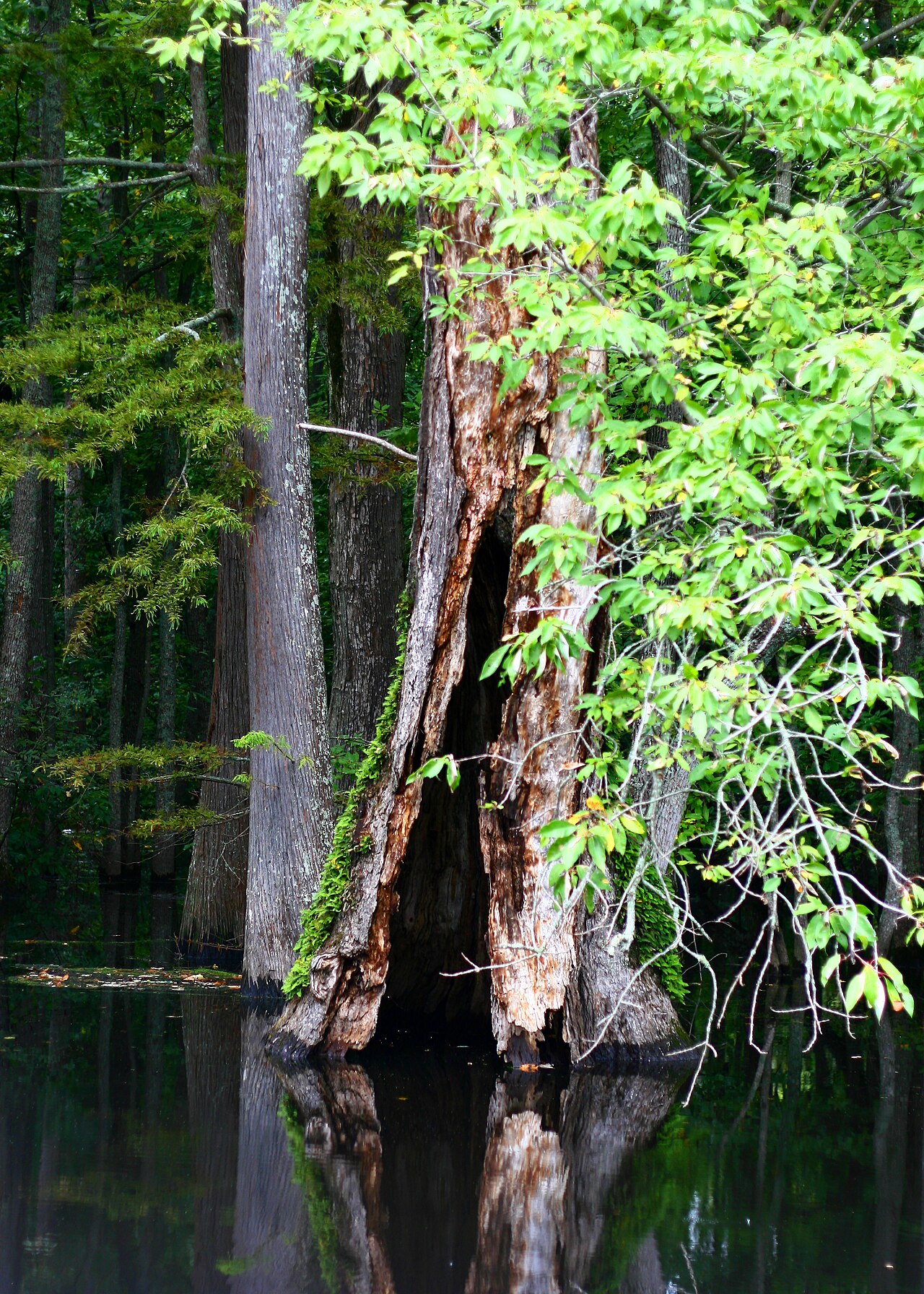
Water tupelo is a large deciduous tree reaching 80 to 100 feet or more at maturity, with champion trees recorded over 100 feet tall. Its most distinctive feature by far is the swollen, bottle-shaped or buttressed base of the trunk, which can be several times the diameter of the clear bole above it — an adaptation that provides stability and additional root-zone oxygen exchange in saturated, oxygen-poor swamp soils.
Bark & Stems
Bark on mature trees is gray-brown, thick, and broken into long, flattened, somewhat scaly ridges; on the submerged portion of the swollen base it is often coated with moss, lichen, or algae from long contact with swamp water. The crown is relatively narrow and rounded for such a large tree, with stout branches and a straight, clear trunk above the buttressed base.
Leaves
Leaves are simple, alternate, 4 to 7 inches long, oval to elliptical with a pointed tip, and either smooth-edged or with a few coarse teeth, especially on vigorous young shoots. They are shiny dark green above and paler, often somewhat hairy beneath, turning a muted yellow in fall before dropping — not a tree grown for fall color, but a reliable one for structure and wildlife value in wet ground.
Flowers
Water tupelo blooms in early spring as the leaves emerge, with small, greenish-white flowers that are easy to overlook individually but important to local beekeepers collectively. Male flowers are borne in dense, rounded clusters, while female and perfect (bisexual) flowers occur singly or in pairs on separate stalks. The tree’s heavy, reliable nectar flow makes tupelo honey a regional specialty in parts of the Gulf Coast.
Fruit & Seeds
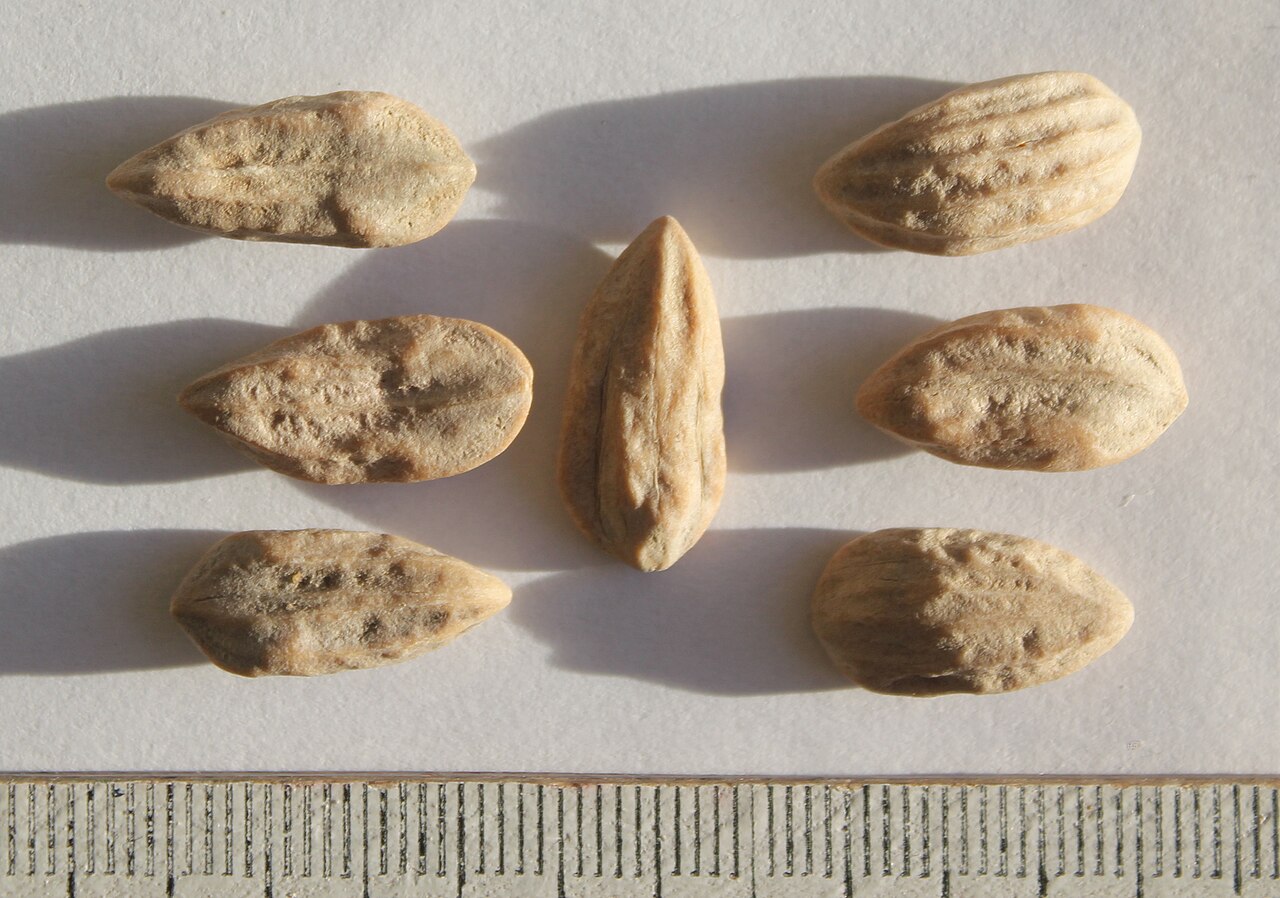
The fruit is a dark purple, oblong drupe about 1 inch long — notably larger than the fruit of black gum (Nyssa sylvatica) — borne on an extended stalk, ripening in late summer and fall. Each fruit contains a single ridged, football-shaped stone. The fruit falls into the swamp water below, where it floats and can be carried some distance before lodging on a mudbank to germinate, and is eaten readily by waterfowl, other birds, and mammals able to reach it.
Quick Facts
| Scientific Name | Nyssa aquatica L. |
| Family | Nyssaceae (Tupelo) |
| Plant Type | Deciduous Tree |
| Mature Height | 80–100 ft (exceptional trees taller) |
| Mature Spread | 25–35 ft |
| Growth Rate | Medium to Fast in flooded soil |
| Sun Exposure | Full Sun to Part Shade |
| Water Needs | Very High; tolerates permanent flooding |
| Soil Type | Wet, poorly drained; swamp muck or clay |
| Soil pH | 5.0–7.0 |
| Bloom Time | March – April |
| Flower Color | Greenish-white |
| Fall Color | Muted yellow |
| Fruit | Dark purple drupe, about 1 in. long |
| Deer Resistant | Yes, generally |
| USDA Hardiness Zones | 6–9 |
Native Range
Water tupelo is native to the southeastern coastal plain and the lower Mississippi River valley, from Virginia south through the Carolinas, Georgia, and Florida, west along the Gulf Coast through Alabama, Mississippi, and Louisiana into eastern Texas, and north through Arkansas into southeastern Missouri, southern Illinois, and western Kentucky and Tennessee. Its range closely tracks the great river-swamp systems of the Southeast rather than following state lines.
Within this range, water tupelo is almost always found standing in water: deep river swamps, backwater sloughs, oxbow lakes, and the margins of slow-moving blackwater and brownwater rivers, frequently in nearly pure stands or mixed with bald cypress. It tolerates longer and deeper flooding than almost any other large eastern hardwood, and its buttressed trunk form becomes more pronounced the longer a site stays flooded.
Water tupelo is strictly a wetland species and does not persist on upland or even moderately well-drained ground; outside of a genuinely swampy, flood-prone site it will not thrive and is not appropriate to plant. Gardeners outside its native southeastern range should not plant it, since it offers no advantage over regionally native wetland trees and its deep-swamp requirements are difficult to replicate artificially.
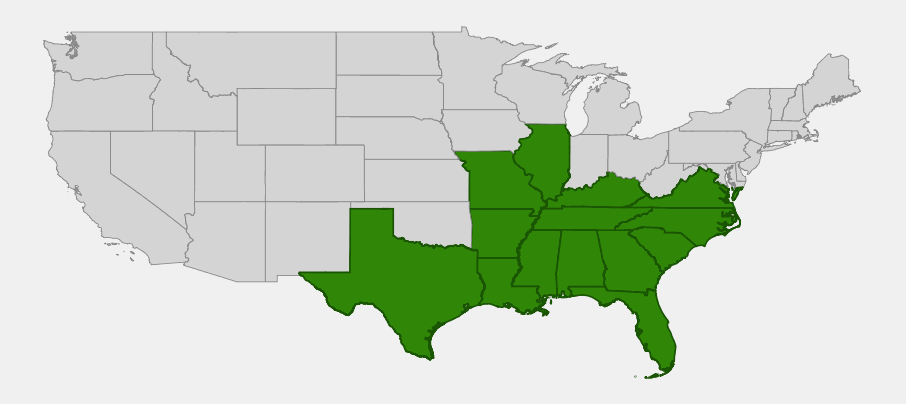
📋 Regional plant lists featuring Water Tupelo: Maryland, Virginia & West Virginia · North Carolina & South Carolina · Georgia, Alabama & Mississippi · Arkansas, Louisiana, Eastern Oklahoma & Eastern Texas · Kentucky & Tennessee · Illinois, Iowa & Missouri
Growing & Care Guide
Water tupelo is a specialist tree for a specialist site: it needs standing or seasonal flood water to thrive and offers little advantage on ordinary dry ground, where other native trees perform better. Where the right wet conditions exist, though, it is a tough, long-lived, low-maintenance tree.
Light
Water tupelo grows well in full sun to light shade. Young trees establish and grow fastest with good overhead light, and mature trees in open swamp conditions form fuller, more vigorous crowns than those growing in deep shade under a closed canopy.
Soil & Water
This tree needs consistently wet, poorly drained soil and tolerates prolonged or even permanent standing water better than almost any other large native hardwood — it is genuinely built for a life with flooded roots. It is not a tree for average or well-drained garden soil, where it will struggle; it belongs in swampy, low-lying ground, constructed wetlands, or the flooded margins of a large pond or lake.
Planting Tips
Plant young trees in late winter or early spring, choosing a site that floods seasonally or holds standing water much of the year. Container-grown stock establishes well if kept consistently moist during the first growing season; in restoration plantings, water tupelo is often planted alongside bald cypress to recreate the classic swamp-forest structure.
Pruning & Maintenance
Established water tupelo needs very little maintenance beyond occasional removal of dead or storm-damaged branches. It is a naturally long-lived, wind- and flood-adapted tree that requires no special winter protection or supplemental care once established in appropriate wet ground.
Landscape Uses
Water tupelo fits a narrow but valuable set of landscape roles:
- Wetland and swamp restoration plantings alongside bald cypress
- Constructed wetland or stormwater basin trees for consistently flooded ground
- Pond or lake margin specimen where soil stays saturated
- Large-property swamp or bottomland plantings within its native range
- Wildlife habitat plantings for waterfowl and other swamp-dependent species
Wildlife & Ecological Value
Water tupelo anchors some of the most productive wetland habitat in the Southeast, supporting wildlife through its flowers, fruit, and the physical structure of mature swamp stands.
For Pollinators
The abundant, nectar-rich spring flowers are a major early-season food source for honeybees and native bees. In parts of the Gulf Coast, particularly the Apalachicola River basin of Florida, water tupelo is the source of prized tupelo honey, produced during the short but intense spring bloom window.
For Birds
Wood ducks and other waterfowl eat the fallen fruit directly from the swamp water, and many songbirds and wading birds use mature tupelo-cypress swamp stands for nesting and roosting cover. The open, buttressed bases and cavities that develop in old trees provide nest sites for cavity-using swamp birds.
For Mammals & Aquatic Life
Fruit that falls into the water is eaten by a range of mammals able to access the swamp, and the submerged root systems and woody debris around tupelo stands provide cover and structure for fish and other aquatic animals in otherwise open swamp water.
Ecosystem Role
As a dominant tree of southern river swamps, water tupelo helps define the structure of an entire wetland community, slowing floodwater, stabilizing swamp substrate with its buttressed roots, and creating the shaded, nutrient-rich conditions that support a diverse swamp food web from the canopy down into the water itself.
Cultural & Historical Uses
Water tupelo’s name comes from a Native American word of Creek origin — combining ito (“tree”) and opilwa (“swamp”) — that entered English usage by the mid-18th century, a fitting name for a tree so completely defined by its flooded habitat. The swollen trunk base has long made the tree instantly recognizable to anyone who has paddled a southern river swamp.
Commercially, water tupelo has been an important timber tree, with the clear, straight-grained wood above the swollen base historically used for furniture, crates, and other general construction purposes, while the buoyant, light wood of the swollen base itself has been a favored material for wood carvers. In the Apalachicola River region of the Florida Panhandle, the tree’s spring nectar flow supports a long-standing tupelo honey industry, prized for its distinctive flavor and resistance to crystallization.
Beyond its commercial uses, water tupelo has long served as a practical landmark and navigational feature for people moving through southern swamps by boat, its tall, straight trunks rising from flooded ground long before any understory vegetation becomes visible at water level.
Frequently Asked Questions
Why does water tupelo have such a swollen trunk base?
The bottle-like swelling is an adaptation to growing in standing water: it adds stability in soft, saturated swamp soil and may aid in gas exchange for roots that spend much of the year submerged. The effect is most pronounced in trees that experience the deepest, most prolonged flooding.
Can water tupelo be planted in a normal yard?
Not successfully in most cases. It needs consistently wet or seasonally flooded soil and performs poorly on ordinary well-drained ground. It is best reserved for genuinely swampy, low-lying sites, constructed wetlands, or pond and lake margins that stay saturated.
What is tupelo honey made from?
Tupelo honey comes primarily from the nectar of water tupelo flowers, most famously along Florida’s Apalachicola River, where beekeepers place hives to catch the brief but heavy spring bloom. It is prized for its mild flavor and because it is slow to crystallize.
How is water tupelo different from black gum?
Black gum (Nyssa sylvatica) is a related species that grows in both wet and upland sites and has smaller fruit, while water tupelo is strictly a swamp tree with a more pronounced buttressed base and notably larger fruit. Black gum is also far more widely adaptable to garden conditions than water tupelo.
Is water tupelo fruit edible?
The fruit is not used as human food and is considered a wildlife food source, primarily for waterfowl and other swamp-dependent animals rather than people.

Looking for a nursery that carries Water Tupelo?
Browse our native plant nursery directory: Virginia, South Carolina, Texas & Tennessee · North Carolina · Georgia & Florida · Alabama & Arkansas · Mississippi, Louisiana, Missouri & Kentucky · Illinois