
Jamaica Dogwood (Piscidia piscipula)
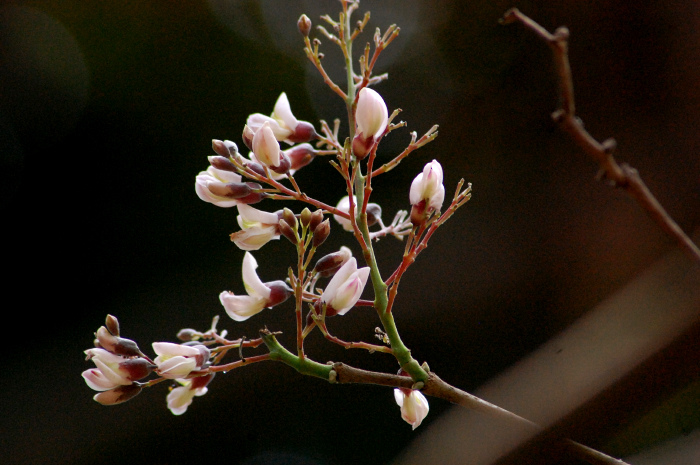
Piscidia piscipula, commonly called Jamaica Dogwood or Florida Fishpoison Tree, is a medium-sized tree of the pea family found in the United States only in the tropical hardwood hammocks and pine rocklands of extreme southern Florida. Despite the common name, it is not related to true dogwoods (Cornus) at all — it earned the name from early settlers who likely noticed its showy spring flower display, reminiscent of flowering dogwood, blooming on bare branches.
Jamaica dogwood grows as a rounded, spreading tree, typically 25 to 40 feet tall in Florida, with a trunk that develops attractive buttressed, fluted ridges with age. It is deciduous for a brief period in late winter, dropping its leaves just before an often spectacular flush of fragrant, pink-tinged white flowers in March and April, followed quickly by new foliage and distinctive papery, four-winged seed pods. The tree is deeply rooted and remarkably wind-firm, a trait that has made it valuable in South Florida’s hurricane-prone landscape.
The common name “fishpoison tree” refers to the historic use of its bark and roots, which contain rotenone and related compounds toxic to fish, by Caribbean and Central American peoples to stupefy fish for easy capture in streams and tide pools — a practice that is now illegal in Florida and most of its range. All parts of the tree should be considered toxic and are not edible or medicinal for people or pets.
Identification
Jamaica dogwood is best recognized by the combination of its buttressed gray trunk, compound leaves with glossy leaflets, and — for a few weeks each spring — its drifts of pink-and-white, wisteria-like flower clusters on otherwise bare branches.
Bark & Stems
Mature bark is light gray to gray-brown, relatively smooth on younger trunks and becoming irregularly fissured and ridged with age; older trees often show pronounced buttressing and fluting at the base. Twigs are stout and finely hairy when young, aging to gray-brown.
Leaves
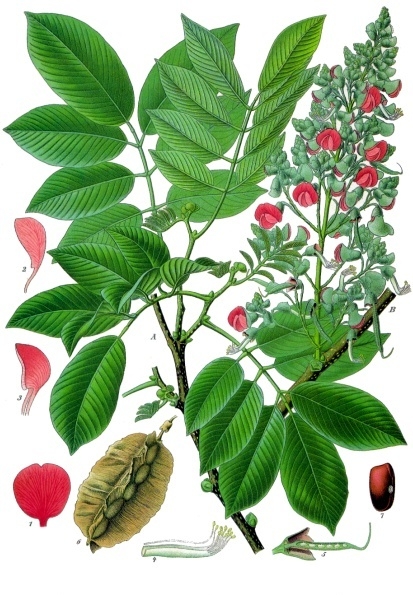
Leaves are alternate and odd-pinnately compound, 6 to 10 inches long, typically with 7 to 9 leaflets that are elliptical to ovate, 1.5 to 3 inches long, leathery, and glossy dark green above with a paler, often finely hairy underside. The tree is briefly deciduous in late winter, usually dropping its leaves just before flowering.
Flowers
In March and April, Jamaica dogwood produces dense, showy clusters of fragrant, pea-shaped flowers 0.5 to 0.75 inch long, pale pink to white with magenta to maroon veining on the banner petal, opening on leafless branches in a display that can cover the entire canopy for a week or two. The flowers are a major nectar source for honeybees in South Florida and the Keys during the display period.
Fruit & Seeds
The fruit is a distinctive papery, four-winged legume pod, 2 to 4 inches long, green ripening to brown, containing a few hard reddish-brown seeds. The winged pods are lightweight and somewhat buoyant, aiding dispersal by wind and water in the coastal hammocks where the species grows.
Quick Facts
| Scientific Name | Piscidia piscipula |
| Family | Fabaceae (Pea/Legume) |
| Plant Type | Briefly deciduous tree |
| Mature Height | 25–40 ft |
| Mature Spread | 25–35 ft |
| Growth Rate | Moderate |
| Sun Exposure | Full Sun |
| Water Needs | Low once established |
| Soil Type | Limestone-based, well-drained hammock soils |
| Soil pH | Neutral to alkaline |
| Bloom Time | March–April |
| Flower Color | Pink-veined white to pale pink |
| Fall Color | None; briefly deciduous in late winter |
| Fruit | Papery 4-winged pod, 2–4 in. |
| Deer Resistant | Yes |
| USDA Hardiness Zones | 10 – 11 |
Native Range
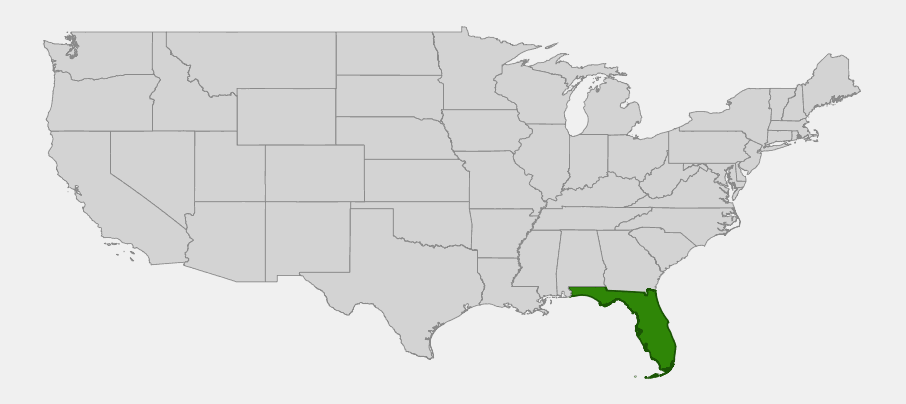
In the United States, Jamaica dogwood is native only to extreme southern Florida — principally Miami-Dade and Monroe counties, including the Florida Keys — where it grows in tropical hardwood hammocks and pine rocklands on shallow, limestone-derived soils. It reaches the northern limit of its range here and has essentially no cold tolerance beyond occasional light, brief frost.
Within its Florida range, the species favors well-drained, often rocky upland sites within hammock communities, usually growing alongside other South Florida hardwood hammock trees rather than in open or disturbed ground. It is not a widespread species even within its native counties and is most often encountered as scattered individuals in intact hammock habitat.
Outside Florida, Jamaica dogwood is far more common and widespread, found throughout the Caribbean (it is the national tree of the Cayman Islands), coastal Mexico, Central America, and the northern coast of South America, where it typically grows as a larger tree than it does at the cooler northern edge of its range in Florida.
📋 Regional plant lists featuring Jamaica Dogwood: none yet — no plantnative.org regional list currently covers South Florida hammock trees; see our full native plant directory for other Florida-native species.
Growing & Care Guide
Jamaica dogwood makes an excellent, low-maintenance shade or specimen tree for South Florida yards that can accommodate its mature size, prized for its wind resistance, drought tolerance once established, and spectacular spring flower display.
Light
Plant in full sun to very light shade for the best growth rate and the heaviest spring flowering; trees grown in dense shade become leggy and bloom sparsely.
Soil & Water
Jamaica dogwood is well adapted to South Florida’s shallow, rocky, limestone-based soils and tolerates alkaline pH without difficulty. It needs regular watering only while becoming established; mature trees are quite drought tolerant and do not need supplemental irrigation except during extended dry spells. Good drainage is important — the species does not tolerate prolonged standing water.
Planting Tips
Choose a planting site with room for a 25- to 35-foot canopy spread, away from pavement that could be disturbed by the deep root system. Young trees benefit from staking only in very exposed, windy sites and typically establish quickly once planted. Because the species is deeply rooted and notably wind-firm, it is a good choice near structures in hurricane-prone areas, though adequate distance from buildings is still recommended for any large shade tree.
Pruning & Maintenance
Jamaica dogwood needs little routine pruning beyond removing dead or crossing branches and shaping young trees to develop strong scaffold branching. It is generally free of serious pest and disease problems in Florida landscapes.
Landscape Uses
Jamaica dogwood works well as:
- Shade tree for South Florida yards and parks
- Specimen tree for its dramatic spring flower show
- Hurricane-resistant canopy planting near (but not against) structures
- Hammock restoration and native landscape plantings
Wildlife & Ecological Value
Within South Florida’s hardwood hammocks, Jamaica dogwood contributes both structural habitat and, during its brief but intense bloom, an important seasonal nectar resource.
For Birds
The canopy and branching structure provide nesting and foraging habitat typical of mature hammock trees, and the flowers attract insects that in turn draw insectivorous songbirds through the hammock canopy during the spring bloom period.
For Mammals
Hammock-dwelling mammals such as gray squirrels use the branches for travel and cover; there are no reports of significant mammal browsing on the foliage, likely owing to the toxic compounds the tree contains.
For Pollinators
The spring flower display is one of the most important nectar events of the year for honeybees in the Florida Keys and South Florida hammocks, often producing a distinctive monofloral honey where hives are kept near flowering stands; native bees and other pollinating insects also visit heavily during the bloom window.
Ecosystem Role
As a member of the pea family, Jamaica dogwood can fix atmospheric nitrogen through root nodule bacteria, modestly enriching the thin, rocky hammock soils it grows in. Its canopy adds structural diversity and shade to the hammock understory, and its wind-firm root system helps stabilize hammock soils during the tropical storms that regularly affect its South Florida range.
Cultural & Historical Uses
The common name “fishpoison tree” comes directly from a widespread historical practice throughout the Caribbean and parts of Central America of crushing the bark and roots, which contain rotenone and related ichthyotoxic compounds, and releasing them into streams or tide pools to stupefy fish, making them easy to collect by hand or net. This practice, sometimes called “dogwooding” fish in parts of the Caribbean, is now illegal in Florida and most other jurisdictions because of its harmful effects on aquatic ecosystems, and it should never be attempted.
The same toxic properties led to historical medicinal use of bark and root preparations in folk medicine throughout the Caribbean as a sedative and analgesic, a use reflected in an older common name, “fish-poison tree” or sometimes “Jamaica dogwood bark,” once sold in herbal commerce; these preparations are not considered safe for modern use and this page does not recommend any medicinal application of the plant.
The wood is heavy, hard, and durable, and has traditionally been used in boat building, fence posts, and general construction throughout its Caribbean and Central American range, where larger, faster-growing trees than Florida’s populations are more commonly harvested.
Frequently Asked Questions
Is Jamaica dogwood poisonous?
Yes. The bark, roots and other parts contain rotenone and related compounds that are toxic, historically used to stupefy fish. No part of the plant should be eaten or used medicinally, and using it to poison fish is illegal.
Is Jamaica dogwood related to flowering dogwood?
No. Despite the shared common name, Jamaica dogwood (Piscidia piscipula) is a member of the pea family (Fabaceae), unrelated to true dogwoods in the genus Cornus. The name likely stems from its showy spring flower display.
When does Jamaica dogwood bloom?
Typically in March and April in South Florida, with the flowers opening on bare branches just before or alongside the flush of new leaves.
Is Jamaica dogwood a good tree for hurricane-prone areas?
It has a reputation as a notably wind-firm, deeply rooted tree, which is one reason it is valued as a landscape and shade tree in South Florida, though normal setback distances from structures are still recommended for any large tree.
Where does Jamaica dogwood grow natively in the U.S.?
Only in extreme southern Florida — mainly Miami-Dade and Monroe counties, including the Florida Keys — within tropical hardwood hammocks and pine rocklands; it is far more widespread throughout the Caribbean, Mexico and Central America.

Looking for a nursery that carries Jamaica Dogwood?
Browse our native plant nursery directory: Florida
Jamaica dogwood grows alongside other South Florida hammock natives such as Gumbo Limbo and Wild Tamarind. For more on why native canopy trees matter for local wildlife, see our guide to the benefits of planting native trees.

