
Soldierwood (Colubrina elliptica)
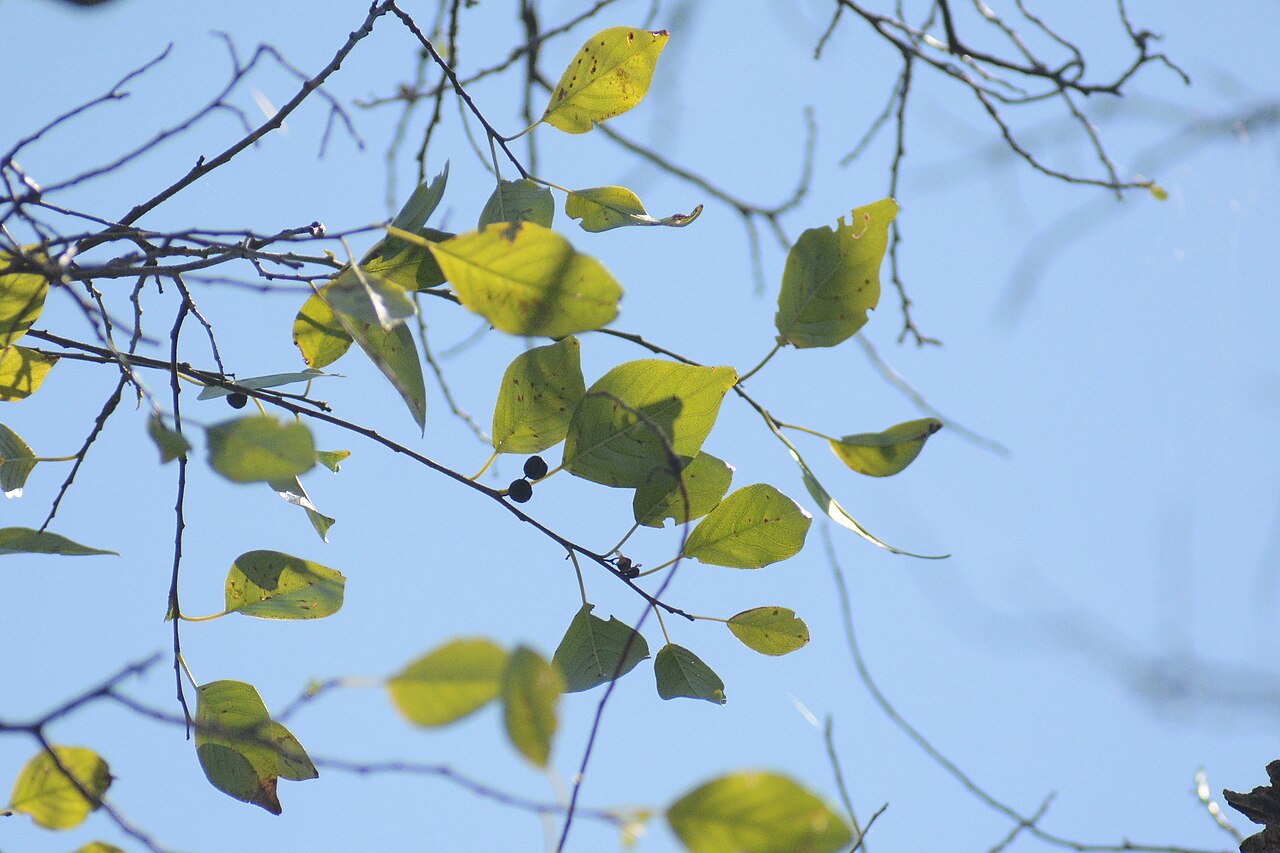
Colubrina elliptica, known as Soldierwood, is a small, slow-growing tree of South Florida’s rockland hammocks — one of the rarer native trees a Florida gardener is likely to encounter, and one worth knowing about precisely because it is uncommon. In the United States, Soldierwood is found only in South Florida and the Keys, where it is listed as endangered by the state. If you garden within its native range and want a genuinely conservation-minded planting choice, nursery-propagated Soldierwood is a way to support a species that has lost much of its original rockland hammock habitat to development.
Soldierwood belongs to the buckthorn family and grows as an understory to mid-canopy tree in the dense, biodiverse hardwood hammocks of the Miami Rock Ridge and the Florida Keys, typically alongside other hammock specialists like gumbo limbo, mastic, and lignum vitae. It is an unassuming tree rather than a showy one — modest flowers, small dark fruit, and a tidy, rounded form — but it fills a quiet, important niche in one of Florida’s most threatened natural plant communities.
Because Soldierwood is state-listed as endangered, never collect material from wild populations. Source plants only from reputable native plant nurseries that propagate from legally and ethically obtained stock, and treat any wild Soldierwood you find on your own property as a conservation asset worth protecting rather than a landscape plant to prune into something else.
Identification
Soldierwood is a small tree, typically 15 to 30 feet tall, with a slender trunk, smooth gray bark, and a rounded, relatively open crown.
Leaves
Leaves are alternate, simple, elliptic to ovate, 2 to 4 inches long, with a glossy yellow-green to dark green upper surface and finely toothed to nearly smooth margins. Foliage is evergreen to semi-evergreen depending on conditions, with new growth often showing a brighter yellow-green cast than older leaves.
Flowers
Flowers are small, greenish-yellow to white, borne in inconspicuous axillary clusters. They are easy to overlook, blooming more or less continuously through much of the year in South Florida’s mild climate, with heaviest bloom from late summer through winter.
Fruit
The fruit is a small, round, dark purple to black drupe, roughly a quarter inch across, maturing after the inconspicuous flowers and often visible scattered along the branches as shown in the photo above. Fruit is an important, if minor, food source for hammock wildlife.
Bark & Form
Bark is smooth and gray on younger stems, becoming slightly rougher with age. The overall habit is tidy and upright, fitting comfortably into the layered canopy structure of a rockland hammock without crowding out neighboring trees.
Quick Facts
| Scientific Name | Colubrina elliptica |
| Synonym | Colubrina reclinata |
| Family | Rhamnaceae (Buckthorn) |
| Plant Type | Evergreen to Semi-evergreen Tree |
| Mature Height | 15–30 ft |
| Mature Spread | 10–20 ft |
| Growth Rate | Slow |
| Sun Exposure | Full Sun to Partial Shade |
| Water Needs | Low to Moderate |
| Soil Type | Shallow, rocky limestone soils |
| Soil pH | Alkaline |
| Bloom Time | Nearly year-round; heaviest late summer – winter |
| Fruit | Small dark purple-black drupe |
| Conservation Status | Endangered in Florida (state-listed) |
| USDA Hardiness Zones | 10b–11 |
Native Range
In the continental United States, Soldierwood is native only to South Florida and the Florida Keys, where BONAP county records concentrate on the southernmost tip of the peninsula and the Keys. It also occurs natively in Puerto Rico, the U.S. Virgin Islands, and parts of the wider Caribbean. In Florida it grows in rockland hammocks, hammock margins, thickets, and rocky coastal strands — all habitats that have shrunk dramatically under development pressure, which is the primary reason behind its endangered status in the state.
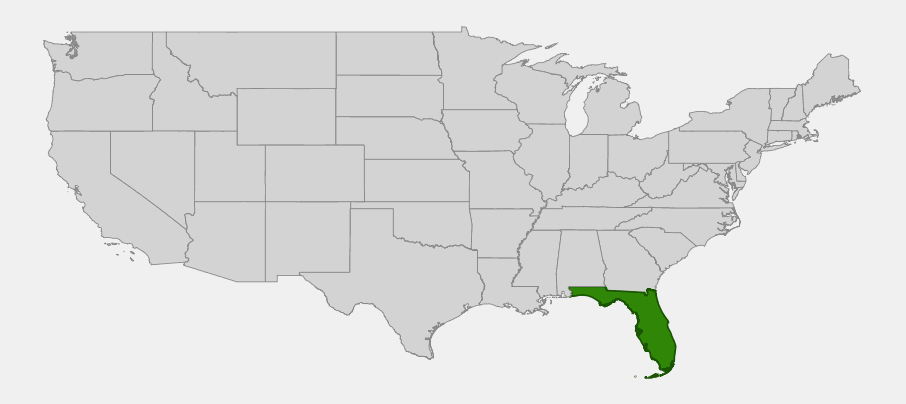
Soldierwood is native only to Florida (and the Caribbean); this campaign has no regional plant list covering peninsular Florida, so no 📋 regional list links apply to this page.
Growing & Care Guide
Soldierwood is a slow-growing, low-maintenance tree well matched to the rocky, alkaline soils of its native South Florida range.
Light
Grows in full sun to partial shade, reflecting its natural role as both a hammock-margin and understory tree. Partial shade from taller hammock canopy species often produces the straightest, healthiest growth.
Soil & Site
Adapted to shallow, rocky, alkaline limestone soils typical of the Miami Rock Ridge and the Keys. Good drainage is essential; this is not a tree for wet or heavy clay soils.
Water
Water regularly during the first year or two to establish. Once established, Soldierwood is reasonably drought-tolerant, consistent with its native rockland hammock habitat, which can be dry between rain events despite South Florida’s overall humidity.
Planting
Because of its endangered status, only plant nursery-propagated stock from a reputable native plant nursery — never collected material. Give it room within a hammock-style planting rather than isolating it as a lone specimen in a conventional lawn setting, where it will look out of place and miss the understory conditions it is adapted to.
Pruning & Maintenance
Minimal pruning needed. Remove dead or damaged wood as necessary and allow the tree to develop its naturally tidy, rounded form.
Landscape Uses
- Rockland hammock restoration and conservation plantings within its native South Florida range
- Understory or hammock-edge tree alongside Gumbo Limbo and Mastic
- Conservation-minded native gardens for South Florida and Keys property owners wanting to support a state-endangered species
- Wildlife plantings where the small fruit crop supports hammock fauna
Wildlife & Ecological Value
For Birds & Wildlife
The small dark fruit provides food for birds and other hammock wildlife, contributing in a modest but real way to the food web of the rockland hammock community.
Ecosystem Role
Rockland hammock is one of Florida’s most imperiled plant communities, reduced to a small fraction of its historical extent by development across the Miami Rock Ridge. As a characteristic tree of this habitat, Soldierwood’s presence is itself a marker of hammock quality and intactness, and planting nursery stock within its native range contributes, in a small way, to maintaining genetic diversity for the species.
A Note on Rockland Hammock Conservation
South Florida’s rockland hammocks are patches of dense, broadleaf tropical hardwood forest growing on outcrops of limestone just a few feet above the surrounding pine rockland and wetlands. They support an unusually high concentration of rare plants — many, like Soldierwood, found in the continental United States only on the Miami Rock Ridge and in the Keys, with their main populations in the Caribbean. Decades of urban development across Miami-Dade County destroyed the great majority of this habitat, leaving scattered remnants in county, state, and national park preserves such as the Deering Estate, Castellow Hammock, and the hammocks of the Florida Keys.
For a home gardener, the most useful way to support a species like Soldierwood is not to search out and remove wild specimens, but to buy nursery-propagated plants, use them in a layered, naturalistic planting that mimics hammock structure, and support local land trusts and park programs that protect remaining rockland hammock fragments. A single well-placed Soldierwood in a South Florida yard will not replace lost habitat, but a neighborhood’s worth of them, planted alongside its natural hammock associates, can start to function as informal habitat corridors between larger protected parcels.
Frequently Asked Questions
Is Soldierwood endangered?
Yes, it is listed as endangered in Florida, where it is the only U.S. state in which it occurs naturally. Habitat loss in South Florida’s rockland hammocks is the primary driver. Never collect wild material; source plants only from nurseries that propagate from legal, ethically obtained stock.
Where does Soldierwood grow naturally?
In the continental U.S., only in the southern tip of Florida and the Keys, in rockland hammocks and similar limestone-based habitats. It is more widespread in the Caribbean.
Is Soldierwood a good landscape tree?
It is a modest, low-maintenance choice best suited to a naturalistic hammock-style planting rather than as a showy specimen tree. Its main appeal is ecological and conservation value rather than ornamental impact.
Why is it called Soldierwood?
The common name’s exact origin is not well documented in available botanical literature; it is the accepted common name used by USDA PLANTS and Florida conservation sources for Colubrina elliptica.
What does Soldierwood need to thrive?
Good drainage, alkaline, rocky soil, and a climate free of hard freezes (zones 10b–11). It does best when planted alongside other rockland hammock natives rather than in isolation.
Related reading: Planting Native Trees for Wildlife · Woodland Garden Design with Natives

Looking for a nursery that carries Soldierwood?
Browse our native plant nursery directory: Delaware, Florida & Georgia

