
Tough Bully (Sideroxylon tenax)
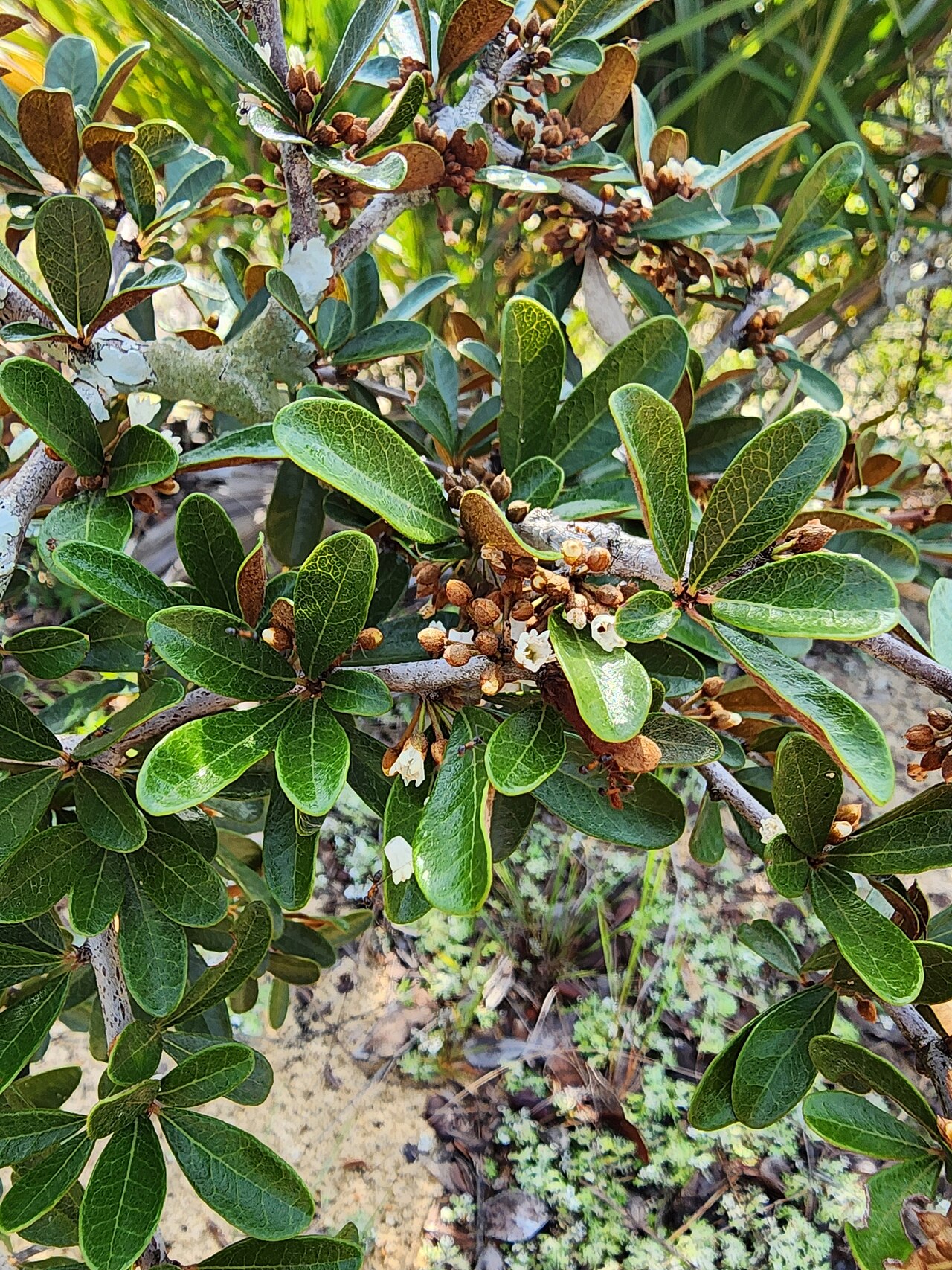
Sideroxylon tenax, commonly known as Tough Bully or Tough Florida Bully, is a thorny, dense-crowned evergreen shrub or small tree of the coastal scrub, sandhills and dry hammocks of the far southeastern United States. Its tough, leathery leaves and springy, tenacious wood, reflected directly in both the species name tenax (Latin for “tenacious” or “tough”) and the common name, make it one of the most resilient native shrubs available for genuinely harsh, sandy, sun-blasted coastal sites.
Like other members of the bully/bumelia group in the Sapotaceae, Tough Bully carries short thorns along its branches and bears clusters of small white flowers that are, despite their modest size, a magnet for a wide range of pollinating insects; watching the insect activity on a blooming Tough Bully on a summer day is, by several accounts, one of the more rewarding small pleasures of growing this plant. The species is considered globally vulnerable, reflecting its narrow range and the ongoing loss of the coastal scrub, sandhill and hammock habitats it depends on.
For gardeners in Florida, coastal Georgia, South Carolina or the southernmost tip of North Carolina with a dry, sandy, sun-exposed site, Tough Bully is an outstanding, low-maintenance native choice: salt-wind tolerant, drought tolerant once established, broadly available from Central Florida native plant nurseries, and valuable to pollinators and wildlife alike.
Identification
Tough Bully is a large shrub or small tree with an open, irregular crown, typically 5 to 15 feet tall though it can grow taller under good conditions, with Wikipedia and taxonomic sources reporting a maximum height to roughly 27 feet. It is often broader than tall in the open, wind-exposed coastal sites where it is most commonly found. Trunks are short and bear many irregular branches armed with short, stiff thorns, a useful and reliable identification trait within the bully group. Bark is thick, fissured and reddish brown, and growth is slow, consistent with the plant’s tough, long-lived character.
Leaves
Leaves are evergreen, leathery, and up to about 2.8 inches long, bright to sometimes shiny green on the upper surface, with the underside coated in a distinctive layer of rust-colored to brown hairs, a sericeous texture that is one of the most reliable field marks for the species. The branches, leaf stalks and flower stalks often share this same tawny, brown or reddish-brown hairiness.
Flowers & Fruit
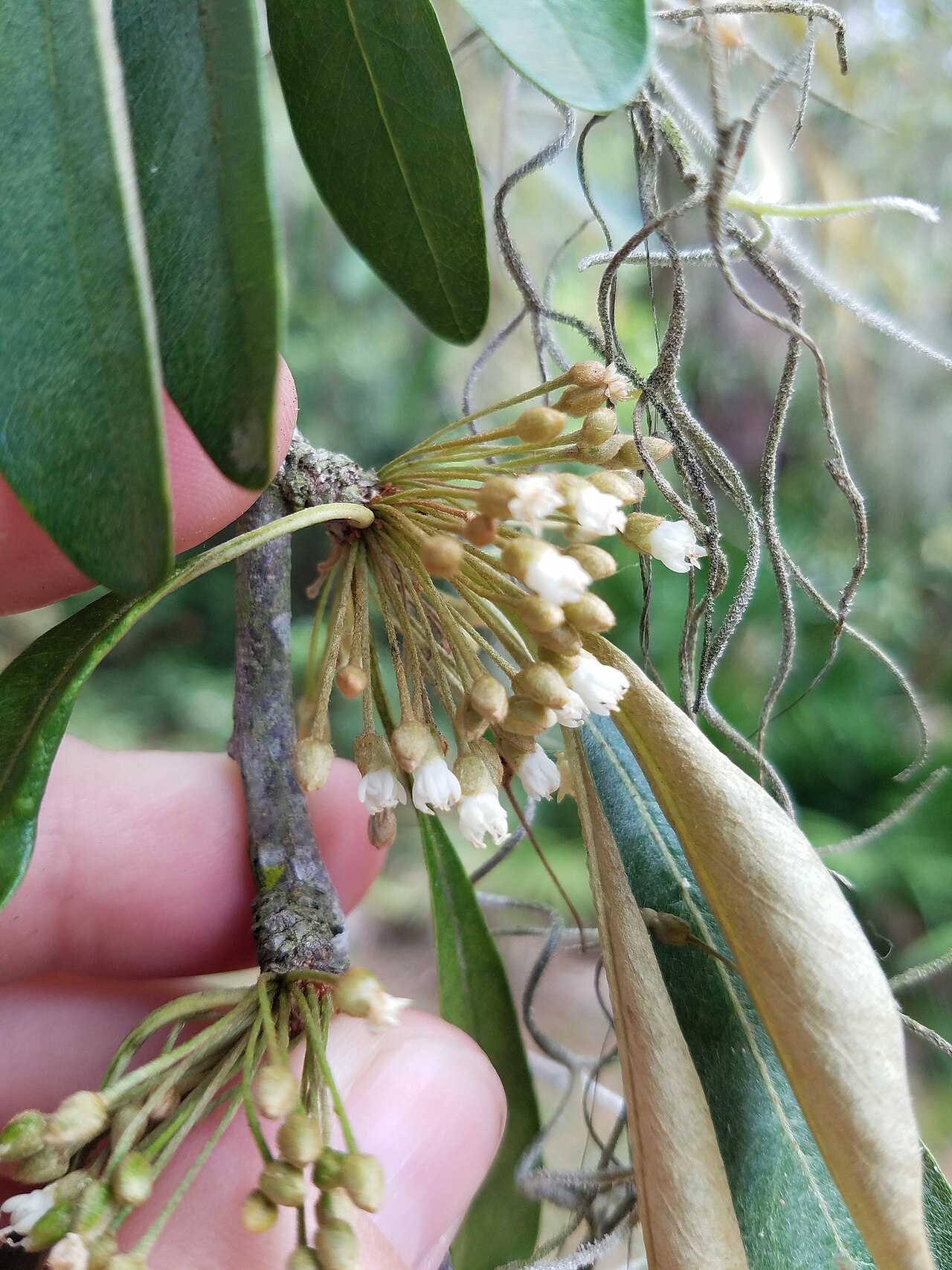
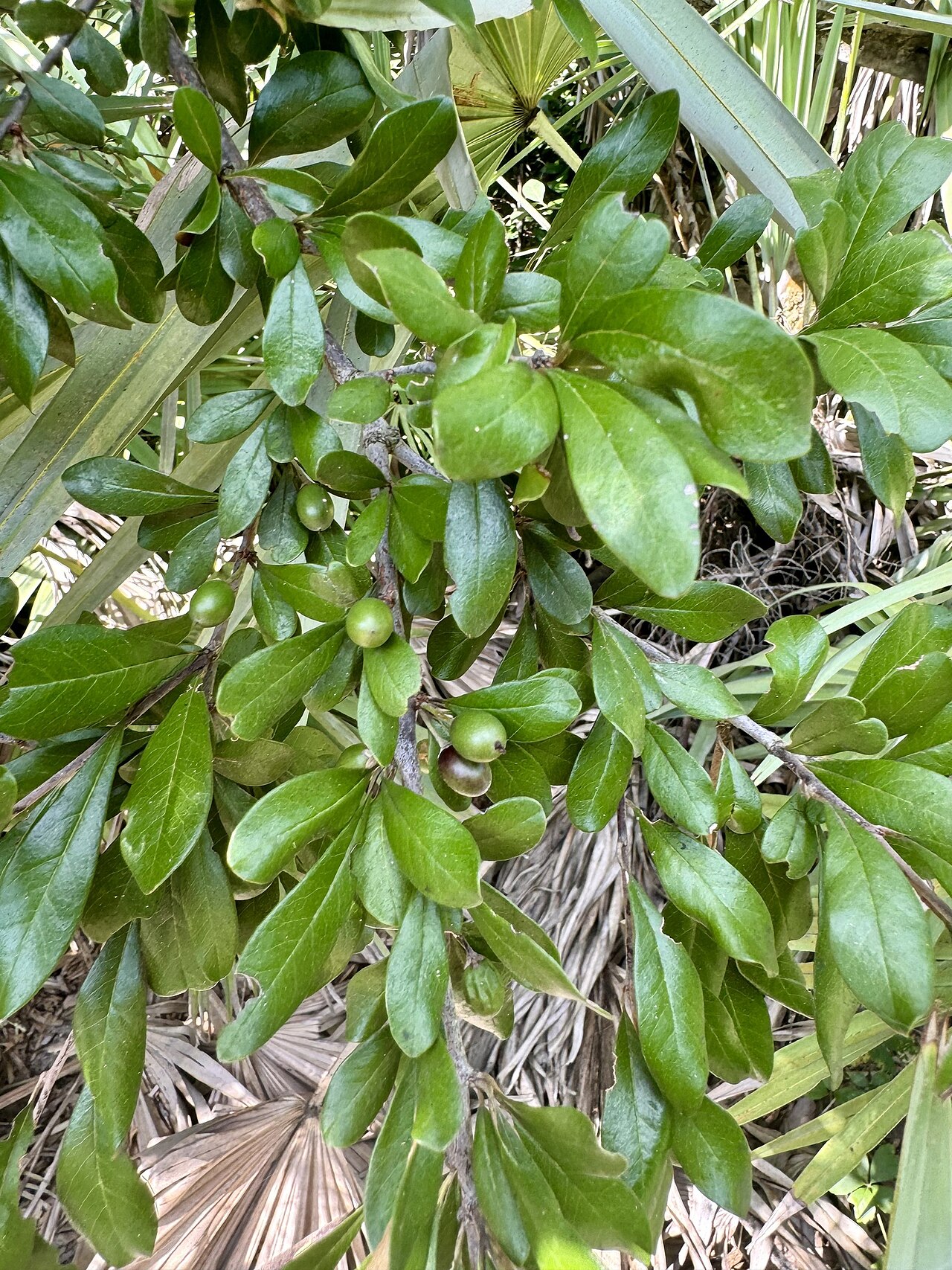
Small white flowers, each under a quarter inch across, are borne in dense clusters of up to 40 flowers at the leaf axils, and the plant can bloom nearly year-round in South Florida with a peak in spring and summer. Though individually inconspicuous, the flowers are intensely attractive to a wide range of pollinating insects, making a blooming specimen alive with activity. Flowers are followed by nearly black, spherical to egg-shaped berries about 0.4 inches across, which ripen later in the season and are eaten by birds and other wildlife.
Quick Facts
| Scientific Name | Sideroxylon tenax |
| Family | Sapotaceae (Sapodilla) |
| Plant Type | Evergreen, thorny large shrub or small tree |
| Mature Height | 5–15 ft typical; to about 27 ft possible |
| Mature Spread | Often broader than tall |
| Growth Rate | Slow |
| Sun Exposure | Full Sun to Light Shade |
| Water Needs | Low; high drought tolerance once established |
| Soil Type | Moist to dry, well-drained sandy soils with some organic content |
| Soil pH | Acidic to neutral |
| Bloom Time | Nearly year-round in South Florida; peak spring–summer |
| Flower Color | White |
| Fall Color | None (evergreen) |
| Fruit | Black, ovoid berry |
| Deer Resistant | Yes, thorny branches discourage browsing |
| USDA Hardiness Zones | 8b–11 |
Native Range
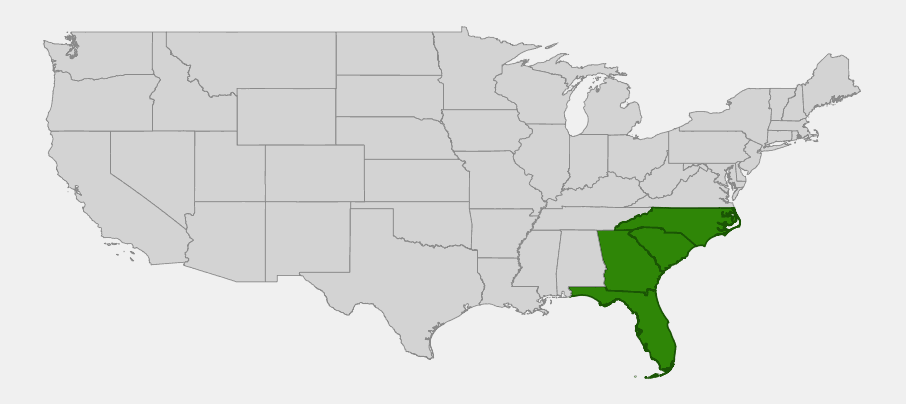
Tough Bully is native to Florida, Georgia, South Carolina and the southernmost part of North Carolina, making it a narrow-range species of the far southeastern Coastal Plain. Within Florida, it occurs in the southeastern United States generally and extends south to Miami-Dade and Collier counties, though it is very rare in South Florida outside Palm Beach and Martin counties and is presumed extirpated in Miami-Dade County, with records suggesting it may never have been present, or has since disappeared, from Broward County.
Typical habitat is coastal hammocks, scrub, scrubby sandhills, dry hammocks and pinelands, usually on well-drained sandy soils with at least some organic topsoil. The species is considered globally vulnerable (NatureServe G3), a status reflecting its inherently narrow geographic range combined with ongoing habitat loss as coastal and sandhill scrub communities throughout its range continue to be developed or fragmented.
📋 Regional plant lists featuring Tough Bully: Georgia, Alabama & Mississippi, North Carolina & South Carolina. This site does not currently publish a dedicated Florida regional list; see the Florida nursery directory below.
Growing & Care Guide
Tough Bully more than lives up to its name as a garden plant, tolerating the kind of dry, sandy, wind-exposed coastal conditions that defeat many other ornamentals.
Light
Plant Tough Bully in full sun to light shade. It naturally occurs in open, sun-exposed scrub and sandhill habitat and performs best with good light, though it tolerates some shading from neighboring vegetation.
Soil & Water
This species is adapted to moist to dry, well-drained sandy soils that carry at least some organic content in the topsoil; it has moderate nutritional requirements and can grow in nutrient-poor sand but does better with some organic matter. Once established, it has high drought tolerance and needs no supplemental irrigation. It has low tolerance for long-term flooding by salt or brackish water, but notably high tolerance for salt-laden wind, handling coastal exposure with little injury, which makes it valuable for near-shoreline plantings.
Planting Tips
Tough Bully is commonly available at native plant nurseries in Central and South Florida, making it one of the more accessible narrow-range Florida natives to source. Propagate from de-pulped seed. Because the thorny branches can be a consideration near walkways or play areas, site the plant with that in mind, though the same thorns make it a useful barrier or deer-deterrent planting elsewhere in the landscape.
Pruning & Maintenance
Tough Bully is reported as easy to grow but does have comparatively weak wood, so avoid heavy pruning cuts on large limbs and watch for storm damage in exposed coastal sites. Routine maintenance is otherwise minimal: remove dead or damaged wood as needed and allow the naturally open, irregular crown to develop with little interference.
Landscape Uses
- Accent or specimen shrub in coastal uplands and dry, sandy landscapes
- Thorny barrier or deer-deterrent hedge, given its armed branches and good deer resistance
- Coastal and salt-wind-exposed plantings, where few woody natives tolerate conditions this well
- Pollinator and wildlife gardens, paired with related scrub natives such as Gum Bumelia
Wildlife & Ecological Value
Tough Bully is a genuinely productive wildlife plant, offering something for pollinators, birds and other animals across much of the year.
For Pollinators
The small white flowers, produced in dense clusters over an unusually long season in South Florida, draw a wide range of pollinating insects; watching insects swarm over a blooming Tough Bully is a well-documented summertime treat for gardeners who grow it, and the plant’s long bloom window makes it a dependable nectar source across multiple seasons.
For Birds & Mammals
The black, berry-like fruits are eaten by birds and other animals as they ripen, and the dense, thorny branching structure provides secure nesting and escape cover, a combination of food and physical protection that is especially valuable in open coastal scrub habitat with limited woody cover.
Ecosystem Role
As a globally vulnerable species restricted to a narrow band of the southeastern Coastal Plain, Tough Bully is an important component of the increasingly fragmented coastal hammock, scrub and sandhill communities it inhabits. Its decline or absence in parts of its historic range, including the apparent local extirpation in Miami-Dade County, underscores how much pressure these coastal habitats are under, and makes cultivated plantings within the species’ appropriate native range a meaningful conservation contribution.
Cultural & Historical Uses
There is no significant documented history of medicinal or utilitarian use specific to Tough Bully; its common name instead reflects the practical, physical toughness of its wood and wiry branches rather than any historical economic use. As with many lesser-known members of the bully/bumelia group, it has remained primarily a plant of botanical and ecological interest rather than one with a recorded tradition of use by Indigenous or settler communities.
Today Tough Bully’s significance is mainly horticultural and ecological: it is valued by Florida native plant gardeners for its toughness, drought and salt tolerance, and wildlife value, and it is the subject of ongoing interest among botanists studying the broader, somewhat underappreciated genus Sideroxylon in Florida.
Frequently Asked Questions
Is Tough Bully thorny?
Yes, its stems are armed with short thorns, a reliable identification trait shared with other members of the bully/bumelia group. This makes it useful as a barrier planting but worth siting away from walkways.
Will Tough Bully tolerate coastal wind and salt spray?
Yes, it has high tolerance for salt-laden wind, though it does not tolerate long-term flooding by salt or brackish water. This combination makes it well suited to upland coastal sites rather than tidal or frequently flooded ground.
Is Tough Bully easy to find at nurseries?
It is commonly available at native plant nurseries in Central Florida and also available in South Florida, making it one of the more accessible choices among Florida’s narrow-range coastal scrub natives.
Is Tough Bully rare or endangered?
It is considered globally vulnerable due to its narrow native range and ongoing habitat loss, and it is very rare or possibly extirpated in parts of South Florida, including Miami-Dade County. It is not currently federally listed, but gardeners should still prefer nursery-propagated stock.
How tall does Tough Bully get?
Most garden and wild specimens are in the 5 to 15 foot range and often grow broader than tall, though taxonomic references note the species can reach close to 27 feet under favorable conditions.

Looking for a nursery that carries Tough Bully?
Browse our regional nursery directories: Colorado to Hawaii (includes Florida & Georgia), Nebraska to Oklahoma (includes North Carolina) and Pennsylvania to Virginia (includes South Carolina). For more ideas, see our guides to privacy trees for Georgia, drought-tolerant native plants for Florida and attracting songbirds with native plants.

