Gum Bumelia (Sideroxylon lanuginosum)
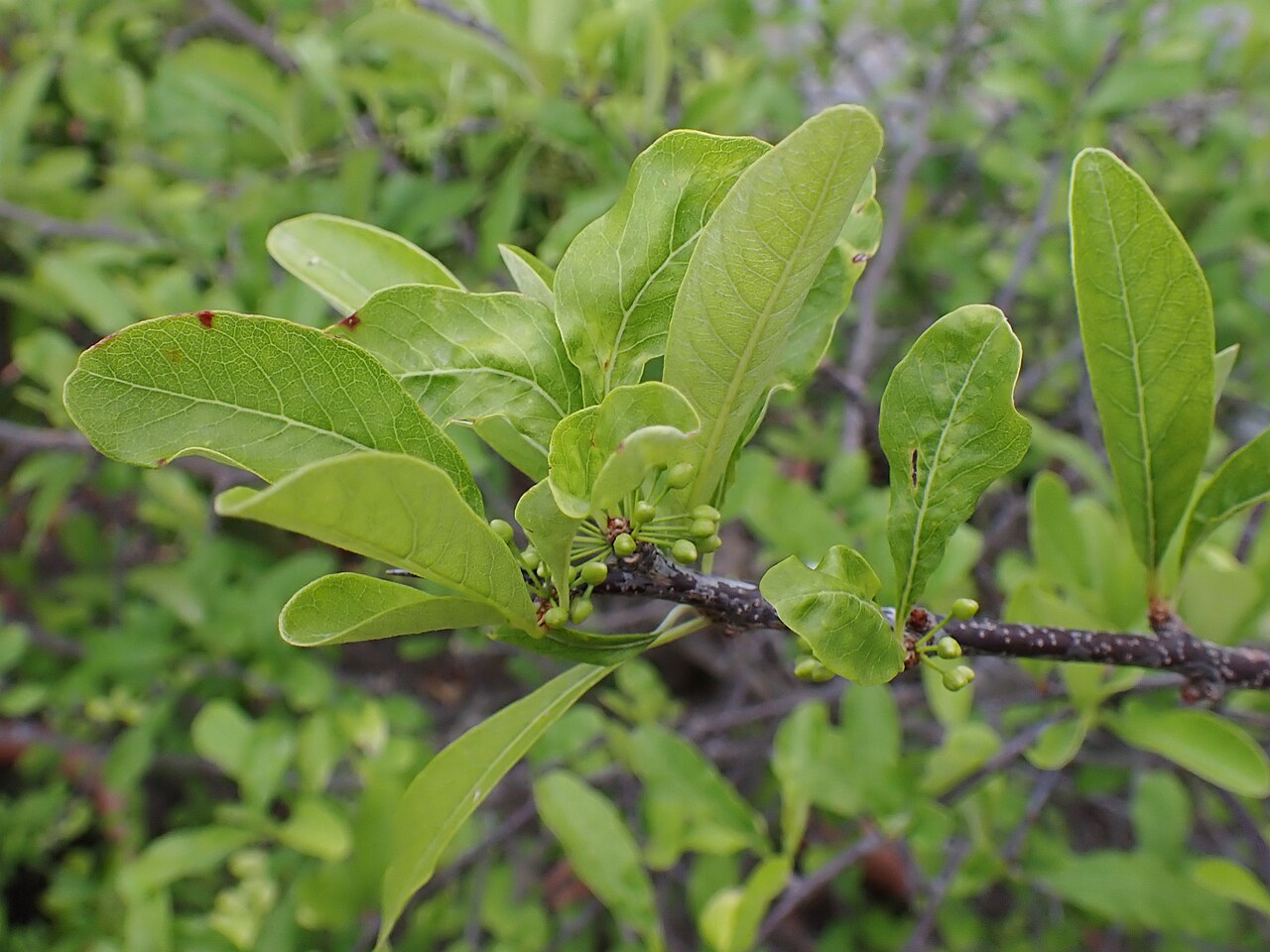
Sideroxylon lanuginosum, commonly known as Gum Bumelia, gum bully, chittamwood, or woolly buckthorn, is a resilient small to medium tree found across a wide stretch of the south-central and southeastern United States. A member of the Sapotaceae, the mostly tropical sapodilla family, gum bumelia is one of the hardiest representatives of that family this far north, surviving drought, poor soil, and harsh sun that would challenge many other native trees. Its name hints at its most memorable trait: a gummy latex sap that oozes from wounds in the bark, once chewed informally by children much like a wild gum.
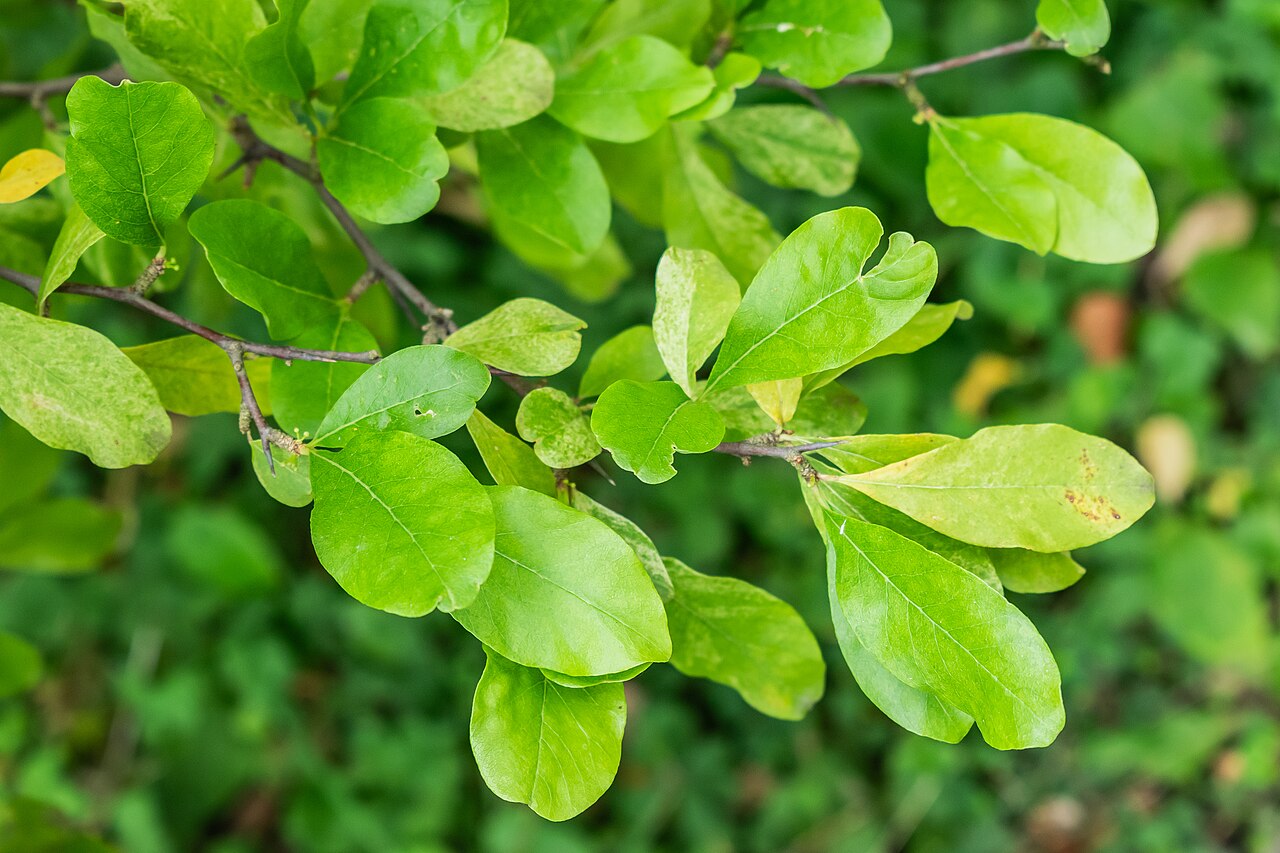
Gum bumelia typically grows 20 to 40 feet tall with a rounded crown of glossy, dark green leaves that are distinctively pale and woolly-haired underneath — the source of both the “woolly” and “gum” in its various common names. Older trees often develop stout, sharp spine-tipped branchlets, giving mature specimens a somewhat thorny, rugged character that makes them valuable as wildlife cover as well as shade trees.
For gardeners from Texas and Oklahoma east through the Gulf South, gum bumelia is an underused but genuinely tough native shade tree — slow-growing, long-lived, and able to handle the kind of poor, dry, rocky soil that defeats many faster-growing ornamentals.
Identification
Gum bumelia is a deciduous to nearly evergreen (in the warmest parts of its range) small to medium tree, typically 20 to 40 feet tall, occasionally larger, with a rounded crown and a trunk that can reach 1 to 2 feet in diameter on old specimens.
Bark & Stems
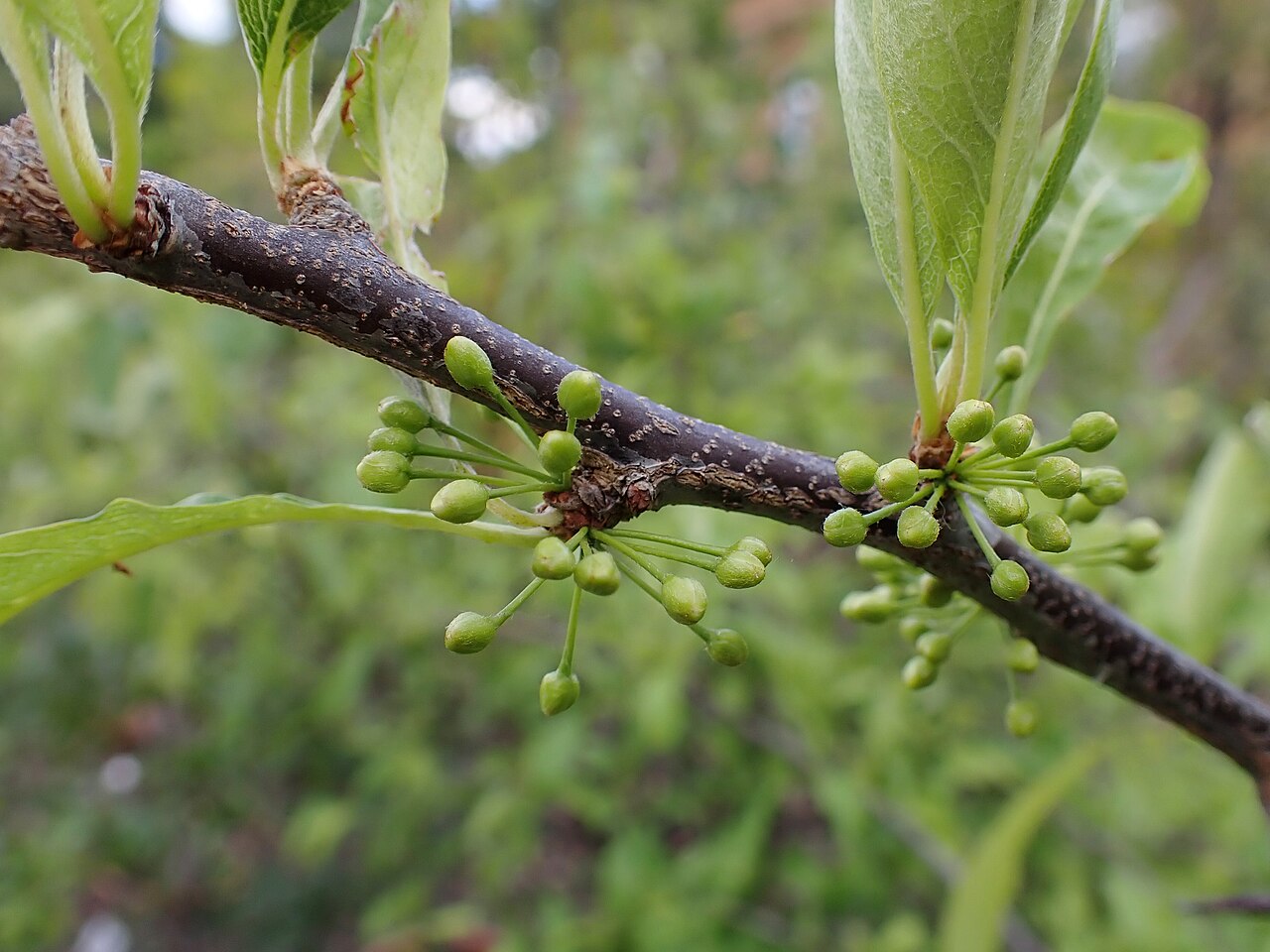
Bark is gray to grayish-brown, becoming furrowed and blocky with age. Branchlets are often tipped with stout, sharp spines, especially on younger growth and lower branches, and wounds in the bark exude a whitish, gummy latex sap characteristic of the species.
Leaves
Leaves are simple, alternate or clustered on short spur shoots, oval to obovate, 1 to 3 inches long, with smooth (untoothed) margins. The upper surface is glossy dark green while the underside is densely covered in soft, pale woolly hairs, a key identification feature that gives rise to the common names “woolly buckthorn” and “wooly bumelia.”
Flowers
Small, fragrant, creamy white flowers appear in dense clusters along the twigs in mid to late summer, after most other native trees in its range have finished blooming, making it a valuable late-season nectar source.
Fruit & Seeds
Flowers are followed by small, dark blue-black, berry-like fruits (technically drupes) about ½ inch long, ripening in fall. The fruit is edible but can cause stomach upset or dizziness if eaten in quantity, and is mainly used by wildlife rather than people.
Quick Facts
| Scientific Name | Sideroxylon lanuginosum (syn. Bumelia lanuginosa) |
| Family | Sapotaceae (Sapodilla) |
| Plant Type | Deciduous to Semi-evergreen Tree |
| Mature Height | 20–40 ft |
| Mature Spread | 20–30 ft |
| Growth Rate | Slow |
| Sun Exposure | Full Sun to Part Shade |
| Water Needs | Low |
| Soil Type | Adaptable; rocky, sandy, caliche or clay |
| Soil pH | 6.0–8.5 |
| Bloom Time | Mid to late summer |
| Flower Color | Creamy white |
| Fall Color | Yellow (where deciduous) |
| Fruit | Small blue-black drupes, edible in moderation |
| Deer Resistant | Moderately (spiny branchlets) |
| USDA Hardiness Zones | 6–9 |
Native Range
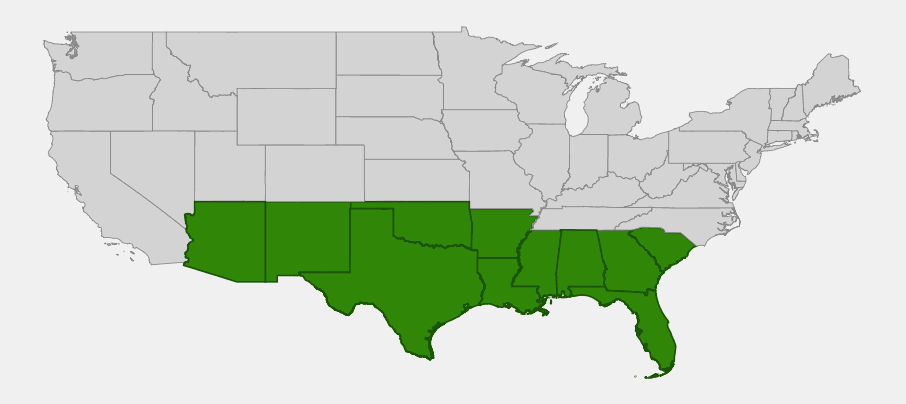
Gum bumelia has one of the broadest native ranges of any tree discussed on this site, stretching from Arizona and New Mexico east across Texas and Oklahoma, through Arkansas and Louisiana, and on through Mississippi, Alabama, Georgia, Florida, and South Carolina, with scattered populations in parts of the Midwest. It also extends south into northeastern Mexico.
Within this large range it is remarkably adaptable, growing in dry woodlands, prairie edges, limestone glades, sandy coastal plain soils, and rocky hillsides alike. It is especially characteristic of dry, calcareous (limestone-derived) soils in Texas and Oklahoma, where it is a familiar component of oak-juniper woodlands and post oak savanna.
Because its range spans such different climates, from the arid Trans-Pecos to the humid Gulf Coast, gum bumelia is one of the more climate-flexible native trees available, though gardeners should source locally grown stock where possible to match their regional conditions.
📋 Regional plant lists featuring Gum Bumelia: South & West Texas · Arizona & New Mexico · Arkansas, Louisiana & Eastern Oklahoma/Texas · Georgia, Alabama & Mississippi · North & South Carolina
Growing & Care Guide
Gum bumelia’s biggest selling point is adaptability: it tolerates a wider range of soils and climates than most native shade trees, making it a reliable choice where other species struggle.
Light
Plant in full sun to light part shade. Gum bumelia naturally grows as both an open-grown tree in prairie and savanna edges and as an understory component in drier woodlands, so it tolerates a range of light conditions, though full sun produces the fullest, most rounded crown.
Soil & Water
This species is remarkably soil-adaptable, growing in rocky limestone glades, sandy coastal soils, and heavier clay alike, as long as drainage is reasonable. It is quite drought tolerant once established, reflecting its presence across some of the driest habitats in its range, and needs supplemental water mainly during the establishment period in the first one to two years.
Planting Tips
Plant young trees in fall or late winter to allow root establishment before summer heat. Because gum bumelia is slow-growing, choose the largest reasonably priced container stock available to shorten the wait for a shade-sized tree. Give it room: a mature spread of 20 to 30 feet calls for siting well away from structures and power lines.
Pruning & Maintenance
Prune in winter dormancy to remove dead or crossing branches and to clear lower, spine-tipped branchlets away from foot traffic if the tree is sited near a walkway. Established trees need little further maintenance and are notably free of serious pest and disease issues.
Propagation
Propagate from seed collected from ripe fall fruit, cleaned of pulp and cold-stratified over winter before spring sowing. Germination and early growth are slow, consistent with the species’ overall unhurried growth habit.
Landscape Uses
Gum bumelia is well suited to:
- Tough-site shade trees on rocky, dry, or poor soil where other species fail
- Wildlife gardens, for its late-summer flowers and fall fruit
- Naturalized woodland and prairie-edge plantings
- Drought-tolerant street or yard trees in appropriate regions
- Wildlife hedgerows, where its spiny branchlets add cover value
Wildlife & Ecological Value
Gum bumelia’s late-summer bloom and fall fruiting fill important seasonal gaps in the wildlife food chain across its wide native range.
For Pollinators
The fragrant summer flowers, blooming later than most other native trees, attract bees and other pollinating insects at a time when many spring-flowering trees have long finished, making gum bumelia a valuable late-season nectar source.
For Birds
The fall fruit crop is eaten by numerous songbirds, and the dense, sometimes spiny branching structure provides good nesting and roosting cover. Historically, Kiowa and Comanche communities also gathered the ripe fruit for food, indicating its reliability as a fall food source.
For Mammals
Fruit is eaten by raccoons, foxes, and other small mammals, and children in rural communities have traditionally chewed the gummy sap much like store-bought chewing gum, a minor but memorable piece of regional plant lore.
Ecosystem Role
As a long-lived, slow-growing tree able to persist on marginal soils, gum bumelia is a stabilizing presence in the dry woodlands and glades it inhabits, and its wide climatic tolerance makes it an important component of plant communities from the arid Southwest to the humid Gulf Coast.
Cultural & Historical Uses
Gum bumelia carries a cluster of regional common names — chittamwood, chittimwood, shittamwood, gum elastic, ironwood, and coma among them — that reflect its long familiarity to rural communities across its wide range. The gummy latex sap exuded from wounds in the bark was informally chewed by children, giving rise to the “gum” names still used today.
The Kiowa and Comanche peoples are documented to have consumed the ripe fruit when in season, part of a broader pattern of seasonal wild-fruit foraging across the southern Plains and Southwest. The fruit can cause stomach upset or dizziness if eaten in large quantities, so modern use should be limited and cautious.
The dense, heavy wood has seen some use for tool handles and similar small items locally, valued for its strength, though gum bumelia has never been an important commercial timber species given its generally modest trunk size and slow growth.
Frequently Asked Questions
Is gum bumelia the same as chittamwood?
Yes. Chittamwood, chittimwood, gum bully, woolly buckthorn, and several other names all refer to the same species, Sideroxylon lanuginosum (formerly classified as Bumelia lanuginosa).
Is gum bumelia fruit safe to eat?
The fruit is edible and was historically eaten by Kiowa and Comanche communities, but it can cause stomach aches or dizziness if eaten in large quantities, so it should only be sampled in moderation.
Does gum bumelia have thorns?
Mature trees often develop stout, sharp spine-tipped branchlets, particularly on lower growth, so some caution is warranted when pruning or working close to the tree.
How fast does gum bumelia grow?
It is a slow-growing tree, which is part of why it is long-lived and tough on poor soils, but it does mean patience is needed to reach full shade-tree size.
What soil does gum bumelia need?
Very little in particular — it is one of the most soil-adaptable native trees in its range, growing successfully in rocky limestone, sandy coastal plain, and heavier clay soils as long as drainage is reasonable.

Looking for a nursery that carries Gum Bumelia?
Browse our native plant nursery directory: Arizona, Arkansas & Alabama · New Mexico & Oklahoma · Louisiana & Mississippi · Texas & South Carolina · Georgia & Florida