Orange Zexmenia (Wedelia acapulcensis var. hispida)
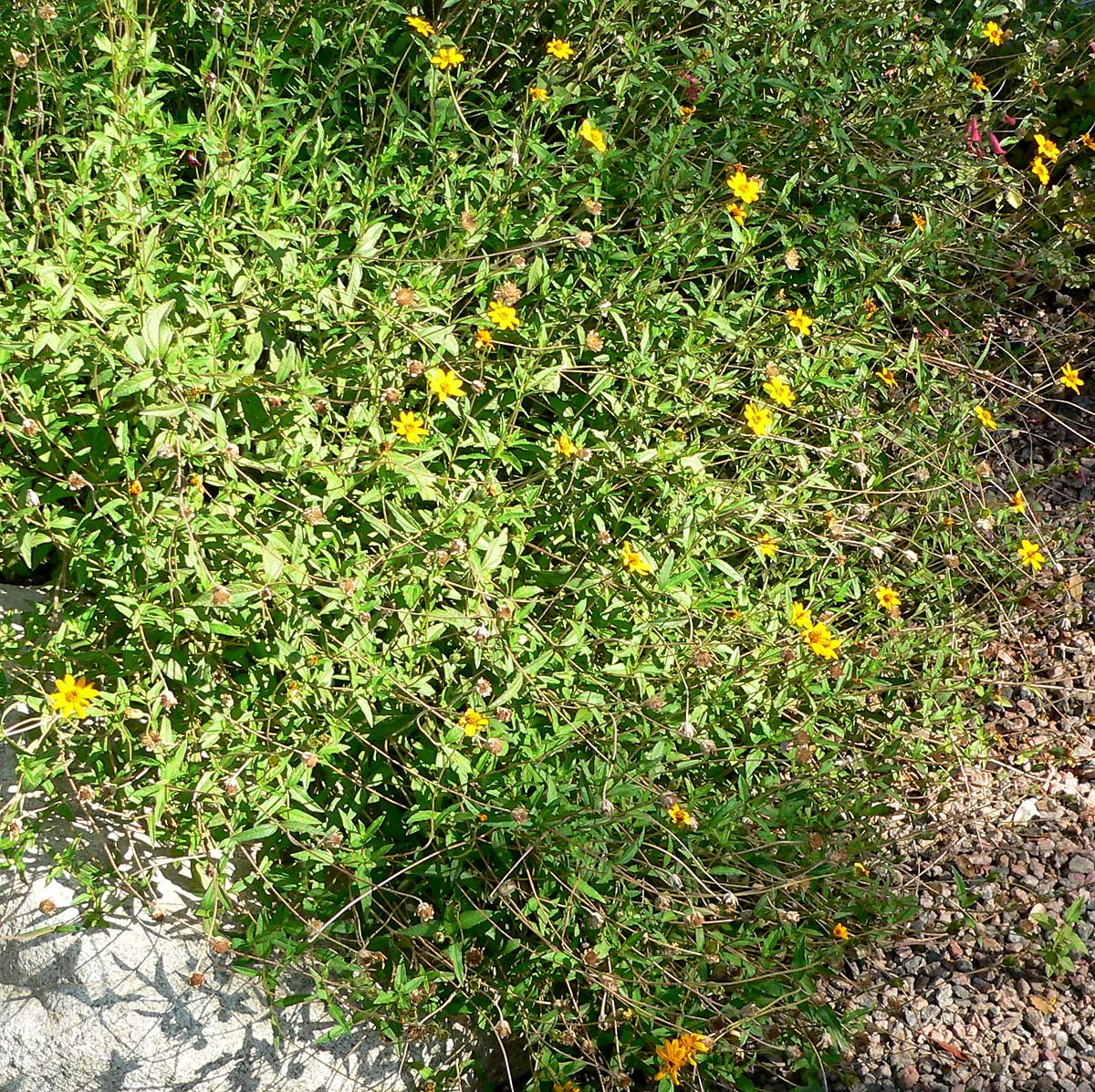
Wedelia acapulcensis var. hispida, far better known to Texas gardeners as Orange Zexmenia, is a cheerful, hard-working perennial of the Edwards Plateau and the brushlands of South Texas. A member of the aster family (Asteraceae), it has been sold and grown under several names over the years — Zexmenia, Hairy Wedelia, Texas Creeping-Oxeye, and the older botanical names Zexmenia hispida and Wedelia texana — but all refer to the same tough, drought-loving little shrub. It forms a rounded, bushy mound of rough, sandpapery leaves studded almost continuously, spring through frost, with small orange-yellow, daisy-like flowers.
In the wild, orange zexmenia grows on thin, rocky, limestone-derived soils across the Hill Country and the Rio Grande Plains, where its deep roots let it shrug off the region’s long dry summers. In the garden it behaves much the same way: once established it needs little supplemental water, blooms almost nonstop in hot weather when many other perennials are resting, and draws a steady stream of butterflies and native bees.
Orange zexmenia has become one of the most widely planted Texas native perennials precisely because it is so undemanding. It stays compact — usually 1 to 3 feet tall and about as wide — making it useful as a low border, a filler among larger shrubs, or a long-season color patch along a dry, sunny foundation bed.
Identification
Orange zexmenia is a woody-based perennial subshrub, evergreen in the warmer, southern parts of its range and dying back to the woody crown after hard freezes farther north. Plants form a dense, rounded mound 1 to 3 feet tall and similarly wide, with numerous slender, branching stems.
Leaves
Leaves are opposite, lance-shaped to narrowly ovate, 1 to 3 inches long, with toothed margins and a distinctly rough, sandpapery texture on both surfaces from short stiff hairs — a good field mark, and the source of the species epithet hispida (“bristly”). Foliage is medium to dark green and holds up well through summer heat.
Flowers
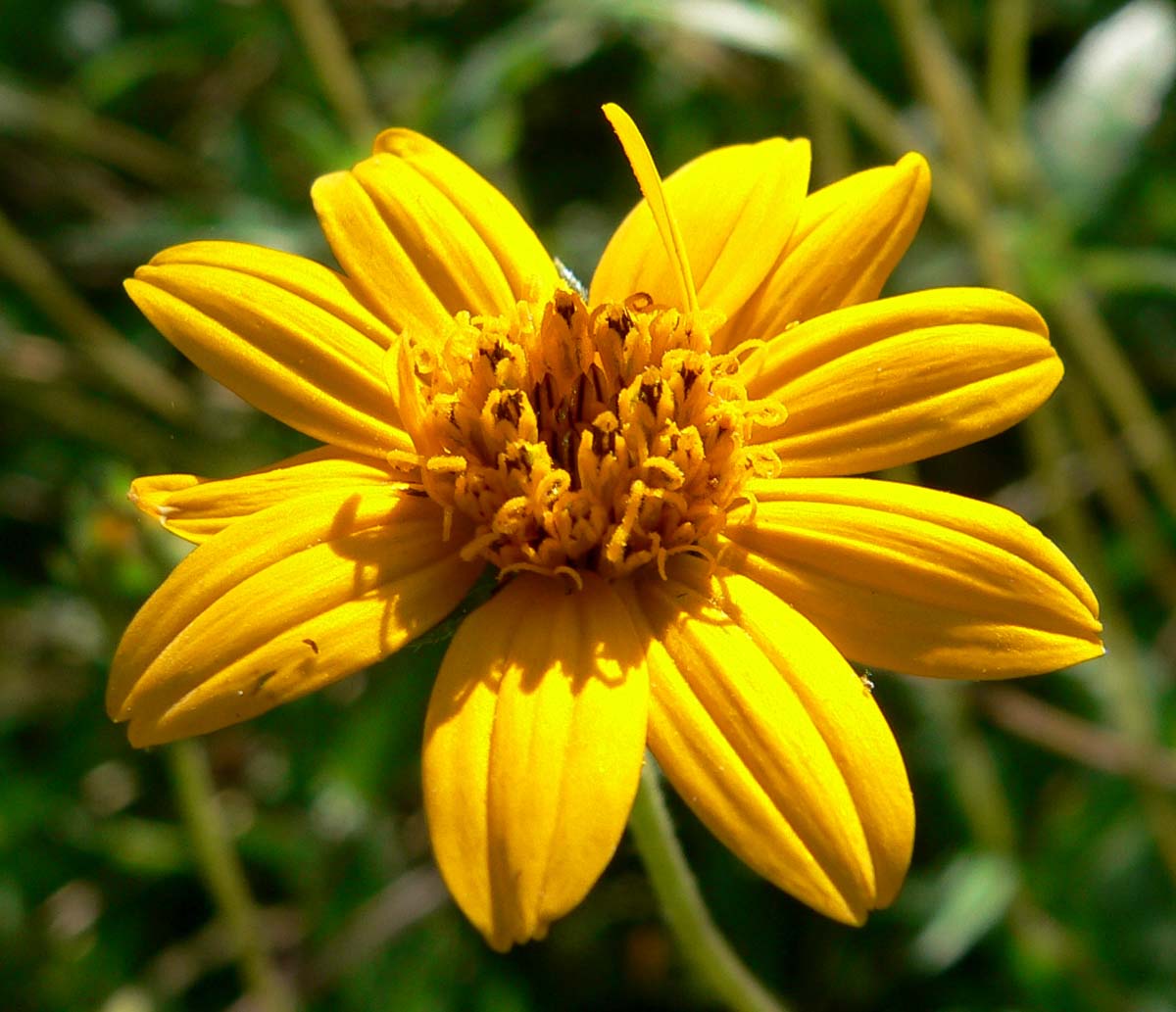
Flower heads are small, about 1 to 1½ inches across, with 8 to 13 orange to orange-yellow ray florets surrounding a darker orange-brown disc center, carried singly on stalks above the foliage. Bloom is nearly continuous from late spring through the first hard freeze, with a brief lull during the most extreme summer heat in southern populations.
Fruit & Seeds
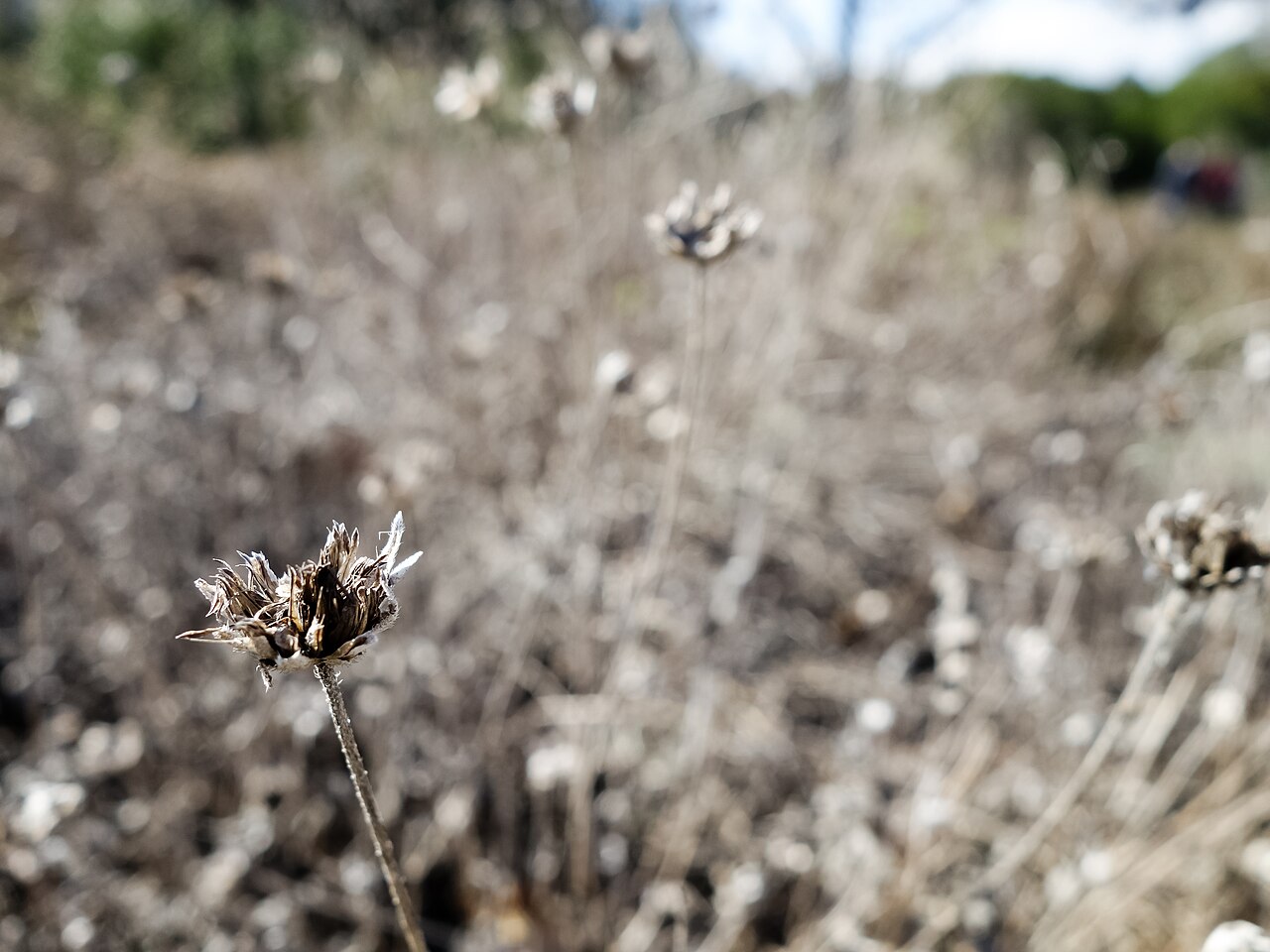
Like other members of the aster family, spent flowers are followed by small dry, one-seeded fruits (achenes) in the dried flower head. Seed set is generally light, and the plant spreads mainly by expanding its woody base rather than by self-sowing aggressively.
Quick Facts
| Scientific Name | Wedelia acapulcensis var. hispida (syn. Zexmenia hispida, Wedelia texana) |
| Family | Asteraceae (Aster/Sunflower) |
| Plant Type | Perennial Subshrub (evergreen in mild winters) |
| Mature Height | 1–3 ft |
| Mature Spread | 1–3 ft |
| Growth Rate | Moderate to fast |
| Sun Exposure | Full Sun to Part Shade |
| Water Needs | Low |
| Soil Type | Rocky, limestone-based; well-drained |
| Soil pH | 7.0–8.5 (neutral to alkaline) |
| Bloom Time | Late spring – first frost |
| Flower Color | Orange to orange-yellow |
| Fall Color | None notable; evergreen to semi-evergreen |
| Fruit | Small dry achenes, inconspicuous |
| Deer Resistant | Moderately (rough foliage discourages browsing) |
| USDA Hardiness Zones | 8–11 |
Native Range
Orange zexmenia is native to South and Central Texas, where it is a characteristic plant of the Edwards Plateau (Hill Country) and the Rio Grande Plains, extending south into the brushlands of the lower Rio Grande Valley and into adjacent northeastern Mexico.
Within Texas it grows on thin, rocky, often limestone-derived soils on hillsides, canyon rims, and brushland flats, typically in full sun or the light shade of oaks and junipers. It is a common component of Hill Country scrub and Tamaulipan thornscrub plant communities, often growing alongside cenizo, agarita, and various native grasses.
Orange zexmenia is not native outside Texas and adjacent Mexico; gardeners farther east or north growing it in frost-prone climates should expect it to die back hard, or entirely, in a severe winter and treat it as a root-hardy perennial rather than a true evergreen shrub.
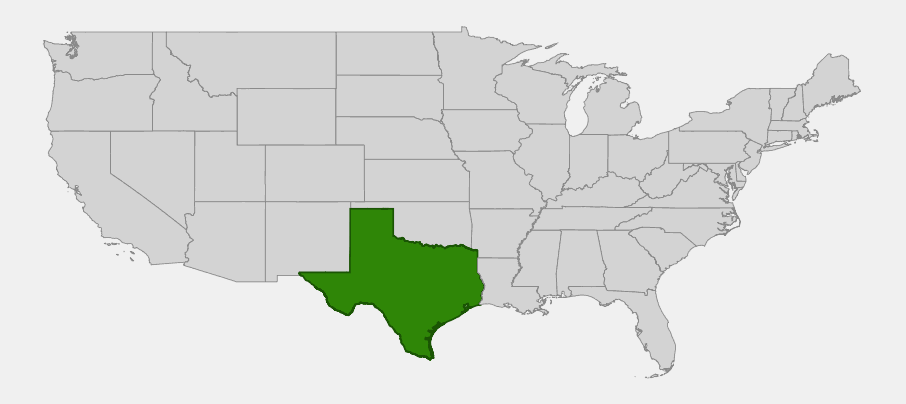
📋 Regional plant lists featuring Orange Zexmenia: South & West Texas
Growing & Care Guide
Orange zexmenia is a favorite of low-water Texas landscaping because it blooms through brutal summer heat with almost no care once it is established.
Light
Full sun produces the densest, most floriferous plants, though orange zexmenia also performs well in the light, dappled shade of oaks or mesquite, where it tends to grow slightly more open and reach a bit taller toward available light.
Soil & Water
Rocky, well-drained, limestone-based soils are ideal, matching the thin Hill Country soils this plant grows in naturally, but it adapts readily to average garden soil as long as drainage is good. Water regularly the first growing season to establish a deep root system; after that, orange zexmenia needs only occasional deep watering during extended drought and otherwise thrives on rainfall alone through a Texas summer.
Planting Tips
Plant in spring after the last frost so the root system has a full growing season to establish before winter. Space plants 2 to 3 feet apart to give the mature mounds room to fill in without crowding. It tolerates poor, rocky soil far better than rich, heavily amended beds.
Pruning & Maintenance
Shear plants back by about one-third to one-half in late winter or after a hard freeze has browned the foliage, which keeps growth dense and encourages the heaviest spring and summer bloom. Light shearing during the growing season can also tidy up the mound and spur a fresh flush of flowers.
Propagation
Orange zexmenia is easily propagated from softwood stem cuttings taken in spring or summer, which root readily in a well-drained mix. Seed can also be collected from dried flower heads, though cutting-grown plants establish faster and more reliably.
Landscape Uses
Orange zexmenia is widely used as:
- Low border or edging plant along walks and beds
- Mass plantings for season-long color in xeric landscapes
- Filler among larger native shrubs like cenizo and agarita
- Slope and rock garden plantings on thin, rocky soil
- Butterfly and pollinator gardens throughout Central and South Texas
Wildlife & Ecological Value
Orange zexmenia’s nearly continuous bloom cycle makes it an important nectar resource through the hottest, driest part of the Texas growing season, when many other flowering plants have slowed down.
For Pollinators
The flowers are highly attractive to butterflies, including several native skippers and fritillaries, as well as native bees and the occasional hummingbird. Gardeners in Central and South Texas often cite it as one of the most reliable butterfly-nectar plants for summer.
For Birds
Small seed-eating birds glean the dried flower heads for achenes in late season, and the dense, low growth form offers shelter for ground-foraging songbirds and other small wildlife.
For Mammals
The rough, bristly foliage discourages heavy browsing by deer, which is part of why orange zexmenia has become such a popular landscape choice in deer-heavy Hill Country subdivisions.
Ecosystem Role
As a drought-adapted, nectar-rich perennial, orange zexmenia helps anchor the understory of oak-juniper woodlands and brushland on thin, rocky soils, stabilizing ground and supporting pollinator populations that depend on summer-blooming plants in an otherwise flower-sparse season.
Cultural & Historical Uses
Orange zexmenia has no significant documented history of medicinal or culinary use among Indigenous peoples of Texas; its main historical role has been as a conspicuous, long-blooming component of Hill Country and brushland plant communities, noted by early Texas botanists for its toughness on poor, rocky range soils.
The plant’s various common and scientific names reflect a tangled taxonomic history, having been classified at different times in the genera Zexmenia and Wedelia before current treatments placed it as a variety of Wedelia acapulcensis. Older nursery catalogs, extension publications, and plant tags frequently still use Zexmenia hispida or “Zexmenia” as the name of record, so gardeners may encounter all of these names referring to the identical plant.
In recent decades, orange zexmenia has moved from a native-plant specialty item to a mainstream Texas landscape perennial, driven largely by the statewide push toward lower-water, lower-maintenance gardening as drought and water restrictions have become more common across the state.
Frequently Asked Questions
Is Orange Zexmenia the same plant as Zexmenia hispida or Wedelia texana?
Yes. These are all names that have been used for the same plant, now classified as Wedelia acapulcensis var. hispida. You will see all three names in use at nurseries and in older references.
How much water does orange zexmenia need?
Very little once established. Water regularly through the first growing season to build a deep root system, then rely mostly on rainfall, supplementing only during extended drought.
Will orange zexmenia survive a hard freeze?
In much of its Central and South Texas range it stays evergreen through mild winters, but a hard freeze will knock it back to the woody crown. It typically resprouts vigorously from the base once warm weather returns.
Is orange zexmenia deer resistant?
It is more deer-resistant than many flowering perennials thanks to its rough, bristly leaf texture, though no plant is completely deer-proof in times of heavy browsing pressure.
How often should I prune orange zexmenia?
A hard shearing once a year in late winter, or right after frost damage, keeps the mound dense and promotes the heaviest bloom; occasional light shearing during the growing season can tidy it up further.

Looking for a nursery that carries Orange Zexmenia?
Browse our native plant nursery directory: Texas