Texas Barberry (Berberis swaseyi)
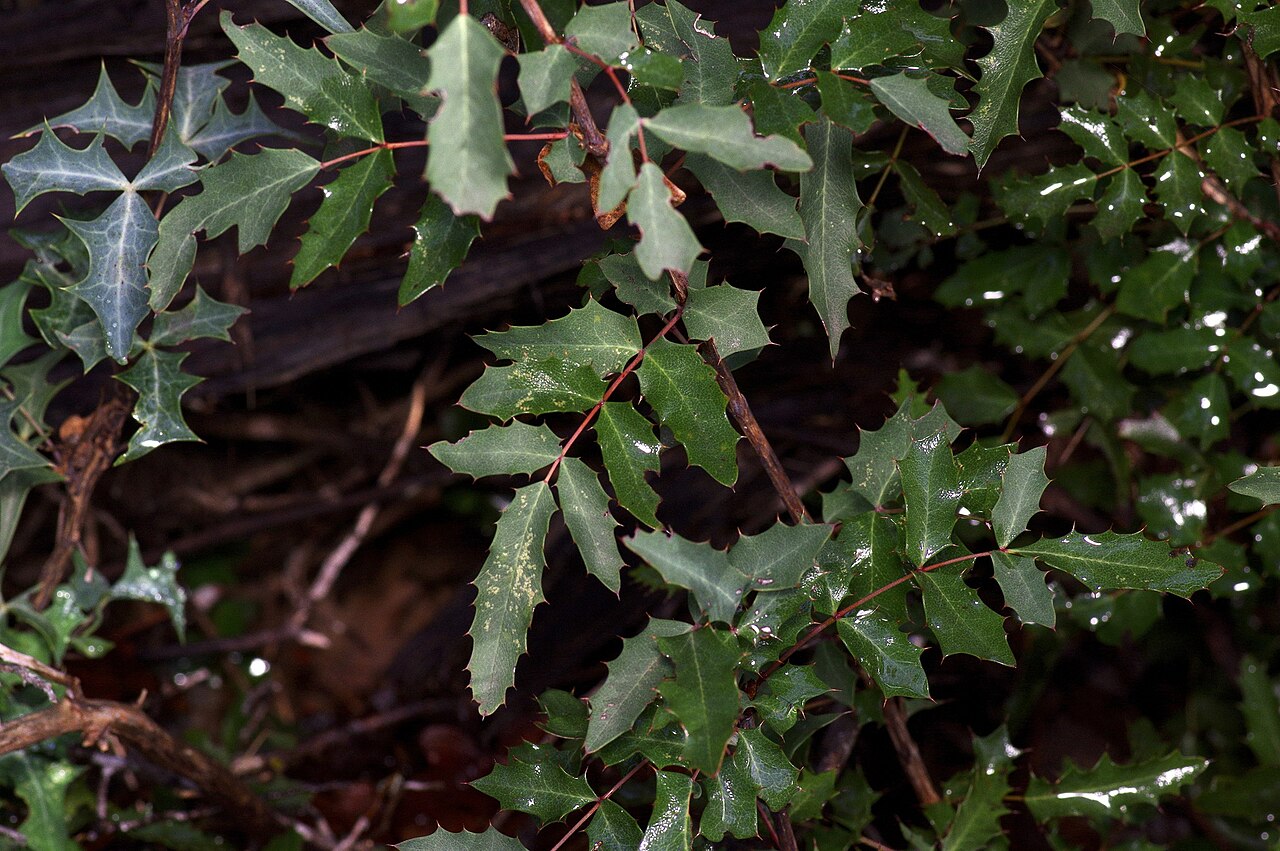
Berberis swaseyi, the Texas Barberry, is a rare and little-known evergreen shrub found only on the limestone ridges and canyons of the Edwards Plateau in the Texas Hill Country. Closely related to the far more common agarita (Mahonia trifoliolata), with which it readily hybridizes, Texas barberry is distinguished by its larger, longer compound leaves made up of several spiny, holly-like leaflets. Botanically, its compound-leaved structure places it among the species sometimes segregated into the genus Mahonia, and it is occasionally still listed under the synonym Mahonia swaseyi in older references and some nursery catalogs.
Texas barberry grows as a rounded, dense evergreen shrub, typically reaching 3 to 6 feet tall, armed with the sharply spine-toothed leaflets typical of the barberry family. It is endemic to the Edwards Plateau — meaning it is found nowhere else on Earth — growing in the thin, rocky, limestone soils of canyons and ridgelines in a handful of Central Texas counties, including Travis, Hays, Comal, and Bexar.
Because of its rarity and narrow range, Texas barberry is a true specialty plant for Hill Country native gardeners, valued for its evergreen structure, fine ornamental detail, and the satisfaction of growing a genuinely endemic Texas species that exists almost nowhere outside cultivation and its own limited wild range.
Identification
Texas barberry is a rounded, densely branched evergreen shrub, typically 3 to 6 feet tall and similarly wide, with rigid, upright stems clothed year-round in glossy, spine-toothed foliage.
Bark & Stems
Stems are woody and rigid, grayish brown, and typically unarmed along the stem itself (unlike some true barberries with stem spines), with the defensive spines concentrated instead on the leaflet margins.
Leaves
Leaves are evergreen and pinnately compound, with five to nine thick, rigid, holly-like leaflets per leaf — notably larger and longer than the leaflets of the closely related and more common agarita. Each leaflet has sharply spine-tipped teeth along the margin and a glossy, dark green upper surface.
Flowers
Small, bright yellow flowers typical of the barberry family appear in short clusters in late winter to early spring, generally February through April, often among the first native shrubs in the Hill Country to bloom.
Fruit & Seeds
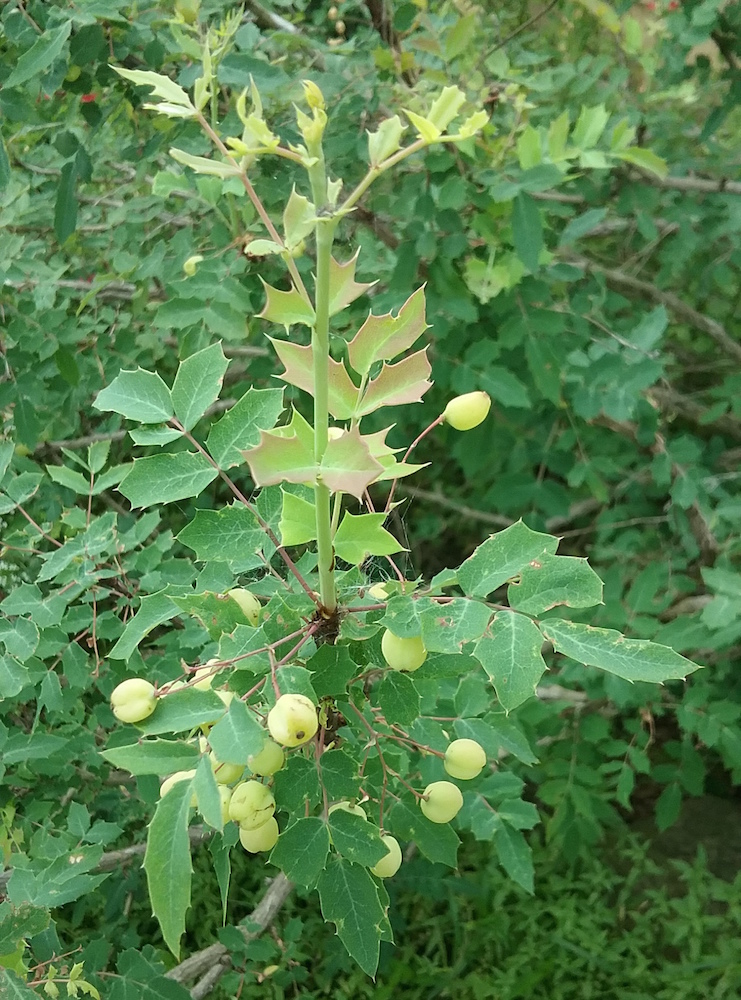
Flowers are followed by small berries, dry to juicy depending on conditions, ranging in color from white to red and roughly ⅓ to ⅝ inch in diameter — notably more variable in color than the reliably red berries of agarita.
Quick Facts
| Scientific Name | Berberis swaseyi (syn. Mahonia swaseyi) |
| Family | Berberidaceae (Barberry) |
| Plant Type | Evergreen Shrub |
| Mature Height | 3–6 ft |
| Mature Spread | 3–6 ft |
| Growth Rate | Slow |
| Sun Exposure | Full Sun to Part Shade |
| Water Needs | Low |
| Soil Type | Rocky, calcareous (limestone); well-drained |
| Soil pH | 7.0–8.5 (neutral to alkaline) |
| Bloom Time | February – April |
| Flower Color | Bright yellow |
| Fall Color | None; evergreen |
| Fruit | Small white-to-red berries, ⅓–⅝ in |
| Deer Resistant | Yes (spiny leaflets) |
| USDA Hardiness Zones | 8–9 |
Native Range
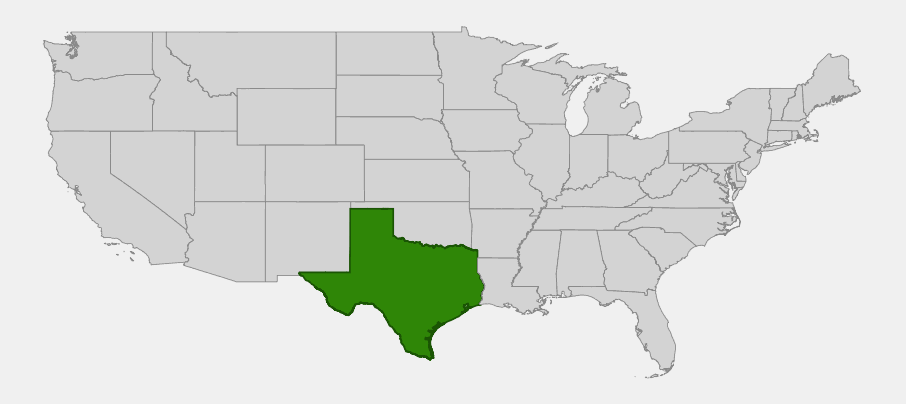
Texas barberry is endemic to the Edwards Plateau region of Central Texas, found only in a limited area that includes Travis, Hays, Comal, and Bexar counties along the eastern edge of the Hill Country, with its core range extending somewhat further into the broader Edwards Plateau.
Within this narrow range, it grows in dry woodlands on limestone, rooting into thin, rocky soil on canyon walls, ridges, and slopes where few other shrubs can establish. NatureServe ranks the species G3 (globally vulnerable), reflecting both its naturally restricted range and the ongoing pressure of habitat loss from Hill Country development.
Because Texas barberry is found nowhere outside this small part of Central Texas, it should never be collected from the wild; nursery-propagated plants are the only appropriate source for garden use, and supporting the handful of growers who propagate it helps take pressure off wild populations.
📋 Regional plant lists featuring Texas Barberry: South & West Texas
Growing & Care Guide
Texas barberry is slow but undemanding once planted in a site that mimics its native limestone habitat, rewarding patient gardeners with a genuinely rare, fine-textured evergreen.
Light
Full sun to part shade both suit Texas barberry, matching conditions on the open ridges and more shaded canyon walls where it grows naturally. Light afternoon shade in the hottest, sunniest sites can reduce leaf scorch without sacrificing flowering.
Soil & Water
Rocky, calcareous, well-drained soil is essential, reflecting its limestone-canyon origins; it does not tolerate wet feet. Once established it is drought tolerant, needing only occasional deep watering during extended dry spells, though young plants benefit from regular watering through their first one to two growing seasons.
Planting Tips
Plant container-grown nursery stock in fall or early spring. Because Texas barberry is slow-growing, start with the largest healthy container size available and be patient; choose a site with excellent drainage, such as a slope or raised bed, if native soil tends to hold moisture.
Pruning & Maintenance
Little pruning is required; remove only dead or damaged growth as needed. Because the spiny foliage can be uncomfortable to handle, wear gloves when working near the plant, and site it away from walkways where its sharp leaflet margins could catch passersby.
Propagation
Propagation is typically by seed, which should be cleaned from ripe berries and cold-stratified before sowing; germination can be slow and uneven. Because Texas barberry hybridizes readily with agarita where the two grow near each other, seed collected from mixed populations may not come true to the species.
Landscape Uses
Texas barberry is well suited to:
- Rock gardens and limestone-themed plantings in Central Texas landscapes
- Specialty native and endemic-species collections
- Evergreen structural accents in a Hill Country native bed
- Barrier or security plantings, thanks to its spiny foliage
- Low-water, limestone-soil xeriscaping
Wildlife & Ecological Value
Though rare in the wild, Texas barberry provides meaningful habitat value within its limited range, much as its common relative agarita does across the broader Hill Country.
For Pollinators
The early-spring yellow flowers provide nectar and pollen at a time when relatively few other Hill Country natives are blooming, making the plant useful to early-season native bees emerging from winter dormancy.
For Birds
Berries are eaten by various songbirds, and the dense, spiny evergreen structure offers secure nesting and shelter sites, similar to the protective value provided by agarita thickets elsewhere in the Hill Country.
For Mammals
The sharp, spine-toothed leaflets strongly discourage browsing by deer and other mammals, making Texas barberry one of the more reliably deer-resistant evergreen shrubs for Hill Country gardens.
Ecosystem Role
As a narrow endemic restricted to a specific limestone habitat type, Texas barberry is an indicator species for intact Edwards Plateau canyon and ridge woodland, and its conservation is tied directly to the protection of that increasingly development-pressured habitat around Austin and San Antonio.
Cultural & Historical Uses
Texas barberry has no significant documented history of use by Indigenous peoples or early settlers separate from its close relative agarita, with which it was likely treated interchangeably where the two species overlapped or hybridized in the wild.
Its primary historical significance is botanical rather than cultural: described by Samuel Botsford Buckley and later validated by M.J. Young in the Flora of Texas in 1873, it has remained a relatively obscure species known mainly to botanists and Hill Country native plant specialists, overshadowed by its far more common and widely cultivated relative, agarita.
In recent decades, growing interest in Texas endemic species among native plant enthusiasts and specialty nurseries has brought Texas barberry modest new attention, both as a conservation priority and as an unusual addition to serious native plant collections.
Frequently Asked Questions
Is Texas barberry the same as agarita?
No, though they are closely related and can hybridize where they grow together. Texas barberry (Berberis swaseyi) has larger, longer compound leaves than agarita (Mahonia trifoliolata) and a much more restricted native range limited to the Edwards Plateau.
Where does Texas barberry grow in the wild?
It is endemic to the Edwards Plateau of Central Texas, found in a limited area including Travis, Hays, Comal, and Bexar counties and nowhere else in the world.
Is Texas barberry rare?
Yes. NatureServe ranks it G3, globally vulnerable, reflecting its naturally narrow range and ongoing habitat pressure from Hill Country development. It should only be sourced from nursery propagation, never collected from the wild.
Is Texas barberry deer resistant?
Yes, its sharply spine-toothed, holly-like leaflets make it one of the more reliably deer-resistant evergreen shrubs available for Central Texas gardens.
How fast does Texas barberry grow?
It is a slow-growing shrub, so gardeners should expect it to take several years to reach its mature 3 to 6 foot size, and starting with larger nursery stock can help shorten that wait.

Looking for a nursery that carries Texas Barberry?
Browse our native plant nursery directory: Texas