Texas Mulberry (Morus microphylla)
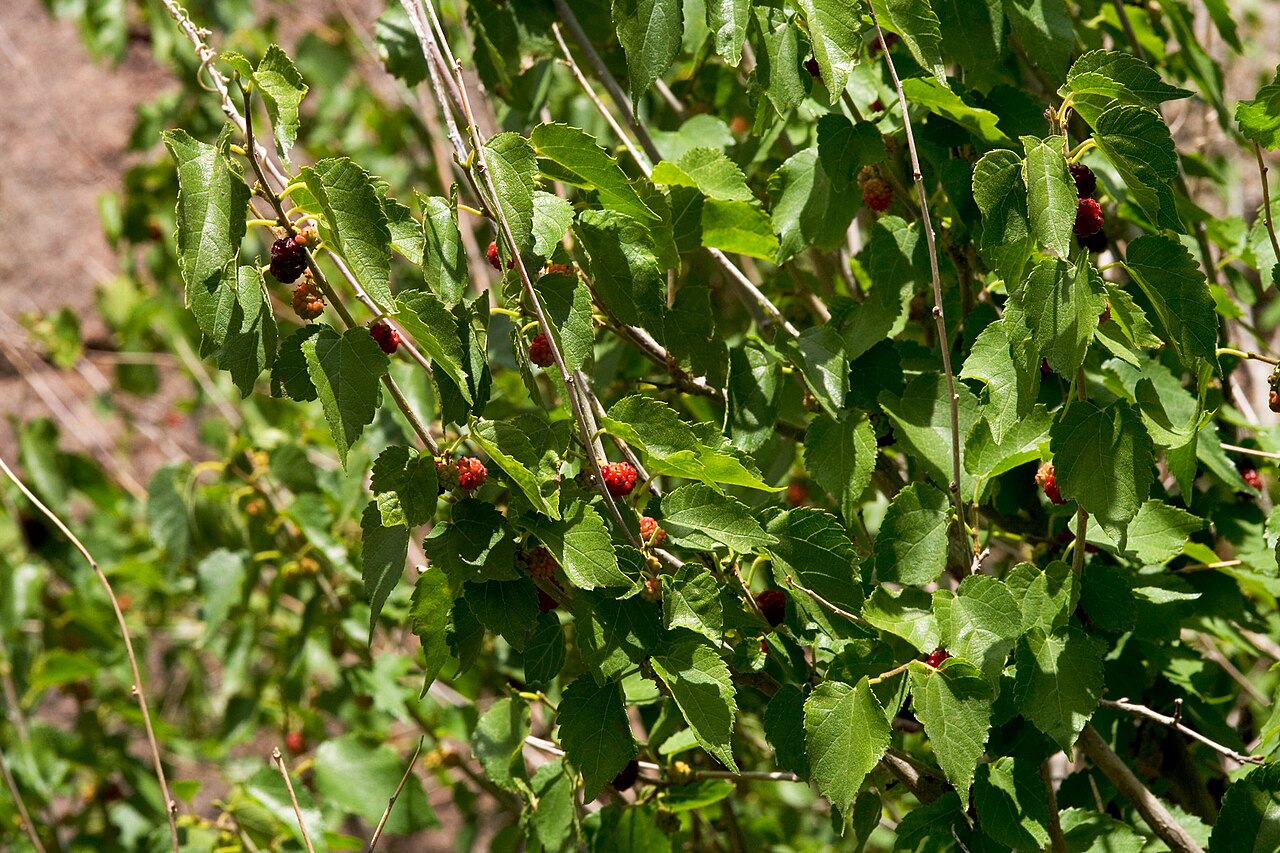
Morus microphylla, the Texas Mulberry, is a small, tough, and often overlooked native tree of canyons and rocky slopes across the desert Southwest. True to its species name, which means “small-leaved,” it bears the smallest leaves of any mulberry native to North America, giving it a finer, more delicate texture than its larger relatives, red mulberry and white mulberry. Despite its modest size, Texas mulberry produces generously, and its small, sweet, blackberry-like fruit has been gathered and valued by wildlife and people alike for as long as the species has grown along the dry washes and limestone canyons of its range.
Usually encountered as a many-trunked shrub 6 to 15 feet tall, Texas mulberry occasionally develops into a small single-trunked tree up to about 25 feet where conditions allow, almost always rooted in the thin, rocky soil of a canyon bottom or slope where some extra moisture collects. Like other mulberries it is dioecious, meaning individual plants bear either male or female flowers, so female plants need a male nearby to set fruit.
For gardeners in its native range, Texas mulberry offers a genuinely drought-tough small tree with real wildlife value and an attractive, fine-textured silhouette — a good alternative to water-hungry ornamental trees in dry Southwest landscapes.
Identification
Texas mulberry is a deciduous shrub or small tree, usually multi-trunked, reaching 6 to 15 feet in height and occasionally to 25 feet as a single-trunked tree form in favorable canyon-bottom sites.
Bark & Stems
Bark on young stems is smooth and grayish brown, becoming more furrowed and darker with age. Twigs are slender and often slightly zigzag, a trait shared with other mulberries.
Leaves
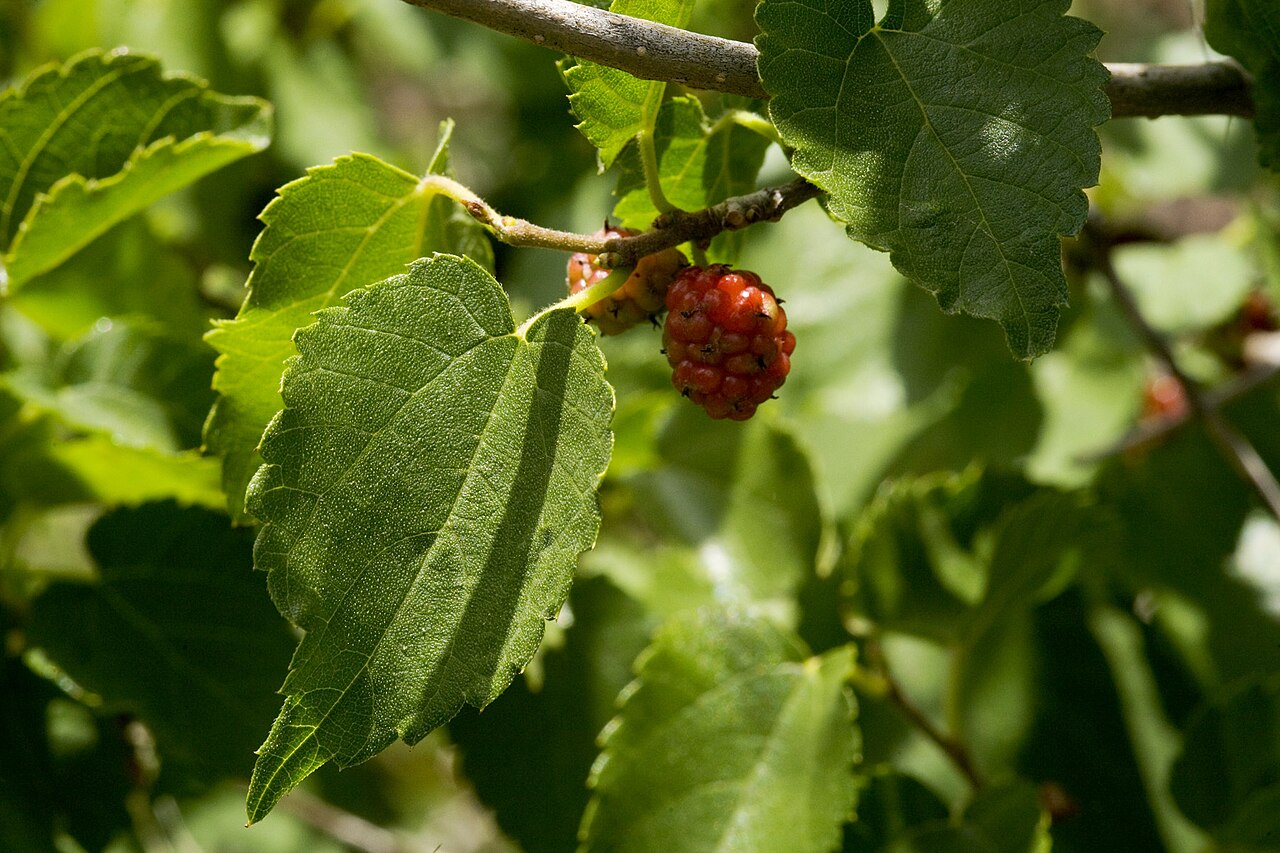
Leaves are the standout identification feature: simple, alternate, and notably small for a mulberry, usually under 2¾ inches long, broadly ovate with toothed margins and sometimes a shallow lobe or two. The upper surface is dark green and somewhat rough to the touch, while the underside is paler and softly hairy. Leaves emerge in spring alongside the small flower clusters.
Flowers
Texas mulberry is dioecious, with separate male and female plants. Flowers are tiny, greenish, and wind-pollinated, borne in small catkin-like clusters in spring at the same time new leaves appear; male clusters are slightly longer and more elongated than the more compact female clusters.
Fruit & Seeds
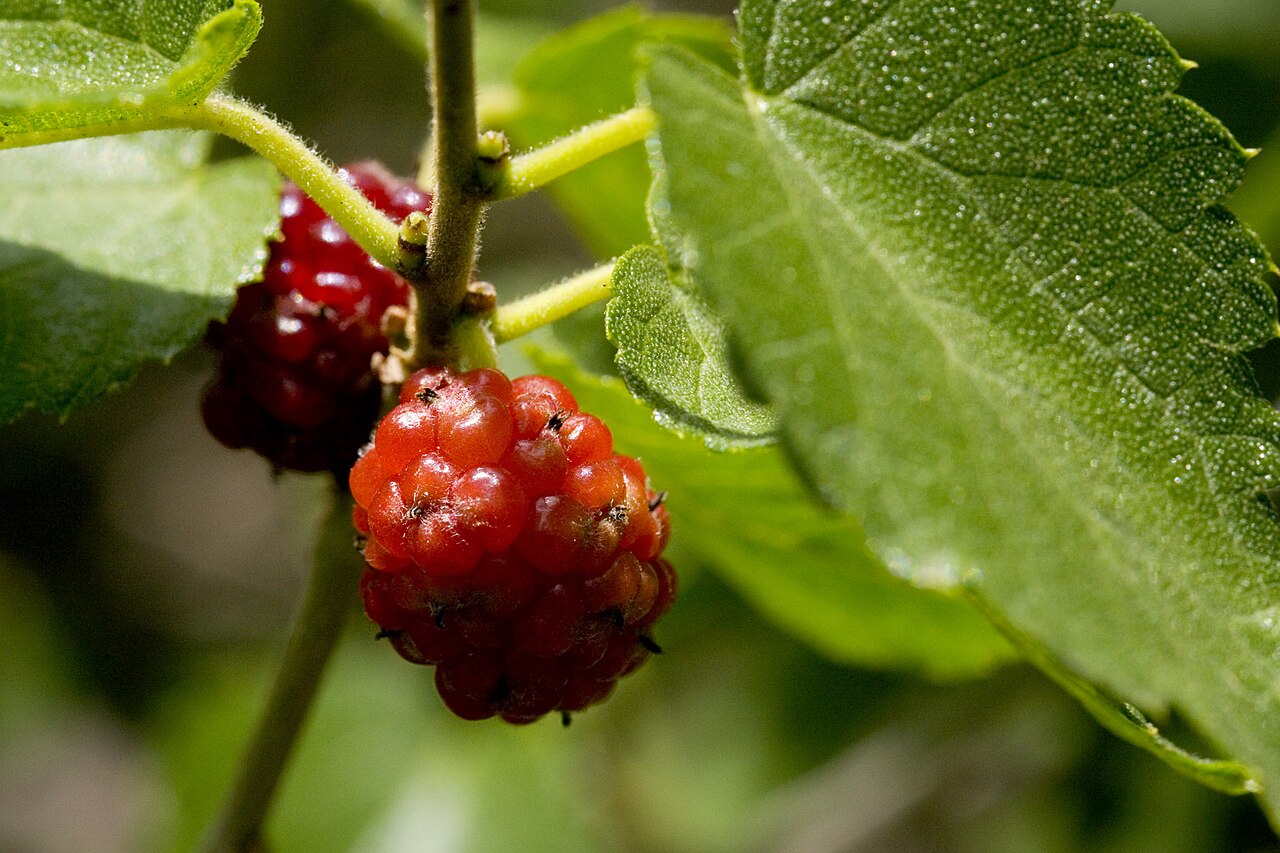
Female trees produce small, blackberry-like aggregate fruits about ½ inch long that ripen from red through purple to nearly black. The fruit is sweet and edible when fully ripe, and is heavily used by birds and mammals, which disperse the seeds widely across its range.
Quick Facts
| Scientific Name | Morus microphylla |
| Family | Moraceae (Mulberry) |
| Plant Type | Deciduous Shrub / Small Tree |
| Mature Height | 6–15 ft (to 25 ft as a tree) |
| Mature Spread | 6–12 ft |
| Growth Rate | Slow to moderate |
| Sun Exposure | Full Sun to Part Shade |
| Water Needs | Low to Moderate |
| Soil Type | Rocky, limestone canyon soils; well-drained |
| Soil pH | 7.0–8.5 (neutral to alkaline) |
| Bloom Time | March – April |
| Flower Color | Greenish (inconspicuous) |
| Fall Color | Yellow |
| Fruit | Small red-to-black blackberry-like fruit, edible (female plants only) |
| Deer Resistant | No (foliage browsed) |
| USDA Hardiness Zones | 6–9 |
Native Range
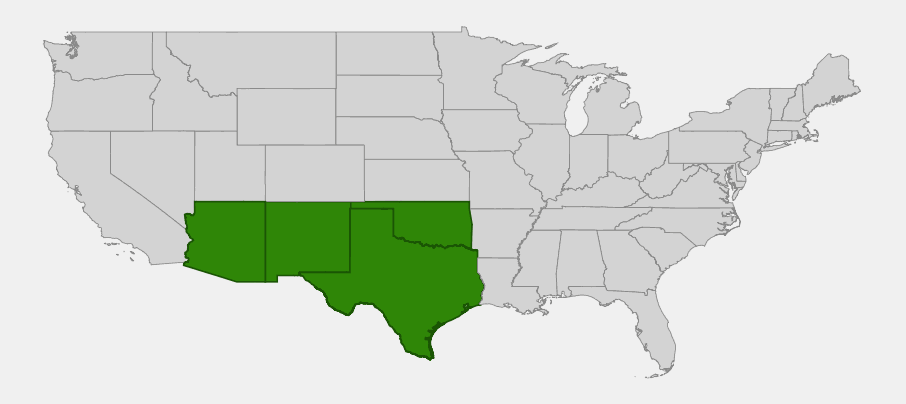
Texas mulberry is native to the southern half of Arizona and New Mexico, southwestern Oklahoma, and central and west Texas in the United States, continuing south into northern Mexico. It is a plant of the Chihuahuan and southern Sonoran Desert region and the limestone canyon country of the Edwards Plateau.
Within this range it typically grows in canyons and on rocky slopes, usually near intermittent streams or drainages where it can access extra subsurface moisture, from about 660 to 7,200 feet in elevation. It is often found tucked into canyon bottoms and north-facing slopes where shade and runoff moisture give it an edge over surrounding desert scrub.
Texas mulberry should not be confused with the much larger, moister-site-loving red mulberry (Morus rubra) native to the eastern half of Texas and much of the eastern United States, nor with the weedy, often invasive white mulberry (Morus alba), an introduced Asian species that has escaped cultivation widely and is not native anywhere in North America.
📋 Regional plant lists featuring Texas Mulberry: Arizona & New Mexico · South & West Texas
Growing & Care Guide
Texas mulberry is a forgiving, low-water small tree once it has a season or two to settle in, well suited to the rocky soils and intense sun of Southwest gardens.
Light
Full sun to part shade both work well. In its native canyons it is often found with some afternoon shade, and garden specimens sited with a bit of shelter from the hottest afternoon sun tend to show less leaf stress during peak summer heat.
Soil & Water
Rocky, well-drained, limestone-influenced soils mimic its native canyon habitat best, though it adapts to average garden soil with good drainage. Texas mulberry is drought tolerant once established but produces more fruit and fuller foliage with occasional deep watering during the driest months, particularly if some irrigation mimics the extra moisture it would receive near a natural drainage.
Planting Tips
Plant in fall or early spring. If fruit production is a goal, plant at least one male alongside female plants, since this dioecious species needs both sexes present to set fruit; nursery stock is not always sexed, so multiple plants improve the odds of a fruiting combination. Choose a site with some rocky or gravelly soil rather than heavy clay.
Pruning & Maintenance
Prune in winter dormancy to remove dead or crossing branches and to shape young plants toward a single-trunk tree form if desired, or leave the natural multi-trunked shrub habit for a denser screening effect. Texas mulberry is generally low-maintenance and free of serious pest or disease problems in its native range.
Propagation
Propagate from seed collected from ripe fruit, cleaned and stratified over winter, or from semi-hardwood cuttings taken in summer. Root suckers sometimes appear near the base of established plants and can be dug and transplanted.
Landscape Uses
Texas mulberry works well as:
- A small patio or specimen tree where space is limited
- Wildlife and edible-landscape plantings for birds and people alike
- Xeriscape and rock garden plantings in canyon-style landscaping
- Naturalized washes and drainage areas mimicking its native habitat
- Screening or informal hedgerows in its multi-trunked shrub form
Wildlife & Ecological Value
Texas mulberry’s fruit crop makes it an important food source in the otherwise lean Southwest canyon and desert habitats where it grows.
For Birds
Many desert and canyon bird species feed on the ripe berries, including mockingbirds, thrashers, and various thrushes and finches, which help disperse the seeds throughout the canyon systems where the tree grows.
For Mammals
Coyotes, foxes, and other mammals eat the fallen fruit, and the foliage is browsed by deer and javelina in parts of its range, making it a useful wildlife-support planting in rural and ranch landscaping.
For Pollinators
Being wind-pollinated, Texas mulberry does not rely on insect pollinators, though its flowers provide some incidental pollen forage for bees in early spring when few other canyon plants are blooming.
Ecosystem Role
As one of relatively few fruit-bearing trees adapted to dry canyon habitats in its range, Texas mulberry plays an outsized role in supporting wildlife through its reliable spring fruit crop, and its root system helps stabilize soil on the rocky slopes and canyon bottoms it favors.
Cultural & Historical Uses
Texas mulberry’s sweet, blackberry-like fruit has long been gathered by people throughout its range, eaten fresh off the branch or used in preserves and baked goods much like other mulberry species. The fruit was historically an important seasonal food for Indigenous peoples across its desert and canyon range.
In ancient, likely prehistoric times, the Havasupai people are credited with introducing Texas mulberry to the Grand Canyon, extending its range through deliberate cultivation — an early example of Indigenous plant stewardship and agroforestry in the Southwest.
The wood, while rarely of large enough diameter for significant lumber use, has occasionally been used locally for small tool handles and similar purposes, consistent with the dense, close-grained wood typical of the mulberry family.
Frequently Asked Questions
Is Texas mulberry fruit edible?
Yes, the ripe fruit is sweet and edible, similar in taste and texture to blackberries, though it is produced only on female plants and only when a male plant is nearby for pollination.
Why didn’t my Texas mulberry produce fruit?
Texas mulberry is dioecious, meaning individual plants are either male or female. If you only have a male plant, or a single unsexed plant without a nearby pollinator of the opposite sex, it will not set fruit.
How is Texas mulberry different from white mulberry?
Texas mulberry is a native Southwest species with distinctly small leaves, typically under 2¾ inches long, while white mulberry (Morus alba) is a larger-leaved introduced Asian species that is not native anywhere in North America and has become weedy in many areas.
How much water does Texas mulberry need?
It is drought tolerant once established, reflecting its native canyon habitat, but produces better foliage and fruit with occasional deep watering during the hottest, driest months.
How big does Texas mulberry get?
Most plants stay a multi-trunked shrub 6 to 15 feet tall, though favorable, moister canyon-bottom sites can allow it to develop into a small single-trunked tree up to about 25 feet.

Looking for a nursery that carries Texas Mulberry?
Browse our native plant nursery directory: Arizona · New Mexico & Oklahoma · Texas