
Tracy Hawthorn (Crataegus tracyi)
Crataegus tracyi, commonly known as Tracy Hawthorn or Tracy’s Hawthorn, is a thorny native shrub or small tree found only in a few rugged corners of Texas and the adjoining mountains of northern Mexico. It belongs to the Rosaceae (rose family) and is one of several hundred named hawthorn species in North America — a notoriously difficult group where regional forms are often described as distinct species. Tracy Hawthorn is a true Texas specialty, occurring in the limestone canyons of the Edwards Plateau and the volcanic Davis Mountains of the Trans-Pecos.
Like other hawthorns, it is armed with stiff, sharp thorns along its branches, which combine with a dense, twiggy growth habit to make it an excellent natural barrier and wildlife thicket plant. In spring it is covered with small white flowers, followed in fall by red, somewhat fuzzy fruit (pomes) that persist into winter and feed birds and small mammals. No photographs of this species are currently available from Wikimedia Commons, so this page relies on herbarium and flora descriptions for its identification details; gardeners working with wild-collected or nursery seed should verify identity against a regional flora such as the Flora of North America treatment of Crataegus.
Because Tracy Hawthorn is adapted to thin, rocky, often limestone soils and low-to-moderate rainfall, it is best suited to native and xeric gardens in its home range in south, west and central Texas, where it offers thorny cover, spring bloom and fall fruit without the water demands of more commonly planted ornamental hawthorns.
Identification
Tracy Hawthorn grows as a many-branched shrub or small tree, typically reaching 10 to 20 feet (3–6 m) in height, with a rounded, twiggy crown. Like most hawthorns, the branches carry straight, sharp thorns 1 to 2 inches long, and the overall silhouette is dense and tangled, especially on older plants growing in the open.
Leaves
The leaves are simple, alternate, and broadly ovate to triangular in outline, usually 1 to 2½ inches long, with toothed margins and shallow lobes toward the tip. They are a dull to semi-glossy green through the growing season and, like many Texas hawthorns, often turn shades of red to orange-red in autumn before dropping.
Flowers
Flowers open in spring in small flat-topped clusters (corymbs) of five-petaled white blossoms, typical of the rose family and similar in general appearance to apple or pear blossoms. Each flower is roughly ½ to ¾ inch across. The bloom period is brief but, as in other hawthorns, draws a wide range of early-season pollinators.
Fruit
The fruit is a small pome, round to slightly pear-shaped, ripening to red in late summer or fall. A distinguishing feature of this species noted in herbarium records is that the fruit surface is somewhat hairy or pubescent rather than perfectly smooth, which along with its Trans-Pecos and Edwards Plateau range helps separate it from other Texas hawthorns. Fruit often persists on the branches into winter.
Quick Facts
| Scientific Name | Crataegus tracyi |
| Family | Rosaceae (Rose) |
| Plant Type | Deciduous large shrub / small tree |
| Mature Height | 10–20 ft (3–6 m) |
| Growth Rate | Slow to moderate |
| Sun Exposure | Full Sun to Part Shade |
| Water Needs | Low to moderate; drought tolerant once established |
| Soil Type | Rocky, well-drained; tolerates thin limestone soils |
| Soil pH | Neutral to alkaline (tolerates limestone) |
| Bloom Time | Spring (March–April) |
| Flower Color | White |
| Fall Color | Red to orange-red |
| Fruit | Red, somewhat hairy pomes, late summer–fall |
| Deer Resistant | Yes (thorny growth discourages browsing) |
| USDA Hardiness Zones | 6b–9a |
Native Range
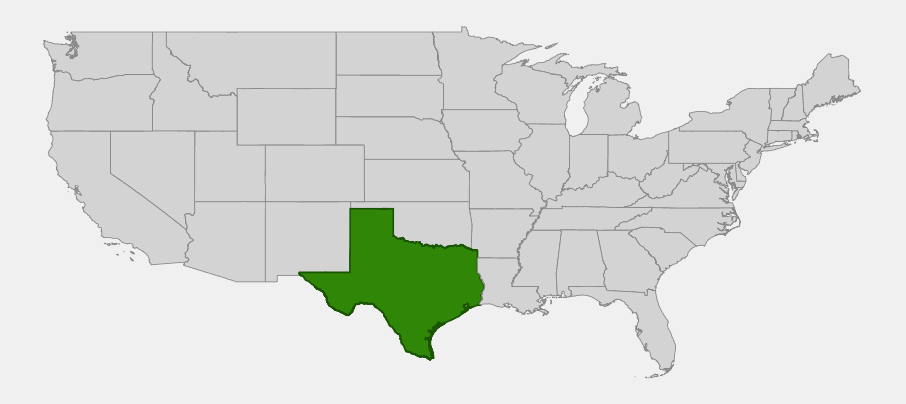
Tracy Hawthorn is known in the United States only from Texas, where it occurs in two disjunct areas: the limestone canyons and woodlands of the Edwards Plateau in central Texas, and the higher-elevation oak-juniper and pine-oak woodlands of the Davis Mountains in the Trans-Pecos region of far West Texas. Its range continues south across the border into the mountains of Coahuila, Nuevo León and San Luis Potosí in Mexico, where it is reportedly more common than in Texas.
Within its range, Tracy Hawthorn grows on rocky slopes, in canyon woodlands, and along the margins of oak-juniper associations, generally on thin, well-drained, often limestone-influenced soils at moderate to higher elevations. It is considered uncommon in Texas and is easily overlooked among the state’s many other native hawthorns, several of which share similar white flowers and thorny growth.
Because its U.S. range is limited to Texas, Tracy Hawthorn is not a realistic planting choice outside the southern Great Plains and Texas hill country region. Gardeners elsewhere in the Southwest or South should look to other regionally native hawthorns, such as mayhaw or parsley hawthorn in the eastern half of Texas; our general hawthorn growing guide covers care tips that apply across the genus.
📋 Regional plant lists featuring Tracy Hawthorn: South and West Texas
Growing & Care Guide
Tracy Hawthorn is a tough, low-input choice for Texas gardeners who want a thorny native tree or large shrub that asks little once established. It is best suited to naturalistic or wildlife-focused plantings rather than formal landscapes, since its branching is irregular and its thorns demand some distance from paths.
Light
Plant Tracy Hawthorn in full sun to light shade. In the wild it grows in open rocky woodlands and canyon edges where it receives strong Texas sun for much of the day; full sun generally produces the densest flowering and fruiting.
Soil & Water
This species is adapted to thin, rocky, well-drained soils, including those derived from limestone, and tolerates neutral to alkaline pH without difficulty. Good drainage is essential — heavy, poorly drained clay is the most common cause of failure. Water regularly during the first one to two growing seasons to establish a deep root system; after that, established plants are drought tolerant and need supplemental water only during extended dry spells.
Planting Tips
Plant in fall or late winter to take advantage of cooler temperatures and seasonal rainfall for root establishment. Because this hawthorn is thorny, site it away from walkways, patios and areas where people or pets pass closely, and consider it instead for property-line thickets, wildlife hedgerows, or the back of a rocky, sunny border. Space plants at least 8 to 10 feet apart if planting a group or informal screen.
Pruning & Maintenance
Little pruning is required. Remove dead, damaged or crossing branches in late winter while the plant is dormant, wearing thick gloves and long sleeves to work safely around the thorns. Avoid heavy shearing, which spoils the naturally irregular, picturesque form that makes hawthorns valuable for wildlife cover.
Landscape Uses
- Wildlife thickets and hedgerows in rocky, sunny parts of a central or west Texas property
- Xeric and rock gardens paired with redberry juniper and other low-water natives
- Erosion control on rocky slopes and canyon edges, where its root system helps stabilize thin soils
- Barrier or security plantings, since the thorny branches discourage both people and large animals
- Bird gardens, where the persistent fall and winter fruit provides a reliable food source
Wildlife & Ecological Value
Like other native hawthorns, Tracy Hawthorn supports a range of wildlife through its flowers, fruit and dense, thorny structure, even though it is a relatively obscure species outside its home range.
For Pollinators
The spring flowers are visited by a variety of native bees, flies and other early-season pollinators, which are drawn to the open, flat-topped flower clusters typical of the rose family.
For Birds
Fruit-eating birds, including robins, waxwings and various thrushes, feed on the small red pomes through fall and into winter, especially as other food sources become scarce. The dense, thorny branches also provide secure nesting and roosting cover that protects eggs and nestlings from predators.
For Mammals
Small mammals feed on fallen fruit, and the tangled, spiny growth form offers protective cover for rabbits and other small animals moving through rocky woodland and canyon habitat.
Ecosystem Role
As a component of Edwards Plateau and Trans-Pecos oak-juniper woodlands, Tracy Hawthorn adds structural diversity to otherwise open, rocky terrain, and its root system helps hold soil on slopes and canyon margins that are prone to erosion after heavy rain.
Taxonomy & Identification Notes
Crataegus is one of the most taxonomically challenging genera in North American botany, with hundreds of named species and forms, many of them narrow regional variants separated by subtle differences in fruit, leaf shape and pubescence. Tracy Hawthorn was described from Trans-Pecos Texas material and is accepted as a distinct species in current treatments, distinguished from its relatives chiefly by its combination of Texas-Mexico distribution and somewhat hairy fruit. Because hawthorn identification is difficult even for specialists, gardeners and naturalists working with wild material in the Edwards Plateau or Davis Mountains should compare plants carefully against a current regional flora rather than relying on common names alone, which are applied inconsistently across the group.
Frequently Asked Questions
Where does Tracy Hawthorn grow naturally?
In the United States, Tracy Hawthorn is known only from Texas, in the Edwards Plateau and the Davis Mountains of the Trans-Pecos. Its range extends south into the mountains of northern Mexico, where it is more frequently encountered.
Is Tracy Hawthorn the same as other Texas hawthorns?
No. Texas is home to many native hawthorn species that can look similar at a glance. Tracy Hawthorn is distinguished by its specific combination of range and fruit characteristics, but positive identification in the field can be difficult and often requires comparing several features against a current flora.
Can I eat the fruit?
Hawthorn fruit is primarily wildlife food rather than a garden crop. This page does not recommend foraging the fruit of Tracy Hawthorn, since its edibility has not been specifically documented and it is an uncommon species best left undisturbed in the wild.
Does Tracy Hawthorn need a lot of water?
No. Once established, it is drought tolerant and well suited to the low-rainfall, rocky conditions of its native Texas range. Regular water is mainly needed during the first couple of growing seasons after planting.
Is this a good tree for small yards?
Because of its thorns and irregular, spreading form, Tracy Hawthorn is best used in naturalistic plantings, wildlife hedgerows or larger rocky borders rather than as a specimen tree close to walkways or play areas.

Looking for a nursery that carries Tracy Hawthorn?
Browse our native plant nursery directory: Texas

