Redberry Juniper (Juniperus pinchotii)
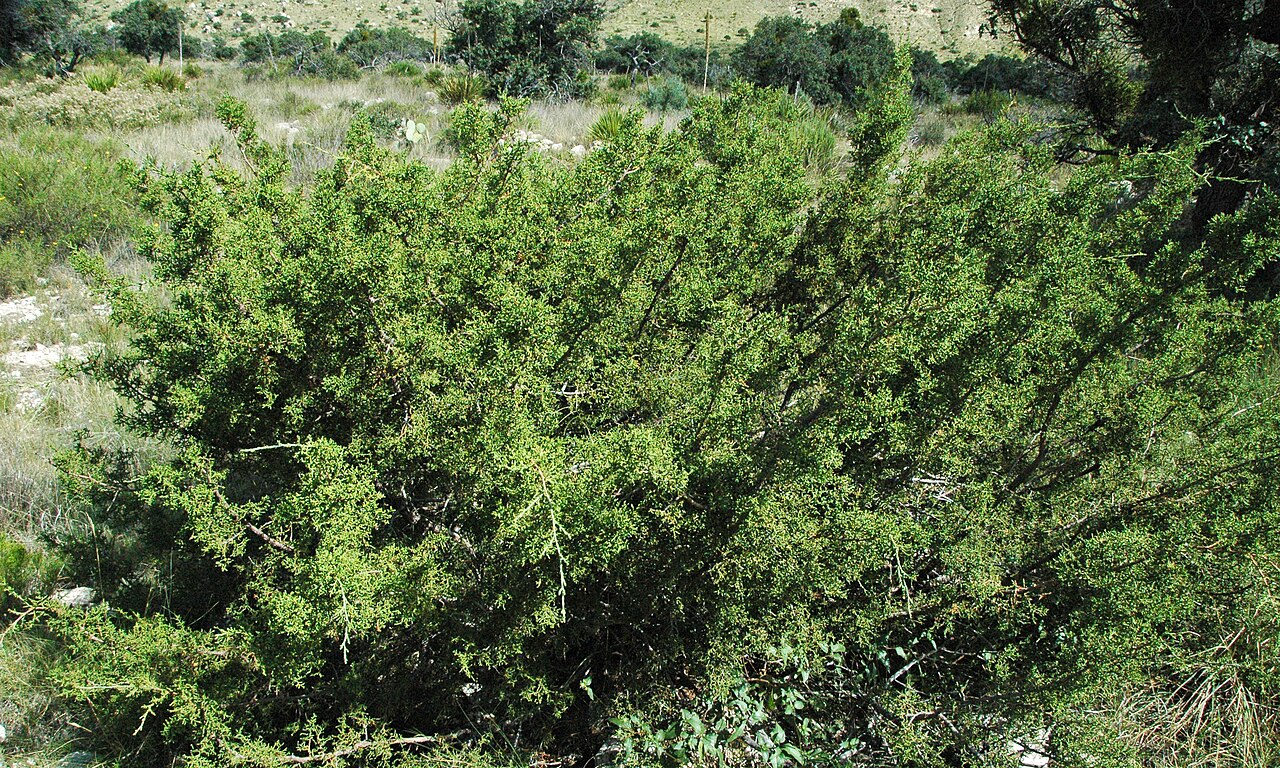
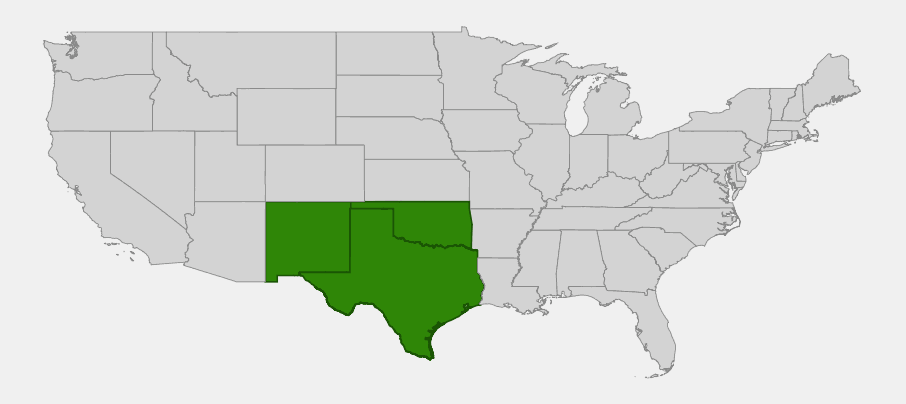
Juniperus pinchotii, commonly called Redberry Juniper or Pinchot’s Juniper, is a tough, dense evergreen shrub or small tree of the rocky hills, canyons, and plains of West Texas, western Oklahoma, and southeastern New Mexico. Named for Gifford Pinchot, the first chief of the U.S. Forest Service, it is one of the most recognizable woody plants of the Texas Rolling Plains and Trans-Pecos, forming dense, rounded thickets on limestone and gypsum slopes where few other trees can grow.
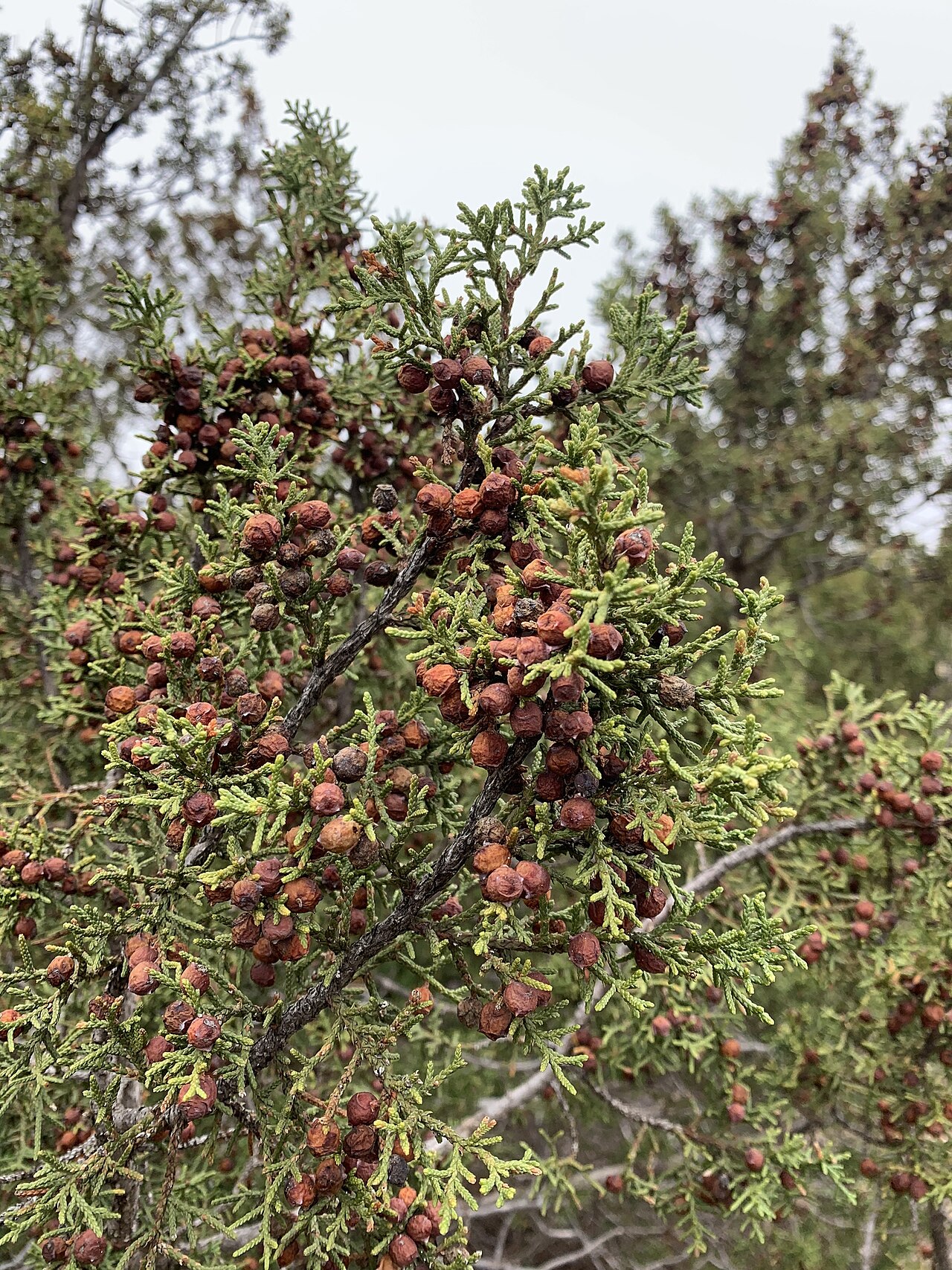
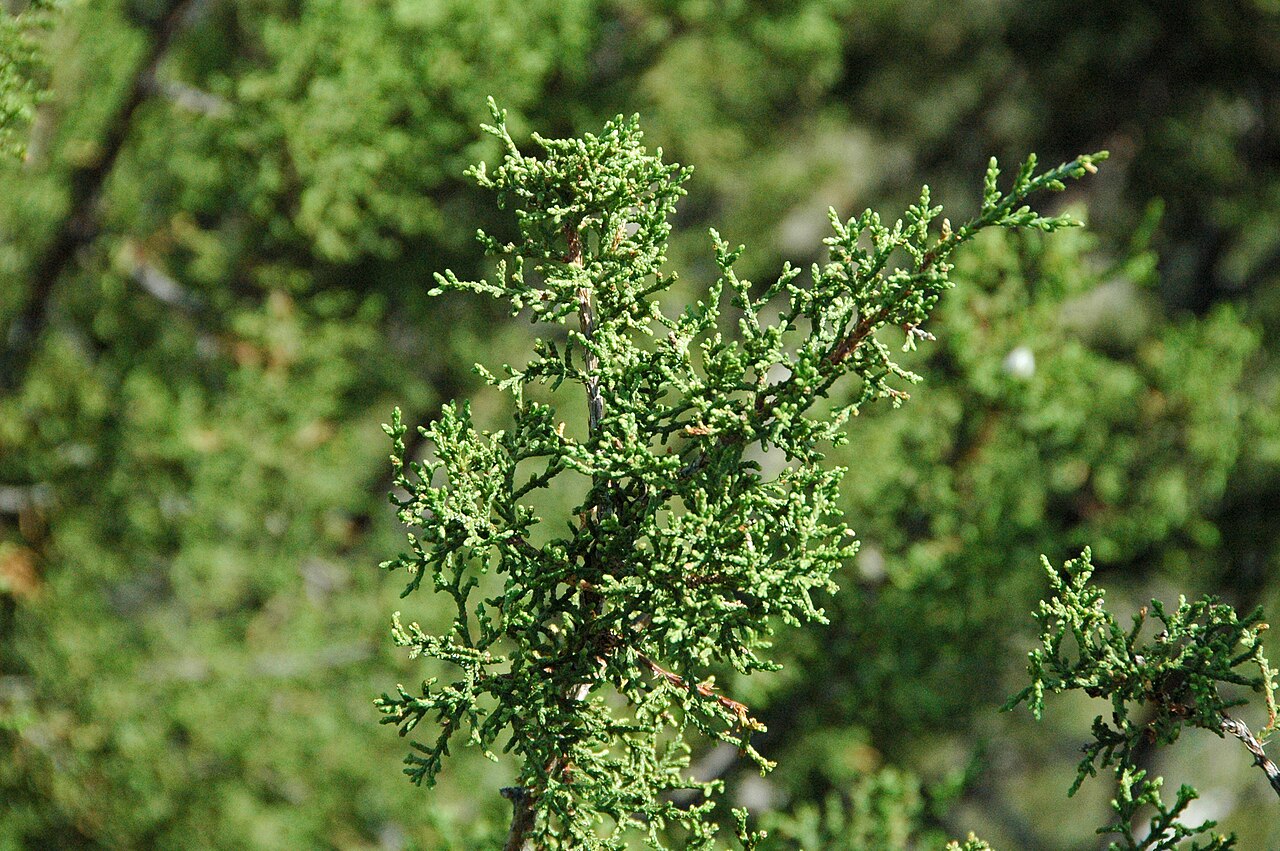
Unlike most other junipers, which produce blue or blue-black “berries” (actually fleshy cones), redberry juniper produces distinctive reddish-brown to copper-colored cones that stand out against its fine, blue-green to gray-green foliage. This feature, combined with its scaly, aromatic leaves and shaggy, fibrous bark, makes it easy to identify even from a distance on the open rangeland it often dominates.
Redberry juniper has a famously complicated relationship with Texas ranchers: as a highly successful, fire-adapted native shrub, it has expanded dramatically across range sites following decades of fire suppression, often at the expense of grassland forage, making it both a valued native wildlife plant and a significant rangeland management challenge, depending entirely on the context and density in which it occurs.
Identification
Redberry juniper grows as a dense, rounded, multi-stemmed shrub or small tree, typically 6 to 20 feet tall, often wider than tall where it branches close to the ground. It is notable among junipers for resprouting vigorously from the base after fire or cutting, a trait that sets it apart from many other juniper species and helps explain its ability to spread and persist on rangeland.
Bark & Stems
Bark is thin, gray to reddish-brown, and shreds into long, fibrous strips, typical of junipers generally. The shrub’s dense, many-branched structure, often forming multiple stems from the base, gives mature plants a rounded, almost hedge-like silhouette.
Leaves
Foliage consists of tiny, scale-like leaves pressed closely against the twigs in opposite pairs, giving the branchlets a finely textured, cord-like appearance. Color ranges from blue-green to gray-green, and the foliage is aromatic when crushed, as in most junipers.
Cones (“Berries”)
Like all junipers, what look like berries are actually modified, fleshy seed cones. Redberry juniper’s cones are distinctively reddish-brown to copper or orange-brown at maturity, roughly 1/4 to 3/8 inch across — a key field mark that separates it from most other junipers in its range, which typically have blue or blue-black cones. The cones mature in a single season and are produced only on female plants, since junipers are dioecious (separate male and female plants).
Quick Facts
| Scientific Name | Juniperus pinchotii |
| Family | Cupressaceae (Cypress) |
| Plant Type | Evergreen Shrub / Small Tree |
| Mature Height | 6–20 ft |
| Mature Spread | 8–20 ft, often wider than tall |
| Growth Rate | Slow to Moderate |
| Sun Exposure | Full Sun |
| Water Needs | Low; very drought tolerant once established |
| Soil Type | Rocky limestone or gypsum; shallow, well-drained |
| Soil pH | Neutral to alkaline |
| Bloom Time | Pollen cones shed late winter; not showy |
| Flower Color | Inconspicuous (wind-pollinated conifer) |
| Fall Color | None (evergreen) |
| Fruit | Reddish-brown to copper fleshy cones (“berries”) |
| Deer Resistant | Yes (though browsed in winter when forage is scarce) |
| USDA Hardiness Zones | 6–8 |
Native Range
Redberry juniper is native to the southern Great Plains and Trans-Pecos region, found in central and western Texas, western Oklahoma, and southeastern New Mexico. It is especially abundant and characteristic of the Texas Rolling Plains, Edwards Plateau, and Trans-Pecos, where it is one of the dominant woody species on rangeland and canyon slopes.
Typical habitat includes rocky limestone or gypsum hillsides, canyon rims, mesa tops, and dry rangeland, usually at elevations between about 2,000 and 6,900 feet. Historically, redberry juniper was largely confined to rocky, fire-protected sites such as steep slopes and canyon breaks, where periodic natural fires rarely reached. With the suppression of wildfire across much of the southern Plains over the past century, the species has expanded substantially onto adjacent, more level rangeland.
Its range continues south into adjoining areas of Nuevo León and Coahuila, Mexico. While ecologically native and valuable in appropriate densities, redberry juniper’s fire-adapted ability to resprout and spread has made it a significant management concern in parts of the Texas Rolling Plains, where it can outcompete native grasses for water on encroached rangeland.
📋 Regional plant lists featuring Redberry Juniper: South and West Texas · Arizona & New Mexico
Growing & Care Guide
Redberry juniper is extremely low-maintenance once established, built to thrive on poor, rocky soils with minimal care — but its vigorous resprouting habit means it should be sited thoughtfully.
Light
This juniper requires full sun and does not perform well in shade, where growth becomes thin and open rather than its characteristic dense form.
Soil & Water
Redberry juniper is exceptionally well adapted to shallow, rocky, alkaline soils, including limestone and gypsum ground that few other woody plants tolerate. It needs no supplemental irrigation once established and in fact performs best on lean, dry sites; rich or regularly watered soil can encourage disease problems and is unnecessary for this naturally drought-adapted species.
Planting Tips
Plant container-grown redberry juniper in fall or early spring. Give it plenty of room to reach its mature width, since it naturally grows wider than tall and resents crowding. Because mature plants resprout vigorously from the base if cut or burned, think carefully before planting it where you may later want to remove it, and consider that its dense form can be effective as a living windbreak or privacy screen precisely because of this persistence.
Pruning & Maintenance
Little pruning is needed for a naturalistic form; remove dead wood as needed. Because cutting typically triggers vigorous resprouting from the base, mechanical or hand removal alone is not an effective control method if you want to eliminate an unwanted plant — in rangeland contexts, redberry juniper control typically relies on prescribed fire, herbicide, or repeated treatment rather than simple cutting.
Landscape Uses
- Windbreaks and privacy screens, using its dense, persistent growth habit
- Xeriscapes and rock gardens on shallow, alkaline soil
- Wildlife plantings, for cover and winter fruit
- Erosion control on rocky slopes and canyon rims
- Evergreen structure in naturalistic West Texas landscaping
- Difficult-site plantings where few other evergreens will grow
Wildlife & Ecological Value
Despite its reputation as a rangeland management challenge in dense stands, redberry juniper provides significant wildlife value, especially as cover and winter food across the Texas Rolling Plains and Trans-Pecos.
For Birds
The dense evergreen canopy provides year-round cover and nesting habitat for many bird species, while the reddish-brown cones are an important winter food source for species including cedar waxwings, American robins, and various sparrows, especially when other food is scarce.
For Mammals
White-tailed deer and other wildlife browse the foliage during winter when other forage is limited, even though it is not a preferred food. Small mammals use dense juniper thickets for cover and nesting, and the plant’s persistence on the landscape provides stable, long-term habitat structure.
For Pollinators
As a wind-pollinated conifer, redberry juniper offers no nectar, but male plants produce large amounts of pollen in late winter, which is a significant source of early-season allergens in parts of Texas, a side effect of its reproductive strategy rather than any ecological harm.
Ecosystem Role
Redberry juniper is a genuinely native, fire-adapted component of Texas Rolling Plains and Trans-Pecos ecosystems, but its post-fire-suppression expansion onto grassland has altered the structure of many rangeland plant communities, reducing herbaceous forage and increasing water use in heavily encroached areas. Its ecological role is therefore highly density-dependent: valuable as scattered cover and winter food in open rangeland, but a management concern where it has formed dense, closed stands.
Cultural & Historical Uses
Redberry juniper’s aromatic wood and foliage have a long history of informal use across West Texas and the southern Plains, including as fence posts, since juniper wood resists rot, and as a source of firewood on rural ranches. Fence posts of this and related junipers remain a familiar sight in the region today.
The plant’s expansion across Texas rangeland has become a significant topic in agricultural extension and rangeland science, with Texas Tech University and other institutions conducting ongoing research into its ecology, water use, and management, reflecting its outsized practical importance to the region’s ranching economy.
Historically, some Indigenous peoples of the region used juniper berries and foliage in various traditional practices, though specific documented uses for this species in particular are limited; as with other junipers, the foliage and cones contain aromatic compounds and are not a food source for people today.
Frequently Asked Questions
Why are redberry juniper’s “berries” red instead of blue like other junipers?
Most junipers produce blue to blue-black fleshy cones, but redberry juniper is one of the few North American species with reddish-brown to copper-colored cones, a distinctive trait that gives the species its common name and makes it easy to identify in the field.
Is redberry juniper invasive?
No — it is a true Texas, Oklahoma, and New Mexico native, not an introduced invasive species. However, due to decades of fire suppression, it has expanded well beyond its historical rocky, fire-protected habitat onto open rangeland, where dense stands can reduce grass forage; this is native woody encroachment, a distinct ecological issue from invasive species.
Can you cut down redberry juniper to get rid of it?
Cutting alone is usually not effective, since the species resprouts vigorously from the base after cutting or fire. Rangeland managers typically rely on prescribed burning, herbicide application, or mechanical removal that destroys the root crown for effective long-term control.
Does redberry juniper cause allergies?
Yes. Like many junipers, male plants release large amounts of wind-borne pollen in late winter, which is a significant allergen source (“cedar fever”) in parts of Texas and Oklahoma, though it is usually a secondary contributor compared to Ashe juniper in the main Hill Country cedar fever season.
How is redberry juniper different from Ashe juniper?
Ashe juniper (Juniperus ashei) is more associated with the Texas Hill Country and Edwards Plateau proper and has blue-black cones, while redberry juniper is more characteristic of the drier Rolling Plains and Trans-Pecos further west and is identified by its distinctive reddish-brown cones.

Looking for a nursery that carries Redberry Juniper?
Browse our native plant nursery directory: Texas · Oklahoma & New Mexico