Old Man’s Beard (Clematis drummondii)
Clematis drummondii, commonly called Old Man’s Beard, Drummond’s Clematis, or Texas Virgin’s Bower, is a vigorous, drought-tough native vine of the brushlands and canyons of the southwestern United States. It belongs to the buttercup family (Ranunculaceae) and takes both its common names from its signature feature: long, silvery, thread-like styles that persist on the spent flowers and seed heads, covering whole thickets in a hazy, silver-white “beard” that catches the light for weeks at a time, especially through fall and into winter.
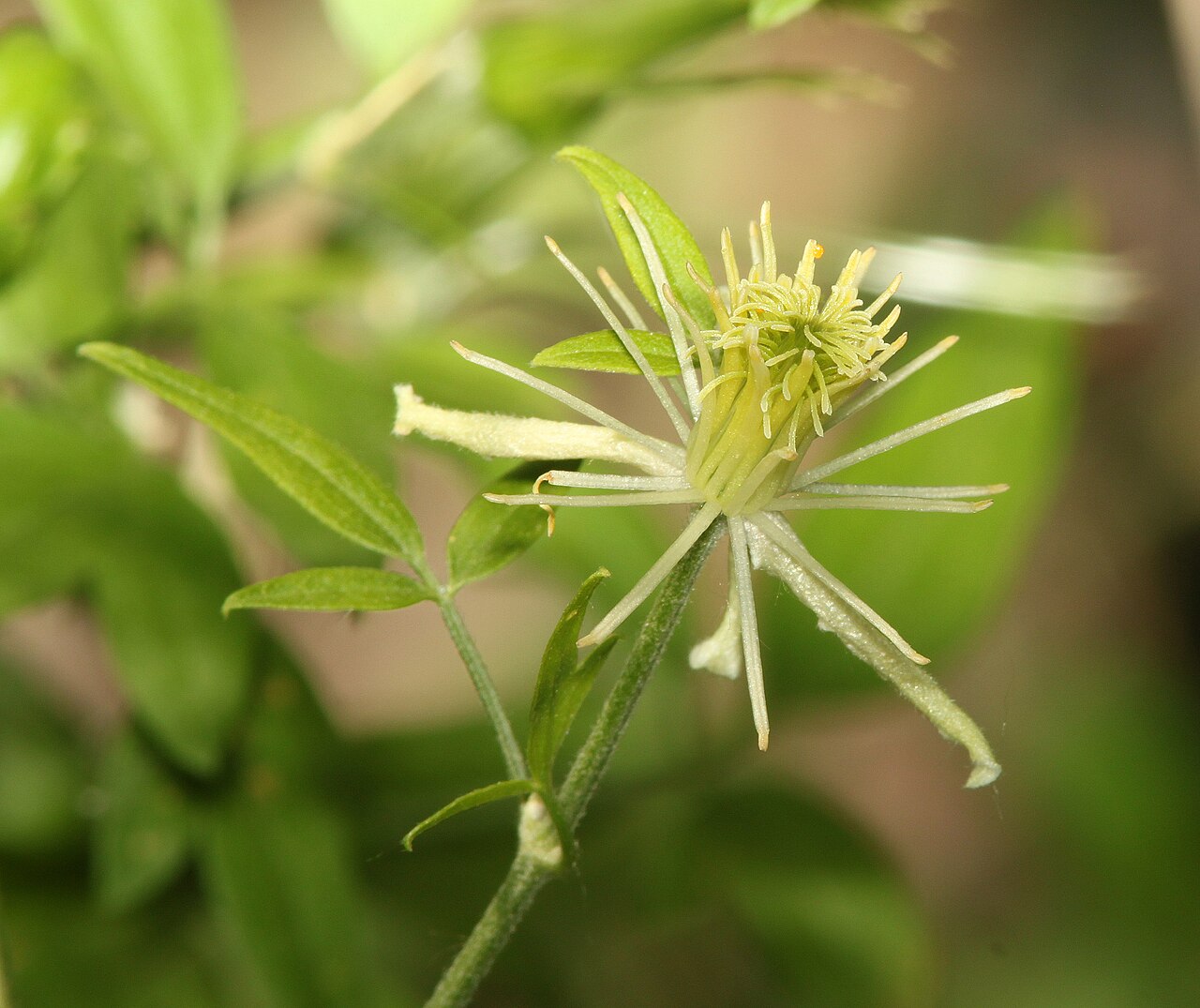
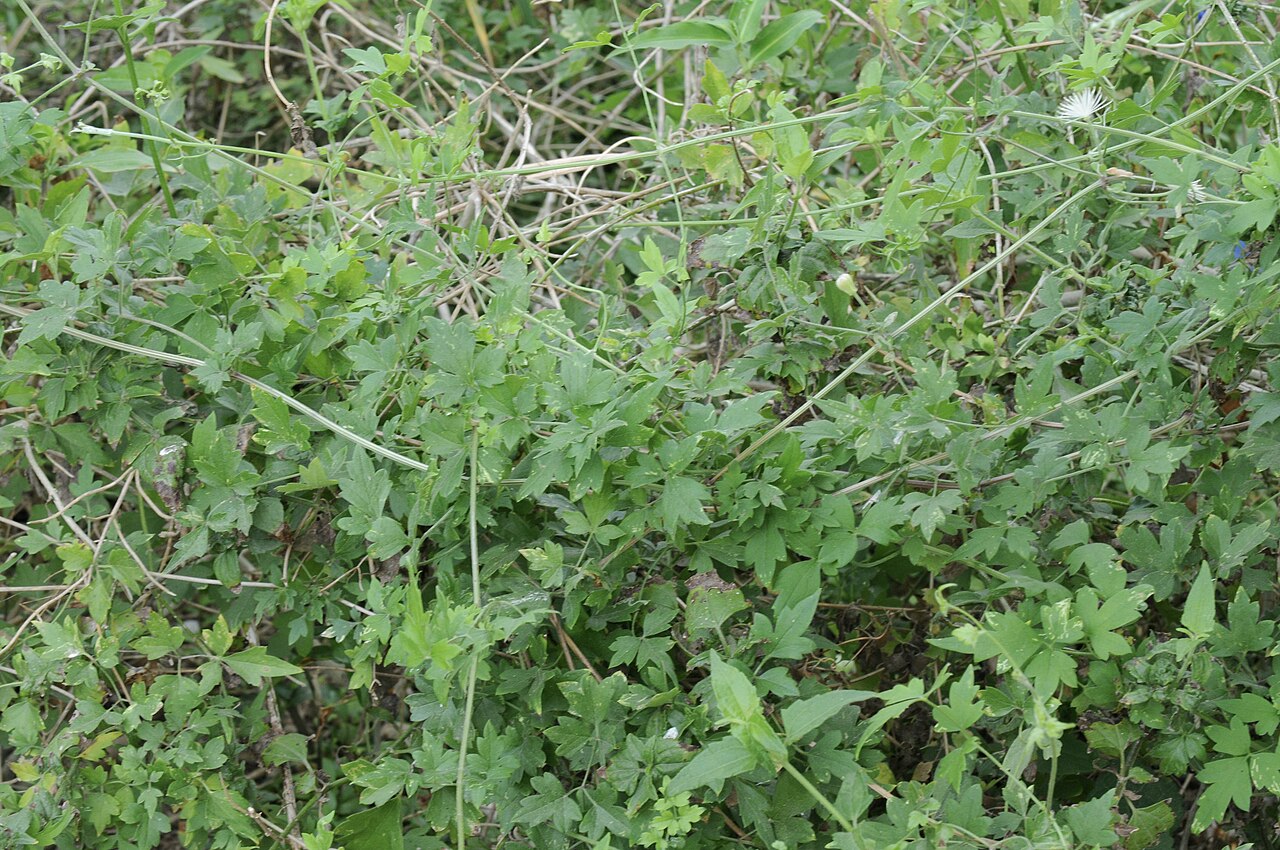
Unlike the showy, large-flowered clematis hybrids sold at garden centers, old man’s beard produces small, greenish-white, star-shaped flowers with no true petals — the show comes later, when each flower’s cluster of pistils elongates into a feathery plume to carry its seeds on the wind. The vine itself is a sprawling, twining climber that scrambles over fences, shrubs, and small trees using its curling leaf stalks, forming dense mounds and curtains of fine-textured, blue-green foliage.
For gardeners in Texas, Arizona, and New Mexico, old man’s beard is an easy, no-fuss native vine for covering a chain-link fence or trellis in part shade to full sun with essentially no water once established. It is not a plant for formal gardens — it spreads readily by seed and can look a little wild — but in a naturalistic hedgerow, wildlife garden, or xeriscape it earns its keep by feeding pollinators in summer and putting on a striking silver display in fall.
Identification
Old man’s beard is a woody-based, twining perennial vine that can climb or sprawl 10 to 30 feet, draping over whatever support it finds. Where no support is available it forms a tangled, mounding thicket 2 to 4 feet tall.
Stems
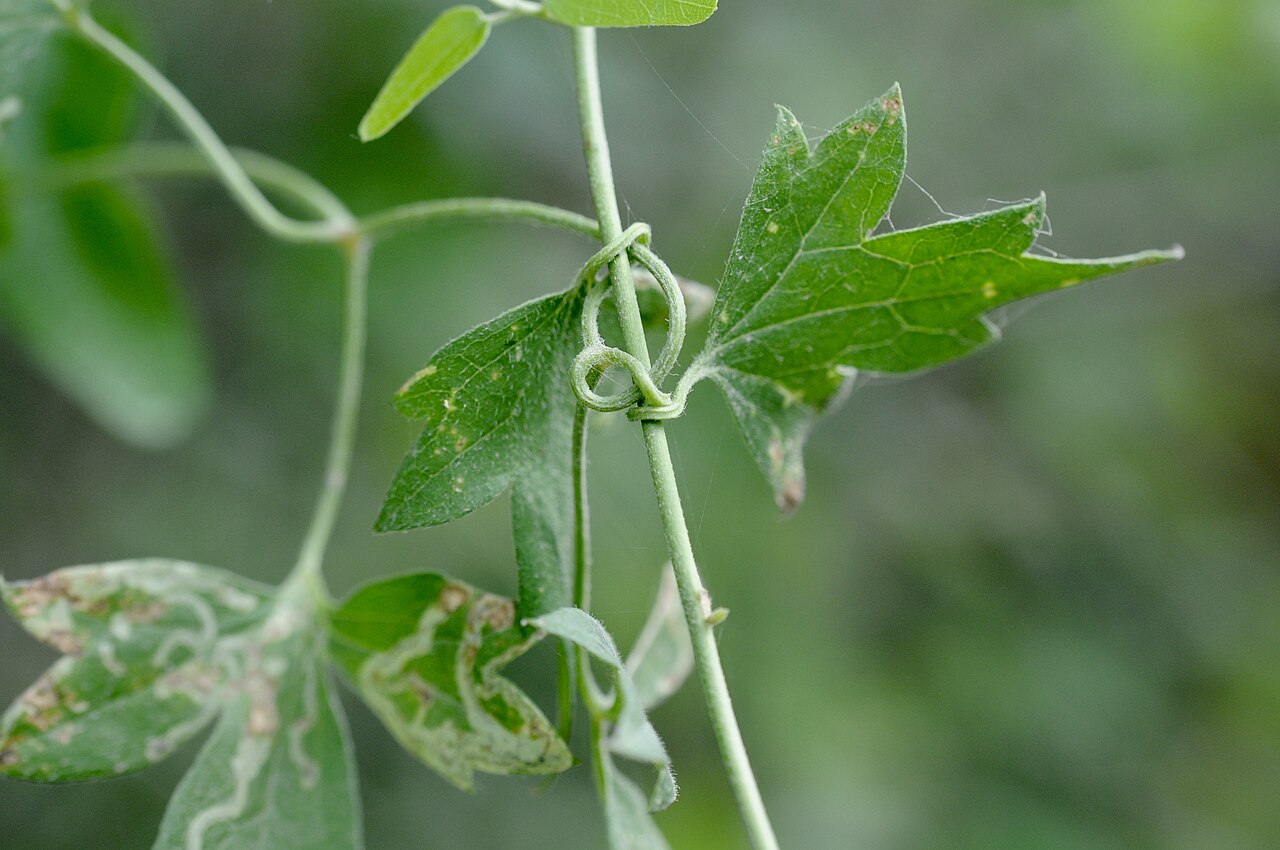
Stems are slender, ridged, and green when young, becoming tan and slightly woody with age at the base. The vine climbs by wrapping its leaf stalks (petioles) around any available support, rather than by tendrils or twining stem tips, which is typical of the clematis genus.
Leaves
Leaves are opposite and pinnately compound, usually divided into 5 to 7 leaflets that are themselves often lobed or toothed, giving the foliage a lacy, fernlike texture. Leaflets are 1 to 3 inches long, thin-textured, and a soft blue-green to gray-green, with the leaf stalks doing the climbing work by curling around nearby stems and wires.
Flowers & Fruit
Flowers bloom in loose clusters from the leaf axils from spring through fall, each about 3/4 to 1 inch across. They lack true petals; what appear to be petals are actually four to five narrow, pointed, greenish-white to cream sepals surrounding a dense central cluster of stamens and pistils. After pollination, each pistil develops a long, feathery, silvery-white style up to 2 inches long, and dozens of these plumed achenes cluster together into the fluffy, tousled seed heads that give the plant its common name. These silky seed heads often persist on the vine well into winter, carried eventually on the wind.
Quick Facts
| Scientific Name | Clematis drummondii |
| Family | Ranunculaceae (Buttercup) |
| Plant Type | Deciduous Perennial Vine |
| Mature Height | 10–30 ft climbing (2–4 ft if unsupported) |
| Mature Spread | Sprawling, 6–15 ft or more |
| Growth Rate | Fast |
| Sun Exposure | Full Sun to Part Shade |
| Water Needs | Low; very drought tolerant once established |
| Soil Type | Rocky, caliche, clay or sandy; well-drained |
| Soil pH | Neutral to alkaline |
| Bloom Time | Spring through fall |
| Flower Color | Greenish-white to cream |
| Fall Color | Foliage yellows; silvery seed plumes are the fall highlight |
| Fruit | Clustered achenes with long, silky, silver-white plumes |
| Deer Resistant | Yes |
| USDA Hardiness Zones | 7–11 |
Native Range
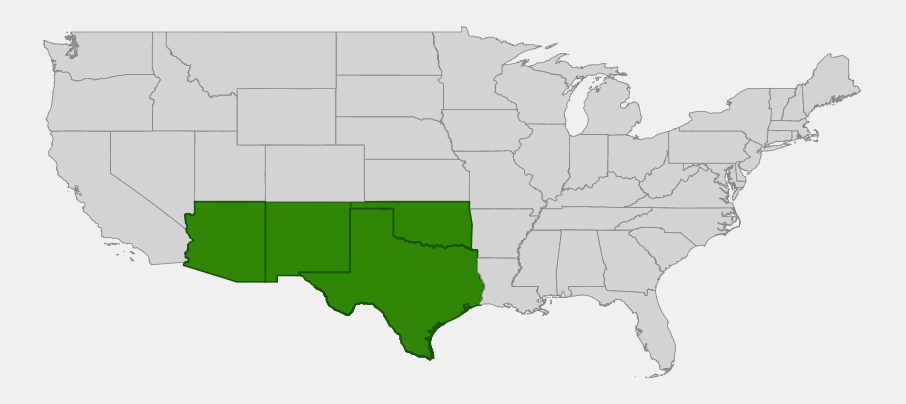
Old man’s beard is native to the southwestern United States, found in Arizona, New Mexico, Oklahoma, and Texas, with its largest and most continuous populations across southern, central, and western Texas. In Arizona it occurs mainly in the central, southern, and southeastern parts of the state; in New Mexico it is found chiefly in the southern counties. Its range continues south into northern Mexico.
Typical habitat is dry, open ground: brushy canyons, arroyos, roadsides, fencerows, and the edges of thornscrub and grassland, often on rocky or caliche soils. The species is closely tied to the Chihuahuan Desert and Tamaulipan thornscrub, where it scrambles over mesquite, acacia, and other woody shrubs for support, but it also turns up in disturbed ground and along waterways well outside true desert habitat.
Because it seeds prolifically and establishes readily on disturbed soil, old man’s beard is sometimes mistaken for a weed, but it is a true Texas and Southwest native and an important early-successional plant in brushland ecosystems, quickly covering bare or disturbed ground and providing structure for other plants and wildlife to follow.
📋 Regional plant lists featuring Old Man’s Beard: South and West Texas · Arizona & New Mexico
Growing & Care Guide
Old man’s beard is about as easy to grow as native vines get, thriving on neglect once it is in the ground. It is best suited to informal, naturalistic plantings rather than tidy formal gardens.
Light
This vine grows and flowers best in full sun but tolerates part shade, especially in the hottest parts of its range, where afternoon shade can keep the foliage looking fresher through summer.
Soil & Water
Old man’s beard is unfussy about soil, growing happily in rocky, caliche, clay, or sandy ground as long as drainage is adequate. It needs regular watering only to get established; mature plants are extremely drought tolerant and typically need no supplemental irrigation beyond natural rainfall in most of its native range. Soggy, poorly drained soil is the main thing to avoid.
Planting Tips
Give old man’s beard a sturdy support from the start — a fence, trellis, or large shrub — since it grows quickly and can become heavy with foliage. Plant in fall or early spring. Because it self-seeds freely, site it where volunteer seedlings are welcome, such as a naturalistic hedgerow or wildlife corner, rather than next to a manicured bed.
Pruning & Maintenance
Cut old man’s beard back hard in late winter if it has outgrown its space; it resprouts vigorously from the woody base each spring. Through the growing season it needs little attention beyond occasionally redirecting new growth onto its support. Deadheading is not necessary — the fluffy seed heads are part of the plant’s appeal — but removing some seed heads can help control self-seeding in small gardens.
Landscape Uses
- Fence and trellis cover for a fast, no-water native screen
- Wildlife hedgerows and naturalistic brush plantings
- Xeriscapes where a climbing element is wanted with minimal irrigation
- Erosion control on disturbed slopes and roadside cuts
- Pollinator gardens, for its long summer bloom season
- Fall-interest plantings, where the silvery seed heads catch low autumn light
Wildlife & Ecological Value
Old man’s beard pulls real ecological weight in the brushlands where it grows, offering food and shelter across a long season of bloom and seed.
For Pollinators
The small, nectar-rich flowers bloom over a long season from spring through fall and attract a wide range of native bees, honeybees, and other insects, providing a steady nectar source through much of the growing year in a habitat where flowering can otherwise be sparse during the hottest months.
For Birds
The dense, tangled growth habit offers excellent cover and nesting sites for small brushland birds, while the fine seed plumes are sometimes gathered by birds as lining material for nests.
For Mammals
White-tailed deer and other browsers generally leave old man’s beard alone, which is part of why it is considered deer resistant; this makes it a reliable choice in areas where deer pressure limits other native vines.
Ecosystem Role
As a fast-growing pioneer species, old man’s beard quickly colonizes disturbed or bare ground, stabilizing soil and creating structure that other brushland plants and wildlife can use. Its dense cover over shrubs and fences also provides thermal shelter for small animals during extreme heat, a significant benefit in the hot climates where it grows.
Cultural & Historical Uses
Old man’s beard has long been a familiar sight along South Texas roadsides and fencerows, and its dramatic, silvery seed heads have made it a recognizable, if sometimes overlooked, feature of the regional landscape. The common name “old man’s beard,” shared with several other fluffy-seeded plants around the world, reflects the simple visual impression of the plumed seed clusters draped over brush like tufts of white hair.
As with many clematis species, parts of the plant contain irritant compounds typical of the buttercup family and are not used as food. Historical accounts from the region note the plant’s dense growth being used informally as natural fencing or windbreak material when massed over existing brush, but it has no significant documented food, fiber, or medicinal tradition among regional communities.
Today old man’s beard is valued mainly as a low-input native landscaping plant in Texas, Arizona, and New Mexico, promoted by native plant societies and nurseries as an easy, waterwise alternative to ornamental vines that require far more irrigation to thrive in the arid Southwest.
Frequently Asked Questions
Is old man’s beard the same as the invasive “old man’s beard” vine in other regions?
No. Several unrelated plants share the common name “old man’s beard” worldwide, including a different clematis species that is invasive in New Zealand. Clematis drummondii is a native Southwest U.S. species and is not considered invasive within its native range.
Why does my old man’s beard look weedy?
Its naturally sprawling, fast-growing habit and tendency to self-seed can make it look unkempt in a formal setting. It looks best given a clear support to climb and room to spread in a naturalistic planting rather than being squeezed into a tidy bed.
Can old man’s beard take full Texas sun and heat?
Yes. It is well adapted to intense heat and sun across its native Texas and Southwest range and needs little to no supplemental water once established, making it one of the most heat-tolerant native vines available.
When do the fluffy seed heads appear?
The silvery, feathery seed plumes develop through summer and are most striking from late summer into fall and winter, often persisting on the vine for weeks after the leaves have dropped.
Is old man’s beard poisonous?
Like many members of the buttercup family, the fresh foliage and sap can be mildly irritating to skin and are not eaten by people or livestock. It is not considered a serious toxicity concern in the landscape, but it should not be regarded as edible.

Looking for a nursery that carries Old Man’s Beard?
Browse our native plant nursery directory: Texas