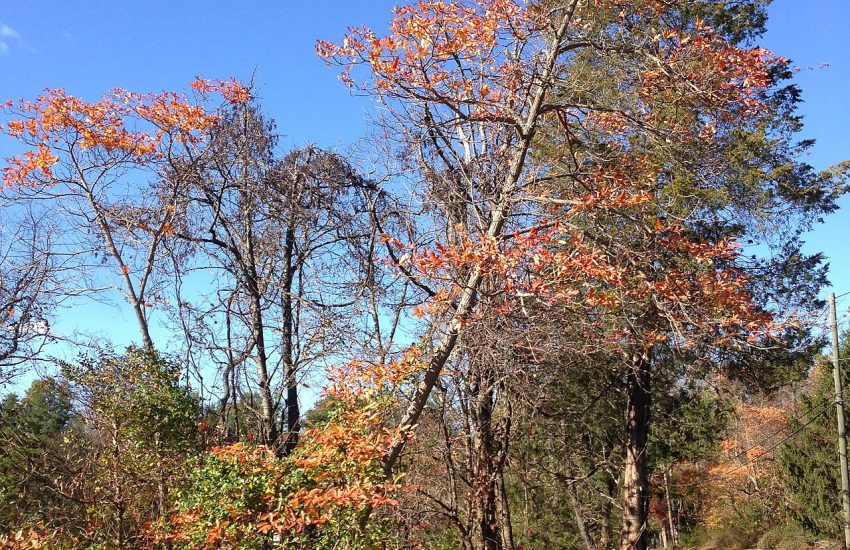
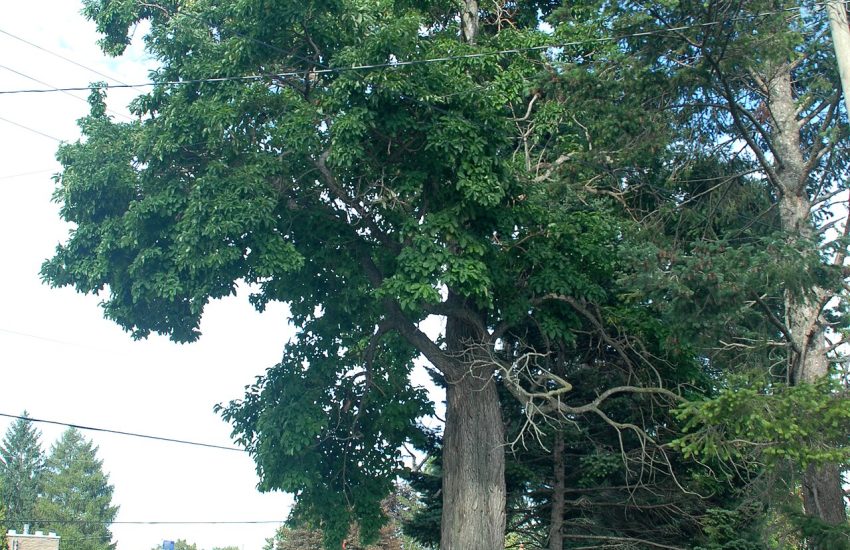
Chihuahuan Ash (Fraxinus papillosa)
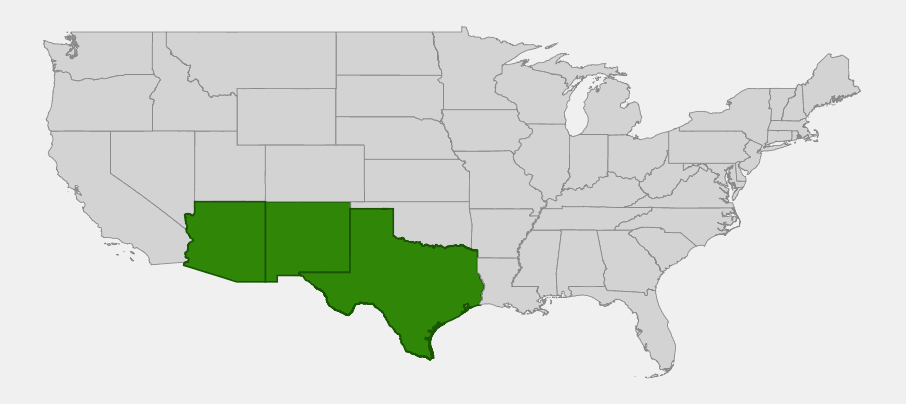
Fraxinus papillosa, the Chihuahuan ash, is a small deciduous tree of canyon bottoms and shaded slopes across the Chihuahuan Desert borderlands of the United States and Mexico. In this country it occurs in scattered populations across southeastern Arizona, southern New Mexico and the Trans-Pecos region of far West Texas, most often tucked into rocky canyons and north-facing slopes where it escapes the full force of desert sun and heat. South of the border, it is more broadly distributed across the arid highlands of northern Mexico, which gives the species its common name.
Chihuahuan ash is identified in part by a distinctive microscopic feature: the undersides of its leaflets are covered with tiny bead-like projections, or papillae, visible under magnification — the trait that gives the species its scientific name, papillosa. This same papillose leaf surface is shared by its eastern relatives Texas ash and white ash, a quiet reminder that these desert and eastern-woodland trees are more closely related than their very different habitats might suggest.
For gardeners across the Trans-Pecos, southern New Mexico and the sky-island country of southeastern Arizona, Chihuahuan ash is a compact, tough, regionally authentic small tree for a canyon-style or xeric native planting — a true desert ash adapted to rocky, well-drained ground and widely fluctuating temperatures.
Identification
Chihuahuan ash grows as a small tree, typically 15 to 25 feet tall, with a rounded to irregular crown shaped by the rocky, often steep terrain it occupies. It is sometimes multi-trunked, especially on plants that have resprouted after fire, flash flooding or browsing damage, both common disturbances in its canyon habitat.
Bark & Stems
Young twigs are gray-green and finely hairy, maturing to thin, gray bark that develops shallow furrows and ridges with age. The overall branching is fine-textured compared to large eastern ashes, in keeping with the tree’s modest desert stature.
Leaves
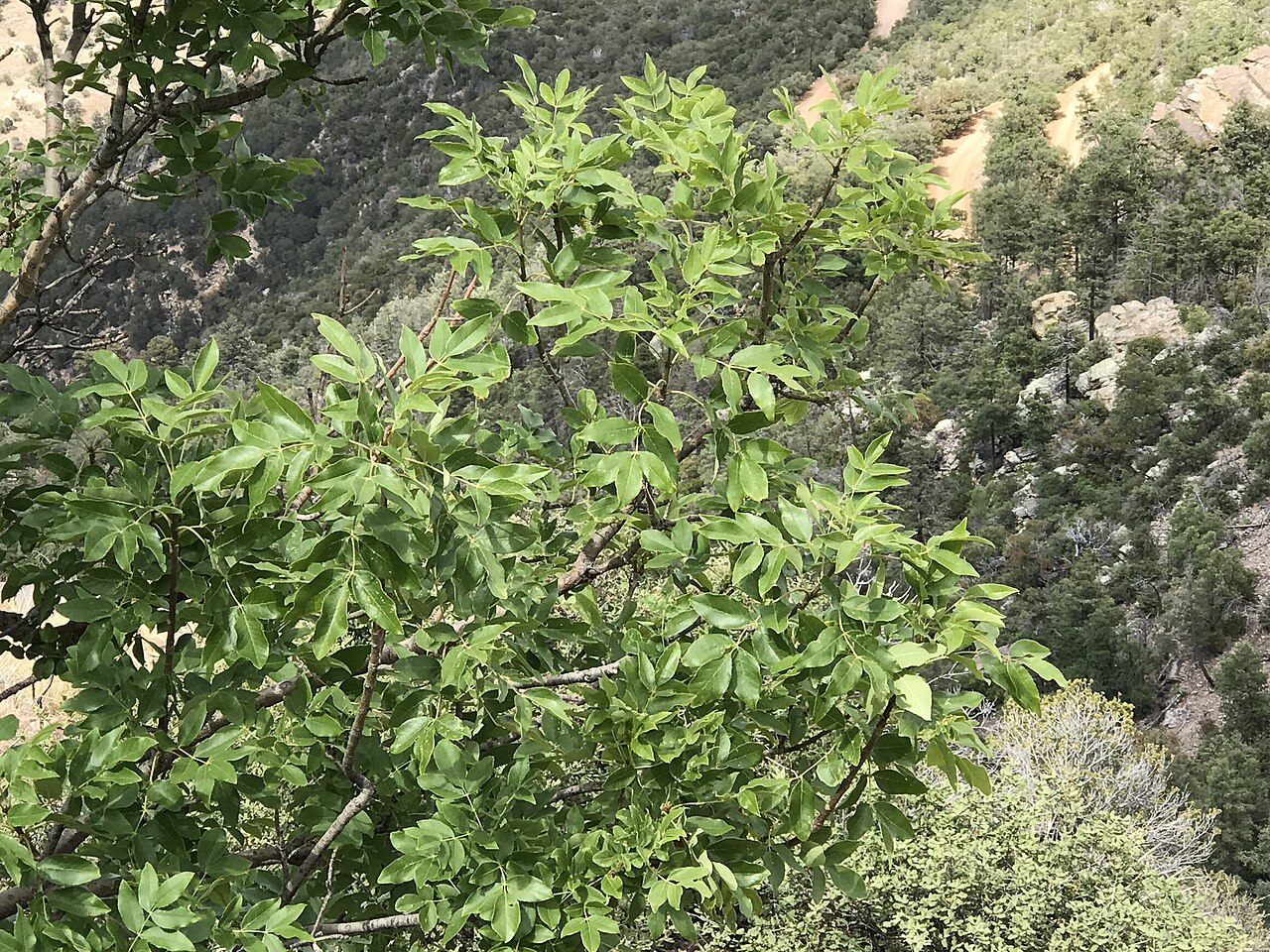
Leaves are opposite and pinnately compound, typically with five to seven elliptic to lance-shaped leaflets. The defining field mark, visible with a hand lens or low-power microscope, is the dense coat of tiny papillae on the leaf undersides, giving them a finely beaded, almost frosted appearance that is diagnostic for the species and distinguishes it from the closely related velvet ash.
Flowers & Fruit
Like other ashes, Chihuahuan ash is dioecious, with separate male and female trees bearing small, greenish, wind-pollinated flowers in early spring before the leaves emerge. Female trees produce single-winged samaras through late spring and summer, dispersed by wind down the canyons and washes where the trees grow.
Quick Facts
| Scientific Name | Fraxinus papillosa |
| Family | Oleaceae (Olive) |
| Plant Type | Deciduous small tree |
| Mature Height | 15–25 ft |
| Mature Spread | 12–18 ft |
| Growth Rate | Slow to moderate |
| Sun Exposure | Part Shade to Full Sun |
| Water Needs | Low to moderate; drought tolerant once established |
| Soil Type | Rocky, well-drained canyon and wash soils |
| Soil pH | Neutral to alkaline |
| Bloom Time | March – April, before leaves |
| Flower Color | Greenish, inconspicuous |
| Fall Color | Yellow |
| Fruit | Single-winged samaras, female trees only |
| Deer Resistant | Moderate |
| USDA Hardiness Zones | 7b – 9a |
Native Range
Chihuahuan ash occurs in the United States across three southwestern states: scattered sky-island canyons of southeastern Arizona, the boot-heel region and adjacent mountains of southern New Mexico, and the Trans-Pecos of far West Texas, including canyons of the Big Bend region and nearby desert mountain ranges. In each state its U.S. populations are limited to suitable canyon and foothill habitat rather than broad lowland distribution, so it is a locally common tree only within these specific settings.
South of the border, Chihuahuan ash is more widely distributed across the arid highlands of northern Mexico, consistent with its common name referencing the Chihuahuan Desert. Typical habitat throughout its range is canyon bottoms, washes and north-facing slopes at middle elevations, generally between about 3,500 and 6,000 feet, where it benefits from the cooler, moister microclimate those sites provide compared to the surrounding desert.
The species was long treated by some botanists as a variety of velvet ash (Fraxinus velutina), based on overall similarity, but detailed study of leaf surface features — including the papillae for which the species is named — supports treating it as a distinct species, the treatment followed here and by current floras of the region. It is not currently federally listed, but its U.S. populations are scattered and localized enough that wild trees should be left undisturbed.
📋 Regional plant lists featuring Chihuahuan Ash: Arizona & New Mexico · South and West Texas
Growing & Care Guide
Chihuahuan ash is a well-adapted small tree for canyon-style and xeric gardens across its native southwestern range, tolerant of rocky soils and wide temperature swings once established.
Light
In the wild it often grows on shaded, north-facing slopes and canyon bottoms, so part shade suits it well, especially at lower, hotter elevations. At higher, cooler sites within its range, or with reliable supplemental water, it also tolerates full sun.
Soil & Water
Plant in rocky, well-drained soil typical of desert canyons and washes; avoid heavy, poorly drained clay. Water new trees regularly through their first two seasons to build a deep root system. Established Chihuahuan ash is drought tolerant, though occasional deep watering during the hottest summer months, mimicking the monsoon-season moisture pulses of its native range, keeps it looking its best.
Planting Tips
Choose a site that offers some relief from the most intense afternoon sun, such as the east or north side of a structure or a spot with high, filtered shade. As with other ashes, the tree is dioecious, so an individual tree’s production of winged seed depends on its sex and does not reflect its overall health.
Pruning & Maintenance
Minimal pruning is needed; remove dead or damaged wood in late winter, and thin multiple trunks if a more single-stemmed tree form is preferred. Chihuahuan ash has no unusual pest or disease issues in cultivation beyond the general concerns that affect ashes in general.
Propagation
Propagate from seed collected from female trees in late spring to early summer; cold stratification over winter improves germination, as it does for most temperate ashes. Nursery availability is limited outside the Southwest, so seed-grown plants from regional native plant specialists are the most reliable source.
Landscape Uses
- Canyon and wash-style native gardens across the Trans-Pecos, southern New Mexico and southeastern Arizona
- Part-shade companion planting with netleaf hackberry and Emory oak
- Small shade tree for a West Texas or Southwest xeriscape; see our guide to shade trees for El Paso, Texas
- Drought-tolerant desert landscaping alongside broader desert landscaping ideas
- Wildlife plantings in canyon-bottom or wash restoration projects
Wildlife & Ecological Value
As one of the few deciduous trees able to establish in rocky desert canyons, Chihuahuan ash contributes disproportionately to the structural and habitat diversity of its sparse surroundings.
For Pollinators
The small, wind-pollinated spring flowers offer limited direct forage compared to insect-pollinated desert wildflowers, but their early bloom time, ahead of the leaves, can provide incidental resources for insects active in late winter and early spring.
For Birds
The tree’s canopy offers nesting and roosting cover in canyon habitat that is otherwise often sparse and shrubby, and its winged seeds provide food for some seed-eating birds through the summer.
For Mammals
Chihuahuan ash foliage is browsed by deer and other wildlife where accessible, and the tree’s shade and cover support a range of canyon-dwelling mammals that rely on these scattered wooded pockets within the broader desert landscape.
Ecosystem Role
By establishing in canyon bottoms and washes, Chihuahuan ash helps anchor soil and provide structural diversity in habitats that otherwise see intermittent, sometimes violent water flow during flash floods. These canyon riparian pockets function as biological refuges and corridors across the broader desert, supporting species that could not survive in the surrounding open terrain.
Cultural & Historical Uses
Chihuahuan ash has a modest documented history of traditional use, generally overshadowed in ethnobotanical literature by the larger, more widespread velvet ash and by the dominant oaks of the same canyon habitats. Where used, ash wood across the Southwest has traditionally served for tool handles and similar small implements, taking advantage of its strength and workability, though uses specific to this species are not well documented.
The species has a more substantial history in botanical science: debate over whether it merits status as a full species or a variety of velvet ash has made it a case study in how microscopic leaf characters, not just overall form, can resolve taxonomic questions in difficult desert tree groups.
Today, Chihuahuan ash is mainly of interest to native-plant gardeners and restoration projects across its three-state U.S. range, valued as an authentic, regionally adapted small shade tree for canyon and wash settings that few widely marketed landscape trees can match.
Frequently Asked Questions
How do I tell Chihuahuan ash from velvet ash?
The clearest distinction requires magnification: Chihuahuan ash leaflet undersides are covered in tiny bead-like papillae, giving them a finely beaded texture, while velvet ash leaflets are more uniformly velvety-hairy without that papillose surface.
Does Chihuahuan ash need a lot of water?
No, it is drought tolerant once established, though it performs best with occasional deep watering during the hottest summer months, echoing the monsoon moisture pulses of its native canyon habitat.
Is Chihuahuan ash the same tree people call “Chihuahua ash”?
Yes, both names refer to the same species, Fraxinus papillosa; “Chihuahuan ash” more directly references the Chihuahuan Desert region it inhabits.
Where does Chihuahuan ash grow in Texas?
In Texas it is found in the Trans-Pecos region of the far west, including canyons in and around the Big Bend area, rather than in Central or East Texas.
Will Chihuahuan ash tolerate alkaline soil?
Yes, it is naturally adapted to the neutral to alkaline, rocky soils typical of Chihuahuan Desert canyons and does not need acidic soil amendments.

Looking for a nursery that carries Chihuahuan Ash?
Browse our native plant nursery directory: Arizona · Texas · New Mexico