Faxon Yucca (Yucca faxoniana)
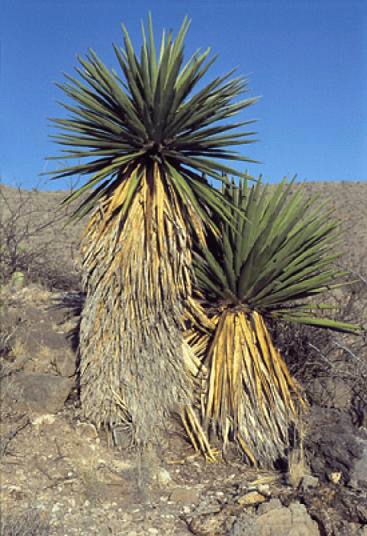
Yucca faxoniana, the Faxon yucca (also called Spanish dagger or Eve’s needle), is a bold, tree-like yucca of the Chihuahuan Desert, found in the United States across the Trans-Pecos region of far West Texas and adjacent southern New Mexico. With age it develops a thick, often single trunk topped by a dense, starburst crown of stiff, sharply pointed blue-green leaves, becoming one of the most striking and recognizable plants of the Big Bend landscape.
Faxon yucca is named for botanist Charles Edward Faxon, and it shares the common name “Spanish dagger” with several related yuccas because of its genuinely weapon-like leaf tips — rigid, needle-sharp, and capable of delivering a serious puncture if a gardener or hiker gets careless. Mature plants often retain a thick thatch of dried, straw-colored old leaves hanging down around the trunk, a distinctive “skirt” that protects the trunk and adds to the plant’s rugged desert character.
For gardeners across the Trans-Pecos, southern New Mexico and similar hot, dry, alkaline-soil regions, Faxon yucca is a dramatic, essentially maintenance-free architectural plant, equally at home as a solitary desert accent or massed with other Chihuahuan Desert natives in a xeriscape planting.
Identification
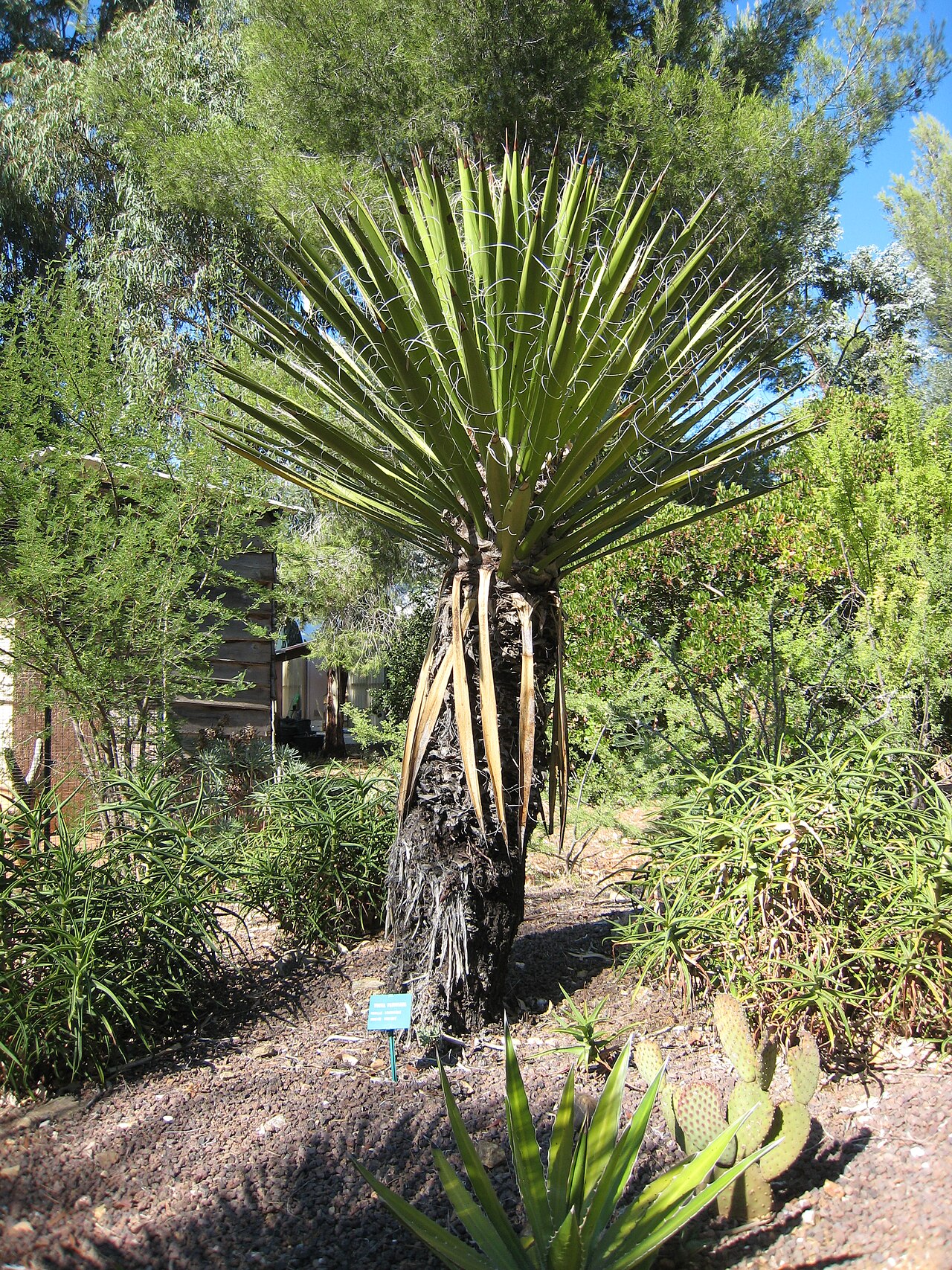
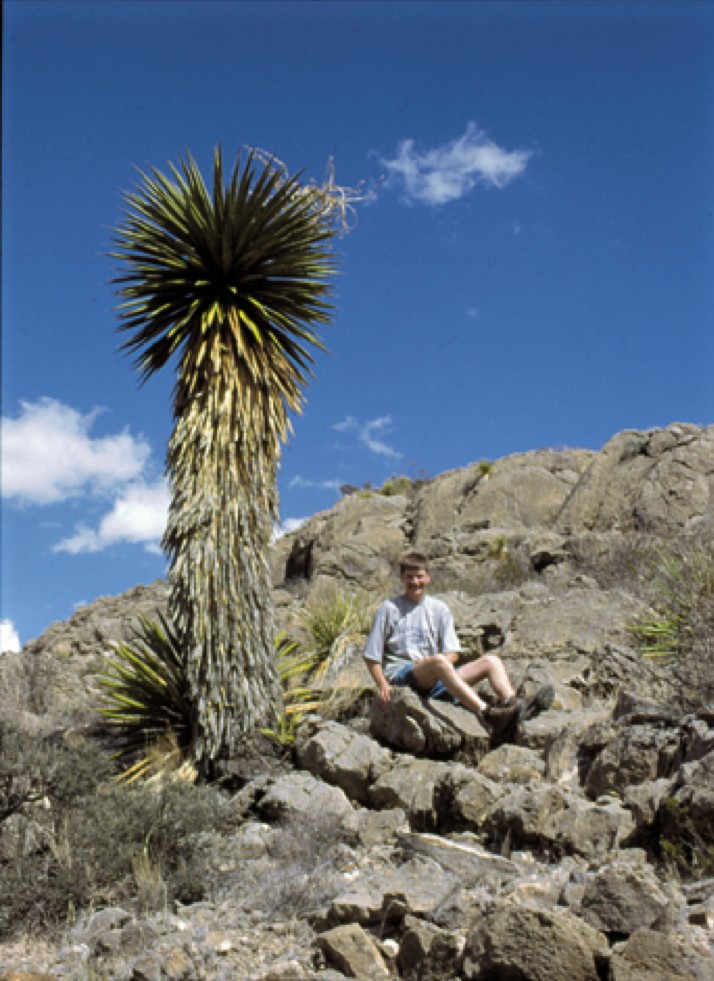
Faxon yucca grows slowly into a small evergreen tree, typically 10 to 20 feet tall at maturity, with one main trunk or occasionally two or three, each ending in a dense rosette of leaves. Old specimens can look almost palm-like from a distance, with a thick, textured trunk and a crown of radiating spiny foliage.
Trunk
The trunk is stout, often noticeably swollen or buttressed at the base, and either unbranched or forking into one or two upright branches with age. For years young plants remain trunkless, holding their leaf rosette close to the ground, before beginning visible trunk growth; the dried, reflexed old leaves often persist in a thick thatch down the trunk for a long time before eventually weathering away to reveal a textured gray-brown bark.
Leaves
Leaves are stiff, blue-green, bayonet-shaped, and typically 2 to 3 feet long, tapering to an extremely sharp, rigid point capable of puncturing skin or clothing easily. Leaf margins may bear fine, pale, curling fibers, though less conspicuously than in some related yuccas. The leaves radiate outward and slightly downward from the growing point in a dense, starburst crown.
Flowers & Fruit
In spring, usually March through May, Faxon yucca sends up a tall, dense flower spike from the center of the rosette, crowded with creamy white, bell-shaped flowers that are often tinged with purple or red at the base. The flowers are followed by thick, fleshy to semi-fleshy capsules, dark brown to nearly black at maturity, unlike the purely dry capsules of many other yuccas — a trait historically noted in ethnobotanical accounts of the plant’s edible potential.
Quick Facts
| Scientific Name | Yucca faxoniana |
| Family | Asparagaceae (subfamily Agavoideae) |
| Plant Type | Evergreen, single- or few-trunked tree-form yucca |
| Mature Height | 10–20 ft (taller on very old specimens) |
| Mature Spread | 4–8 ft crown |
| Growth Rate | Slow |
| Sun Exposure | Full Sun |
| Water Needs | Very low; excellent drought tolerance |
| Soil Type | Rocky, gravelly, well-drained desert soils |
| Soil pH | Alkaline |
| Bloom Time | March – May |
| Flower Color | Creamy white, sometimes purple-tinged at base |
| Fall Color | None (evergreen) |
| Fruit | Thick, fleshy-to-semi-fleshy capsule, dark brown to black |
| Deer Resistant | Yes; rigid, sharply pointed leaves |
| USDA Hardiness Zones | 7a – 9a |
Native Range
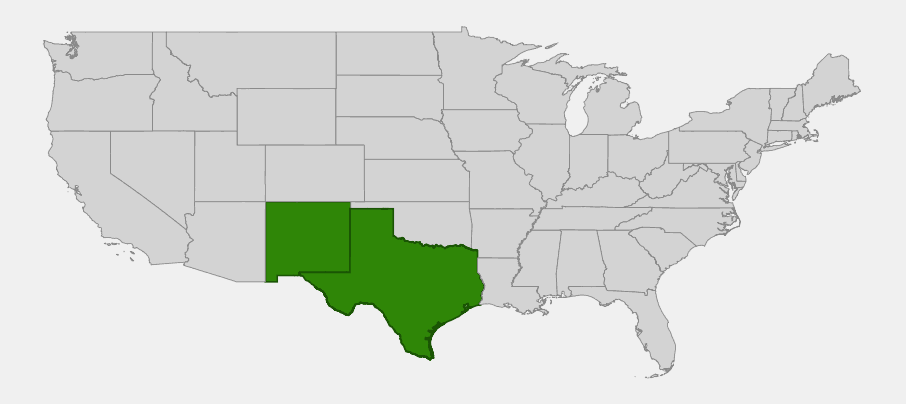
Faxon yucca is native to the Trans-Pecos region of far West Texas, including the Big Bend area and surrounding desert mountain ranges in Brewster, Presidio, Jeff Davis, Culberson and Hudspeth counties, and extends into adjacent southern New Mexico, generally in the state’s southern tier of counties. It is squarely a Chihuahuan Desert species, reaching the northern edge of that desert’s range in these two states.
Typical habitat is desert grassland, rocky slopes and limestone or igneous hillsides, generally at elevations between about 2,500 and 5,500 feet, often growing alongside other iconic Chihuahuan Desert plants such as lechuguilla, sotol and ocotillo. It is a familiar and locally common sight throughout much of Big Bend National Park and the surrounding Trans-Pecos backcountry.
Faxon yucca is not federally or state listed as threatened or endangered and remains a widespread, locally abundant species within its Chihuahuan Desert range, though as with all slow-growing desert yuccas, wild plants represent decades of growth and should never be dug or removed from their native habitat.
📋 Regional plant lists featuring Faxon Yucca: Arizona & New Mexico · South and West Texas
Growing & Care Guide
Faxon yucca is about as low-maintenance as landscape plants get once established, thriving on neglect in hot, dry, sunny sites where many other plants fail.
Light
Give it full sun; this is an open-desert plant that needs strong, unfiltered light to maintain its tight, compact rosette form and to flower well. In shade it becomes leggy and sparse and rarely blooms.
Soil & Water
Plant in rocky, gravelly or sandy soil with excellent drainage; soggy or heavy clay soil is the main thing that kills this species, through root and crown rot. Water occasionally to establish a young plant, then stop regular irrigation altogether — mature Faxon yucca wants essentially no supplemental water beyond natural rainfall in most of its range and can suffer in overly irrigated landscape settings.
Planting Tips
Site Faxon yucca well away from walkways, patios and anywhere people or pets regularly pass, given the genuinely dangerous sharp leaf tips. Plant in spring after the last frost so roots can establish before the following winter. Because growth is slow, choose the largest specimen your budget allows if you want a trunked, tree-like form sooner rather than waiting years for a young plant to develop one.
Pruning & Maintenance
Little pruning is needed or wanted; the dried, reflexed old leaves that thatch the trunk are a natural and attractive part of the plant’s character, though some gardeners choose to trim them away for a cleaner look, which also reduces fire fuel load near structures. Wear heavy leather gloves and eye protection when working near the plant because of the leaf tips. Faxon yucca has essentially no pest or disease problems in well-drained soil.
Propagation
Propagate from seed collected from ripe capsules in late summer and fall, or from offsets (basal shoots) that some plants produce, which can be separated and replanted. Seed germination can be slow and variable, consistent with the plant’s generally unhurried growth habit.
Landscape Uses
- Bold architectural accent for a Trans-Pecos or southern New Mexico xeriscape
- Chihuahuan Desert plant groupings with soaptree yucca and beaked yucca
- Rock gardens and gravel beds; see our guide to rock garden plants for dry sites
- Security plantings below windows, where the sharp leaves deter intruders
- Desert-style shade tree substitute in our broader list of trees for El Paso, Texas landscapes, and among plants similar to yucca
Wildlife & Ecological Value
As one of the larger, more structurally significant plants of the Chihuahuan Desert, Faxon yucca plays an outsized ecological role relative to its slow growth and modest footprint.
For Pollinators
Like other yuccas, Faxon yucca relies on a specialized pollination relationship with yucca moths, which lay their eggs in the flowers while simultaneously pollinating them, one of the classic examples of co-evolved plant-insect mutualism found in American deserts. The flowers also draw various native bees.
For Birds
The dense, spine-tipped leaf rosettes give small desert birds a well-defended nesting site safe from most predators, and the tall flower stalks provide an elevated perch during the spring bloom.
For Mammals
The fleshy fruits are eaten by a range of desert mammals, including rodents and larger wildlife, which help disperse the seeds. Historically, large mammals including pronghorn and mule deer have been documented browsing on yucca flower stalks and fruit in season.
Ecosystem Role
Faxon yucca’s substantial, long-lived structure provides rare vertical architecture in open desert grassland and scrub, offering shelter, nesting sites and microhabitat diversity that smaller, shorter-lived plants cannot match in the same setting.
Cultural & Historical Uses
Faxon yucca has a real history of indigenous use across its Trans-Pecos and Chihuahuan Desert range. Unlike yuccas with purely dry capsules, its thick, fleshy-leaning fruit was historically roasted or baked and eaten as a food source by Indigenous peoples of the region, a practice documented in ethnobotanical accounts of Big Bend and adjacent areas; this is a matter of historical record rather than a current foraging recommendation, since identification errors among yuccas and agaves can have serious consequences.
The plant’s tough, fibrous leaves were also used historically for cordage, basketry and other woven items, a common practice across many yucca and agave species in the arid Southwest, where fiber plants were an essential resource in a landscape with few other options.
Today, Faxon yucca is best known as a defining visual element of the Big Bend landscape and a popular, tough landscape plant across the Trans-Pecos and southern New Mexico, valued by gardeners for exactly the rugged, architectural character that made it useful to the region’s earlier inhabitants.
Frequently Asked Questions
Is Faxon yucca the same as Spanish dagger?
“Spanish dagger” is used as a common name for several different yuccas, including Faxon yucca and the related Yucca treculeana; always check the scientific name to be sure which species you are getting.
How long does it take Faxon yucca to develop a trunk?
Many years. Young plants typically grow as a trunkless rosette close to the ground for a long period before visible trunk growth begins, and mature, well-trunked specimens like those seen in Big Bend National Park represent decades of slow growth.
Can I eat the fruit of Faxon yucca?
Historically the fleshy fruit was roasted and eaten by Indigenous peoples of the region, but correct identification is essential, and this page describes that use as history rather than a foraging recommendation for home gardeners.
Is Faxon yucca dangerous to have in the yard?
The leaf tips are genuinely sharp and can cause a serious puncture wound, so plant it away from paths, play areas and low-traffic zones, and use caution and gloves when working near it.
Will Faxon yucca survive outside the desert Southwest?
It is hardy to around USDA zone 7a to 9a and tolerates cold reasonably well, but it needs excellent drainage and strong sun; wet winters or heavy, poorly drained soil outside its native dry climate are the biggest risk to its survival.

Looking for a nursery that carries Faxon Yucca?
Browse our native plant nursery directory: Texas · New Mexico