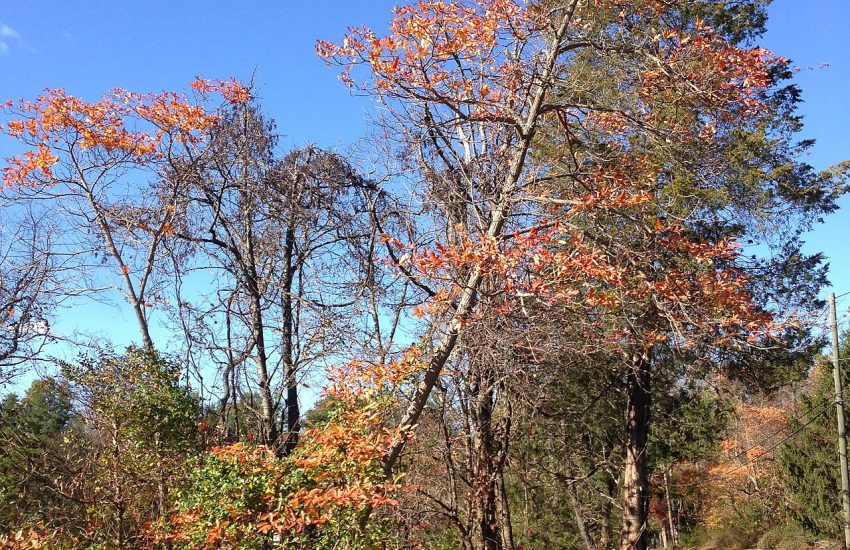
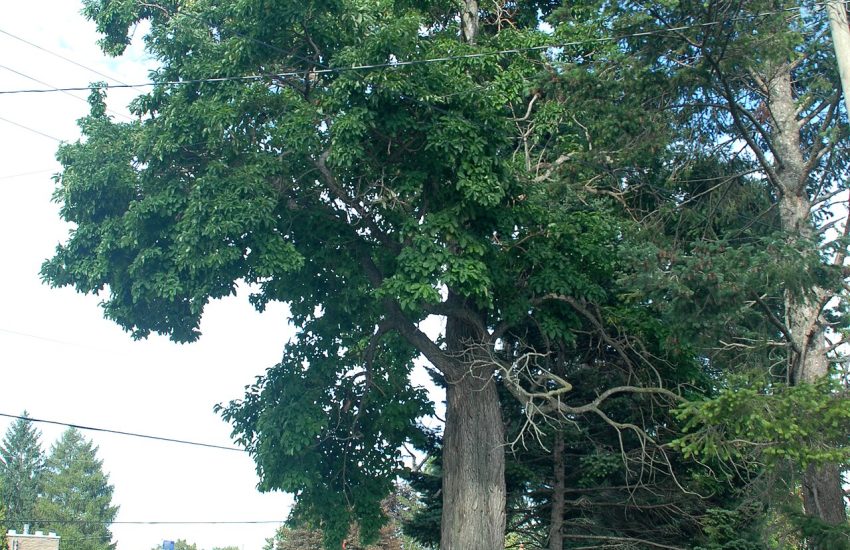
Yewleaf Willow (Salix taxifolia)
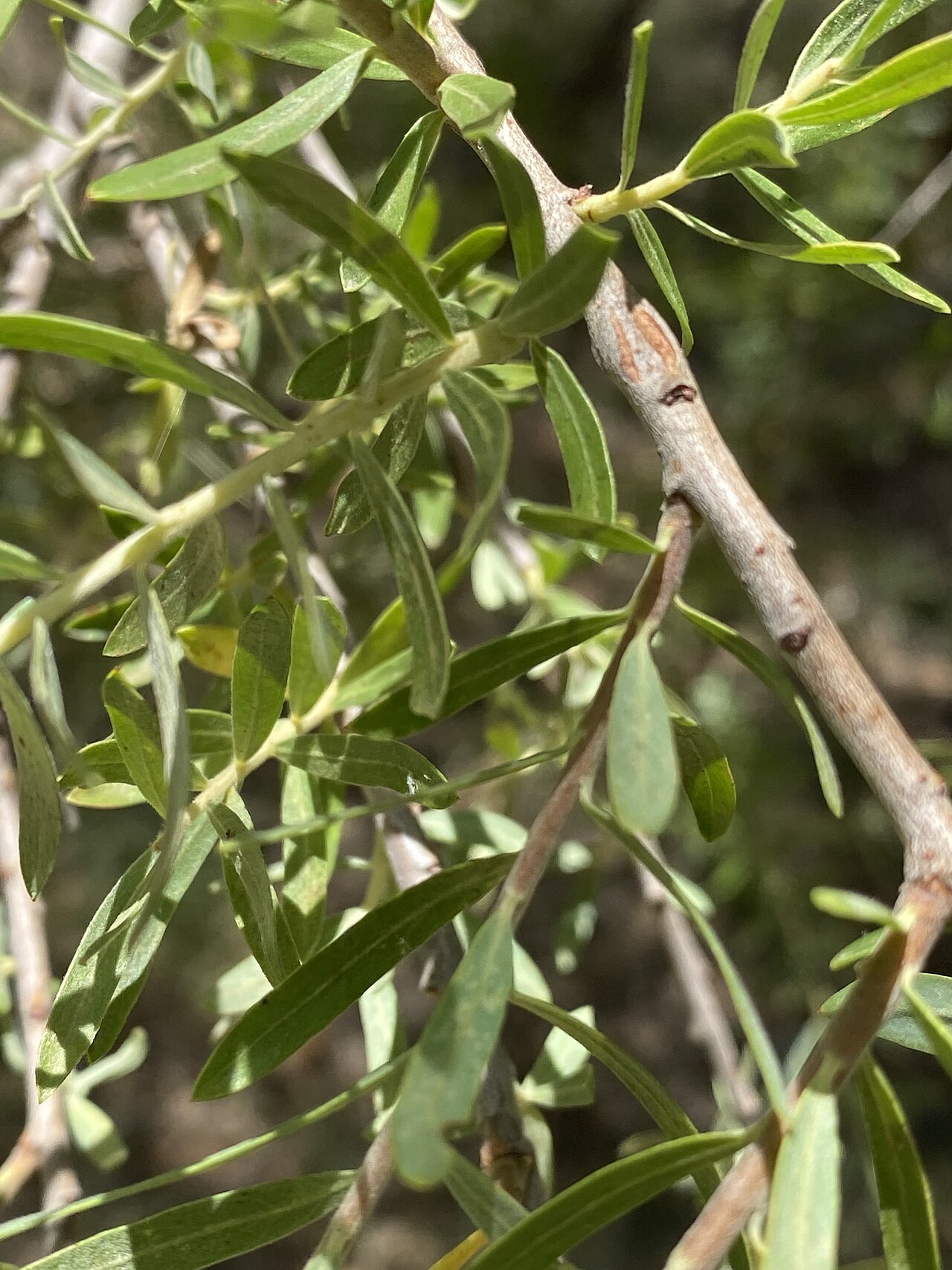
Salix taxifolia, the Yewleaf Willow, is an unusual small desert-adapted willow found along washes, foothill streams, and canyon bottoms of the Southwestern borderlands. It takes its common name from its narrow, needle-fine leaves, which closely resemble the foliage of a yew tree rather than the broad, lance-shaped leaves most people associate with willows. In fact, it carries the smallest leaves of any tree-sized willow native to North America, giving mature specimens a soft, feathery, almost conifer-like silhouette that is immediately distinctive along a desert streambank.
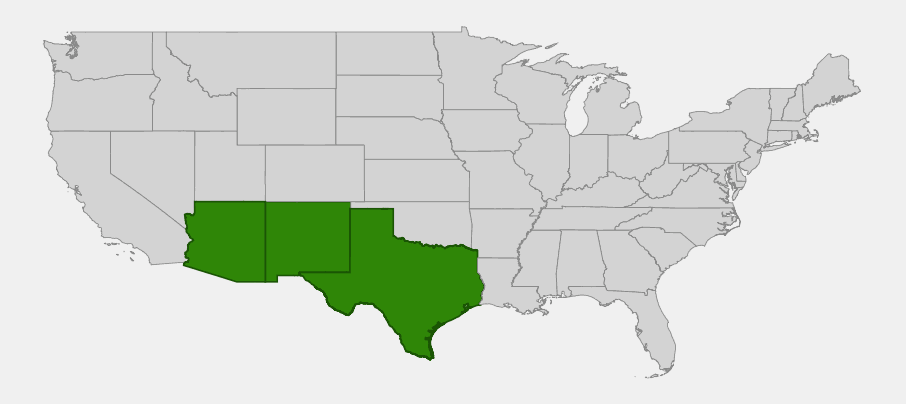
Though the great bulk of its range lies in Mexico and Central America — it is common from the Sierra Madre south through the highlands of Guatemala — scattered populations reach north of the border into the mountain foothills and river valleys of southeastern Arizona, southern New Mexico, and the Trans-Pecos of West Texas. In these borderland canyons it is a characteristic streamside tree of oak woodland and desert grassland transition zones, typically growing between about 3,500 and 6,000 feet elevation.
Yewleaf Willow’s fine texture, drought tolerance relative to other willows, and excellent streambank-stabilizing root system make it a valuable but underused choice for riparian restoration projects in the desert Southwest. Because few other willows combine this degree of heat and drought tolerance with genuine wetland value, it fills a unique niche in borderland watershed plantings.
Identification
Yewleaf Willow typically grows as a large, dense, rounded shrub or small to medium tree with numerous erect and spreading branches forming a full, bushy crown. Mature height is usually in the 15 to 30 foot range along favorable streamside sites, though it can remain shrubbier in drier, more exposed locations.
Bark & Stems
Young twigs are slender and often covered in fine silvery or grayish hairs, giving new growth a soft, silvery cast that contrasts with the more uniformly green foliage of most other native willows. Older bark becomes gray and furrowed, typical of mature willows.
Leaves
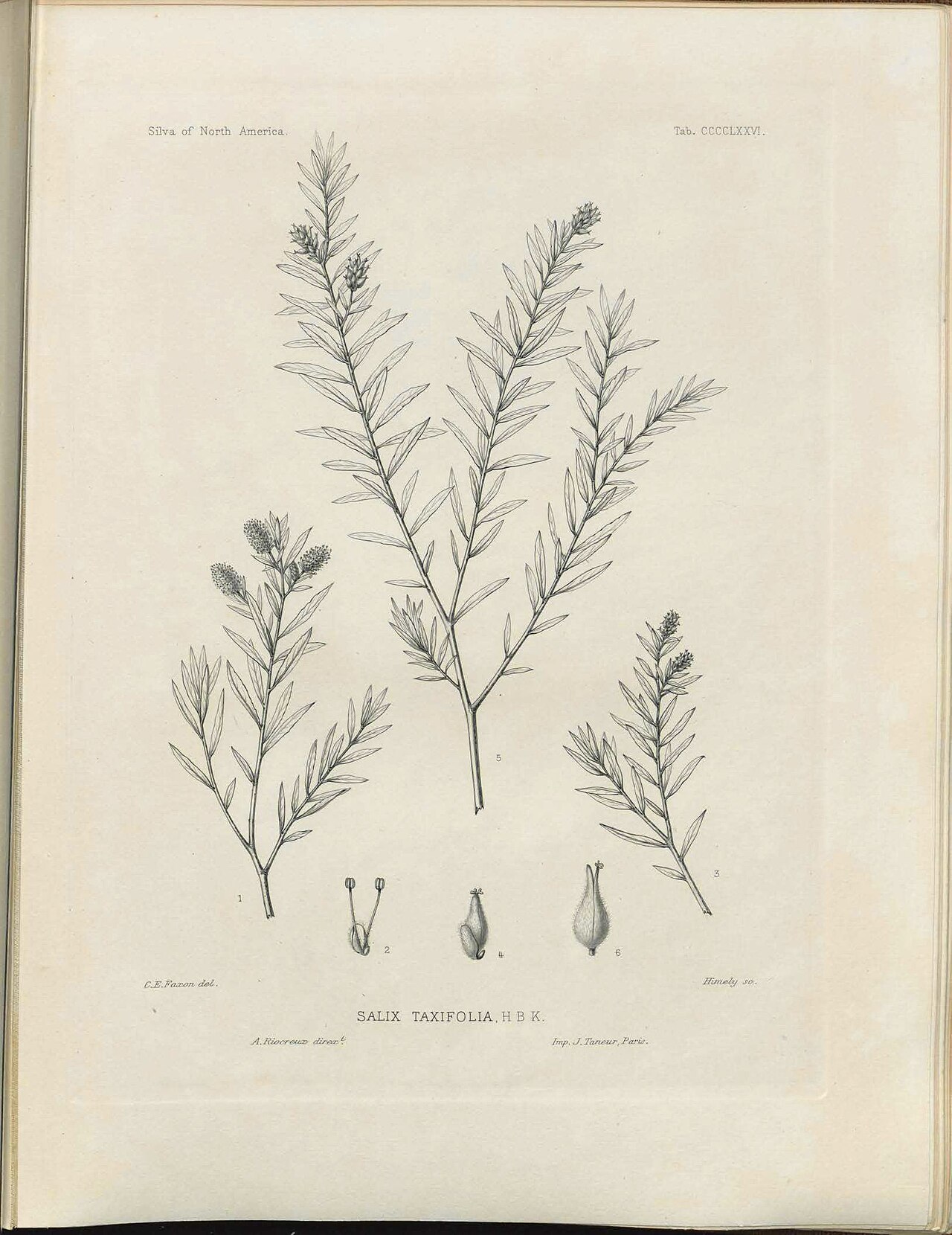
The leaves are the plant’s defining feature: very narrow, linear, and needlelike, rarely more than an inch or two long and only a few millimeters wide, with smooth or very finely toothed margins. They are often covered in fine silky hairs, giving the foliage a silvery-gray-green cast, especially on new growth. This needle-fine foliage — the smallest of any North American tree willow — is unmistakable once you know to look for it, and makes the species a poor match for anyone expecting the broader, more typical willow leaf shape.
Flowers
Like all willows, Yewleaf Willow is dioecious, with separate male and female plants, and flowers in short, inconspicuous catkins that are notably smaller than those of most other native willow species. Catkins open in spring (roughly March through June depending on elevation and local climate) alongside or just before the new leaves, in whitish clusters that are easy to overlook against the fine foliage.
Fruit & Seeds
Following pollination, female catkins mature into small capsules that split open to release tiny seeds attached to cottony hairs, dispersed by wind and water in the classic willow pattern. Like other willows, the seeds remain viable for only a short time and require consistently moist soil to germinate successfully.
Quick Facts
| Scientific Name | Salix taxifolia |
| Family | Salicaceae (Willow) |
| Plant Type | Deciduous Large Shrub / Small-Medium Tree |
| Mature Height | 15–30 ft |
| Growth Rate | Moderate to fast with reliable moisture |
| Sun Exposure | Full Sun |
| Water Needs | Medium to High; more drought-tolerant than most willows |
| Soil Type | Moist sandy or gravelly streambank soils |
| Bloom Time | March – June |
| Flower Color | White (small catkins) |
| Fall Color | Muted yellow-green |
| Fruit | Small capsule with cottony wind-dispersed seeds |
| Deer Resistant | No (valued browse for livestock and wildlife) |
| USDA Hardiness Zones | 8–10 |
Native Range
In the United States, Yewleaf Willow is found only in a narrow band of the Mexican border region: the mountain foothills and canyons of southeastern Arizona, the bootheel and southern river valleys of New Mexico, and the Trans-Pecos region of West Texas. These U.S. populations are the northern edge of a species whose main range lies much farther south, stretching through the Sierra Madre Occidental and Sierra Madre Oriental of Mexico and continuing into the highlands of Guatemala.
Within its U.S. range, it grows along permanent and intermittent streams in foothill canyons and mountain drainages, typically between about 3,500 and 6,000 feet elevation, often within oak woodland or desert grassland transition zones rather than the lowland desert floor itself. It shares this borderland canyon habitat with species such as Arizona sycamore, netleaf hackberry, and other riparian trees adapted to flashy, intermittent desert streams.
Because its core range is so far south, U.S. populations are naturally scattered and limited to the right combination of elevation, moisture, and the warm winters of the borderlands; it is not a species that will tolerate the hard freezes common farther north or at higher elevations.
📋 Regional plant lists featuring Yewleaf Willow: Arizona & New Mexico · South and West Texas
Growing & Care Guide
Yewleaf Willow occupies a useful niche for borderland gardeners and restoration practitioners: it offers true willow streambank value with noticeably better heat and drought tolerance than most of its relatives, as long as it has access to at least seasonal moisture.
Light
Requires full sun, consistent with its native streamside and canyon-bottom habitat where it grows in open, sun-exposed washes rather than shaded understory.
Soil & Water
Prefers sandy or gravelly soils with reliable access to groundwater or seasonal streamflow, as found along the washes and foothill drainages of its native range. While more drought-tolerant than many willows once established — a genuine asset in the arid Southwest — it is still fundamentally a riparian species and performs best with at least intermittent surface or near-surface water. It is not a xeriscape plant and should not be sited on a dry upland slope.
Planting Tips
Plant along stream corridors, arroyo margins, or constructed wetland edges within its native elevation range. Like most willows, it establishes readily from cuttings taken from dormant wood and pushed directly into moist soil — a useful, low-cost propagation method for restoration plantings. Avoid planting in frost pockets or at elevations significantly above its natural range, since it lacks the cold hardiness of higher-elevation native willows.
Pruning & Maintenance
Tolerates pruning well, in keeping with its vigorous willow growth habit. Remove dead or storm-damaged wood as needed; periodic coppicing can help maintain a denser, shrubbier form in restoration plantings designed for bank stabilization rather than shade.
Propagation
Easily propagated from hardwood cuttings taken during dormancy and planted directly into consistently moist soil, the standard and most reliable method for willows. Seed propagation is possible but less practical, since willow seed loses viability within days to weeks and requires immediate sowing into wet soil.
Landscape Uses
- Riparian and streambank restoration in the desert Southwest borderlands
- Erosion control along washes and arroyo margins
- Livestock browse in rangeland settings, where it is valued forage
- Fine-textured specimen planting for its distinctive needlelike, almost conifer-like foliage
- Wildlife corridor plantings connecting canyon drainages
Wildlife & Ecological Value
As a riparian willow, Yewleaf Willow supports the dense web of wildlife dependent on desert stream corridors, which are disproportionately important habitat in the arid Southwest.
For Pollinators & Insects
The spring catkins provide early-season nectar and pollen for native bees, and the foliage serves as a larval host plant for several butterfly species that use willows generally, including tiger swallowtail, viceroy, mourning cloak, and sylvan hairstreak. For more on designing a garden that supports butterflies through their full life cycle, see our guide to attracting butterflies to gardens.
For Birds
Dense willow thickets along desert streams are critical nesting and foraging habitat for riparian songbirds in the arid Southwest, where streamside vegetation is scarce and disproportionately valuable. Insect-rich willow canopy supports flycatchers, warblers, and vireos that depend on these narrow green corridors through otherwise dry landscapes.
For Mammals
Yewleaf Willow is recognized as good browse for livestock, and wild ungulates such as deer browse the foliage as well. Beavers and other wildlife in the rare perennial reaches of borderland streams also make use of willow stands for food and building material where they occur.
Ecosystem Role
Like other willows, its dense, fibrous root system stabilizes stream banks and arroyo margins, reducing erosion during the flash floods characteristic of desert watersheds, while its canopy shades and cools water for aquatic life. In the water-scarce Southwest borderlands, riparian corridors like those this species helps anchor support a disproportionate share of regional biodiversity.
Cultural & Historical Uses
As with many native willows, the flexible young branches of Yewleaf Willow have traditionally been useful for basketry and small woven items among peoples of its range in Mexico and the Southwest borderlands, taking advantage of the same pliable, fibrous wood valued across the willow family. Historically, livestock operations in the borderlands have also recognized the species as valuable browse, a practical use that continues today on working rangeland within its native range.
No significant medicinal tradition specific to this species is documented in available sources, though willows in general have a long history of use across cultures for their bark, which contains salicin, a compound chemically related to aspirin. This historical association should be understood as background, not as guidance for self-treatment.
Today the species’ primary significance is ecological and practical: it remains an underused but increasingly recognized tool for riparian restoration and streambank stabilization work across its limited U.S. range. Compare its fine, willow-specific wood with the properties of more commonly burned species in our guide to whether willow trees make good firewood.
Frequently Asked Questions
Why does this willow have such unusual leaves?
Its narrow, needlelike leaves are an adaptation shared with several other dryland Salix species, likely helping reduce water loss in its hot, sun-exposed canyon habitat compared to the broader leaves of wetter-climate willows. The resemblance to yew foliage is where its common name comes from, even though the two plants are unrelated.
Is Yewleaf Willow drought tolerant?
It is more drought tolerant than most willows, a real advantage in the arid Southwest, but it still needs access to at least seasonal moisture from a stream, wash, or shallow water table. It is not suited to a true dry xeriscape planting.
Can I grow this outside Arizona, New Mexico, or Texas?
Its U.S. range reflects real cold-hardiness limits (roughly USDA zones 8–10), so it is not a good candidate for colder climates. Within those warmer zones, it is best suited to sites that mimic its native canyon-stream habitat.
Is it good for erosion control?
Yes — like other willows, its dense root system is excellent at stabilizing streambanks and arroyo margins, making it a valuable, if underused, choice for riparian restoration within its native Southwestern border region. For broader context on native plants suited to the regional climate, see our roundup of drought-tolerant plants for Arizona landscapes.
Does it support butterflies?
Yes — like many native willows, its leaves are a larval host plant for several butterfly species, including tiger swallowtail, viceroy, mourning cloak, and sylvan hairstreak, making it a valuable addition to a Southwestern wildlife or pollinator garden sited near reliable moisture.

Looking for a nursery that carries Yewleaf Willow?
Browse our native plant nursery directory: Arizona · New Mexico · Texas