Haleakala Sandalwood / ʻIliahi (Santalum haleakalae)
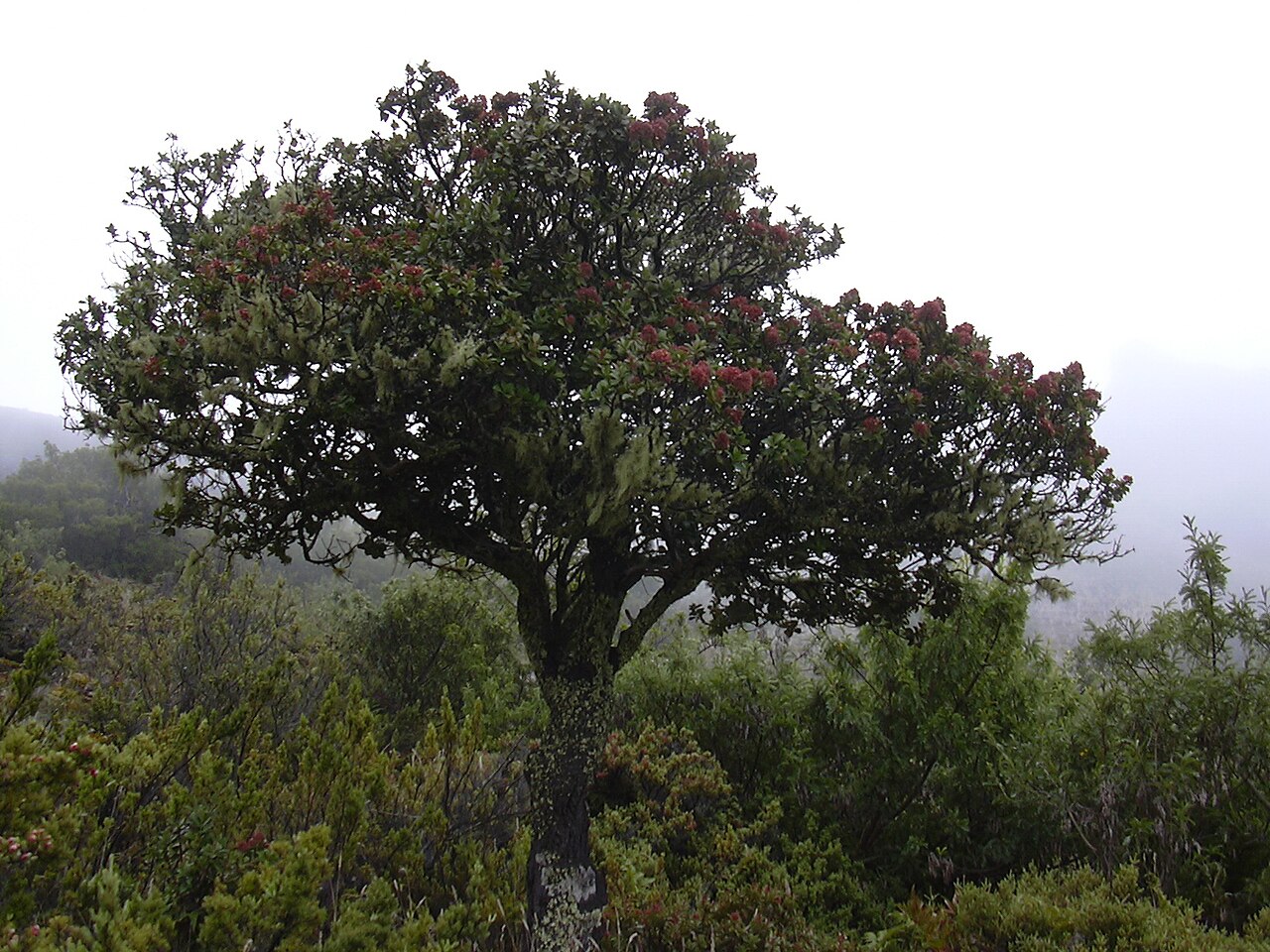
Santalum haleakalae, called Haleakala Sandalwood or ʻIliahi in Hawaiian, is one of four native Hawaiian sandalwoods and the only one adapted to the cold, windswept subalpine shrublands of upper Haleakalā. It is a close botanical relative of the aromatic sandalwoods prized worldwide, and it carries the same weight of history: Hawaiian sandalwoods were nearly logged to commercial extinction in the early 1800s during the islands’ brutal sandalwood trade.
This species occurs in two recognized varieties. Variety haleakalae grows only on the upper slopes of Haleakalā itself, in subalpine shrubland and mesic forest from about 6,200 to nearly 9,000 feet, where it forms a gnarled, lichen-draped small tree with purple-tinged, glaucous leaves. Variety lanaiense occurs at lower elevations on Lānaʻi, Molokaʻi, and elsewhere on Maui, in wetter shrubland, and is thought to parasitize the roots of koa (Acacia koa) and other native trees for part of its nutrition, as sandalwoods characteristically do.
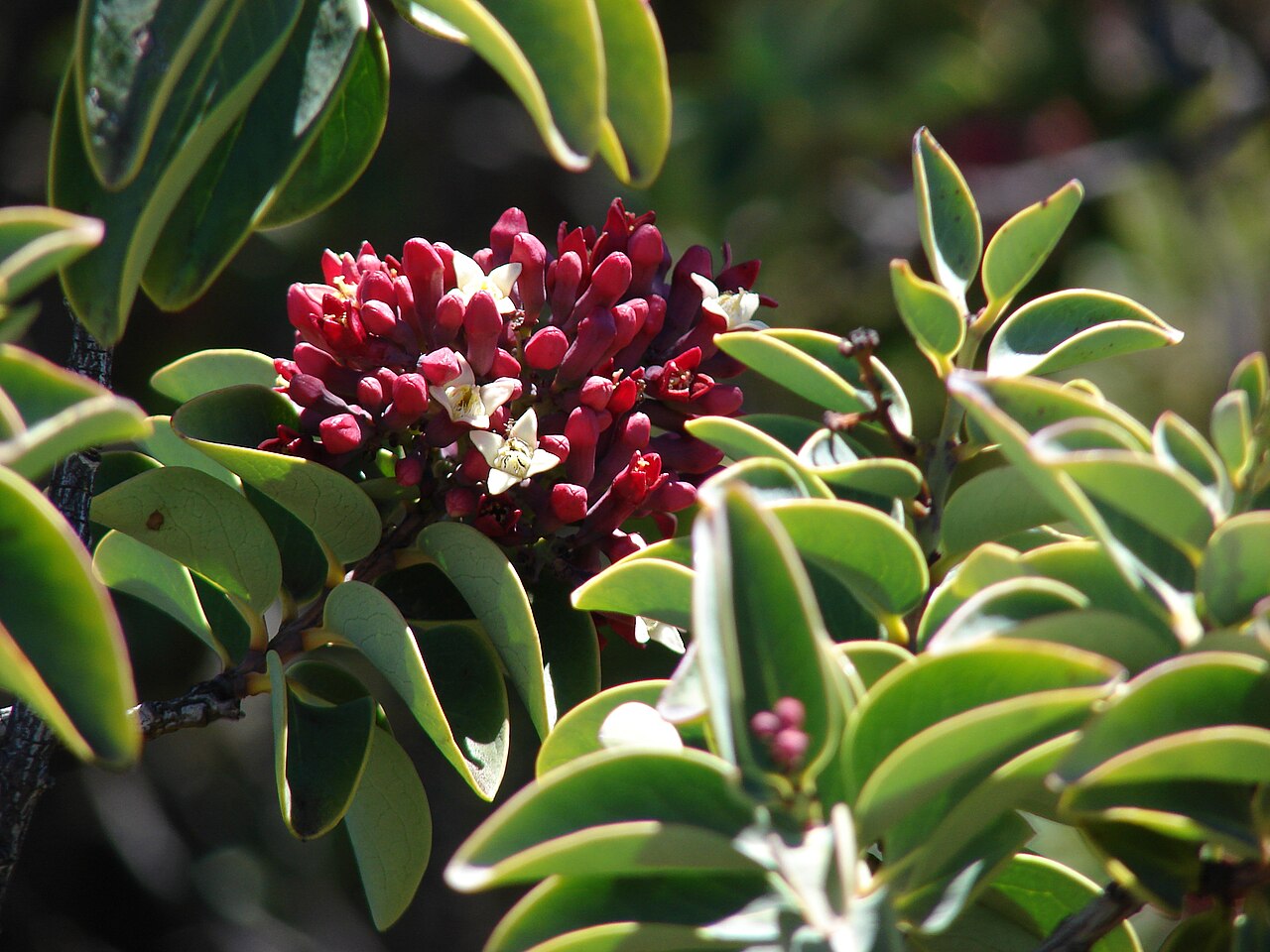
For Maui, Molokaʻi, and Lānaʻi gardeners at higher, cooler elevations, Haleakala Sandalwood is a striking and ecologically meaningful native to grow, with clusters of deep red buds opening to cream-white flowers that draw native Hawaiian honeycreepers. It is not a fast or easy plant for lowland gardens, but where conditions suit it, few native trees carry as much natural and cultural significance.
Identification
Haleakala Sandalwood grows as a shrub or small tree, with variety haleakalae adapted to cold, exposed, high-elevation conditions and typically staying compact and wind-sculpted, while variety lanaiense in milder, wetter habitat can grow somewhat larger and more upright.
Leaves
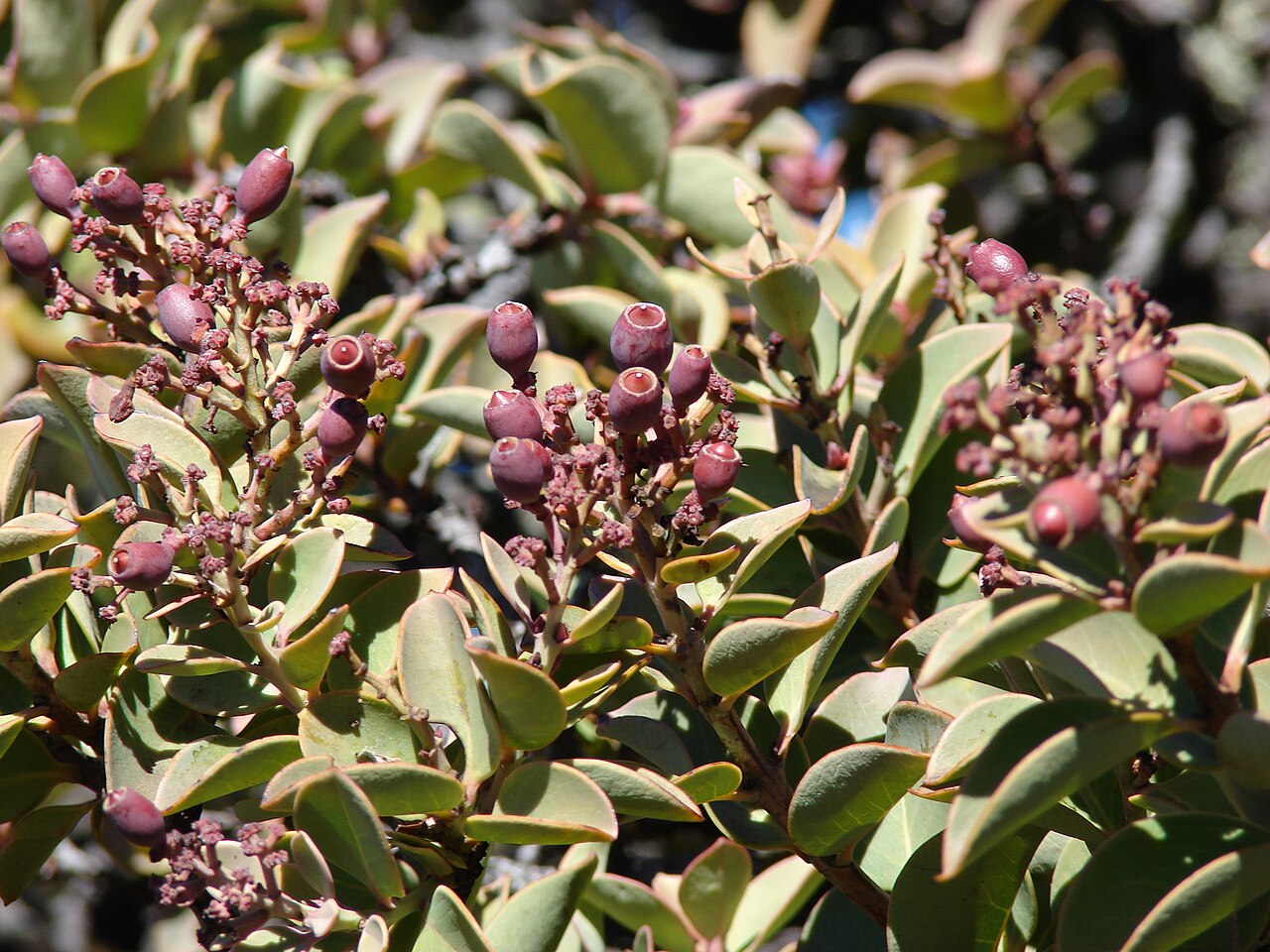
Leaves are green, ovate, and often glaucous (waxy, blue-gray toned), frequently tinged purple, especially in variety haleakalae. New growth (“liko”) can show striking red coloration, particularly noticeable after rain.
Flowers
Flowers are borne in tight compound clusters (cymes), emerging deep red to maroon in bud and opening to cream or white. The contrast between the dark red buds and pale open flowers is one of the species’ most attractive identification features.
Fruit
The fruit is a small, rounded drupe that ripens from reddish to black.
Quick Facts
| Scientific Name | Santalum haleakalae |
| Family | Santalaceae (Sandalwood) |
| Plant Type | Shrub / Small Tree (Root Hemiparasite) |
| Mature Height | 6–20 ft (varies by elevation and variety) |
| Growth Rate | Slow |
| Sun Exposure | Full Sun |
| Water Needs | Low to Moderate |
| Soil Type | Well-drained volcanic soils; needs a compatible host plant nearby |
| Flower Color | Deep red buds opening cream to white |
| Conservation Status | IUCN Endangered |
| USDA Hardiness Zones | 9b–11 |
Native Range
Haleakala Sandalwood is endemic to Maui, Lānaʻi, and Molokaʻi. Variety haleakalae is restricted to the upper slopes of Haleakalā on Maui, in subalpine shrubland and dry to mesic montane forest from about 6,200 to nearly 9,000 feet in elevation. Variety lanaiense occurs at much lower elevations, roughly 1,300 to 2,100 feet, in wetter shrubland and mesic forest on Lānaʻi, Molokaʻi, and other parts of Maui.
Like other sandalwoods, this species is a root hemiparasite, tapping into the root systems of neighboring plants for part of its water and nutrients while still photosynthesizing on its own. Variety lanaiense is believed to parasitize koa (Acacia koa) among other native trees, which is one reason sandalwoods are difficult to establish without an appropriate host nearby.
In its native habitat, variety lanaiense grows with associates including ‘ōhi’a (Metrosideros polymorpha), ‘a’ali’i (Dodonaea viscosa), and lama (Diospyros sandwicensis), while higher-elevation variety haleakalae grows in more open subalpine shrubland. Our guide to flowering trees of Hawaiʻi includes several other species sharing this high-elevation habitat.
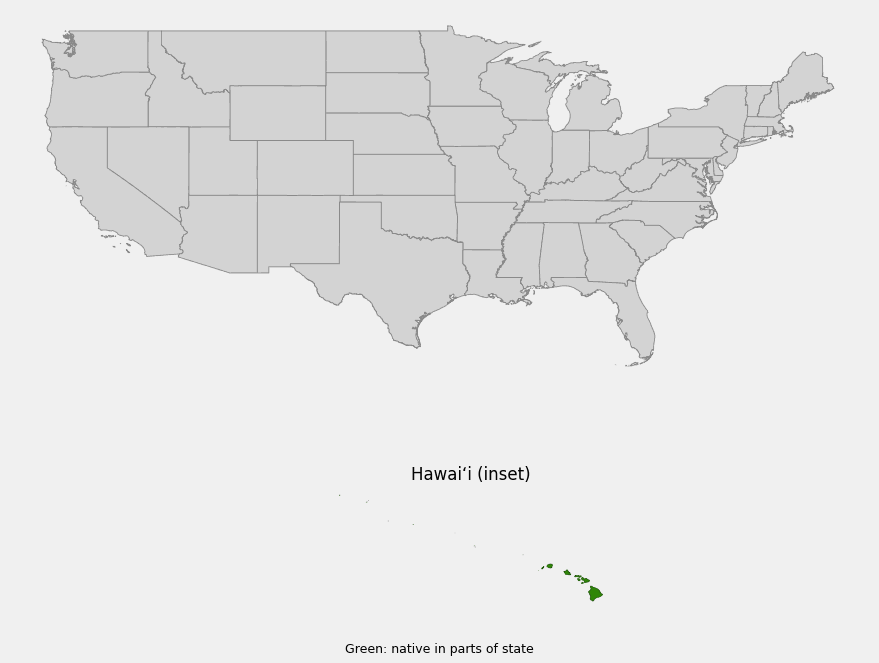
📋 Regional plant lists featuring Haleakala Sandalwood: Hawaii
Growing & Care Guide
Haleakala Sandalwood is a slow-growing, specialist native best suited to higher-elevation gardens on Maui, Molokaʻi, and Lānaʻi that can approximate its natural subalpine or upland shrubland conditions.
Light
Give it full sun, matching the open, exposed conditions of its native subalpine and shrubland habitat.
Soil & Water
Well-drained volcanic soils are essential. Water regularly while young to help the hemiparasitic root system establish connections with a host plant, then reduce watering as the tree matures; established plants tolerate moderate drought.
Planting Tips
Because Haleakala Sandalwood is a root hemiparasite, it should be planted near a compatible host plant, such as koa or another native tree or shrub, to grow and flower well. Specialty native-plant nurseries familiar with sandalwood propagation can advise on suitable host species for your site and elevation.
Pruning & Maintenance
Minimal pruning is needed; remove dead or storm-damaged wood as it appears. At higher elevations, deer browsing has historically damaged cultivated and wild sandalwood populations, so young plants may need protection until well established.
Landscape & Conservation Uses
- High-elevation native gardens on Maui, Molokaʻi, and Lānaʻi
- Conservation and restoration plantings supporting recovery of an Endangered species
- Wildlife gardens, since the flowers draw native Hawaiian honeycreepers
- Specimen planting for its distinctive red-budded, cream-flowered display
Wildlife & Ecological Value
Haleakala Sandalwood’s flowers provide nectar for native Hawaiian honeycreepers, including the Maui ʻamakihi, which depend on a shrinking number of native nectar sources at higher elevations. As a hemiparasite, the species also plays a subtler ecological role, interacting directly with the root systems of its host plants in ways still being studied.
Ecosystem Role
As one of the few native trees adapted to Haleakalā’s harsh subalpine shrubland, variety haleakalae helps anchor a specialized high-elevation plant community found almost nowhere else on Earth. Conservation of this habitat benefits not only the sandalwood itself but the honeycreepers and other native species that rely on it, a theme explored further in our article on the benefits of planting native trees.
Cultural & Historical Uses
Native Hawaiians used ʻiliahi, including this and other native sandalwood species, for a range of purposes: as a perfume for kapa (bark cloth), in crafting musical instruments, and in traditional medicine. The wood’s rich fragrance made it deeply significant culturally, long before it became a target of international trade.
In the early 19th century, after Hawaiian chiefs learned of sandalwood’s enormous value in the China trade, commoners were conscripted in large numbers to harvest it from the forests, often at the expense of growing food crops, contributing to famine and widespread suffering. So much sandalwood was shipped from Hawaiʻi that the islands became known in parts of China as “Tan Heung Shan,” the Sandalwood Mountains. The trade collapsed by the mid-19th century as accessible sandalwood stocks were exhausted, and while many ʻiliahi populations have since recovered, large old-growth trees remain rare across the islands — a sobering piece of history behind every surviving Hawaiian sandalwood today.
Frequently Asked Questions
Is Haleakala Sandalwood fragrant like commercial sandalwood?
Hawaiian sandalwoods, including this species, do produce aromatic heartwood, which is part of why they were so heavily harvested historically. However, this guide does not recommend harvesting wood from cultivated or wild plants, since all Hawaiian sandalwood species warrant conservation-minded stewardship.
Why does Haleakala Sandalwood need another plant nearby?
Like other sandalwoods, it is a root hemiparasite, meaning it taps into a neighboring host plant’s roots for part of its water and nutrients. Koa is a known host for variety lanaiense, and nursery growers can recommend suitable hosts for cultivation.
What’s the difference between the two varieties of Santalum haleakalae?
Variety haleakalae is restricted to high-elevation subalpine shrubland on Haleakalā itself, while variety lanaiense occurs at much lower elevations in wetter shrubland on Lānaʻi, Molokaʻi, and other parts of Maui.
Is Haleakala Sandalwood endangered?
Yes, it is assessed as Endangered by the IUCN, reflecting ongoing threats from habitat degradation, browsing animals, and its historically reduced population following the 19th-century sandalwood trade.
Can I grow Haleakala Sandalwood outside Hawaiʻi’s higher elevations?
It is best suited to the cooler, higher-elevation conditions of Maui, Molokaʻi, and Lānaʻi that mimic its native habitat; it is not a typical choice for lowland coastal gardens.

Looking for a nursery that carries Haleakala Sandalwood?
Browse our native plant nursery directory: Hawaii