Loulu Hiwa (Pritchardia martii)
Pritchardia martii, known in Hawaiian as Loulu Hiwa (or simply Loulu), is a native Hawaiian fan palm endemic to the island of Oʻahu, where it grows nearly the entire length of the Koʻolau Mountain Range. It holds a special place in Hawaiian botany as the first native Hawaiian Pritchardia to be formally given a scientific name, and it remains by far the most abundant of the islands’ 23 endemic loulu species, with an estimated 10,000 plants surviving in the wild.
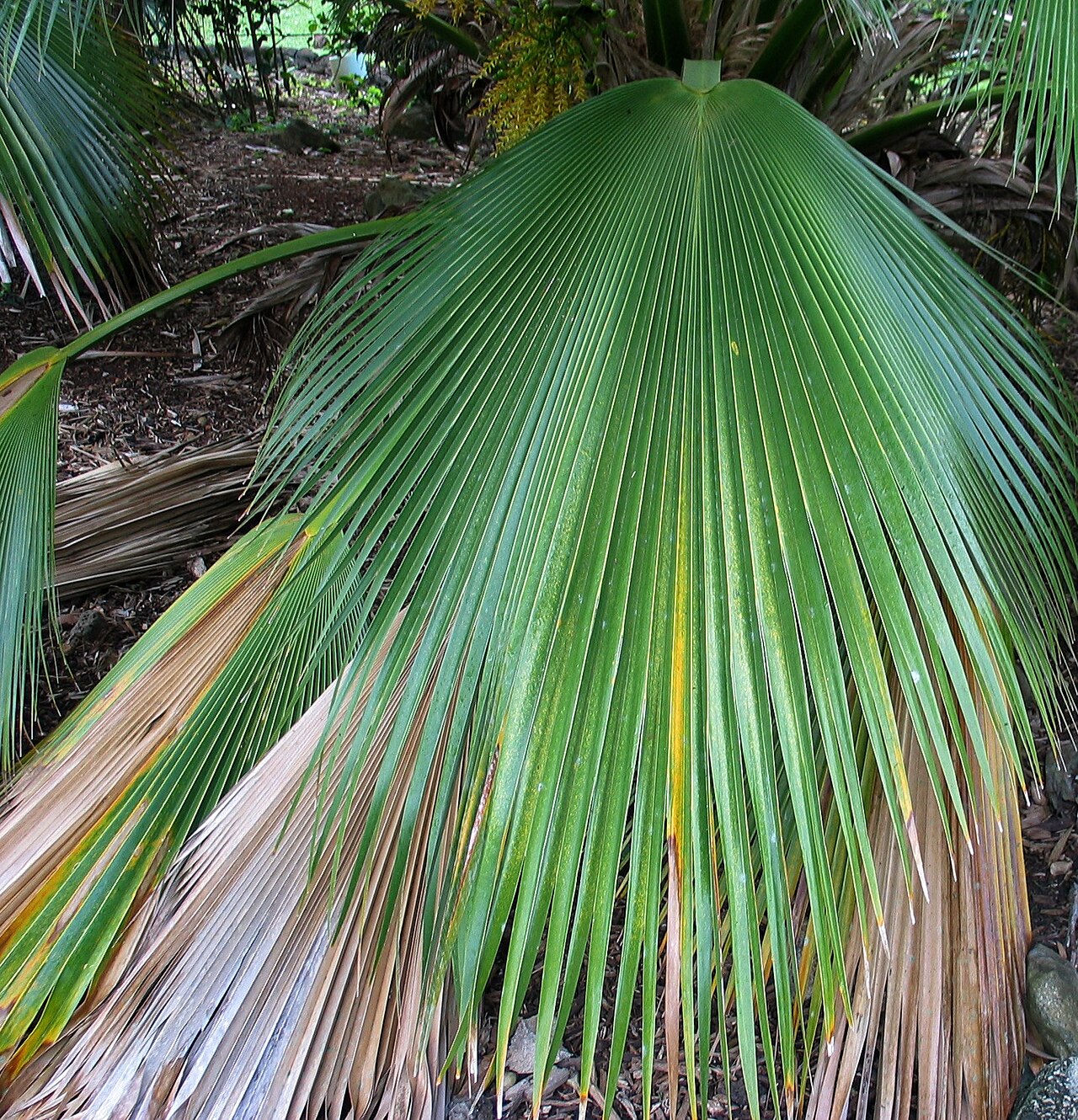
Loulu Hiwa is a true fan palm, with a crown of 20 to 30 glossy green blades that can appear silvery to bronze on their undersides depending on the plant’s age. Its growth habit shifts dramatically with the environment: on the cold, windswept upper ridges of the Koʻolau Range it stays short and compact, while in sheltered, well-watered ravines it can tower more than 30 feet tall with fronds stretching nearly 8 feet across. Plants are slow-growing but long-lived, surviving for decades or more.
Despite being the most common native Hawaiian loulu, Loulu Hiwa is rarely available commercially, since its fruit — the largest of any Hawaiian Pritchardia — takes a long time to mature and is frequently eaten by rats before it can be collected. For Oʻahu gardeners patient enough to grow it, Loulu Hiwa is a genuinely rewarding native palm, though it now faces a serious new threat from the invasive coconut rhinoceros beetle that growers need to understand before planting.
Identification
Loulu Hiwa is highly variable in size depending on growing conditions: compact and wind-sculpted on exposed upper mountain slopes, or a tall, graceful palm reaching more than 30 feet in sheltered, moist ravines, with a trunk up to about a foot in diameter and fronds spreading nearly 8 feet. Adult trees have a smooth gray trunk.
Fronds
The crown holds 20 to 30 ascending, spreading, and slightly drooping fan-shaped blades, roughly equal in length to their stalks, with stiff tips along the outer edge. The upper surface is glossy green, while the underside is often covered in silvery to bronze scales, though the visibility of these scales varies with the palm’s age and origin.
Flowers
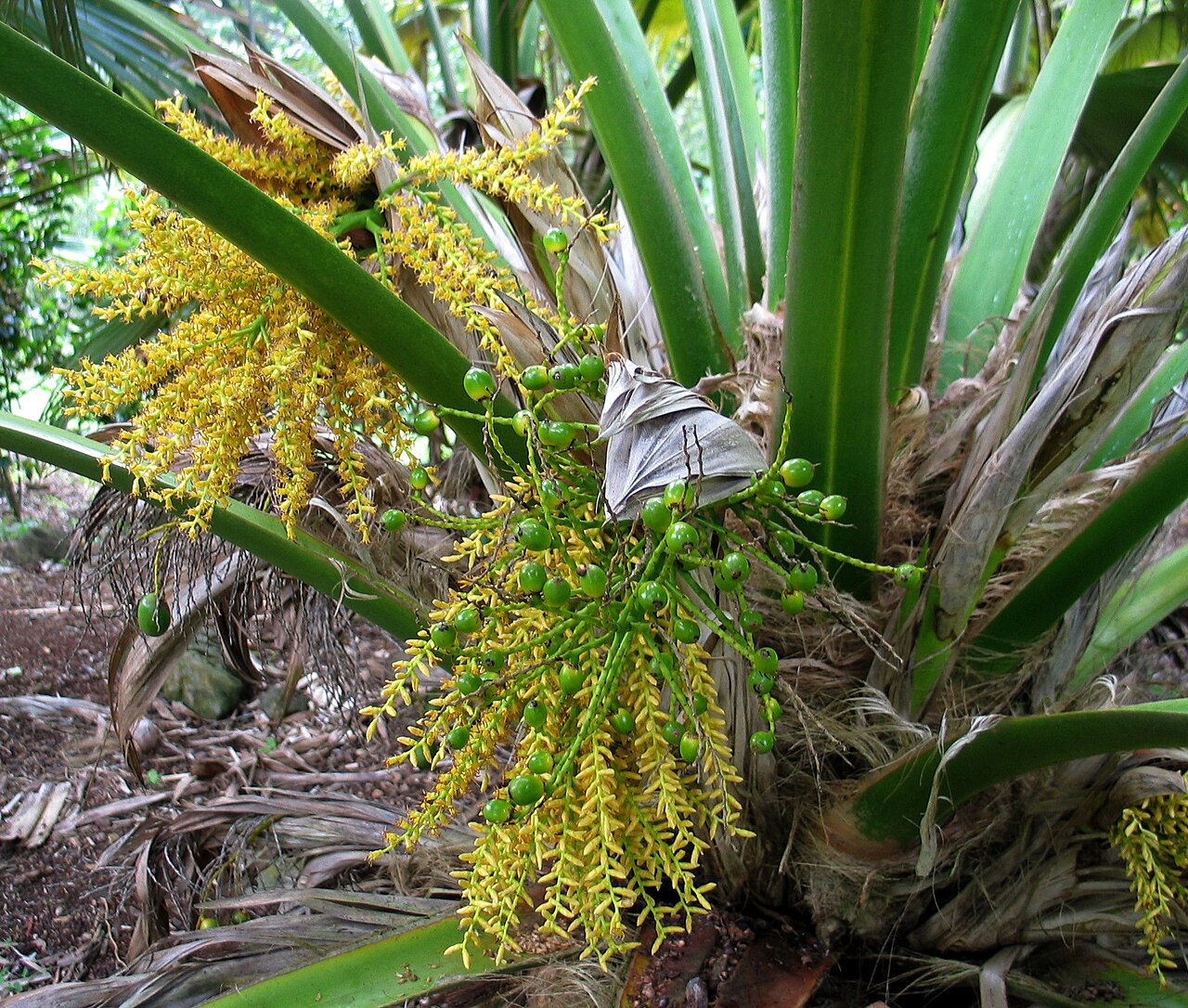
Inflorescences carry up to four branches bearing dozens of small, tubular, orange-yellow, bisexual flowers. Wild Loulu Hiwa populations often show an irregular bloom period, with neighboring plants at very different flowering and fruiting stages at the same time.
Fruit
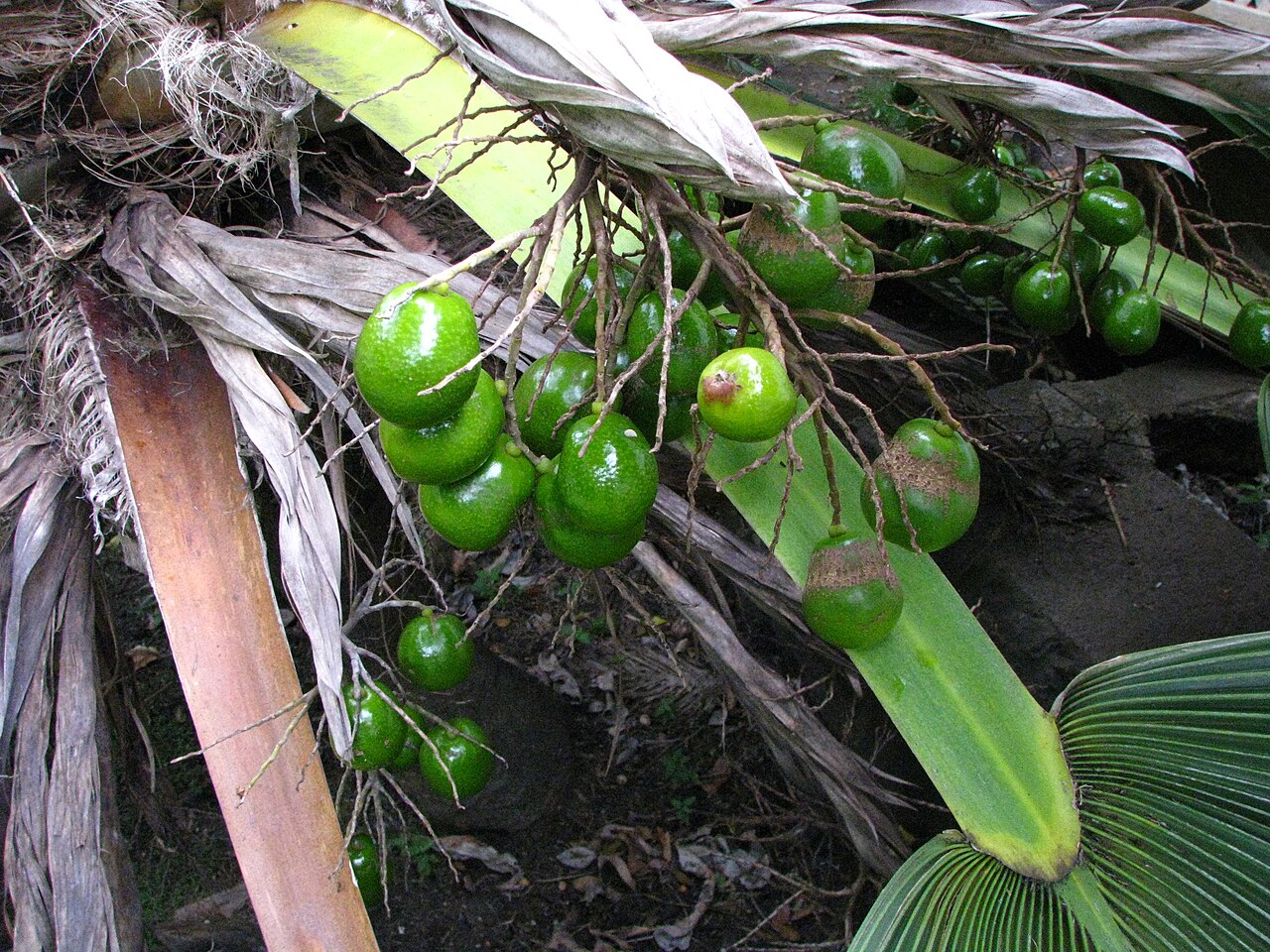
The fruit is shiny, single-seeded, elliptical to spherical, and enlarges up to 2 inches long — the largest fruit of any Hawaiian loulu species — ripening to black.
Quick Facts
| Scientific Name | Pritchardia martii |
| Family | Arecaceae (Palm) |
| Plant Type | Fan Palm |
| Mature Height | 10–30+ ft (varies widely by site) |
| Growth Rate | Slow (about 1 ft/year or less) |
| Sun Exposure | Full Sun (tolerates light shade when young) |
| Water Needs | Moderate to High; roots prefer constant moisture |
| Soil Type | Well-drained cinder, clay, or organic soils |
| Flower Color | Small, tubular, orange-yellow |
| Conservation Status | USFWS Species of Concern |
| USDA Hardiness Zones | 10b–11 |
Native Range
Loulu Hiwa is endemic to the island of Oʻahu, where it grows along nearly the entire length of the Koʻolau Mountain Range, from about 1,000 to 2,700 feet in elevation. A small relic population was also discovered in the 1980s in the southern Waiʻanae Mountain Range near Palikea — fossil evidence suggests loulu once grew in the lowland plains between the two ranges, which may explain this now-disjunct distribution.
The species occupies a wide range of habitats within its range, from mesic to wet low scrubby forest and exposed grassy slopes to steep rocky cliffs and sheltered, well-watered ravines, where the tallest individuals are found. With roughly 10,000 wild plants, Loulu Hiwa is the most abundant native Hawaiian Pritchardia, though the USFWS lists it as a Species of Concern due to habitat degradation and pressure from introduced animals.
A close relative, Loulu Lelo (Pritchardia hillebrandii), is endemic to the island of Molokaʻi, and a smaller, faster-growing species, Loulu (Pritchardia remota), is native to the remote island of Nīhoa. For a wider look at the islands’ native canopy, see our guide to canopy trees of Hawaiʻi.
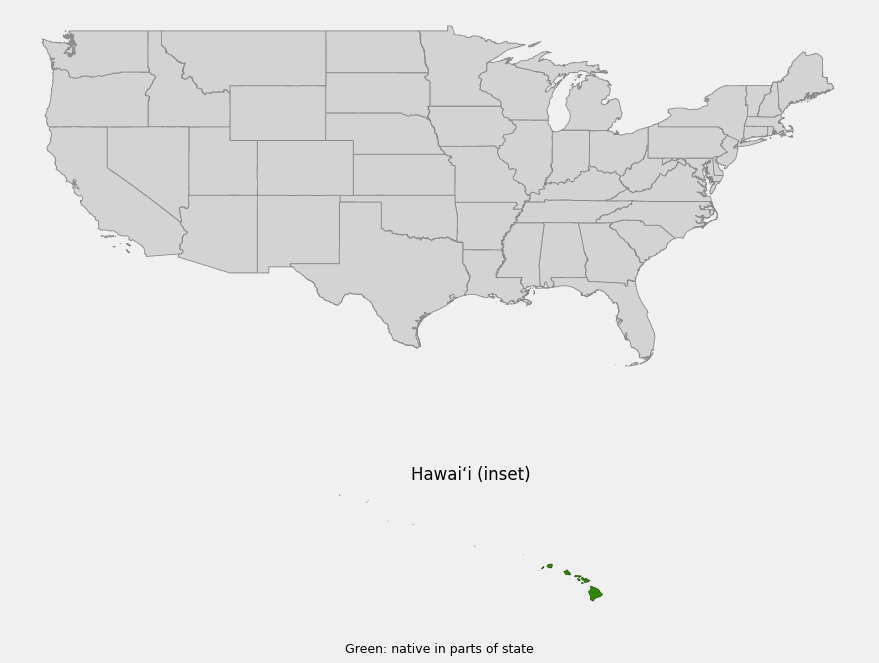
📋 Regional plant lists featuring Loulu Hiwa: Hawaii
Growing & Care Guide
Loulu Hiwa rewards patient growers with a slow but steady-growing native palm, though prospective growers on Oʻahu and Kauaʻi should read about the coconut rhinoceros beetle threat below before planting.
Light
Give Loulu Hiwa full sun for most of the day for best growth. Young plants tolerate some shade, mirroring how seedlings establish under forest canopy in the wild, but avoid constant heavy shade, which causes very slow growth.
Soil & Water
Loulu Hiwa prefers cooler temperatures and consistently moist soil or growing media, reflecting its native habitat at higher, wetter elevations compared to its lowland-adapted relative Pritchardia remota. It has been successfully grown in cinder, clay, and organic-dominant soils, provided they drain well; avoid letting the root zone dry out completely.
Planting Tips
Because this species grows slowly — often a foot or less per year — plan for a long-term landscape investment. Use a complete palm fertilizer containing magnesium and potassium, since deficiencies in these minerals are common and show up as yellowing or streaking fronds.
Pruning & Maintenance
Remove only dead fronds and spent fruit stalks, taking care never to damage the trunk or crown, since palms have a single growing point that cannot regenerate if destroyed. Avoid pruning live, healthy fronds, which can stress the palm and invite pests such as the banana moth.
Landscape Uses
- Specimen planting as an accent palm in native Hawaiian landscapes
- Grouped plantings, three or five trees spaced about ten feet apart, to create shaded gathering spaces
- Restoration plantings within its native Koʻolau Range habitat
- Conservation collections supporting genetic diversity of this Species of Concern
Wildlife & Ecological Value
Loulu Hiwa’s orange-yellow flowers are particularly attractive to bees, and its large black fruit historically fed native Hawaiian birds before introduced rats became a major seed predator. As the most abundant native loulu, it plays an outsized ecological role in the Koʻolau Range’s remaining native forest.
Ecosystem Role
Fossil pollen evidence shows that loulu palms were once far more widespread across lowland Hawaiʻi before human settlement, rats, and land clearing dramatically reduced their range. Today’s Koʻolau Range populations represent an important remnant of that once-extensive native palm forest, and the species’ local abundance makes it a valuable anchor for restoration planning, discussed further in our article on the benefits of planting native trees for wildlife.
Cultural & Historical Uses
Loulu leaves, called lau hāwane, were a primary traditional roofing material for thatching hale (houses) and were also used to build small temporary heiau associated with fishing. Trunks were fashioned into spears and used in construction for their uniform size and durability, while older trunks still bear notches once cut as handholds for climbing to harvest fruit and fronds. The fruit itself, hāwane or wāhane, was peeled and its coconut-like endosperm eaten, and seeds were likely strung into lei. Loulu were frequently planted around Hawaiian homesites, underscoring their everyday importance.
In modern times, loulu fronds continue to be used for traditional hats and fans, and seeds are still made into lei. Since 2013, the accidental introduction of the coconut rhinoceros beetle to Oʻahu has become the single greatest threat to cultivating Loulu Hiwa and Hawaiʻi’s other native palms, since the beetle bores into and kills the palm’s single irreplaceable growing tip. Growers on Oʻahu and Kauaʻi are advised to consult current coconut rhinoceros beetle response resources before planting, and in some cases to grow young palms in containers or at higher, wetter, more isolated sites until effective controls are developed.
Frequently Asked Questions
Where does Loulu Hiwa grow in the wild?
It is endemic to Oʻahu, found along nearly the full length of the Koʻolau Mountain Range plus a small relic population in the southern Waiʻanae Mountains, making it the most common of Hawaiʻi’s 23 native loulu species.
Why is Loulu Hiwa rarely sold at nurseries despite being so common in the wild?
Its fruit takes a long time to mature, and rats frequently eat it before it can be collected for propagation, which limits commercial seed and plant availability even though wild populations are relatively large.
Is Loulu Hiwa threatened by the coconut rhinoceros beetle?
Yes, significantly. This invasive beetle, established on Oʻahu since 2013 and spreading to other islands, bores into the palm’s single growing tip, and currently there is no fully reliable way to protect outdoor-grown palms from it.
How is Loulu Hiwa different from Pritchardia remota?
Loulu Hiwa grows more slowly, prefers cooler and consistently moist conditions, and produces the largest fruit of any Hawaiian loulu, while P. remota grows faster, tolerates warmer and drier sites, and has smaller fruit and hairless flower branches.
Were loulu leaves really used for umbrellas?
Not originally, but when Hawaiians first saw imported umbrellas after Western contact, they began calling them “loulu” because of the resemblance to the rain-shielding use of loulu fronds, a naming connection that persists in Hawaiian today.

Looking for a nursery that carries Loulu Hiwa?
Browse our native plant nursery directory: Hawaii