A Small Seating Area in a Native Garden: Place Plants Around People
Last updated: November 7, 2026
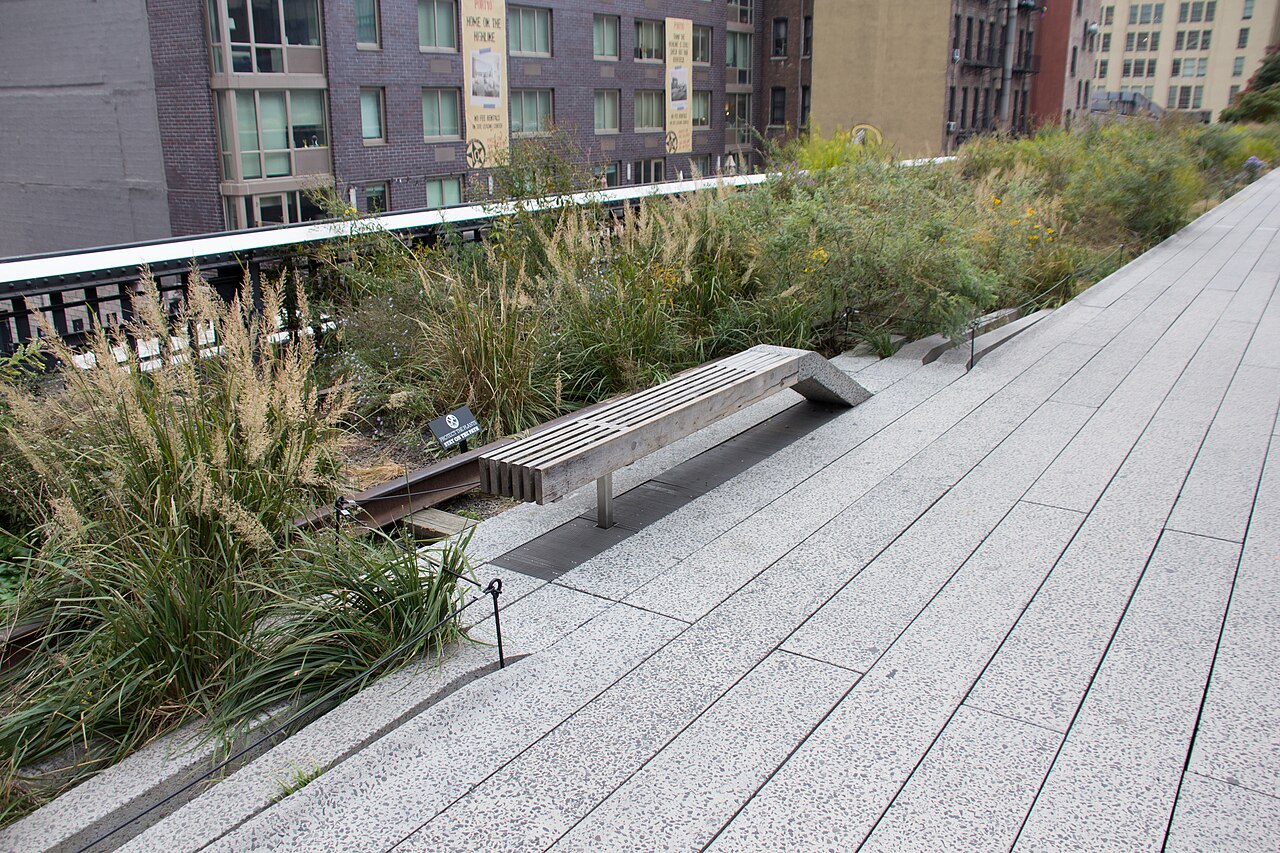
Most native gardens are designed from the plants outward. The seat goes in last, wherever there’s a gap, and it rarely gets used.
A seating area works better the other way around. Decide where people sit, how they get there and what they look at. Then place plants to make that spot shaded, sheltered and pleasant to smell.
This guide works through a small sitting spot, about the size of a bistro table and two chairs or a single bench, set inside a native planting. The measurements come first, then the plants.
Plan at a Glance
- Site: a corner or edge of a native garden with a view worth sitting for.
- Size: a paved or gravel pad of about 6 by 8 feet, plus planting around three sides.
- Sun: morning sun with afternoon shade is ideal; the plan also works in part shade.
- Soil: average to moist for the sample palette; dry-site swaps below.
- Maintenance: trim back anything leaning over the pad; one cutback a year.
- Best regions: eastern U.S. for the sample plants, with western and southwestern swaps.
Start With the People, Not the Plants
NC State Extension’s Gardener Handbook makes a blunt point: a garden seat gets used if there’s a view or something of interest around it, and it doesn’t get used if there isn’t.
So before you buy a bench, sit in a kitchen chair in a few candidate spots at different times of day. Note four things:
- The view. What do you see from the seat? A bird bath, a flowering shrub, a long view down the garden? Avoid facing the neighbor’s garage or your own trash cans.
- The sun. Where is the shade at the hours you’d actually sit? Afternoon shade matters most in summer.
- The back. Is the spot exposed from behind, to a street or a neighbor’s window? A seat feels better with something solid at your back.
- The route. How will you carry a cup of coffee there? A seat that’s awkward to reach won’t get used.
Size the Floor First
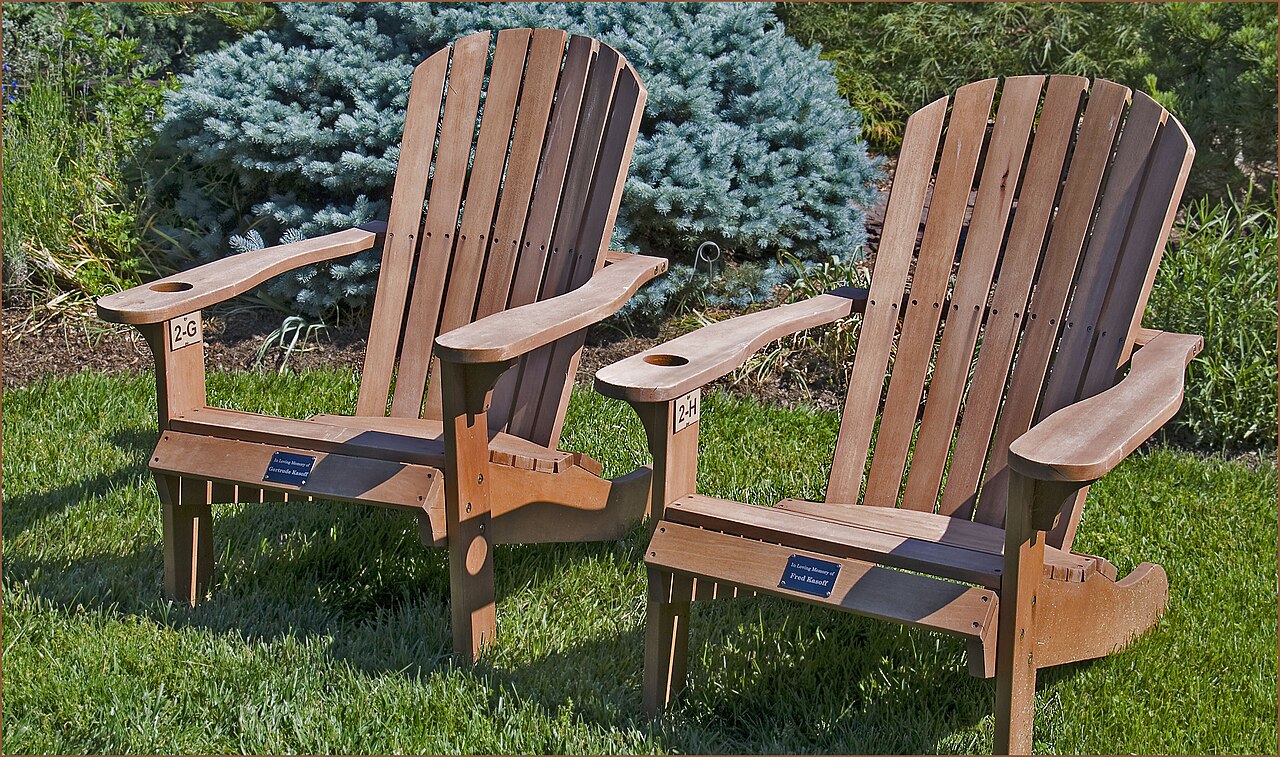
NC State describes a garden room as a space with a floor, walls and sometimes a ceiling. The floor is the pad people sit on, and it needs to be big enough before any plant goes near it.
Houzz’s guide to outdoor furniture measurements gives useful working numbers from landscape designers:
- A bistro table (usually 2 to 3 feet across) and two chairs fit in about 6 by 8 feet, including room to move.
- For a larger table, measure it with chairs pushed in, then add 3 feet on every side so chairs can pull out and people can pass.
- Main walkways need at least 3 feet of clear width, with 4 feet preferred. A quieter garden path can be 2 to 2½ feet.
Mark the pad with string or a hose, set your actual furniture on it, and pull the chairs out as if you were sitting down. If a chair leg goes off the edge, the pad is too small.
Gravel, flagstone, or pavers all work. Whatever you choose, the pad’s edge is where your planting begins. Nothing should be planted inside it.
Plan the Planting in Rings
NC State’s example of a small dining patio for two shows the idea: the plants immediately around the patio are low and get larger as they move away from it. Think of three rings around the pad.
Distance Guide: Plants Around a Seat
| Ring | Where | What goes there |
|---|---|---|
| Edge | Right at the pad edge | Low, soft plants under knee height that won’t flop onto the pad |
| Middle | A few steps out | Flowering perennials and the busiest pollinator plants, visible but not touching you |
| Walls | Behind and to one side | Shrubs, set back by at least half their mature width so they don’t crowd the seat |
| Ceiling | To the south or west | One small tree whose canopy shades the seat in the afternoon |
Leave the side facing the view open. If every side is walled with shrubs, the seat feels like a closet.
Build the Walls Behind the Seat
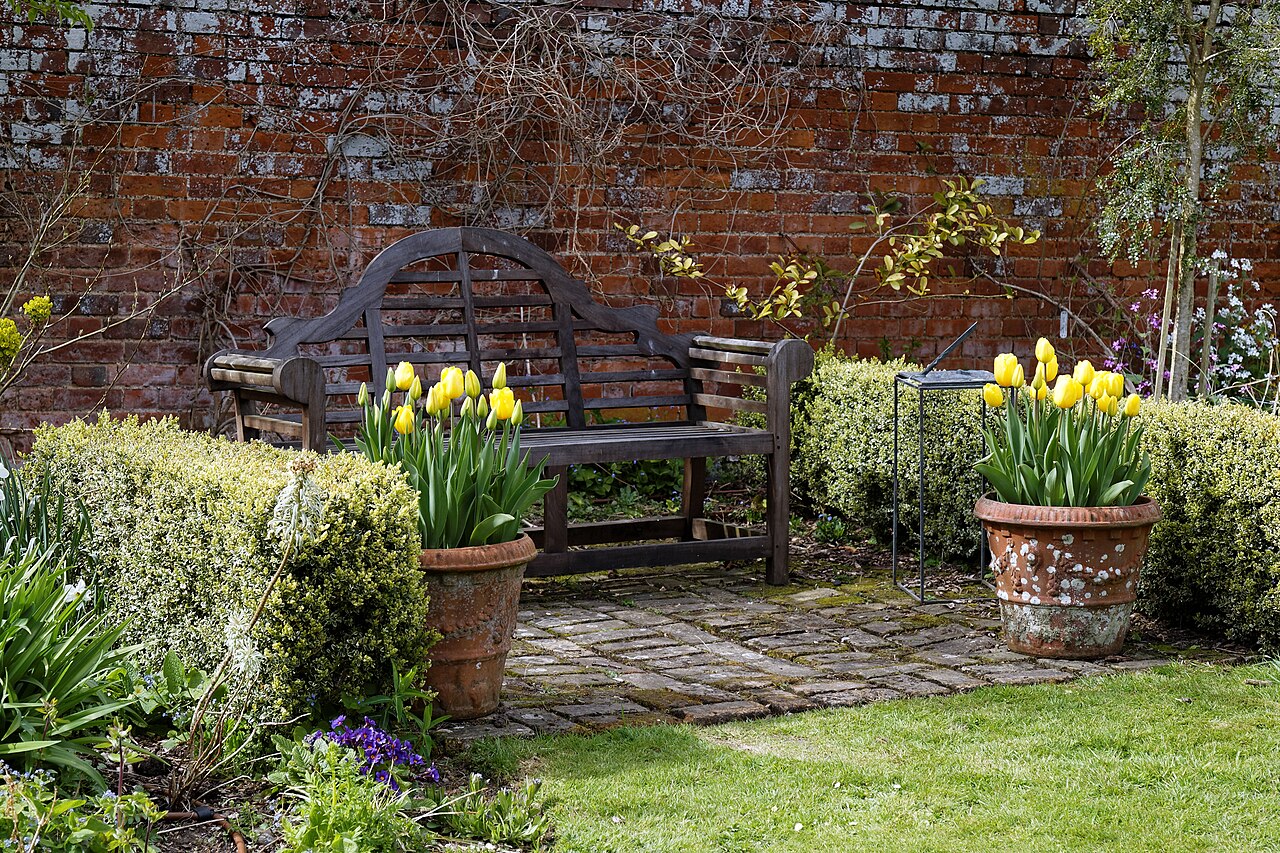
NC State notes that vertical elements enclose a space, act as a backdrop and frame views. For privacy, it suggests evergreen shrubs or a fence, and vines on trellises where space is tight.
UF/IFAS Gardening Solutions adds that seating is especially effective at the edge of larger shrubs or understory trees. The seat borrows their sense of shelter.
Summersweet is a strong choice for the wall behind the seat in the East. The Wildflower Center gives its usual height as 3 to 6 feet, and NC State Extension says it’s often grown as a screen or in groupings as a border.
It also suckers into small thickets in moist soil, according to NC State. Plant it far enough back that the colony can widen without reaching the pad, or edge the bed so you can pull suckers that creep forward.
On a dry, sunny site, use New Jersey tea instead. It stays around 3 feet and tolerates drought, so it works as a low side wall that doesn’t block the view.
Plant for Scent at Nose Height
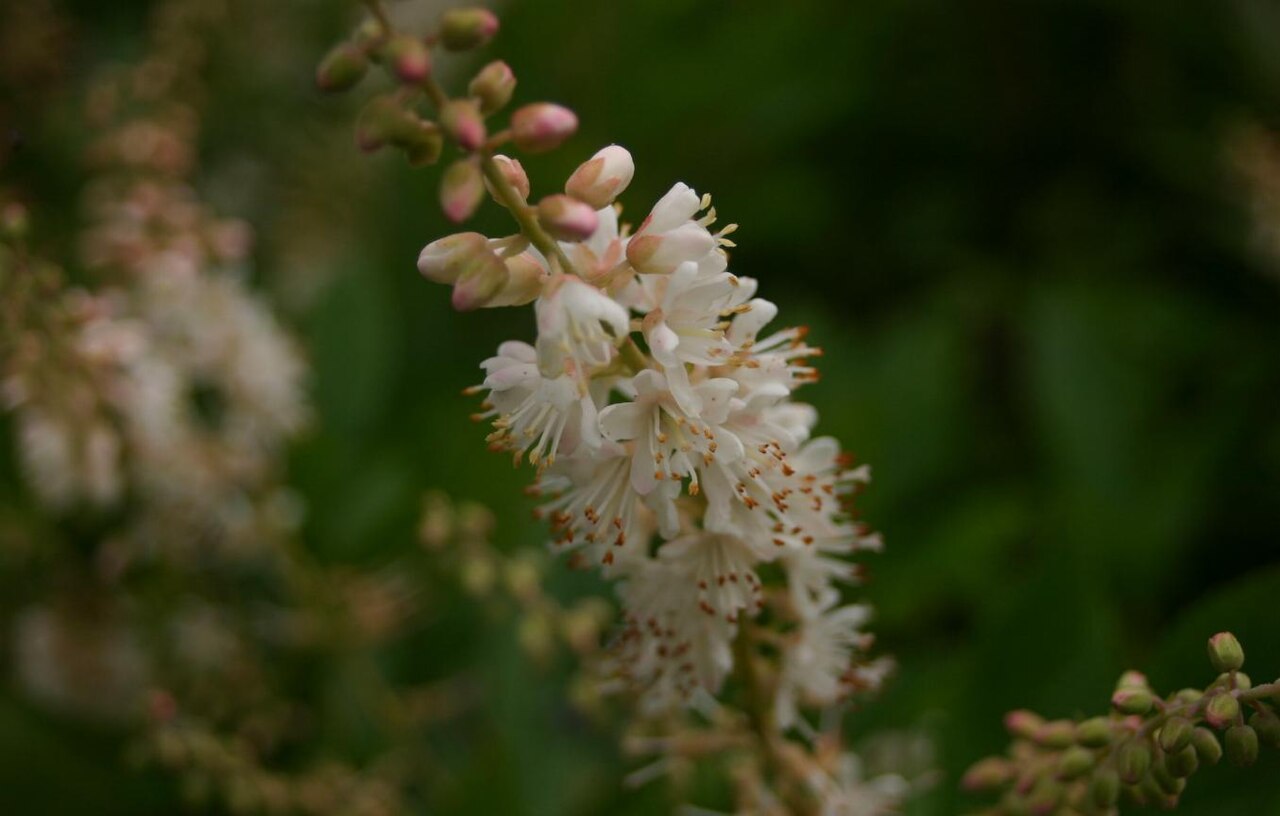
A seat is the one place in the garden where you stay still long enough to notice fragrance. Put scented plants where you’ll be sitting, not along a path you walk past.
Summersweet blooms in July and August with fragrant white spikes, per the Wildflower Center. NC State Extension calls the flowers “very aromatic” and notes it blooms in shade in late summer, when few other shrubs do.
Prairie dropseed adds scent at ground level. The Wildflower Center says its flowers are perhaps most noted for their unique fragrance. It’s a low, fine-textured bunchgrass, so it suits the edge ring on a sunny pad.
Spring fragrance can come from overhead, which brings us to the ceiling.
Add a Ceiling: One Small Tree
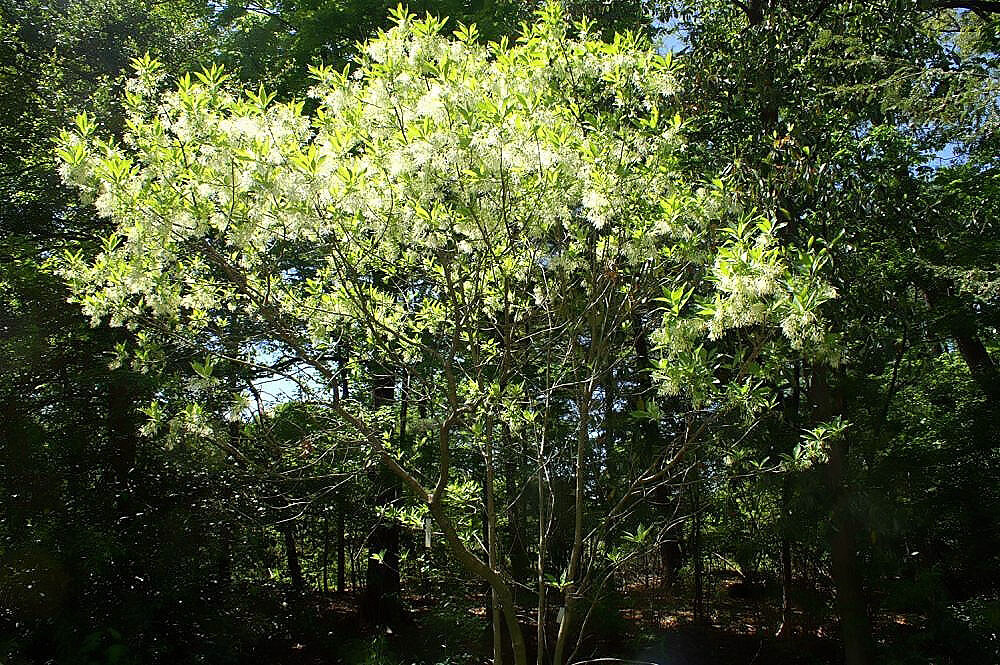
NC State describes the overhead plane as something we feel more than see. It gives a sense of shelter, and “being under” creates a strong sense of enclosure.
For a small seating area, one tree is enough. Fringetree is a good fit in the East. The Wildflower Center describes drooping clusters of fragrant white flowers in spring on a tree or large shrub of 15 to 30 feet.
Place it to the south or west of the seat so its shade falls on you in the afternoon. Leave enough room for the canopy and for fallen fruit on female trees; our guide to a fringetree near a patio covers setbacks, roots and fruit drop in detail.
Keep the Busiest Flowers a Few Steps Away
Native pollinator plants bring bees, wasps and flies, which is the point. But you don’t want the busiest flowers brushing your elbow while you eat.
Put the heaviest nectar plants in the middle ring, a few steps out, where you can watch the activity. Keep the edge ring to grasses, sedges and plants with modest flowers.
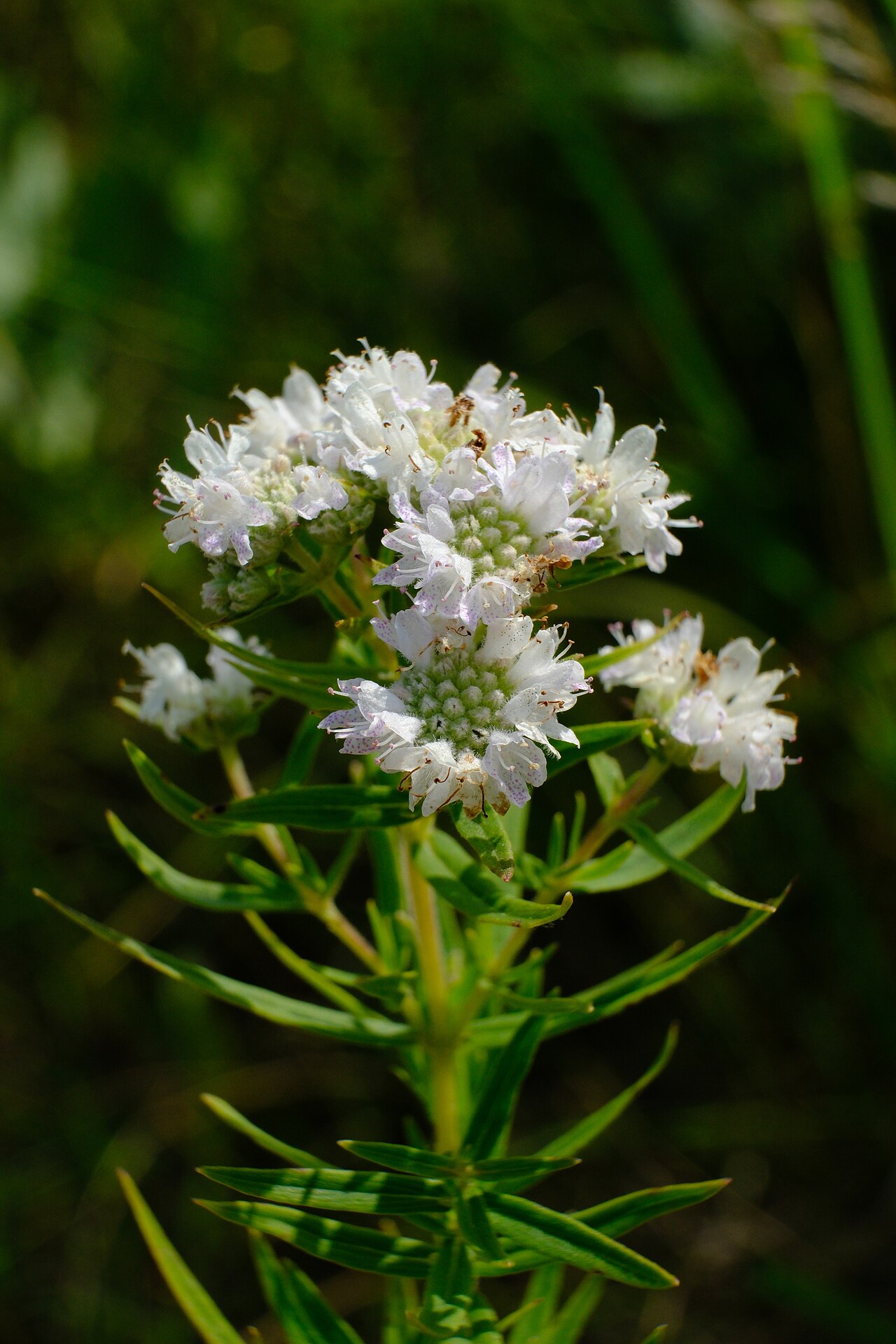
Mountain mint is the classic example. Our article on mountain mint near a patio works through who visits it and how far to plant it from foot traffic.
If anyone in your household has a serious sting allergy, keep the strongest pollinator plants well away from the seat and the route to it, and follow the advice of their doctor.
Plant Palette
A sample eastern U.S. palette for a seat in part sun. Heights and ranges are from the Lady Bird Johnson Wildflower Center, NC State Extension and the PlantNative profiles. Confirm each plant is native to your area before buying.
| Plant | Role | Height | Sun / moisture | Native range |
|---|---|---|---|---|
| Fringetree | Ceiling: afternoon shade, spring scent | 15–30 ft | Part shade to sun; moist | Florida to e. Texas, north to New Jersey, s. Ohio, s. Missouri and Oklahoma |
| Summersweet | Back wall, late-summer scent | Usually 3–6 ft | Sun to part shade; moist, acidic | Maine to Florida, west to Texas (Coastal Plain) |
| New Jersey tea | Low side wall on dry sites | About 3 ft | Sun to part shade; dry | Se. Canada to n. Florida, west to Texas and Nebraska |
| Mountain mint | Middle ring: pollinator show | 2–3 ft | Sun to part shade; moist | Se. Canada to n. Florida and Georgia, west to the edge of the Plains |
| Prairie dropseed | Edge ring, sunny side; scented bloom | Tufts about 2 ft; seed heads to 3 ft | Full sun; dry | Quebec to Saskatchewan, locally south to N. Carolina, Kentucky, e. Texas and Colorado |
| Pennsylvania sedge | Edge ring, shady side | 6–12 in | Sun to shade; dry to moderate | Widespread in eastern North America |
Regional swaps. Keep the rings and change the plants. On the California coast, blueblossom can form the back wall where there’s room for a large shrub. In the Southwest, deergrass makes a soft side wall, and in central Texas autumn sage fits the middle ring. Check your state list for the right tree.
Installation Steps
Step 1: Test the spot. Sit in a chair at the site in morning, midday and evening. Confirm the view and the afternoon shade, or where the tree will cast it.
Step 2: Lay out the pad and path. Mark the pad with string, set real furniture on it and pull out the chairs. Mark a path of at least 2 to 2½ feet from the house or main path.
Step 3: Build the floor. Install gravel, flagstone or pavers, with a firm edge so mulch and gravel don’t mix.
Step 4: Plant the tree. Set it to the south or west, at a distance that suits its mature canopy and roots.
Step 5: Plant the walls. Place shrubs behind and to one side, set back by at least half their mature width from the pad.
Step 6: Fill the middle and edge rings. Pollinator plants a few steps out; low grasses and sedges at the pad edge. Water everything in and mulch around, not on, the stems.
The First Three Years
- Year 1: water new plants through dry spells, especially summersweet, which NC State says won’t tolerate a hot, dry site. Expect gaps; a couple of pots on the pad can fill the space meanwhile (see our guide to native plants in large patio containers).
- Year 2, late winter: cut back last year’s perennial stems. Summersweet flowers on new growth, so NC State notes winter or spring is the time to prune it.
- Year 2, summer: sit in the seat and check the edge ring. Trim or move anything leaning onto the pad.
- Year 3: pull summersweet suckers that creep toward the pad, and divide edge plants that have outgrown their spot. Prairie dropseed is slow; the Wildflower Center says it takes about three seasons to reach specimen size.
Mistakes to Avoid
- Choosing the seat by leftover space. No view, no shade and no back means no use.
- Undersizing the pad. Chairs that can’t pull back push people into the plants.
- Tall plants at the pad edge. They flop onto the seat after rain and block the view.
- Walling in all four sides. Leave the view side open.
- Bee magnets beside the seat. Watch them from a few steps away instead.
- Forgetting the route. A seat needs a clear path, the same way a front door does. The same principle drives our guide to making a native front yard look intentional.
📋 Find plants for your region: summersweet and fringetree both appear in our native plant lists for Delaware, Southern New Jersey & Long Island and Georgia, Alabama & Mississippi. Browse your own state’s list for local alternatives.
Frequently Asked Questions
How big should a small garden seating area be?
A bistro table and two chairs fit in about 6 by 8 feet, according to designers quoted by Houzz. For a single bench, measure the bench plus room to stretch your legs.
How close can I plant to a bench?
Keep low plants at the pad edge and taller plants farther back. Set shrubs back by at least half their mature width so they don’t push onto the seat.
Will native plants bring too many bees to my seat?
Pollinator plants will bring insects, so place the busiest flowers a few steps away and keep grasses and sedges right at the edge. That way you can watch without crowding.
What’s the best native tree for shade over a seat?
It depends on your region and space. In the East, fringetree is a small, fragrant option; elsewhere, check your state list for a small native tree that suits your soil.
Can I build a seating area in a shady garden?
Yes. Use shade-tolerant edge plants like Pennsylvania sedge, and choose wall shrubs that bloom in shade, such as summersweet.
Sources
- NC State Extension Gardener Handbook: 19. Landscape Design
- NC State Extension Plant Toolbox: Clethra alnifolia
- UF/IFAS Gardening Solutions: Cues to Care
- Houzz: Key Measurements for Planning Your Outdoor Furniture Layout
- Lady Bird Johnson Wildflower Center: Clethra alnifolia
- Lady Bird Johnson Wildflower Center: Chionanthus virginicus
- Lady Bird Johnson Wildflower Center: Sporobolus heterolepis