Plan a Native Shrub Thicket Without Losing Access to Your Fence
Last updated: November 7, 2026
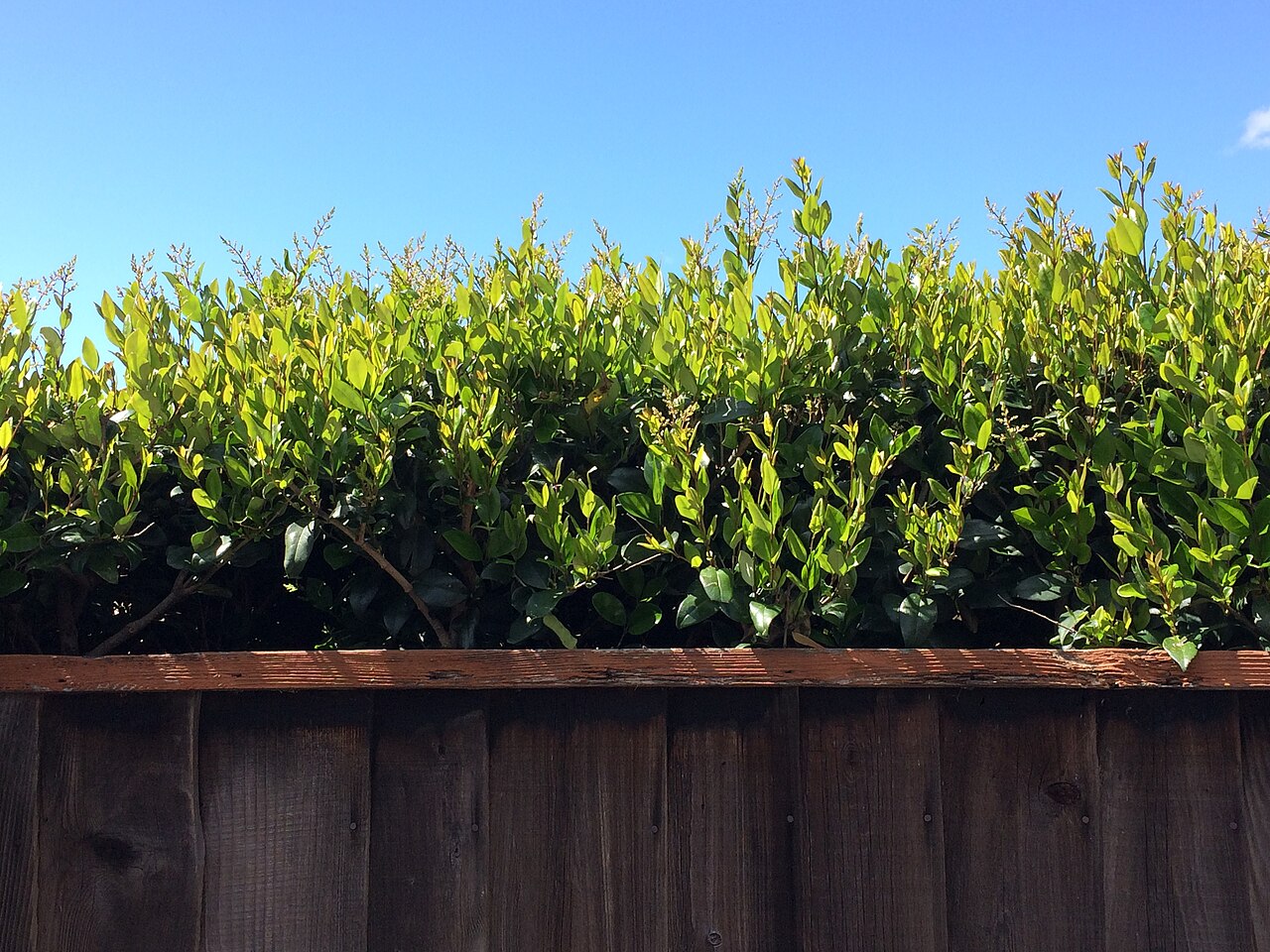
A native shrub thicket along a fence is one of the best wildlife features a yard can have. Dense, multi-stemmed shrubs give birds cover, food, and nesting sites, and they screen the fence better than a single row ever could.
The catch is the fence itself. Boards rot, posts lean, gates sag, and stain wears off. If the thicket is planted right up against the boards, you lose the ability to reach any of it without cutting your way in.
The answer is to plan a permanent access lane between the fence and the thicket, and to choose shrubs whose spread you can manage from that lane. Plant choices must match your region, so swaps are listed below.
Plan at a Glance
| Site | A fence line at least 30 feet long with room for a planting band in front of it |
| Size | The sample plan is a 40-foot run with a 3-foot access lane and a 12-foot shrub band |
| Sun | Full sun to part shade; hazelnut, gray dogwood, and coralberry also take shade |
| Soil | Average garden soil; most of these shrubs handle both moist and occasionally dry spells |
| Maintenance | Mow or edge the lane, pull stray suckers once or twice a year, thin old stems every few years |
| Best regions | Eastern and central North America for the main palette; western swaps are noted |
Step 1: Work Out What Fence Access You Need
Before choosing a single shrub, list every reason you or someone else will need to reach the fence. That list sets the width of the lane and the location of any openings.
- Inspection and repair: checking posts, replacing boards, tightening wire.
- Finishing: staining or sealing a wood fence, which means room for a sprayer or a brush and a bucket.
- Gates: both the gate swing and a clear path to it.
- The other side: if the fence is shared, agree with your neighbor on who maintains what.
- Utilities: meters, valves, or easements along the fence line.
If you are not sure where the property line is, find out before planting. Shrubs that sucker can creep under a fence onto the neighbor’s side, and that is easier to prevent than to undo.
Our guide to a native garden beside a fence covers sun mapping and fence-side light. This plan focuses on the thicket and the lane.
Step 2: Build the Access Lane Into the Design
The access lane is a strip along the fence that stays clear of shrubs for good. It is not wasted space. It is what makes the thicket possible.
Width
Measure the widest thing you will take down the lane: a wheelbarrow, a ladder footprint, a stain sprayer. Add elbow room. The sample plan uses 3 feet, but a lane for ladders or heavy repairs may need more.
Surface
Mown grass, wood chips, or gravel all work. A mown lane has one big advantage: every pass of the mower cuts any suckers that wander into it.
Ends and entrances
Give the lane an entrance at each end so you can walk in without pushing through shrubs. If the run is long, add one cross-path through the thicket partway along. Keep the gate area fully open.
Step 3: Set Shrubs Back by Their Mature Width
Most fence-side thickets fail because shrubs were spaced for their nursery size. Use the mature width instead.
A simple rule: place each shrub’s center at least half its mature width away from the lane edge. A shrub NC State lists at 6 to 10 feet wide, such as arrowwood viburnum, goes in about 5 feet from the lane. Then its branches meet the lane edge rather than filling it.
Width math for the sample band
- Lane: 3 feet, kept clear.
- Back row: tall shrubs with centers 5 to 7 feet in from the lane edge, depending on mature width.
- Front row: low shrubs with centers about 2 to 3 feet in from the front edge.
- Front edge: a mown strip or bed edge you can run a mower along.
That gives a band about 12 feet deep. If your yard cannot spare that much, use fewer tall shrubs and more low ones, or see our plan for a narrow garden between a fence and a path.
Step 4: Choose Shrubs You Can Steer
A thicket needs shrubs that spread. The trick is choosing ones you can keep in check from the lane and the front edge.
Suckering shrubs for the back row
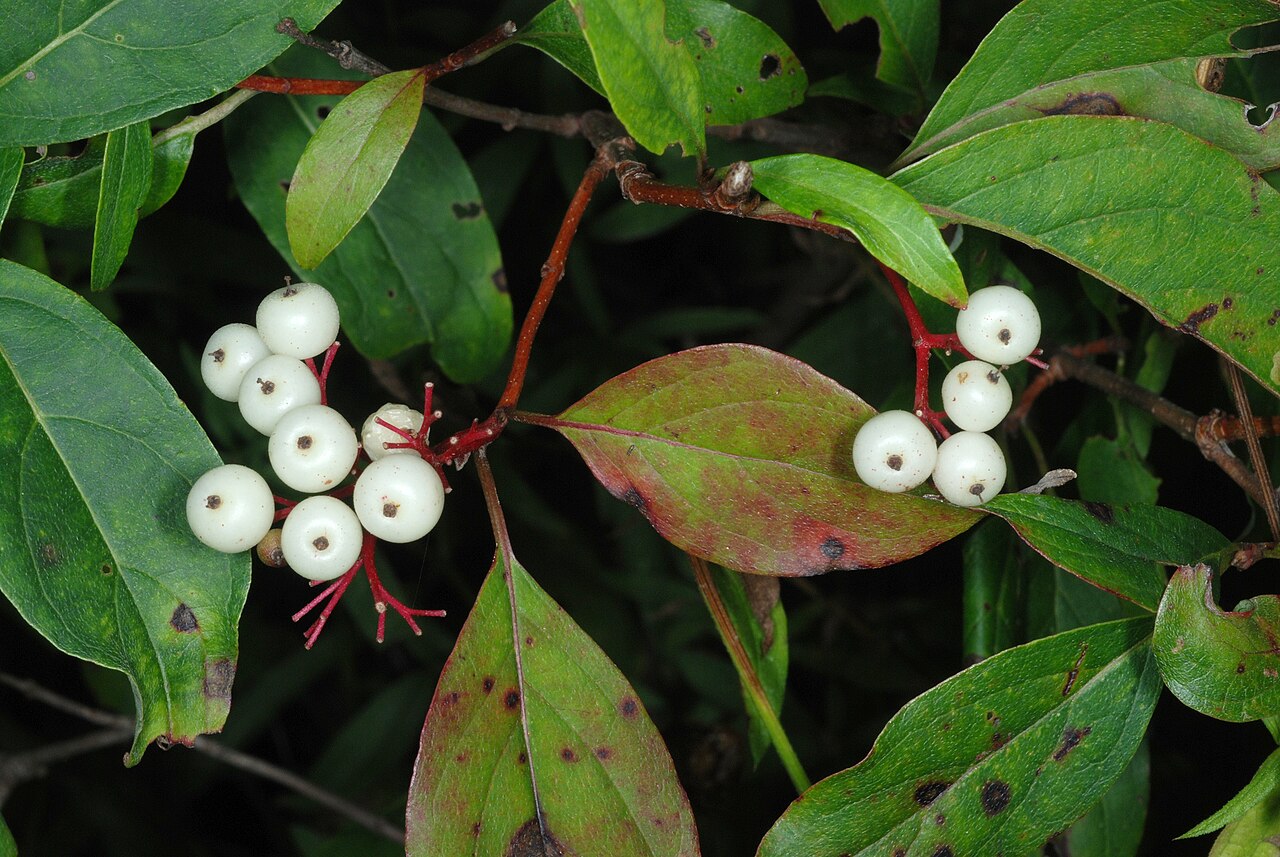
NC State describes gray dogwood as a rhizomatous shrub that will colonize if suckers are not removed. Its fruits feed many songbirds, and in dense thickets it shelters birds and small mammals.
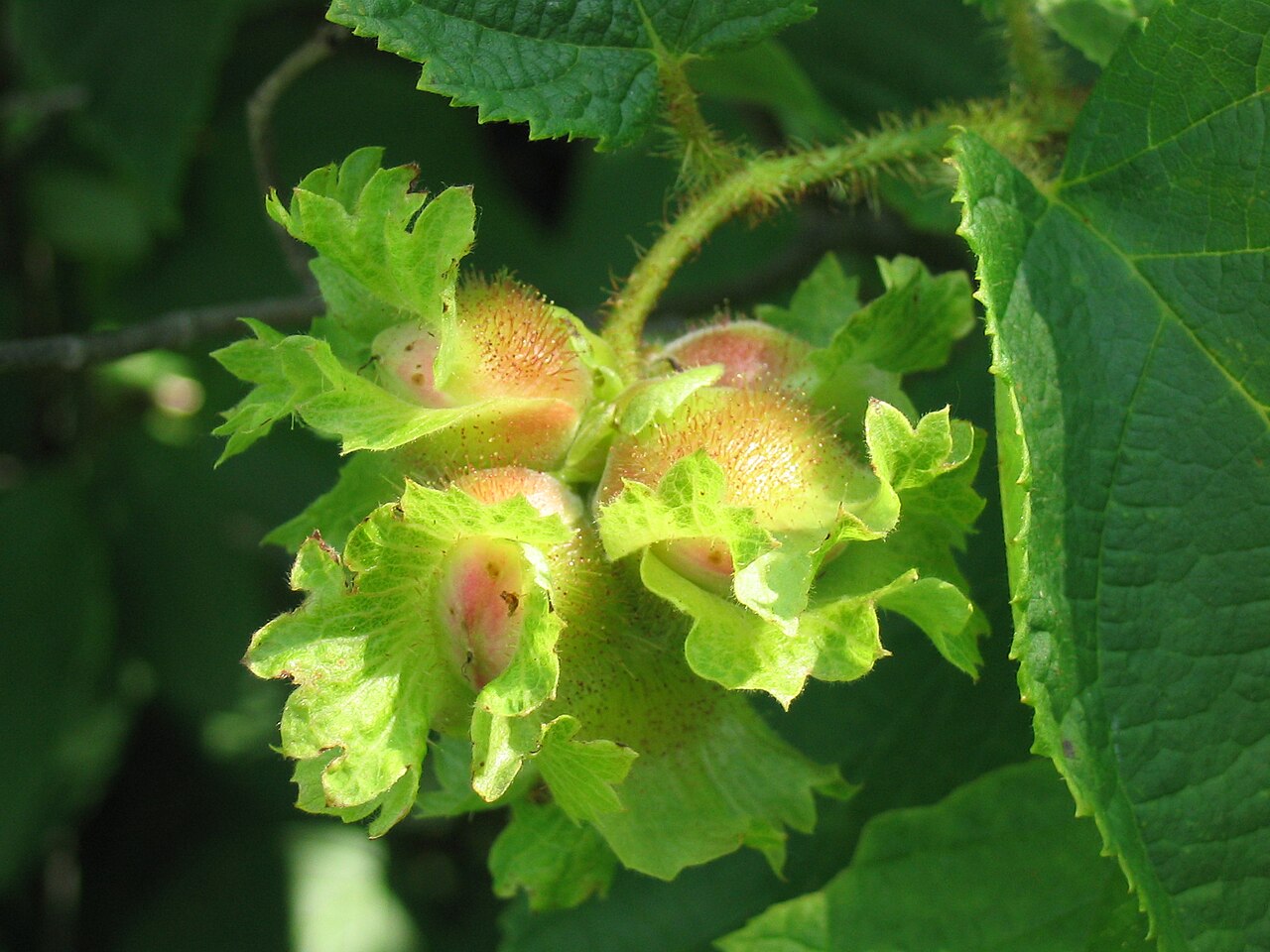
American hazelnut is a suckering shrub, and NC State advises thinning the suckers to prevent or reduce thickets. Our hazelnut boundary planting covers nuts and pollination in more depth.
Arrowwood viburnum develops suckers with age, and NC State notes they are easy to transplant. That makes it easy to fill gaps with your own divisions.
Low shrubs for the front row
Black chokeberry spreads freely and suckers profusely, according to NC State. Use it in front where the mower can trim its edge. Our guide to managing black chokeberry suckers shows how.
Coralberry is a dense, suckering shrub that NC State lists at 2 to 4 feet tall. It fills the low front layer, but NC State flags its fruit as poisonous with low severity, so keep it away from play areas.
A large-yard option with thorns
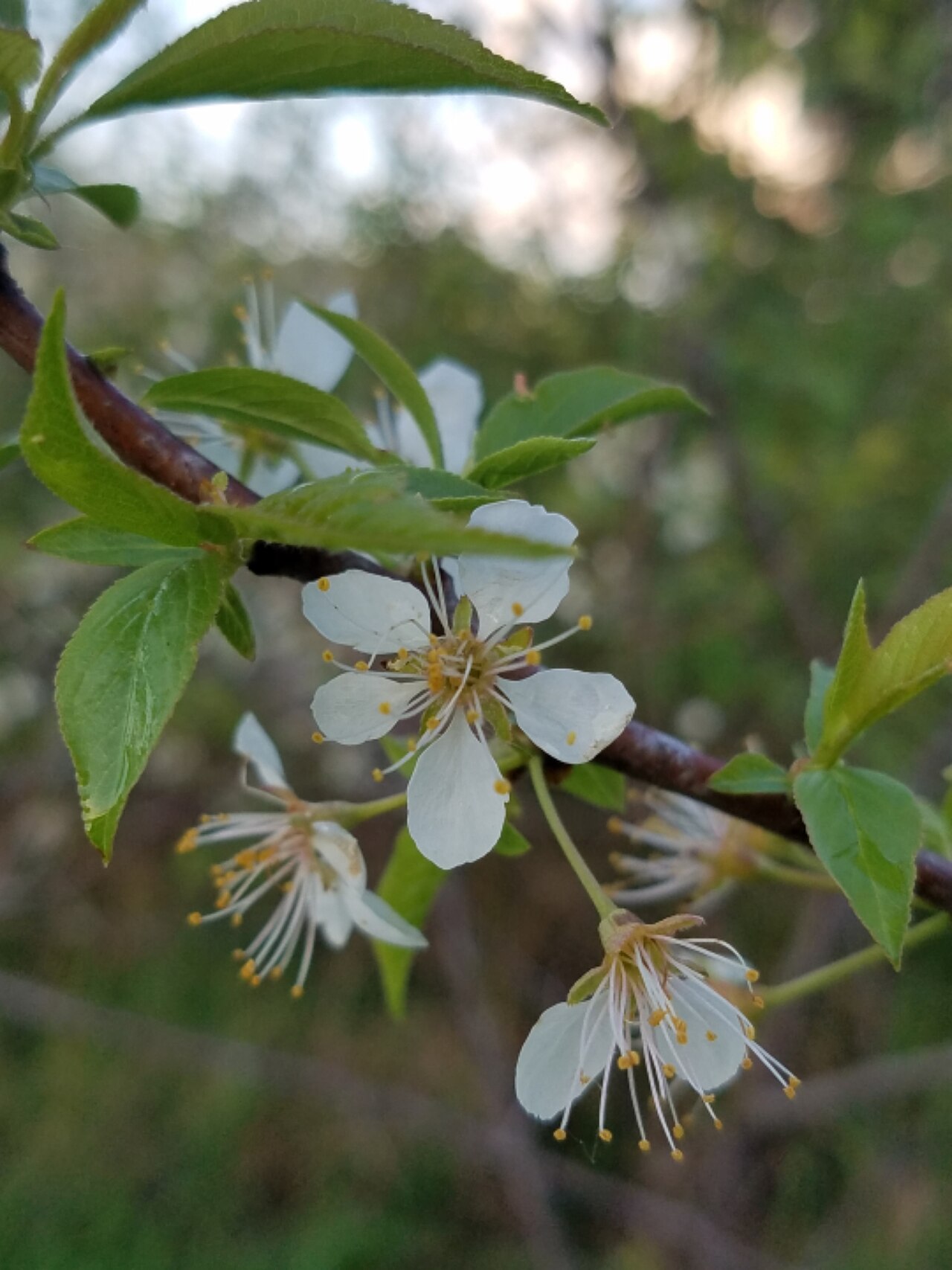
Wild plum forms thickets, and NC State says they give songbirds and small mammals good cover year-round. It also warns that maintenance is needed to stop thickets forming with its thorny stems, and lists the plant as having medium-severity poison characteristics.
Use it only at a far corner, well away from the gate and lane entrances. NC State lists it at 15 to 25 feet tall and wide, so it is too big for most small fence runs.
Plant Palette
Heights and widths are from NC State Extension unless noted. Native ranges are from the Lady Bird Johnson Wildflower Center. Confirm each plant for your state.
| Plant | Role | Height | Sun / moisture | Native range |
|---|---|---|---|---|
| Arrowwood viburnum | Back-row anchor; flowers and fruit | 5–10 ft; 6–10 ft wide | Sun to part shade; moist to occasionally dry | Florida to east Texas, north mainly on the Coastal Plain to Massachusetts and Ohio |
| Gray dogwood | Suckering back-row cover | Up to about 16 ft (Wildflower Center); 10–15 ft wide | Sun to deep shade; wet to dry | Maine to Ontario and Manitoba, south to South Carolina and Arkansas |
| American hazelnut | Suckering back row; nuts | 9–12 ft; 8–13 ft wide | Sun to deep shade; moist to occasionally dry | Southern Maine to Saskatchewan, south to Georgia and eastern Oklahoma |
| Black chokeberry | Front row; fruit and fall color | 3–10 ft; 3–6 ft wide | Sun to part shade; wet to occasionally dry | Newfoundland to Minnesota, south to the Georgia mountains, Tennessee, Arkansas |
| Coralberry | Low front layer | 2–4 ft; 3–6 ft wide | Sun to shade; dry to moist | New York south to east Texas, west to South Dakota and Colorado |
| Wild plum | Large-yard corner thicket; thorny | 15–25 ft tall and wide | Sun to part shade; moist to occasionally dry | Southern New Hampshire to Manitoba and Montana, south to the Florida Panhandle, Arkansas, Kansas, New Mexico |
Regional swaps
Arrowwood viburnum’s native range leans toward the Coastal Plain, so inland gardeners should check their state list or pick a close relative native to their area.
In the northern and western United States, the Wildflower Center lists common snowberry (Quebec to Alaska, south to Colorado and California), Woods’ rose (North Dakota to British Columbia, south to Texas and California), and redosier dogwood (Newfoundland to Alaska, south to Virginia, New Mexico, and northern California) as thicket-forming natives.
Sample 40-Foot Fence Run
Spacing is based on the mature widths above, so shrubs knit together without filling the lane.
| Zone | Depth from fence | What goes there |
|---|---|---|
| Access lane | 0–3 ft | Mown grass or wood chips; nothing planted |
| Back row | Centers 8–10 ft from fence | 2 arrowwood at about 8 ft; 1 gray dogwood and 1 American hazelnut at about 10 ft; roughly 10 ft apart |
| Front row | Centers 12–13 ft from fence | 4 black chokeberry and 3 coralberry in small groups |
| Front edge | 15 ft from fence | Mown strip or edged bed line |
| Cross-path | At about 20 ft along the run | A gap through both rows from the lawn to the lane |
Installation Steps
- Fix the fence first. Replace rotten boards, reset leaning posts, and stain while the area is open. It will never be easier.
- Check for utilities. Have underground lines marked through your local utility-locating service before you dig.
- Mark the lane and band. Lay a hose or string for the lane edge and the front edge. Flag the cross-path and lane entrances.
- Set out the shrubs. Place pots at their mapped centers and walk the lane with a wheelbarrow to check clearance before digging.
- Plant and mulch. Plant at the same depth the shrubs grew in the pot, water deeply, and mulch the band, keeping mulch off the stems.
- Surface the lane. Seed or sod a grass lane, or lay wood chips, so the boundary is obvious from day one.
First Three Years: A Maintenance Calendar
Year one
- Spring and summer: Water deeply during dry spells. Keep the lane mown or weeded.
- Fall: Rake leaves from the lane into the band. Our leaf litter guide explains where leaves help and where to clear them.
Year two
- Spring: Walk the lane and remove any suckers that have come up in it. Pot up arrowwood suckers if you want to fill gaps.
- Summer: Prune arrowwood, if needed, right after flowering. NC State notes next season’s flowers form on old growth.
- Fall: Check the fence from the lane and fix small problems early.
Year three
- Spring: Thin suckers on the lane and front edges. Let them fill in toward the middle of the band, where you want the thicket.
- Summer: Look for branches leaning onto the fence and cut them back to a side branch.
- Ongoing: NC State notes arrowwood may need rejuvenation pruning after years of growth. Remove a few of the oldest stems at the base rather than shearing.
Mistakes to Avoid
- Planting against the fence. Without a lane, every repair means cutting through the thicket.
- Spacing for nursery size. Use mature widths, or the band will swallow the lane within a few years.
- Thorny shrubs by the gate. Keep wild plum and other thorny species well away from paths and entrances.
- No mown edge. Suckering shrubs need a clear line to stop at. A mower is the easiest sucker control there is.
- Ignoring the neighbor’s side. Check the property line and talk to your neighbor before planting suckering shrubs on a shared fence.
- Shearing. Shearing a thicket into a box removes flowers and fruit. Thin old stems instead.
For more fruiting shrubs to add to the band, see our native berry border for birds.
📋 Check your region before buying. Arrowwood viburnum, gray dogwood, and wild plum all appear on the New York, Pennsylvania, and northern New Jersey list and the Michigan, Wisconsin, and eastern Minnesota list.
Frequently Asked Questions
How far from a fence should I plant shrubs?
Far enough to leave a clear access lane plus half the shrub’s mature width. For a shrub 10 feet wide and a 3-foot lane, that puts its center about 8 feet from the fence.
Which native shrubs make the best thicket?
Suckering shrubs such as gray dogwood, American hazelnut, black chokeberry, and coralberry fill in on their own. Arrowwood viburnum adds height and develops suckers with age.
How do I stop a thicket from spreading under the fence?
Keep a mown or wood-chip lane along the fence and remove suckers that appear in it. NC State recommends removing or thinning suckers on gray dogwood, hazelnut, and wild plum to control spread.
Can I still stain or repair the fence?
Yes, if you plan the lane first. Fix and finish the fence before planting, then use the lane for future work.
Is a shrub thicket good for birds?
NC State notes that gray dogwood and wild plum thickets give birds and small mammals shelter, and that several of these shrubs have fruit birds eat. Results vary with your area and the birds present.
Sources
- NC State Extension Plant Toolbox: Viburnum dentatum, Cornus racemosa, Corylus americana, Aronia melanocarpa, Symphoricarpos orbiculatus, Prunus americana: heights, widths, suckering, pruning, wildlife value, poison notes.
- Lady Bird Johnson Wildflower Center plant database: Viburnum dentatum, Cornus racemosa, Corylus americana, Aronia melanocarpa, Symphoricarpos orbiculatus, Prunus americana, Symphoricarpos albus, Rosa woodsii, Cornus sericea: native ranges, light and moisture, sizes.