A Native Hummingbird Corner With Coral Honeysuckle and Region-Matched Flowers
Last updated: November 7, 2026
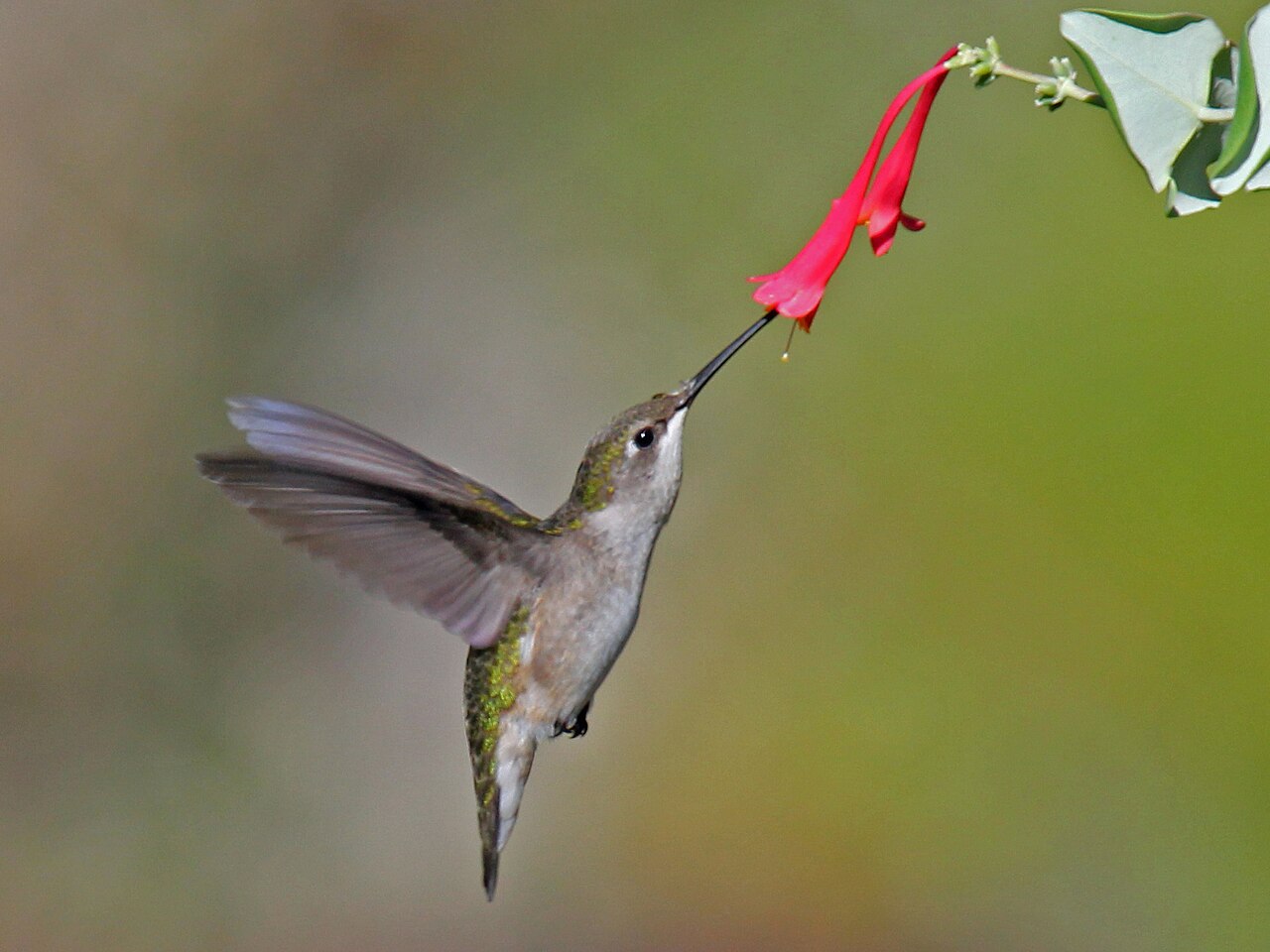
You do not need a whole yard to plant for hummingbirds. A single corner, where a fence meets a wall or two property edges meet, can hold a flowering vine, a perch and a sequence of tubular flowers.
Coral honeysuckle makes a good anchor for that corner across much of the East. It climbs, blooms in spring and then off and on afterward, and its red trumpet flowers are the shape hummingbirds feed from.
The flowers around it are where region matters. This plan pairs coral honeysuckle with companions that are native to the same areas, then gives swaps for the Southeast and the West. It cannot guarantee visits, but it gives hummingbirds a reason to stop.
Plan at a Glance
| Site | A fence or wall corner with a sturdy support for the vine |
| Size | Roughly 8 by 8 feet; scale down to a vine and one flower group if needed |
| Sun | Sun for the vine; part shade works for columbine, fire pink and red buckeye |
| Soil | Well-drained for most plants; a moister low spot for cardinal flower or bee balm |
| Maintenance | Low: train the vine, thin for airflow, skip pesticides |
| Best regions | Eastern U.S. for the core plan; Southeast and western swaps below |
What a Hummingbird Corner Needs
The USDA Forest Service guide Attracting Hummingbirds to Your Garden Using Native Plants says hummingbirds prefer large, tubular flowers that are often, but not always, red. Because they hover, they have little need for flat flowers with landing platforms.
Flowers are only part of it. The same guide lists perches, since hummingbirds spend much of their time on dead branches and treetops, and tall shrubs and trees for nesting cover. It also recommends planting big patches of each species for efficient feeding.
Timing matters too. The Forest Service advises having flowers in bloom throughout the growing season, and UF/IFAS notes that hummingbirds need a lot of nectar during the spring-through-summer nesting season.
East of the Mississippi River, the ruby-throated hummingbird is the only species that breeds, according to the Forest Service. That is the bird this core plan is built for.
Assess the Corner
Watch how sun moves across the corner. The Forest Service notes that coral honeysuckle produces more flowers the more sun it gets, and the Lady Bird Johnson Wildflower Center agrees that it flowers best with more sun.
Check airflow. The Wildflower Center says coral honeysuckle needs light, good air circulation and adequate drainage to prevent powdery mildew. A tight, still corner against a solid wall may need the vine set a little forward on a trellis.
Look for a low or damp spot. Cardinal flower needs soil kept moist to wet, so it belongs where water collects. If the corner is dry throughout, skip it and use fire pink or columbine instead.
- Back corner: coral honeysuckle on the fence, trellis or arbor.
- One side: a red buckeye or other small tree or shrub as a perch.
- Front and sides: flowers in groups, tall at the back and short at the front.
If the corner is along a fence line, our guide to a native garden beside a fence shows how to map sun and plan for mature width.
Anchor With Coral Honeysuckle
Coral honeysuckle (Lonicera sempervirens) is a twining vine with stems up to about 20 feet long, according to the Wildflower Center. Its red, tubular flowers are about 2 inches long, and it is described as frequently visited by hummingbirds and not too aggressive.
The Wildflower Center lists its native range as southern Maine to Florida and eastern Texas, scattered inland to Illinois. It normally blooms in mid-spring and then intermittently afterward.
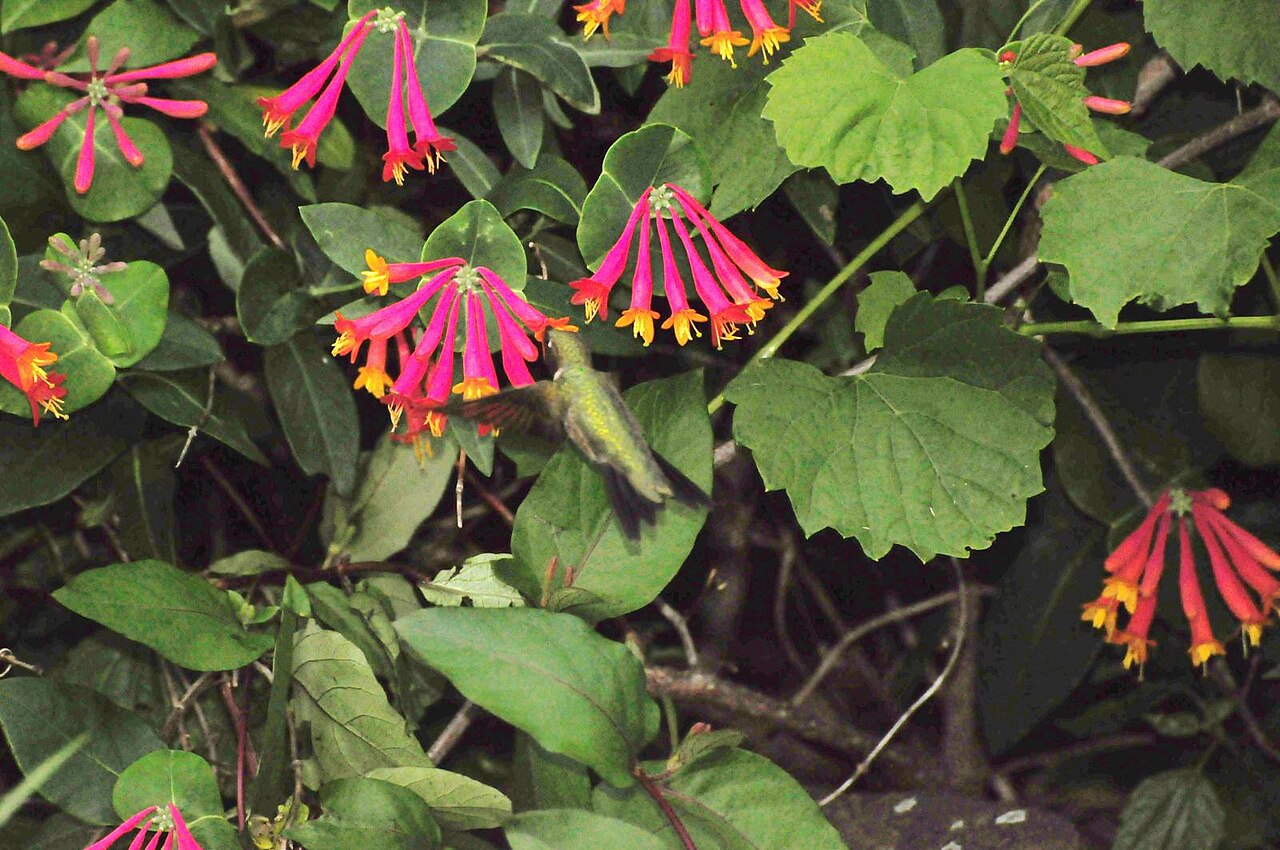
Give it a support from day one. The Wildflower Center notes the vine may need some structural help to start climbing and calls it great for arbors. UF/IFAS describes it as perfect for a trellis or fence, and notes it can also be used as a groundcover.
Buy the native species, not Japanese honeysuckle (Lonicera japonica), which has become invasive in a number of countries, including parts of the U.S. Check the scientific name on the tag before you buy.
Add a Perch: Red Buckeye
Red buckeye (Aesculus pavia) adds height, a perch and early flowers. The Wildflower Center lists it as attracting hummingbirds and blooming from March to May, and notes it does best with protection from afternoon sun.
Its size varies. The Wildflower Center gives 10 to 40 feet, while UF/IFAS says 15 to 20 feet in home landscapes and notes it can be kept as a shrub. Its native range runs from North Carolina to northern Florida, west to central Texas and north to southern Illinois.
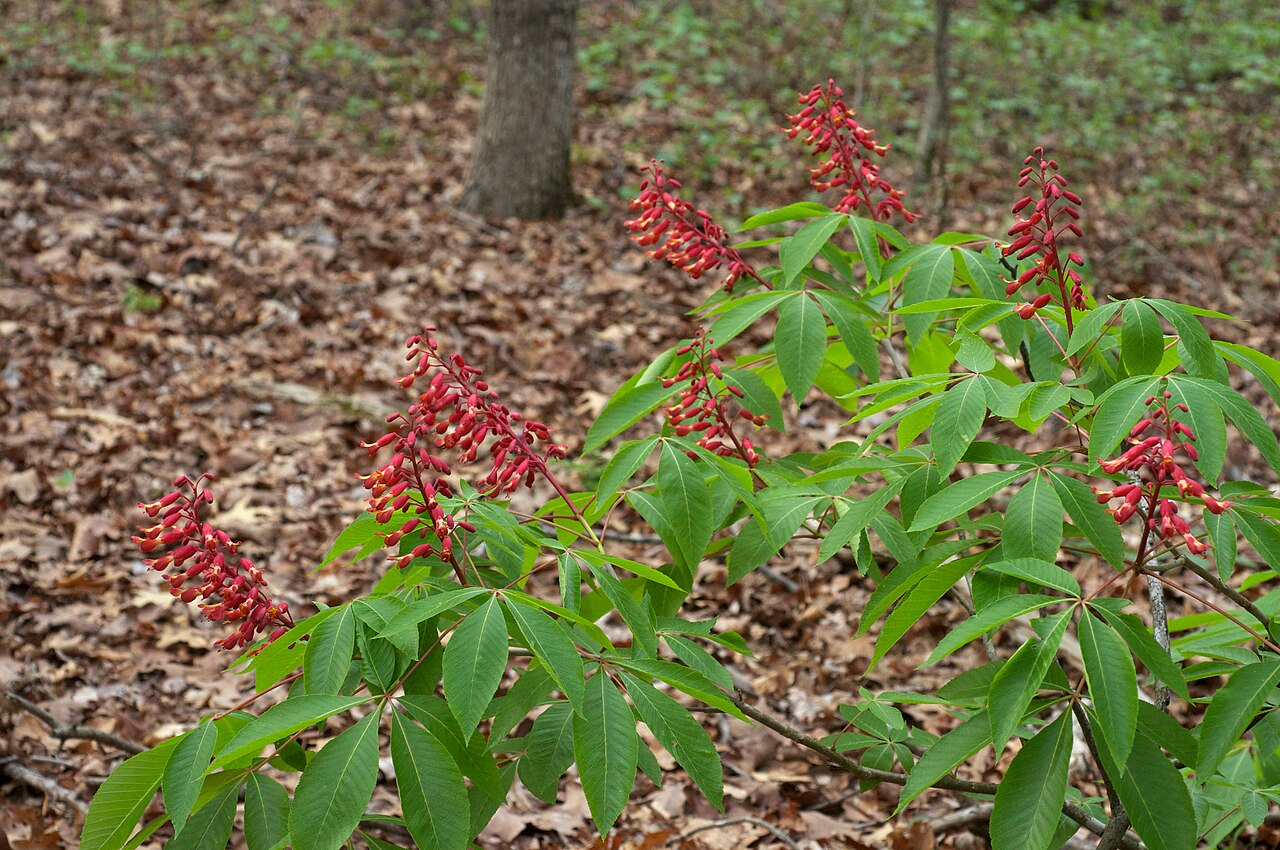
Be careful where children and pets play. UF/IFAS warns that all parts of red buckeye are poisonous to humans and toxic to pets if eaten. If that is a concern, use a native shrub instead and leave a dead branch or a simple post as a perch.
Fill the Bloom Sequence
The goal is a hand-off from one flower to the next. Each companion below is native to much of the same eastern range as coral honeysuckle, with bloom times from the Wildflower Center.
Bloom Hand-Off for the Core Plan
- Early spring: red buckeye (Mar–May) and wild columbine (listed from Feb).
- Mid-spring: coral honeysuckle’s main flush; fire pink begins (Apr).
- Early summer: coral honeysuckle repeats intermittently; fire pink continues; scarlet bee balm starts (May).
- Midsummer to fall: scarlet bee balm and cardinal flower (both listed through Oct).
Bloom months shift with latitude and elevation, so watch your own corner and fill gaps after the first year.
Wild columbine (Aquilegia canadensis) grows up to about 3 feet in part shade to shade and dry to moist soil. The Wildflower Center notes it needs well-drained soil, and rich soil can make stems weak.
Fire pink (Silene virginica) is usually about 1 foot tall. It wants dappled light and well-drained, rocky, acid soil, and the Wildflower Center notes it does not do well in deep shade.
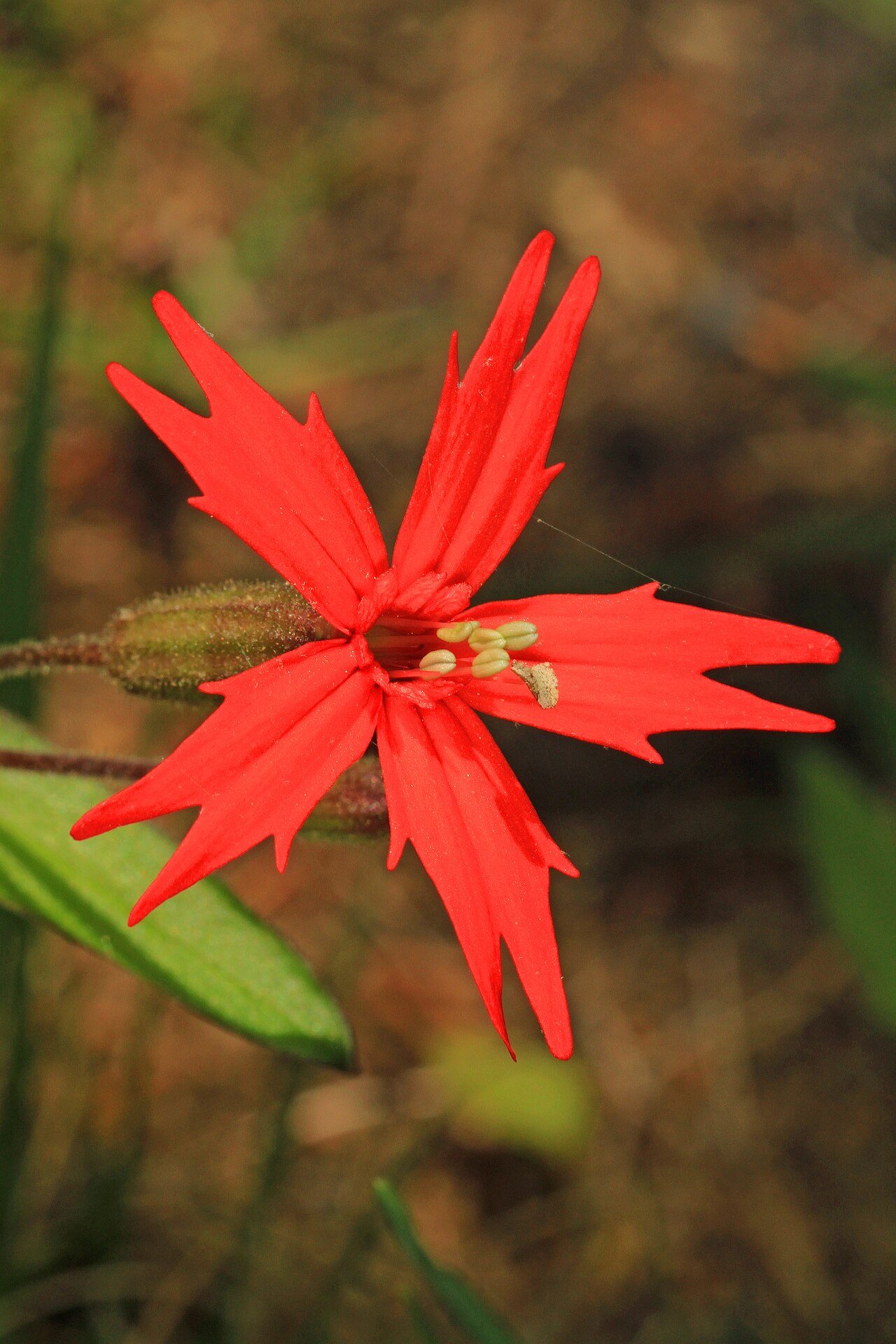
Scarlet bee balm (Monarda didyma) is normally 2 to 4 feet tall in sun or part shade and moist soil. Its native range is narrower than many people assume: Ohio to New Jersey and south along the mountains to Georgia and Tennessee, according to the Wildflower Center.
Cardinal flower (Lobelia cardinalis) can reach about 6 feet and needs moist to wet soil. UF/IFAS says it depends on hummingbirds for pollination because other pollinators have trouble reaching inside the flower. The Wildflower Center notes it is toxic if eaten in large quantities.
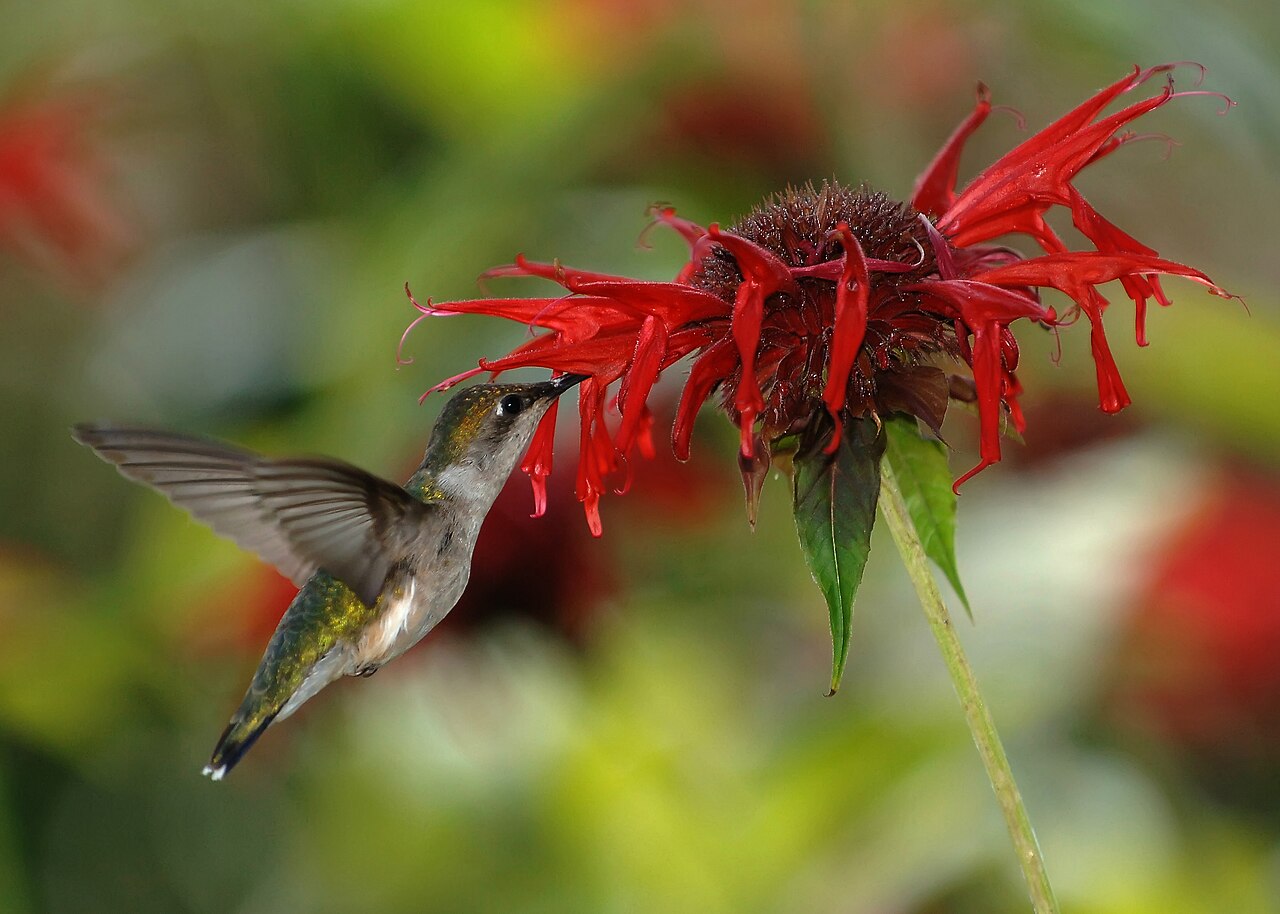
Red is not required everywhere. The Forest Service notes that hummingbirds often feed on flowers of other colors, and recommends a variety of colors with plenty of nectar. For more combinations across the season, see our native bloom calendar and our guide to hummingbird perennials.
Plant Palette
Heights, conditions and ranges are from the Lady Bird Johnson Wildflower Center unless noted. Confirm each plant is native to your state before buying.
| Plant | Role | Height | Sun / moisture | Native range |
|---|---|---|---|---|
| Coral honeysuckle (Lonicera sempervirens) | Anchor vine; spring and repeat bloom | Stems to about 20 ft | Sun–part shade; moist, well-drained | S. ME to FL & e. TX, scattered inland to IL |
| Red buckeye (Aesculus pavia) | Perch; early spring flowers | 10–40 ft; often 15–20 ft in yards (UF/IFAS) | Part shade; moist | NC to n. FL, west to c. TX, north to s. IL |
| Wild columbine (Aquilegia canadensis) | Spring flowers | Up to about 3 ft | Part shade–shade; dry to moist | Much of N. America east of the Rockies |
| Fire pink (Silene virginica) | Front edge; spring to summer | Usually about 1 ft | Part shade; dry to moist | NJ to s. Ont., south to FL & OK |
| Scarlet bee balm (Monarda didyma) | Summer patch | 2–4 ft, up to 6 ft | Sun–part shade; moist to wet | OH to NJ, south along mountains to GA & TN |
| Cardinal flower (Lobelia cardinalis) | Late summer to fall; damp spot | Up to about 6 ft | Sun–shade; moist to wet | S. N.B. to Ont. & se. MN, south to FL, TX & s. CA |
Region-Matched Swaps
Florida and the Gulf Coast: UF/IFAS says coral honeysuckle is evergreen in Central and South Florida. It also lists scarlet sage (Salvia coccinea), a native salvia that blooms in spring, summer and fall, which can stand in where scarlet bee balm is not native.
Northern edge: where coral honeysuckle is scattered or not native, lean on wild columbine and cardinal flower, which reach farther north, and check your state list before planting the vine.
The West: coral honeysuckle is an eastern plant, so build the corner around western natives instead. The Forest Service pairs hummingbirds with western columbine (Aquilegia formosa), hummingbird trumpet (Epilobium canum, also sold as California fuchsia), scarlet gilia and penstemons.
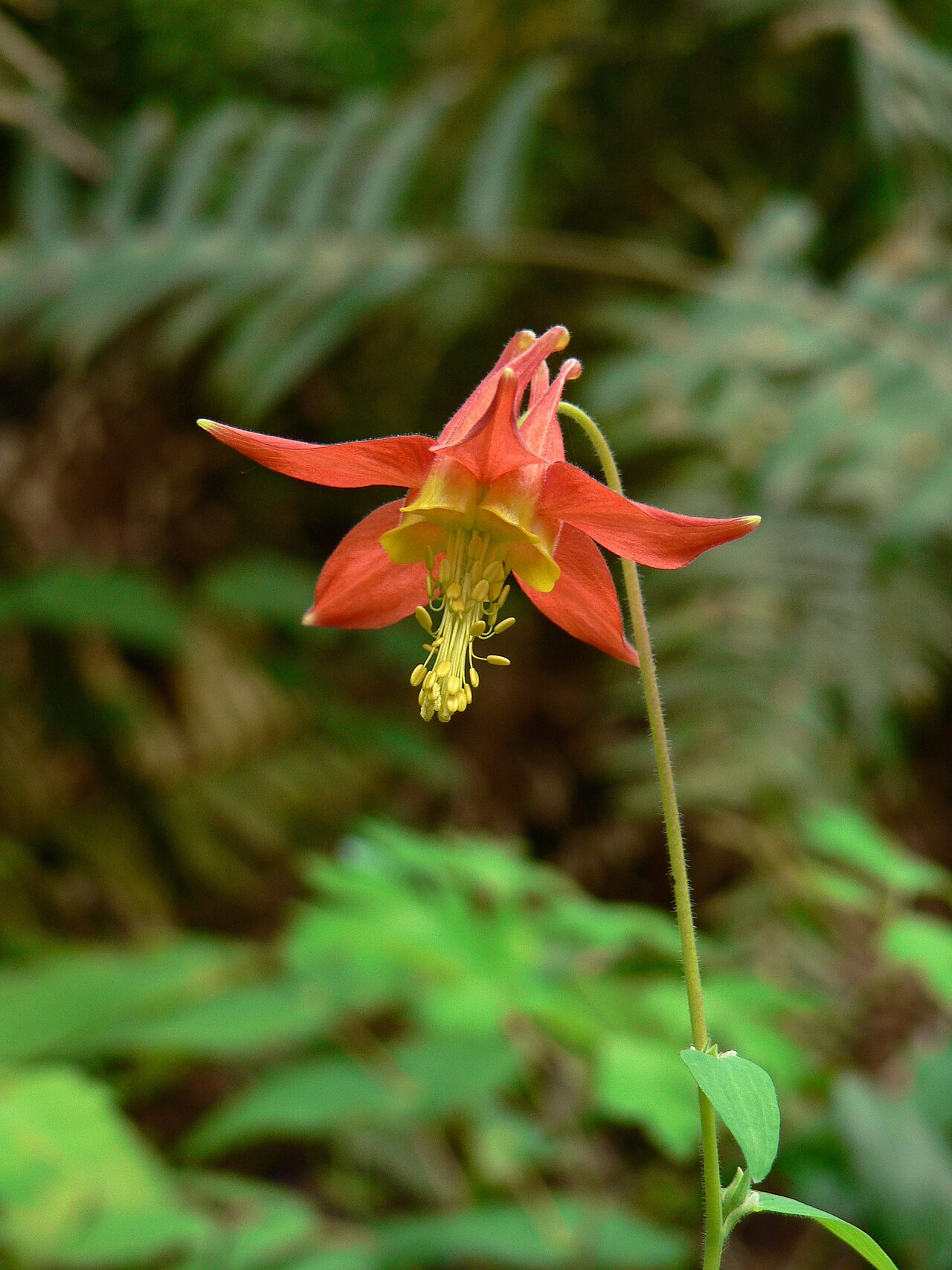
The Wildflower Center gives western columbine a range from northern Baja California to Utah and north to southern Alaska, blooming May to August. It lists hummingbird trumpet as native from southwestern Oregon to Baja California and east to southwestern New Mexico, blooming August to October, which makes it a natural late-season partner.
Installation Steps
- Build the support first. Set a trellis, arbor or wire panel a few inches off the fence or wall so air can move behind the vine.
- Plant the woody plants. Set the vine at the base of the support and the red buckeye or shrub to one side, leaving room for its mature spread.
- Guide the first stems. Tie or weave young stems onto the support until they twine on their own.
- Plant flowers in groups. Follow the Forest Service advice to plant big patches of each species rather than single plants.
- Mulch lightly. The Forest Service suggests avoiding weed cloth and heavy mulch, because many insects nest in the ground or in leafy debris, and hummingbirds eat insects.
- Add water if you can. The Forest Service notes hummingbirds will bathe in dripping water and even garden sprinklers.
The First Three Years
- Year 1, spring: plant, water through dry spells and train the vine onto its support.
- Year 1, summer and fall: keep the damp spot moist for cardinal flower; let plants settle without heavy feeding.
- Year 2, early spring: thin crowded vine stems for airflow and tie in new growth while the vine is dormant or just leafing out.
- Year 2, growing season: note which weeks have nothing in bloom and add a plant to cover each gap.
- Year 3: divide crowded perennials if needed, and keep the vine’s base open to air to reduce mildew.
The Forest Service also asks for patience: it takes time for native plants to grow and for hummingbirds to find a garden, especially far from wild land.
Mistakes to Avoid
- Buying Japanese honeysuckle by mistake. Always check the botanical name.
- Planting the vine in a still, shady pocket. Less sun means fewer flowers and more mildew risk.
- One plant of each flower. Plant patches, not singles.
- Using pesticides. The Forest Service warns that pesticides kill insect pollinators and can harm hummingbirds.
- Letting cats roam. The Forest Service notes that domestic cats can kill hummingbirds and recommends keeping them indoors.
- Copying an eastern palette in the West. Match plants to your own region.
If you also want to support butterfly caterpillars in a shadier part of the yard, our woodland butterfly garden plan pairs well with this corner.
📋 Find plants for your region: start with the profiles linked above, then see our native plant lists for Georgia, Alabama & Mississippi, Delaware, Southern New Jersey & Long Island or, in the West, Western Oregon & Western Washington, or the list for your own state.
Frequently Asked Questions
Does coral honeysuckle really attract hummingbirds?
The Wildflower Center describes it as frequently visited by hummingbirds, and the Forest Service features it as a ruby-throated hummingbird plant. Visits still depend on whether hummingbirds are nearby.
Is coral honeysuckle invasive like Japanese honeysuckle?
No. The Wildflower Center calls it not too aggressive. Japanese honeysuckle is a different species that has become invasive in a number of countries.
Do I need a feeder too?
No, but you can add one. The Forest Service suggests a 1:4 ratio of cane sugar to water, feeders that are easy to clean, and changing the solution often in hot weather.
Can I grow this corner in part shade?
Partly. Columbine, fire pink and red buckeye handle part shade, but the vine flowers best with more sun. Put the support on the sunniest side of the corner.
Do the flowers have to be red?
No. The Forest Service says hummingbirds prefer red but often feed on flowers of other colors, and western hummingbirds arriving early in the season use many colors.
Sources
- USDA Forest Service, Attracting Hummingbirds to Your Garden Using Native Plants (FS-1046): flower shape and color, perches and nesting cover, big patches, season-long bloom, water, light mulch, pesticides, cats, feeders, western plant pairings.
- UF/IFAS Gardening Solutions, Hummingbird Gardens: coral honeysuckle in Florida, red buckeye size and toxicity, cardinal flower pollination, scarlet sage.
- Lady Bird Johnson Wildflower Center plant database: Lonicera sempervirens, Aesculus pavia, Aquilegia canadensis, Silene virginica, Monarda didyma, Lobelia cardinalis, Aquilegia formosa, Epilobium canum.
- Wikipedia, Lonicera japonica: invasive status of Japanese honeysuckle.