A Native Berry Border for Birds: Plan Beyond One Fruiting Season
Last updated: November 6, 2026
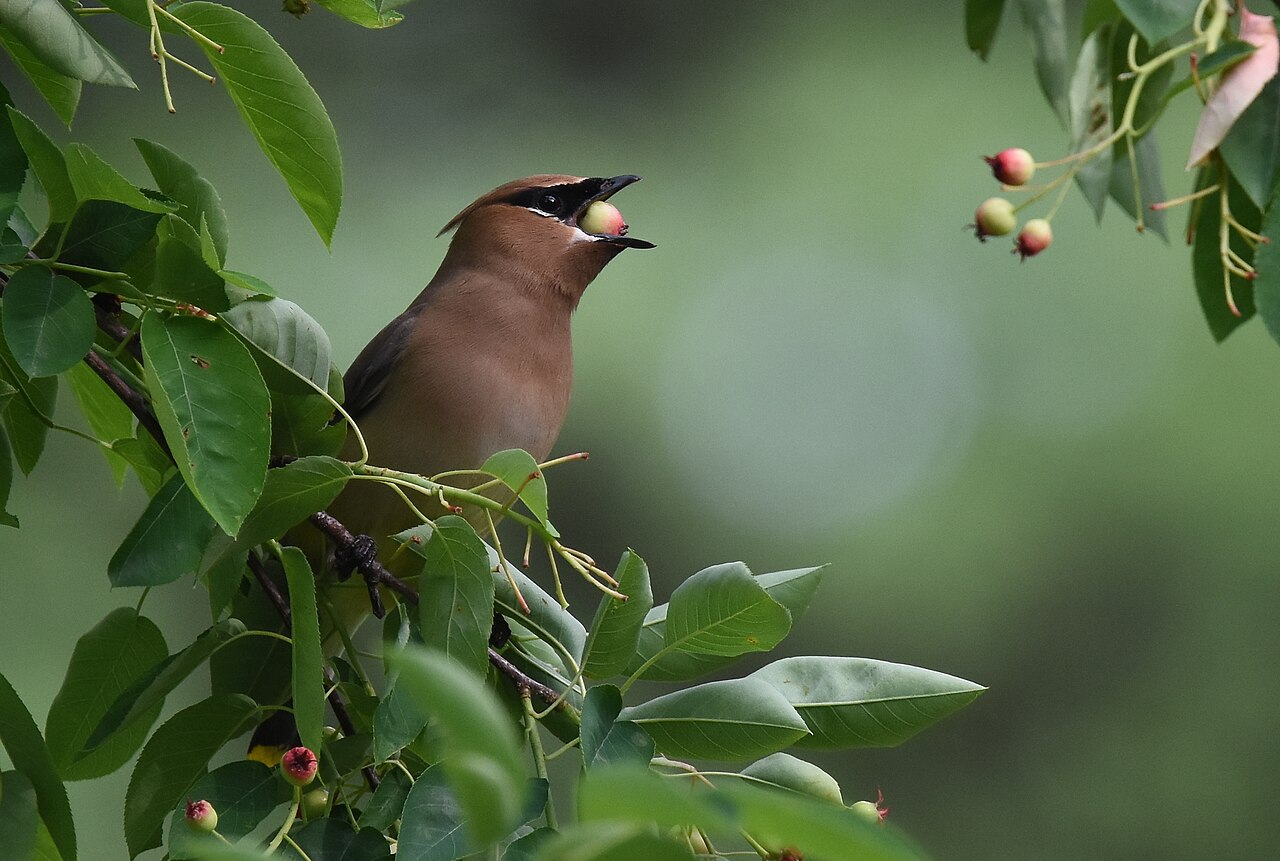
Most bird-friendly borders are planted around one showy shrub. It fruits for a few weeks, the birds strip it, and the border offers nothing until the same time next year.
A better plan spreads the fruit out. Some native shrubs ripen in early summer, others in fall when migrants pass through, and a few hold their fruit into winter after almost everything else is gone.
This guide lays out a border built on that sequence, with summer, fall and winter fruiters for the eastern U.S. It cannot promise which birds will come or when. It can make sure there is something ripe for much more of the year.
Plan at a Glance
| Site | A property-line border, hedge row or woodland edge at least 8 to 10 feet deep |
| Size | About 40 to 60 feet long for the full sequence; shorter borders can use fewer species |
| Sun | Sun to part shade; several shrubs here tolerate shade |
| Soil | Average to moist; a few plants take wet or dry spots |
| Maintenance | Low: occasional pruning, managing suckers, leaving fruit for birds |
| Best regions | Eastern U.S.; ranges vary by species, so confirm each against your state list |
Why Plan Beyond One Season
The Morton Arboretum recommends choosing a variety of plants so there is food in every season, because fruits ripen at different times. It gives a simple sequence.
Serviceberries and wild cherries ripen in summer. In fall, migrating birds look for the fatty fruits of spicebush, magnolia, sassafras and dogwood. Other plants, including nannyberry, sumac, hawthorn and crabapple, hold fruit through winter.
That sequence is the backbone of this border. Morton also notes that not every bird eats every fruit, and that some fruits are too large for smaller birds to swallow, so variety matters as much as timing.
Site Assessment
Measure the depth
Fruiting shrubs get wide. American beautyberry alone grows 4 to 6 feet across, according to the Lady Bird Johnson Wildflower Center, and several plants here reach 12 to 20 feet tall. A border needs real depth, or you will be shearing off next year’s fruit.
Map sun and shade
Note which stretches get full sun and which sit under trees. Serviceberry, gray dogwood, spicebush, winterberry and smooth sumac all tolerate sun to shade, per the Wildflower Center. Coralberry prefers part shade to shade.
Check moisture
Elderberry and winterberry handle wet ground, while sumac and coralberry tolerate dry soil. Put each plant where its moisture needs are met, rather than amending the whole border.
Look for invasive shrubs
Morton warns that invasive species such as buckthorn and Amur honeysuckle produce abundant fruit but not the nutrition birds need. Removing them makes room for the natives below.
Design the Border
Arrange by fruiting season along the length
Group summer fruiters at one end, fall fruiters in the middle and winter-persistent shrubs at the other end, or near a window. You will see winter fruit and the birds that eat it from indoors.
Plant in drifts
Morton recommends planting in groups rather than singles. Clusters improve cross-pollination and fruit yield, and make ripening fruit easier for migrating birds to spot.
Plan for male and female plants
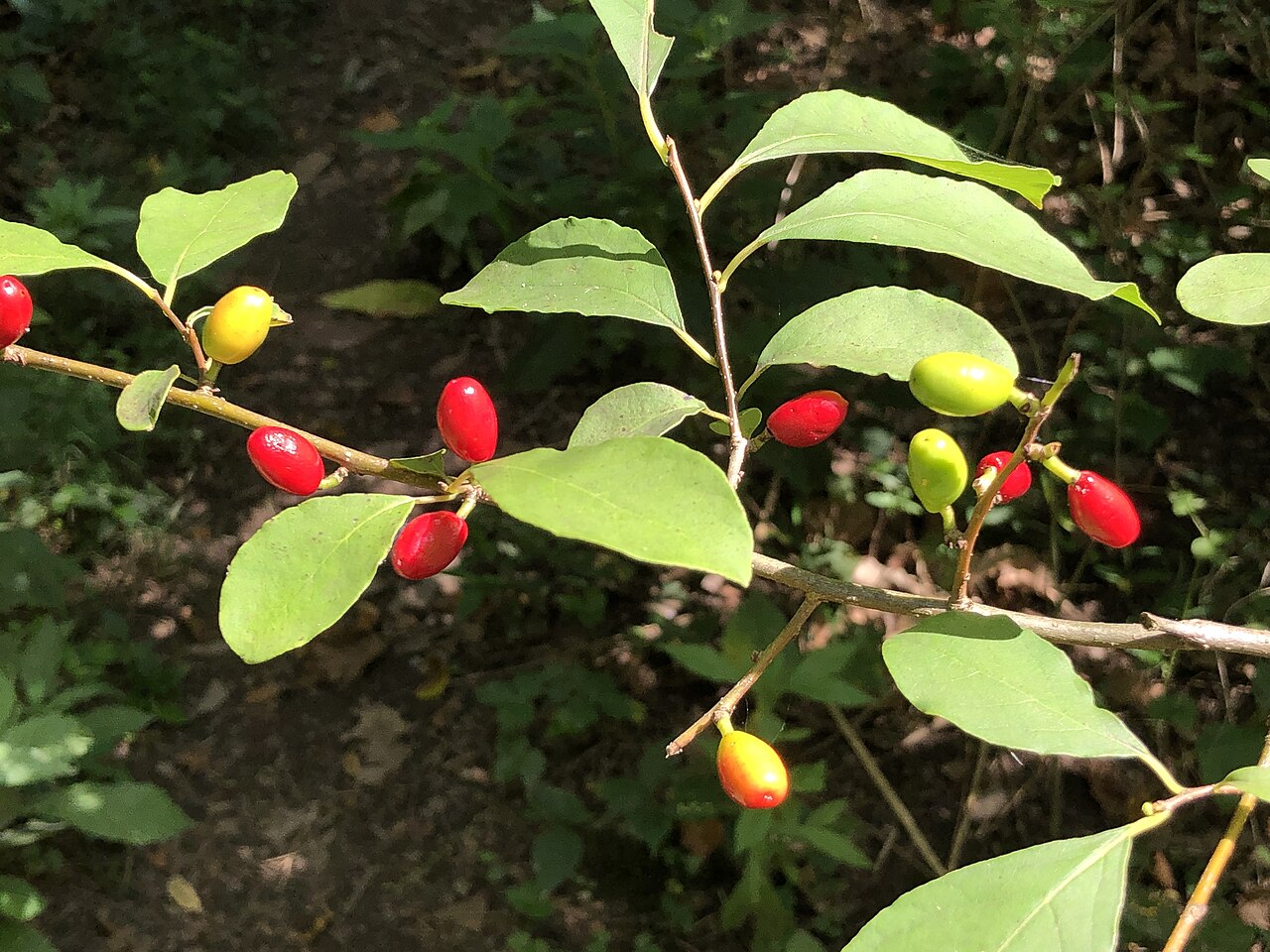
Some of these shrubs need a partner. The Wildflower Center notes that winterberry plants are either male or female, and that only female smooth sumac produces fruit. Wikipedia describes spicebush as dioecious too, so both sexes are needed for fruit. For spacing ideas, see our spicebush group planting plan.
Build layers
Morton suggests vertical layers: canopy, understory, shrubs, vines and ground cover. In a home border, that can mean a serviceberry as the tallest point, mid-height shrubs, and low coralberry along the front.
Give spreaders their own space
Gray dogwood forms thickets, coralberry forms extensive colonies, and smooth sumac spreads into colonies from a single parent, per the Wildflower Center. Put them where suckers can fill in, or edge them with lawn you can mow.
The Fruit Sequence
Summer: serviceberry and elderberry
Downy serviceberry produces sweet, red-to-purple fruit after its spring flowers. The Wildflower Center calls it a preferred serviceberry for birds and other wildlife. It can grow into a tree, often well under its 60-foot maximum.
Elderberry grows up to about 12 feet in part shade and wet to moist soil. The Wildflower Center says its berries are relished by many bird species, but lists its leaves, stems, roots and unripe fruit as poisonous.
Fall: dogwood, spicebush and beautyberry
Gray dogwood is a thicket-forming shrub up to about 16 feet. The Wildflower Center lists northern cardinal, downy woodpecker, northern flicker and eastern bluebird among the birds that use its white fruit, which usually does not stay on the shrub for long.
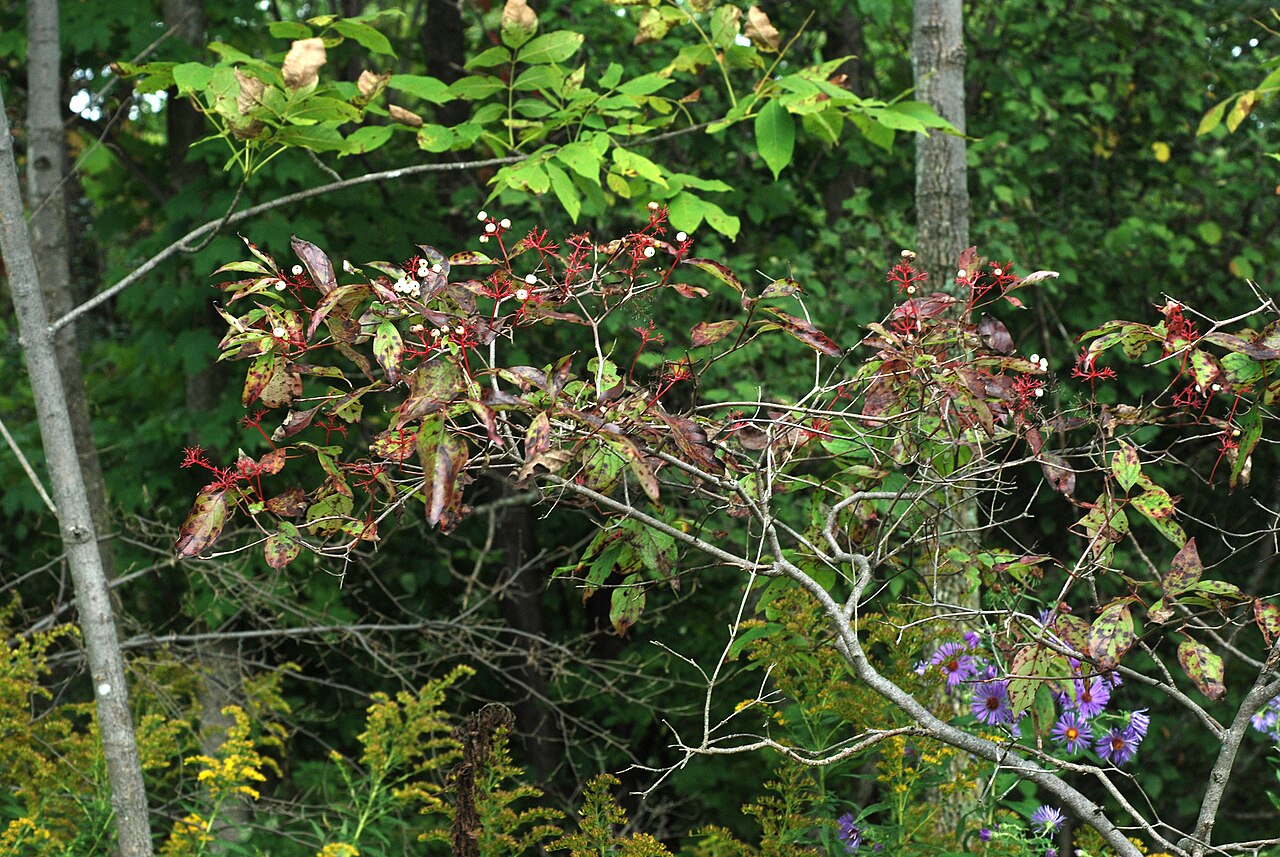
Spicebush grows in sun to shade and dry to wet soil, usually up to about 15 feet. The Wildflower Center advises collecting its seed from late summer through October, once the fruit has turned red.
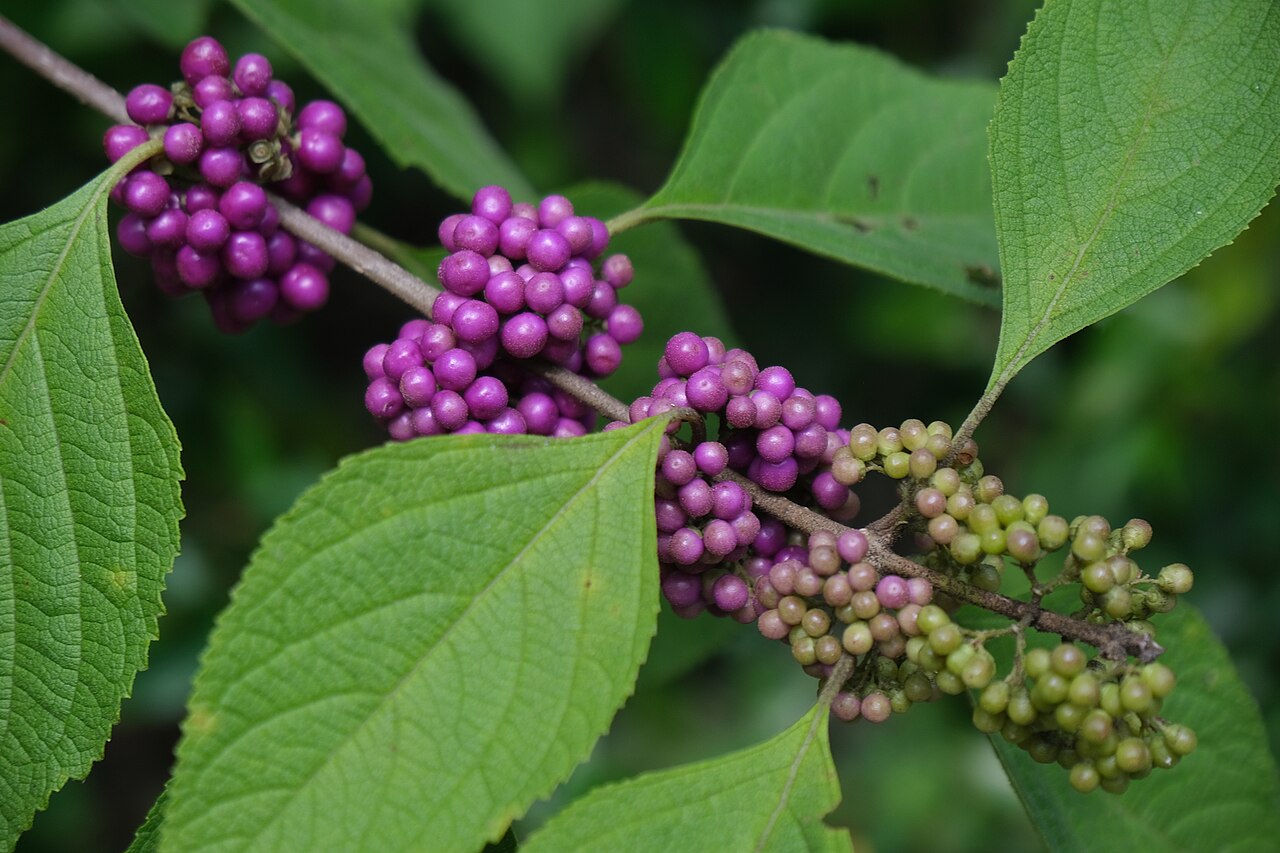
American beautyberry is a southern shrub, native from Virginia to Arkansas and south to Florida and east Texas. Its purple fruit persists after the leaves fall, and the Wildflower Center calls the seeds and berries important foods for many bird species. For layout options, see our American beautyberry garden plans.
Winter: winterberry, coralberry, nannyberry and sumac
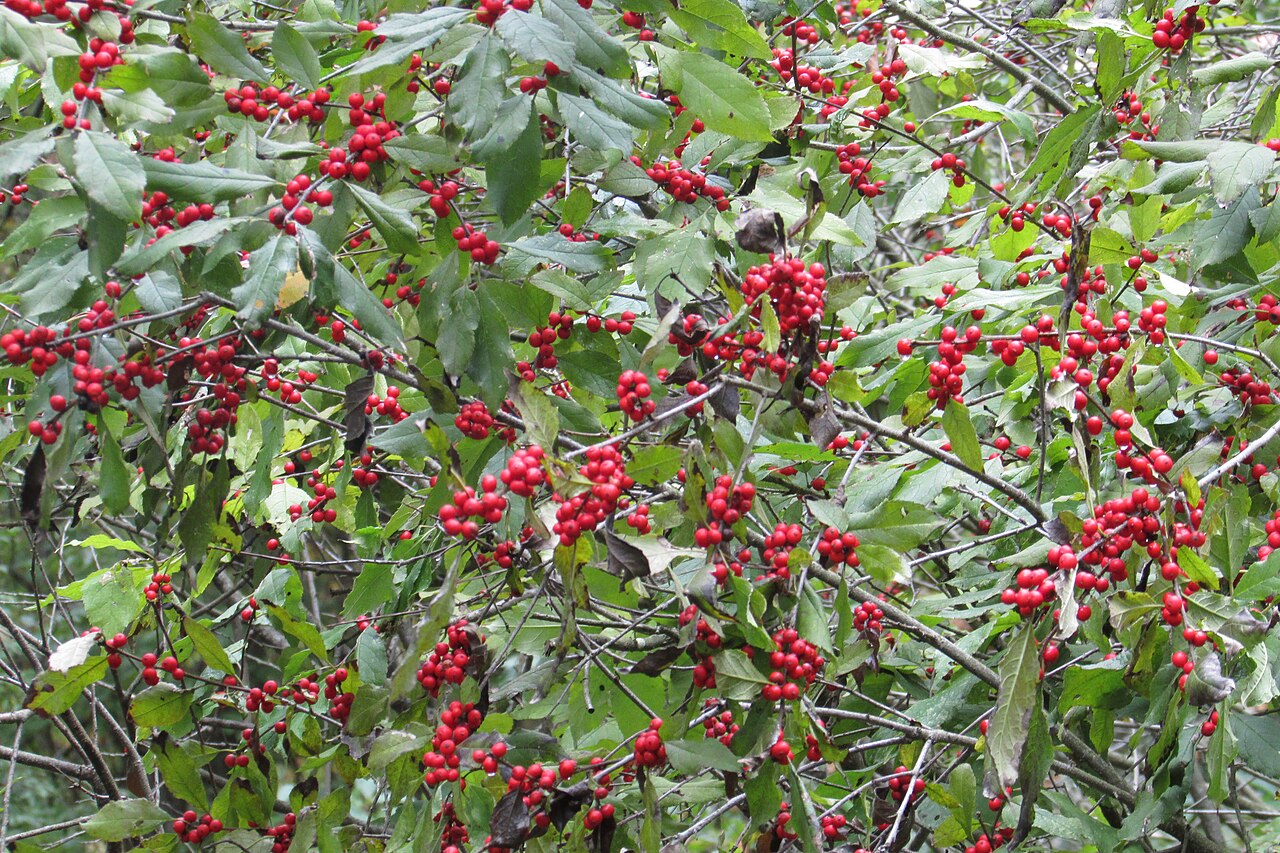
Winterberry is extremely showy in late fall and early winter, according to the Wildflower Center, and birds are readily attracted to it. Plant a male within range of the females. The Wildflower Center also cautions that all hollies may be somewhat toxic if eaten.
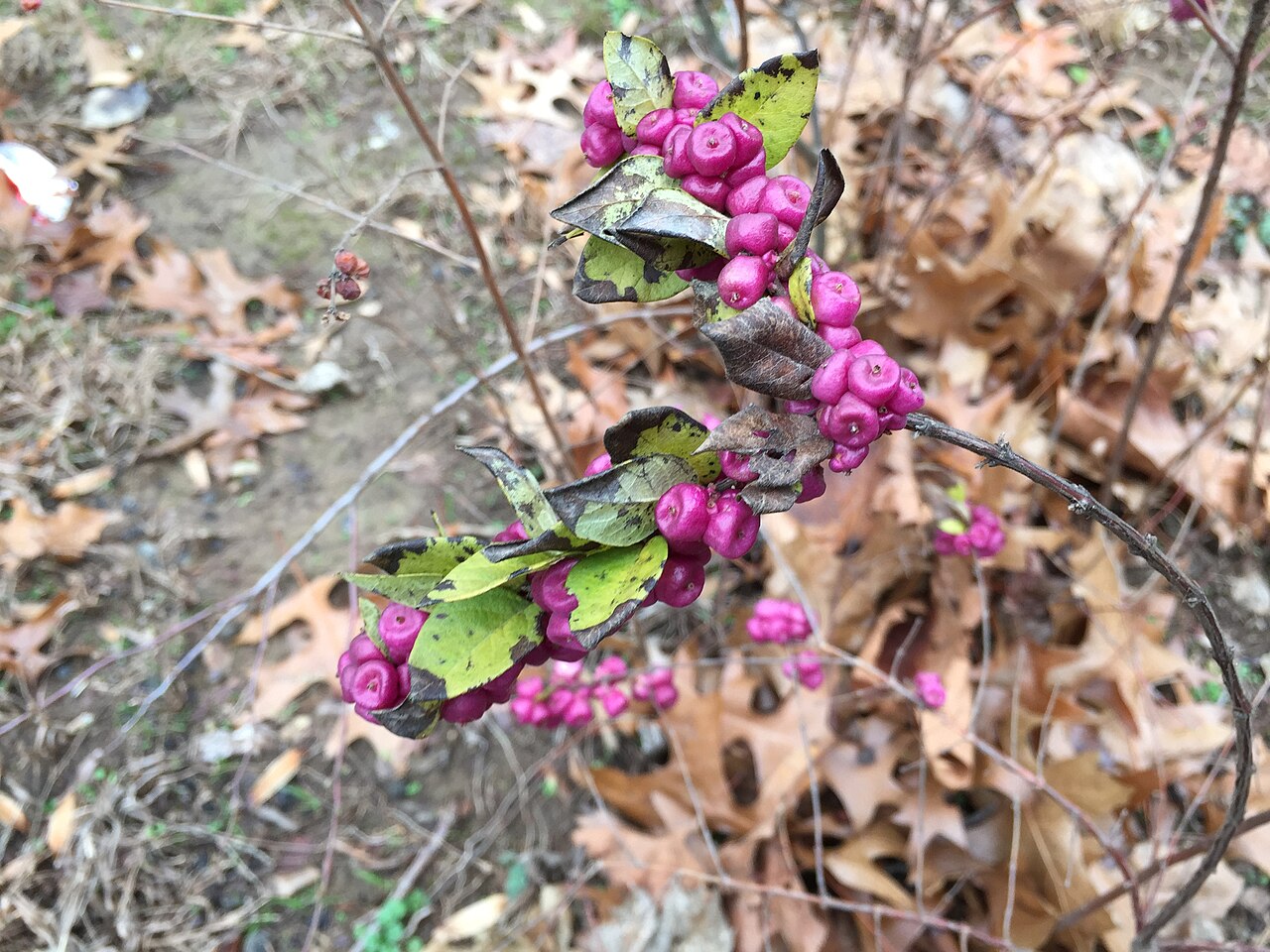
Coralberry is a low shrub, up to about 6 feet, for part shade to shade. Its coral-pink to purple fruit stays on the plant through winter, and the Wildflower Center lists songbirds and ground birds among the wildlife that use it.
Nannyberry has blue-black berries that persist through winter, per the Wildflower Center, and the Morton Arboretum lists it among winter fruiters. It can reach 30 feet and often suckers. See our mixed shrub border built around nannyberry for a layout.
Smooth sumac carries red, hairy fruit clusters that persist throughout winter. The Wildflower Center says birds of many kinds eat them, mainly in winter, which is exactly when the rest of the border is bare.
Plant Palette
Heights, conditions, fruit notes and ranges are from the Lady Bird Johnson Wildflower Center; fruiting seasons follow the Morton Arboretum’s sequence and the Wildflower Center’s notes. Confirm each plant is native to your state.
| Plant | Role | Height | Sun / moisture | Native range |
|---|---|---|---|---|
| Downy serviceberry (Amelanchier arborea) | Summer fruit | Often well under 60 ft | Sun–shade; dry | N.B. to FL, west to e. MN, e. NE & ne. TX |
| Elderberry (Sambucus nigra ssp. canadensis) | Summer fruit | To ~12 ft | Part shade; wet–moist | N.S. to FL, west to s. Man., e. Dakotas, e. OK & TX |
| Gray dogwood (Cornus racemosa) | Fall fruit, thicket | To ~16 ft | Sun–shade; moist | ME to Ont. & Man., south to SC & AR |
| Spicebush (Lindera benzoin) | Fall fruit | Usually to ~15 ft | Sun–shade; dry–wet | Sw. ME, c. MI & se. KS, south to FL & se. TX |
| American beautyberry (Callicarpa americana) | Fall into winter | 3–6 ft, 4–6 ft wide | Part shade; moist | VA to AR, south to FL & e. TX |
| Winterberry (Ilex verticillata) | Winter fruit | To ~20 ft, often shorter | Sun–shade; dry–wet | N.S. to FL Panhandle, west to MN, se. MO & e. TX |
| Coralberry (Symphoricarpos orbiculatus) | Winter fruit, low layer | To ~6 ft | Part shade–shade; dry–moist | NY south to e. TX, west to SD & CO |
| Nannyberry (Viburnum lentago) | Winter fruit | To ~30 ft | Sun–shade; moist | Que. to Man. & MT, south to VA & ne. MO, e. NE & WY |
| Smooth sumac (Rhus glabra) | Late-winter fruit | To ~20 ft | Sun–shade; dry | Most of Canada and nearly all of the U.S. |
Sample Fruit Calendar
Timing varies by region and year. Use it to check that each season has at least two fruiting shrubs.
| Season | Shrubs offering fruit |
|---|---|
| Early to midsummer | Serviceberry, then elderberry |
| Late summer to fall | Spicebush, gray dogwood, beautyberry |
| Late fall to early winter | Winterberry, beautyberry, coralberry, nannyberry |
| Late winter | Smooth sumac, coralberry, nannyberry, any winterberry fruit left |
Regional Alternates
- Upper Midwest and Northeast: beautyberry is out of range. Use nannyberry, gray dogwood and winterberry as the core, and check your list for red-osier dogwood, which UNH Extension names among fall and winter fruiters.
- Southeast: beautyberry, elderberry and spicebush carry the summer and fall. Confirm winterberry and nannyberry against your state list before relying on them for winter fruit.
- West: most of this palette is eastern. Smooth sumac is a rare exception, native across nearly all of the U.S.; build the rest from your regional list.
Installation Steps
- Remove invasive fruiting shrubs first. Clear buckthorn, Amur honeysuckle and similar plants before planting.
- Lay out the sequence. Mark summer, fall and winter zones along the border with stakes.
- Space for mature width. Use each plant’s mature spread, not its pot size, and leave room to walk behind the border.
- Buy male and female plants where needed. Ask the nursery for a male winterberry, and buy spicebush and sumac in groups.
- Plant in spring or fall. Water deeply after planting.
- Mulch lightly. Keep mulch away from stems.
First-Three-Years Maintenance Calendar
Year one
- Spring and summer: water deeply during dry spells; shrubs establish slowly.
- Summer: weed around young plants until they shade the ground.
- Fall: do not expect much fruit yet; young shrubs often fruit lightly.
Year two
- Late winter: remove dead or damaged branches only. Heavy pruning removes next year’s flowers and fruit.
- Summer: note when each shrub ripens fruit and whether birds take it.
- Fall: pull suckers from gray dogwood or sumac where they creep into paths.
Year three
- Winter: check which shrubs still hold fruit after New Year’s. Add more of those if the late-winter window is thin.
- Spring: fill gaps in drifts with more of whatever has fruited well.
- Any time: leave fruit on the shrubs. The border exists for the birds.
Mistakes to Avoid
- Planting one fruiting season. A border of only fall fruiters is empty for the rest of the year.
- Forgetting the male plant. Female winterberry needs a male plant nearby to set fruit.
- Too little depth. Shearing shrubs to fit a narrow strip cuts off flowers and fruit.
- Keeping invasive shrubs because birds use them. Morton notes these fruits lack the nutrition birds need.
- Expecting instant results. Young shrubs take a few years to fruit heavily, and which birds visit depends on your area.
📋 Find plants for your region: start with the profiles linked above, then see our native plant lists for Kentucky & Tennessee and New York, Pennsylvania & Northern New Jersey, or the list for your own state.
Frequently Asked Questions
Which native shrubs keep berries all winter?
The Wildflower Center notes that coralberry, nannyberry and smooth sumac hold fruit through winter. Winterberry is especially showy in late fall and early winter.
Why do birds leave some berries until late winter?
The Wildflower Center notes that birds eat smooth sumac mainly in winter. Fruits that hang on into late winter fill the gap after fall fruit is gone.
How many shrubs do I need for a berry border?
Aim for at least two fruiting species in each season, planted in groups. Morton notes that drifts improve fruit set and make fruit easier for birds to find.
Are these berries safe for people?
Not all. The Wildflower Center lists elderberry’s leaves, stems, roots and unripe fruit as poisonous, and cautions that hollies may be somewhat toxic. Teach children not to eat berries from the border.
Will this border attract specific birds?
It cannot be guaranteed. The Wildflower Center records birds such as cardinals and bluebirds using gray dogwood, but which species visit depends on your region, season and surroundings.
Sources
- The Morton Arboretum, Trees and Shrubs that Attract Birds: summer, fall and winter fruiting sequence, fatty fall fruits, invasive shrubs, planting in drifts and layers.
- University of New Hampshire Extension, Native Trees and Shrubs That Provide Berries for Birds Through Fall and Winter: fall and winter fruiting natives.
- Wikipedia, Lindera benzoin: spicebush is dioecious.
- Lady Bird Johnson Wildflower Center plant database: downy serviceberry, elderberry, gray dogwood, spicebush, American beautyberry, winterberry, coralberry, nannyberry, smooth sumac: fruit, wildlife use, height, conditions, warnings and native range.