American Beautyberry Garden Plans: Three Ways to Place a Berry-Bearing Shrub
Last updated: November 6, 2026
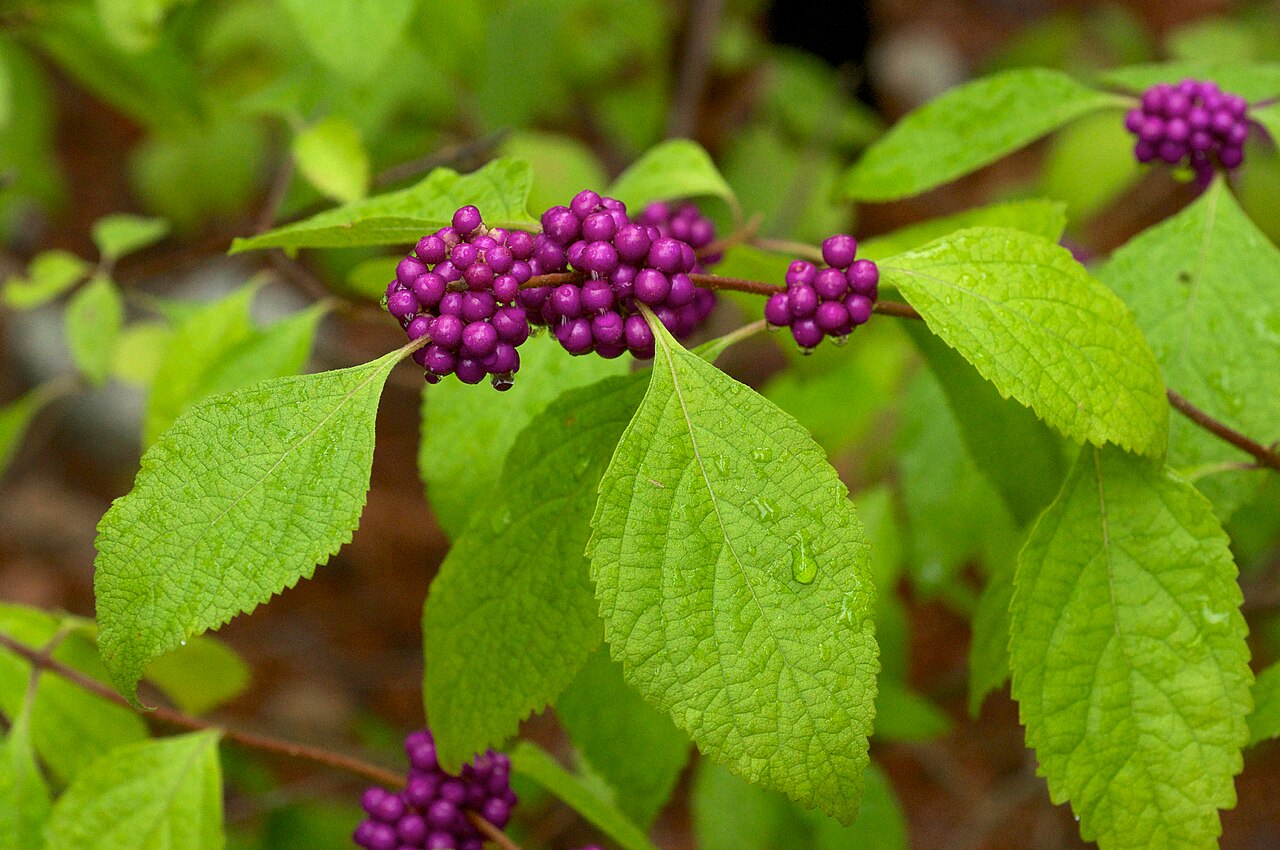
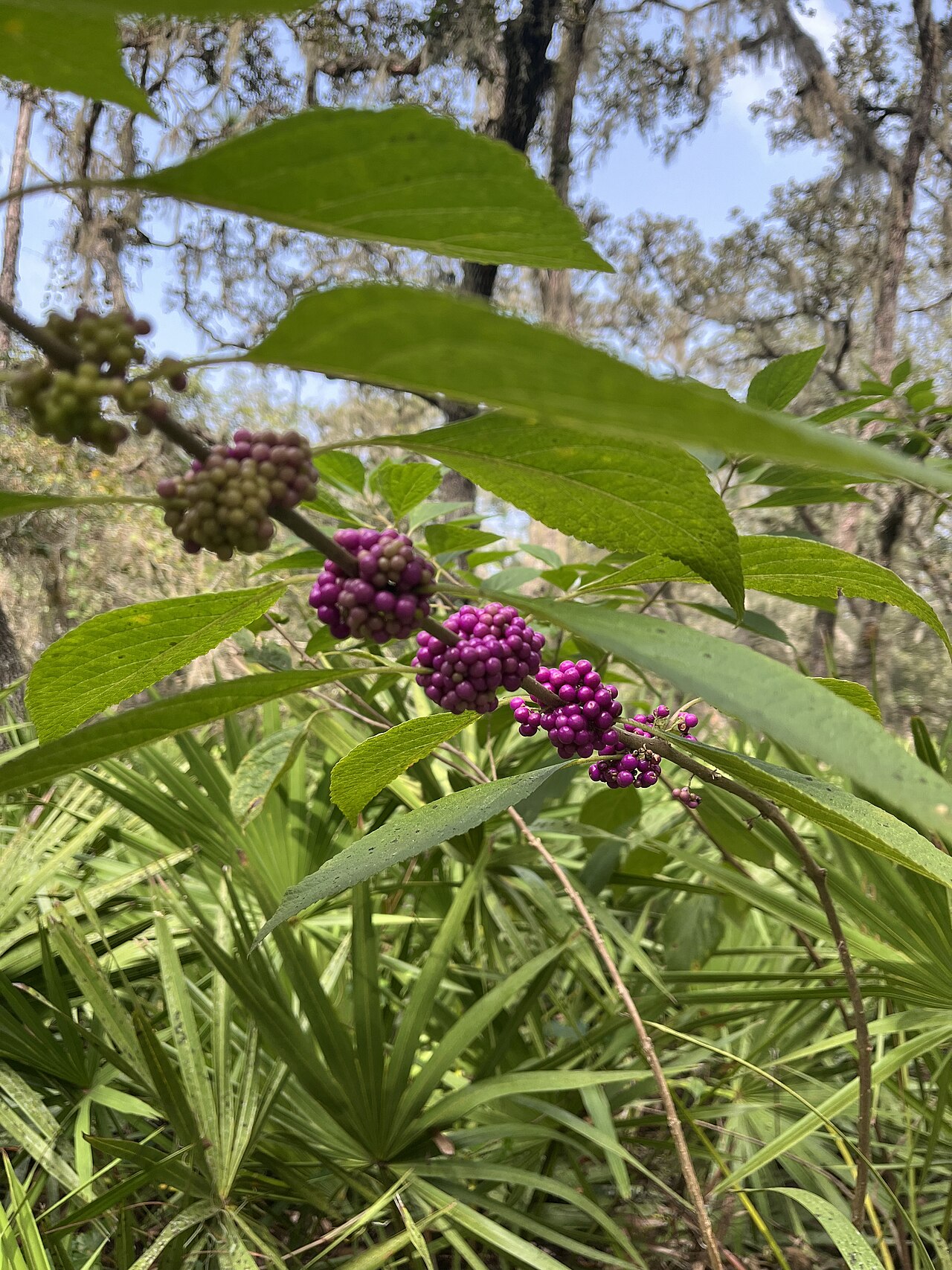
American beautyberry is easy to fall for in October. Then you get one home and have to decide where a loose, arching shrub with plain summer leaves actually belongs.
The answer depends on what you want from it. A beautyberry kept short in a sunny bed, a row of them in a wildlife hedge, and a single shrub under tall trees all need different spacing, partners, and pruning.
This guide lays out three practical ways to place it. Each plan lists the site it suits, the plants that pair well with it, and how much work it takes to keep looking right.
Plan at a Glance
| Site | Sunny bed, property-line hedge, or woodland edge under high shade |
| Size | Usually 3 to 5 feet tall and wide. It can reach about 9 feet in rich, moist soil if never cut back. |
| Sun | Full sun to part shade. Fruiting drops off in deep shade. |
| Soil | Sand to clay, as long as it drains. Steady moisture during summer helps the fruit. |
| Maintenance | Low. One late-winter pruning decision per year. |
| Best regions | Native from Virginia and Maryland south to Florida and west to Arkansas, Oklahoma, Missouri, and eastern Texas |
Start With a Site Assessment
Beautyberry fruits on shoots that grow the same year. NC State Extension notes that flowers and fruit appear on new growth, and that the shrub tolerates part shade but not deep shade. The light it gets in summer decides how many berries you’ll see.
Spend a day watching the spot you have in mind. Count the hours of direct sun once nearby trees are in full leaf. Six or more hours suits Plan 1. Partial sun or bright, high shade suits Plans 2 and 3.
Next, check drainage. Dig a hole about a foot deep, fill it with water, and see whether it empties within a day. The Lady Bird Johnson Wildflower Center lists beautyberry in moist woods, thickets, and bottomlands. It also notes that a long summer drought can make the shrub drop leaves and developing fruit. Soil that stays evenly moist without puddling is the target.
Finally, confirm you’re inside or near its native range. Beautyberry is a Southern shrub. NC State lists hardiness zones 6 through 9. North of that band, choose one of the regional alternates later in this guide.
Plan 1: The Cut-Back Accent in a Sunny Bed
This is the plan for a front-yard bed, a mailbox planting, or the corner of a patio. You treat beautyberry almost like a perennial, cutting it low every winter so it regrows as a compact mound.
The Wildflower Center notes that beautyberry can be cut to 12 inches above the base each winter to keep it compact and encourage flowers and fruit. NC State gives the same advice: prune in late winter to about a foot tall. The new shoots arch out by midsummer and carry berries by fall.
Layout. Place one beautyberry, or a group of three on a triangle, toward the back third of the bed. Leave a circle about 5 feet across for each shrub so the arching stems don’t smother their neighbors.
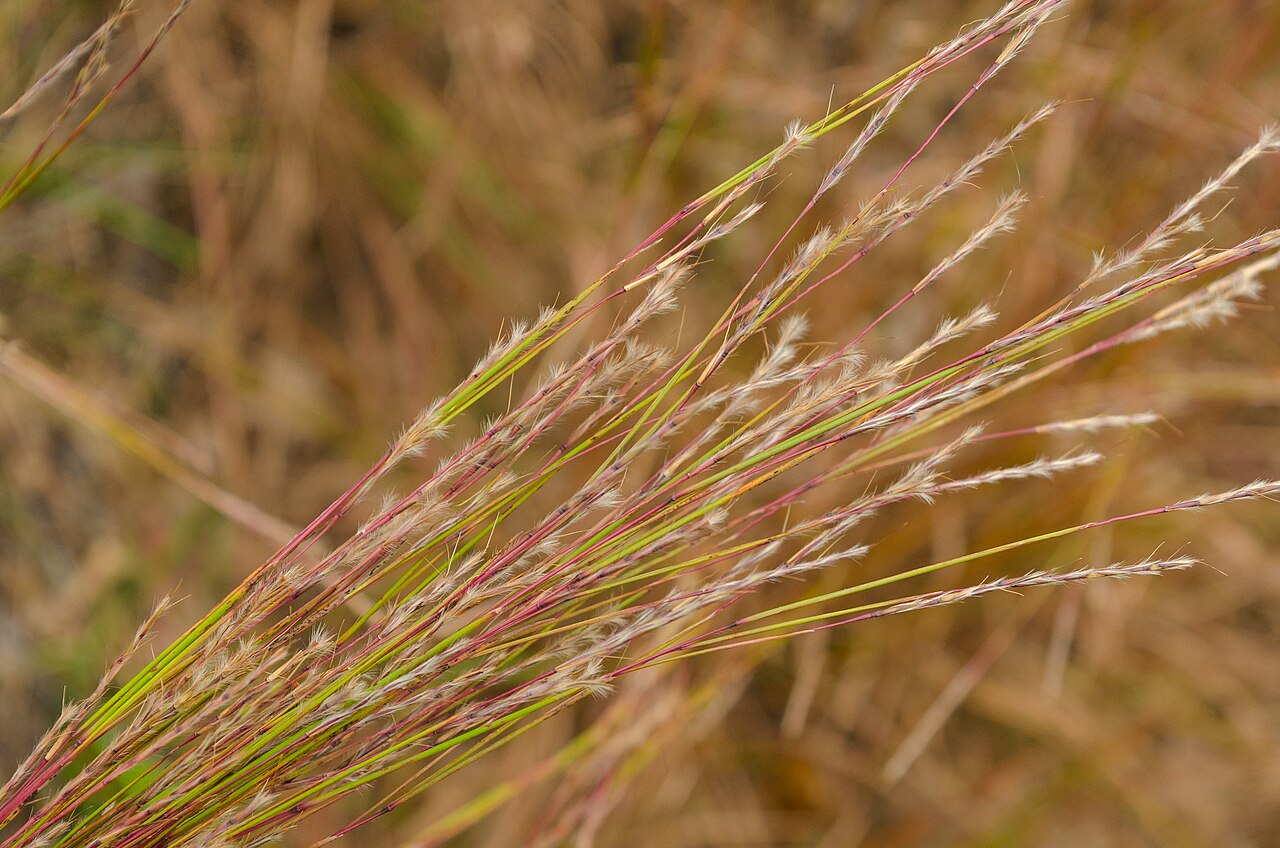
Partners. Sunny-bed companions should look good when the shrub is just a stubby clump in spring. Little bluestem is a strong choice. NC State lists it at 2 to 4 feet in full sun, with a warm copper fall color that holds through winter. Black-eyed Susan (Rudbeckia hirta) fills the summer gap with yellow flowers in sun to part shade.
Why it works. The yearly cut keeps the shrub in scale with a small garden and restarts the flowering shoots. It’s also the easiest plan to manage if you inherited an overgrown plant. Our guide to pruning beautyberry in a small garden covers the cut step by step.
Plan 2: The Wildlife Hedge Along a Property Line
If you have a long edge to fill, beautyberry works well massed with other native shrubs. NC State lists it for mass plantings and naturalized areas. It also notes that plants seem to fruit more heavily when several grow near each other.
Layout. Think in two loose rows. The back row holds taller evergreens for year-round screening. The front row holds beautyberry spaced 4 to 6 feet apart, staggered so each shrub sits in front of a gap in the row behind.
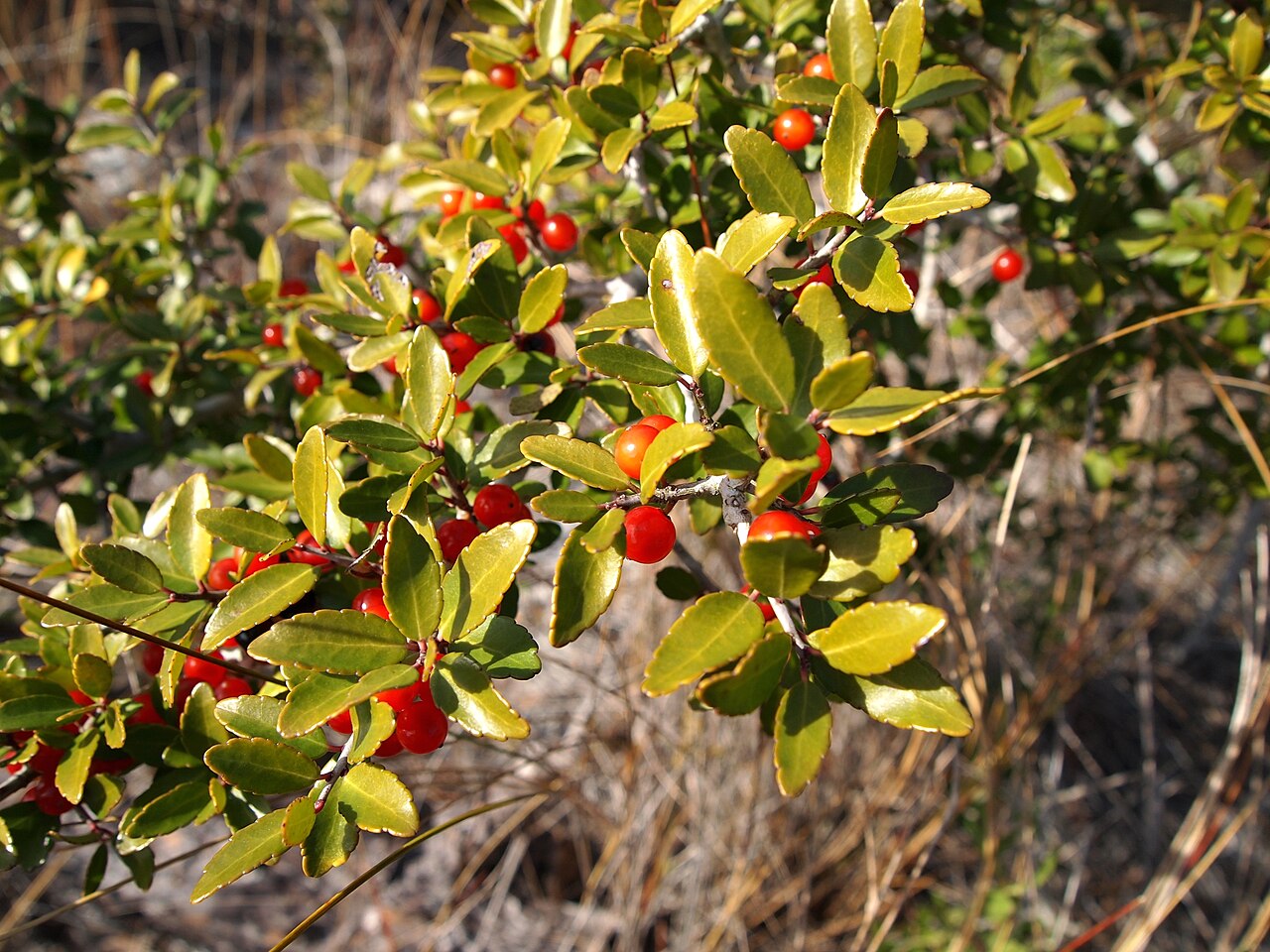
Partners. Yaupon holly is the natural backbone in the coastal South. NC State describes it as a broadleaf evergreen, 10 to 20 feet tall, that grows in sun or shade. It has separate male and female plants, so you need both for its red berries. Along the front, coralberry adds a lower layer. NC State lists it at 2 to 4 feet, suckering into dense cover with pink-purple fruit.
Why it works. Evergreens give birds shelter, and the deciduous shrubs give them fruit. The Wildflower Center notes that beautyberry’s seeds and berries are important foods for many birds, especially the northern bobwhite. Our guide to attracting songbirds with native plants explains how to pair food and cover.
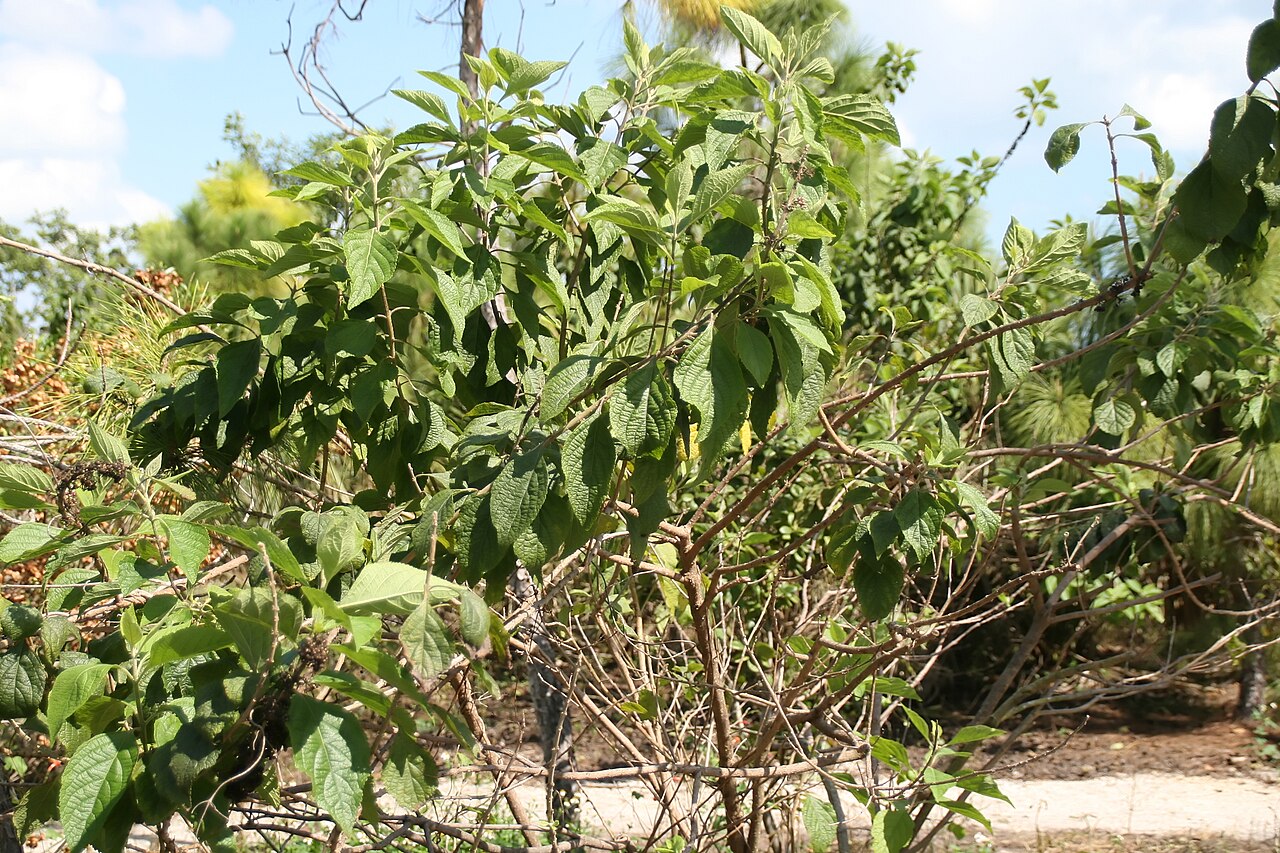
Pruning choice. In a hedge you don’t have to cut beautyberry to a foot. The Wildflower Center notes it can be left to grow into a tall woody shrub. A middle path works well: each late winter, remove a few of the oldest stems at the base and leave the rest.
Plan 3: The Woodland-Edge Understory
The Wildflower Center calls beautyberry a “wonderful, large understory shrub” and suggests it under shade trees. In the wild it grows in open pine woods and along forest edges, where high branches filter the sun.
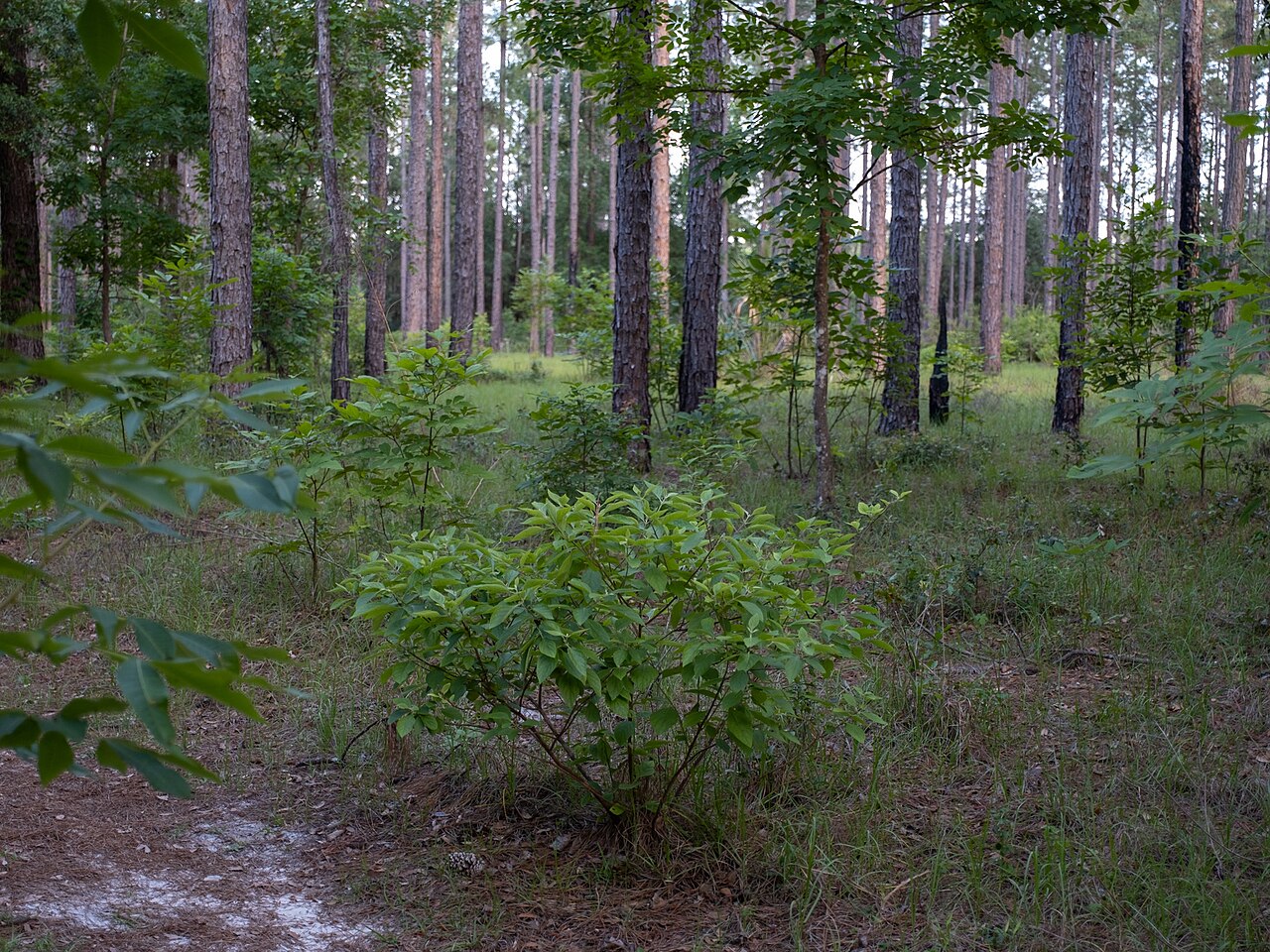
Layout. Set beautyberry where the canopy opens up: the sunny side of a tree line, a gap where a limb came down, or the edge of a path. Keep it out toward the edge of the canopy rather than tight against a large trunk, where roots and shade are densest.
Partners. Oakleaf hydrangea is a Southeastern native that NC State lists at 4 to 8 feet in sun to part shade. Its white summer flowers fill the gap before beautyberry fruits. Underneath, Christmas fern stays green all winter and tolerates shade down to a few hours of sun.
Why it works. The edge gives beautyberry enough light to fruit, and the ferns and leaf litter keep its roots cool. For a fuller layered planting, see our guide to what to plant with beautyberry in a part-shade border.
Plant Palette
| Plant | Role | Height | Sun / moisture | Native range |
|---|---|---|---|---|
| American beautyberry | Fall fruit, all plans | 3–8 ft | Sun to part shade; moist, drained | VA to FL, west to AR, OK, MO, e. TX |
| Little bluestem | Grass, Plan 1 | 2–4 ft | Full sun; drained to dry | Eastern and central North America |
| Black-eyed Susan | Summer flowers, Plan 1 | 2–4 ft | Sun to part shade; drained | Eastern US |
| Yaupon holly | Evergreen back row, Plan 2 | 10–20 ft | Sun to shade; dry to wet | SE VA to FL, west to AR, OK, TX |
| Coralberry | Low front layer, Plan 2 | 2–4 ft | Sun to shade; dry to moist | NY to e. TX, west to SD and CO |
| Oakleaf hydrangea | Summer flowers, Plan 3 | 4–8 ft | Sun to part shade; moist, drained | Southeastern US |
| Christmas fern | Evergreen groundcover, Plan 3 | 1–3 ft | Part to deep shade; moist, drained | Nova Scotia to MN, south to FL and e. TX |
Heights from NC State Extension; ranges from the Lady Bird Johnson Wildflower Center and NC State. Always confirm a plant is native to your county before buying.
How Many Plants to Buy
| Plan 1, 10 × 6 ft bed | 1–3 beautyberry, 5–7 little bluestem, 3–5 black-eyed Susan |
| Plan 2, 30 ft of hedge | 5–6 beautyberry at 5 ft, 3 yaupon (include a male) at 10 ft, 6–8 coralberry along the front |
| Plan 3, one tree edge | 1–2 beautyberry, 1 oakleaf hydrangea, 7–10 Christmas ferns at about 2 ft |
Installation Steps
- Plant in fall or early spring. Cool weather lets roots grow before summer heat arrives.
- Mark the mature footprint. Set stakes or a hose at each shrub’s full width before digging. The gaps will look too big at first. That’s correct.
- Dig wide, not deep. Make the hole two to three times as wide as the root ball and no deeper. Set the top of the root ball level with the soil surface.
- Loosen circling roots. Tease apart roots that wrap the pot so they grow outward into native soil.
- Water deeply and mulch. Soak the root ball and surrounding soil. Spread 2 to 3 inches of shredded leaves or wood mulch, kept a few inches from the stems.
- Plant the layers last. Add grasses, perennials, and ferns once the shrubs are in, so you don’t trample them.
If a new shrub droops in its first summer, check the root ball before adding more water. Our guide to newly planted beautyberry wilting walks through what to look for.
The First Three Years
- Year 1, spring and summer: water deeply whenever the top few inches of soil dry out. Pull weeds by hand. Expect a light berry crop or none.
- Year 1, late winter: remove only dead or broken stems. Let the young plant build roots.
- Year 2, spring: start the pruning style for your plan. Cut to about a foot for Plan 1. Remove a few old stems for Plans 2 and 3.
- Year 2, summer: water during long dry spells, especially while the shrub is flowering and setting fruit.
- Year 3: the planting should be filling in. Top up mulch, divide or move crowded perennials, and let fallen leaves stay under the shrubs.
- Every fall: leave the berries for birds. Hold cleanup until late winter.
Mistakes to Avoid
- Pruning in spring or summer. Beautyberry flowers on new shoots, so cutting after growth starts removes this year’s berries.
- Burying it in shade. NC State calls it intolerant of deep shade. Under a dense canopy you get leggy stems and few berries.
- Planting it as a foundation shrub. Its loose, arching shape and bare winter stems don’t suit tight spots against a wall.
- Ignoring deer. The Wildflower Center notes that deer like the foliage. Protect young plants where browsing is heavy.
- Buying the wrong beautyberry. Asian species such as purple beautyberry (Callicarpa dichotoma) are sold alongside the native. Check the label for Callicarpa americana, and see our American vs. purple beautyberry comparison for how to tell them apart.
Outside Beautyberry Country? Regional Alternates
Beautyberry’s native range ends roughly at Maryland, Kentucky, and southern Missouri. If you garden farther north or west, use the same three plans with a different fruiting shrub:
- Northeast and Great Lakes: winterberry holly or black chokeberry in Plans 1 and 2, and spicebush for the woodland edge.
- Plains and Midwest: coralberry, which reaches west to South Dakota and Colorado, fills the same low, berry-bearing role.
- Western states: check your state’s native plant list for a local fruiting shrub. No beautyberry is native there.
📋 Find it in your region: American beautyberry appears in our native plant lists for Georgia, Alabama & Mississippi, Arkansas, Louisiana, Eastern Oklahoma & Eastern Texas, Kentucky & Tennessee, and Illinois, Iowa & Missouri (southern Missouri only).
Frequently Asked Questions
How far apart should I plant beautyberry?
About 4 to 6 feet between shrubs works for a hedge or group. NC State lists a mature width of 3 to 6 feet, so closer spacing fills in faster but crowds sooner.
Can beautyberry grow in full shade?
It will survive, but it won’t fruit well. NC State describes it as tolerant of part shade but not deep shade. Plant it where it gets at least several hours of sun or bright, filtered light.
Do I need more than one beautyberry?
No, a single plant can fruit. NC State notes that plants seem to fruit more when several grow nearby, which is one reason to plant a group of three.
Is beautyberry good near a patio?
Yes, if you use Plan 1 and cut it back each winter. Left alone, it can get too wide for a small seating area.
Will deer eat beautyberry?
They can. The Wildflower Center notes that white-tailed deer favor its foliage. Fence or cage young plants until they’re well established.
Sources
- Lady Bird Johnson Wildflower Center, Callicarpa americana: size, native distribution and habitat, understory and screening use, winter cutback, drought response, wildlife and deer.
- North Carolina Extension Gardener Plant Toolbox, Callicarpa americana: light tolerance, late-winter pruning, flowering on new shoots, mass planting, group fruiting and hardiness zones.
- NC Extension Gardener Plant Toolbox: Ilex vomitoria, Symphoricarpos orbiculatus, Hydrangea quercifolia, Polystichum acrostichoides, Schizachyrium scoparium and Rudbeckia hirta: companion sizes, light and habit.
- Lady Bird Johnson Wildflower Center, companion distribution records for yaupon holly, coralberry and Christmas fern.
- Wikipedia, Callicarpa americana: native range and wildlife use.