Black Chokeberry vs. Winterberry: Which Fits Your Wet Garden Edge?
Last updated: November 6, 2026
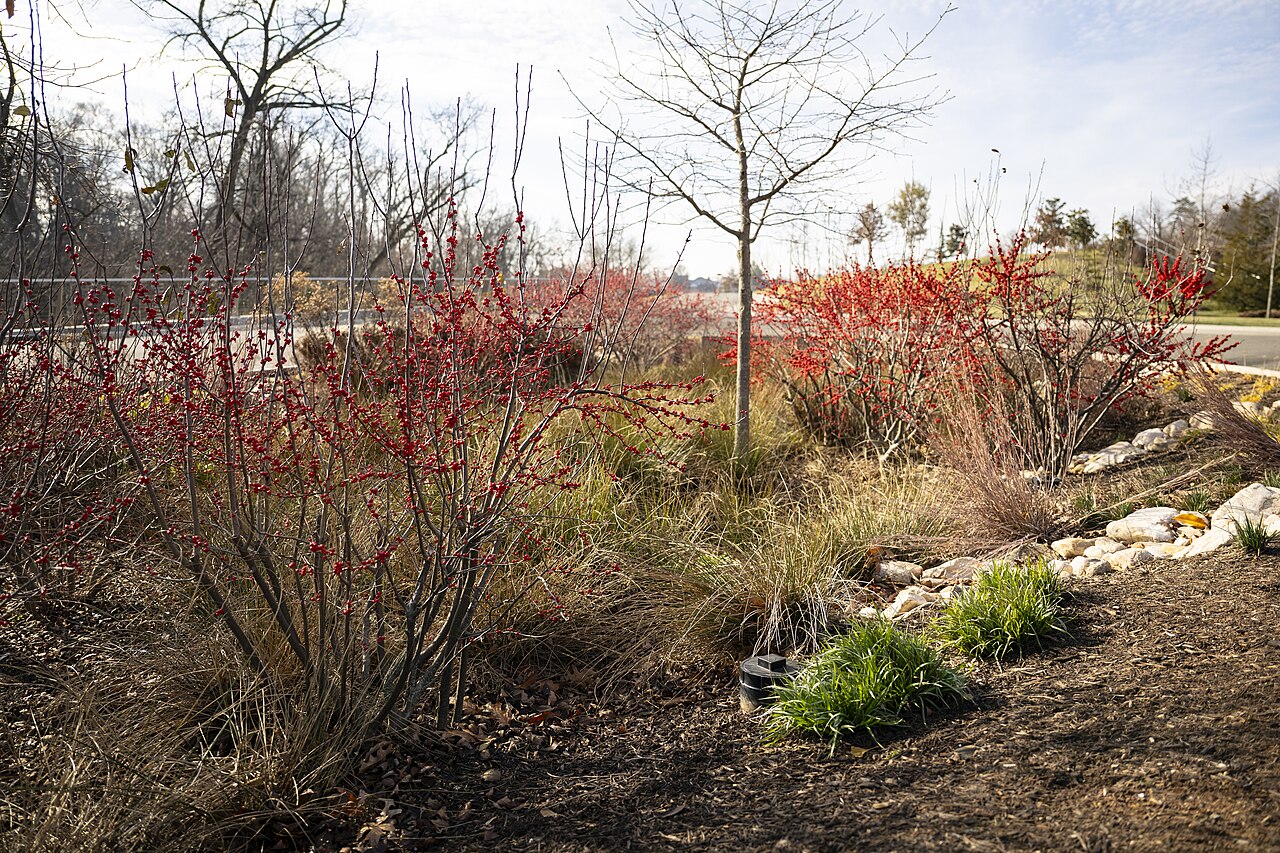
You have a soggy corner, a pond edge, or a low strip along a ditch, and you want one tough native shrub for it. Two names come up again and again: black chokeberry and winterberry holly.
Both are eastern natives. Both take wet feet, sucker into clumps, and color up in fall. They are not interchangeable, though.
The right pick depends on how wet the spot really is, your soil pH, how much room you have, and whether you can plant a male winterberry nearby. This guide walks through each factor and ends with a layout that uses both.
Plan at a Glance
- Site: a wet garden edge: pond margin, swale, low corner, or the slopes of a rain garden.
- Size: chokeberry suits narrow edges; winterberry wants more room and an extra plant for pollination.
- Sun: full sun to part shade for both. Fruit is heaviest in sun.
- Soil: chokeberry is broadly adaptable; winterberry needs acidic soil.
- Maintenance: low for both. Remove suckers where unwanted; thin old stems occasionally.
- Best regions: the overlapping eastern ranges, centered on the Northeast, mid-Atlantic, Appalachians and Great Lakes. Winterberry also reaches farther south and west.
Step 1: Read Your Wet Edge
“Wet” covers a lot of ground. Before choosing a shrub, watch the spot after a heavy rain and again during a dry spell.
- Soggy but draining: water stands briefly after storms and the soil stays moist. Both shrubs fit.
- Wet most of the season: soil stays saturated for long stretches. Both tolerate it, but chokeberry is the more flood-tolerant of the two by most accounts.
- Standing water for weeks: neither is the best tool. Look at buttonbush instead (more on that below).
- Wet in spring, dry by August: common at the top of a slope or berm. Winterberry’s tolerance of drought, noted by Penn State Extension, helps here.
Penn State Extension’s rain garden plant sheets put it neatly. They list black chokeberry for the “wet/moist” zone of a rain garden and winterberry for the “moist/dry” zone.
Penn State also notes that a rain garden itself should drain within 24 hours and shouldn’t be placed where the ground stays wet. If your “rain garden” never dries out, it is really a wetland edge, and plant choices shift.
Step 2: Test Soil pH Before You Choose
This is the factor that most often decides the question. University of Minnesota Extension gives winterberry’s preferred soil pH as 4.5 to 6.5 and warns that leaves may turn yellow above 6.5.
Black chokeberry is far less fussy. NC State’s plant toolbox lists it for acid, neutral and even alkaline soils, and The Morton Arboretum notes tolerance of road salt.
If your soil test comes back neutral or alkaline, chokeberry is the safer choice. If it’s acidic, both are open to you. Heavy clay is workable for either, but check drainage first; our guide to planting black chokeberry in clay covers a simple percolation test.
Step 3: Decide How Many Plants You Can Fit
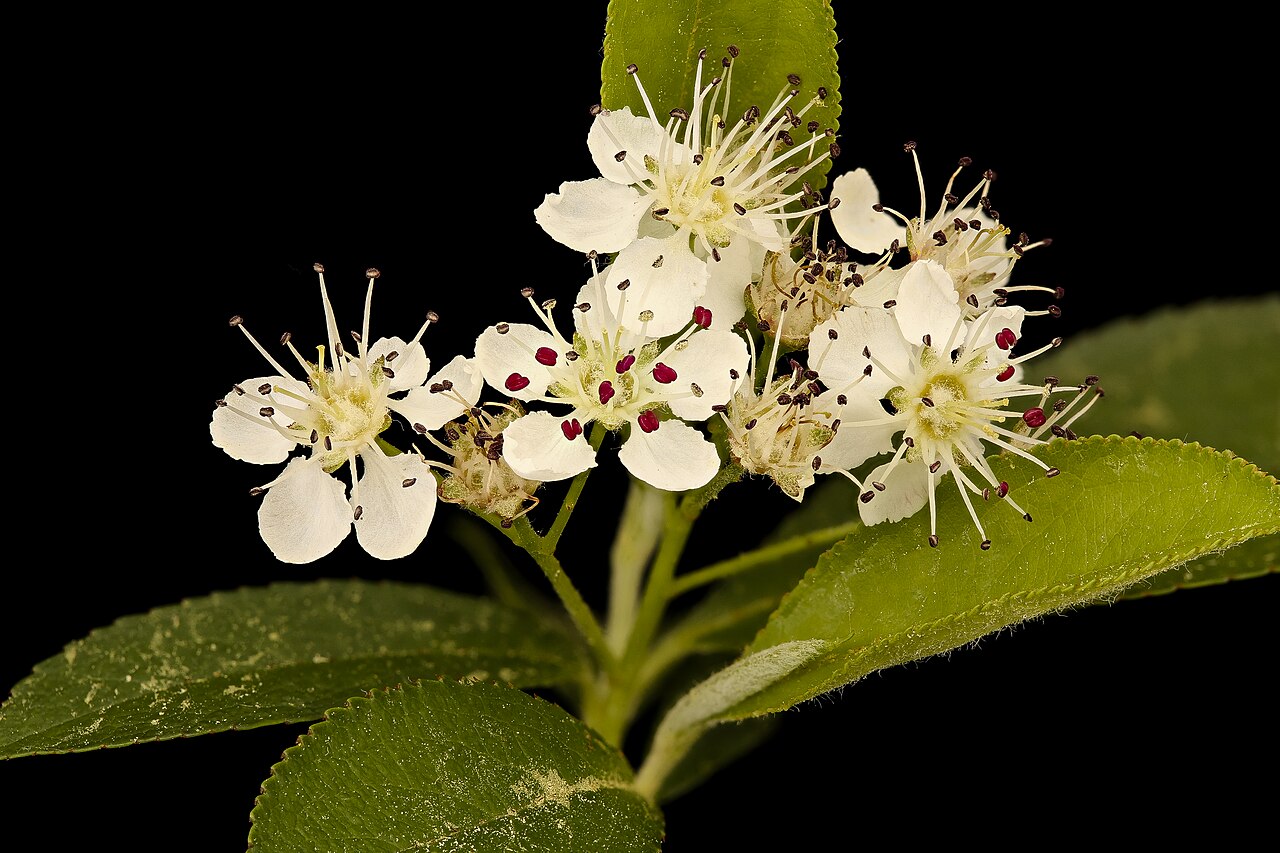
Here the two shrubs differ sharply. Iowa State Extension notes that aronia is self-fruitful, so a single chokeberry can flower and fruit on its own.
Winterberry is dioecious: each plant is either male or female, and only females bear fruit. University of Minnesota Extension says one male can pollinate about 20 females within 40 feet, but only four or five beyond that distance.
The Lady Bird Johnson Wildflower Center adds that the male must be the same species and bloom at the same time as the female. Nurseries often sell matched pairs, such as early-blooming ‘Jim Dandy’ with early females, which the UConn Plant Database lists.
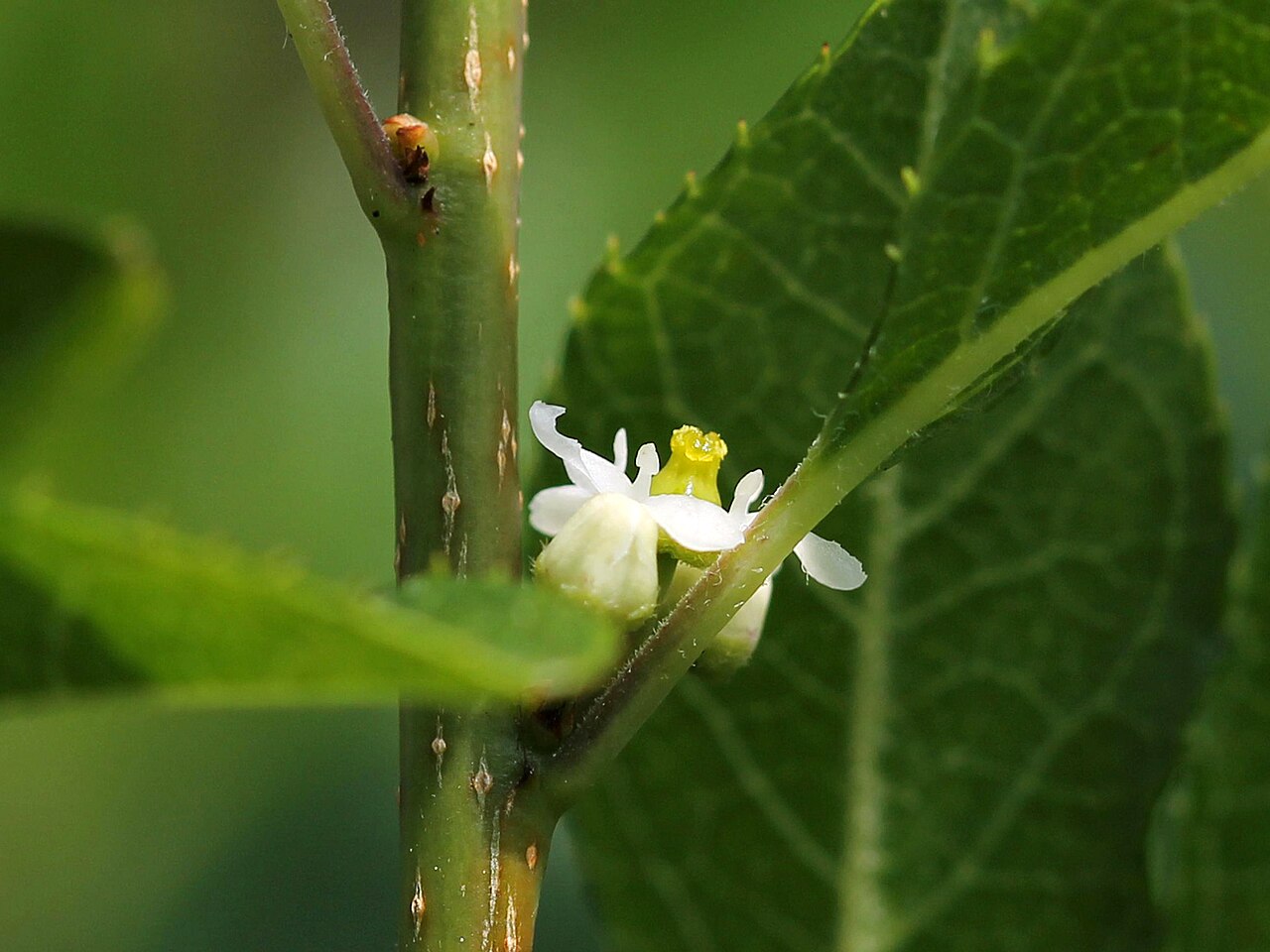
If you only have room for one shrub, chokeberry is simpler. If wild hollies grow nearby, a lone female winterberry may still fruit, but the Wildflower Center frames that as a gamble. Our guide to winterberry holly with no berries explains how to match bloom times.
Step 4: Compare Size, Spread and Season
Side-by-Side Comparison
| Factor | Black chokeberry | Winterberry holly |
|---|---|---|
| Height | Usually 3–8 ft | Typically 6–10 ft; 3–15 ft by cultivar and site |
| Spread | Suckers freely into colonies | Slow-growing; suckers into clumps or thickets over time |
| Wetness | Very flood tolerant; rain garden “wet/moist” zone | Tolerates poor drainage; rain garden “moist/dry” zone |
| Soil pH | Acid to alkaline | Acidic, about 4.5–6.5 |
| Pollination | Self-fruitful | Needs a male of matching bloom time |
| Fruit | Black, late summer; edible but very tart | Red (or orange/yellow cultivars), fall into winter; not for people |
| Fall color | Red to burgundy | Yellow |
| Hardiness | Zones 3–8 | Zones 3–9 |
Compiled from NC State, Penn State, University of Minnesota, The Morton Arboretum and the Lady Bird Johnson Wildflower Center.
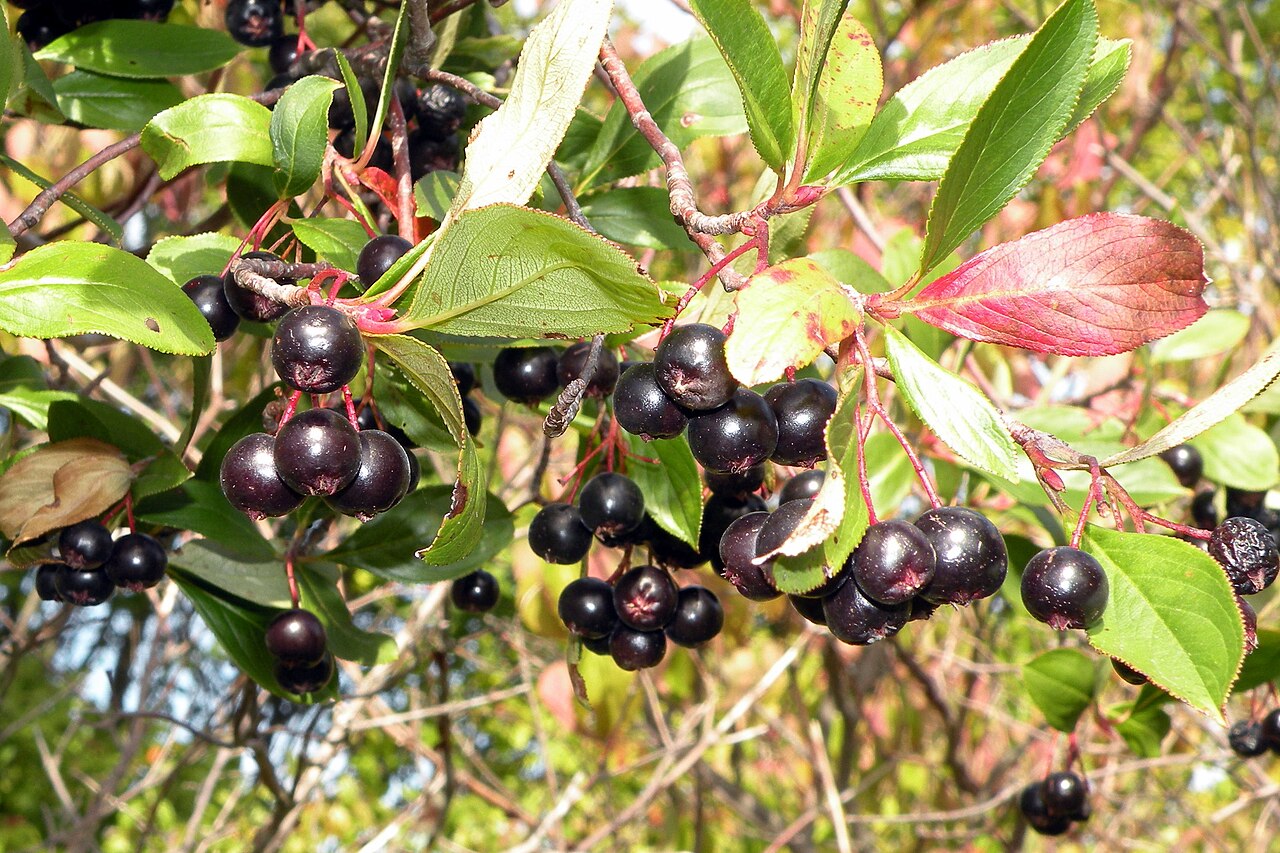
Season of interest is the other big difference. Chokeberry peaks in late spring with white flowers and again in fall with red leaves. Its fruit ripens in late summer, and the USDA plant guide notes it begins to drop and shrivel soon after.
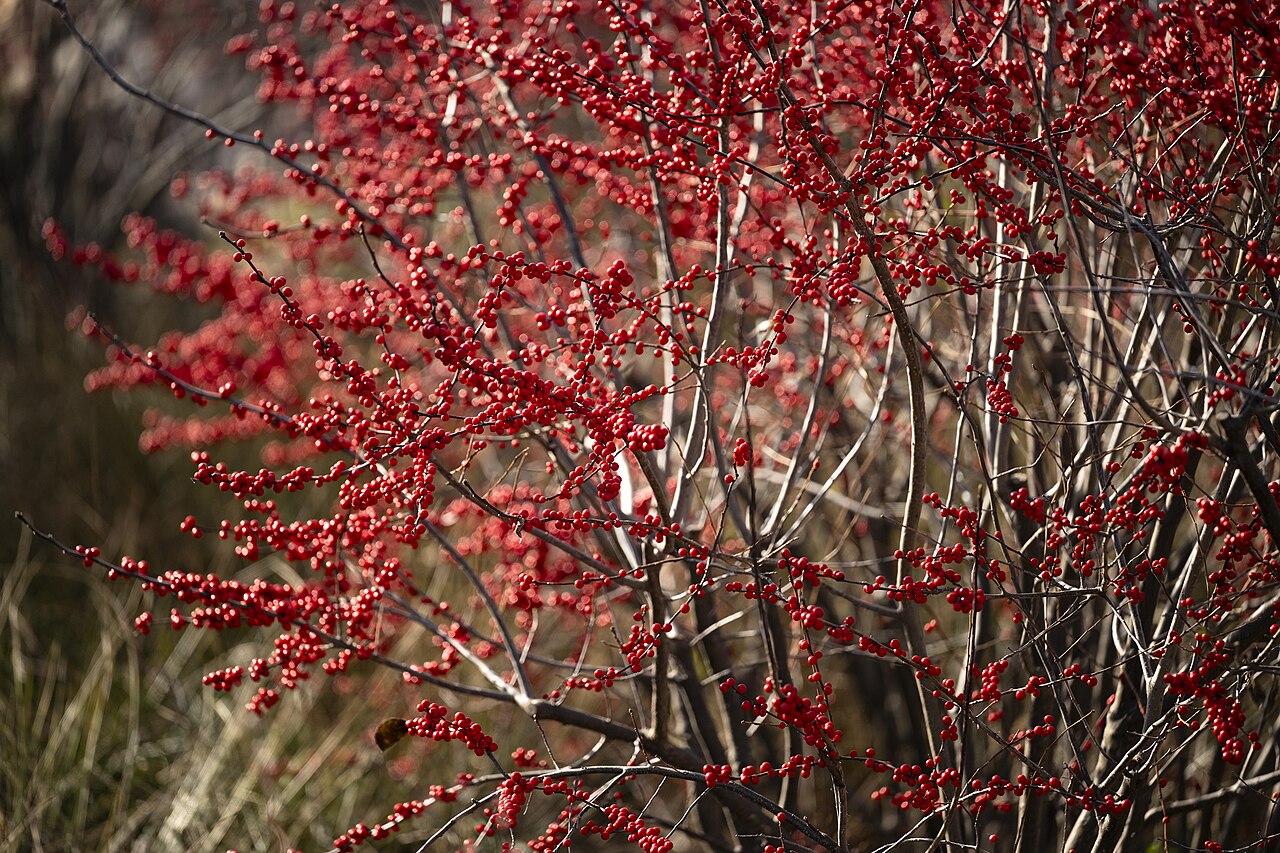
Winterberry’s show comes later. Its leaves turn yellow, drop, and leave the bare stems covered in red fruit that, per Penn State, persists into the winter months.
Birds eventually eat both. If berries vanish faster than you’d like, that is usually wildlife at work; our guide to winterberry berries disappearing covers the other possibilities.
One safety note: NC State lists winterberry fruit and leaves as having low-severity toxicity to people, mainly stomach upset. Chokeberry fruit is edible, though very astringent. If small children use the area, that may tip the choice.
Step 5: Lay Out a Wet Edge That Uses Both
On many sites you don’t have to choose. A wet edge usually has a gradient, and the two shrubs sort themselves along it.
- Lowest, wettest band: black chokeberry, spaced about 4 to 6 feet apart as the USDA plant guide suggests. Let it sucker into a band.
- Middle band, moist but draining: a group of three to five female winterberries with a male at one end, within 40 feet of all of them.
- Upper edge or berm: keep winterberry here only if the soil is acidic. Otherwise, extend the chokeberry or use a dry-tolerant companion.
- Front edge: leave a mulched strip so suckers from both shrubs have somewhere to go before they reach lawn or path.
Odd-numbered groups read more naturally than single specimens. Repeating the same shrub two or three times along a long edge also ties the planting together.
Plant Palette
| Plant | Role | Height | Sun / moisture | Native range |
|---|---|---|---|---|
| Black chokeberry (Aronia melanocarpa) | Wettest band; any pH | 3–8 ft | Sun to part shade; wet to moist | Newfoundland to Minnesota, south to the Georgia mountains, Tennessee, Arkansas |
| Winterberry holly (Ilex verticillata) | Middle band; winter fruit | 6–10 ft typical | Sun to part shade; moist, acidic | Nova Scotia to the Florida Panhandle, west to Minnesota, SE Missouri, east Texas |
| Buttonbush (Cephalanthus occidentalis) | Standing-water spots | 5–8 ft | Full to part sun; wet | Eastern and southern North America |
| Virginia sweetspire (Itea virginica) | Southern alternate | 3–8 ft | Sun to part shade; moist to wet | SE Pennsylvania to Florida, west to east Texas |
Ranges are broad summaries from the Lady Bird Johnson Wildflower Center, NC State and our plant profiles. Confirm local status before buying.
Regional Alternates
Both shrubs are eastern. In the Southeast, where black chokeberry thins out, winterberry still works on acidic soils, and Virginia sweetspire is a strong suckering option for wet ground.
Where water actually stands for long periods, buttonbush is the better fit. NC State notes it grows in standing water up to 3 feet deep, while flowering poorly in shade or dry soil. Our guide to where buttonbush fits in a rain garden explains which spots suit it.
West of the Great Plains, neither chokeberry nor winterberry is native. Use your regional native plant list, or a local native plant society, to find a wet-site shrub that belongs where you live.
Installation Steps
- Test the soil. A pH test decides whether winterberry is an option at all.
- Map the moisture. After a storm, flag where water stands longest. Penn State recommends this for rain gardens before planting.
- Buy winterberry by sex. Get labeled females plus a compatible male, not unlabeled seedlings.
- Plant in spring or early fall. Set each shrub at the depth it grew in the pot.
- Mulch. Penn State suggests about 2 inches of mulch in rain gardens to hold moisture and suppress weeds.
- Water through establishment. Even wet-site shrubs dry out in their first summer. Our guide to watering winterberry after planting shows how to check below the mulch.
First-Three-Years Maintenance Calendar
- Year 1: water during dry spells, keep weeds out of the mulch, and don’t prune beyond removing broken stems.
- Year 2, spring: let chokeberry suckers fill in its band. Pull any that head toward a path or lawn.
- Year 2, summer: watch winterberry leaves. Leaves yellowing in summer can point to soil pH above the 6.5 limit University of Minnesota Extension gives.
- Year 3: start light thinning of the oldest stems. Prune chokeberry right after flowering, as Penn State advises. For winterberry, see our guide to pruning an overgrown winterberry.
- Every fall: check fruit set. A poor crop on winterberry usually means a pollination gap. On chokeberry, look first at light; see black chokeberry not fruiting.
Mistakes to Avoid
- Planting winterberry in alkaline soil. It tends to yellow and struggle.
- Buying a single unlabeled winterberry. It may be a male, or a female with no partner.
- Treating a permanent puddle as a rain garden. Neither shrub is the best choice for water that stands for weeks.
- Crowding a path. Both shrubs sucker; leave a buffer strip.
- Heavy shade. Both fruit best in sun.
If chokeberry wins on your site and you want it in a line, see our layout for black chokeberry as a low hedge.
📋 Check your region: both shrubs appear in our native plant lists for New Hampshire, Maine & Vermont, New York, Pennsylvania & Northern New Jersey, Maryland, Virginia & West Virginia, and North Carolina & South Carolina.
Frequently Asked Questions
Which is better for a really wet spot, chokeberry or winterberry?
For the wettest ground, black chokeberry. The Lady Bird Johnson Wildflower Center calls it very flood tolerant, and Penn State places it in the wet zone of a rain garden. Winterberry tolerates poor drainage too, but suits the moist middle better.
Do I need two black chokeberries for fruit?
No. Iowa State Extension notes aronia is self-fruitful. Winterberry is different: you need a male plant that blooms at the same time as the females.
Can winterberry grow in alkaline soil?
It struggles. University of Minnesota Extension recommends pH 4.5 to 6.5 and notes leaves may yellow above 6.5. Chokeberry is the better choice for neutral or alkaline sites.
Are the berries safe to eat?
Black chokeberry fruit is edible but very tart. Winterberry fruit is not for people; NC State lists low-severity toxicity from the fruit and leaves.
Which one gives better winter interest?
Winterberry. Its red fruit stays on bare stems into winter, while chokeberry fruit tends to drop or shrivel soon after ripening in late summer.
Sources
- Penn State Extension, Rain Garden Plants: Black Chokeberry, Rain Garden Plants: Winterberry and An Introduction to Rain Gardens: hydrologic zones, spread, flood and drought tolerance, fruit persistence, drainage timing, mulch.
- University of Minnesota Extension, Winterberry: size, soil pH, suckering, male-to-female ratios and distances.
- NC State Extension Gardener Plant Toolbox: Aronia melanocarpa, Ilex verticillata, Cephalanthus occidentalis: soil pH, size, toxicity, standing-water tolerance.
- Lady Bird Johnson Wildflower Center: Aronia melanocarpa and Ilex verticillata: native distribution, flood tolerance, male and female bloom matching.
- Iowa State University Extension, Growing Aronia in Iowa: self-fruitfulness.
- USDA NRCS, Black Chokeberry Plant Guide: spacing and fruit drop.
- The Morton Arboretum, Black chokeberry: wet sites and road salt tolerance.
- UConn Plant Database, Ilex verticillata: cultivars and matched pollinators.