Planting Black Chokeberry in Clay: Checking Drainage Before Digging
Last updated: November 5, 2026
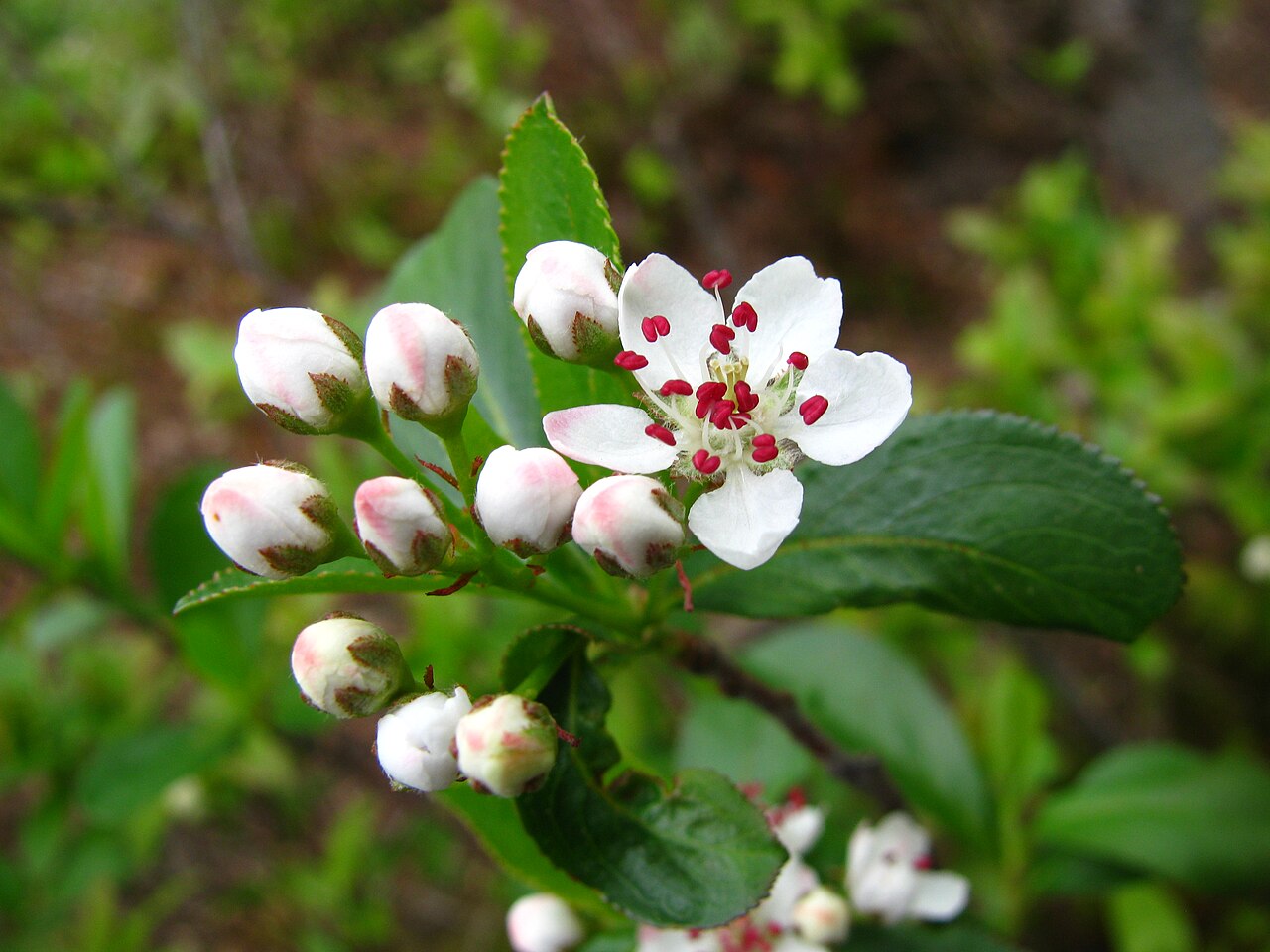
Heavy clay has a bad reputation, and for many shrubs it deserves it. Black chokeberry is one of the better choices for it. It grows naturally in wet lowlands and tolerates occasional flooding.
Tolerant doesn’t mean indifferent, though. A young shrub set into a sealed clay pit that holds water like a bucket can still struggle through its first seasons.
The fix starts before you dig the planting hole. A simple drainage test tells you how your clay actually behaves, and the result decides how you plant.
The Short Answer
- Test first: dig a test hole, soak it, refill it, and measure how fast the water drops.
- 1 to 3 inches per hour: good drainage. Plant normally.
- Under 1 inch per hour: poor drainage. Plant the root ball a few inches high and don’t dig deeper than the root ball.
- Water stands for days: treat it as a wet site. Build a low mound or berm, or plan a rain garden.
- Backfill with the soil you dug out. Don’t fill the hole with compost or potting mix.
- Mulch and water through the first summers, even on clay.
How Black Chokeberry Handles Clay and Wet Soil
In the wild, black chokeberry grows across a wide range of sites. The Lady Bird Johnson Wildflower Center lists lowlands, bogs, dunes, and bluffs as native habitat and describes the species as very flood tolerant.
The Morton Arboretum recommends it for low, wet locations and lists tolerance for occasional flooding and wet sites, as well as occasional drought.
Mark Brand of the University of Connecticut writes that both red and black chokeberries seem to tolerate dry or wet conditions, that best growth comes in moist soils, and that soil type is not critical.
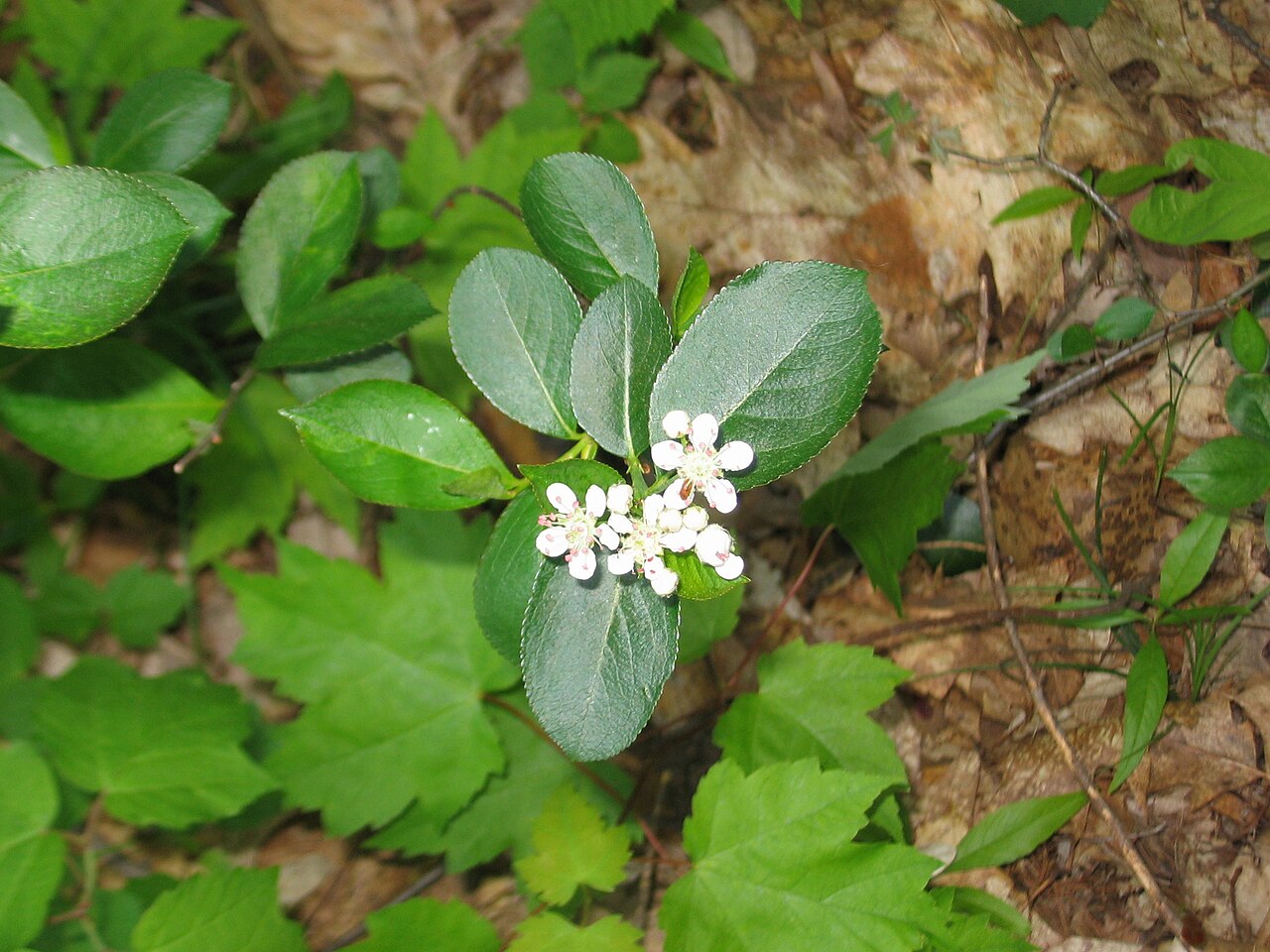
The extension guides add one useful qualifier. Iowa State University Extension says aronia performs best in well-drained soils, though it tolerates poorly drained ones. The USDA plant guide puts the best growth and fruit on low, moist but well-drained sites.
So clay is fine. The goal is to avoid a planting hole that turns into a long-lasting puddle around a new root ball.
Why Clay Drains Slowly
Iowa State’s guide to testing soil drainage explains the basics. Clay particles are the smallest soil particles, so clay soils have less pore space and hold water longer. Excess water pushes out oxygen, and low oxygen hurts roots.
Compaction makes it worse. Construction traffic, foot traffic, and working soil while it’s wet all crush the pores. Low spots, high water tables, and hardpans slow drainage too, even on slopes.
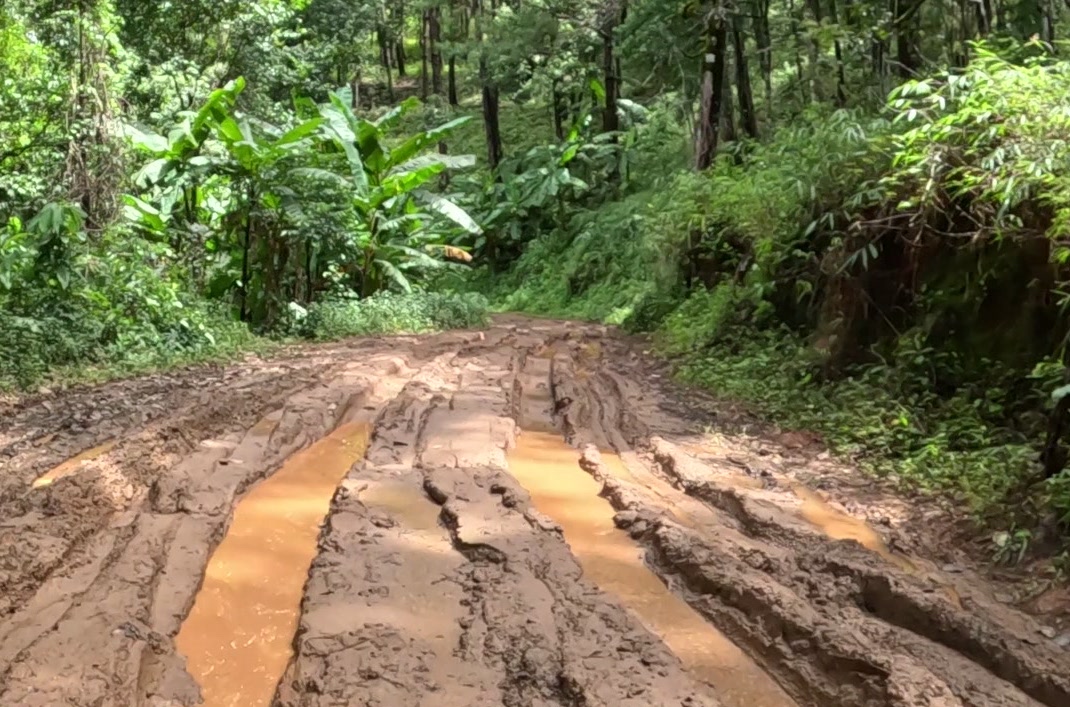
That’s why two clay yards can behave very differently. A test tells you which one you have.
Step 1: Read the Site Before You Test
Walk the spot after a heavy rain. Note where water collects, how long puddles last, and where downspouts or slopes send runoff.
Ask about the site’s history too. New-construction lots are often compacted and covered with subsoil. Our clay soil improvement tips cover the common causes in more detail.
A basic soil test is worth doing at the same time. Clemson Cooperative Extension recommends testing before any planting project to learn pH and nutrient levels. Iowa State notes aronia prefers slightly acidic soil. Our soil testing tips for beginners explain how to take a sample.
Step 2: Dig a Test Hole
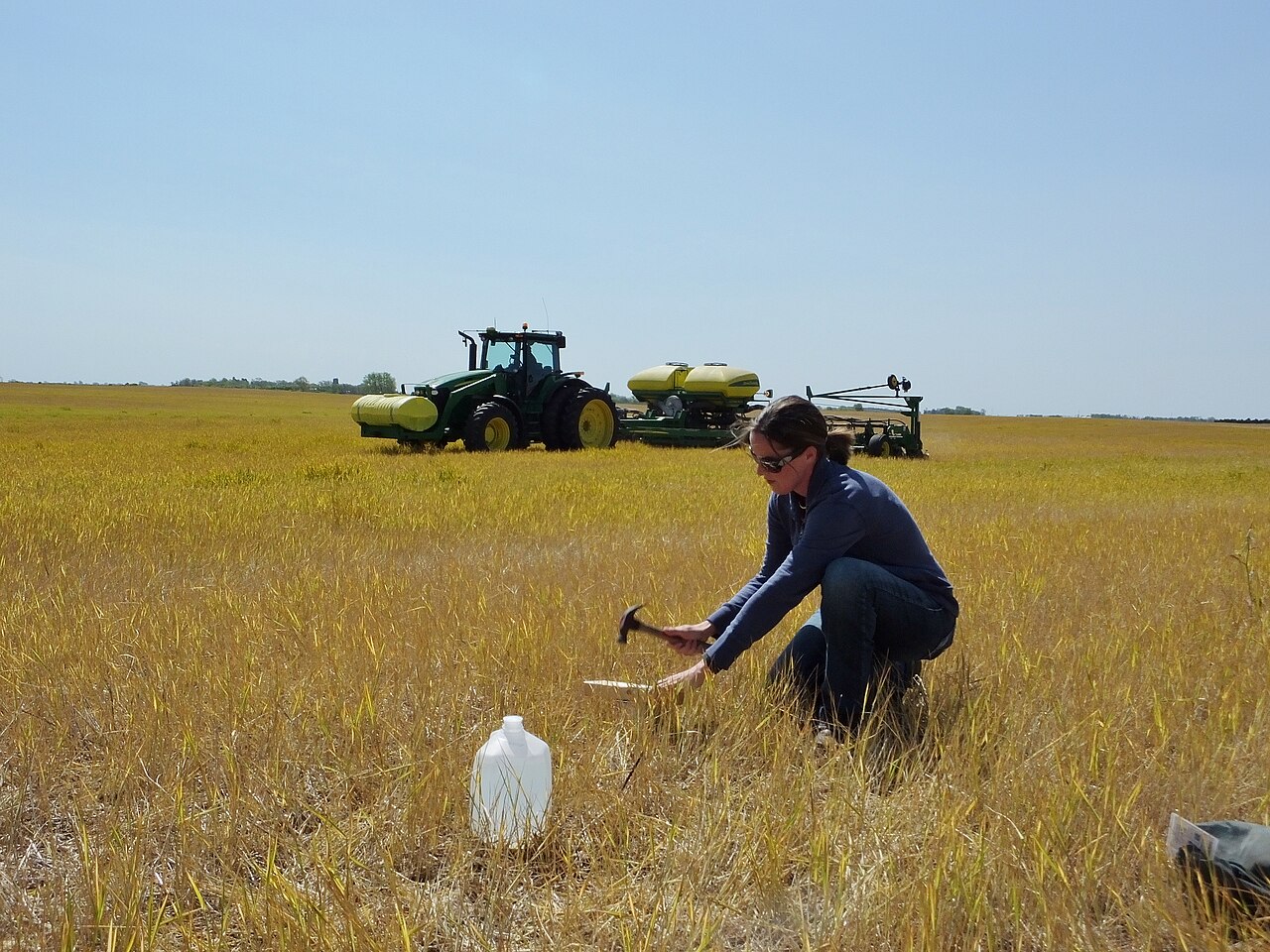
Iowa State’s percolation test is simple. Using a shovel or post-hole digger, dig a hole at least 12 inches deep and 4 to 12 inches wide. It can go to 18 inches if your root ball is taller than 12 inches.
You can use the actual planting hole for the test, which saves digging.
Don’t dig when the soil is soaking wet. Iowa State warns that working overly wet soil can glaze the sides of the hole, which gives a falsely slow result.
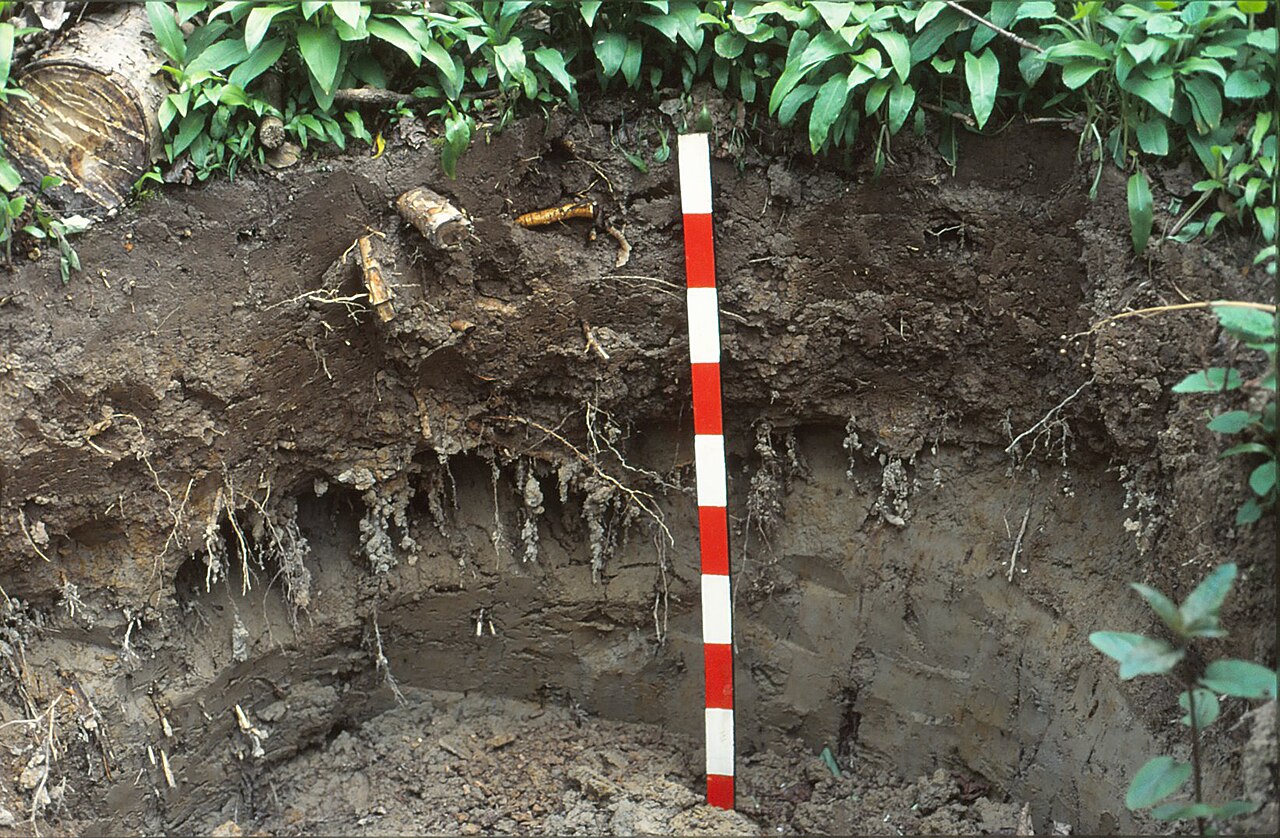
While you dig, look at the soil. Dense, sticky subsoil, gray coloring, or a hard layer you can barely get through all point toward slow drainage.
Step 3: Soak, Refill, and Measure
Follow Iowa State’s steps:
- Fill the hole with water and let it drain completely. This saturates the surrounding soil. It may take a short time or most of a day.
- Right after it drains, fill it again.
- Measure the water depth with a ruler.
- Wait 15 minutes and measure how far the water dropped.
- Multiply that drop by 4 to get inches per hour.
Reading Your Drainage Test
| More than 4 in/hour | Very well-drained. Mulch well and plan to water, since black chokeberry is not drought-tolerant. |
| 1 to 3 in/hour | Desirable for most plants. Plant at normal depth. |
| Less than 1 in/hour | Poor drainage. Plant slightly high, use native backfill, and consider a wider prepared bed. |
| Still full the next day | A wet site. Plant on a low mound or berm, redirect water, or design a rain garden. |
Rate thresholds from Iowa State University Extension. Site notes for black chokeberry from the USDA plant guide.
Step 4: Choose a Planting Approach
If drainage is good: plant normally, following Steps 5 and 6.
If drainage is poor but the hole empties within a day: black chokeberry is still a good fit. Clemson Extension recommends setting the top of the root ball about 2 to 4 inches above the surrounding soil in poorly drained or compacted ground. Build soil up around the sides of the root ball, not over the top.
If water stands for a day or more: you have a genuinely wet spot. Iowa State suggests options such as regrading low spots, redirecting downspout water, building a raised bed or berm large enough for the root system, or installing a rain garden.
Black chokeberry is a natural rain garden shrub. Our guide on how to start a rain garden explains how to size and shape one. For the soggiest corners, Iowa State also lists wet-tolerant shrubs like buttonbush and redosier dogwood.
Step 5: Dig a Wide, Shallow Hole
Clemson Extension’s shrub-planting guidance is especially relevant on clay:
- Find the root flare first. Brush away potting mix from the top of the root ball until you find the uppermost roots.
- Dig wide. Make the hole two to five times wider than the root ball. Roots grow faster into loosened soil.
- Don’t dig deep. Never dig deeper than the distance from the topmost roots to the bottom of the root ball. Leave the bottom undisturbed so the plant doesn’t sink.
- Rough up glazed sides. In heavy clay, hole walls can glaze like the inside of a clay pot. Notch them with a shovel or mattock so roots can move out.
A deep hole in clay is the classic mistake. Loose soil at the bottom settles, the plant sinks, and the deepest part of the hole collects water.
Step 6: Backfill With the Soil You Removed
Plant tags often suggest mixing compost into the hole. Clemson Extension says research favors backfilling with only the native soil. An amended pocket encourages roots to stay inside the hole instead of spreading into the surrounding soil.
In clay, an amended hole can also collect water. Purdue University’s forestry extension describes this as a “bathtub effect”: loose fill in a compacted, clay pit holds water and drains poorly.
If you want to improve the soil, improve the whole bed. Clemson recommends mixing organic matter evenly through the entire planting area, at no more than 10 to 20 percent by volume. Iowa State also recommends organic matter, not sand, for poorly drained soil, worked into the top 6 to 12 inches without over-tilling.
Firm the backfill in layers to remove big air pockets, then water slowly and deeply to settle it.
Step 7: Mulch, Water, and Space for the Future
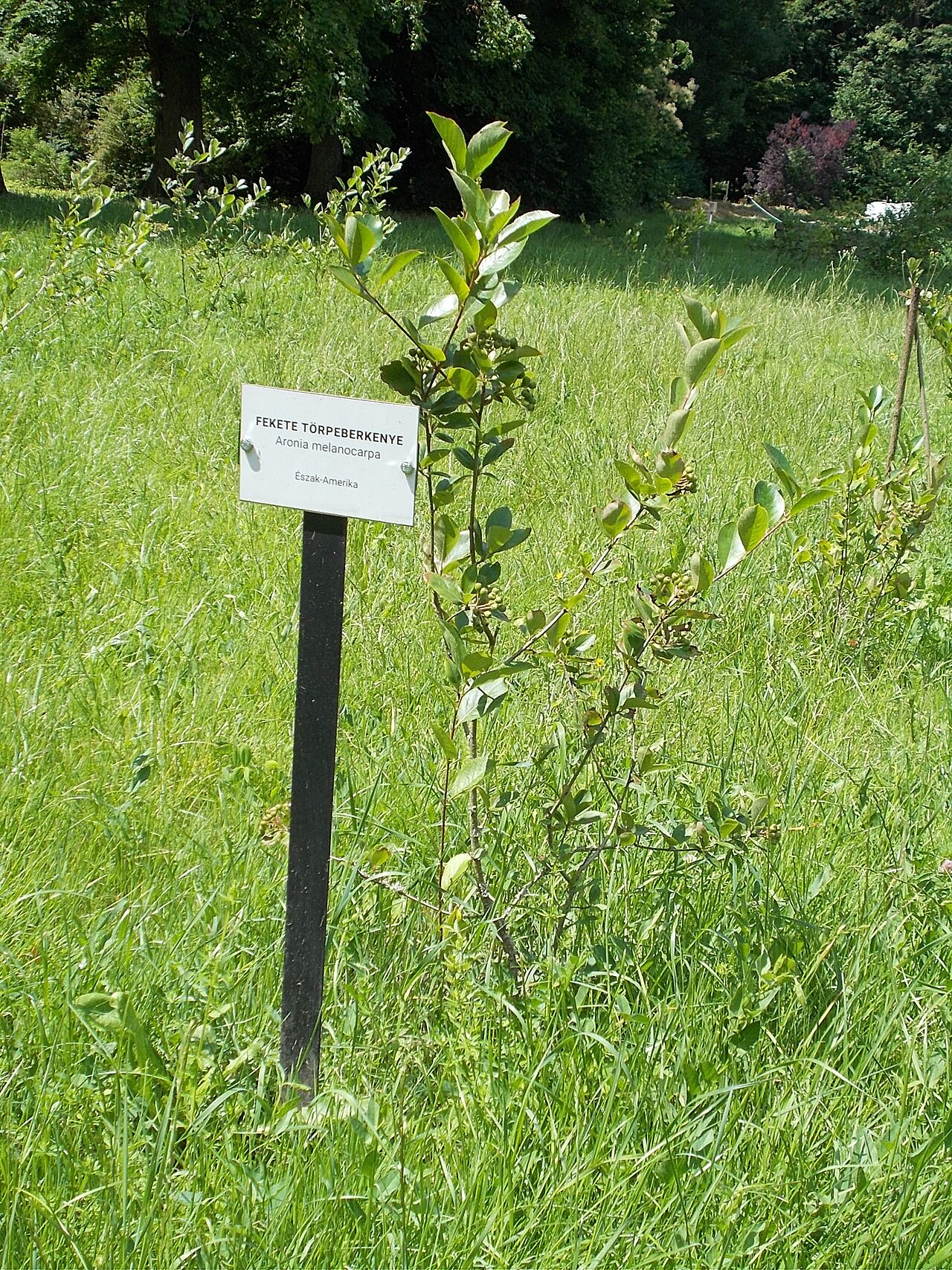
Clemson recommends 2 to 3 inches of organic mulch over the planted area, kept 2 to 3 inches away from the stems. Mulch also protects the exposed sides of a root ball planted above grade. See our mulching techniques for native gardens.
Water matters even on clay. A root ball set high can dry out quickly in summer, as Clemson points out. Iowa State advises watering aronia during the first year or two of establishment and then during very dry periods.
Check moisture with a finger before watering. On clay, the surface can look dry while the soil a few inches down is still wet.
Give the shrub room. The USDA plant guide suggests spacing plants 4 to 6 feet apart, or about 10 feet apart for fruit production. Black chokeberry also spreads by suckers over time, so plan the bed edge now. Our guide to managing black chokeberry suckers covers buffers along paths and lawns.
Timing the Planting
The USDA plant guide recommends planting bare-root stock in spring once the threat of frost is over. Container plants can go in from spring to midsummer if there’s enough moisture.
On clay, also time the work around the soil itself. Iowa State warns against working wet soil, which compacts it. Squeeze a handful: if it smears into a sticky ribbon, wait a few drier days.
Mistakes to Avoid on Clay
| Skipping the drainage test | You won’t know whether to plant level or high. |
| Digging deeper than the root ball | The plant settles and the hole collects water. |
| Filling the hole with compost or potting mix | Creates a “bathtub” and keeps roots in the hole. |
| Adding sand to clay | Iowa State recommends organic matter instead. |
| Leaving slick, glazed hole walls | Notch them so roots can escape. |
| Digging when the soil is wet | Compacts clay and skews test results. |
A Season-by-Season Plan for the First Year
- Before planting: watch the site after rain, run the drainage test, and send off a soil sample.
- Spring planting day: dig wide and shallow, set the root ball level or slightly high, backfill with native soil, water in, and mulch.
- Early summer: check moisture a few inches down once a week. Water only when it’s drying out.
- Midsummer: watch high-planted root balls closely in heat. Keep mulch topped up and off the stems.
- Fall: note where water stood after storms. Redirect a downspout or extend a berm before next spring if needed.
Once it settles in, the shrub should flower and start fruiting within a couple of seasons. If it doesn’t, our checklist for black chokeberry not fruiting covers light, pruning, and plant age.
📋 More on this plant: read the full Black Chokeberry (Aronia melanocarpa) profile, or see it in our native plant lists for New Hampshire, Maine & Vermont, New York, Pennsylvania & Northern New Jersey, Maryland, Virginia & West Virginia, North Carolina & South Carolina, and Ohio & Indiana.
Frequently Asked Questions
Does black chokeberry grow well in clay soil?
Yes. It tolerates poorly drained soil and occasional flooding, and Brand notes soil type isn’t critical. It still does best where water drains away rather than standing around new roots.
How do I test drainage before planting a shrub?
Dig a hole at least 12 inches deep, fill it with water and let it drain, then refill it. Measure the drop after 15 minutes and multiply by 4. One to 3 inches per hour is good.
Should I add compost to the planting hole in clay?
No. Extension guidance favors backfilling with the native soil. If you want to add organic matter, mix it through the whole bed, not just the hole.
How high should I plant a shrub in poorly drained clay?
Clemson Extension recommends setting the top of the root ball about 2 to 4 inches above the surrounding soil, then building soil up around the sides.
Can black chokeberry go in a rain garden?
Yes. Its tolerance of wet sites and occasional flooding makes it a common rain garden shrub. Put it where water drains within a day or two rather than in a permanently soggy low spot.
Sources
- Iowa State University Extension, Yard and Garden, Testing and Improving Soil Drainage: percolation test, drainage rates, organic matter, berms, rain gardens.
- Clemson Cooperative Extension Home & Garden Information Center, Planting Shrubs Correctly: hole width and depth, native backfill, glazed walls, planting high, mulch.
- Purdue University Forestry & Natural Resources Extension, What should I do about the high clay content in my soil?: the bathtub effect in amended clay pits.
- Iowa State University Extension, Growing Aronia in Iowa: soil drainage tolerance, pH preference, establishment watering.
- USDA NRCS, Black Chokeberry Plant Guide: site, drought, planting season, and spacing.
- Lady Bird Johnson Wildflower Center, Aronia melanocarpa, and The Morton Arboretum, Black chokeberry: habitat, flood and wet-site tolerance.
- Mark Brand, Aronia: Native Shrubs With Untapped Potential, Arnoldia 67(3), 2010: wet and dry tolerance, soil type.