Transplanting a Young Evening Primrose: Root and Timing Considerations
Last updated: November 5, 2026
A common evening primrose seedling has come up in the wrong place. It’s in the path, crowding a perennial, or just somewhere you’d rather not have a 5-foot plant next summer.
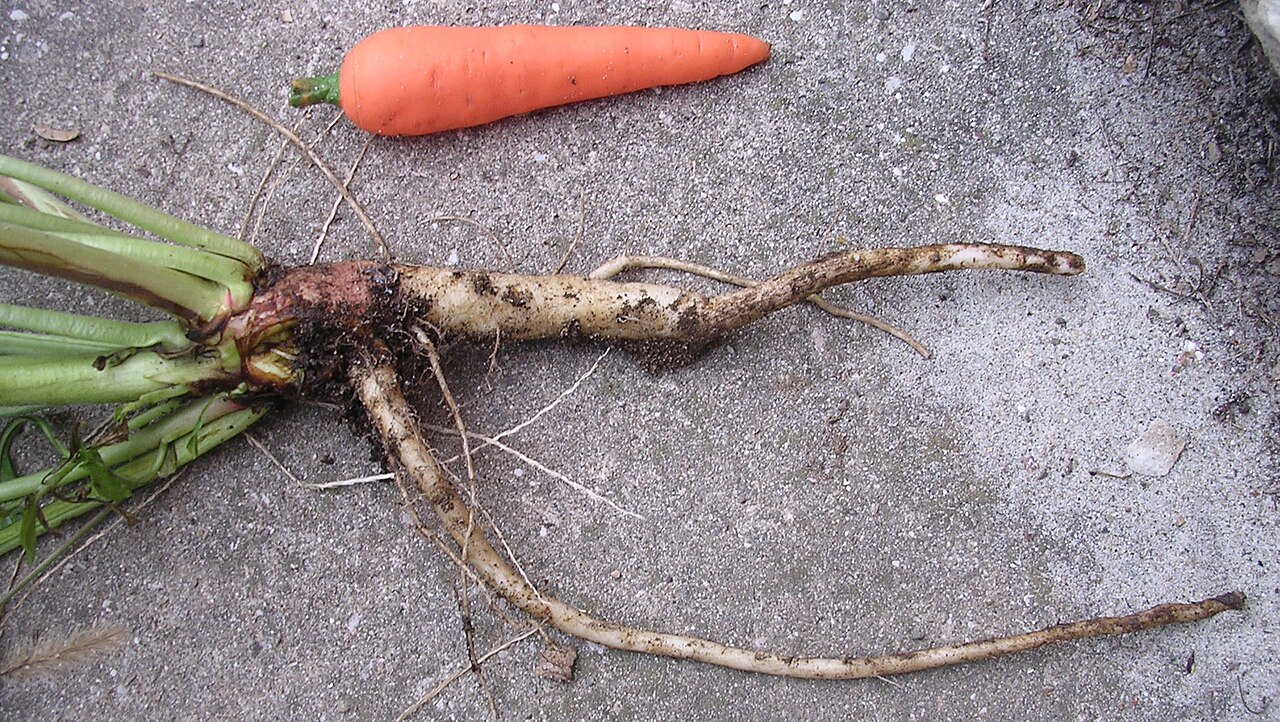
You can move it, but evening primrose is less forgiving than most garden flowers. It grows a deep, fleshy taproot, and the older the plant, the more of that root you’ll cut when you dig.
This guide covers how the root develops, the best stages and seasons to transplant, and a step-by-step method that gives young plants the best chance.
The Short Answer
Common evening primrose (Oenothera biennis) transplants best when it’s young:
- Best stage: seedlings with a few true leaves, up to a small first-year rosette.
- Best timing: cool, moist weather in spring or early fall, well before the ground freezes.
- Avoid moving: large rosettes with a thick taproot, and any second-year plant that has started to send up a flower stem.
- Method: water first, dig deep rather than wide, keep the root and soil together, and replant at the same depth.
- Alternative: for large plants, collect seed and sow where you want new plants instead.
How the Evening Primrose Root Develops
Evening primrose is a biennial. In its first year it grows a low rosette of leaves while storing energy in a thick root. In its second year it sends up a tall flower stem, sets seed and dies.
The Weed Technology species review describes the root as a deep, fleshy taproot, and Ohio State’s weed guide calls it a deep, yellow, fleshy taproot. Our profile notes the taproot can extend several feet into the soil and that plants don’t transplant well once established.
The closely related Hooker’s evening primrose behaves the same way. Its rosette resents transplanting once the taproot forms.
Transplant Risk by Stage
| Seed leaves only | Very fragile. Better to wait a week or two for true leaves. |
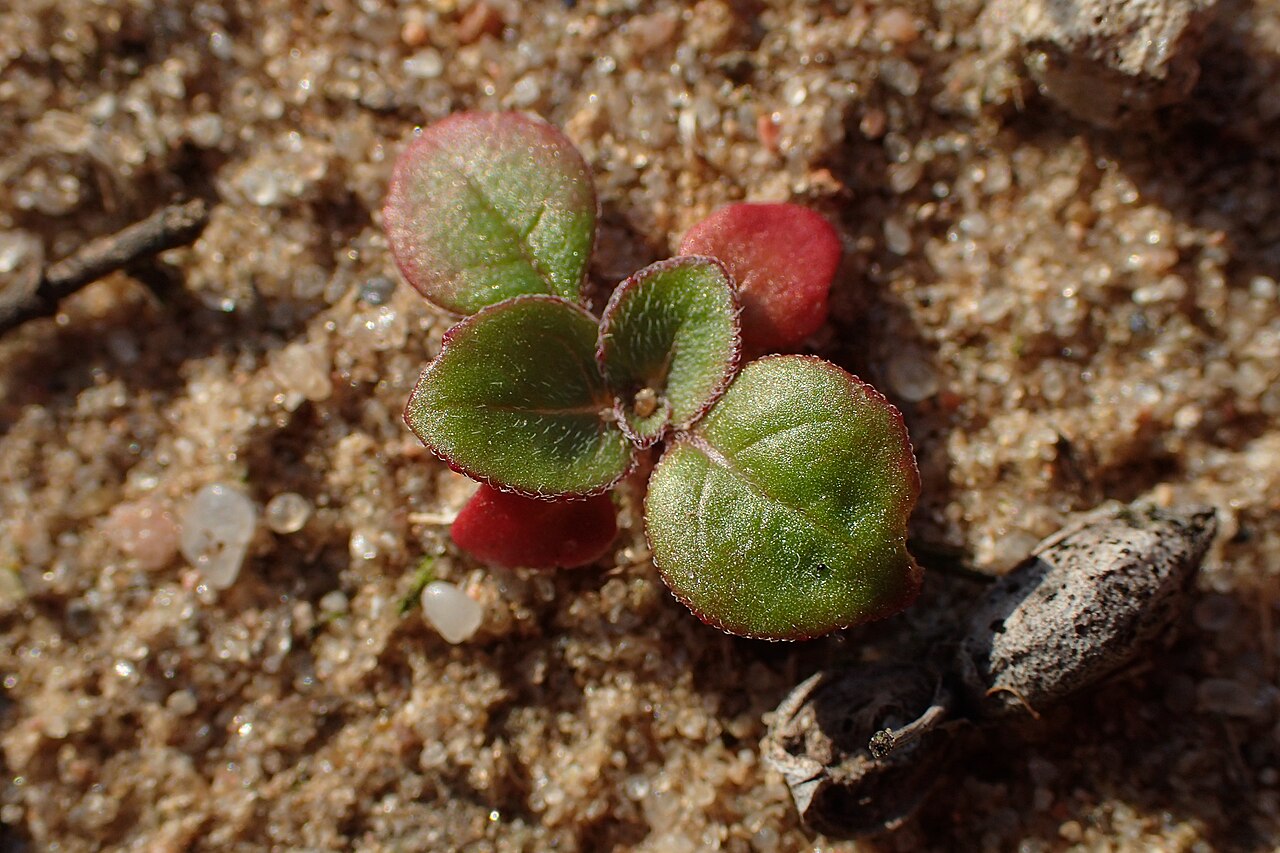
| First few true leaves | Low risk. Short root, easy to lift with soil intact. |
| Small rosette, a few inches across | Moderate risk. Dig deep and keep the root ball whole. |
| Large overwintered rosette | High risk. Thick taproot; much of it will be cut. |
| Bolting or flowering plant | Not worth moving. Collect seed instead. |
Step 1: Pick the Right Stage
Researchers who grow Oenothera for study give a useful timeline. Greiner and Köhl report that seedlings develop their first true leaves about 7 to 10 days after germination, when they’re roughly an inch across, and that is when they move them from seedling trays into individual pots.
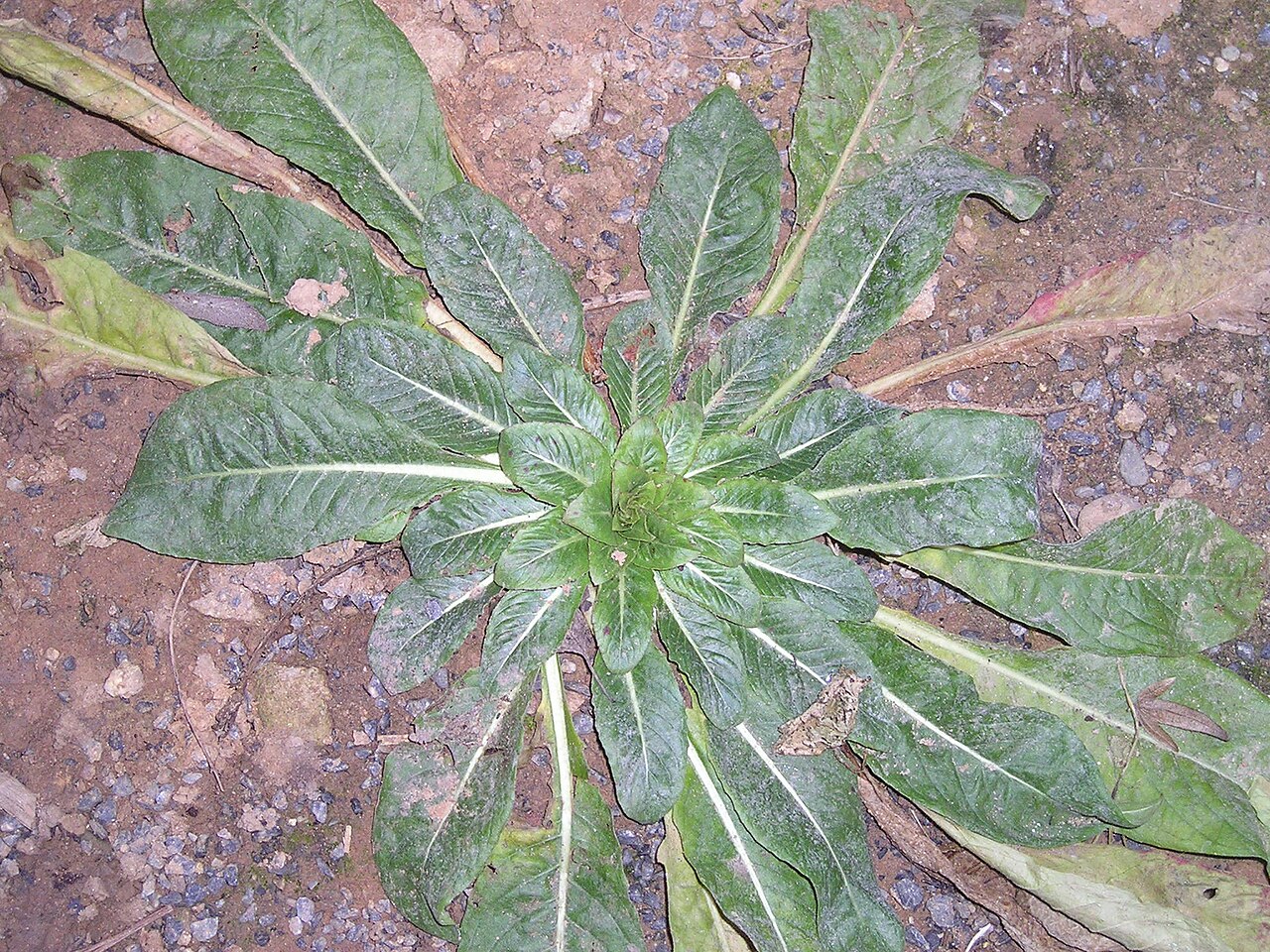
About 3 to 4 weeks after germination, the plants reach an early rosette stage, roughly 12 cm (about 5 inches) across with five or six leaves. The same review describes that as the earliest stage at which they set plants out into field plots.
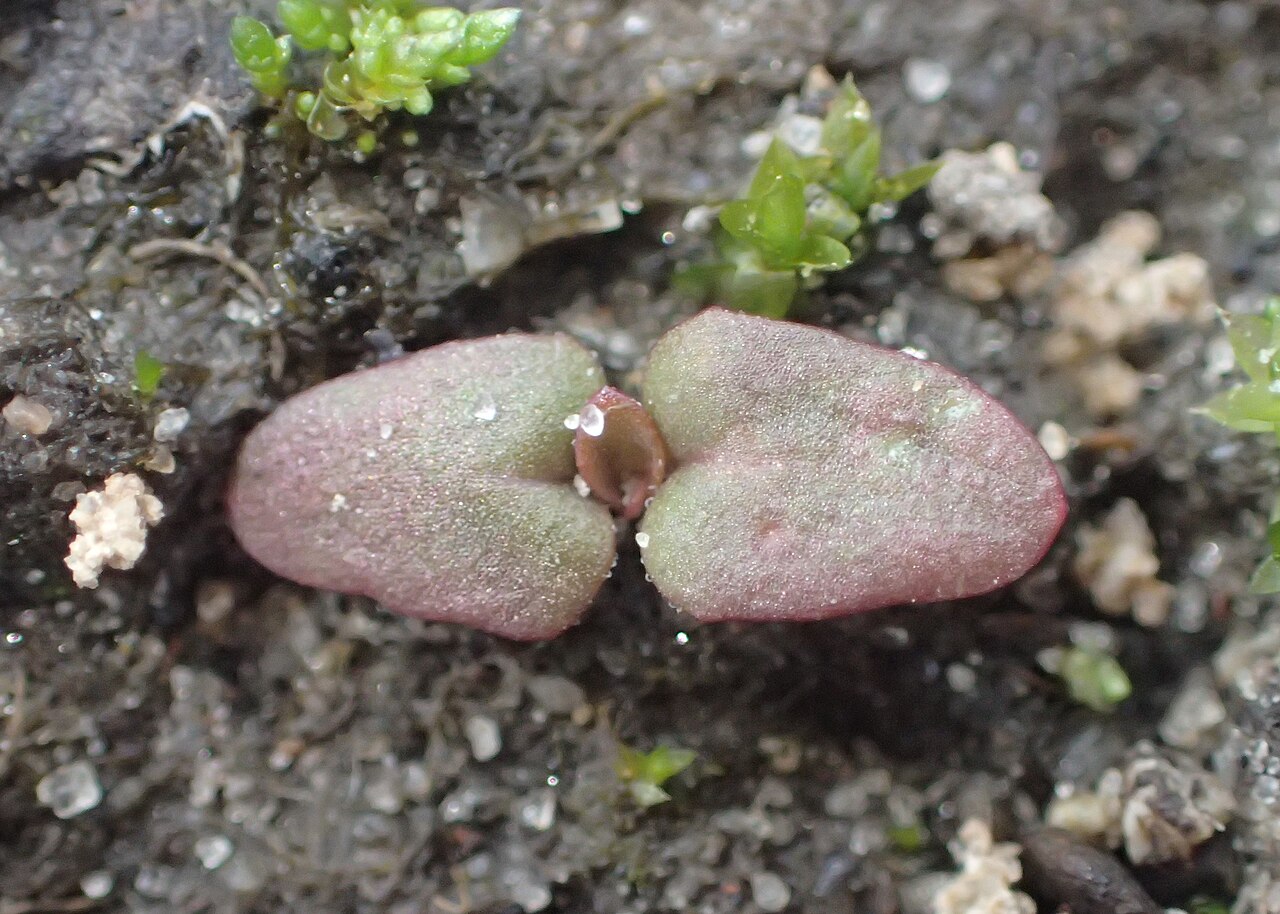
For garden volunteers, that translates to a simple rule: move seedlings once they have a few true leaves and before the rosette gets much bigger than your palm.
Not sure the seedling is actually evening primrose? Check first with our guide on recognizing evening primrose seedlings.
Step 2: Choose Your Timing
Move young plants during cool, moist weather. Spring and early fall are the usual windows, and an overcast day or late afternoon is better than a hot, sunny morning.
Avoid midsummer heat and drought. A small rosette with a freshly disturbed root loses water quickly.
Think about bloom timing, too. A first-year rosette needs a winter before it flowers. Greiner and Köhl note that plants set out in June generally require a winter cold period before they bloom, so a rosette moved in summer or fall will flower the following year, not this one. See evening primrose rosette but no flowers for the full explanation.
Don’t move second-year plants that are bolting. Greiner and Köhl note the plant has a high water demand during bolting, when it grows rapidly. Cutting the root at that stage is the riskiest move you can make.
Step 3: Prepare the New Spot First
Get the new hole ready before you lift the plant, so the root spends as little time out of the ground as possible.
- Sun: full sun is best. NC State Extension notes the plant tolerates afternoon shade. Shady plants grow leggy and tend to flop, as covered in evening primrose falling over.
- Soil: well-drained, ideally sandy or gravelly. Illinois Wildflowers lists average moisture and somewhat sandy soil as its preference.
- Space: our profile suggests 12 to 18 inches between plants. NC State describes mature plants as about 3 feet wide.
- No rich amendments: skip compost and fertilizer in the planting hole. Lean soil grows a sturdier plant.
Dig the hole deeper than it is wide. You’re accommodating a carrot-shaped root, not a spreading root ball.
Step 4: Lift the Plant Without Breaking the Root
- Water the seedling thoroughly the day before. Moist soil holds together around the root.
- Push a narrow trowel straight down a few inches from the center on two or three sides. Go as deep as the trowel allows.
- Lever gently and lift the plant with its plug of soil. Support it from below rather than pulling on the leaves.
- Check the root. If the taproot has snapped partway, replant anyway. A short break is survivable for a small seedling.
For larger rosettes, dig a deeper, wider cylinder of soil with a spade. Expect to cut the bottom of the taproot no matter how careful you are.
Step 5: Replant at the Same Depth
Set the plant in the new hole so the crown, where the leaves meet the root, sits at the same level as before. Burying the crown can lead to rot, and our profile warns that overly wet conditions can cause root rot.
Backfill with the soil you removed, firm it gently around the root, and water slowly until the soil settles.
Step 6: Aftercare for the First Few Weeks
- Water whenever the top inch of soil dries for the first two to three weeks. Our profile notes consistent moisture improves seedling establishment.
- Expect some wilting for a day or two. Outer leaves may yellow and drop while new ones grow from the center.
- Shade briefly if the weather turns hot. An upturned basket or a piece of shade cloth for a few afternoons helps.
- Mulch lightly around the plant, keeping it off the crown. See our mulching techniques for native gardens.
Once the rosette is making new leaves from its center, it has rooted in. From then on, water only in long dry spells.
Starting Plants in Pots to Avoid Transplant Shock
If you’re growing evening primrose from seed for a specific spot, plan ahead. Our profile recommends starting seed indoors 6 to 8 weeks before the last frost in individual pots to minimize root disturbance.
Greiner and Köhl caution against leaving plants too long in small pots, where they become pot-bound or crowd each other. Move them to their final spot at the early rosette stage.
Outdoors, sowing directly where you want plants avoids transplanting entirely. The Lady Bird Johnson Wildflower Center suggests sowing unstratified seed in fall or stratified seed in spring. Our evening primrose seed guide covers the basics, and sowing native seeds in fall explains fall timing.
Troubleshooting at a Glance
| Wilted badly after moving | Root loss or heat. Water, shade for a few afternoons, and wait for new center leaves. |
| Outer leaves yellowed and dropped | Normal adjustment. Keep the center growing. |
| Center turned soft or black | Crown planted too deep or soil too wet. Usually not recoverable. |
| Moved rosette didn’t bloom | Probably still in its first year. Expect flowers after winter. |
| Bolting plant collapsed after moving | Too late to transplant. Let it set what seed it can and sow that. |
Should You Move It or Start Over?
Small seedling in the wrong spot: move it. This is the easy case.
Large first-year rosette: try only if you must, in cool weather with a deep root ball. Otherwise leave it, let it flower next summer, and collect seed for the spot you prefer.
Second-year plant already bolting: leave it, or cut it if it’s truly in the way. Each plant can produce plenty of seed, so you’ll have more chances. Our guide to managing evening primrose reseeding shows how to collect and place it.
A Season-by-Season Plan
- Spring: move young seedlings and small rosettes once they have a few true leaves. Leave overwintered rosettes that are about to bolt.
- Summer: avoid transplanting during heat and drought. Enjoy second-year flowers in their current spots.
- Early fall: a second window for moving young rosettes, giving roots time to settle before the ground freezes. Collect seed from finished plants.
- Late fall: sow saved seed where you want next year’s rosettes.
- Winter: transplanted rosettes stay green and low, getting the cold period they need to flower.
📋 More on this plant: read the full Evening Primrose (Oenothera biennis) profile, or see it in our native plant lists for North Dakota, South Dakota & Western Minnesota and Nebraska, Kansas & Eastern Colorado.
Frequently Asked Questions
Can you transplant evening primrose?
Yes, when it’s young. Seedlings with a few true leaves and small rosettes move well. Large rosettes and flowering plants have deep taproots and transplant poorly.
When is the best time to transplant evening primrose?
Cool, moist weather in spring or early fall, while the plant is still a small first-year rosette. Avoid hot, dry spells and avoid second-year plants that are sending up a stem.
How deep are evening primrose roots?
Evening primrose forms a deep, fleshy taproot. Our profile notes it can extend several feet into the soil on established plants, so dig deep when moving anything larger than a seedling.
Will a transplanted evening primrose flower the same year?
Usually not, if it’s a first-year rosette. It needs to go through a winter first and typically blooms the following summer.
Can I divide an evening primrose?
It isn’t a clump-forming perennial. Greiner and Köhl report that researchers have re-rooted pieces of split young rosettes, but for gardeners, seed is far easier and more reliable.
Sources
- Greiner, S. and Köhl, K. (2014), Growing evening primroses (Oenothera), Frontiers in Plant Science: seedling and early-rosette stages, potting and field transplanting, pot-binding, water demand during bolting and winter requirement.
- Steckel, L. E. et al. (2019), Common evening-primrose (Oenothera biennis L.), Weed Technology: taproot and life cycle.
- Ohio State University Weed Guide, Common Evening-primrose: deep, yellow, fleshy taproot.
- NC State Extension Plant Toolbox, Oenothera biennis: light, soil and mature size.
- Illinois Wildflowers, Common Evening Primrose: cultivation preferences and life cycle.
- Lady Bird Johnson Wildflower Center, Oenothera biennis: propagation and sowing.