Common Evening Primrose Falling Over: When to Support or Remove a Stem
Last updated: November 5, 2026
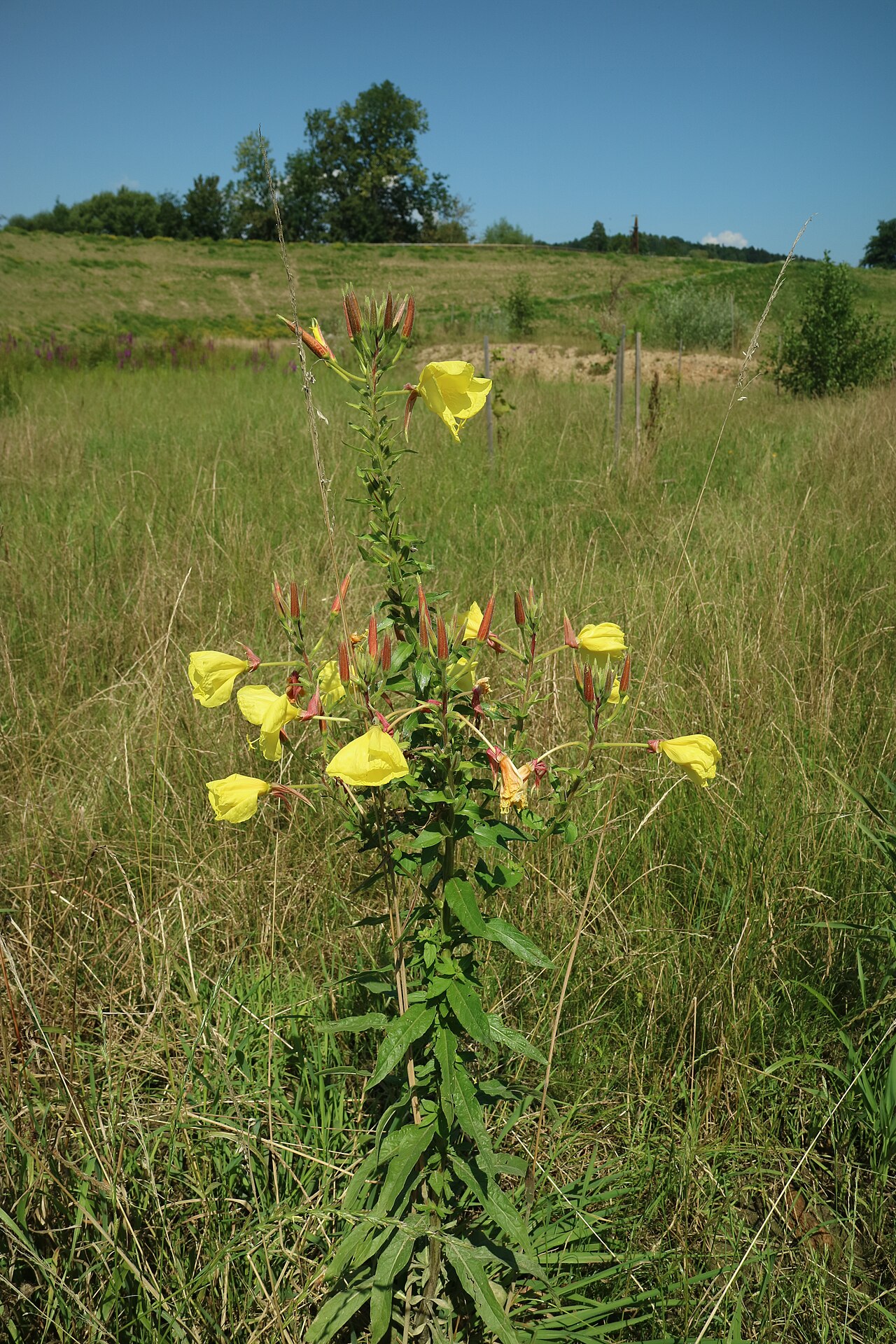
Your common evening primrose shot up to shoulder height this summer. Then a storm came through, and now the stem is leaning across the path or lying flat in the bed.
Whether to stake it, cut it, or leave it depends on two things: why it fell, and where the plant is in its short life.
This guide walks through the common causes of a falling stem, how to support one that’s worth saving, and when removal is the better call.
The Short Answer
Common evening primrose (Oenothera biennis) flowers on one tall stem, or a few, in its second year and then dies. A stem usually falls over because of:
- Shade, which stretches the stem tall and weak.
- Rich soil or extra water and fertilizer, which push soft, oversized growth.
- A heavy, branched top catching wind and rain.
- Damage at the base from wet soil, digging, animals or stem-boring insects.
- The end of its life cycle. Late in the season the plant is dying anyway.
Support it if the stem is intact and still flowering. Remove it if it’s snapped, rotting at the base, finished blooming, or about to drop seed where you don’t want it.
How an Evening Primrose Stem Grows
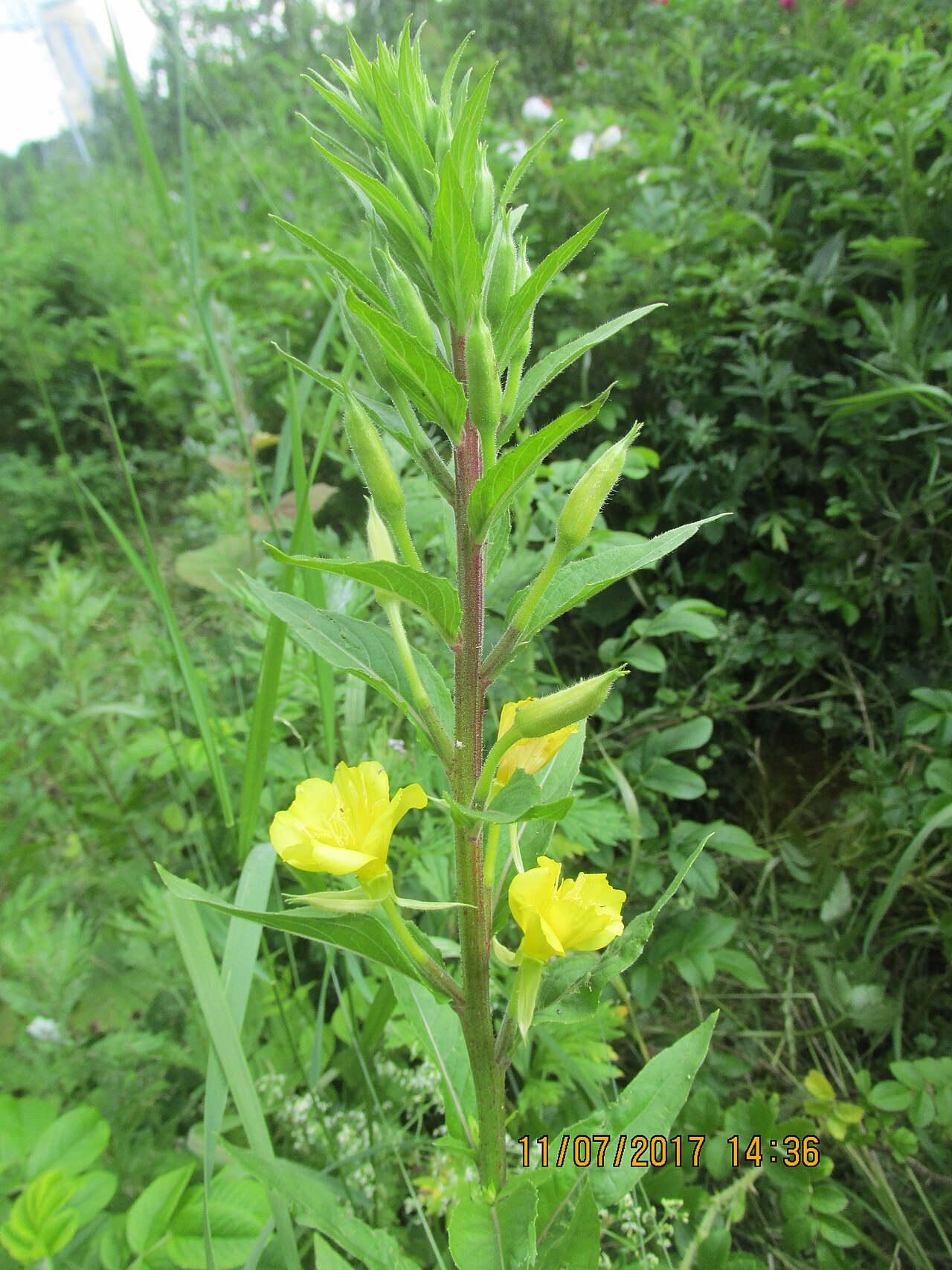
In its first year, evening primrose stays low as a rosette. In its second year, a flowering stem rises from the center. Wikipedia describes that stem as semi-woody, and NC State Extension notes plants can reach 5 to 7 feet tall.
The stem keeps lengthening while it blooms. Flowers open near the top while seed capsules ripen lower down, so the plant grows taller and heavier through the season.
Illinois Wildflowers adds that plants in open areas sometimes produce several stems for a bushier look. A plant with a wide, branched top carries a lot of weight high up, and that makes it more likely to lean.
When Stems Tend to Fall
| Late spring | Stem bolts quickly. Soft, fast growth in shade or rich soil can lean early. |
| Midsummer | Peak height and bloom. Storms and heavy rain topple top-heavy plants. |
| Late summer to fall | Capsules ripen and leaves drop. The plant is finishing its life. |
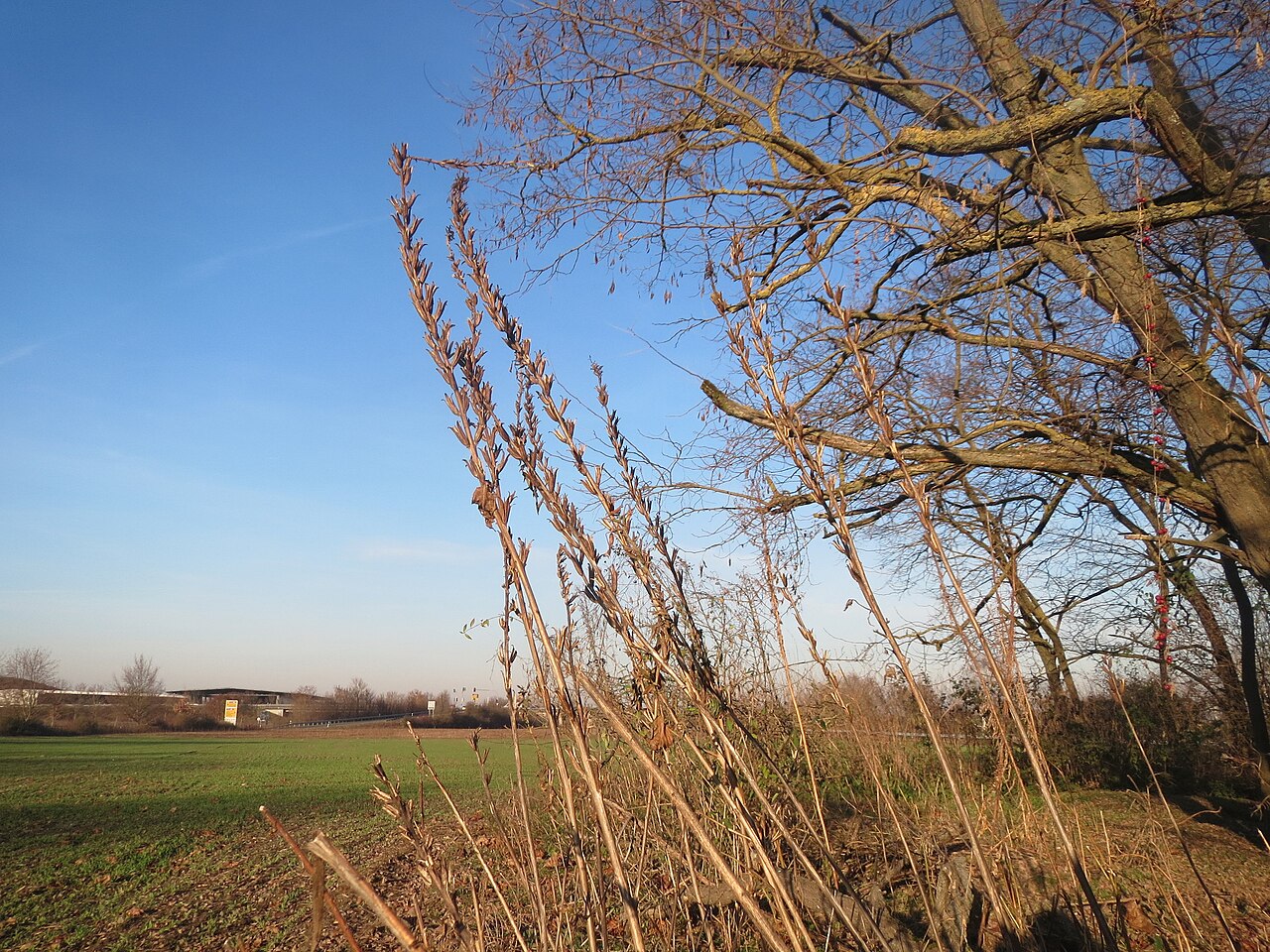
| Winter | Dead stalks stand or lean until they break down or you cut them. |
Check 1: Is the Stem Bent, Snapped or Loose at the Base?
Before anything else, look at where the stem meets the ground and where it bends.
- Bent but unbroken: the stem has a smooth curve or a crease, but no split. These can usually be supported.
- Snapped or split: the stem is cracked open or hanging by a strip. It won’t recover. Cut it below the break.
- Whole plant tilted: the stem is straight but the base has heaved or loosened. The root may be damaged or the soil too soft and wet.
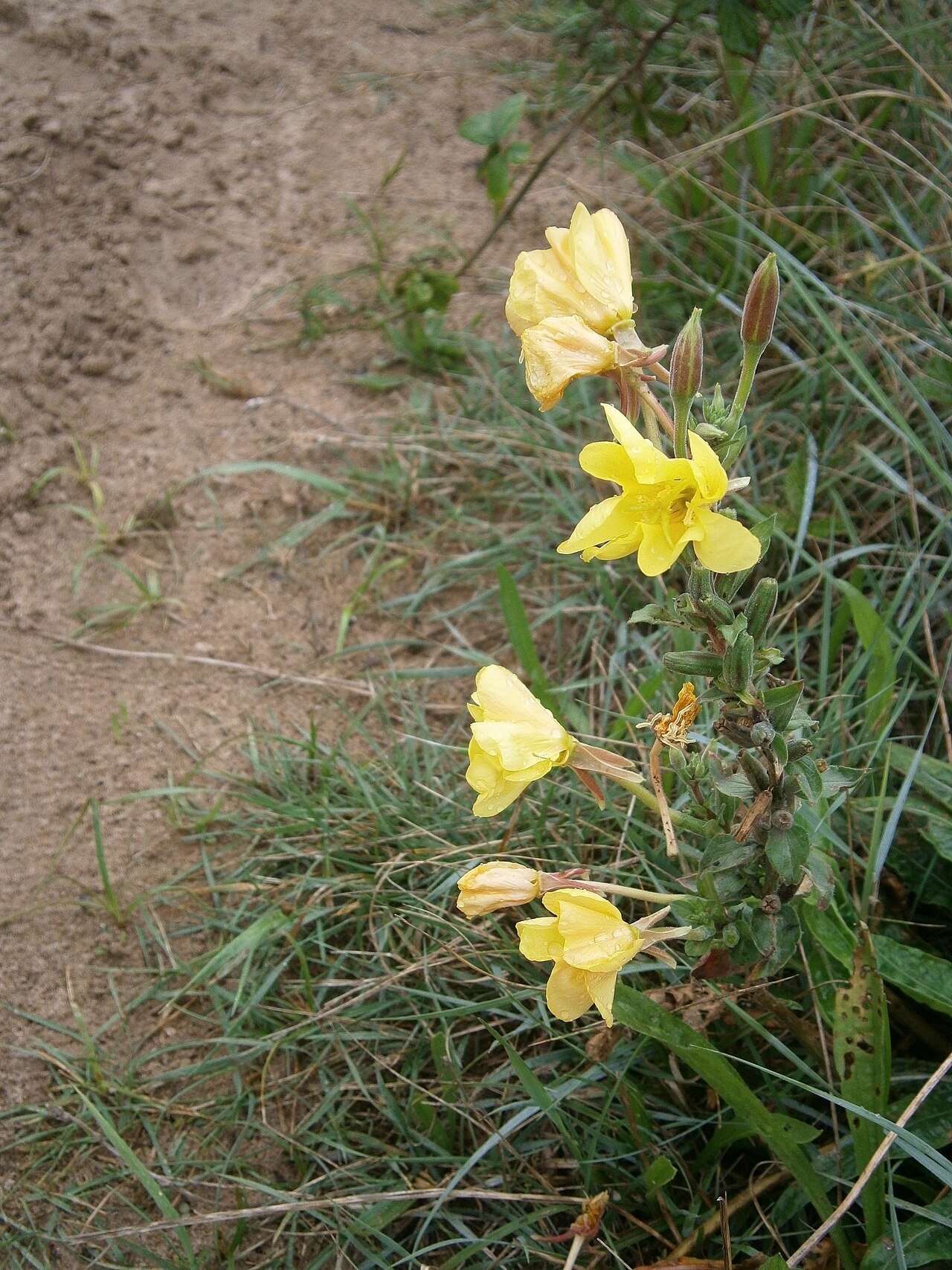
A stem that has fallen will often curve its tip back upward and keep flowering. That’s a sign it’s still alive and working, not that it needs immediate removal.
Check 2: Count the Hours of Sun
Light is the most common cause of a floppy evening primrose. Our profile notes that plants grown in shadier conditions tend to become tall and leggy, and are more prone to lodging in wind and rain.
Iowa State University Extension makes the same point for perennials in general: too much shade makes stems stretch taller than they can support.
NC State recommends full sun, with afternoon shade tolerated. If your plant gets only a few hours of direct light, or leans noticeably toward a gap, shade is likely part of the problem.
Check 3: Look at Soil, Water and Fertilizer
Evening primrose is a plant of sandy, gravelly, disturbed ground. Illinois Wildflowers describes its preference as full sun, average moisture and somewhat sandy soil.
Rich conditions grow a bigger plant. Greiner and Köhl’s review notes that field studies recorded the largest plants in tilled, rich soil. Iowa State observes that many prairie natives grow much larger in fertile soil with little competition, and that excess water and fertilizer cause growth that can’t be supported upright.
So a primrose in a well-fed vegetable bed or a regularly watered flower border may simply be too big for its own stem. If you’re not sure how rich your soil is, a basic soil test tells you more than guessing.
Check 4: Inspect the Base and Stem
Run your eyes down the stem from the lean point to the ground. The normal stem is hairy and often reddish. Ohio State describes the lower stem as often tinged purple and somewhat hairy, and some plants have small red spots at the base of the hairs.
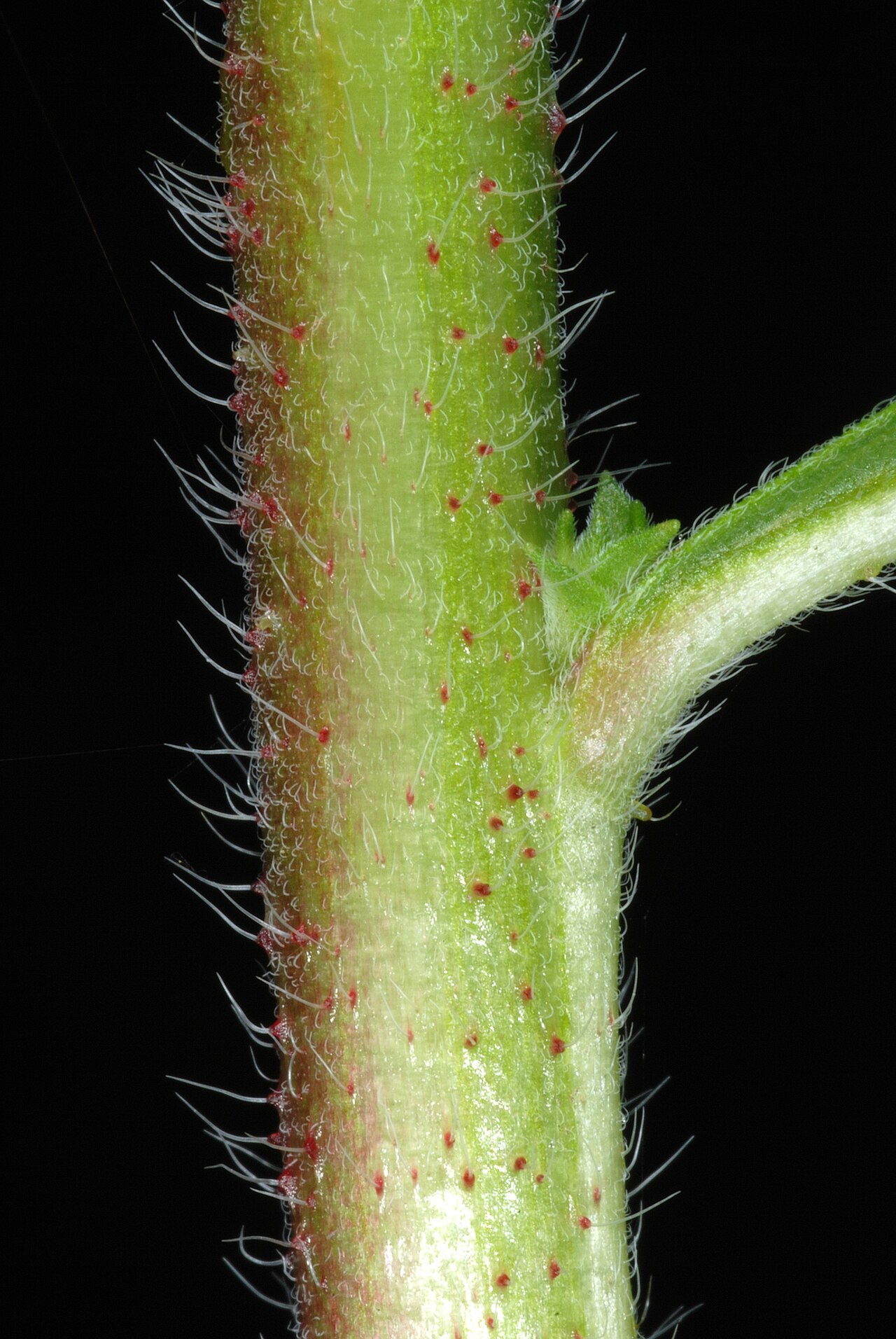
Signs of a problem include:
- Soft, dark or mushy tissue at the base. Our profile warns that excess moisture can lead to root rot. Waterlogged soil also lets a tall plant rock loose.
- Small holes or sawdust-like debris on the stem. Illinois Wildflowers lists a small moth, Mompha eloisella, whose larvae bore through the stems.
- A chewed or scraped base. The Lady Bird Johnson Wildflower Center notes that deer graze older plants.
- Recent digging nearby. Evening primrose has a deep, fleshy taproot, and cutting through roots on one side can leave the plant unstable.
A plant with a rotting or hollowed-out base is unlikely to stay up even when staked. Removal is usually the better choice there.
Check 5: Where Is It in Its Life Cycle?
This question often decides the matter. Illinois Wildflowers notes that the plant flowers, sets seed and dies in its second year, and that it often becomes rather unsightly as the season goes on.
Illinois Wildflowers also notes that drought can make the lower leaves yellow and drop. A leaning stem with bare lower stalk and mostly ripening capsules is near the end anyway, and supporting it buys little.
A stem that falls in early or midsummer, still budding at the tip, has weeks of flowers left. That one is worth saving.
How to Support a Fallen Stem
If the stem is intact and still blooming, a single stake is the simplest fix. Iowa State recommends single stakes for tall, vertical plants with few side branches, which describes most evening primrose stems.
- Choose a stake tall enough to reach most of the way up the stem, but below the flowers. Bamboo, a plastic-coated steel stake or a length of rebar all work. Our roundup of plant support stakes for tall perennials compares common options.
- Place it behind the plant, several inches from the base, so you don’t drive it through the taproot. Iowa State advises leaving room between the stake and the root system.
- Raise the stem gently to a natural angle. Don’t force a sharply bent stem fully straight, or it may crack at the crease.
- Tie it loosely with soft twine or fabric strips in a figure-eight, with the stake in one loop and the stem in the other. For tall stems, tie in several places, keeping the top tie below the flowers.
- Check the ties every week or two as the stem keeps growing.
For next year’s plants, stake earlier. Iowa State suggests staking single stems when the plant has almost reached full height but before flower buds open. In windy sites, stake earlier still.
Multi-stemmed, bushy plants are better held with a ring of three or four stakes and twine around the outside, so the stems lean on the string rather than on each other.
When to Remove the Stem Instead
Removal is the right call in several situations:
- The stem is snapped, split or rotting. Cut it cleanly below the damage.
- The plant has finished flowering and is mostly capsules. It will die after seeding regardless.
- It’s lying on and smothering other plants in a small bed.
- You don’t want its seed. A fallen stem drops its seed right where it lies. Our guide to managing evening primrose reseeding explains timing.
Cut the stem near the ground. The plant is a biennial that normally dies after setting seed, so removing a damaged or finished second-year stem costs you only the flowers it had left.
If birds are using the seed, you can move a capsule-laden stalk to a wild corner instead of composting it. Bag the top first so seed doesn’t scatter along the way.
Troubleshooting at a Glance
| Tall, thin, leaning toward light | Too much shade. Stake now; site future plants in full sun. |
| Huge, lush plant flopped after rain | Rich soil or extra water. Stake it, and skip fertilizer around primroses. |
| Bent stem, tip turning upward, still budding | Alive and blooming. Support it with one stake behind the plant. |
| Snapped or split stem | Won’t recover. Cut below the break. |
| Soft, dark base or holes in stem | Rot or stem borers. Remove the stem. |
| Bare lower stem, mostly capsules, late season | End of life cycle. Remove it, or leave it for birds where seed is welcome. |
A Season-by-Season Plan to Prevent It
- Fall: when thinning rosettes, keep the ones in full sun and pull those in shade. See how to recognize evening primrose seedlings if you’re unsure which are which.
- Spring: don’t fertilize around primroses. Avoid digging near overwintered rosettes, which are about to bolt. If a rosette hasn’t bolted yet, it may still be in its first year.
- Late spring: once stems are well up, set a stake behind any plant in a windy or partly shaded spot, before the buds open.
- Summer: loosen ties as stems grow. Water only in long droughts.
- Late summer to winter: cut or leave finished stalks depending on whether you want the seed.
Sturdy neighbors help too. Planting evening primrose among upright native grasses such as little bluestem, one of the companions listed in our profile, gives stems something to lean on.
📋 More on this plant: read the full Evening Primrose (Oenothera biennis) profile, or see it in our native plant lists for North Dakota, South Dakota & Western Minnesota and Nebraska, Kansas & Eastern Colorado.
Frequently Asked Questions
Why is my evening primrose falling over?
The usual causes are shade, rich or overwatered soil producing a stem too tall for its strength, or a heavy flower-laden top caught by wind and rain. Late in the season, it may simply be dying after setting seed.
Can a fallen evening primrose stem recover?
If it’s bent but not broken, yes. The tip often turns back upward and keeps flowering, and a stake will hold it more upright.
Should I cut back evening primrose after it flowers?
It’s up to you. The plant dies after setting seed, so cutting does no harm. Cut before the capsules split to limit seedlings, or leave the stalk for birds.
How tall does evening primrose get?
Heights vary by site. NC State Extension gives 5 to 7 feet, while Minnesota Wildflowers lists 2 to 6 feet. Plants in rich soil tend toward the taller end.
Does staking hurt evening primrose?
Not if you place the stake a few inches from the base to avoid the taproot and tie loosely. Tight ties can damage the stem as it grows.
Sources
- Iowa State University Extension and Outreach, Staking Perennials and How to Maintain Perennial Beds and Borders: causes of flopping, single-stake placement, timing and ties.
- Illinois Wildflowers, Common Evening Primrose: multiple stems, drought symptoms, life cycle and stem-boring insects.
- NC State Extension Plant Toolbox, Oenothera biennis: mature height, sun and soil preferences.
- Greiner, S. and Köhl, K. (2014), Growing evening primroses (Oenothera), Frontiers in Plant Science: growth in rich, tilled soil.
- Ohio State University Weed Guide, Common Evening-primrose: stem description.
- Lady Bird Johnson Wildflower Center, Oenothera biennis: deer browsing of older plants.
- Minnesota Wildflowers, Common Evening Primrose: height range.
- Wikipedia, Oenothera biennis: semi-woody second-year stem.