How to Recognize Common Evening Primrose Seedlings Before Weeding
Last updated: November 5, 2026
Last summer your common evening primrose bloomed, dropped its seed, and died. Now the bed is full of small green seedlings, and you’re about to weed.
Some of those seedlings are next year’s evening primroses. Others are ordinary weeds. At this size they can look alike, and a quick pass with the hoe can take out the plants you wanted to keep.
This guide walks you through the features that separate evening primrose from the usual look-alikes, stage by stage, so you can decide what stays before you start pulling.
The Short Answer
Common evening primrose (Oenothera biennis) seedlings are easiest to recognize by a combination of features:
- Small egg-shaped seed leaves on short stalks, with a reddish tint where they join the stem.
- A flat rosette of narrow, lance-shaped leaves with smooth or wavy edges.
- A pale white to pink midrib down the center of each leaf.
- No milky sap and no woolly fuzz.
- A fleshy, yellowish taproot once the rosette is a few weeks old.
- Location: usually in bare or disturbed soil close to where a parent plant stood.
Where and When Evening Primrose Seedlings Appear
Evening primrose seeds have no special adaptations for travel, so most fall close to the parent plant. Expect the heaviest crop of seedlings within a few feet of last year’s flower stalks.
Timing varies. The Weed Technology species review notes that seeds germinate in summer or fall and produce rosettes that overwinter. Ontario’s weed guide adds that seeds prefer warm soil and likely peak in late spring to early summer.
Seeds also need to be near the surface. Ontario’s guide, citing Hall and colleagues, reports that seeds don’t germinate when buried deeper than about 5 mm, a little under a quarter inch.
That is why seedlings pop up wherever soil is scratched open. The Lady Bird Johnson Wildflower Center notes that seed lingers in the soil and germinates when the ground is disturbed. Evening primrose seed is famously long-lived, staying viable for decades, so seedlings can appear in a bed where you never planted it.
Seedling Stages at a Glance
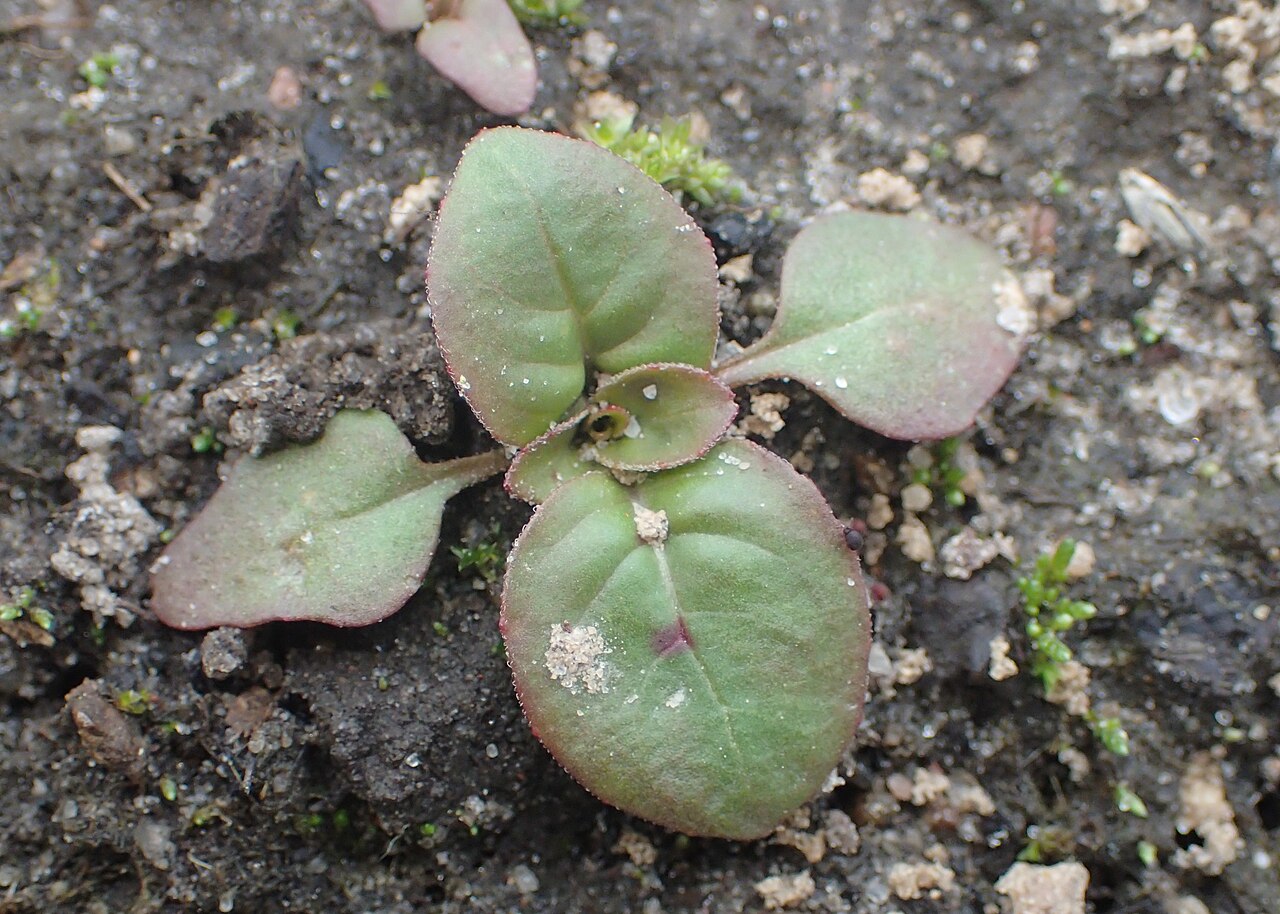
| Seed leaves | Two small, egg-shaped cotyledons on short stalks. The stem below them is tinted red. |
| First true leaves | Rounder leaves appear from the center, often with a few fine hairs near the base and red edges or undersides. |
| Young rosette | Leaves lengthen into narrow, lance-shaped blades lying flat. Pale midribs become obvious. |
| Overwintering rosette | A wide, flat rosette over a fleshy taproot. Older outer leaves may turn red in cold weather. |
Step 1: Check the Seed Leaves
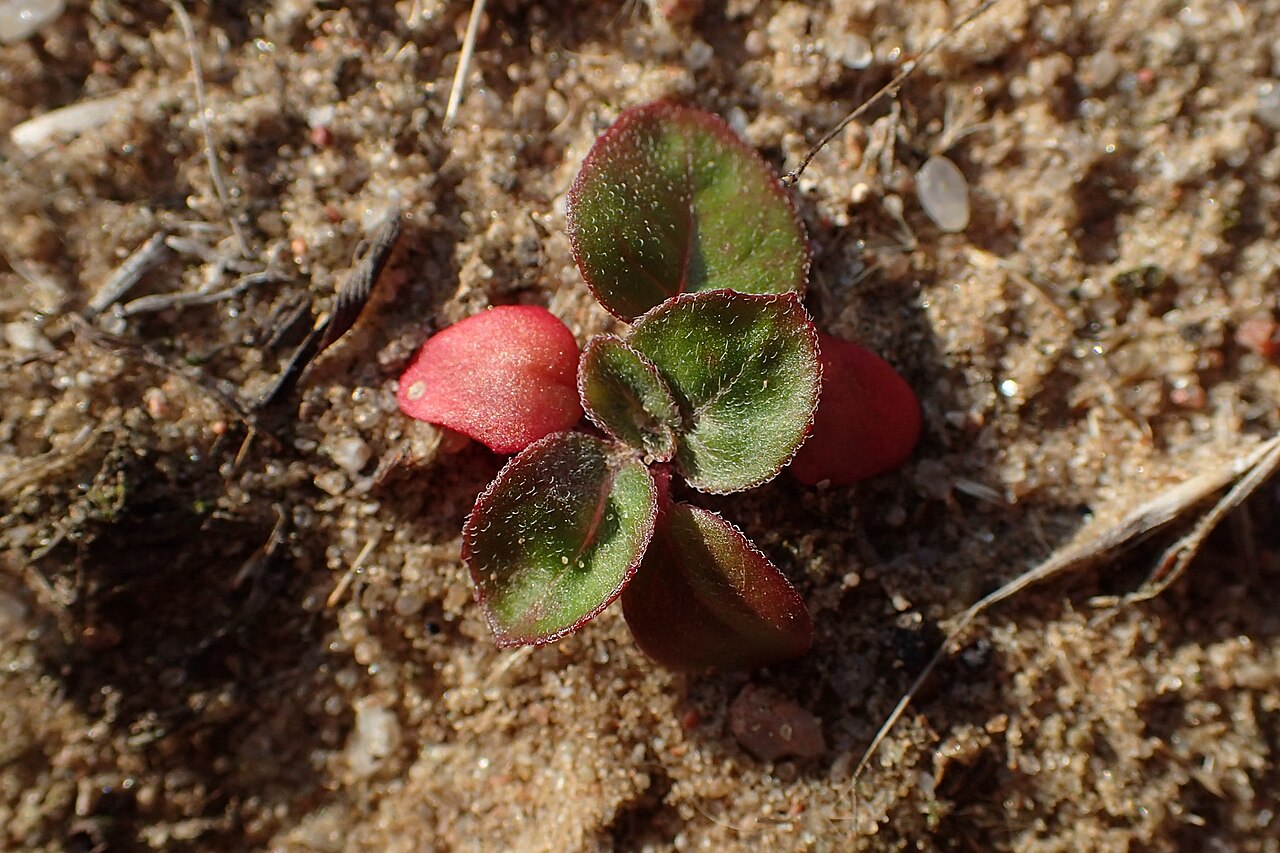
If your seedlings are just a pair of leaves, look closely at those first two. Virginia Tech’s weed identification guide describes the cotyledons as usually egg-shaped with a short stalk, about 6 to 11 mm long (roughly a quarter to half an inch).
The key detail is color. Virginia Tech notes the stem at the base of the cotyledons has a reddish tint, and Ohio State’s weed guide describes the spot where the seed leaves attach as usually tinged bright red.
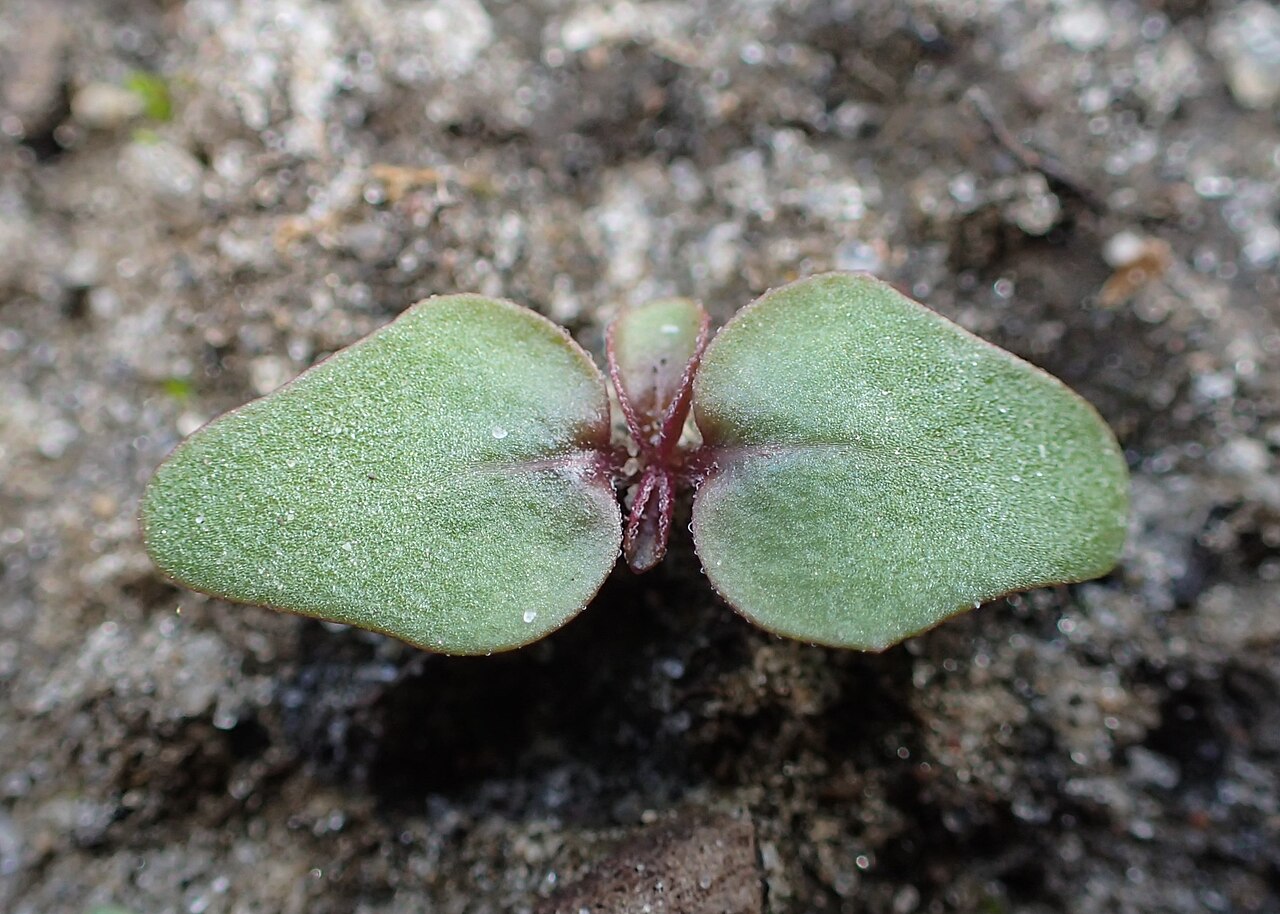
Many seedlings have plain oval seed leaves, so this step alone won’t confirm the plant. If you’re unsure, leave the seedling for another week or two. The first true leaves tell you much more.
Step 2: Watch the First True Leaves
The next leaves to appear are rounder and slightly larger than the seed leaves. Virginia Tech notes that the upper surfaces of young leaves may carry a few hairs near the base.
In sunny, dry spots these young leaves often show red edges, red undersides, or a red blush at the center. The color fades to green as the rosette fills out.
At this stage, look for leaves arranged in a tight spiral from a single center point, all sitting low to the ground. Evening primrose doesn’t form an upright stem in its first season.
Step 3: Read the Rosette Leaves
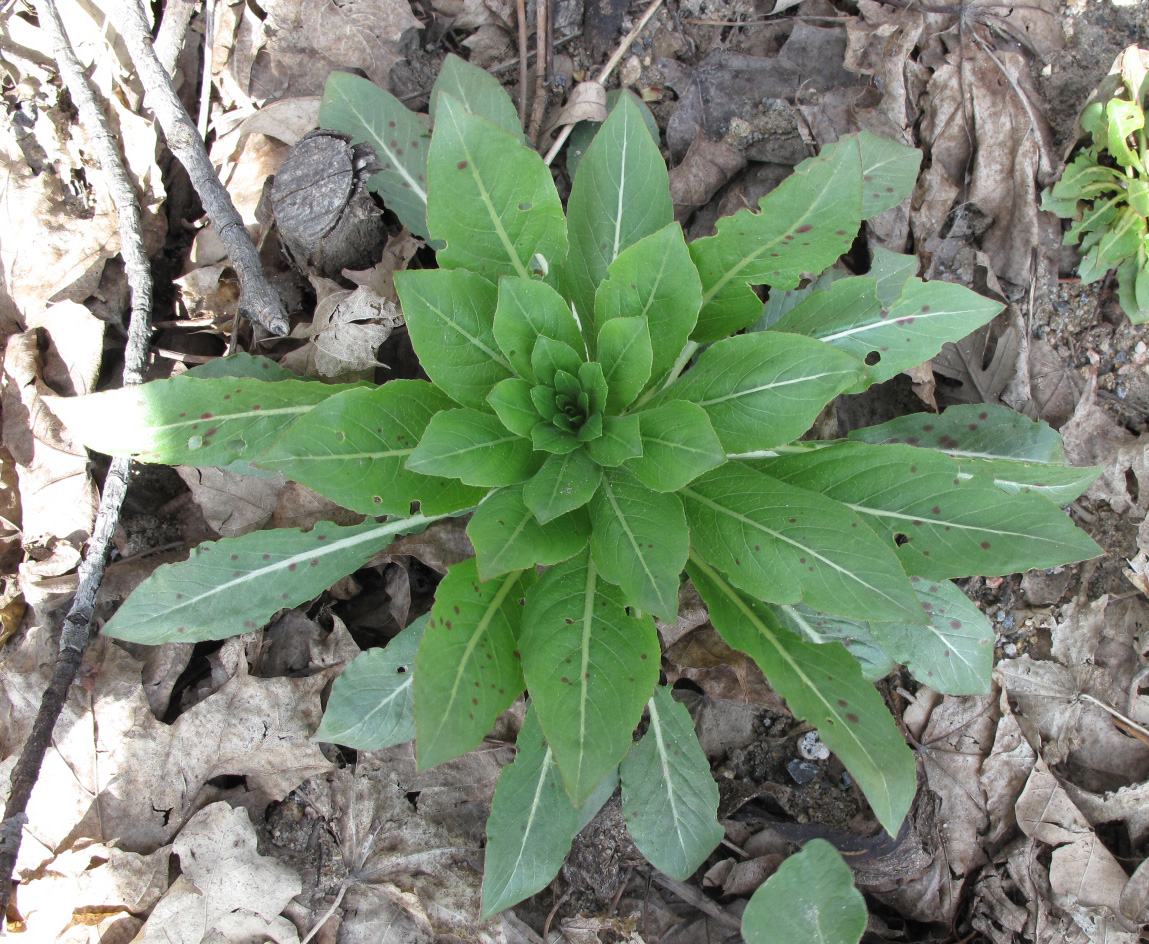
Within a few weeks the seedling becomes a recognizable rosette, and identification gets much easier.
- Shape: narrow and lance-shaped to elliptic, tapering to a point. Ontario’s guide describes young rosette leaves as spoon-shaped.
- Edges: smooth or only slightly toothed, often wavy.
- Midrib: a distinctive white or pink midvein, according to Virginia Tech. Ohio State notes the midribs of rosette leaves are typically reddish, and Ontario mentions occasional red blotches near the leaf tip.
- Texture: Ohio State describes the leaves as usually appearing thin and crinkled.
- Size: NC State Extension describes first-year rosette leaves as 4 to 8 inches long once mature.
The pale midrib is the feature most gardeners learn to spot first. Seen from above, a young rosette looks like a star of narrow green leaves, each with a light stripe down the middle.
Step 4: Do the Sap and Root Tests
When the leaves alone leave you unsure, two quick tests help.
Sap test: snap a leaf. Evening primrose has no milky sap. Virginia Tech’s dandelion profile notes that all parts of a dandelion exude milky sap when cut, so a white bead on the break rules out evening primrose immediately.
Root test: sacrifice one seedling from a crowded clump and pull it gently. Ohio State describes the root as a deep, yellow, fleshy taproot. Even on young rosettes, you’ll see a single thickened root heading straight down.
Use the root test sparingly. Evening primrose grows a deep taproot and doesn’t transplant well once established, so every seedling you pull is one you won’t get back.
Step 5: Rule Out the Common Look-Alikes
A handful of plants form similar first-year rosettes in the same kinds of bare, sunny spots. Here’s how to tell them apart.
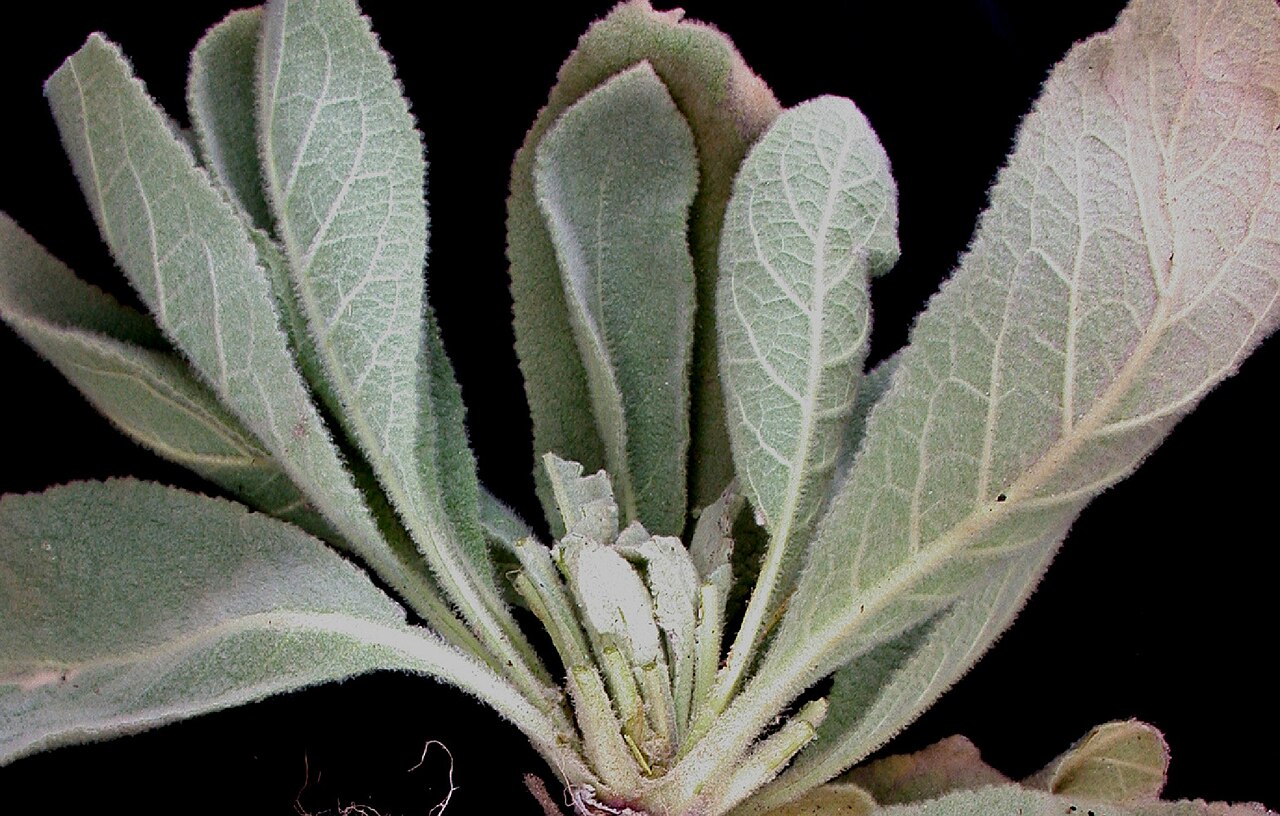
Common mullein (Verbascum thapsus) is also a biennial rosette-former. Ohio State describes its leaves as densely covered in soft hairs on both sides, so they feel like flannel. If a rosette is thick, gray-green and fuzzy, it’s mullein.
Dandelion (Taraxacum officinale) rosettes usually have jagged, deeply toothed edges, and the leaves bleed milky sap when broken.
Curly dock (Rumex crispus) forms a rosette of hairless, dark green leaves with strongly wavy edges. Virginia Tech notes its narrow, wavy leaves are the main way to separate it from broadleaf dock.
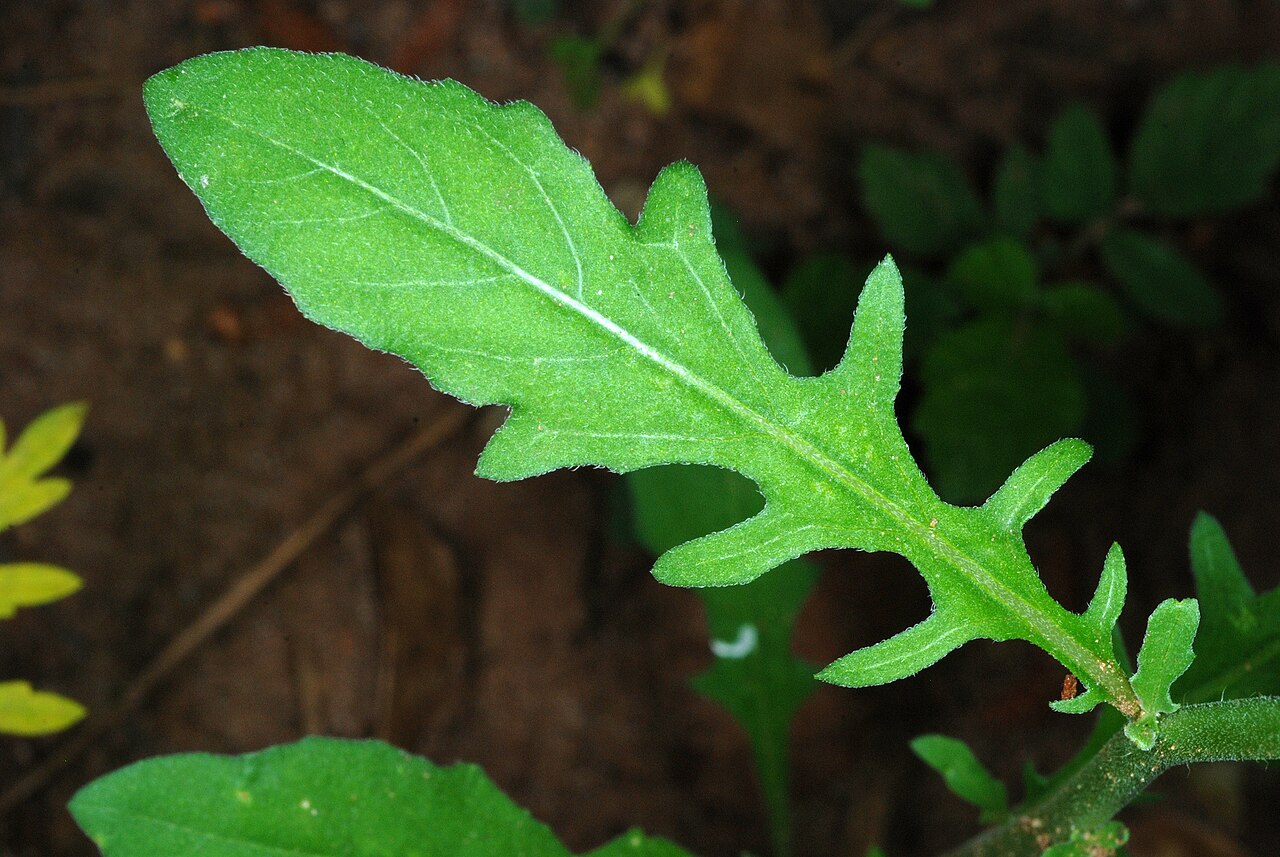
Cutleaf evening primrose (Oenothera laciniata) is a close relative, common in the southern and eastern United States. Its first leaves are smooth-edged, but later leaves become deeply toothed or lobed, and the plant usually sprawls rather than standing upright. Both Virginia Tech and Ohio State use those toothed leaf edges to separate it from common evening primrose.
In the West, Hooker’s evening primrose also grows from a first-year rosette. If you grow both species, mark which plant dropped seed where.
Quick Reference: Evening Primrose vs. Look-Alikes
| Common evening primrose | Narrow, thin leaves; smooth or wavy edges; white to pink midrib; no milky sap; yellowish taproot. |
| Cutleaf evening primrose | Similar midvein, but later leaves deeply toothed or lobed; sprawling habit. |
| Common mullein | Broad, thick, woolly gray-green leaves that feel like flannel. |
| Dandelion | Jagged, toothed leaves; milky sap from every part. |
| Curly dock | Dark green, hairless leaves with strongly wavy, curled edges. |
How to Weed Around the Keepers
Once you can spot the seedlings, decide how many you actually want. A single plant can release a great deal of seed, so you’ll usually have far more seedlings than space.
Mark first, weed second. Push a stake or plant label next to each seedling you plan to keep. Our profile suggests spacing plants 12 to 18 inches apart, which leaves each rosette room to grow before winter.
Pull extras while they’re small. Ohio State advises that unwanted plants are best removed in the rosette stage. Young seedlings come out easily, before the taproot thickens. Water the bed the day before so roots slide out whole.
Hoe shallowly, and only between marked plants. A sharp hoe slices small seedlings at the soil line, but it also opens bare soil where new seeds can sprout. Our guide to weeding with a hoe covers clean, shallow technique.
Cover bare soil after weeding. Since seeds germinate only near the surface, a layer of mulch where you don’t want new seedlings cuts down the next flush. See our mulching techniques for native gardens.
What to Do If You Already Pulled Them
Don’t worry. Evening primrose seed persists in the soil for years, and new seedlings usually keep appearing wherever the ground is disturbed.
If you want plants in a specific spot, you can also start fresh. Our guide to growing evening primrose from seed covers sowing, and fall sowing outdoors works well for many natives, as explained in sowing native seeds in fall.
Remember that the seedlings you keep won’t bloom this year. They spend their first season as rosettes. If you’re wondering why a kept seedling is all leaves, see evening primrose rosette but no flowers.
A Season-by-Season Plan
- Spring: scan the bed before your first weeding. Mark rosettes that survived winter and any new seedlings near old stalks.
- Early summer: new seedlings appear in warm, bare soil. Keep the best-placed few and pull the rest while small.
- Late summer to fall: another flush may follow seed drop. Thin to final spacing so keepers enter winter as healthy rosettes.
- Winter: leave rosettes alone. Older leaves may redden in the cold, which is normal.
- Every year: if you’re still unsure of an ID, our beginner’s guide to identifying native plants lists features worth recording.
📋 More on this plant: read the full Evening Primrose (Oenothera biennis) profile, or see it in our native plant lists for North Dakota, South Dakota & Western Minnesota and Nebraska, Kansas & Eastern Colorado.
Frequently Asked Questions
What does an evening primrose seedling look like?
It starts as two small, egg-shaped seed leaves with a reddish tint at the stem. It then forms a flat rosette of narrow, smooth-edged leaves, each with a pale white to pink midrib.
When do evening primrose seedlings come up?
Seedlings can appear from late spring into fall, often after the parent drops its seed. Many overwinter as small rosettes and flower the following summer.
Is evening primrose a weed?
It’s a native wildflower in much of North America, but it self-sows freely and weed guides list it as a weed of landscapes and crops. Whether it’s a weed in your garden depends on where it comes up.
How do I tell evening primrose from mullein?
Touch the leaves. Mullein leaves are thick and woolly like flannel. Evening primrose leaves are thin, narrow and nearly smooth, with a pale midrib.
Can I move evening primrose seedlings instead of pulling them?
Small seedlings can be moved with care because the taproot is still short. Larger rosettes resent disturbance, so move them as young as possible or simply let them grow where they are.
Sources
- Virginia Tech Weed Identification Guide: common evening primrose, cutleaf evening primrose, common dandelion and curly dock: cotyledons, leaf features, sap and look-alike traits.
- Ohio State University Weed Guide: Common Evening-primrose and Common Mullein: seedling color, taproot, rosette midribs, mullein leaf texture and control timing.
- Ontario Ministry of Agriculture, Food and Agribusiness, Weed Identification Guide: Yellow evening-primrose: emergence depth and timing, rosette leaf shape and coloring.
- Steckel, L. E. et al. (2019), Common evening-primrose (Oenothera biennis L.), Weed Technology: germination timing, seed dispersal and seed longevity.
- NC State Extension Plant Toolbox, Oenothera biennis: rosette leaf size and self-seeding.
- Lady Bird Johnson Wildflower Center, Oenothera biennis: germination after soil disturbance.