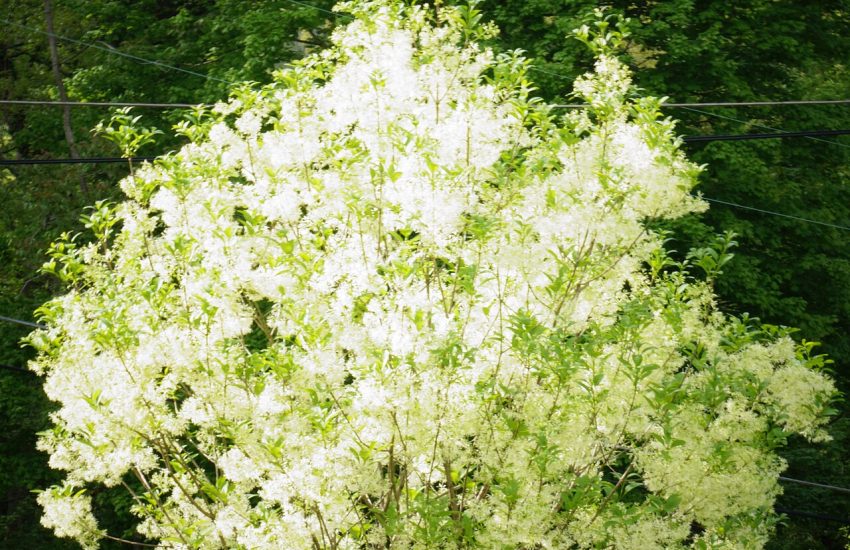
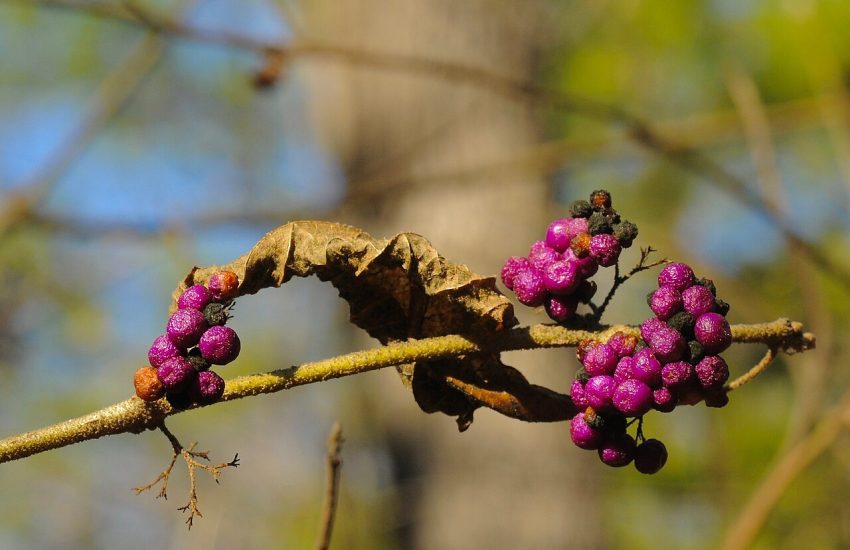
Black Chokeberry Leaf Spots: How to Identify the Problem Before Treating
Last updated: November 5, 2026
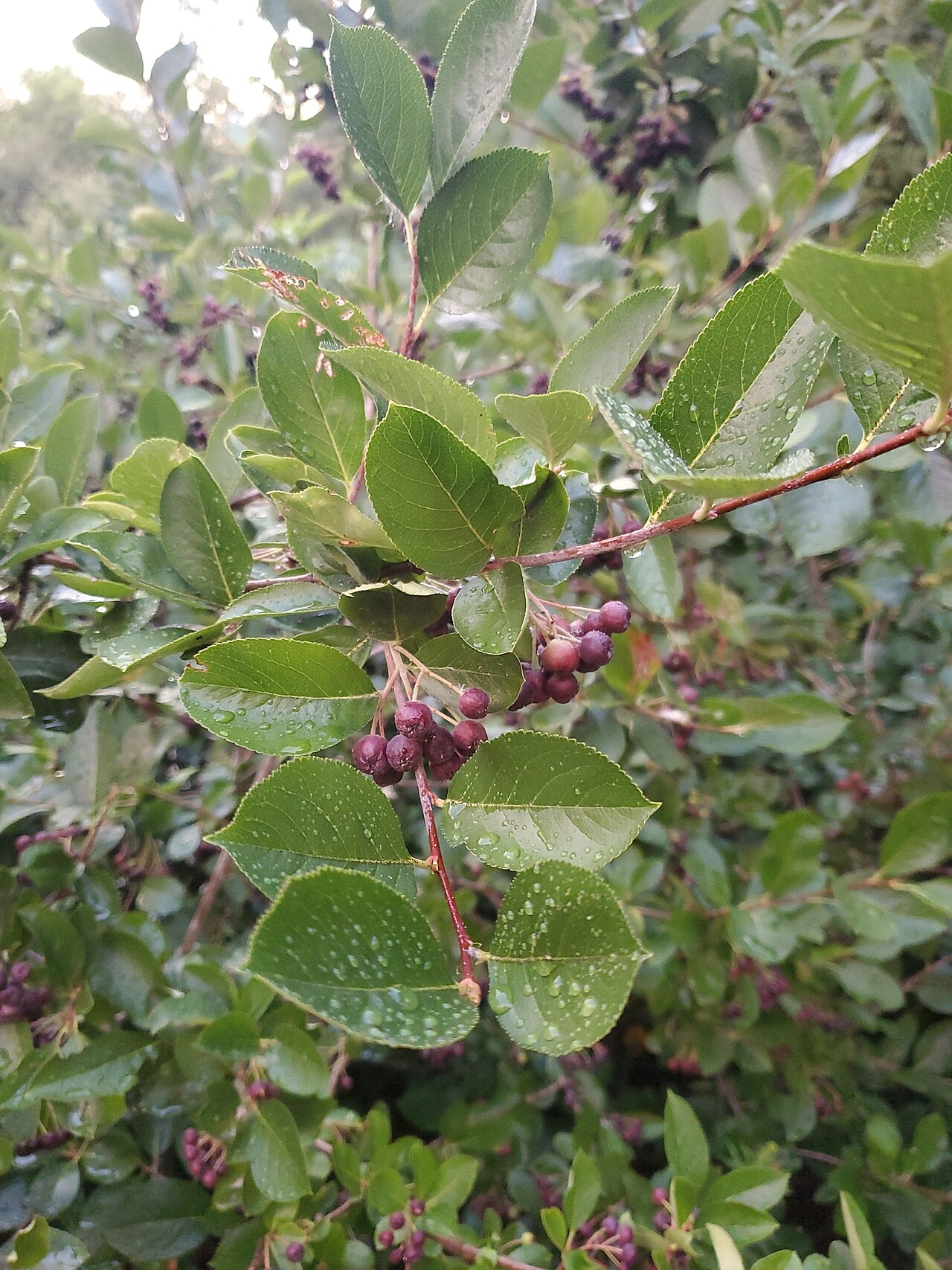
You notice spots on your black chokeberry leaves. Maybe they’re orange, maybe white and dusty, maybe just pale speckles. The first instinct is to reach for a spray.
Hold off for now. Black chokeberry has few serious problems, and many leaf spots on it are cosmetic. Some aren’t diseases at all. A spray chosen without a diagnosis may do nothing, and it can harm the bees that visit the flowers.
This guide walks you through what to look at, how to tell the common causes apart, and when treatment is actually worth considering.
The Short Answer
Most spots on black chokeberry (Aronia melanocarpa) fall into a few groups:
- Yellow-orange spots, sometimes with tiny tubes underneath: a cedar rust, which needs a juniper or red cedar nearby.
- White, powdery patches: powdery mildew, worst in shade and still air.
- Pale stippling with dark specks underneath: lace bugs, often on hot, dry sites.
- Holes or lacy, skeletonized leaves: chewing insects such as Japanese beetles.
- Browned edges on many leaves at once: drought or site stress.
- Red blotches in late summer: often just early fall color.
Extension sources describe most of these as cosmetic on healthy shrubs. Identify first, then decide whether anything needs doing.
Why Black Chokeberry Rarely Needs Spraying
Black chokeberry is in the rose family, along with apples, pears, and serviceberries. Mark Brand of the University of Connecticut notes that, like most members of that family, it has a long list of possible pests and diseases, but plants rarely seem to be affected by much.
The North Carolina Extension Gardener Plant Toolbox lists no serious insect or disease problems. The USDA plant guide says it appears to have very few, and the Morton Arboretum says the same.
That doesn’t mean spots never appear. It means a few spots are rarely a threat, and the cause is worth knowing before you act. Iowa State University Extension also points out that very few insecticides are labeled for aronia, which limits your options if you plan to eat the fruit.
What to Note Before You Diagnose
| Color and shape | Orange, white, pale, brown, red? Round spots, irregular blotches, or edges? |
| Leaf underside | Tubes, powder, insects, cast skins, or dark specks? |
| Where on the plant | Shaded interior, sunny top, one side, or everywhere? |
| Time of year | Spring, midsummer, or as fall approaches? |
| Nearby plants | Any junipers or eastern red cedars? Other rose-family shrubs with similar spots? |
Check 1: Look at Both Sides of the Leaf
Pick several affected leaves from different parts of the shrub. Look at the top, then turn each leaf over. A hand lens or your phone’s camera zoom helps a lot.
Many of the most telling clues are on the underside: fungal tubes, insects, the shed skins of nymphs, or dark droppings. The top surface often shows only the result.
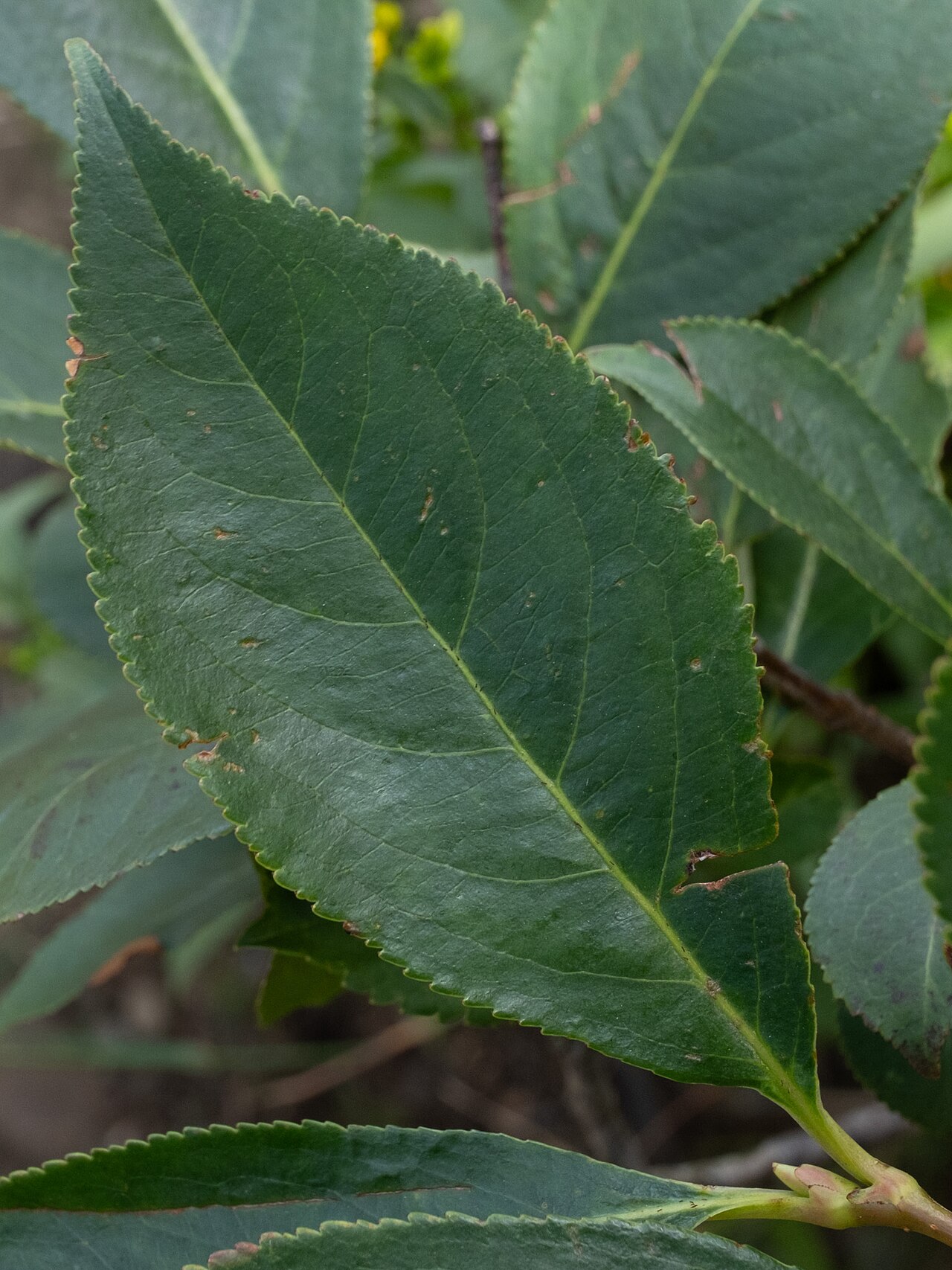
Also note how much of the plant is affected. Spots on a handful of lower leaves are a different situation from spots on every leaf.
Check 2: Orange or Yellow Spots — Cedar Rusts
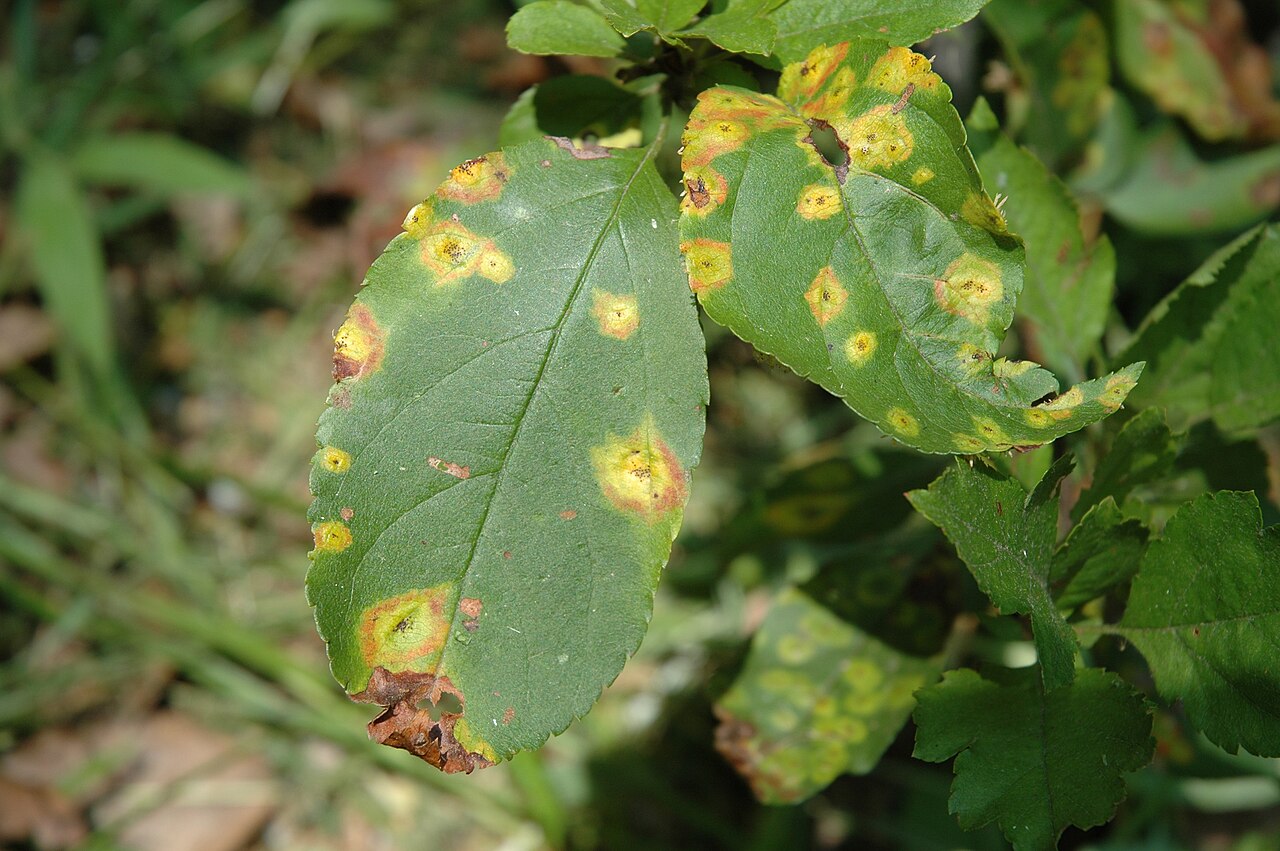
Iowa State has observed cedar-quince (hawthorn) rust and cedar-apple rust on aronia. University of Minnesota Extension lists chokeberry among the rose-family hosts of quince rust.
These fungi can’t complete their life cycle on chokeberry alone. Minnesota Extension explains that they alternate between a rose-family host and a juniper or red cedar, and spores are carried between them by wind.
What to look for on the leaves, based on Minnesota Extension’s descriptions for rose-family hosts:
- Yellow spots that turn orange, often with a red border.
- Tiny raised black dots in the center of mature spots on the upper surface.
- Short, finger-like tubes on the underside, opening to release orange powdery spores in mid to late summer.
Quince rust shows up mainly on fruit and green stems. Minnesota Extension describes white, finger-like tubes on fruit that open to release bright orange spores, with leaves often unaffected.
To confirm, look for a juniper or eastern red cedar in your yard or nearby. In wet spring weather, infected junipers produce orange, gummy galls or swellings.
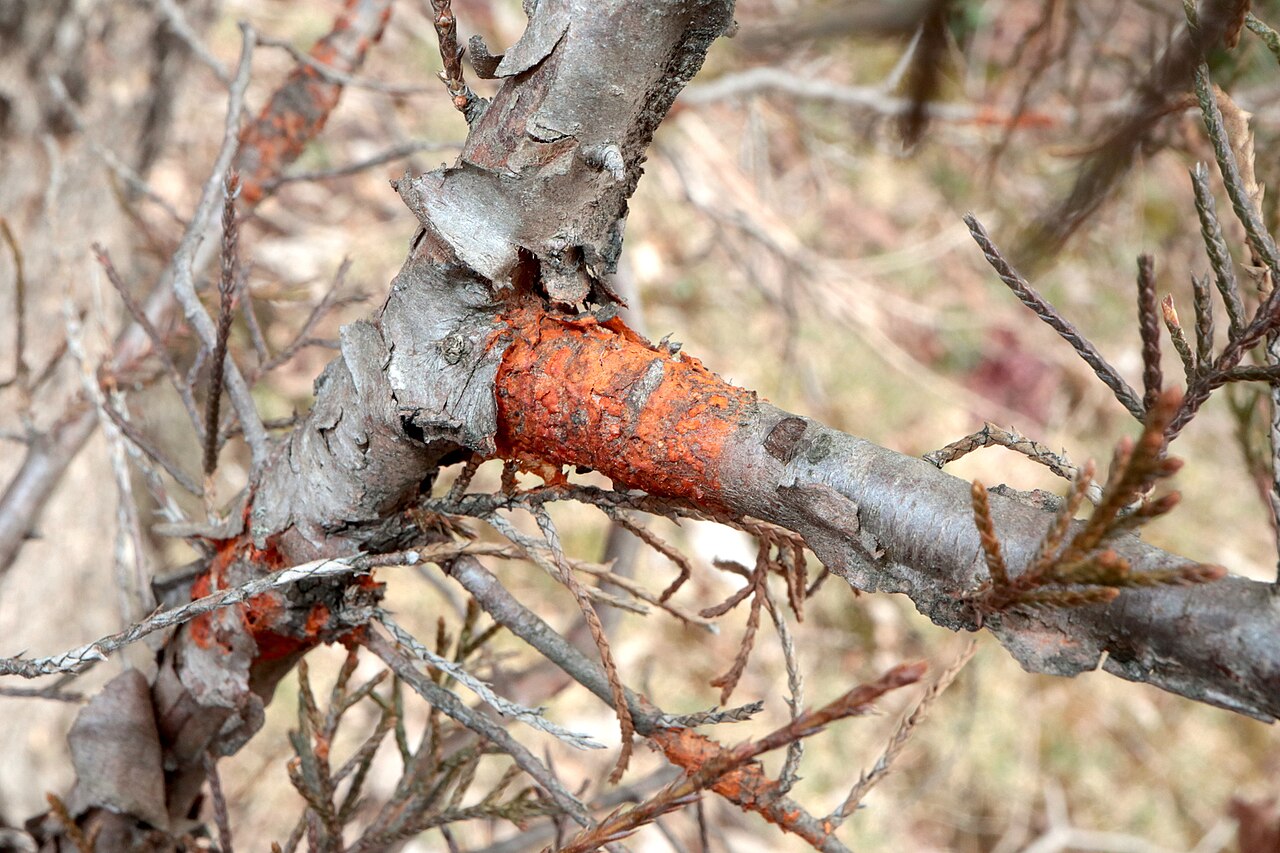
What to do: usually nothing. Iowa State reports that healthy aronia seems very tolerant of these rusts and that yield most likely will not be affected. Minnesota Extension says these rusts rarely cause serious damage and don’t require management in most cases.
If you’re still planning a planting, Minnesota Extension advises not placing junipers and red cedars close to rose-family plants. Other rose-family natives such as serviceberry share the same rusts.
Check 3: White Powdery Patches — Powdery Mildew
Brand notes that powdery mildew can affect black chokeberry, while it rarely shows up on red chokeberry. The USDA plant guide adds that mildew becomes a problem when plants lack sunlight and air circulation.
Minnesota Extension describes powdery mildew on trees and shrubs as white to gray powdery spots, blotches, or felt-like mats on leaves and green shoots. Young leaves and shoots are often hit hardest, and leaves may cup or twist.
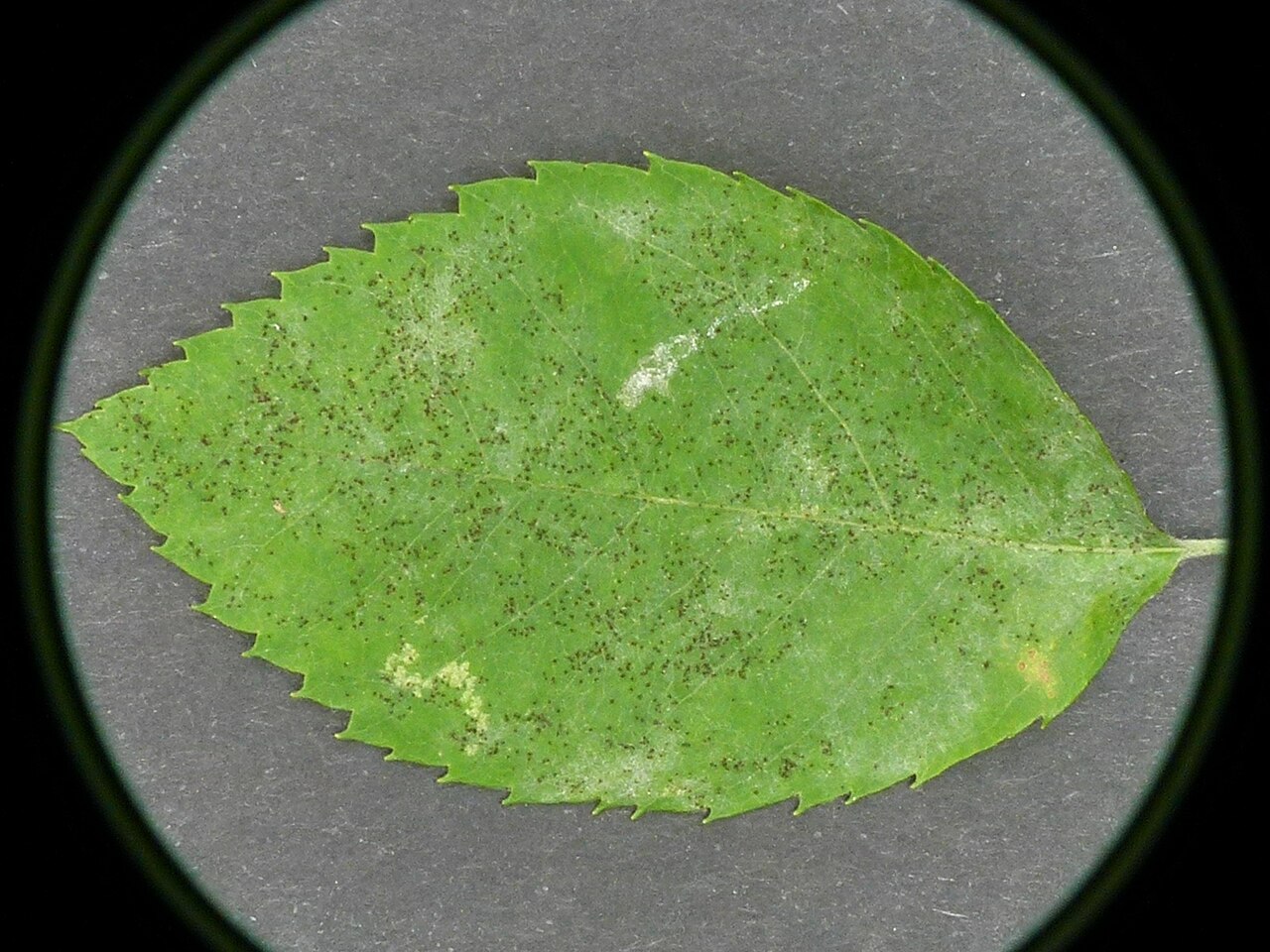
A simple test: rub a spot with your finger. Powdery mildew is a surface growth and partly wipes off. A rust spot or insect damage won’t.
What to do: Minnesota Extension says powdery mildew does not significantly affect the health of trees and shrubs and doesn’t require management. To reduce it, the guide recommends:
- Pruning in winter to let light and air into the canopy.
- Not overcrowding plants.
- Not fertilizing infected shrubs unless a soil test calls for it, since soft new shoots are most susceptible.
- Avoiding heavy pruning during the growing season, which also pushes susceptible new shoots.
A crowded old clump is a classic mildew site. Our staged pruning plan for overgrown black chokeberry opens it up over a few winters.
Check 4: Pale Stippling — Lace Bugs
Brand has observed lace bugs occasionally attacking black chokeberry growing on hot, dry sites.
According to Minnesota Extension, lace bugs feed on the undersides of leaves, creating small white or yellow mottled spots on the upper surface. Turn the leaf over and you may find the flat, lacy-winged adults, spiny nymphs, cast skins, and tiny dark droppings.
Damage is most visible in mid to late summer, when populations peak.
What to do: Minnesota Extension notes that healthy, established shrubs tolerate lace bug feeding and that ignoring it is usually the best option, since predators help keep numbers down. A strong spray of water aimed at the leaf undersides knocks nymphs off small plants.
Because Brand links lace bugs to hot, dry sites, the longer-term fix is often water and mulch. Our watering guide for shrubs and trees covers deep watering in dry spells.
Check 5: Holes and Lacy Leaves — Chewing Insects
Holes are not spots, but they often get lumped together. Iowa State lists Japanese beetles and grasshoppers among possible insect pests of aronia, since it shares many pests with apples.
Minnesota Extension describes Japanese beetle damage as skeletonized leaves, with the tissue between the major veins eaten so the leaf looks lacy. Damaged leaves may brown and drop.
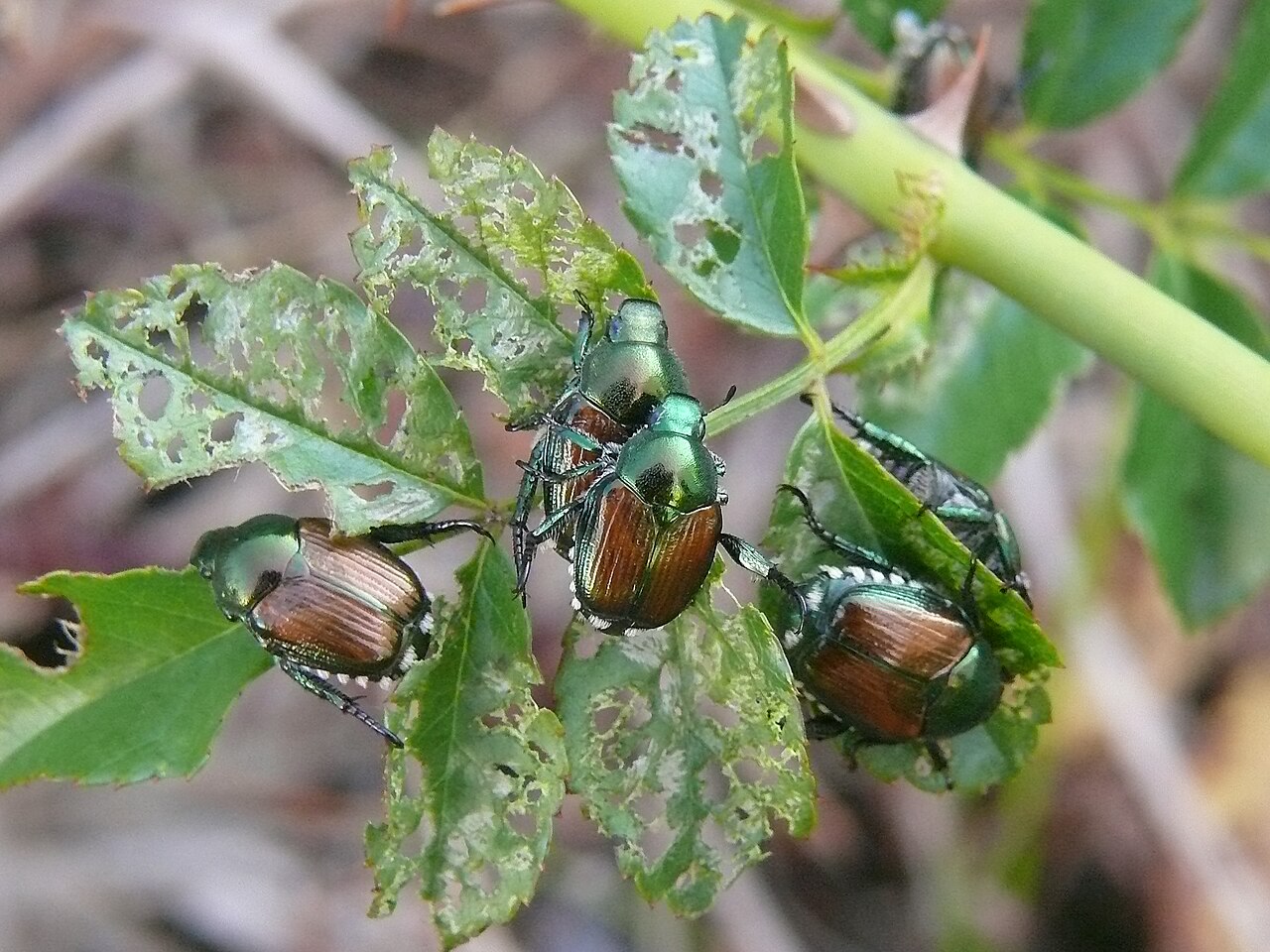
What to do: Minnesota Extension notes that adult beetle damage usually affects only appearance. For a few plants, the guide suggests handpicking beetles or knocking them into a bucket of soapy water.
Check 6: Brown Edges or Scorch — Water and Site Stress
If many leaves brown at the edges or tips at once, with no distinct spots, think about the weather before you think about disease.
The USDA plant guide describes black chokeberry as growing best on moist but well-drained sites and calls it not drought-tolerant. A hot, dry spell can scorch leaf edges, especially on young plants, sandy soils, or shrubs next to paving.
Scorch from heat and drought usually shows up most on the sunny, exposed side of the plant, and new leaves that emerge after rain look normal. Compare that with a disease, which tends to keep spreading leaf to leaf.
Our guide to caring for native shrubs covers watering and mulching through the first few seasons.
Check 7: Red Blotches Late in the Season — Fall Color
Black chokeberry is grown partly for its fall color. The Morton Arboretum describes the foliage turning a deep mahogany-red, and Brand describes a blend of yellow, orange, and red.
Color often starts as uneven red patches on scattered leaves. If the “spots” appear as nights cool, have no raised dots or powder, and spread into full-leaf color, you’re watching autumn, not a disease.
Check 8: Know When to Get Help
Some symptoms deserve a closer look from a professional:
- Shoot tips that suddenly blacken and wilt. Iowa State notes aronia may be susceptible to fire blight, though documented cases are very rare.
- Rapid leaf drop across the whole shrub in early summer.
- Spots that don’t match anything here.
Your county extension office or a university plant diagnostic lab can identify a sample, often for a small fee. Bag a few affected leaves and a shoot, and include photos of the whole plant.
Troubleshooting at a Glance
| Orange spots, red border, black dots | Cedar rust. Check for nearby junipers. Usually no treatment needed. |
| White tubes on fruit | Quince rust. Remove affected fruit if you like. Usually cosmetic. |
| White powder that wipes off | Powdery mildew. Improve light and airflow. Skip the fertilizer. |
| Pale stippling, specks underneath | Lace bugs. Hose leaf undersides. Water and mulch the site. |
| Lacy, skeletonized leaves | Japanese beetles. Handpick. Mostly cosmetic. |
| Brown edges during heat | Drought scorch. Deep-water and mulch. |
| Red patches as nights cool | Fall color. Enjoy it. |
| Blackened, wilting shoot tips | Get a diagnosis before acting. |
When Treatment Makes Sense
For most home plantings, the right treatment is better growing conditions. More sun, better airflow, steady moisture, and no extra fertilizer prevent most of the problems above.
If you’re still considering a fungicide or insecticide, confirm the diagnosis first. Then check that the product label lists your plant and problem, and follow it exactly. Avoid spraying open flowers, which bees visit heavily.
If you harvest the fruit, keep in mind Iowa State’s point that few insecticides are labeled for aronia. Your local extension office can tell you what’s appropriate where you live.
A Season-by-Season Plan
- Late winter: thin crowded canes to open the shrub to light and air. Note any junipers nearby.
- Spring: check junipers for orange galls in wet weather. Avoid fertilizing.
- Early summer: turn over a few leaves every couple of weeks to check for lace bugs and powder.
- Midsummer: water deeply in dry spells. Handpick Japanese beetles if they appear.
- Fall: enjoy the color. Rake up heavily spotted leaves if you like, and note what you saw for next year.
If the spots came with a poor berry crop, our checklist for black chokeberry not fruiting covers the other likely causes. And if the plant is spreading into a damp, shady corner, our guide to managing black chokeberry suckers can help you keep it where it gets more sun.
📋 More on this plant: read the full Black Chokeberry (Aronia melanocarpa) profile, or see it in our native plant lists for New Hampshire, Maine & Vermont, New York, Pennsylvania & Northern New Jersey, Maryland, Virginia & West Virginia, North Carolina & South Carolina, and Ohio & Indiana.
Frequently Asked Questions
Why does my black chokeberry have orange spots on the leaves?
Orange or yellow spots, especially with a red border and tiny black dots, usually point to a cedar rust. These fungi need a juniper or red cedar nearby to complete their cycle, and healthy aronia tolerates them well.
Should I spray fungicide on black chokeberry leaf spots?
Usually not. Extension sources describe rusts and powdery mildew as rarely harming shrub health. Improve light and airflow first, and get a diagnosis before using any product.
What causes white spots on black chokeberry leaves?
A white powdery film is likely powdery mildew. Small pale stipples with dark specks on the underside point to lace bugs. Rub a spot: mildew partly wipes off, insect damage doesn’t.
Are black chokeberry leaf spots harmful to the berries?
Iowa State reports that rusts on healthy aronia are unlikely to affect yield. Quince rust can disfigure individual fruit, and heavy, repeated stress of any kind can reduce a crop.
Should I remove the eastern red cedar near my chokeberry?
Not usually. Rust on chokeberry is mostly cosmetic, and red cedar is a valuable native tree. For new plantings, Minnesota Extension suggests not placing junipers close to rose-family shrubs.
Sources
- Iowa State University Extension, Yard and Garden, Growing Aronia in Iowa: rusts observed on aronia, tolerance, fire blight rarity, insect pests, labeled products.
- Mark Brand, Aronia: Native Shrubs With Untapped Potential, Arnoldia 67(3), 2010: powdery mildew and lace bugs on black chokeberry, fall color.
- University of Minnesota Extension, Cedar-apple rust and related rust diseases: life cycle, symptoms, chokeberry as a quince rust host, management.
- University of Minnesota Extension, Powdery mildew on trees and shrubs: symptoms and cultural management.
- University of Minnesota Extension, Lace bugs and Japanese beetles: damage patterns and low-impact control.
- USDA NRCS, Black Chokeberry Plant Guide: few pests, mildew in low light, site and moisture.
- North Carolina Extension Gardener Plant Toolbox, Aronia melanocarpa, and The Morton Arboretum, Black chokeberry: no serious problems; fall color.