
Powderpuff (Mimosa strigillosa)
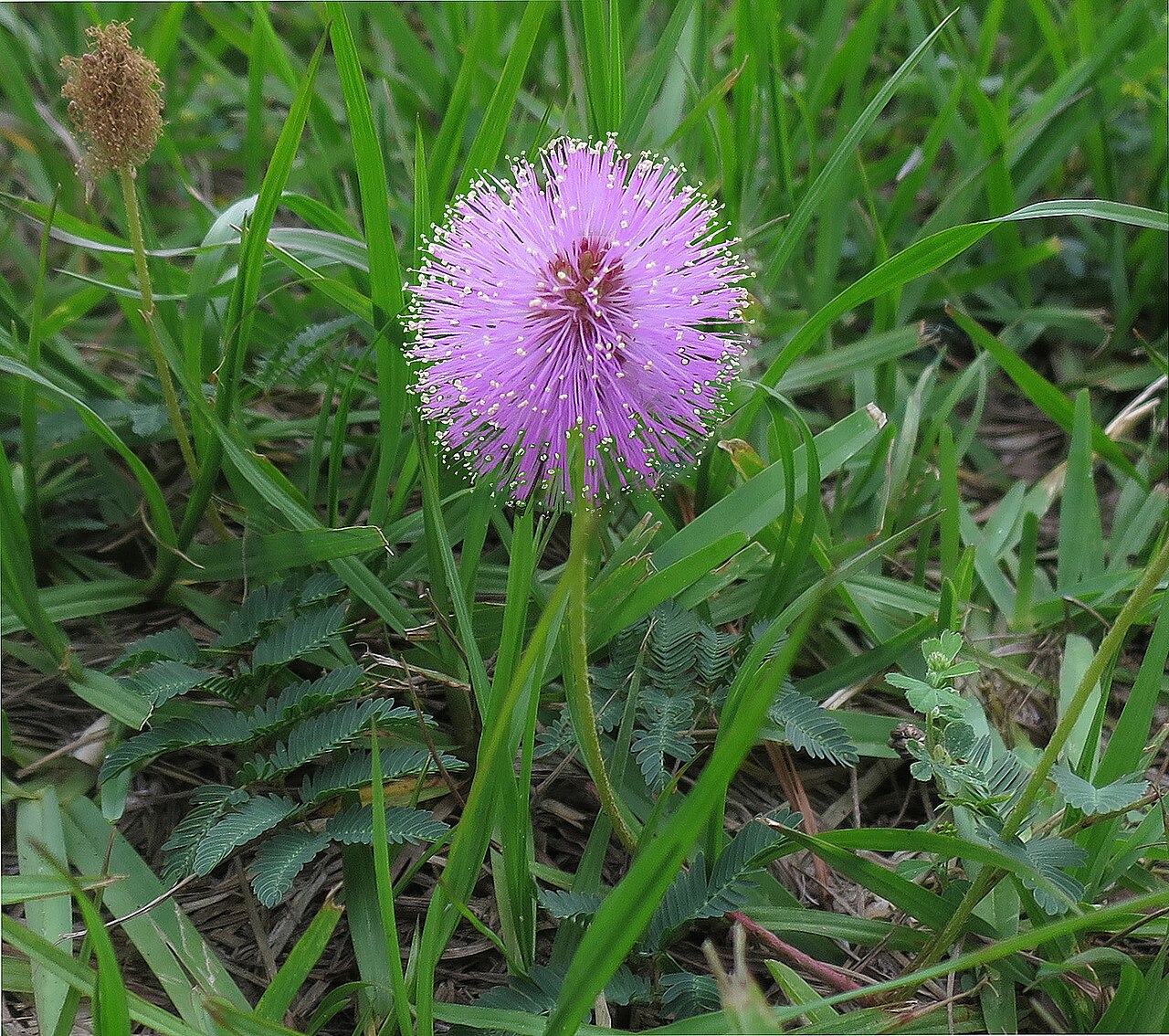
Mimosa strigillosa, known as Powderpuff or sunshine mimosa, is a low, creeping perennial legume that has become one of the most popular native groundcovers in Florida. Its stems run across the ground and root as they go, building a dense mat of ferny, bright green leaves only a few inches high. From spring through summer, round pink flower heads about an inch across rise on slender stalks above the foliage, looking like tiny pink pompoms.
Powderpuff belongs to the legume family (Fabaceae), and like its relative the sensitive plant, its leaflets fold together when touched and close up at night. Its roots host nitrogen-fixing bacteria, so it grows well in poor, sandy soil without fertilizer. In the wild it grows in open, sunny places on the southern Coastal Plain, such as prairies, pine flatwoods, sandy roadsides, river banks and old fields.
Gardeners value powderpuff mainly as a lawn alternative. It covers ground quickly, tolerates light foot traffic and occasional mowing, needs little or no irrigation once established, and feeds pollinators and butterflies. This guide covers how to identify it, where it is native, and how to use it in place of turfgrass.
Identification
Powderpuff is easy to recognize in flower. Out of flower, look for the low, mat-forming habit, the twice-divided leaves that fold when brushed, and stems without prickles.
Stems & Habit
The stems are prostrate, trailing along the ground and rooting at the nodes. A single plant can spread several feet in a season, and over years a colony can cover a large area. In flower the plant is usually 2 to 6 inches tall, and rarely about a foot. The stems are covered with stiff, flattened, bristly hairs; the species name strigillosa refers to this coat of short, stiff hairs. Unlike the sensitive briars, the stems have no prickles.
Leaves
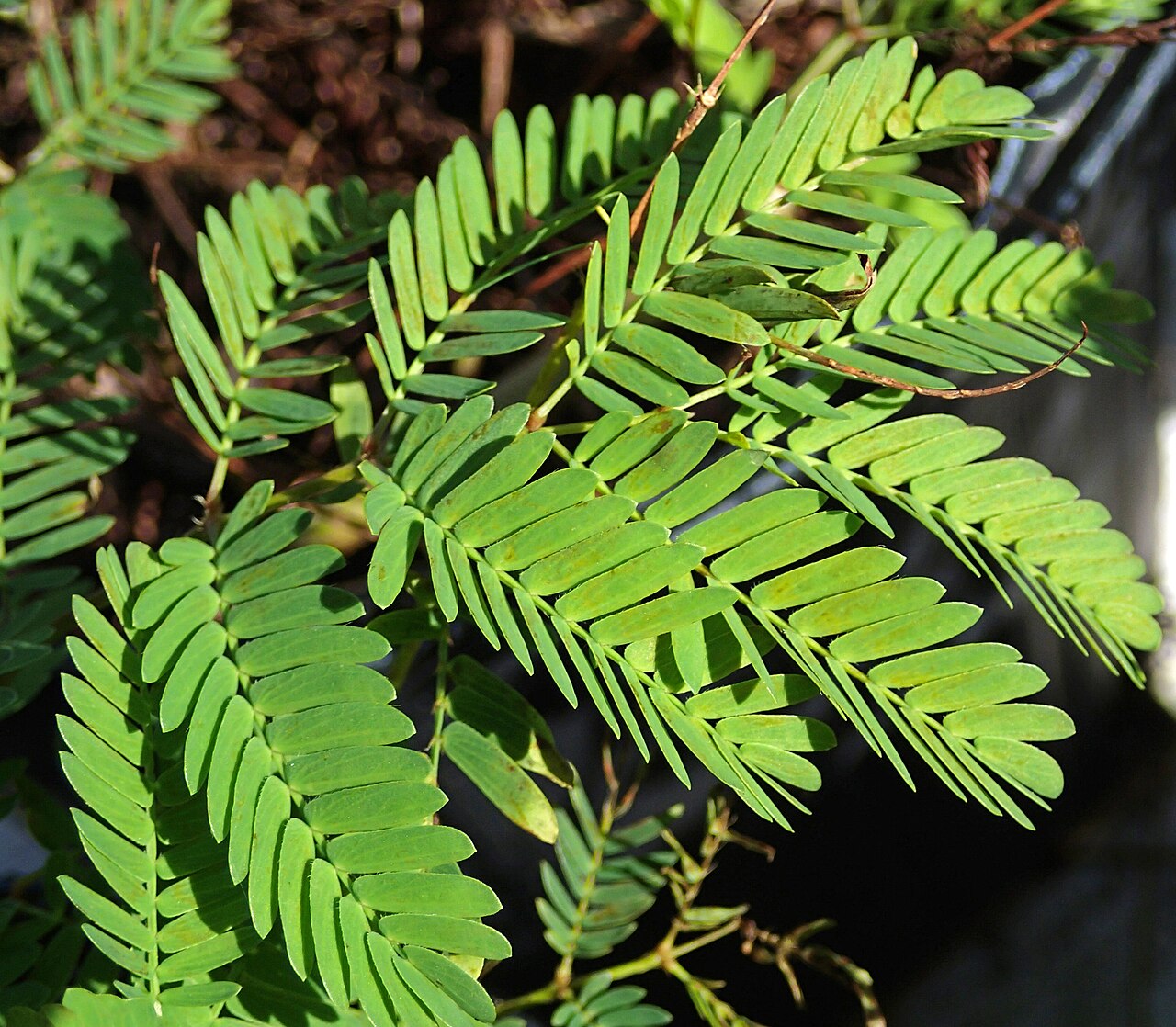
The leaves are bipinnate (twice divided), with several pairs of side branches, each carrying many small, narrow, paired leaflets. The overall effect is soft and ferny. The leaflets fold together when touched, shaken or shaded, and at night, although more slowly than in the tropical sensitive plant. In frost-free areas the foliage stays green all year, while farther north and after hard freezes it dies back to the ground and regrows in spring.
Flowers
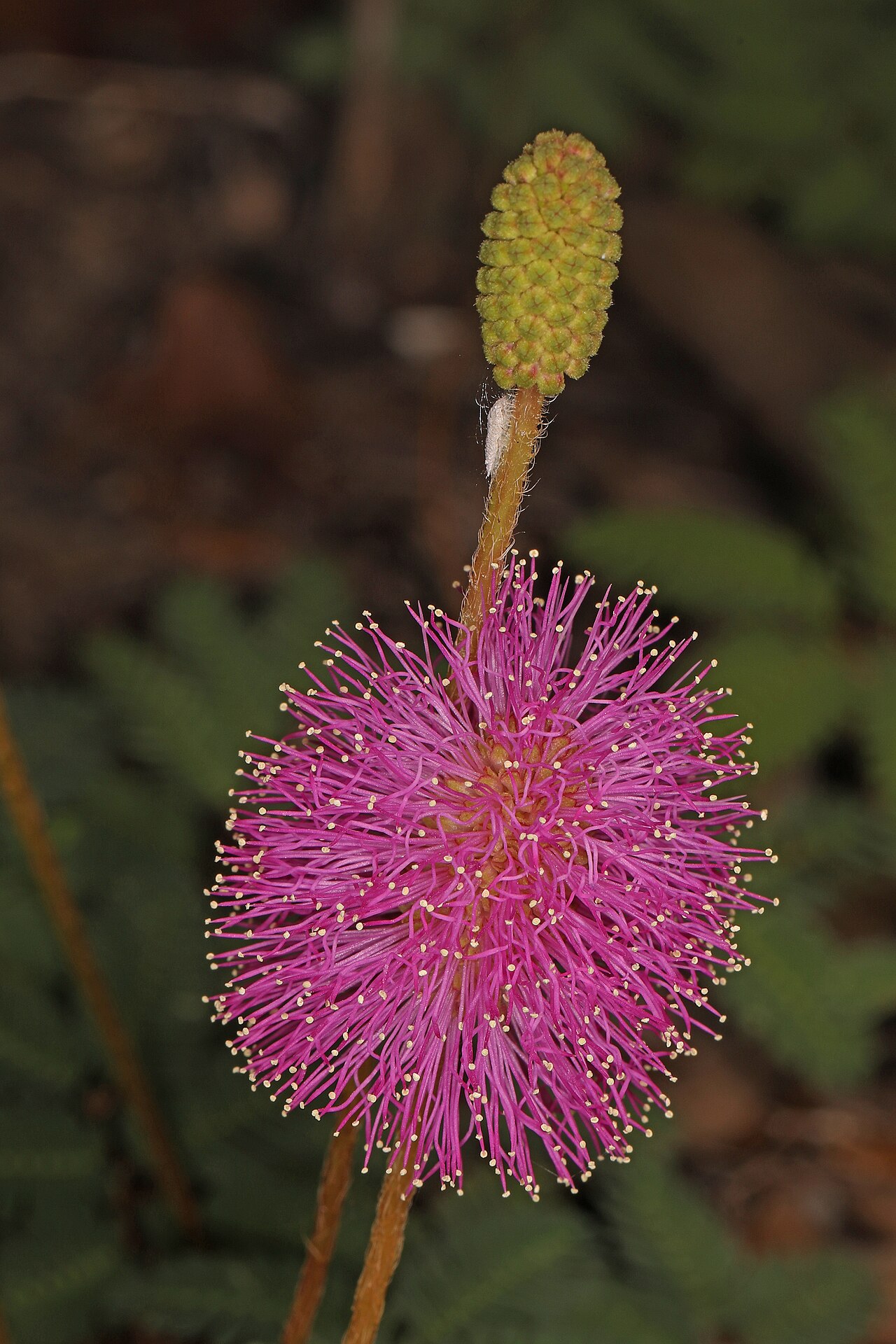
The flowers are tiny and packed into round heads about ¾ to 1¼ inches across, carried singly on long, upright stalks from the leaf axils. What you see is mostly stamens: long, pink to lavender filaments tipped with yellow pollen, paler toward the center of the head. Before opening, the head is a green, cone-like cluster of buds. Bloom begins in spring and continues through summer, from about March to August, and longer in south Florida.
Fruit & Seeds
After flowering, each head produces a cluster of small, flat, bristly pods about ½ to 1 inch long. When ripe they break into one-seeded segments, which fall near the parent plant. Seed set is often modest in gardens, and most new plants come from the rooting stems.
Similar Species
Sensitive briar (Mimosa quadrivalvis and relatives, such as littleleaf sensitive briar) has similar pink puffball flowers, but its stems and pods are covered in hooked prickles. Sensitive plant (Mimosa pudica), a tropical species naturalized in south Florida, is also prickly and folds its leaves almost instantly. Powderpuff is the only one with soft, prickle-free, creeping stems.
Quick Facts
| Scientific Name | Mimosa strigillosa Torr. & A. Gray |
| Family | Fabaceae (legume family) |
| Plant Type | Creeping perennial groundcover (herb to subshrub) |
| Mature Height | 2–6 in (flower stalks occasionally to about 1 ft) |
| Mature Spread | Spreads indefinitely by rooting stems; 3–6 ft per plant in a season |
| Growth Rate | Fast |
| Sun Exposure | Full sun to light shade |
| Water Needs | Low to moderate; highly drought tolerant once established |
| Soil Type | Sandy to loamy, well-drained; tolerates poor soil |
| Soil pH | About 5.5–7.5 |
| Bloom Time | March–August (longer in south Florida) |
| Flower Color | Pink to lavender with yellow-tipped stamens |
| Fall Color | None; foliage dies back after frost in colder areas |
| Fruit | Small flat, bristly pods in clusters |
| Deer Resistant | No; deer and rabbits browse it |
| USDA Hardiness Zones | 7–11 |
Native Range
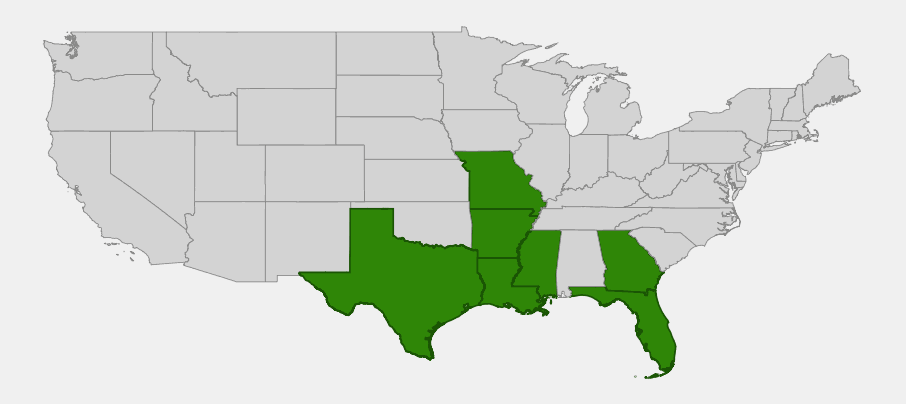
Powderpuff is native to the southern United States and, remarkably, also to southern South America. USDA PLANTS and the Lady Bird Johnson Wildflower Center record it from Florida, Georgia, Mississippi, Louisiana, Arkansas, Missouri and Texas. In Florida it grows throughout most of the state, from the Panhandle to the southern peninsula. In Texas it is native mainly in the eastern half of the state and along the Gulf Coast. Records from Arkansas and Missouri are at the northern edge of its range.
Outside the United States, it grows in the grasslands of Argentina, Uruguay and southern Brazil. Botanists generally consider this wide gap a natural disjunction, a pattern shared by a few other plants of open, warm-temperate grasslands in both hemispheres of the Americas.
Throughout its range it is a plant of sunny, open ground: prairies and coastal grasslands, pine flatwoods and savannas, sandy river and lake banks, and roadsides and fields with low vegetation. It prefers places where tall plants are kept down by fire, flooding or mowing.
📋 Regional plant lists featuring Powderpuff: North & South Florida · Alabama, Georgia & Mississippi · Arkansas, Louisiana, Eastern Oklahoma & Eastern Texas · Illinois, Iowa & Missouri
Growing & Care Guide
Powderpuff is one of the easiest native plants to grow in sunny southern gardens, and it is widely available from Florida native nurseries in pots and plugs. Its main use is as a living groundcover in place of turfgrass, especially in dry, sandy spots where lawns struggle. Expect it to spread, and plan where you want it to stop.
Light
Plant in full sun for the densest growth and the most flowers. It tolerates light shade, but in shade the mat thins out and blooms sparsely. It does not compete well under dense trees.
Soil & Water
Powderpuff grows in nearly any well-drained soil, from deep sand to sandy loam, and does not need fertilizer because it fixes its own nitrogen. Water new plugs regularly for the first four to six weeks, until runners are rooting on their own. After that it is very drought tolerant, though a deep watering during long dry spells keeps it greener and flowering. It does not do well in constantly wet or salty soil.
Planting Tips
For a groundcover, plant plugs or 4-inch pots 12 to 18 inches apart in spring or early summer, when warm weather speeds rooting. Remove existing turf and weeds first, because the young mat cannot outcompete aggressive grasses such as bermudagrass. Spacing closer gives faster coverage. Expect full cover in one to two growing seasons in sunny sites.
Pruning & Maintenance
Mow occasionally on a high setting (about 3 to 4 inches) if you want a tidier look; it recovers quickly. Pull weeds by hand until the mat closes. Edge along walks and beds to keep the runners in bounds. In north Florida and farther north, it goes dormant and looks brown or sparse in winter, so mix in evergreen plants if winter appearance matters. It tolerates light foot traffic but not heavy daily use like a play area.
Propagation
Propagation is easy: dig up rooted sections of runner and replant them, or root stem cuttings in moist sand. Seeds can be sown after nicking or soaking the hard seed coat. Most gardeners start with plugs from a nursery and let the plants fill in.
Landscape Uses
- Lawn alternative: a low, flowering groundcover for sunny areas with light foot traffic
- Erosion control: on sandy slopes, swales and banks, where rooting stems knit the soil
- Pollinator gardens: long-season pollen and nectar for bees and small butterflies
- Between stepping stones and along paths: fills gaps and tolerates occasional footsteps
- Roadsides and open meadows: in low-maintenance plantings in full sun
Wildlife & Ecological Value
Powderpuff is much more than a pretty turf substitute. A patch of it supports pollinators and butterflies and improves poor soils.
For Pollinators
The puffball flowers produce abundant pollen and attract many bees, including honey bees, bumblebees and small native bees, and also butterflies such as skippers. Because it blooms over a long season, a mat of powderpuff provides a steady food source through spring and summer.
For Birds
Birds eat some of the seeds, and the dense mat shelters insects that ground-feeding birds hunt. Its value for birds is modest compared with shrubs and grasses, but it is a better habitat than turfgrass.
For Mammals
Deer and rabbits browse the foliage, sometimes heavily. Plants usually recover because new growth comes from the rooting stems.
Ecosystem Role
Powderpuff is one of the few low groundcovers that is both native and nitrogen-fixing. Its root nodules contain bacteria that fix nitrogen from the air, so it enriches poor sandy soils. On banks and open ground, its rooting stems help hold soil against erosion.
Cultural & Historical Uses
John Torrey and Asa Gray, the leading American botanists of the nineteenth century, described Mimosa strigillosa in 1840 in their Flora of North America. The name refers to the short, stiff hairs on its stems. The genus name Mimosa comes from the Greek word for a mimic, referring to the leaves that “mimic” animal movement by folding when touched.
Powderpuff was little known in gardens until the late twentieth century, when the Florida native plant movement began looking for alternatives to St. Augustine grass and other irrigated turfgrasses. Florida native nurseries began producing it in large quantities, and it is now one of the most commonly sold native groundcovers in the state.
Today powderpuff appears in Florida-Friendly Landscaping programs and native plant society recommendations, and many homeowners and public landscapes use it in place of part of the lawn. It shows how a native wildflower can meet practical needs: groundcover, low water use and erosion control.
Frequently Asked Questions
Can powderpuff replace my lawn?
It can replace part of a lawn in full sun with light foot traffic. It is not suitable for heavy-use play or sports areas, and in north Florida and farther north it goes dormant in winter. Many people combine it with other native groundcovers such as frogfruit.
Is powderpuff invasive?
No. It is native to Florida and the Gulf states, and it spreads only by rooting stems and a modest amount of seed. It can spread into neighboring beds, so edge it or set barriers if needed.
Do the leaves really close when touched?
Yes. Like other mimosas, its leaflets fold together when touched or shaken and at night, although more slowly than the tropical sensitive plant.
Does powderpuff need fertilizer?
No. It fixes its own nitrogen and grows best in lean, sandy soil. Fertilizer mainly helps weeds and turfgrass compete with it.
Is powderpuff prickly?
No. Unlike the sensitive briars and the tropical sensitive plant, its stems have only stiff, flattened hairs and no prickles, so it is comfortable to walk on barefoot.

Looking for a nursery that carries Powderpuff?
Browse our native plant nursery directory: Arkansas · Florida & Georgia · Louisiana, Mississippi & Missouri · Texas