
Lakeside Sunflower (Helianthus carnosus)
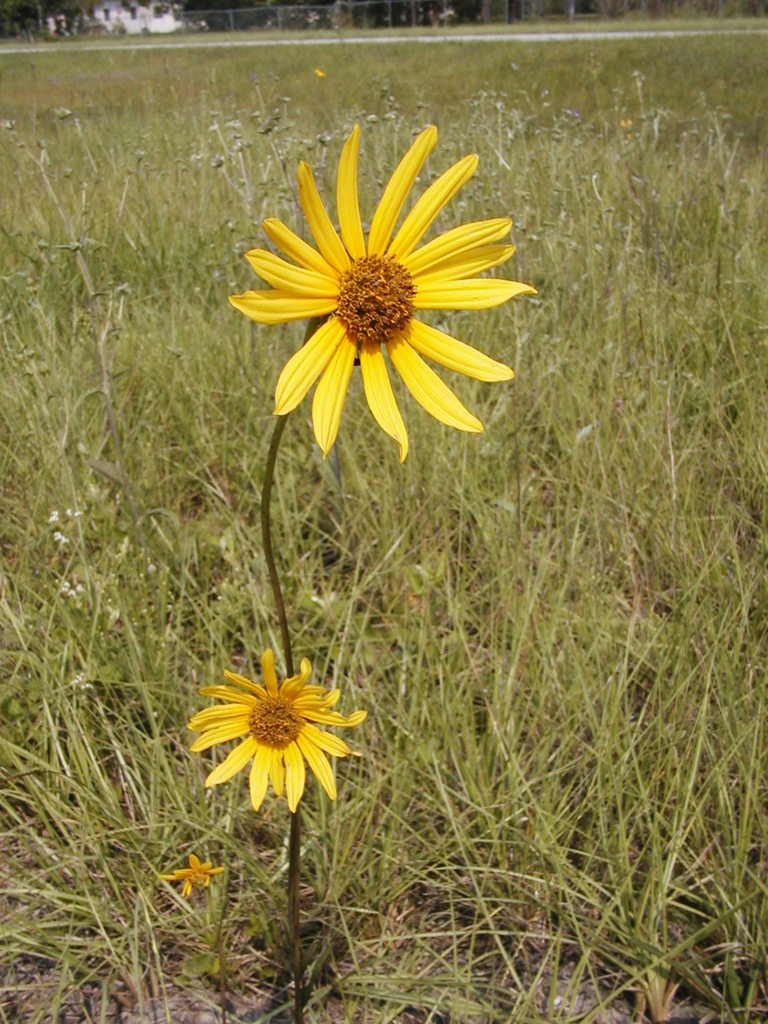
Helianthus carnosus, known as Lakeside Sunflower or flatwoods sunflower, is a rare perennial sunflower found only in northeast Florida. It grows in wet, sunny pine flatwoods, savannas and moist roadside ditches, where in summer it sends up slender, nearly leafless stalks, 1 to 3 feet tall, topped by bright yellow flower heads 2 to 3 inches across. Its narrow, smooth, somewhat fleshy leaves are clustered in a rosette at the base of the plant. It belongs to the aster family (Asteraceae).
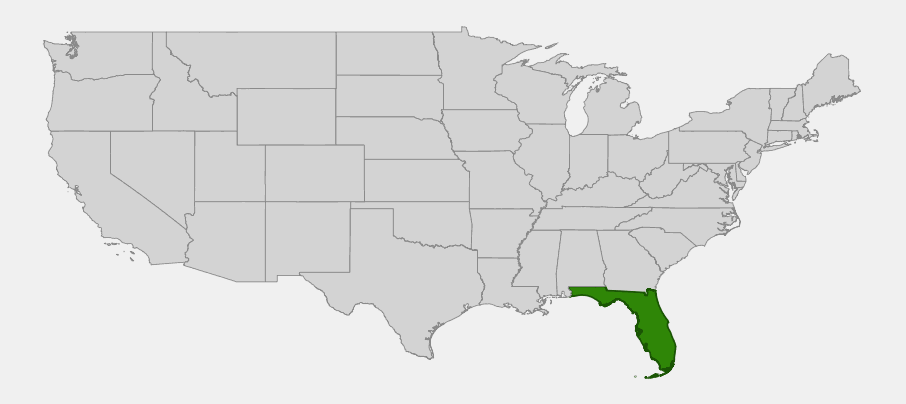
Lakeside sunflower is endemic to Florida per the Atlas of Florida Plants, and USDA PLANTS records it from no other state. It is listed as Endangered by the State of Florida (FDACS Regulated Plant Index). The Florida Native Plant Society notes that it is endemic to several counties along the northeast coast, and recent records come from Clay, St. Johns, Flagler and Volusia counties. Its wet flatwoods habitat has been heavily reduced by development, drainage, pine plantations and lack of fire. Gardeners who want to grow it should buy only nursery-propagated plants or seed from reputable native nurseries and never dig plants or collect seed from wild populations.
It is one of more than a dozen sunflower species native to Florida, and among the most distinctive, with its basal leaves and tall, spare flower stalks. This guide covers how to recognize lakeside sunflower, where it grows, and how it can be grown responsibly in a moist, sunny native garden within its home region.
Identification
Lakeside sunflower looks quite different from the leafy, branching sunflowers most gardeners know. Look for a flat rosette of long, narrow, hairless leaves and one or more slender stalks, each topped by a single large yellow head.
Growth Habit
Plants are perennials that grow from a short rootstock and form a basal rosette of leaves. In summer they produce one to a few erect, slender stems usually 1 to 3 feet tall. The stems have only a few small, reduced leaves, so the flower heads seem to float above the grasses of the flatwoods. Plants die back to the base in winter.
Leaves
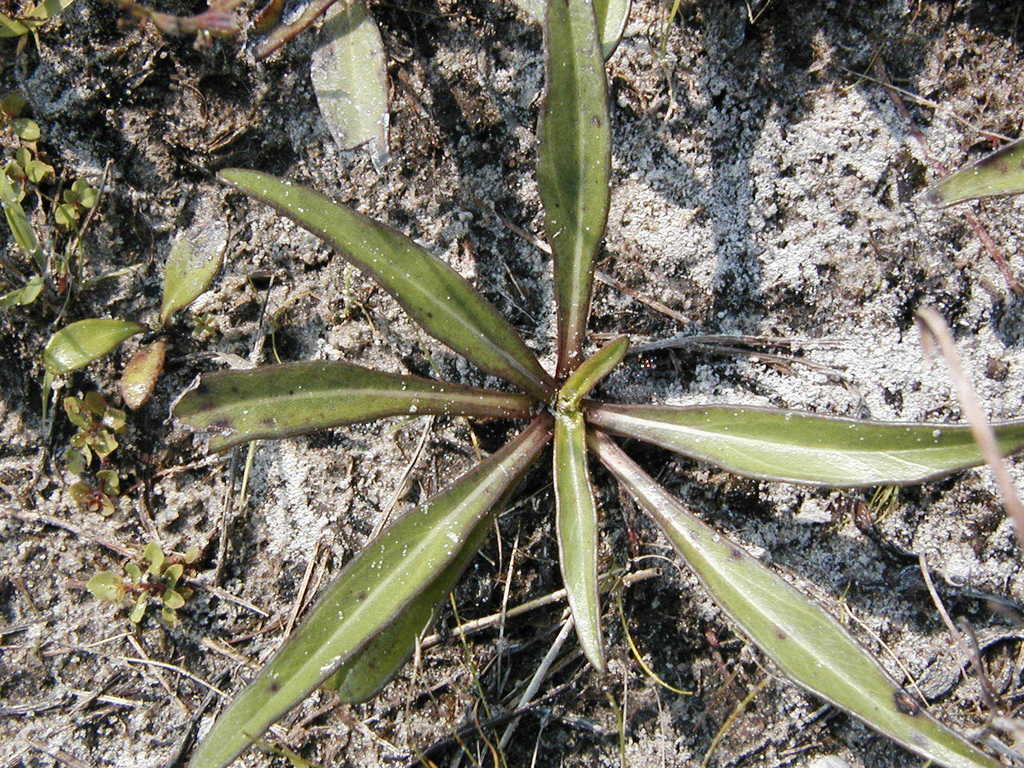
The basal leaves are long and narrow, linear to narrowly lance-shaped, several inches long and well under an inch wide. They are smooth (hairless), slightly thick and fleshy. The species name carnosus means “fleshy,” referring to these leaves. Stem leaves, when present, are much smaller and alternate.
Flowers
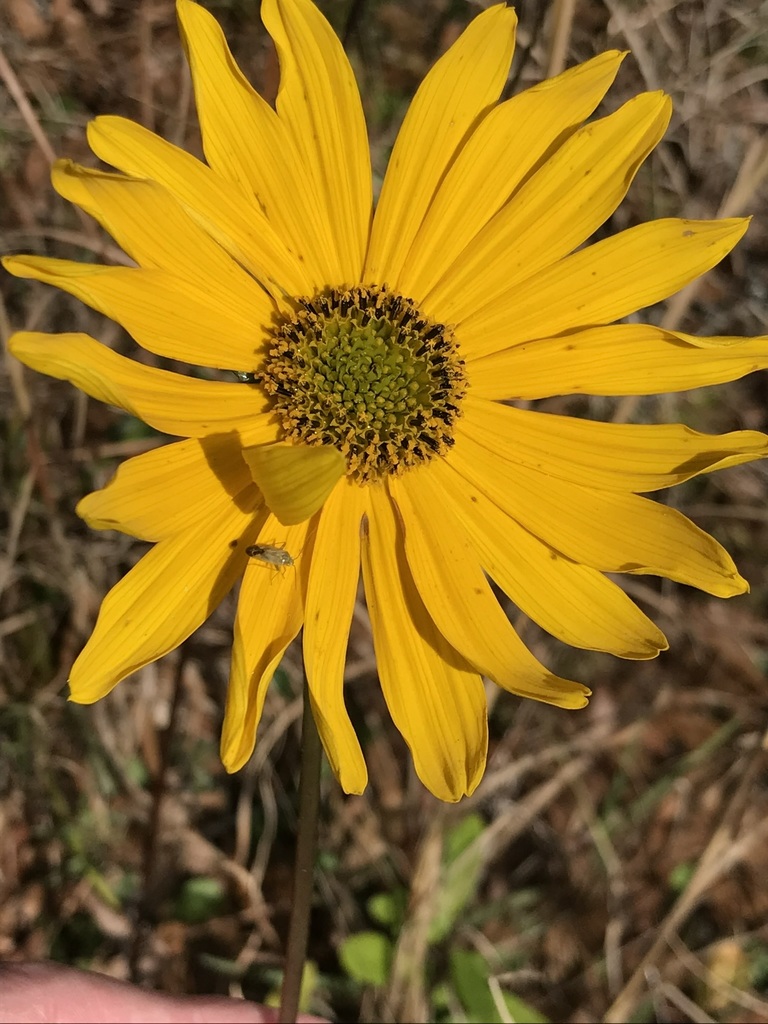
Each stem ends in a single flower head, or occasionally a few, about 2 to 3 inches across. The head has a ring of bright yellow ray florets around a central disk of small yellow to brownish disk florets. Bracts (phyllaries) beneath the head are green and lance-shaped. Flowering is mostly in summer, from about June through August, with scattered heads into early fall.
Fruit & Seeds
After flowering, the disk ripens into a cluster of small, flattened achenes typical of sunflowers. FNPS describes the fruit as whitish. Birds and small mammals eat the seeds.
Similar Species
Swamp Sunflower (H. angustifolius) also grows in wet places, but it is a tall, leafy, branched plant with rough, narrow stem leaves and dark purple-brown disks, blooming in fall. Other Florida sunflowers with basal leaves, such as H. radula (rayless sunflower), have broad, rough, hairy leaves and dark heads that often lack rays.
Quick Facts
| Scientific Name | Helianthus carnosus (accepted by USDA PLANTS and the Atlas of Florida Plants) |
| Family | Asteraceae (aster family) |
| Plant Type | Herbaceous perennial wildflower with a basal rosette |
| Mature Height | 1–3 ft in flower |
| Mature Spread | About 1 ft |
| Growth Rate | Moderate |
| Sun Exposure | Full sun to part sun |
| Water Needs | Moderate to high; moist to seasonally wet soil |
| Soil Type | Acidic sand or sand with organic matter (flatwoods soils) |
| Soil pH | Acid to neutral (about 4.5–7.0) |
| Bloom Time | June–August, occasionally into early fall |
| Flower Color | Bright yellow rays; yellow to brownish disk |
| Fall Color | None; dies back in winter |
| Fruit | Small flattened achenes |
| Deer Resistant | Unknown; flower stalks may be browsed |
| USDA Hardiness Zones | 8b–9b |
Native Range
Lakeside sunflower has one of the smallest ranges of any North American sunflower. It is endemic to northeast Florida, and USDA PLANTS and the Lady Bird Johnson Wildflower Center record it from Florida only. The Florida Native Plant Society describes it as endemic to several counties along the northeast coast. Observations in recent decades come from Clay, St. Johns, Flagler and Volusia counties, roughly from the Green Cove Springs and Hastings area south to near Edgewater.
Its natural habitats are wet pine flatwoods, wet savannas and grassy prairie-like openings with acidic sandy or peaty soils that are saturated for part of the year. Like many flatwoods wildflowers, it needs open, sunny conditions maintained by frequent fire. Today many surviving plants grow in roadside ditches and along road shoulders and power-line corridors, where mowing keeps the vegetation low in place of fire.
Development, conversion of flatwoods to pine plantations and agriculture, drainage, and long fire-free intervals have eliminated much of its habitat. Roadside populations are vulnerable to herbicide spraying, road widening and mowing during the flowering and seed season. Conservation efforts focus on protecting remaining sites, restoring fire to flatwoods, and adjusting roadside mowing schedules.
📋 Regional plant lists featuring Lakeside Sunflower: North & South Florida
Growing & Care Guide
Lakeside sunflower can be grown in a moist, sunny native garden, especially within its home region of northeast Florida. Because it is endemic to Florida and state-listed as Endangered, it should be grown only from nursery-propagated plants or seed obtained from reputable native nurseries. FNPS lists it as occasionally available from native nurseries and as seed. Never dig plants or collect seed from roadside or other wild populations, even if they look abundant.
Light
Plant in full sun or part sun. FNPS lists part sun, and in the wild it grows in open flatwoods with scattered pines. Too much shade reduces flowering.
Soil & Water
Lakeside sunflower grows naturally in acidic sand or sand with organic matter that ranges from moist to occasionally flooded. In a garden, give it a spot that stays reasonably moist, such as the edge of a rain garden, a low area or a lightly irrigated wildflower bed. It tolerates brief flooding but not salt water or salt spray, so it is not suited to beachfront sites.
Planting Tips
Set plants out in spring or early summer, about 12 inches apart. Grow them among low grasses and wildflowers of wet flatwoods, such as meadow beauties, yellow-eyed grasses and blazing stars, rather than in rich, crowded perennial borders. Keep the rosettes free of thick mulch and taller, aggressive plants that could shade them.
Pruning & Maintenance
Leave the flower stalks standing after bloom so seeds can ripen for birds, then cut them back in late fall or winter. In naturalistic plantings, mow or cut back once a year in winter, which imitates the effect of fire. Avoid fertilizer. Since it is a short-lived perennial, allow some seeds to fall near the parent plants.
Propagation
Nurseries grow it from seed. FNPS lists seed as the method of propagation. Use only seed from nursery-grown stock. Seedlings grown in containers can be planted out once they have formed a small rosette.
Landscape Uses
- Rain gardens and moist wildflower beds: suits sunny, seasonally moist sites within northeast Florida
- Wet flatwoods restoration: an endemic wildflower of fire-maintained flatwoods, using nursery-propagated stock under appropriate permits
- Pollinator gardens: summer flowers for bees and butterflies
- Conservation and educational plantings: a striking example of Florida’s endemic flora for botanical gardens and demonstration gardens
- Naturalistic meadows: combines with grasses and other flatwoods wildflowers in low-maintenance plantings
Wildlife & Ecological Value
Like other sunflowers, lakeside sunflower provides nectar, pollen and seeds, but its limited range makes it most important as a component of northeast Florida’s flatwoods biodiversity.
For Pollinators
The large yellow heads attract native bees, including bumble bees, sweat bees and specialist sunflower bees, along with butterflies, skippers and beetles. FNPS notes that bees and butterflies are attracted to it.
For Birds
FNPS notes that birds eat the seeds. Small seed-eating birds such as sparrows and finches forage on sunflower seed heads left standing after bloom.
For Mammals
Small mammals eat the fallen seeds, according to FNPS. Deer may browse flower stalks.
Ecosystem Role
Lakeside sunflower is part of the species-rich ground layer of wet flatwoods and savannas, which depend on regular fire. Its survival along roadsides shows how managed rights-of-way can serve as refuges for rare plants when mowing and herbicide use are timed with care.
Cultural & Historical Uses
The species was described by John Kunkel Small, the New York Botanical Garden botanist who explored Florida extensively in the early twentieth century and named many of its endemic plants. The genus name Helianthus comes from the Greek helios, sun, and anthos, flower.
Lakeside sunflower is a wild relative of the cultivated sunflower, Helianthus annuus. Wild sunflower species are collected and studied by sunflower researchers because they can carry genes for disease resistance and tolerance of difficult soils that may be useful in crop breeding.
Its common names reflect its habitats. “Flatwoods sunflower” describes the wet pine flatwoods where it grows, and “lakeside sunflower” its occurrence near the edges of ponds and wet depressions. Its listing as Endangered by the State of Florida has made it a focus of local conservation efforts in northeast Florida.
Frequently Asked Questions
Is lakeside sunflower endangered?
Yes. Helianthus carnosus is listed as Endangered by the State of Florida (FDACS Regulated Plant Index), and it is endemic to Florida per the Atlas of Florida Plants. Buy only nursery-propagated plants or seed from reputable sources and never collect from the wild.
Where does lakeside sunflower grow?
Only in northeast Florida, in a few counties near the Atlantic coast. Recent records come from Clay, St. Johns, Flagler and Volusia counties, mostly in wet flatwoods, savannas and roadside ditches.
How is it different from swamp sunflower?
Swamp sunflower is a tall, leafy, branched plant with dark centers that blooms in fall. Lakeside sunflower has mostly basal, smooth, fleshy leaves, slender nearly leafless stems and usually one large head per stem, and it blooms mainly in summer.
Can I grow lakeside sunflower in my garden?
Yes, in a sunny, moist spot, especially in northeast Florida. Use nursery-propagated plants or seed, avoid fertilizer, and keep taller plants from crowding it.
Why is it often seen along roadsides?
Regular mowing on road shoulders keeps vegetation low and sunny, much as fire does in natural flatwoods. Many remaining populations survive in these rights-of-way, which is why careful mowing schedules matter.

Looking for a nursery that carries Lakeside Sunflower?
Browse our native plant nursery directory: Florida